In 2018, when he was just 3 years old, Ederson Galicia Alva was taken from his mother’s arms at the U.S.-Mexico border under the first Trump administration’s family separation policy and kept apart from her in a government facility for months. They were finally reunited after lawyers intervened. Then, in June of last year, he and his mother were separated a second time and ultimately sent back to Guatemala, despite legal protections meant to keep them and families like theirs together.
After nearly a year in the indigenous highlands of Guatemala, Ederson’s family was finally allowed to return to Florida last week, following a federal judge’s order that the government had acted illegally.
Now, eight years since President Donald Trump’s forcible border separations triggered global outrage and came to an official halt, an Associated Press investigation has found that the government has re-separated dozens of children from their families, despite a landmark legal settlement meant to keep them together. Some of their parents have been locked in immigration detention facilities for months, and others deported back to their home countries after being taken from their families once again. In some cases, immigration officials conducting interior sweeps deported people despite discovering they were legally off limits for removal, according to emails obtained by AP.
Here are highlights from the AP’s reporting:
Trump’s second administration has vowed to deport more than 1 million people per year. Federal agents have been plucking people from their communities so swiftly that, according to the Brookings Institution, now the parents of tens of thousands of children have been detained.
Family separations often look different from Trump’s first term. In 2018, Ederson and other children at the border were forcibly taken from their parents, who were jailed separately and charged criminally with illegal entry. Then, the government was unable to reunite them for months because adults and children’s information was kept in different computer systems. A judge barred the government from separating families at the border at the border and ordered the government to bring the families back together after the ACLU filed a class action lawsuit. Later, a court settlement banned most family separations to deter immigration until December 2031.
Today, if parents are arrested or deported under the president’s push for mass deportations, they are being made to choose whether to leave their children behind in the United States.
“DHS complies with all court orders, even as radical NGOs shop for the most favorable forum and activist judges seek to thwart our operations,” acting Assistant Secretary Lauren Bis, a Department of Homeland Security spokesperson, said in response to AP requests for comment about the government’s policies toward separated families.
Government attorneys have argued in recent court filings that there are no legal restrictions on “the government’s statutory authority to execute orders of removal.” Bis said enforcing immigration law was “not optional,” and that “every removal of an illegal alien helps restore order and reinforce the rule of law.”
Ederson’s family recently was allowed to return, but their status is still on shaky ground.
In late 2017, immigration officials began forcibly separating parents and children at the U.S.-Mexico border, under a policy championed by Stephen Miller, Trump’s then-senior policy advisor and now White House deputy chief of staff. ACLU filed a class action lawsuit in February 2018 to halt the practice called Ms. L v. U.S. Customs and Immigration Enforcement, on behalf of a Congolese mother the Trump administration separated from her 7-year-old daughter. It wasn’t until thousands of families were torn apart that a judge ordered the government to end separations, saying it caused “lasting, excruciating harm.” According to ACLU’s most recent accounting, the number of separated parents and children, and their impacted family members covered by the settlement is far greater than previously reported— over 11,800 — and because the government deported so many people before the practice was banned, the full scope may never be known. The ACLU also provided AP with new data surrounding Ms. L class members who have been detained and deported during the second Trump administration.
Under a 2023 settlement agreement, Ms. L class members — including separated parents, children and other close relatives — got special legal protections, pathways toward asylum and access to attorneys, work permits and support services. And for eight years, advocates and attorneys tried to help the families reunite and recover, and offered them everything from job placement to psychological counseling, benefits meant “to prevent any ongoing harm caused by the initial separation,” according to the settlement.
As deportations have risen in the last year and a half, attorneys say many separated families have become more fearful about filling out government paperwork and don’t know they can apply for asylum, a key settlement benefit that expires in December. The administration also hasn’t said if it will extend a current, trimmed-back legal services contract for families that ends in August. Another deadline is looming as well: thousands of separated families need to request for any pending removal orders to be cancelled by December, or lose their ability to stay in the U.S. legally.
Each morning since Alva López was deported back to Guatemala last June, she has checked her phone for word of when her family could return. Money started drying up. The children began forgetting their English slang. Briseidy, now 14, worried she would drift away from her American friends. Finally, two weeks ago, there was news: the government would bring her family back to Florida on an American Airlines flight, under a judge’s order.
At the end of May, passports and travel documents in hand, the family flew to Miami. Ederson said it felt like a miracle. But soon after landing, immigration officials began questioning Alva López, taking her photo and fingerprints once again and picking apart her documents. Their stay in the U.S. may be short. An immigration official granted her just two weeks’ humanitarian parole.
The government declined to comment specifically on Alva López’s case.
“I still haven’t told the children” about the two weeks’ parole, Alva López said on her first day back in her old West Palm Beach neighborhood. “They’re going to worry that the same thing will happen again.”
—-
Burke reported from San Francisco. Pérez reported from San Martín Cuchumatán, Guatemala. AP photographer Rebecca Blackwell in Miami contributed reporting.
—-
Contact AP’s global investigative team at Investigative@ap.org or https://www.ap.org/tips/
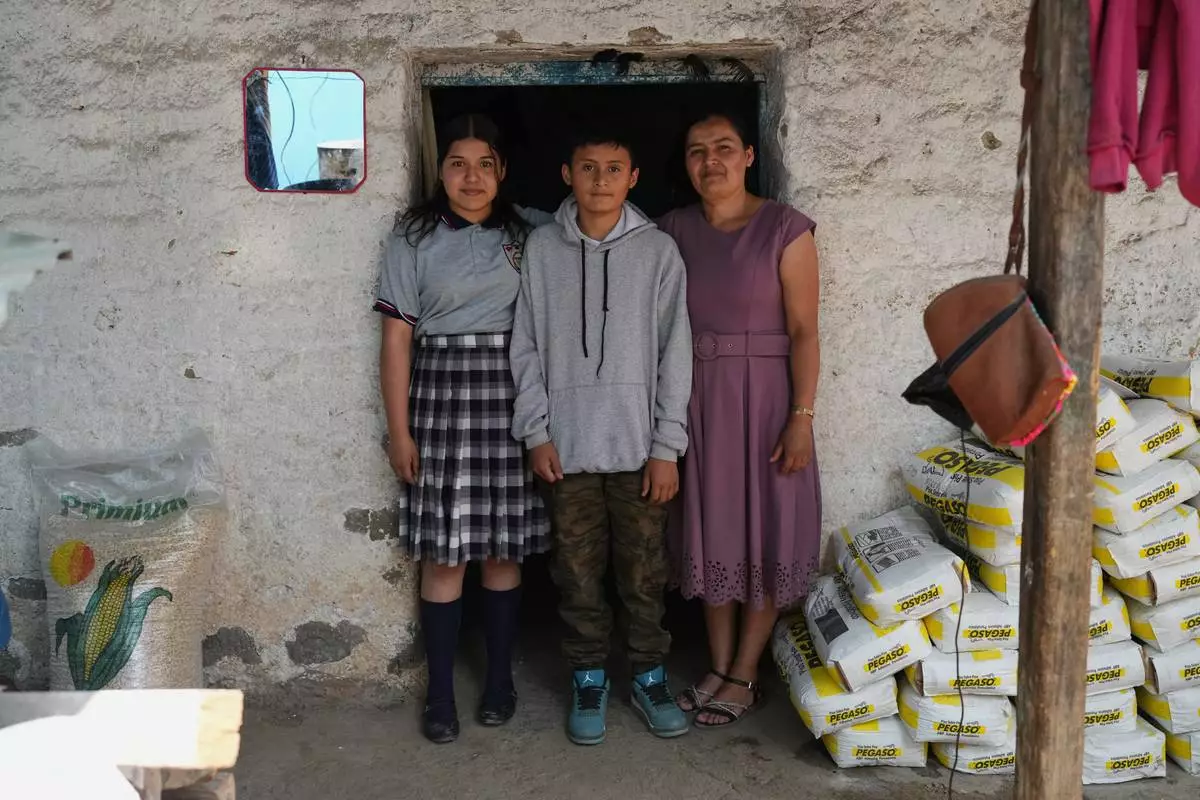
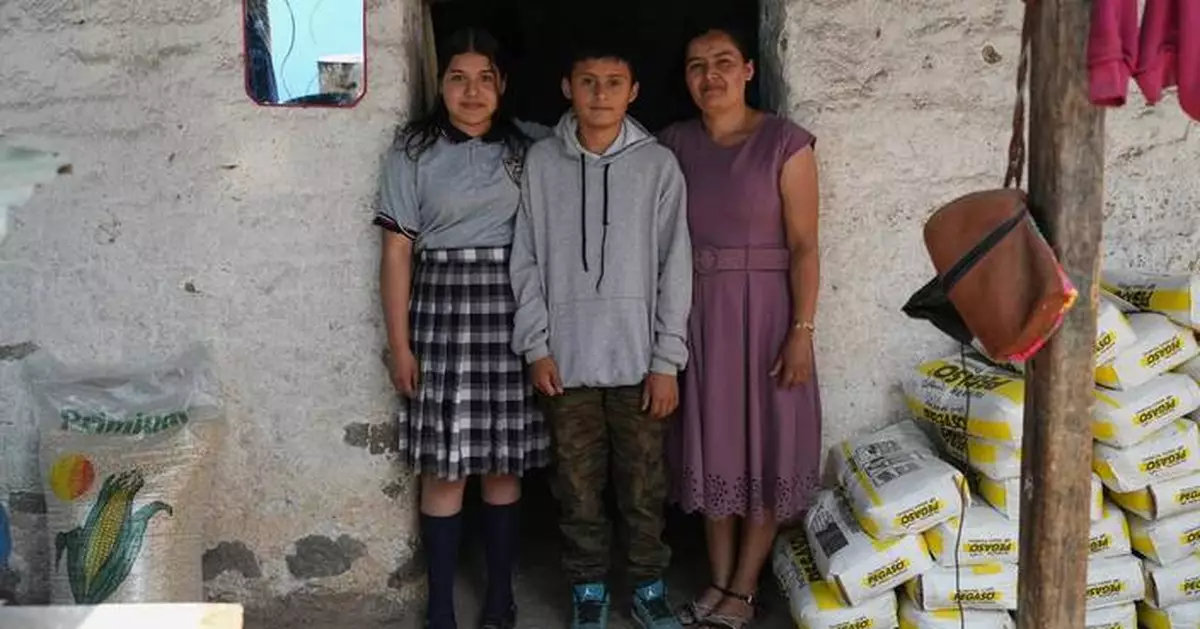
Mirsy Maricela Alva López, right, and her children, Ederson, center, and Briseidy pose for photos at their house in San Martín Cuchumatán, Guatemala, Thursday, April 30, 2026. (AP Photo/Moises Castillo)