Brussels ETO promotes Hong Kong's I&T sector with InvestHK and HKTDC at South Summit
The Hong Kong Economic and Trade Office in Brussels (Brussels ETO), is promoting Hong Kong's innovation and technology (I&T) development at the South Summit, which is being held in Madrid, Spain, from June 3 to 5 (Madrid time). The promotion was done in partnership with Invest Hong Kong (InvestHK) and the Hong Kong Trade Development Council (HKTDC) and under the Economic and Trade Express (ETE)initiative.
As announced by the Chief Executive in the 2025 Policy Address, the new functional platform ETE has been established to enable overseas Economic and Trade Offices, the HKTDC, and InvestHK to enhance their work on trade and investment promotion with greater synergy. One key highlight under the ETE is to provide one-stop support services by these three parties to facilitate business exchanges between Hong Kong and overseas markets.
Speaking at the networking dinner held on June 3, Assistant Representative of Brussels ETO Mr Paul Leung highlighted Hong Kong's achievements and international recognition in I&T development. He noted that Hong Kong ranked fourth globally in the World Digital Competitiveness Ranking 2025. In addition, the Shenzhen-Hong Kong-Guangzhou cluster ranked first in the 2025 Global Innovation Index Ranking of the World's Top 100 Innovation Clusters for the first time.
Supported by various government initiatives to nurture talent and strengthen the I&T ecosystem, as well as the vast opportunities arising from the Guangdong-Hong Kong-Macao Greater Bay Area, Hong Kong has developed into one of Asia's most vibrant start-up hubs, with the number of start-ups increasing significantly over the past 11 years, from around 1 000 in 2014 to over 5 200 in 2025, said Mr Leung.
The South Summit is recognised as one of the world's leading entrepreneurship and innovation platforms for start-ups, investors and institutions to connect. The event brings together more than 20 000 participants from over 130 countries and regions, including more than 7 500 start-ups and 2 100 investors. A Hong Kong booth was set up at the South Summit to provide information on investment and business opportunities in Hong Kong to global attendees.

The Hong Kong Economic and Trade Office in Brussels is promoting Hong Kong's innovation and technology development at the South Summit, which is being held in Madrid, Spain, from June 3 to 5 (Madrid time). The promotion was done in partnership with Invest Hong Kong and the Hong Kong Trade Development Council and under the Economic and Trade Express initiative. Photo shows a Hong Kong booth set up at the South Summit to provide information on investment and business opportunities in Hong Kong to global attendees. Source: HKSAR Government Press Releases
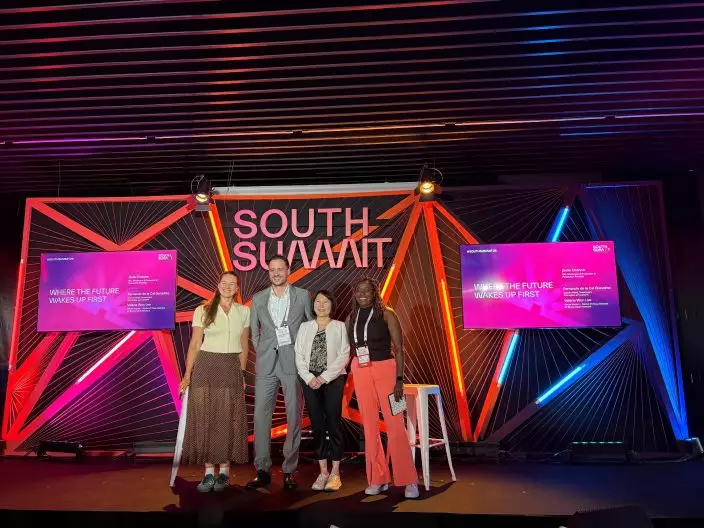
The Hong Kong Economic and Trade Office in Brussels is promoting Hong Kong's innovation and technology development at the South Summit, which is being held in Madrid, Spain, from June 3 to 5 (Madrid time). The promotion was done in partnership with Invest Hong Kong and the Hong Kong Trade Development Council and under the Economic and Trade Express initiative. Photo shows speakers at a panel discussion during which Hong Kong's latest opportunities were presented. Source: HKSAR Government Press Releases
Update on mosquito-borne diseases, dengue fever and chikungunya fever
The Centre for Health Protection (CHP) of the Department of Health today (June 5) announced the latest situation regarding dengue fever (DF) and chikungunya fever (CF). As temperatures rise and humidity increases, creating favourable conditions for mosquito breeding, members of the public are reminded to take appropriate measures to prevent mosquito bites and mosquito breeding, both in Hong Kong and when travelling to areas affected by mosquito-borne diseases, in order to prevent mosquito-borne diseases.
Dengue fever
----------------
From May 29 to yesterday (June 4), the CHP recorded two imported DF cases, including one local DF case announced earlier, and an imported case in which the patient had travelled to Indonesia during the incubation period.
Regarding the local DF case announced earlier, as of noon today, the CHP had assessed over 1 600 residents through a health consultation booth at the Neighbour Care · Buildings Support Center (address: 165 Tai Nan Street, Sham Shui Po), an enquiry hotline, and questionnaire surveys. So far, the CHP has not received any notification of suspected cases epidemiologically linked to that local case. The CHP continues to urge individuals in the vicinity of Ki Lung Street in Sham Shui Po to call the enquiry hotline (tel: 2125 2373, operating from 9am to 6pm) if relevant symptoms develop, and seek medical attention if needed. The CHP and relevant departments’ investigations and follow-up are still ongoing.
Hong Kong has recorded 22 DF cases so far this year, comprising 20 imported cases and two local cases. A total of 59 DF cases were recorded last year (2025), all of which were imported cases. In 2024, 161 DF cases were recorded, comprising 156 imported cases and five local cases.
According to the World Health Organization (WHO), the global incidence of DF has markedly increased over the past two decades, posing a substantial public health challenge. In 2024, the WHO recorded over 14 million cases, which was a record number. From January to July 2025, over 4 million cases and over 3 000 DF-related deaths were reported in 97 countries/territories.
DF is prevalent in many neighbouring tourist destinations. In 2025, Indonesia, India and Vietnam each recorded over 120 000 cases; Malaysia and Thailand each recorded over 50 000 cases; and Singapore recorded over 4 000 cases. Meanwhile, as of May 10, the Guangdong Provincial Center for Disease Control and Prevention had recorded 97 cases in Guangdong Province this year, including eight locally infected cases. Guangdong Province recorded over 3 500 locally infected cases in 2025.
Detailed information on the latest DF situation in Hong Kong, as well as neighbouring and overseas countries and areas, has been uploaded to the CHP'swebsite.
Chikungunya fever
-----------------------
From May 29 to yesterday, no new cases of CF had been recorded. Hong Kong has recorded two confirmed CF cases so far this year, both of which were imported cases. Hong Kong recorded a total of 82 confirmed CF cases last year. Among them, 11 were local cases and the rest were imported cases.
Last year, a total of 502 264 CF cases and 186 CF-related deaths were reported in 41 countries/territories. Cases have been reported in the Americas, Africa, Asia and Europe. Meanwhile, as of May 10, the Guangdong Provincial Center for Disease Control and Prevention had recorded four cases in Guangdong Province this year, including one locally infected case.
Preventive measures to be taken by the public
----------------------------------------------------
According to the Food and Environmental Hygiene Department (FEHD), as compared with last year, the temperature began to climb earlier this year and the rainfall in April and May increased substantially, creating favourable conditions for mosquito growth and breeding. As a result, the rise in gravidtrap indexes occurred earlier this year. Depending on factors like rainfall, the indexes may rise further but the overall trend of gravidtrap indexes this year is similar to those of previous years.
Therefore, the CHP reminds members of the public to maintain good environmental hygiene, and to take appropriate measures to prevent mosquito bites and mosquito breeding, both in Hong Kong and when travelling to areas affected by mosquito-borne diseases, in order to prevent mosquito-borne diseases. Mosquito-borne diseases such as DF and CF are endemic in various countries worldwide. The risk of importation persists. Members of the public should check the situation at their destinations before travelling abroad, especially when travelling to Southeast Asian countries. Additionally, whether travelling or not, members of the public should use DEET-containing insect repellents or other effective active ingredients properly to prevent mosquito bites, but the following precautions should be taken when using them:
 read the label instructions carefully first;
apply right before entering an area with a risk of mosquito bites;
apply on exposed skin and clothing;
use DEET of up to 30 per cent for pregnant women and up to 10 per cent for children (for children who travel to countries or areas where mosquito-borne diseases are endemic or epidemic, and where exposure is likely, those aged 2 months or above can use DEET-containing insect repellents with a DEET concentration of up to 30 per cent);
apply sunscreen first, then insect repellent;
reapply only when needed and follow the instructions; and
in addition to DEET, there are other insect repellents available on the market containing different active ingredients, such as IR3535 and picaridin. When using any insect repellent, the public should follow the usage instructions and precautions on the product label.
read the label instructions carefully first;
apply right before entering an area with a risk of mosquito bites;
apply on exposed skin and clothing;
use DEET of up to 30 per cent for pregnant women and up to 10 per cent for children (for children who travel to countries or areas where mosquito-borne diseases are endemic or epidemic, and where exposure is likely, those aged 2 months or above can use DEET-containing insect repellents with a DEET concentration of up to 30 per cent);
apply sunscreen first, then insect repellent;
reapply only when needed and follow the instructions; and
in addition to DEET, there are other insect repellents available on the market containing different active ingredients, such as IR3535 and picaridin. When using any insect repellent, the public should follow the usage instructions and precautions on the product label.
The FEHD also appeals to members of the public to continue to stay alert and work together to carry out mosquito prevention and control measures early, including inspecting their homes and surroundings to remove potential breeding grounds, changing water in vases and scrubbing their inner surfaces, removing water in saucers under potted plants at least once a week, and properly disposing of containers such as empty cans and lunch boxes. The FEHD also advises members of the public and property management agencies to keep drains free of blockage and level all defective ground surfaces to prevent the accumulation of water. They should also scrub all drains and surface sewers with an alkaline detergent at least once a week to remove any mosquito eggs.
The public should call 1823 in case of mosquito problems, and may visit the following pages for more information: the CF page of theCHPand theTravel Health Service, the latestTravel Health News,tips for using insect repellents, and the CHPFacebook Page,Instagram AccountandYouTube Channel, and also theMosquito Prevention and Control dedicated pageof the FEHD.
Source: AI-found images