Skip to Content Facebook Feature Image

Decades in the making, Deb Haaland's political rise spurs both inspiration and scrutiny

News

Decades in the making, Deb Haaland's political rise spurs both inspiration and scrutiny
News

News

Decades in the making, Deb Haaland's political rise spurs both inspiration and scrutiny

2026-06-05 05:40 Last Updated At:05:50

SAN FELIPE PUEBLO, N.M. (AP) — As the sun peeked over the Sandia Mountains, Deb Haaland was at a familiar spot, the tribal community where she used to work, waving at motorists and encouraging them to stop and vote in New Mexico’s primary.

It was the final day of voting earlier this week, and Haaland was embracing friends and former colleagues at San Felipe Pueblo where she was once a tribal administrator. She talked food, family and handcrafted silver jewelry with Pueblo women who have watched her political ascent with pride and are hoping to see her become the first Native woman to become a governor in the U.S.

More Images
Republican gubernatorial candidate Gregg Hull greets a crowd gathered for an Election Night watch party in Albuquerque, New Mexico, on Tuesday, June 2, 2026. (AP Photo/Susan Montoya Bryan)

Republican gubernatorial candidate Gregg Hull greets a crowd gathered for an Election Night watch party in Albuquerque, New Mexico, on Tuesday, June 2, 2026. (AP Photo/Susan Montoya Bryan)

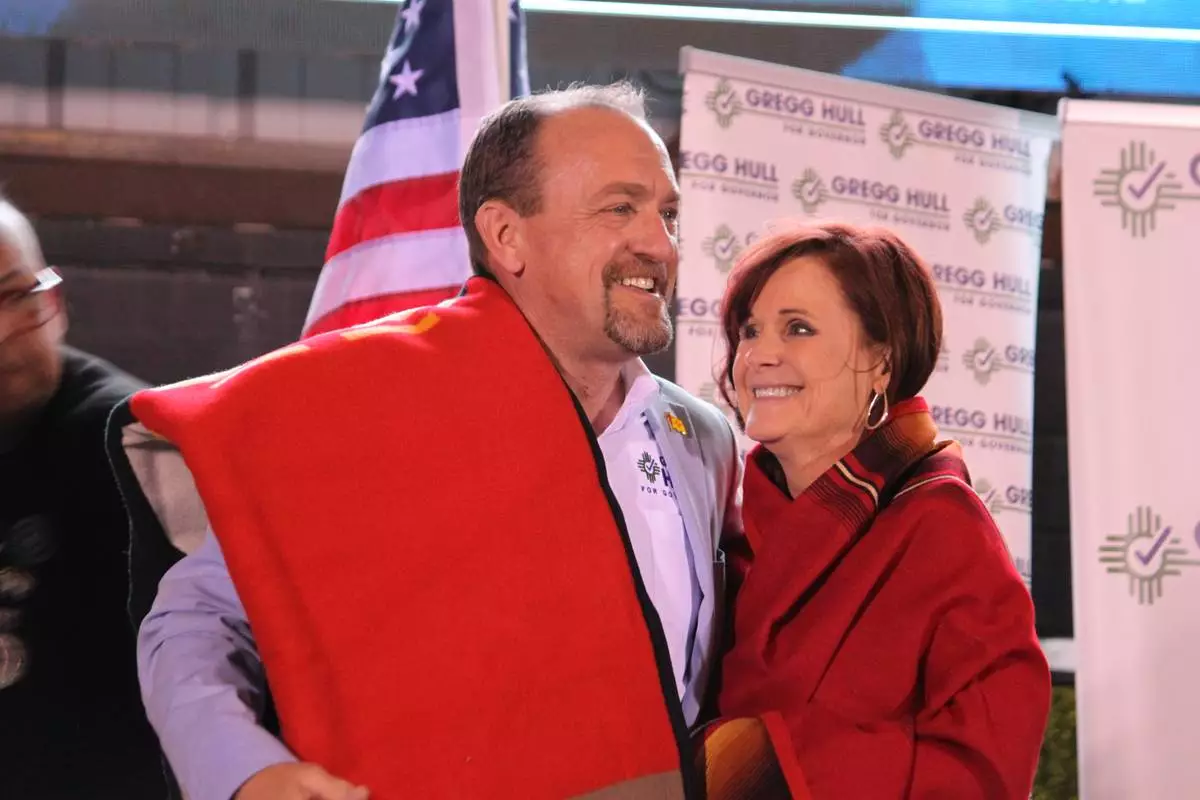
Republican gubernatorial nominee Gregg Hull and his wife Carrie are wrapped in Pendleton blankets gifted to them by Native American supporters during an Election Night watch party in Albuquerque, New Mexico, on Tuesday, June 2, 2026. (AP Photo/Susan Montoya Bryan)

Republican gubernatorial nominee Gregg Hull and his wife Carrie are wrapped in Pendleton blankets gifted to them by Native American supporters during an Election Night watch party in Albuquerque, New Mexico, on Tuesday, June 2, 2026. (AP Photo/Susan Montoya Bryan)

Democratic gubernatorial candidate Deb Haaland walks before speaking at a primary election night watch party after winning the Democratic nomination Tuesday, June 2, 2026, in Albuquerque, New Mexico. (AP Photo/Jon Austria)

Democratic gubernatorial candidate Deb Haaland walks before speaking at a primary election night watch party after winning the Democratic nomination Tuesday, June 2, 2026, in Albuquerque, New Mexico. (AP Photo/Jon Austria)

Former U.S. Interior Secretary Deb Haaland, Democratic gubernatorial candidate, speaks during a news conference in Albuquerque, N.M., Wednesday, June 3, 2026. (AP Photo/Savannah Peters)

Former U.S. Interior Secretary Deb Haaland, Democratic gubernatorial candidate, speaks during a news conference in Albuquerque, N.M., Wednesday, June 3, 2026. (AP Photo/Savannah Peters)

Before the day was over, Haaland, who is a citizen of Laguna Pueblo, secured the Democratic nomination for New Mexico governor. Through her time in Congress and as U.S. Interior secretary, she has broken historical barriers. She's now on the cusp of achieving another milestone, if she can defeat Republican Gregg Hull in November.

The odds are in Haaland's favor, given the state's leftward tilt over the last decade. But Hull, a former three-time mayor, says New Mexico needs a regime shift after years of Democratic rule to tackle longstanding problems such as dismal educational outcomes, high crime and poverty.

The next governor will inherit longstanding challenges and navigate policies rolled out by the Trump administration. Haaland mentioned President Donald Trump immediately in her primary victory speech Tuesday night and has blamed him for making life more expensive for New Mexicans by cutting key federal safety net programs.

In a memoir set for release this month, she said Trump's reelection motivated her to run for governor, a position she sees as the “first line of defense against the worst policies coming out of this administration.”

Hull made no mention of Trump in his speech. He took aim at Haaland's past opposition to the oil and gas industry, which bankrolls everything from education to free childcare in New Mexico, the No. 2 producer of oil in the U.S. behind Texas.

Haaland has said the revenue would factor into her affordability agenda and credited the industry for providing good-paying jobs. A supporter of the Green New Deal that called for shifting the economy away from fossil fuels, Haaland was often grilled during congressional hearings about her views on drilling.

“It’s a choice between an energy policy that’s built on common sense and not one that’s built on ideologies,” Hull said Tuesday night. “New Mexico is an energy state.”

Haaland said the country is long overdue for a female Native governor. Oklahoma is the only state that has elected a tribal citizen as governor and did so twice, in the early 1950s with Democrat Johnston Murray and now with Republican Kevin Stitt.

“I feel so strongly that representation matters,” Haaland said. "I mean, that’s what got me into politics in the first place, is because I wanted more Native people to vote.”

Hull said he respects that Haaland served as one of the first two Native American women in Congress and was the first Native American to be a U.S. Cabinet secretary. But he said Democratic policies have failed New Mexico.

Before a cheering crowd at Hull's election night party, David Bearshield, who is Cheyanne and Arapaho, wrapped Hull and his wife each with a Pendleton blanket in a symbol of support and a reminder that Native people are not politically monolithic.

Some Native voters and tribal governments prefer more conservative candidates, especially when it comes to energy development, Bearshield said. He pointed to an ongoing fight beyond the borders of Chaco Culture National Historical Park, where some Navajos oppose a moratorium on oil and gas drilling that Haaland imposed as Interior secretary.

“It doesn’t have to be like that," Bearshield said. “Those people don’t have to be in poverty.”

Advocacy groups see Haaland’s candidacy as a fresh opportunity to raise the profile of tribes and ensure they’re part of the decision-making process. But Haaland is familiar with both the increased visibility and scrutiny that come with representing often overlooked communities, said Jordan James Harvill with the advocacy group Advance Native Political Leadership.

“The weight on her is the weight to solve 500 years of colonization,” he said. “It's just because there's been so few of us.”

Harvill’s group has been working to change that, building up a presence on county commissions and in statehouses with the recruitment of more than 1,000 Native Americans interested in serving their communities. The group also was part of a coalition that pressed the Biden administration to tap Haaland as Interior secretary.

On primary night, mariachi melodies and hoop dancers set the tone at Albuquerque’s historic Old Town plaza where campaign staff and supporters celebrated a decisive primary victory by “Auntie Deb,” as she's affectionately known in some corners of Indian Country.

When Haaland took the stage in beaded earrings and red cowboy boots to accept the nomination, Ann Chavez Barudin of Santo Domingo Pueblo watched from the crowd. She saw herself, her mother and her daughters reflected in the candidate.

“It’s emotional. It’s powerful,” Chavez Barudin said. “I didn’t think I would ever see this day happen.”

Republican gubernatorial candidate Gregg Hull greets a crowd gathered for an Election Night watch party in Albuquerque, New Mexico, on Tuesday, June 2, 2026. (AP Photo/Susan Montoya Bryan)
Republican gubernatorial candidate Gregg Hull greets a crowd gathered for an Election Night watch party in Albuquerque, New Mexico, on Tuesday, June 2, 2026. (AP Photo/Susan Montoya Bryan)

Republican gubernatorial nominee Gregg Hull and his wife Carrie are wrapped in Pendleton blankets gifted to them by Native American supporters during an Election Night watch party in Albuquerque, New Mexico, on Tuesday, June 2, 2026. (AP Photo/Susan Montoya Bryan)

Republican gubernatorial nominee Gregg Hull and his wife Carrie are wrapped in Pendleton blankets gifted to them by Native American supporters during an Election Night watch party in Albuquerque, New Mexico, on Tuesday, June 2, 2026. (AP Photo/Susan Montoya Bryan)

Democratic gubernatorial candidate Deb Haaland walks before speaking at a primary election night watch party after winning the Democratic nomination Tuesday, June 2, 2026, in Albuquerque, New Mexico. (AP Photo/Jon Austria)

Democratic gubernatorial candidate Deb Haaland walks before speaking at a primary election night watch party after winning the Democratic nomination Tuesday, June 2, 2026, in Albuquerque, New Mexico. (AP Photo/Jon Austria)

Former U.S. Interior Secretary Deb Haaland, Democratic gubernatorial candidate, speaks during a news conference in Albuquerque, N.M., Wednesday, June 3, 2026. (AP Photo/Savannah Peters)

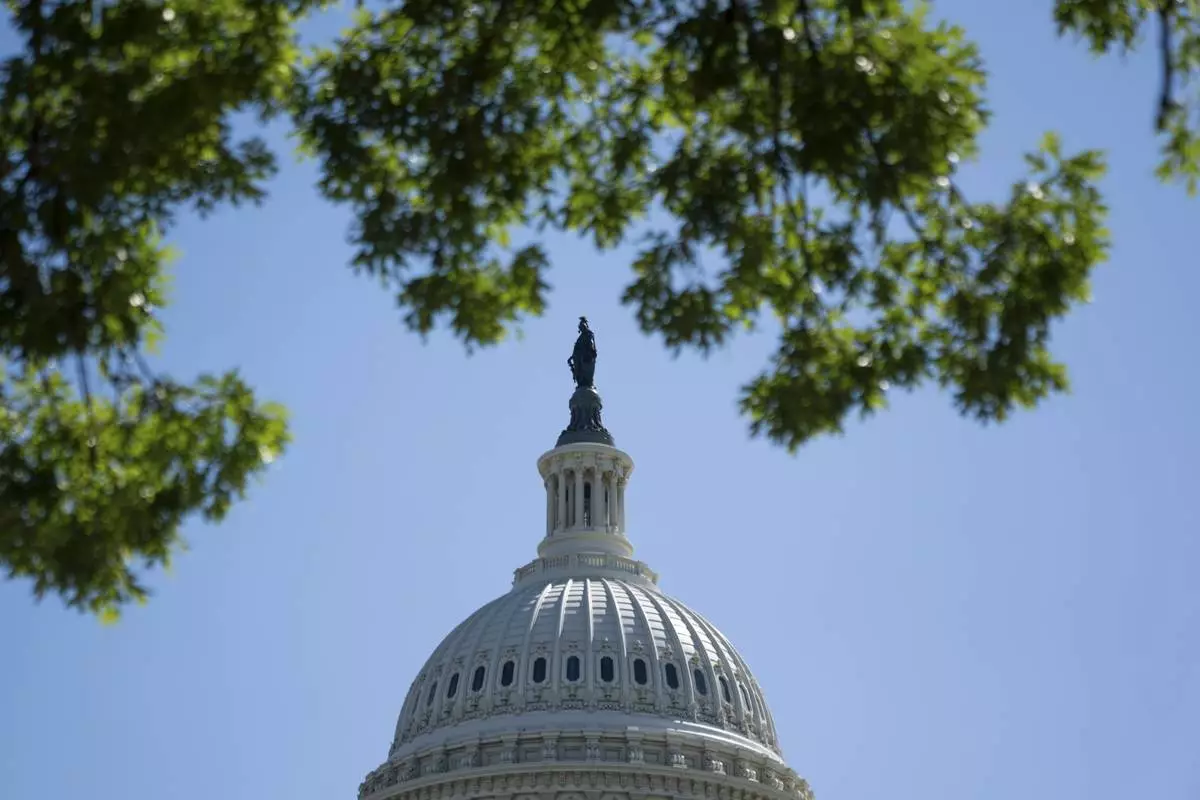
Former U.S. Interior Secretary Deb Haaland, Democratic gubernatorial candidate, speaks during a news conference in Albuquerque, N.M., Wednesday, June 3, 2026. (AP Photo/Savannah Peters)
WASHINGTON (AP) — The House passed legislation Thursday that would aid Ukraine and sanction key segments of the Russian economy, overriding objections from Republican leaders who warned the bill would undermine negotiations designed to achieve a comparable but stronger result.

The legislation, sponsored by Rep. Gregory Meeks, D-N.Y., seeks to cement U.S. assistance for Ukraine by providing more than $1 billion in security and reconstruction aid. It would make another $8 billion available for Ukraine's defense through loans.

The 226-195 vote is a sign of impatience with President Donald Trump's approach to the war and represents the House's second major foreign policy break with Trump this week. The day before, the House, for the first time, approved a war powers resolution aimed at halting U.S. military action against Iran.

Supporters were able to force action on the Ukraine bill by gathering 218 signatures on a discharge petition, a legislative tool that allows a majority of the House to effectively bypass leadership.

Once rarely successful, House members have used the petition tool this Congress to pass bills on releasing the government's files on Jeffrey Epstein and to extend health care subsidies to many of those who get health coverage through the Affordable Care Act, though the latter measure faltered in the Senate.

Meeks said the question before the House was simple. Would it help Ukraine negotiate from a position of strength or help Russia outlast American resolve?

“We all want this war to end,” Meeks said. “The question is how. Will we abandon Ukraine and force it into a terrible deal? That is what Vladimir Putin is counting on. Or will this body live up to the commitments we've made since the start of this war?”

The vast majority of Republicans opposed the measure. Rep. French Hill, the chairman of the House Financial Services Committee, said he is a steadfast supporter of Ukraine. However, the Arkansas Republican said the House was confronted with a flawed, outdated measure that actually calls for less funding for Ukraine security assistance compared to what Congress had agreed to as part of this year's defense policy. Another section could lead to a decrease in defense spending by some NATO members, he warned.

Rep. Brian Mast, the chairman of the House Committee on Foreign Affairs, said he believed the bill was “a cudgel to fight against President Trump.”

“This bill, in my opinion, is an unserious bill that was crafted basically a year-and-a-half ago,” Mast, R-Fla., said.

Rep. Don Bacon, R-Neb., broke with most of his Republican colleagues in voicing support for the measure.

“Are we going to stand with good or are we going to stand with evil? That’s what this is about tonight,” he said.

In the end, 18 Republicans, 207 Democrats and one independent voted for the bill. Democratic Rep. Ilhan Omar joined with 194 Republicans in voting against it.

Supporters are hopeful that the House's passage of the Ukraine bill would put pressure on the Senate to do the same. But they also know the Senate likely won’t go along unless Trump endorses the bill.

“It's probably not going to get 60 votes in the Senate, but it's going to hopefully force the Senate to address the issue," said Rep. Brian Fitzpatrick, R-Pa., who signed the discharge petition and voted for the bill. “It's going to send a great message to the soldiers of Ukraine.”

He said the vote would also send a message to Putin that “we do have a pulse here, that we do care about Ukraine and that we are going to utilize our authority to help them.”

As the war has dragged on, it's gotten more difficult for supporters of Ukraine in Congress to provide additional financial support to help Ukraine defend itself.

The U.S. has approved some $195 billion for the Ukraine response, according to the latest quarterly inspector general report for Operation Atlantic Resolve, with roughly a quarter of that going to replenish weapons stockpiles for the U.S. military. The last major legislation designed to bolster the Ukraine response occurred in April 2024, though modest amounts have since been included in annual appropriations bills.

Republican leaders urged their members to oppose the legislation. House Majority Leader Steve Scalise, R-La., said there are good-faith negotiations between members of Congress and the White House to boost Ukraine. He described the negotiations as complicated.

“I think they are going to yield positive results, but you set that back if you pass legislation that doesn't go as far as the negotiations are going,” Scalise said.

The war that followed Russia’s full-scale invasion of its neighbor is more than four years old, with no end in sight. In recent days, both sides have sought an edge by launching long-range missile strikes.

U.S.-led peace efforts have fizzled out as the sides made no progress on key differences and after the war in Iran grabbed Washington’s attention. Ukrainian President Volodymyr Zelenskyy accepted an unconditional ceasefire demanded by Trump, but Putin refused.

Action in the Senate on Ukraine has revolved around a bill that would impose sweeping tariffs and secondary sanctions on countries that purchase Russia’s oil, gas, uranium and other exports, which are crucial to financing Russia’s military. But the bill has languished.

Associated Press congressional correspondent Lisa Mascaro contributed to this report.

The U.S. Capitol, Wednesday, June 3, 2026, in Washington. (AP Photo/Allison Robbert)

The U.S. Capitol, Wednesday, June 3, 2026, in Washington. (AP Photo/Allison Robbert)

Recommended Articles