SEOUL, South Korea--(BUSINESS WIRE)--Jun 4, 2026--
South Korea’s Ministry of SMEs and Startups (MSS) has opened applications for the K-Startup Grand Challenge (KSGC), the country’s premier government-backed acceleration program for international startups targeting Korea and Asia. Since 2016, KSGC has attracted 21,537 applicants from more than 100 countries, among the world's most recognized inbound programs.
This press release features multimedia. View the full release here: https://www.businesswire.com/news/home/20260604794426/en/
A Full-Cycle Acceleration Journey
Unlike conventional programs that focus on a single moment of market entry, KSGC 2026 guides startups from market entry to scale up in Korea - offered in a hybrid format - online or in person - with Demo Day held in Korea. The program runs July 2026 to April 2027 across three phases:
Korea: Your Gateway to Asia
KSGC connects startups with Proof-of-Concept (PoC) projects and partnership opportunities across 20+ leading Korean conglomerates. Participants also receive investor & funding access, a Demo Day stage at COMEUP 2026, Korea’s flagship startup festival.
Who Should Apply
Open to non-Korean-founded startups under seven years old (ten for deep-tech) in sectors including AI, biotech, fintech, smart manufacturing, mobility, and energy.
What the program includes:
How to Apply
Applications close June 17, 2026, 15:00 KST
Apply at https://ksgc.global or contact apply@ksgc.global
About KSGC
The K-Startup Grand Challenge is funded by the Ministry of SMEs and Startups (MSS), managed by the Korea Institute of Startup and Entrepreneurship Development (KISED), and operated by the Gyeonggi Center for Creative Economy & Innovation (GCCEI). Since 2016, it has helped global startups enter and scale across Korea and Asia.

South Korea’s Ministry of SMEs and Startups (MSS) has opened applications for K-Startup Grand Challenge 2026, a government-backed global startup acceleration program providing end-to-end support for international startups (Image: KSGC)
WASHINGTON (AP) — Senate Republicans beat back several amendments Thursday as they worked to pass legislation to fund President Donald Trump’s immigration enforcement agencies, turning aside a Democratic effort to permanently block Trump from creating a $1.776 billion settlement fund to allies who claim they were persecuted by the government.
But Republicans still faced a gauntlet of amendments before the bill could advance, a test of party unity that could go late into the night. The biggest threat to the bill could be another amendment to ban the settlement fund — this time from Republican Sen. Bill Cassidy of Louisiana, who lost reelection last month after Trump endorsed his primary opponent.
“I feel optimistic that we’ll get there in the end," Senate Majority Leader John Thune, R-S.D., said Thursday evening, while acknowledging he was not sure how the votes would turn out.
Thune has been pushing GOP senators for weeks to keep the bill focused on the funding for Immigration and Customs Enforcement and Border Patrol, which Democrats have blocked since early this year, and to avoid adding new provisions that could complicate its passage.
If an amendment limiting the settlement were to pass, Thune said, it would be “problematic” when they send the bill to the House. It could also mean a White House veto of the immigration spending bill, which has otherwise unified Trump and Republicans.
The last time the Senate abruptly changed a Homeland Security funding package, in March, the House simply refused to accept it and left town.
Still, the judgment fund, which was part of a settlement that resolves Trump’s lawsuit against the IRS over the leak of his tax returns, has angered many Republican senators.
Acting Attorney General Todd Blanche said this week that the fund would not move forward. But Trump, who has been at odds with Senate Republicans in recent weeks, raised new doubts about the settlement’s future Wednesday afternoon — just after the Senate had voted to start debate on the immigration bill — when he told reporters that the settlement is “very important” and said “I don’t know” whether it is dead or on hold.
“I’d have to ask the lawyers,” he said.
The Democratic effort to ban the fund, the first vote of the day, was held open for around three hours as Cassidy, John Husted of Ohio and Dan Sullivan of Alaska withheld their votes. In the end, Cassidy voted against the Democratic motion and the two other GOP senators — both of whom are up for reelection this year — voted for it.
Senators defeated a second amendment from Republican Sen. Thom Tillis of North Carolina that would also ban the settlement fund but would move the money to a separate anti-fraud fund at the Department of Justice. Most Democrats voted against the amendment, guaranteeing its defeat, but more than 10 Republicans supported it.
Tillis said the settlement fund, some of which could potentially go to Trump supporters who beat police and attacked the Capitol on Jan. 6, 2021, is a political liability for the party.
“If Blanche says this is largely inoperative, why not use this moment to codify that?” Tillis said. “Otherwise, you’re exposing every one of our members who are in cycle to having to deal with this between today and Election Day, and that makes no sense for something that the DOJ says they’re not moving forward with."
It was unclear how Republicans would vote on additional amendments.
Cassidy, who had been in discussions all day with the Senate parliamentarian, said he still planned to offer an amendment to ban payouts from the settlement. He told reporters he may also offer an amendment to block a separate part of the settlement that would grant Trump and his family immunity from IRS audits.
Several Republican senators said they supported the idea but would have to see the final language before they decide. Sen. John Cornyn, who also lost reelection last month after Trump endorsed his opponent, said he agrees with the “thrust of it” but would wait to see the amendment. Republican Sen. John Curtis said the same.
Thune said it wasn't yet certain whether the final bill could pass without some sort of prohibition on the settlement.
“We’re going to find out soon enough,” he said Thursday evening.
Democrats planned other votes through the night, including on Trump's tariffs, his war with Iran and his immigration enforcement campaign.
“Amendment after amendment, vote after vote, Republicans are going to have to answer to the American people,” Senate Democratic leader Chuck Schumer said.
Passage of the roughly $70 billion bill to fund U.S. Immigration and Customs Enforcement and the Border Patrol would end the blockade by Democrats who demanded policy changes after the fatal shootings of two protesters by federal agents in January. The bill would fund the agencies for three years, through the end of Trump’s term.
Senate Republicans are using a complicated procedural maneuver to get around the filibuster and pass the budget legislation with no Democratic votes. But it has taken weeks to get the bill to the Senate floor as Republicans navigated various obstacles to passage created by Trump and the White House — including a $1 billion proposal for White House security that they eventually scrapped and the fierce bipartisan backlash to the settlement fund.
Democrats say any funding bill for the Homeland Security Department should place restraints on federal immigration authorities, including better identification for federal officers and more use of judicial warrants, among other asks.
After federal agents shot Renee Good and Alex Pretti in Minneapolis, Trump agreed to a Democratic request that the Homeland Security bill be separated from a larger spending measure that became law. But bipartisan negotiations went nowhere, and the department funding lapsed in mid-February with no agreement on changes to the Trump administration’s immigration enforcement tactics.
Congress eventually funded the rest of the Homeland Security Department at the end of April with Democratic support. But ICE and Border Patrol remained without regular funding, and Republicans launched a new effort to pass three years of funding for those agencies with no Democratic votes.

Sen. Ron Wyden, D-Ore., walks to the chamber during votes on the immigration enforcement funding package, at the Capitol in Washington, Thursday, June 4, 2026. (AP Photo/J. Scott Applewhite)

Senate Majority Leader John Thune, R-S.D., walks to the chamber from his office at the Capitol in Washington, Thursday, June 4, 2026. (AP Photo/J. Scott Applewhite)
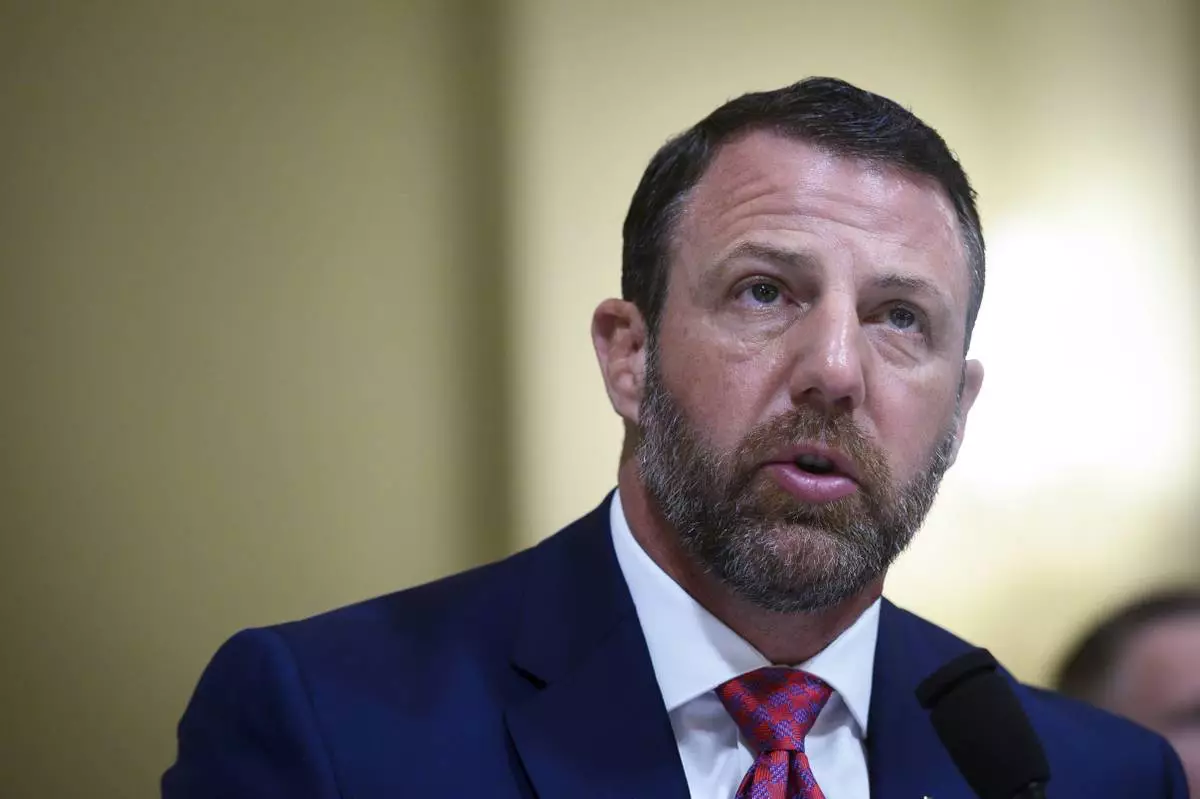
Homeland Security Secretary Markwayne Mullin testifies before the House Committee on Homeland Security during a hearing on the Fiscal 2027 budget request for the Department of Homeland Security, in Washington, Wednesday, June 3, 2026. (AP Photo/Cliff Owen)
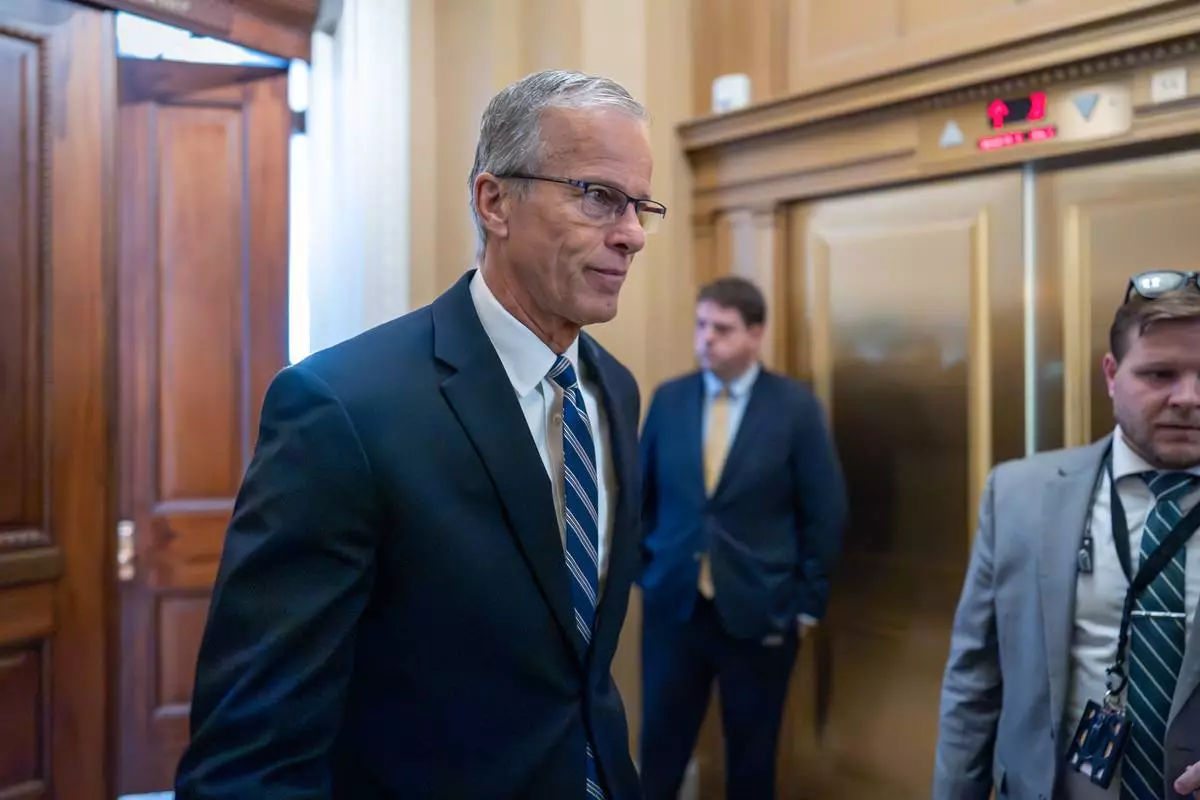
Senate Majority Leader John Thune, R-S.D., heads to the chamber before votes on the immigration enforcement funding package, at the Capitol in Washington, Thursday, June 4, 2026. (AP Photo/J. Scott Applewhite)
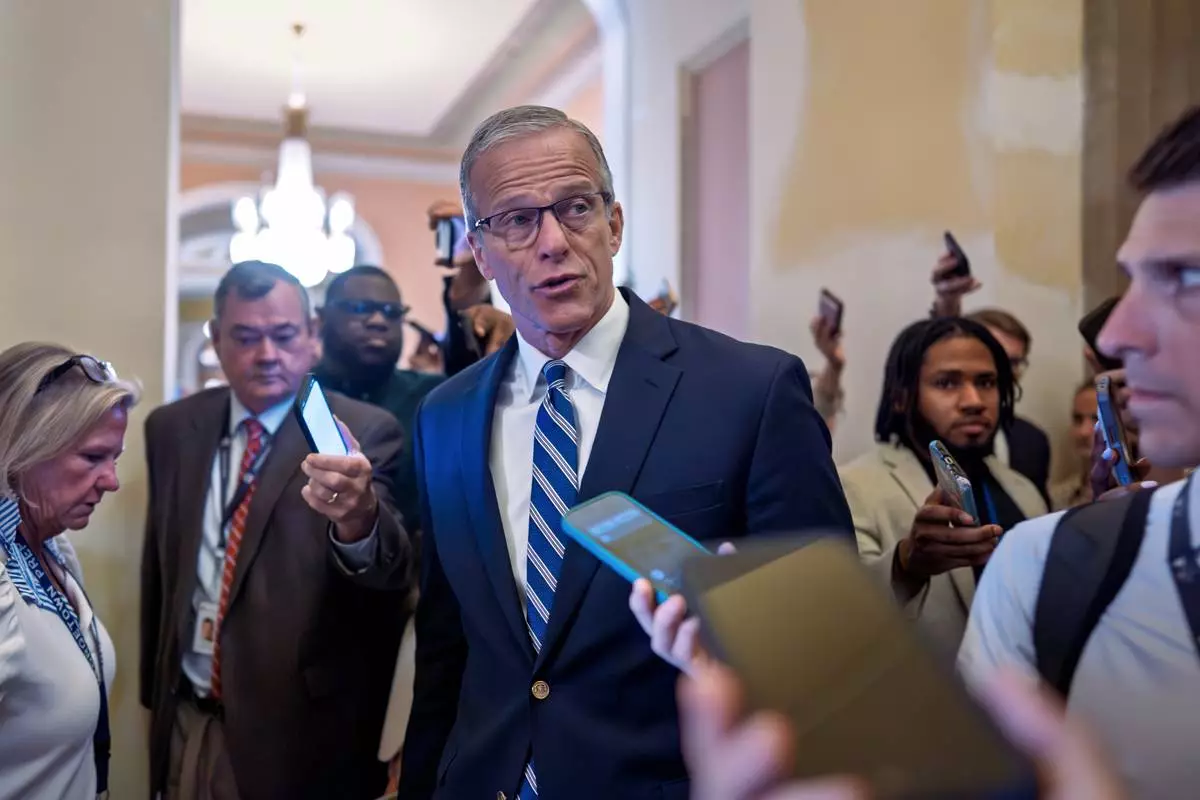
Senate Majority Leader John Thune, R-S.D., pauses for questions from reporters before votes on the immigration enforcement funding package, at the Capitol in Washington, Thursday, June 4, 2026. (AP Photo/J. Scott Applewhite)
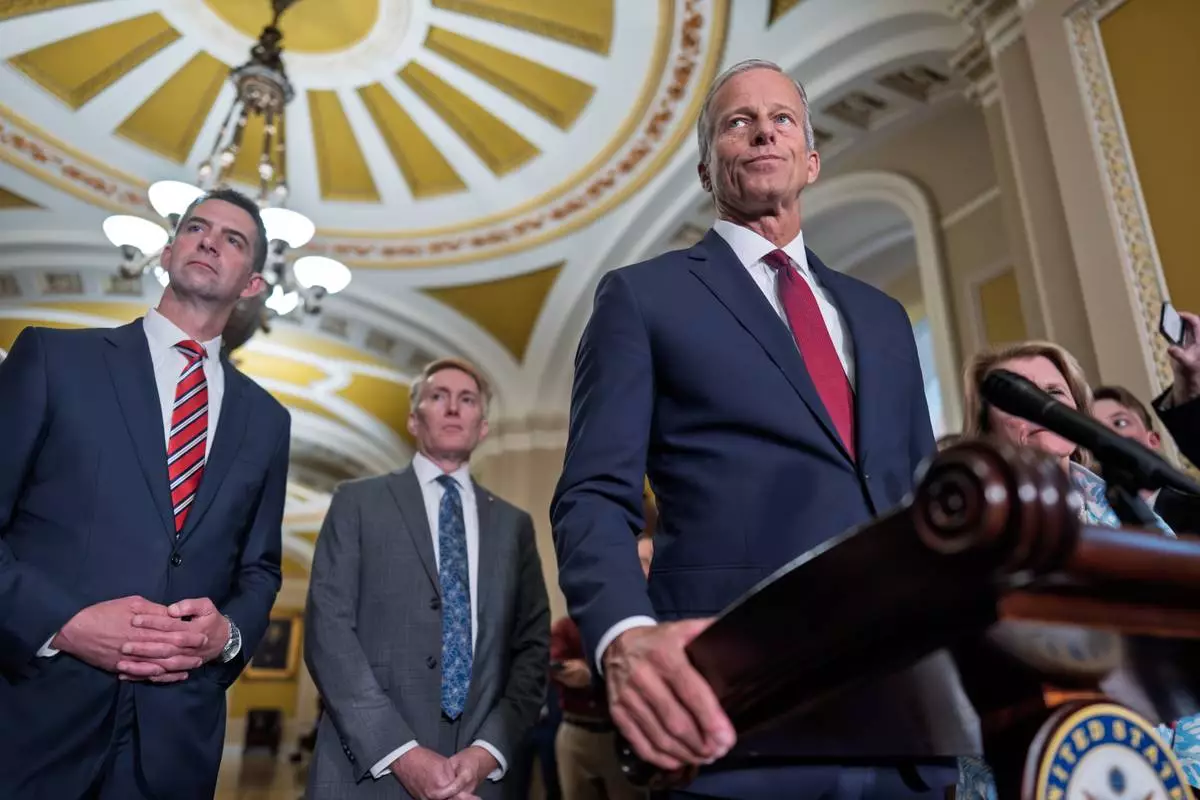
Senate Majority Leader John Thune, R-S.D., joined from left by Sen. Josh Hawley, R-Mo., and Sen. James Lankford, R-Okla., speaks to reporters after a closed-door meeting with fellow Republicans, at the Capitol in Washington, Tuesday, June 2, 2026. (AP Photo/J. Scott Applewhite)