SINGAPORE--(BUSINESS WIRE)--Jun 4, 2026--
Global technology corporation FPT and ComfortDelGro (CDG), a leading multi-modal transport operator, have signed a Memorandum of Understanding to explore collaboration in artificial intelligence, smart mobility, and logistics and transport, with a shared focus on advancing AI-powered operations and next-generation mobility solutions across the APAC region.
This press release features multimedia. View the full release here: https://www.businesswire.com/news/home/20260604694626/en/
Under the agreement, both companies will explore opportunities in a broad range of strategic areas, including AI and digital innovation, logistics and transport solutions, market expansion, and research and talent development. The partnership is expected to support more adaptive, efficient, and scalable mobility solutions for CDG’s business priorities and growth markets.
Bringing together FPT’s technology expertise and delivery capabilities with CDG’s established strengths in multi-modal transport and mobility services, the partnership will focus on AI-enabled applications in fleet and transport management, predictive maintenance, intelligent asset monitoring, demand forecasting, smart transport systems, connected mobility, digital commuter services, and logistics optimization, with the aim of improving operational efficiency, elevating service quality, and driving innovation throughout the mobility and transport ecosystem.
To support these objectives, FPT and CDG plan to advance pilot initiatives, collaborative research, joint innovation workshops, and knowledge-sharing activities with public and private sector stakeholders, helping foster stronger regional connectivity and more innovation-driven mobility ecosystems across the region.
“Urban mobility and logistics are entering a new phase where AI, automation, and digital platforms will increasingly shape customer experience and long-term growth. Backed by our full-stack AI capabilities, FPT aims to work with CDG on developing practical solutions that improve operational performance, support smarter mobility services, and unlock new growth opportunities across Singapore and the wider APAC region,” said David Nguyen, CEO of FPT Asia Pacific, FPT Corporation.
Since entering Singapore in 2007, FPT has expanded across key APAC markets and established itself as a trusted digital transformation partner to more than 500 leading enterprises in sectors such as aviation, logistics, healthcare, and BFSI. With strong capabilities in AI, cloud, data, automation, legacy modernization, and managed services, the company helps organizations improve operational performance and unlock greater business value. This is enabled by FPT’s AI-first strategy, the FleziPT platform, a global workforce of more than 30,000 AI-augmented engineers, AI Factories in Vietnam and Japan, and partnerships with leading global AI innovators. Through this foundation, FPT continues to position AI as a core driver of competitiveness for both the company and its clients.
About FPT
FPT Corporation (FPT) is a globally leading Vietnam-headquartered technology and IT services provider, with operations spanning more than 30 countries and territories. Over more than three decades, FPT has consistently delivered impactful solutions to millions of individuals and tens of thousands of organizations worldwide. With a strong focus on mastering strategic technologies, FPT continues to drive innovation across industries. As an AI-first company, FPT is committed to elevating Vietnam’s position on the global tech map and delivering world-class AI-enabled solutions for global enterprises. In 2025, FPT reported a total revenue of USD 2.66 billion and a workforce of over 54,000 employees across its core businesses.
For more information about FPT's global IT services, please visit https://fptsoftware.com.

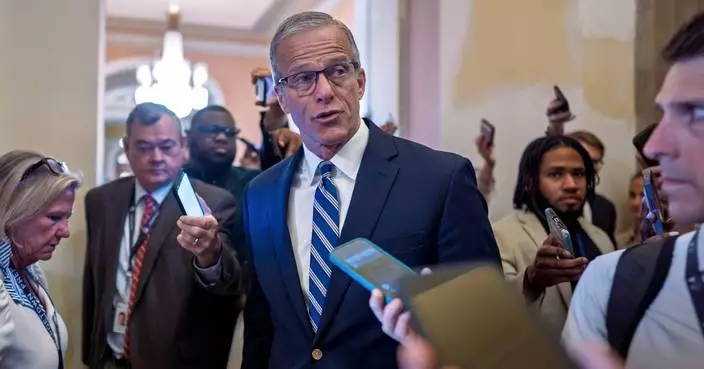
The MOU exchange ceremony took place in Singapore during the official visit by the General Secretary of the Communist Party of Viet Nam and State President H.E. To Lam
BARCELONA, Spain (AP) — Pope Leo XIV is delving into the hotly contested issue of migration by visiting two flashpoints — Spain’s Canary Islands in the Atlantic next week, and Italy’s Lampedusa island in the Mediterranean in early July.
These rocky, remote outposts of Europe have struggled with the arrival of tens of thousands of mostly African migrants through some of the world's deadliest migration routes. Even as numbers decreased this year, especially in the Canaries, the issue continues to roil politics in these historically Catholic countries.
Many Catholics and migrants hope the upcoming papal trips will refocus attention on solidarity and support — and away from divisive political debate that is splitting the right in addition to pitting it against the left.
“Stuck in the middle are the migrants,” said the Most Rev. José Mazuelos, the bishop of Canarias, whose diocese includes several of the islands. “So the church says, ‘Let’s give them a face, because we’re talking about people, not numbers.’"
Among them is Eslim Jallow, 27. Dreaming of a more prosperous future, Jallow and his younger brother left Gambia and landed in the Canary Islands in 2023. At first, Jallow struggled to adapt, but he quickly learned Spanish, took courses and now earns a living as a programmer and web developer in Las Palmas de Gran Canaria.
“Perhaps the pope will change the way in which people here look at immigrants,” Jallow said. “Immigrants should be treated with dignity and respect, not ignored.”
Like most migrants arriving in the islands, he isn’t Catholic. But he feels that Leo “speaks for us, he reminds the world we are also human beings.”
Advocating for migrants globally was a priority for Pope Francis. He went to Lampedusa in 2013 on his first pastoral visit outside Rome and, three years later on the Greek island of Lesbos, he brought back with him a dozen Syrian Muslim refugees.
Under Leo, the Catholic Church has continued to call for their humane treatment around the world, including decrying mass deportations in his home country, the United States.
“Pope Leo is signaling how important immigration is to him by doing these two trips early in his papacy,” said Michele Pistone, a Villanova University professor who leads its new center on immigration.
In the Canaries, Leo is expected at the port of Arguineguín, on the island of Gran Canaria, on June 11 to pay homage to thousands of migrants who died or disappeared en route. The next day, he will meet migrants at a camp on the island of Tenerife.
The archipelago has been the epicenter of a humanitarian crisis that in 2024 saw the arrival of nearly 47,000 migrants from North and West Africa, including several thousand unaccompanied minors.
Like Jallow, half of them landed in El Hierro island — nearly triple its population, said the Most Rev. Eloy Santiago, bishop of Tenerife, whose diocese includes that smaller island. Its resources were strained to a breaking point, even though most migrants only stayed a few days.
“If a boat arrives, the couple of local doctors have to go out running to take care of them, and then the local residents who had their medical appointments can’t have them,” Santiago said.
Catholic organizations are among those that aid migrants from the moment they step out of rickety, overcrowded boats.
Arrivals have slowed dramatically this year, in part due to stricter controls along the African coast. But the most challenging task remains — how to help those who arrived as minors, were entrusted to state care, and are thrown out into the streets when they turn 18, often with no job prospects and no support.
Caya Suárez, secretary-general for the Catholic charity Caritas in the Canaries, has seen firsthand how migrants coming of age on the islands are the most vulnerable.
“That’s a very bad moment, even though they’d been waiting for it with hope, because they see they are still stuck without alternatives,” she said.
Caritas tries to help the young adults find housing and jobs, she added. It’s also relocated a few young migrants to Madrid, a small village in the largely rural region of Galicia, and elsewhere on the mainland, with the help of parishes there even as the governments of other Spanish regions have been reluctant to take on underage migrants.
Many residents in the Canaries feel like they’ve been abandoned to cope with an unsolvable problem — how to stretch even farther resources for migrants who thought they’d be within reach of economic prosperity and free to travel across the European Union, and instead end up on the street, struggling to send remittances home but also to leave.
Compounded with the perception that national and European political institutions tend to see it as an exclusively “island problem,” the situation is generating a growing malaise even among generous islanders who have long been accustomed to migration to and from Latin America, the Canaries’ bishops said.
“The pope’s word can help so that in the middle of this fatigue, people can buck up again because they see they are supported,” said Santiago, who was born and ordained a priest on the islands.
At the national level, Spain’s Catholic Church also backed a new measure giving temporary residency permits to potentially more than half a million foreigners in the country illegally, many from Latin America.
They often work in hospitality, agriculture and eldercare, boosting the economy, according to the socialist government of Prime Minister Pedro Sánchez — and to the church.
“In the matter of immigration, the church’s position gets into a head-on collision with the position of the right,” said Pablo Simón, a political science professor at University Carlos III in Madrid.
That has created a rift between the church and far-right parties, like Vox in Spain, which has criticized the church on immigration, despite often couching its anti-migrant rhetoric in religious terms.
Days before she is expected to meet Leo, Isabel Díaz Ayuso, the firebrand Popular Party conservative regional leader of Madrid, described the migrant legalization push as “importing mass poverty.”
The Rev. Fernando Redondo, who leads the migration department of the Spanish bishops’ conference, said the church’s stance is in line with the Christian mandate to welcome the stranger. But he added it needs better understanding among the many faithful who believe migrants come to steal jobs or live off welfare.
“We have a big challenge, which is raising awareness among our faithful … that from the viewpoint of faith, to welcome a migrant person is to welcome Christ himself,” Redondo said. “Then, of course, there needs to be ways, proper social and political ways, so that migration doesn’t become a total mess.”
In the Canaries, ordinary people have been on the front lines of that often life-endangering chaos — fishermen who hand out drinking water to migrants on ramshackle rafts, sunbathers who run into the sea to help landing migrants, the volunteers who greet them in more than a dozen languages.
But they have also seen that integration can work, as in a small mountain village that was emptying out until a center for three dozen migrant children was opened, creating jobs and filling up the school — and the local church’s annual feast day procession.
That’s why many look forward to Leo bringing a simple but crucial message of reconciliation that focuses on the people impacted, not on the politics.
“The pope doesn’t support this slogan of ‘let’s go, open doors for the whole world here.’ Nobody supports that,” Mazuelos said. “When here comes a gentleman in a wooden boat after five days in the Atlantic, what are we supposed to do, kick him back? We’ve got to find a way to welcome him.”
Dell'Orto reported from Minneapolis.
Associated Press religion coverage receives support through the AP’s collaboration with The Conversation US, with funding from Lilly Endowment Inc. The AP is solely responsible for this content.
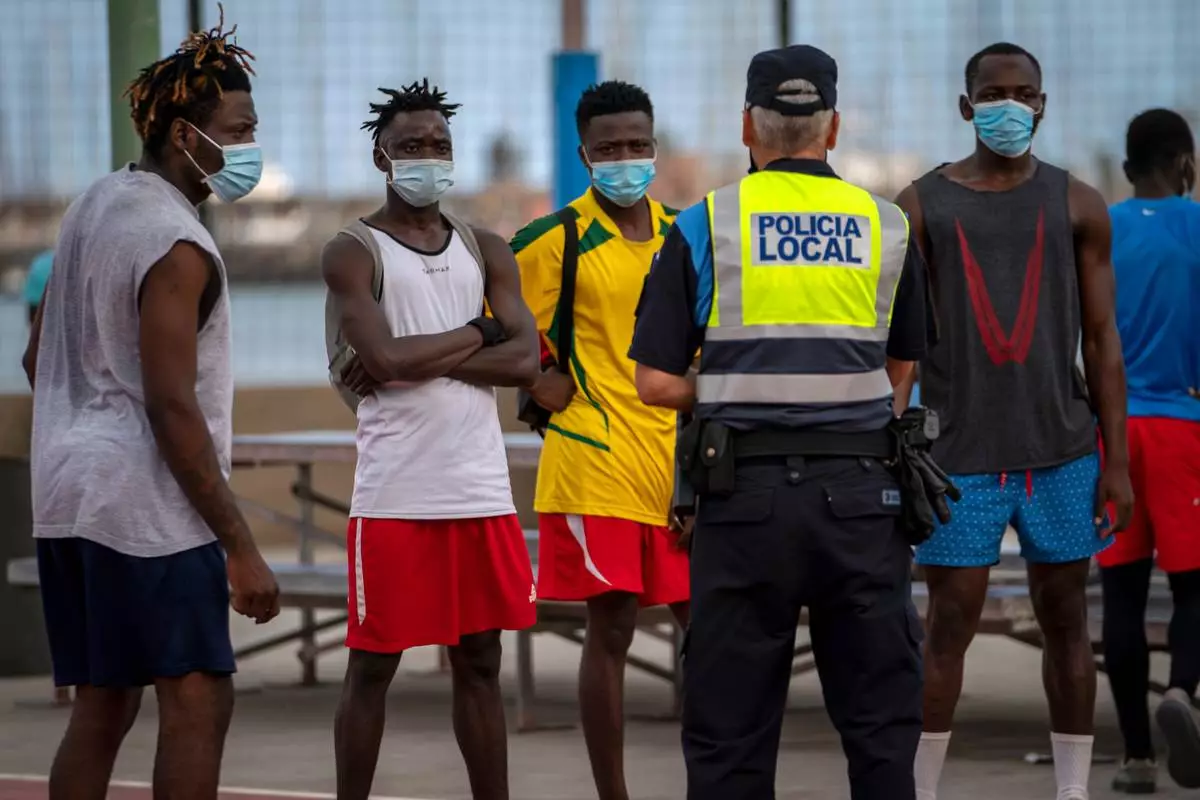
FILE - A police officer speaks with migrants and asylum-seekers in Gran Canaria island, Spain, Tuesday, Aug. 18, 2020. (AP Photo/Emilio Morenatti, File)
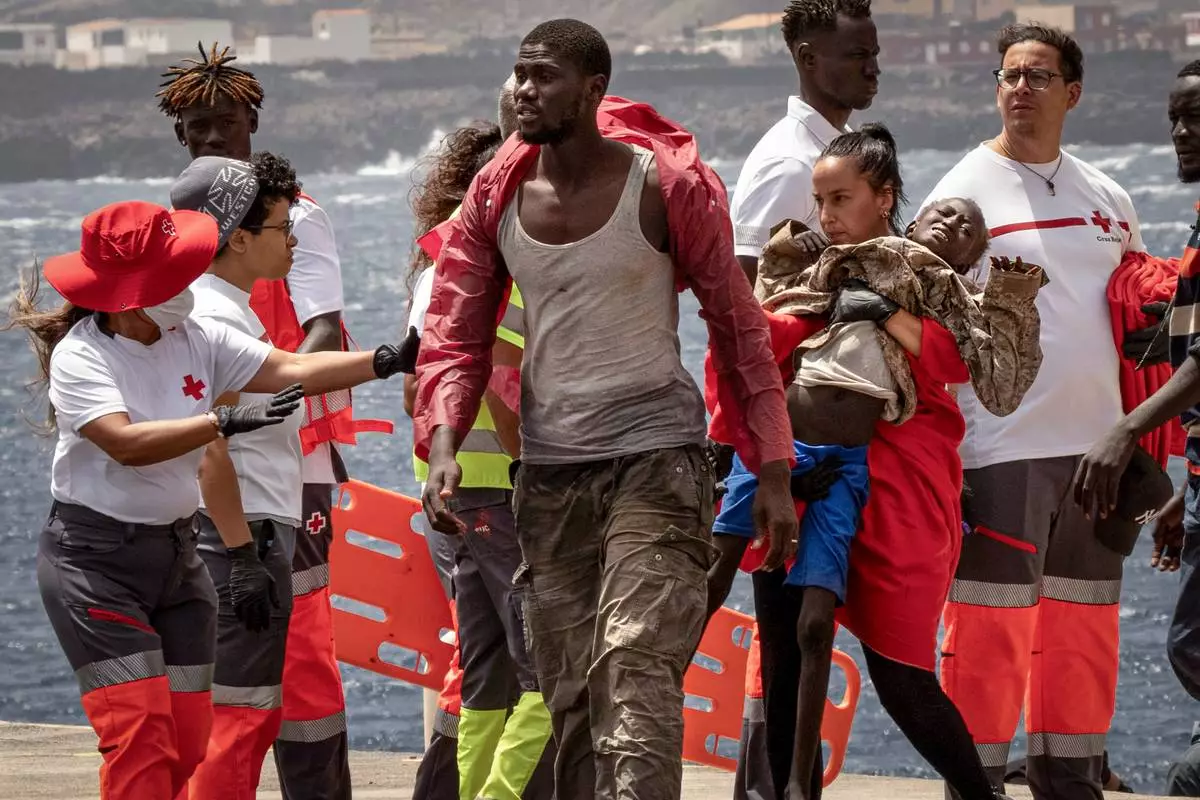
FILE - Migrants disembark at the port of "La Estaca" in Valverde on the Canary island of El Hierro, Spain, Aug. 26, 2024. Emergency services said the migrants arrived by boat after a 13-day voyage from Senegal. (AP Photo/Maria Ximena, File)
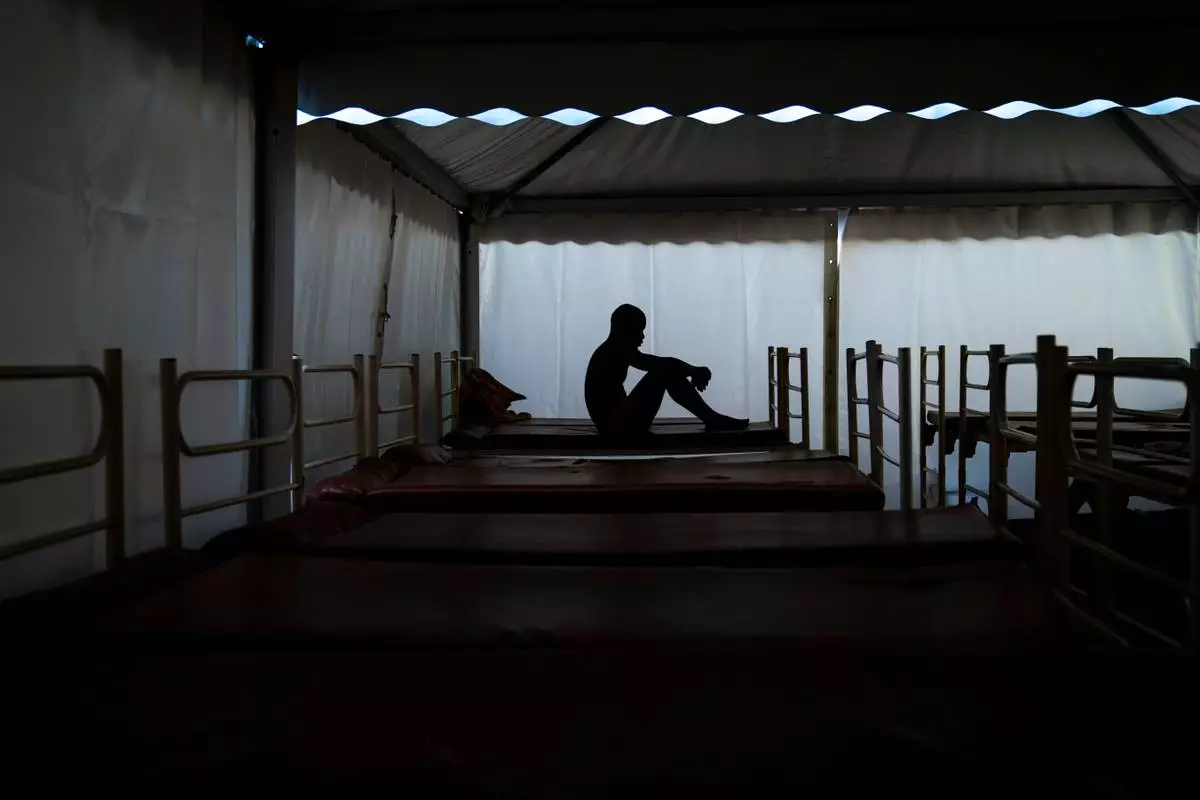
FILE - Mamadou Patherazi, from Guinea, sits on a bench at the Modern Christian Mission church in Fuerteventura, Canary Islands, Spain, on Aug. 22, 2020. (AP Photo/Emilio Morenatti, File)
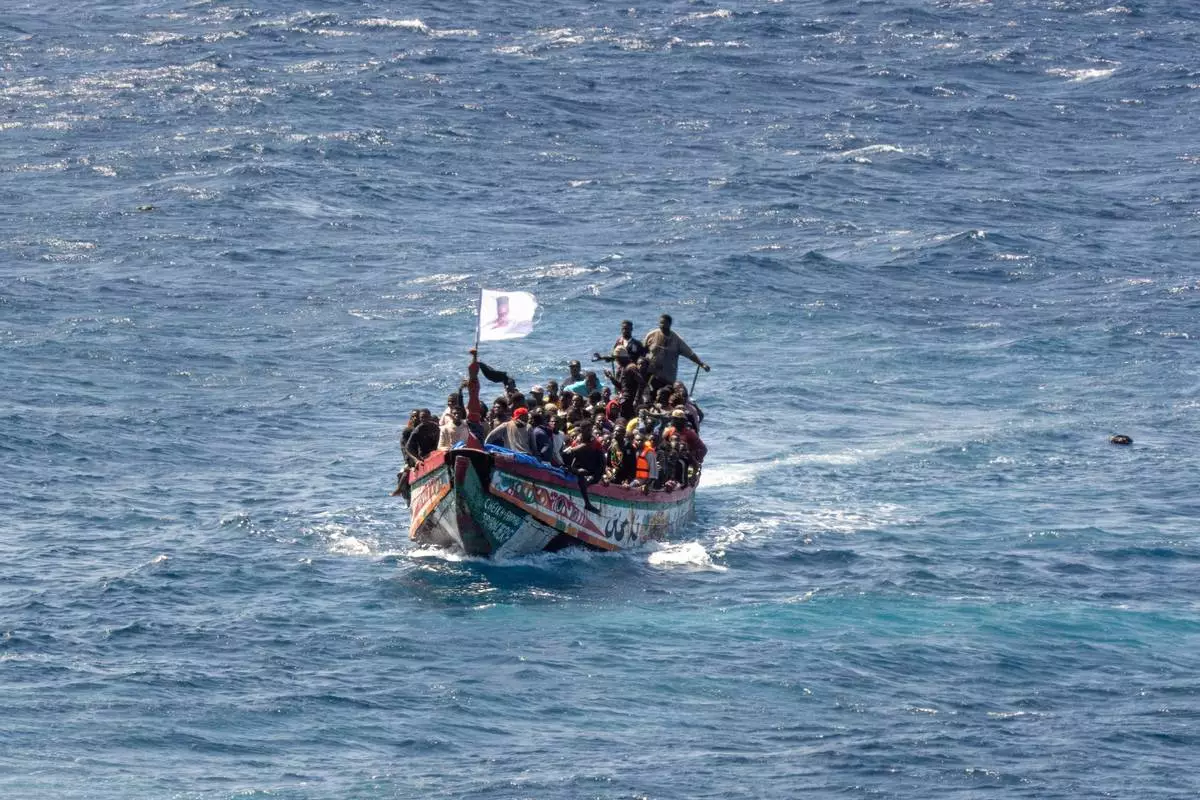
FILE - Migrants crowd a wooden boat as they sail to the port in La Restinga on the Canary island of El Hierro, Spain, Sunday, Aug. 18, 2024. (AP Photo/Maria Ximena, File)
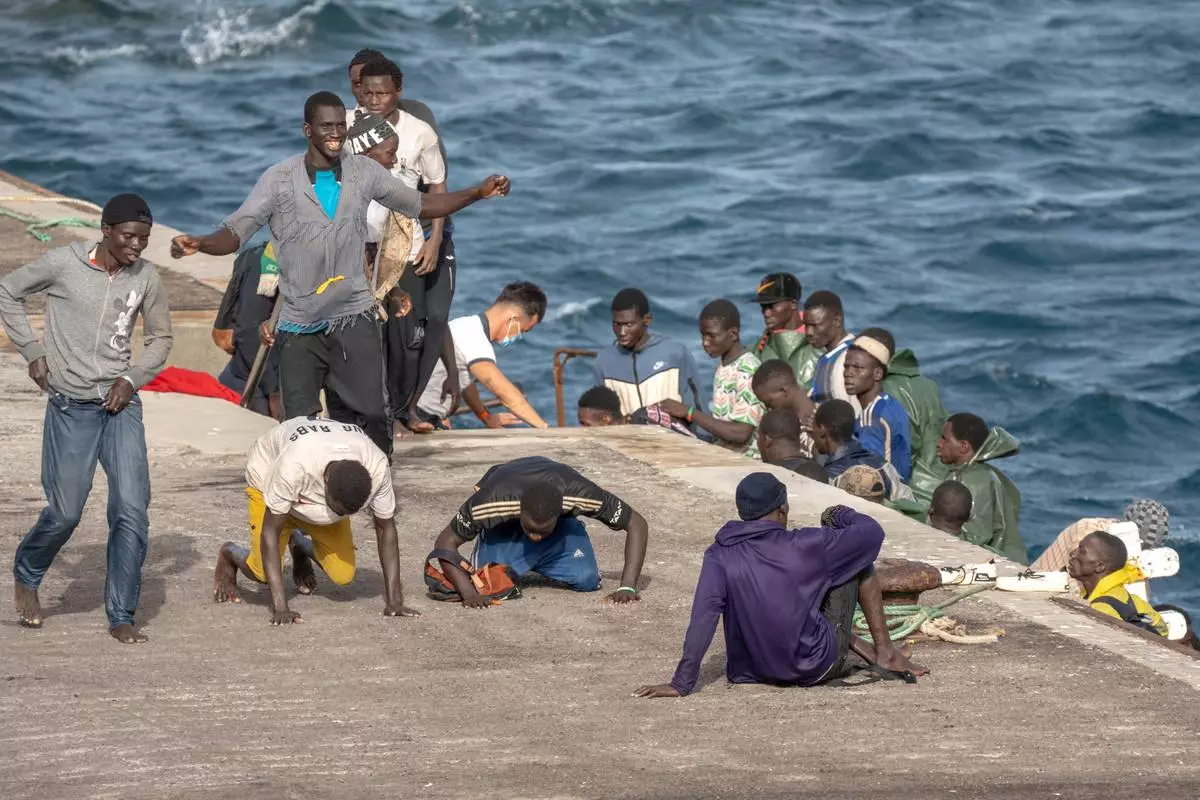
FILE - Migrants react as they arrive at the port in La Restinga on the Canary island of El Hierro, Spain, on, Aug. 19, 2024. (AP Photo/Maria Ximena, File)