Skip to Content Facebook Feature Image

FEHD Investigates Malicious Damage to Mong Kok's Environmental Hygiene; Suspect Arrested

HK

FEHD Investigates Malicious Damage to Mong Kok's Environmental Hygiene; Suspect Arrested
HK

HK

FEHD Investigates Malicious Damage to Mong Kok's Environmental Hygiene; Suspect Arrested

2026-06-05 21:05 Last Updated At:06-07 15:13

FEHD investigates malicious act undermining environmental hygiene

A spokesman for the Food and Environmental Hygiene Department (FEHD) said today (June 5) that the department is investigating a suspected incident of malicious damage to environmental hygiene in Mong Kok District last month. The person involved has been arrested.

Last month, media reported rubbish scattered on the ground near a litter container in Mong Kok, with rodents feeding on the refuse. Following investigation, the FEHD found that the rubbish had been deliberately poured off from the litter container by a suspect, who also interfered with the rodent trapping device set up by the department. With the assistance of the Police, the man involved has been arrested.

The spokesman said that the FEHD condemns acts that maliciously undermine environmental hygiene. The department will conduct further investigation and will initiate prosecution if sufficient evidence is available.

According to the Public Cleansing and Prevention of Nuisances Regulation (Cap. 132BK), raking waste is an offence. Offenders are liable to a fine of $5,000 on first conviction, and $10,000 on subsequent convictions. Under the Public Health and Municipal Services Ordinance (Cap. 132), interfering with equipment used by the FEHD for destroying and removing vermin is also an offence. Offenders are liable to a fine of $5,000.

The spokesman said that the department has also stepped up enforcement in Mong Kok against illegal acts such as illegal refuse disposal, including surprise operations conducted during early morning and evening hours. In May alone, the FEHD issued 160 fixed penalty notices to offenders pursuant to the Fixed Penalty (Public Cleanliness and Obstruction) Ordinance (Cap. 570) in Mong Kok. At the same time, the FEHD has strengthened cleaning and rodent control work in rear lanes across Mong Kok. The department will continue to closely monitor the hygiene conditions in the area and take appropriate action as necessary.
The Food and Environmental Hygiene Department (FEHD), Photo source: reference image

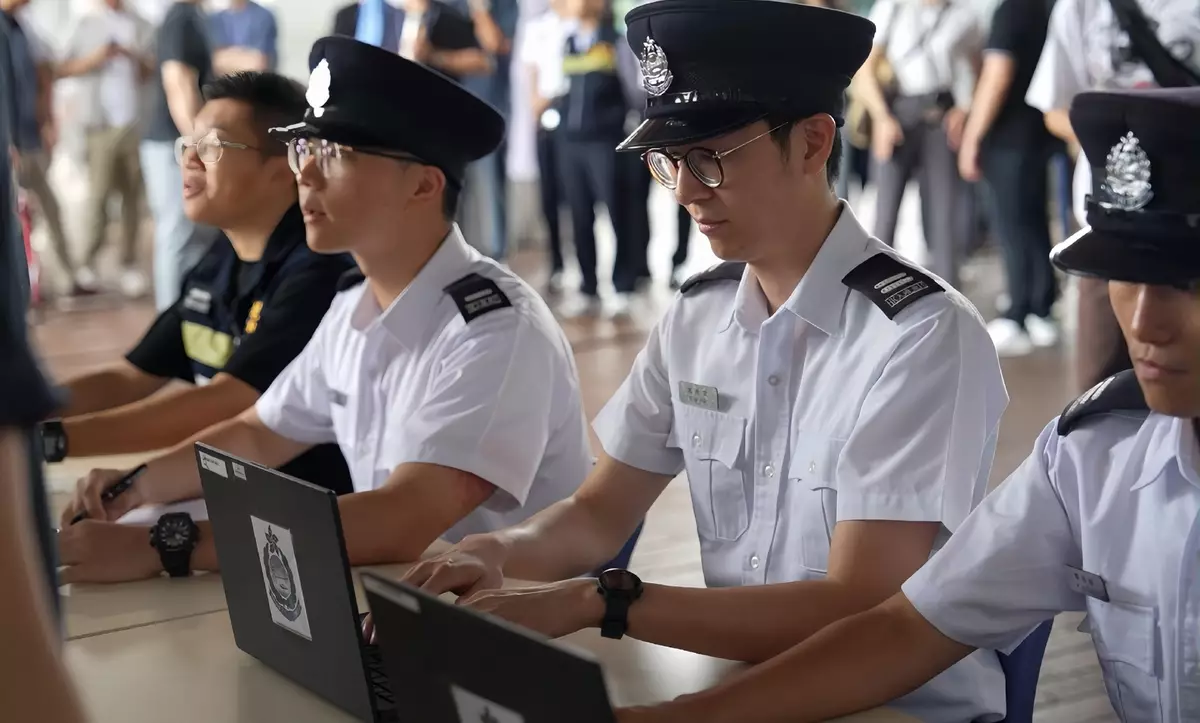
The Food and Environmental Hygiene Department (FEHD), Photo source: reference image

DH convenes 14th Meeting of International Advisory Board on Hong Kong Chinese Materia Medica Standards

The Department of Health (DH) today (July 14) convened the 14th Meeting of the International Advisory Board (IAB) on Hong Kong Chinese Materia Medica Standards (HKCMMS) to review the reference standards for 16 types of Chinese Materia Medica (CMM) commonly used in Hong Kong, and to discuss the future development of the HKCMMS. Over 60 experts from the Chinese Mainland, overseas and Hong Kong attended the meeting.

Since 2002, the DH has been implementing the HKCMMS project in phases to develop standards for commonly used CMM in Hong Kong to ensure their safety and quality.

In his opening remarks, the Director of Health and the Chairperson of the IAB, Dr Ronald Lam, said, "One of the key initiatives of the Government Chinese Medicines Testing Institute (GCMTI) under the DH is the implementation of the HKCMMS. With the publication of the Volume 12 of the HKCMMS, standards for 357 types of CMM have been established so far. They have become widely recognised international reference standards for Chinese medicine testing and certification, thereby promoting the high-quality scientific development of Chinese medicine. In addition, the work of GCMTI is closely aligned with national priorities. The National 15th Five-Year Plan made it clear that we need to 'advance the inheritance and innovation of Chinese medicine' and 'promote the integration of Chinese and Western medicine'. It also calls for us to 'strengthen the conservation and utilisation of Chinese medicine resources', 'improve the quality of Chinese medicine, and build up and strengthen the Chinese medicine industry'. These are exactly the goals that the HKCMMS Project is helping to achieve - by setting rigorous quality standards for CMM and conducting applied research and development on testing methods that underpin the entire industry, establishing the Hong Kong Special Administrative Region as a bridgehead for the global expansion of Chinese Medicine."

Dr Lam emphasised that the success of the HKCMMS project depends on the active collaboration of stakeholders across different sectors. He expressed his sincere appreciation to the four research partners attending the meeting, commending their dedicated contributions to advancing the project's research efforts. They were the National Institutes for Food and Drug Control, the Chinese University of Hong Kong, the Hong Kong Polytechnic University and the China Medical University. He also thanked the Government Laboratory for conducting inter-laboratory verification studies. Dr Lam emphasised that these collaborations are crucial for establishing a rigorous and solid scientific foundation for the HKCMMS and gaining international credibility. The DH is also deeply grateful to the National Medical Products Administration, the National Administration of Traditional Chinese Medicine and the Chinese Pharmacopoeia Commission for their continuous valuable advice and support in developing the HKCMMS. To align with the National 15th Five-Year Plan to advance the inheritance, innovation and high-quality development of Chinese medicine, expand and promote Chinese medicine culture, the DH will continue to steadfastly promote the development of Chinese medicine and better integrate into and serve the overall national development.

The two-day meeting brought together experts from the Chinese Mainland, Australia, Austria, Canada, Germany, Japan, Thailand, the United Kingdom and the United States, as well as representatives from research institutions, the DH and the Government Laboratory of the Hong Kong Special Administrative Region. The 16 types of CMM commonly used in Hong Kong that were discussed at the meeting included Bambusae Caulis in Taenias, Pyrolae Herba, Natrii Sulfas, Dichroae Radix, Dioscoreae Hypoglaucae Rhizoma, Cynanchi Atrati Radix et Rhizoma, Jasmini Flos, Tinosporae Caulis, Inulae Flos, Haematitum, Lasiosphaera seu Calvatia, Vespae Nidus, Dioscoreae Rhizoma, Aconiti Kusnezoffii Folium, Meliae Cortex and Tripterygii Wilfordii Radix.

Previous editions of the HKCMMS can be accessed at the website of the Chinese Medicine Regulatory Office of the DH.

DH convenes 14th Meeting of International Advisory Board on Hong Kong Chinese Materia Medica Standards Source: HKSAR Government Press Releases

DH convenes 14th Meeting of International Advisory Board on Hong Kong Chinese Materia Medica Standards Source: HKSAR Government Press Releases

DH convenes 14th Meeting of International Advisory Board on Hong Kong Chinese Materia Medica Standards Source: HKSAR Government Press Releases

DH convenes 14th Meeting of International Advisory Board on Hong Kong Chinese Materia Medica Standards Source: HKSAR Government Press Releases

DH convenes 14th Meeting of International Advisory Board on Hong Kong Chinese Materia Medica Standards Source: HKSAR Government Press Releases

DH convenes 14th Meeting of International Advisory Board on Hong Kong Chinese Materia Medica Standards Source: HKSAR Government Press Releases

Recommended Articles