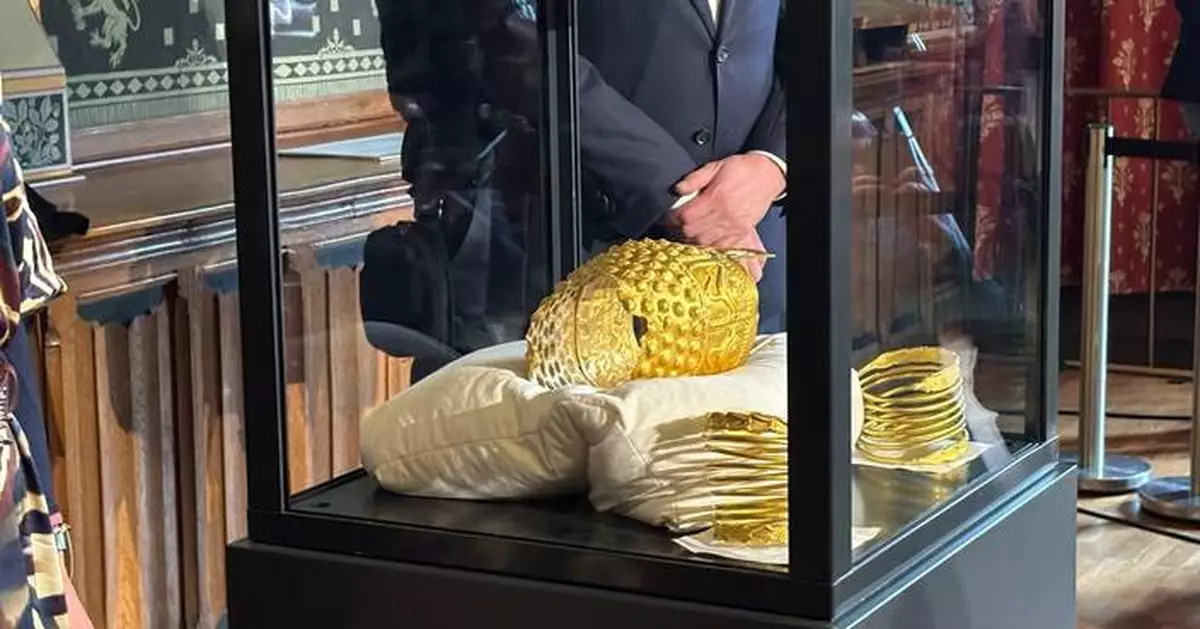
THE HAGUE, Netherlands (AP) — Three men were each sentenced to 47 months in prison on Friday for the theft of an ornate Romanian gold helmet and bracelets in a raid on a Dutch museum.
The Northern Netherlands District Court said the three men, whose identities were not released in line with privacy rules, warranted a custodial sentence “because of the nature and gravity” of their crime.
The Cotofenesti helmet and three golden bracelets — some of Romania’s most revered national treasures from the Dacia civilization — were stolen from the Drents Museum in January 2025 while they were on loan for an exhibition.
Cornel Constantin Ilie, the interim director of Bucharest’s National History Museum, described them as “relics of our historical memory, as the legacy of a civilization that continues to define us.”
The helmet and two of the bracelets were found earlier this year after prosecutors agreed a deal with two of the thieves who helped facilitate the recovery in return for a lower sentencing demand by prosecutors. The third bracelet is still missing.
“The art treasures are part of Romania’s past and are of great importance to current and future generations,” a written summary of the court verdict said.
The court said the treasures were insured for 5.7 million euros ($6.6 million), but added “that is just a number, whereas the importance and value of objects like these cannot be expressed in money. They are, in a literal sense, priceless.” The recovered artifacts have been returned to Romania.
Thieves used a homemade firework bomb and sledgehammer to break into the museum. Security video distributed by police after the raid appeared to show three people opening a museum door with a large crowbar, followed by an explosion.
While only two of the three suspects helped prosecutors get back the artifacts, judges gave all three reduced sentences, saying that they all should “profit from the return of the treasures.”
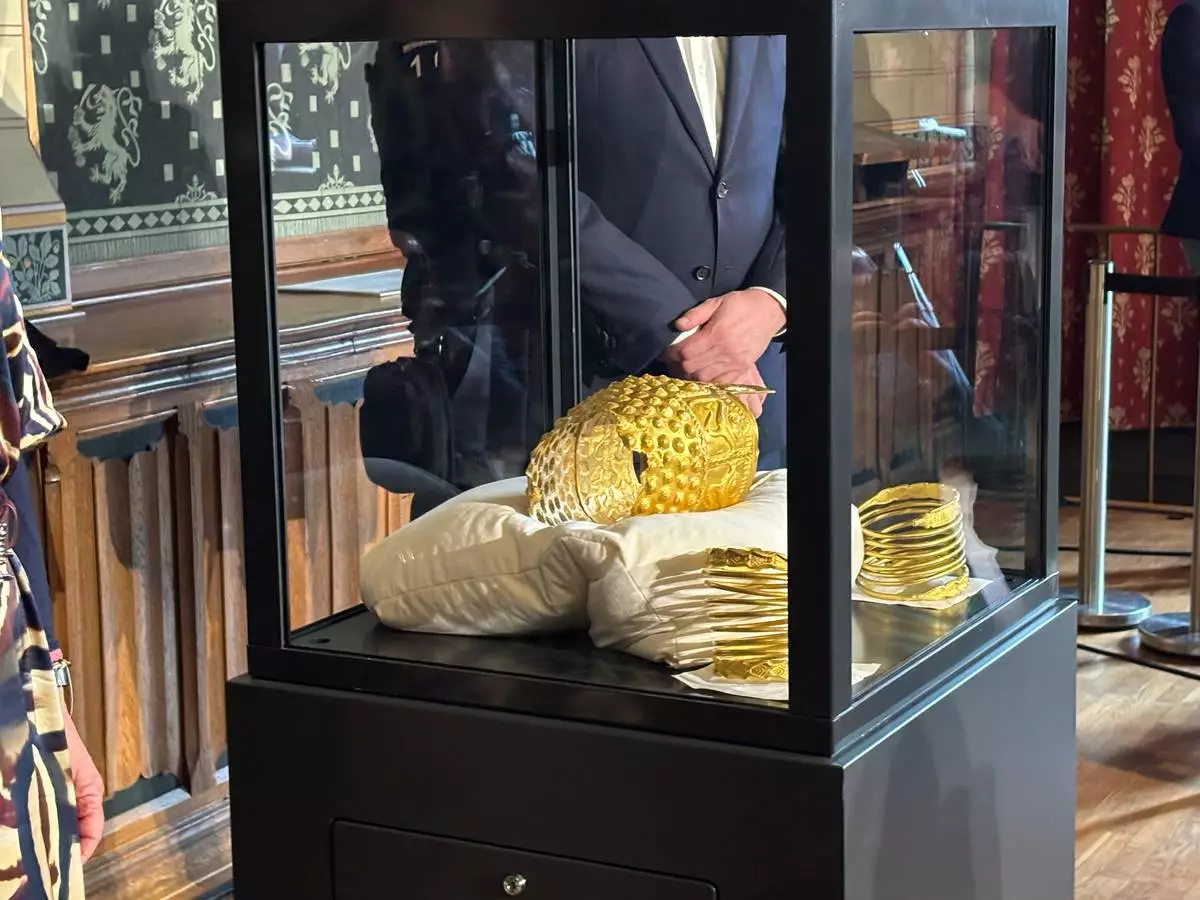
FILE - A stolen artefact from Romania, the 2,500-year-old Cotofenesti helmet, recovered in Netherlands, is shown during a press conference in Assen, Netherlands, Thursday, April 2, 2026. (AP Photo/Aleksandar Furtula, File)
President Donald Trump returned to the rescheduled White House Correspondents' Association dinner Friday night, delivering a rambling, hour-long speech that praised some journalists, took potshots at others, made jokes about public figures' weight and intellect, and quipped about a third presidential term.
He assured the crowd of journalists, though, that he'd scrapped the most biting parts of his remarks.
“That was going to be a doozy,” Trump said about the speech he’d been prepared to give in April, before a gunman upended the original dinner and forced its postponement.
“As I said three months ago, the show must go on,” the president said to begin his remarks, hailing the decision to reschedule the dinner. He referred to “the attempted mass murder” that could have happened that night in April, but then moved largely to humor — and insults.
Trump's return to the correspondents' dinner — and his promise to come back next year as well — represented a notable moment in his relationship with the news media, which he has attacked, sued and taken administrative action against since he began his second term early last year. Among the audience members were reporters he had denounced and barred from events.
Trump’s sometimes off-color speech, which lasted just over an hour, was full of vague potshots directed at individuals he doesn’t like — from Jane Fonda to Bruce Springsteen to “Barack Hussein Obama.” The audience, reacting at first with some friendly laughs, slowly quieted to scattered titters as the insults piled up.
Among other targets of Trump’s humor: Late-night hosts Jimmy Fallon and Jimmy Kimmel; Rep. Ilhan Omar, D-Minn.; California Gov. Gavin Newsom; former New Jersey Gov. Chris Christie; and Trump's own speechwriters, whose jokes he sometimes criticized even as he delivered them. Some of the comments flirted with racism.
The president also spent some time expressing pride in the ballroom at the Waldorf Astoria hotel, formerly the Trump International Hotel. “It’s great to be back at a place that I know very well, because I built it,” Trump said.
He also made reference to the journalism awards that had been handed out earlier in the evening, most of them for stories challenging him and his administration. “Do I have a say in those awards?” he asked with a grimace.
He made a brief mention of the Iran war and several remarks about the ballroom he is building at the White House. He also used the occasion to joke about the possibility he would serve a third term — something barred by the U.S. Constitution's 22nd Amendment.
“Just like my presidency, the second time is always better,” the president quipped. “And the third time will be better yet.”
He added: “I’m only kidding.” Then, at the end, he donned a red cap that said “Trump 2028” and delivered the “scoop” that he was running again.
Earlier, Trump had entered the ballroom to polite applause, and was thanked for his support by outgoing White House Correspondents’ Association president Weijia Jiang of CBS News. After dinner, he then sat through more than an hour of awards presentations.
One of the winners, Tyler Pager of the New York Times, was in fact one of the reporters who had been subpoenaed by Trump’s Justice Department over his reporting about Trump’s Qatari-gifted Air Force One jet. Those subpoenas were withdrawn on Thursday in a New York courtroom — just one of the arenas where the president, in his second term, has been seeking to control media coverage that displeases him.
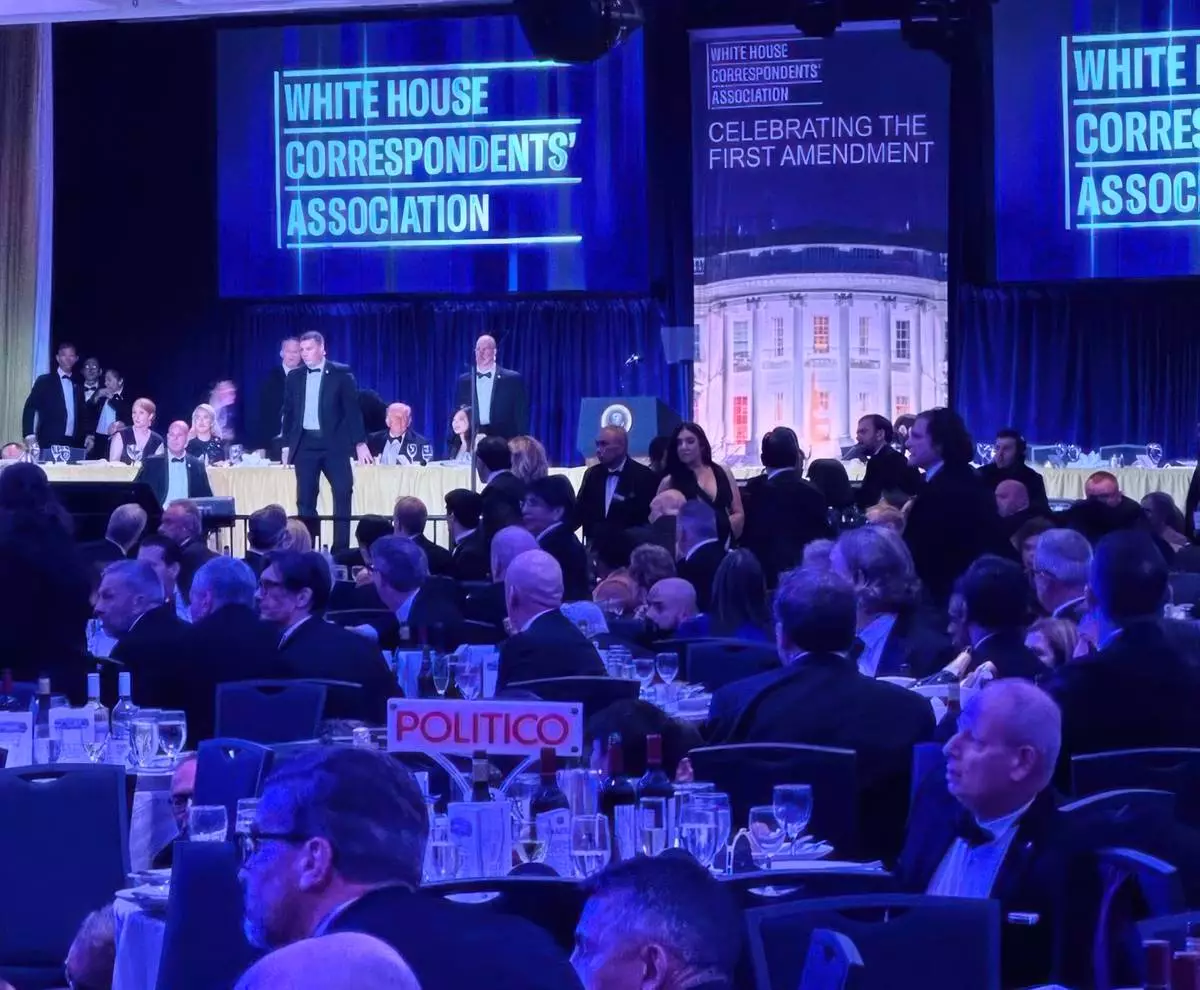
The rescheduled dinner was taking place at a smaller venue this time that held only about 700 people. Security was markedly tighter. Guests entered via a single entrance, through two ID checks and past a detection dog, armed officers and security guards. There was no red carpet and no separate cocktail receptions preceding the dinner.
“Let’s try this again,” Jiang quipped, welcoming the crowd. The White House press corps, she noted, “always have a follow-up.” Turning serious, she referred back to the trauma and confusion of the original dinner in April.
“Tonight our message is this: We are back,” she said. “We will not be intimidated. We refuse to let an act of violence have the final word.”
Early in his speech, Trump signaled that he had decided to tone it down. But he kept some zingers. Like this one, to the media-heavy audience: “This is really the largest group of ‘Trump Derangement Syndrome’ people put together at one time.”
Besides the pared-down approach, there was another change at Friday’s dinner: two additional awards. One was presented to Victor Gonzales, the Secret Service agent who was staffing a security checkpoint in April and was struck in his protective vest.
Gonzales “placed himself directly in harm’s way and engaged the armed suspect,” Jiang said. “He stayed in the fight and the attacker was stopped.”
A second award was presented to the staff of the Washington Hilton hotel, site of the first dinner, hailed for professionalism under pressure.
The dress code this time was a looser “black tie optional,” and dinner included grilled peach and burrata salad, lobster and beef Wellington. The evening, as in April, featured entertainment by mentalist Oz Pearlman — who this time got the chance to do his act..
Jiang and her fellow board members had worked hard to bring about this WHCA dinner 2.0, not wanting to let a violent act — or the image of colleagues hiding under tables — remain the final thought. Announcing the rescheduling, she emphasized the dinner’s stated purpose: “A celebration of a free press and the vital role of journalism in our democracy for over a century.”
But it’s also clear that some people felt the dinner should not be rescheduled at all.
Many never thought it was much of a good look in the first place, with the sight of journalists in formal wear cozying up to their sources, or the objects of their reporting.
“It undermines the public faith in how the press does its work, and it makes it look like we are pals with the people we cover,” Kelly McBride, an ethics expert at the Poynter Institute, a journalism think tank, said when the deliberations were taking place.
The new dinner came at a time of fast-increasing tension between the media and a president who, in his second term, has tried to exert pressure on media outlets he is unhappy with in a variety of ways. That pressure has ranged from sanctions against members of the White House press corps to regulatory actions through the Federal Communications Commission to outright lawsuits. Those tensions have only escalated since April.
Trump, though, ended with an attempt to mend fences to a point. “I have a lot of respect for your profession,” he told the assembled journalists. He also touted his own success, and declared: “When I'm not around, you're all gonna be broke.”
And he concluded about the evening: “I didn't know what to expect. It's far worse than I originally thought.”
Jocelyn Noveck covers the intersection of media and entertainment for The Associated Press.
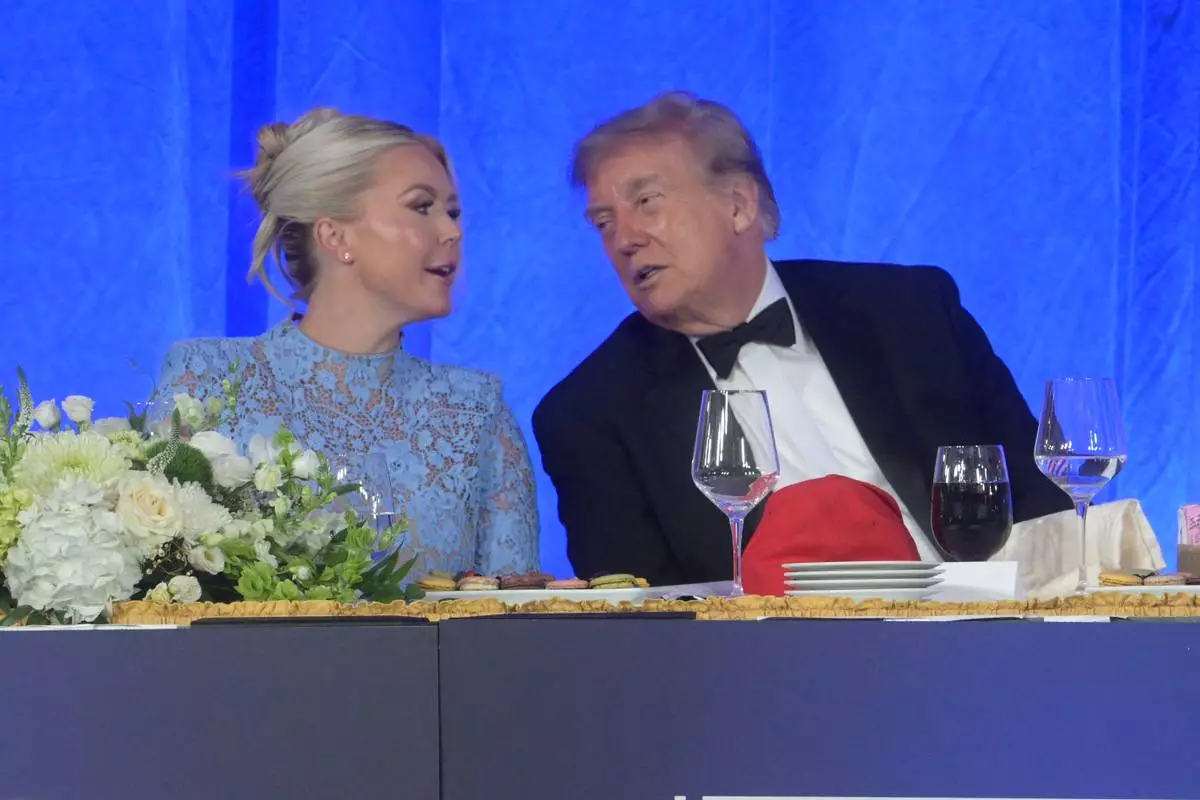
President Donald Trump talks with White House press secretary Karoline Leavitt at the White House Correspondents' Association dinner at the Waldorf Astoria Washington DC, Friday, July 24, 2026, in Washington. (AP Photo/Rod Lamkey, Jr.)
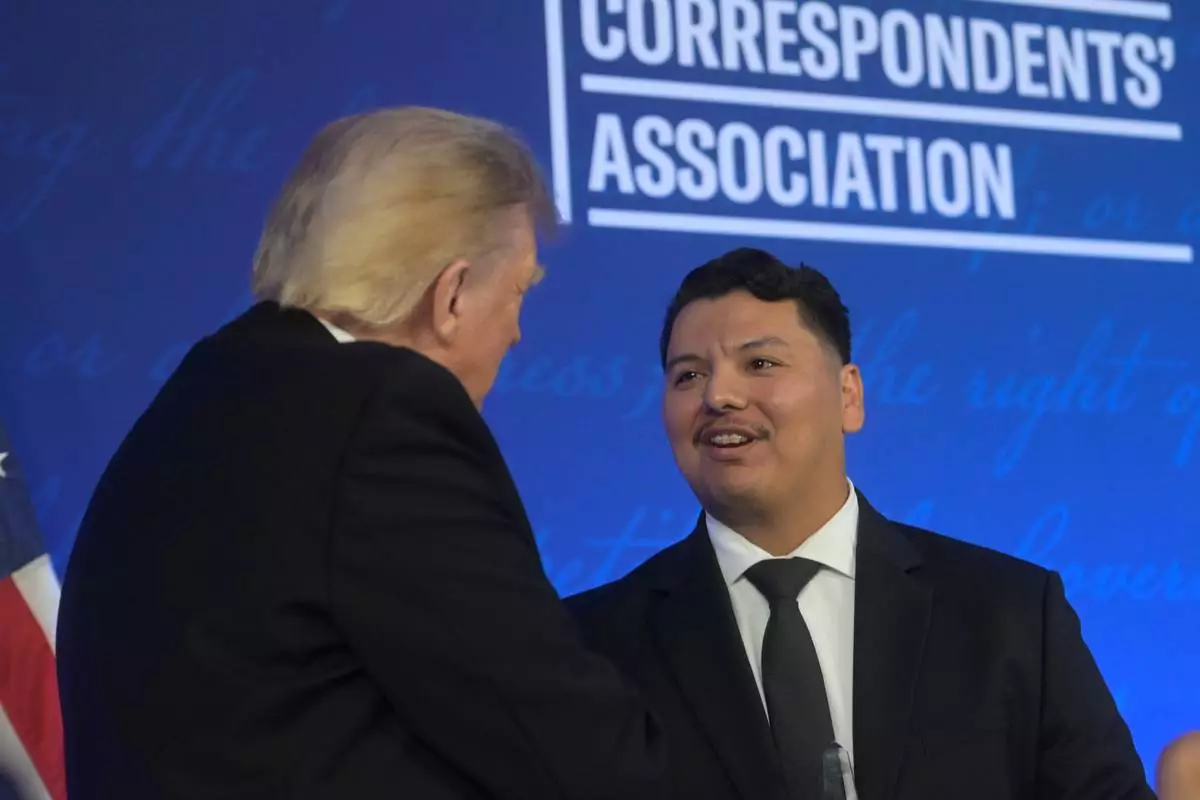
President Donald Trump greets U.S. Secret Service agent Victor Gonzalez at the White House Correspondents' Association dinner at the Waldorf Astoria Washington DC, Friday, July 24, 2026, in Washington. (AP Photo/Rod Lamkey, Jr.)
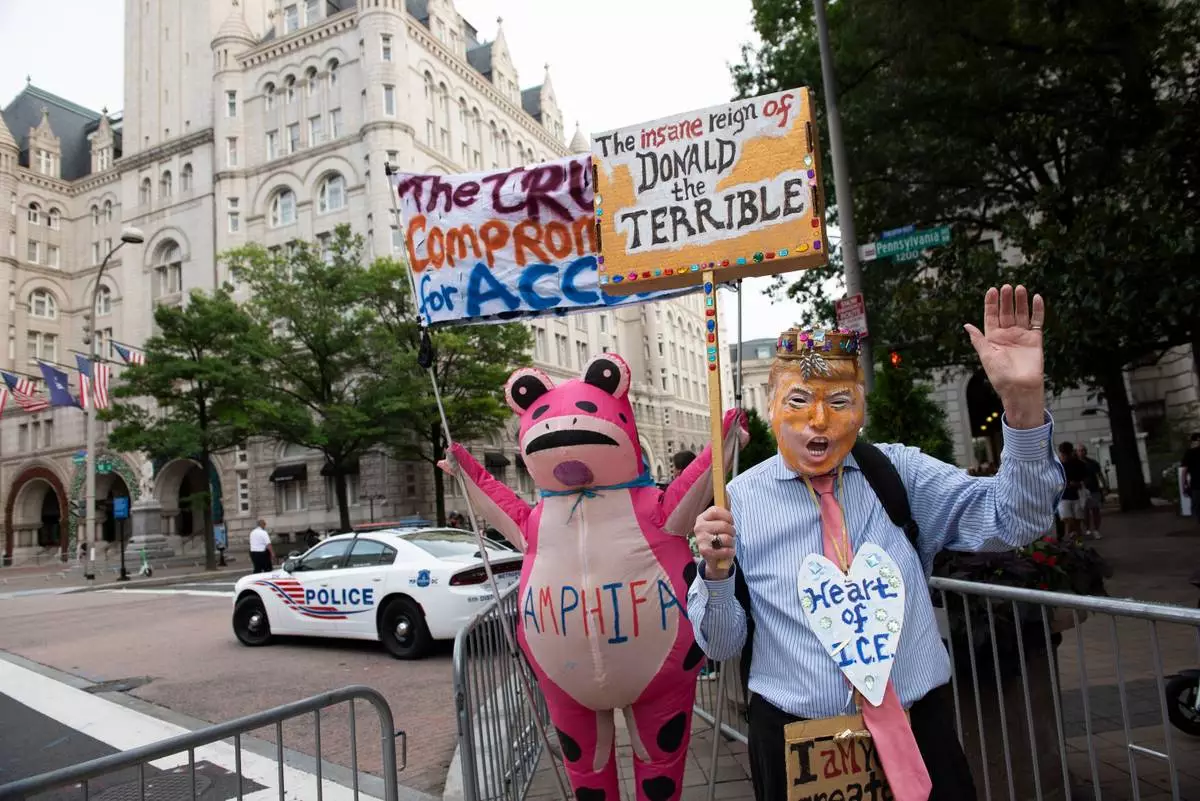
Demonstrators protest outside of the White House Correspondents' Association dinner at the Waldorf Astoria Washington DC hotel, in Washington, Friday, July 24, 2026. (AP Photo/Cliff Owen)
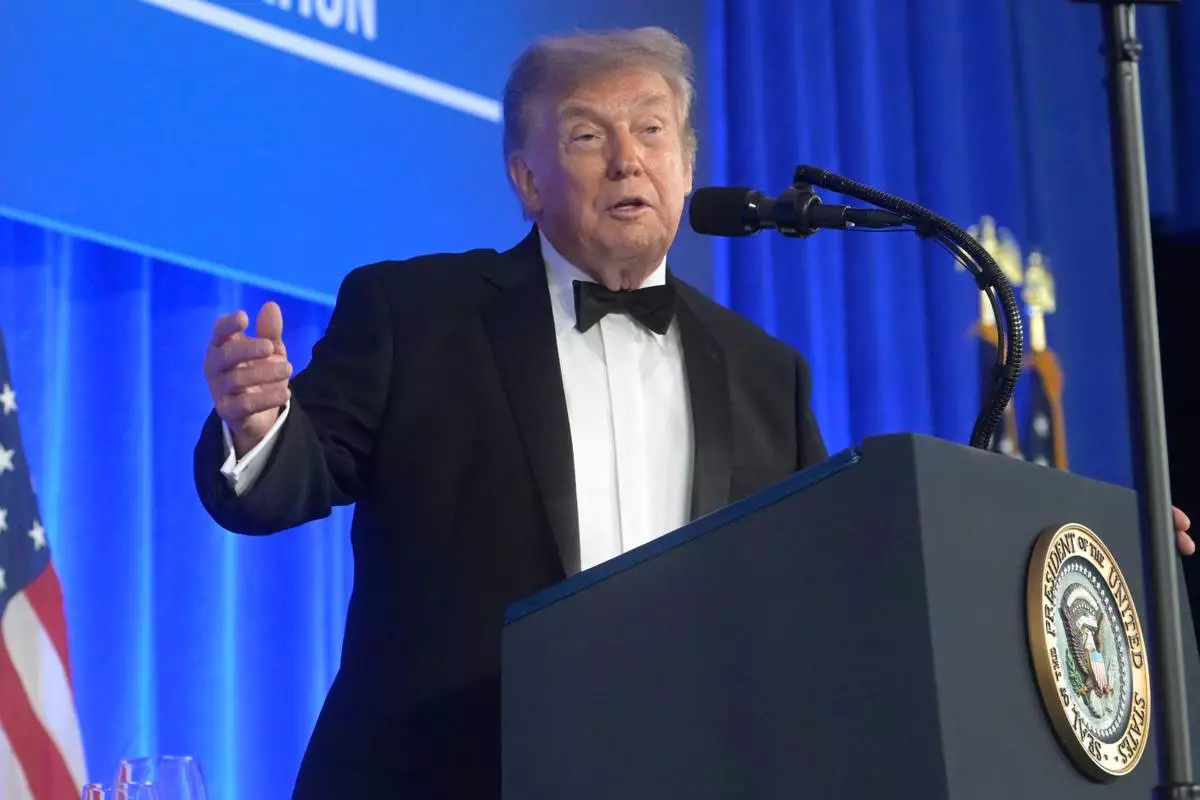
President Donald Trump speaks at the White House Correspondents' Association dinner at the Waldorf Astoria Washington DC, Friday, July 24, 2026, in Washington. (AP Photo/Rod Lamkey, Jr.)
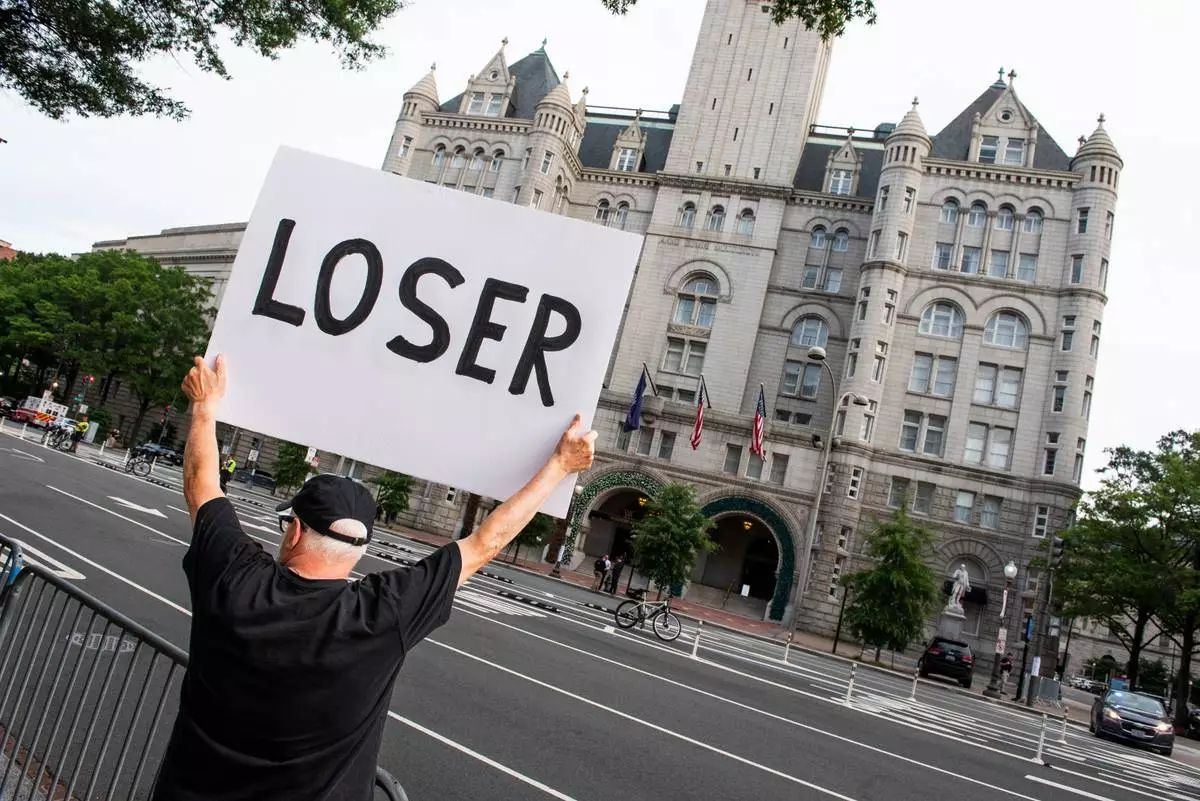
A demonstrator holds up a sign outside the Waldorf Astoria Hotel in Washington, site of the White House Correspondents' Dinner, Friday, July 24, 2026. (AP Photo/Cliff Owen)
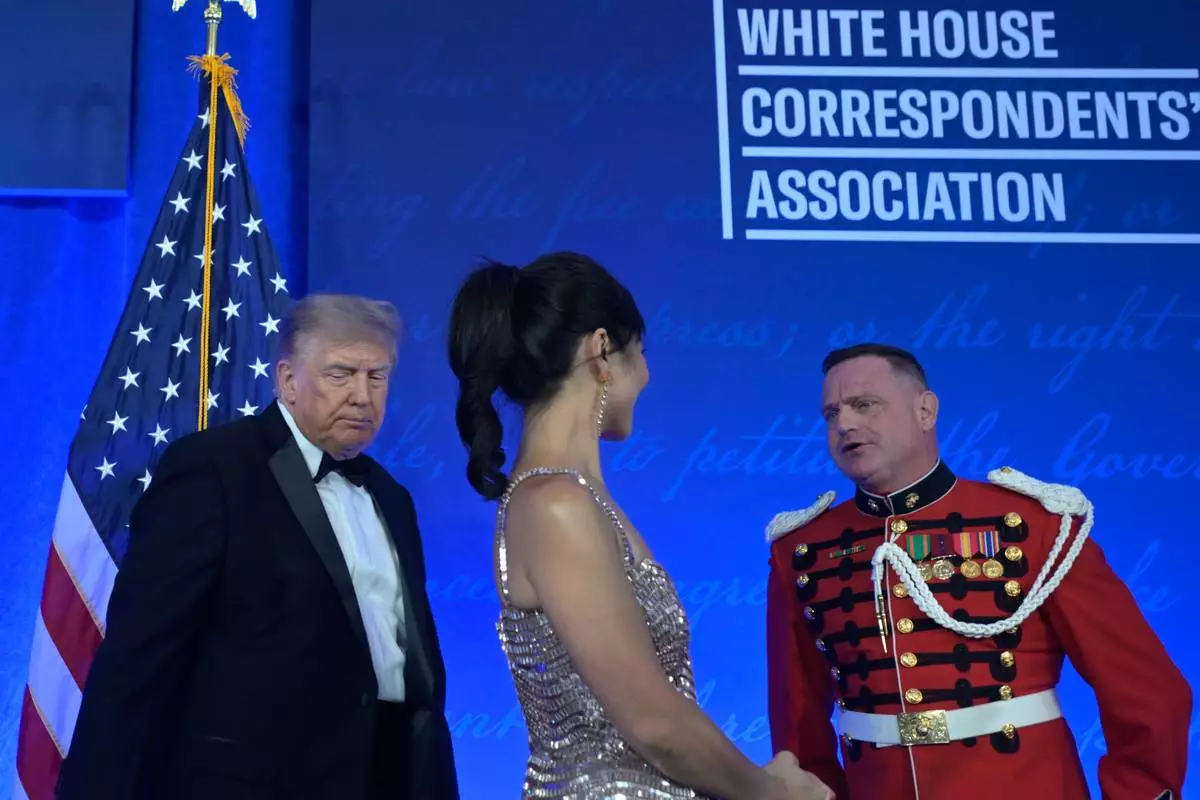
President Donald Trump arrives at the White House Correspondents' Association Dinner, at the Waldorf Astoria Washington DC, Friday, July 24, 2026, in Washington, with WHCA president Weijia Jiang. (AP Photo/Rod Lamkey, Jr.)
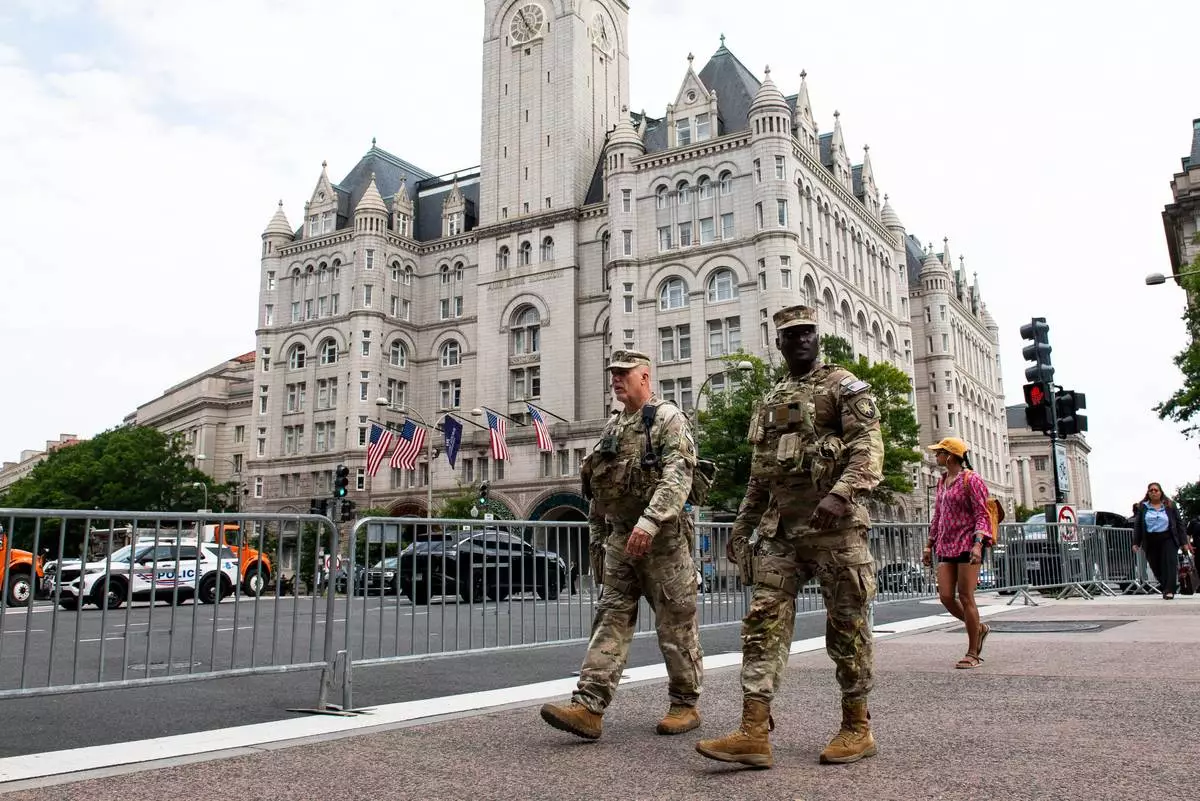
National Guard troops walk across the street from the Waldorf Astoria hotel where President Donald Trump will attend the White House Correspondents' Association Dinner, in Washington, Friday, July 24, 2026. (AP Photo/Cliff Owen)
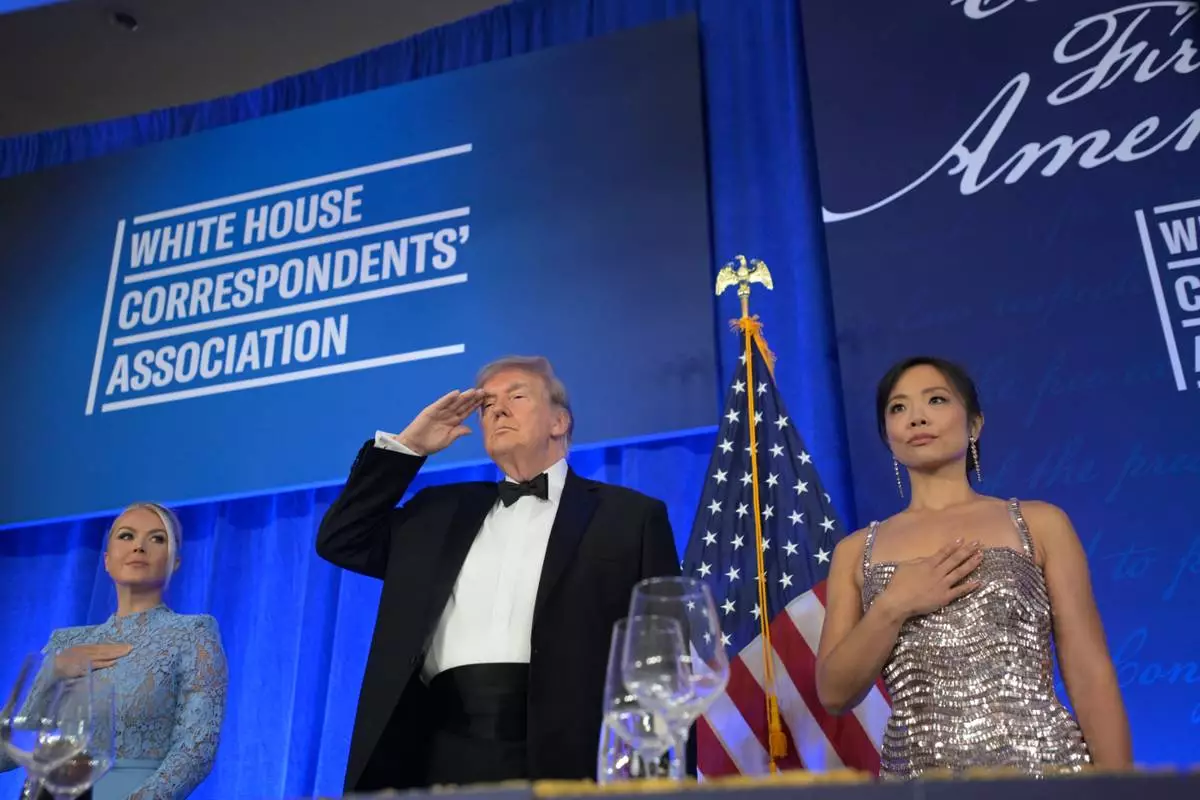
President Donald Trump attends the White House Correspondents' Association Dinner, at the Waldorf Astoria Washington DC, Friday, July 24, 2026, in Washington, with with WHCA president Weijia Jiang, right and White House press secretary Karoline Leavitt. (AP Photo/Rod Lamkey, Jr.)
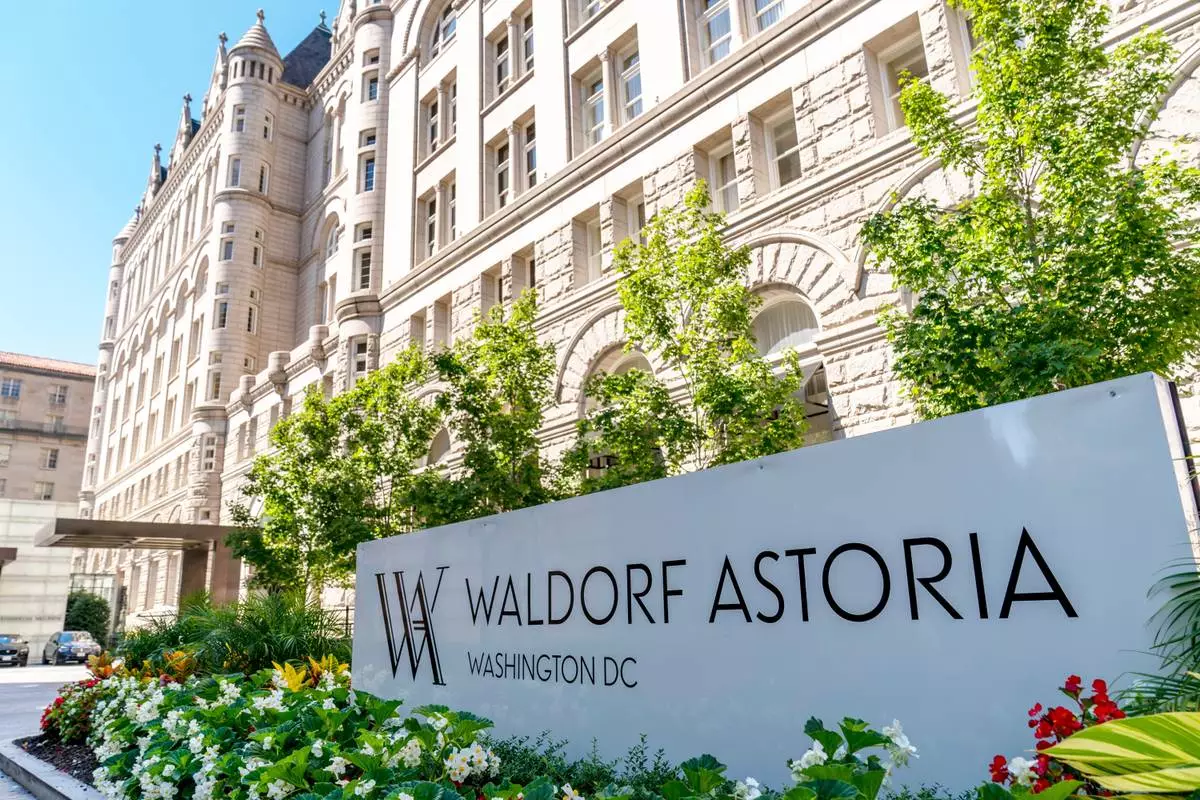
FILE - The Waldorf Astoria is pictured in the Old Post Office building, Aug. 18, 2022, in Washington. (AP Photo/Andrew Harnik, File)
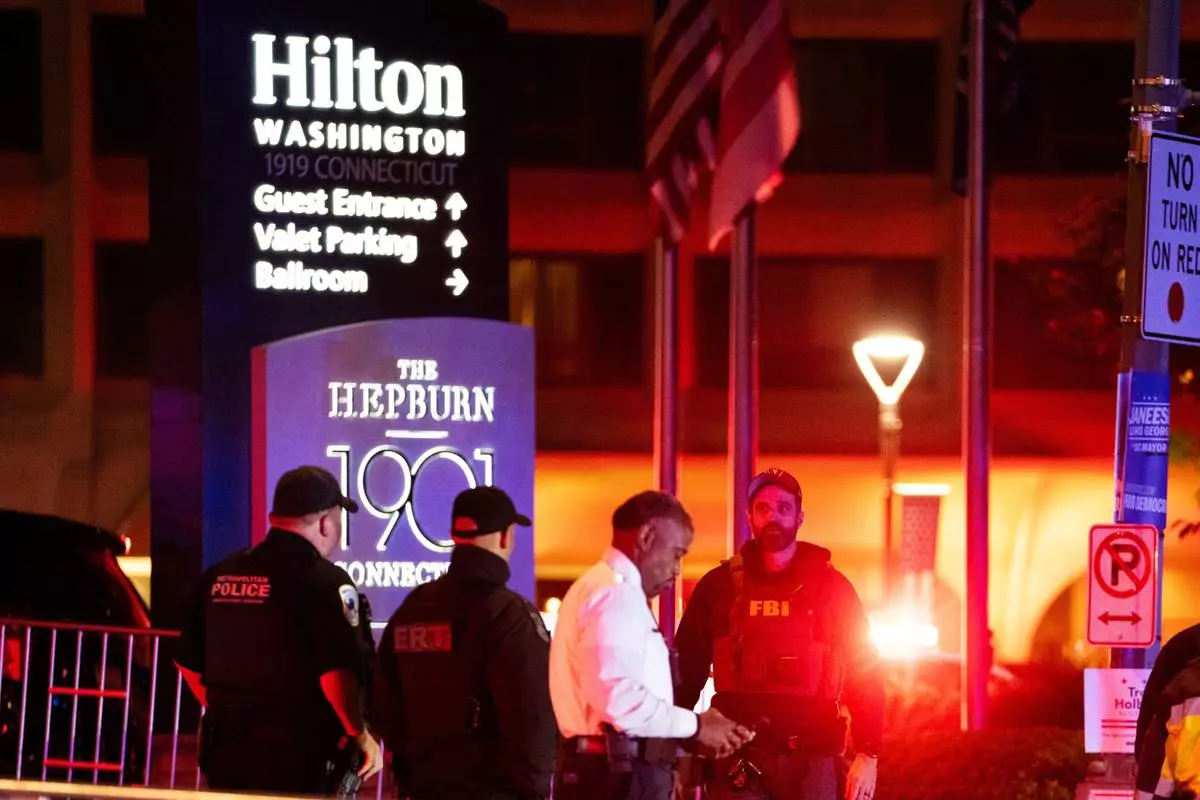
FILE - Law enforcement responds to an incident at the Washington Hilton during the White House Correspondents Dinner, April 25, 2026, in Washington. (AP Photo/Allison Robbert, File)
FILE - U.S. Secret Service agents respond near President Donald Trump and first lady Melania Trump during the White House Correspondents Dinner, Saturday, April 25, 2026, in Washington. (AP Photo/Alex Brandon, File)
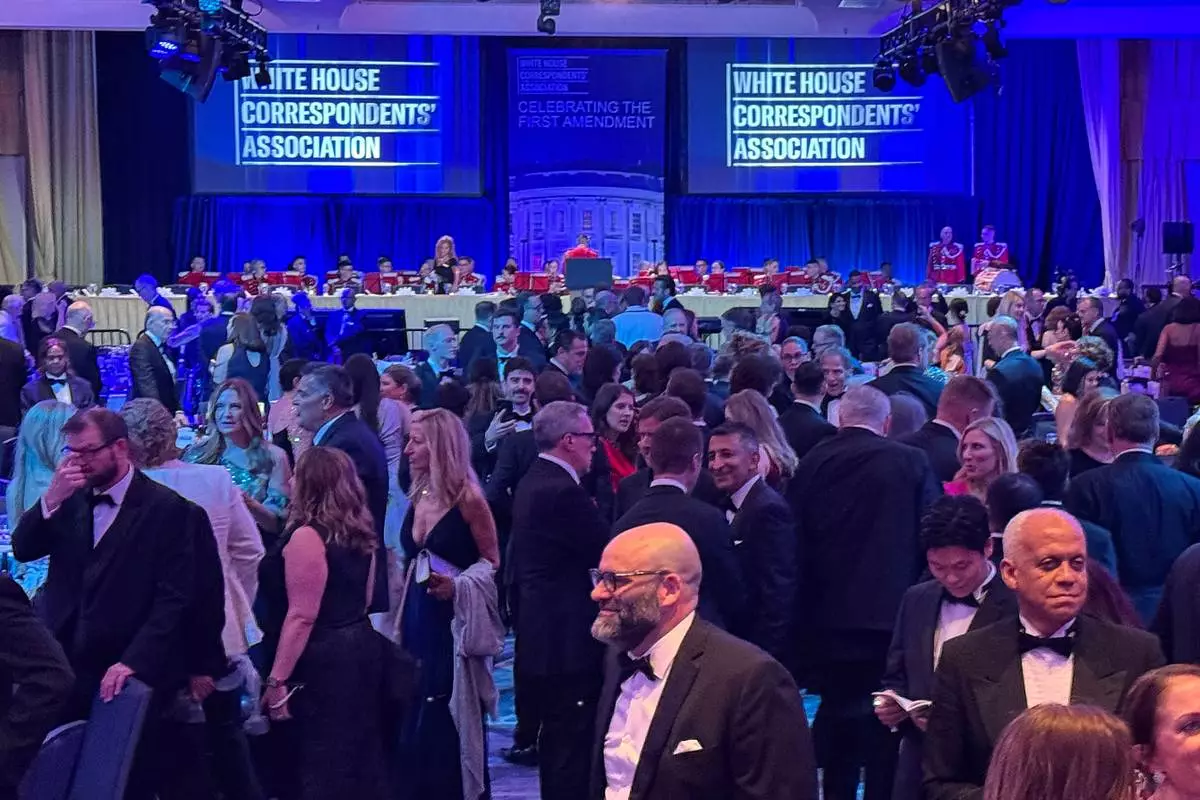
FILE - Attendees gather during White House Correspondents Association Dinner prior to a security incident, April 25, 2026, in Washington. (AP Photo/Mark Schiefelbein, File)
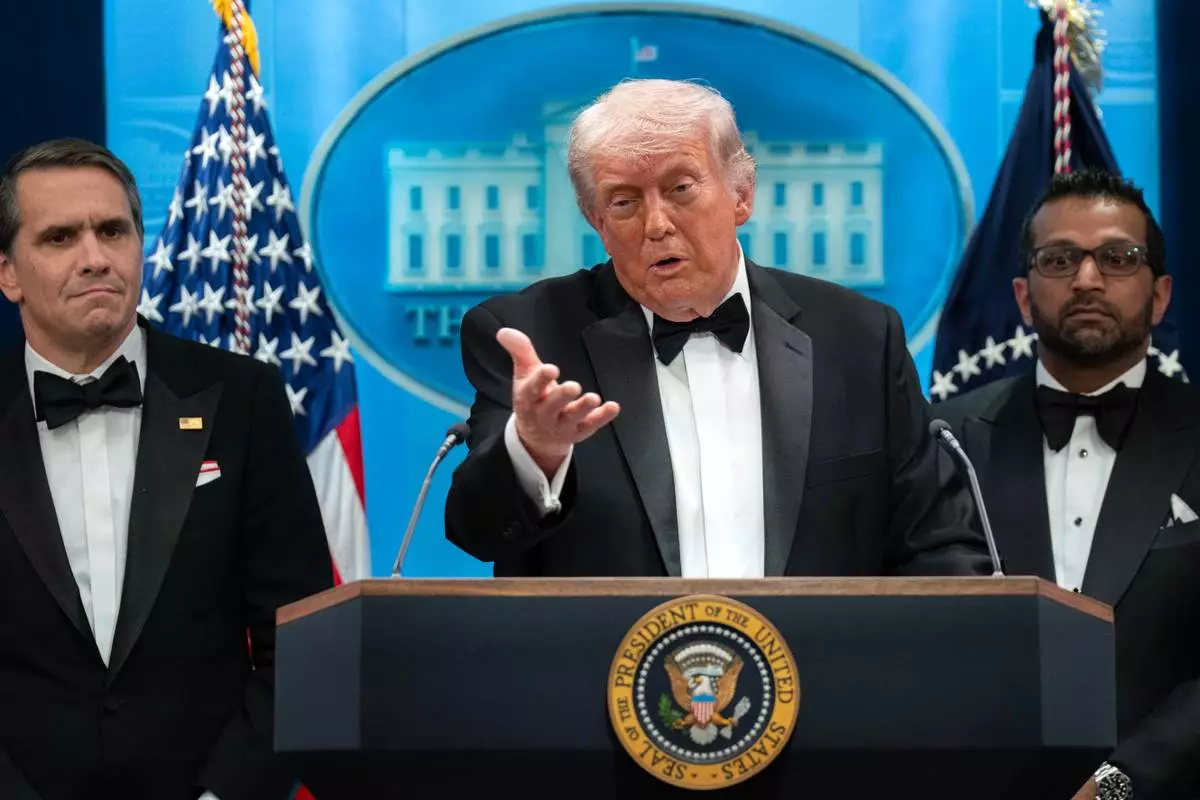
FILE - President Donald Trump speaks in the James Brady Press Briefing Room at the White House after a shooting incident outside the ballroom at at the annual White House Correspondents' Association dinner in Washington, April 25, 2026, as acting Attorney General Todd Blanche, left, and FBI director Kash Patel listen. (AP Photo/Jose Luis Magana, File)
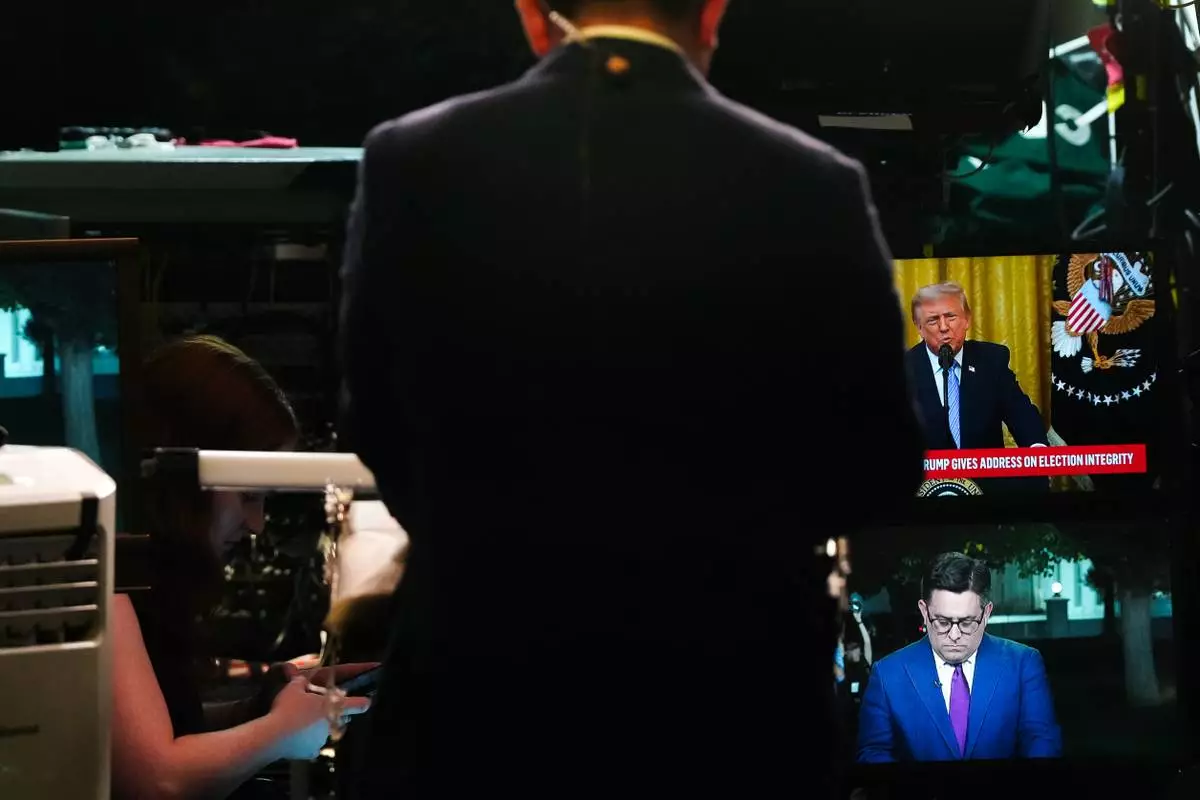
CBS News correspondent Ed O'Keefe prepares to film a stand-up as President Donald Trump speaks from the East Room of the White House, Thursday, July 16, 2026, in Washington. (AP Photo/Julia Demaree Nikhinson)
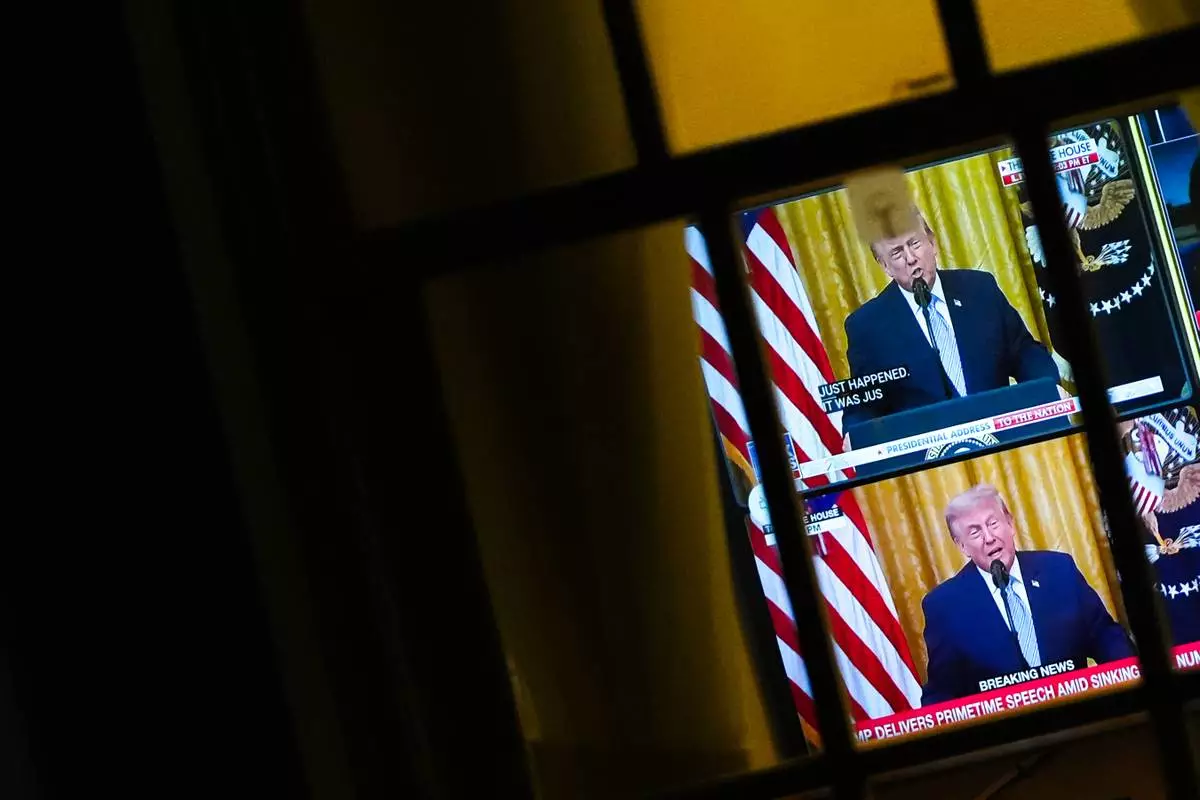
President Donald Trump is seen speaking from the East Room on a television in the West Wing of the White House, Thursday, July 16, 2026, in Washington. (AP Photo/Julia Demaree Nikhinson)