Fatal traffic accident in Castle Peak
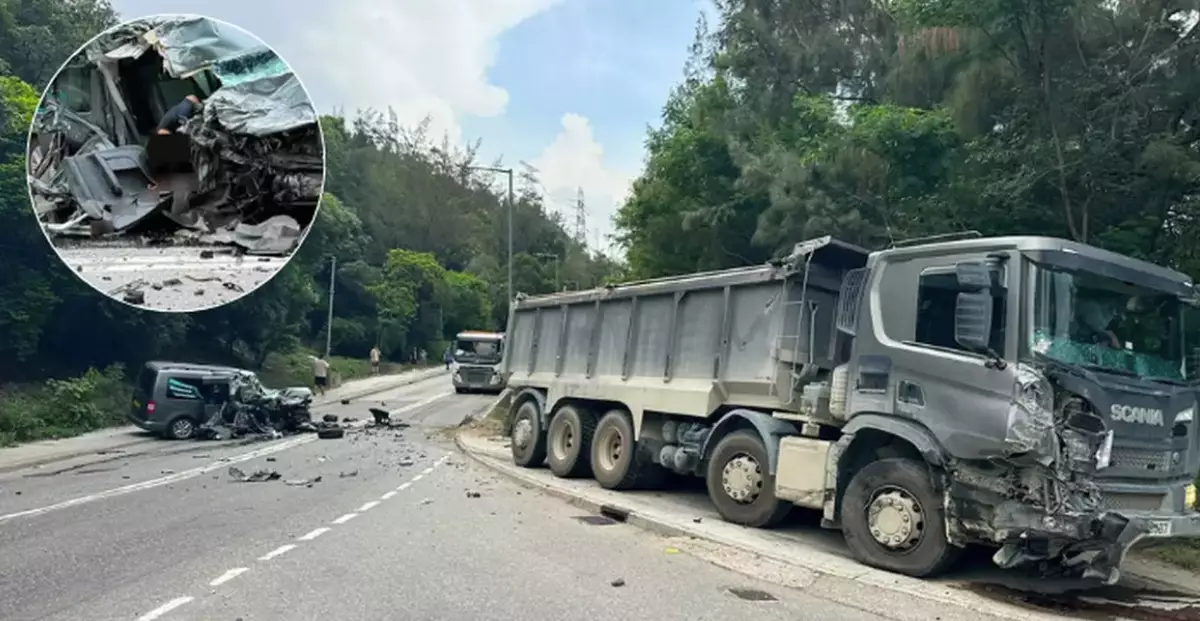
Police are investigating a fatal traffic accident happened in Castle Peak today (June 5), in which a man died.
Police received a report at 5.52pm today that a light goods vehicle (LGV) driven by a 34-year-old man was travelling along Lung Mun Road towards Tuen Mun town, while a heavy goods vehicle driven by a 50-year-old man was travelling along Lung Mun Road towards Lung Kwu Tan. When approaching the junction of Lung Mun Road and Lung Fai Street, the two vehicles reportedly collided head-on.

Photo source: online image
The LGV driver was trapped inside the vehicle and rescued by firemen. Sustaining serious head injuries, he was rushed to Tuen Mun Hospital in unconscious state and was certified dead at 7.15pm.
Investigation by the Special Investigation Team 1 of Traffic, New Territories North is under way.
Anyone who witnessed the accident or has any information to offer is urged to contact the investigating officers. The contact number is 3661 3800.
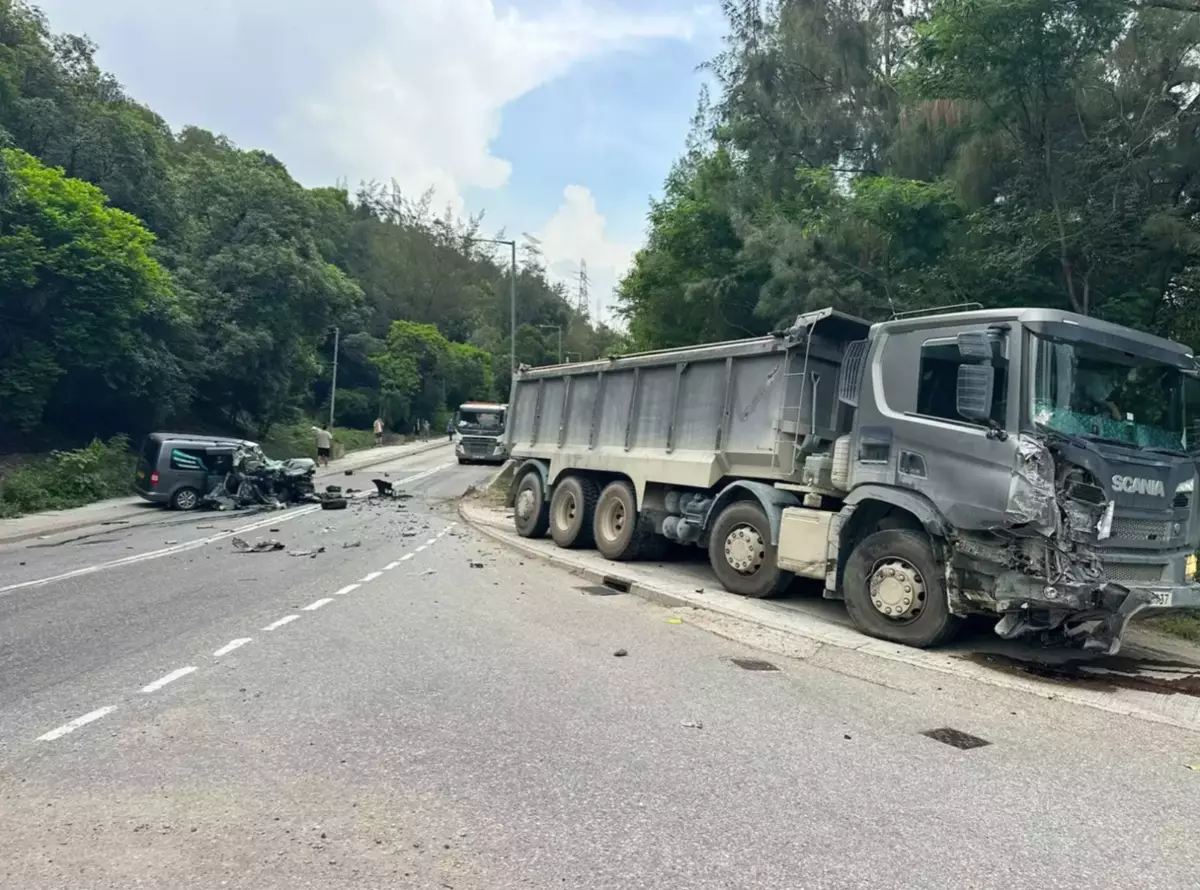
Photo source: online image
Land and Development Advisory Committee holds meeting
The Development Bureau briefed the Land and the Development Advisory Committee (LDAC) at its meeting today (July 27) on the two new measures to incentivise urban renewal. The major arrangements of the measures are as follows:
(1) The Bonus Plot Ratio Pilot Scheme: If a developer commits to pull down a building with residential elements in the seven designated areas (Note), whose building age reached 50 years or above with the site area not less than 700 square metres, and redevelop it into residential use, an additional 20 per cent premium-free gross floor area (GFA) will be provided as bonus. The developer can choose to submit planning application to the Town Planning Board (TPB) to directly utilise the bonus plot ratio in kind for in-situ redevelopment. The developer can also choose to translate the bonus plot ratio into land premium value for offsetting the land premium payable for in-situ redevelopment or any other land transactions in the Northern Metropolisand other parts of the territory. To simplify the execution procedures, the Government will use standard rates to calculate the premium value of the bonus plot ratio. All in-situ redevelopment projects joining the Pilot Scheme are required to be effected by means of lease modification to ensure timely completion of the redevelopment project. The bonus plot ratio will not affect other existing GFA concession measures. Subject to market response, the Development Bureau will evaluate the effectiveness of the Pilot Scheme, as well as introduce adjustments where necessary and consider whether the period of the Pilot Scheme will have to be extended; and
(2) The cross-district transfer of plot ratio (TPR) arrangement: It is to relax the current arrangements of TPR within the same district, allowing cross-district transfer of plot ratio from the sending sites to other areas across the territory, including the New Development Areas, so as to reduce the development density in the urban area. It is also to extend the geographic coverage of sending sites from Mong Kok and Yau Ma Tei to the remaining five designated areas (Note), as well as removing the limit of two receiving sites and reducing the site area requirement of receiving sites from 1000sqm to 700sqm. To provide additional incentives, if the sending site is used for designated uses benefiting the local community, subject to the TPB's approval, certain premium-free GFA could be provided within the sending sites as bonus GFA, in addition to the full transfer of the plot ratio and GFA from sending sites in order to support the on-going management and maintenance of the sending site. Furthermore, the premium assessment arrangement will be relaxed to allow the land premium assessment for the sending sites and receiving sites to be combined. All cross-district TPR proposals will require submission of planning applications to the TPB, which will perform a gatekeeping role in ensuring the transfer will not cause adverse impact to the surrounding environment.
The Secretary for Development, Ms Bernadette Linn, said "At present, the pace of building ageing in Hong Kong far exceeds that of redevelopment by the Urban Renewal Authority (URA) and the private market. In the past decade, the number of buildings aged 50 years or above increased by about 510 per year, while on average only 160 buildings were demolished by the URA and the private sector. And not many redevelopment projects in old districts are financially viable these days. In this regard, the Government has to adopt a new mindset and bold policy thinking to give a stronger policy push to encourage the private sector to participate in urban renewal, with a view to expediting redevelopment and rescuing urban decay."
Members were very supportive of the two new measures proposed by the Government. They agreed that the Bonus Plot Ratio Pilot Scheme would provide incentives and enhance the financial viability of redevelopment projects in old districts, and that the cross-district TPR arrangement could further incentivise the market to use the planning tool to expedite urban renewal.
Members considered that it was time to give bolder and stronger push to promote urban redevelopment by the URA and the market. If the response of these measures is positive, members expected that the Government could extend the Pilot scheme and consider relaxing the implementation arrangements where appropriate. Given the measures would involve a lot of technical implementation details, Members would like the Government to set out such details in the application guidelines of the relevant measures, so as to facilitate implementation.
The above are two of the measures announced in the Chief Executive's 2025 Policy Address to expedite urban renewal. Having consulted relevant stakeholders and taken into account their comments, the Government has formulated the implementation arrangements. The LDAC today mainly discussed the implementation details of the relevant proposals.
The Government will issue a joint practice notes for launching the Bonus Plot Ratio Pilot Scheme and revise the TPB Guidelines on TPR after obtaining the TPB's endorsement, with a view to launching the two schemes in the third quarter of 2026.
Note: The seven designated areas refer to Cheung Sha Wan (the same Outline Zoning Plan (OZP) covering also Sham Shui Po), Ma Tau Kok (covering Kowloon City and To Kwa Wan), Mong Kok, Sai Ying Pun and Sheung Wan (covered by the same OZP), Tsuen Wan, Wan Chai and Yau Ma Tei.

Source: AI-found images