ENGLEWOOD, Colo. (AP) — Denver Broncos outside linebacker Jonathon Cooper was jailed Friday on domestic violence charges stemming from a fight with his girlfriend.
Cooper, 28, was held on suspicion of two counts of domestic violence and one count of criminal mischief, according to Douglas County jail records. He was arrested by Parker Police at 11:16 p.m. Thursday and booked into jail at 2:38 a.m. Friday.
Cooper had his first appearance Friday in the 23rd Judicial District Court and is due back in that court Monday for a disposition hearing.
The Broncos said in a statement to The Associated Press that they “are aware of the matter and are gathering more information.”
The AP left a message with Cooper's agent seeking comment.
Cooper's arrest stemmed from an argument between him and his girlfriend, who was also arrested, according to a police affidavit. Cooper's girlfriend accused him of cheating and threw his phone against a wall in Cooper's apartment and a physical struggle ensued, according to the report.
Besides the legal case, Cooper could also potentially be subject to discipline under the NFL’s personal conduct policy.
A seventh-round draft pick out of Ohio State in 2021, Cooper is entering his sixth season with the Broncos. He has started every game since 2023 and has 31 1/2 career sacks. He's had at least eight sacks in each of the last three seasons, including a career-best 10 1/2 sacks in 2024 when he signed a four-year, $54 million contract extension.
The Broncos began the football field portion of their offseason program earlier this week and Cooper participated in the Thursday practice that was open to media members, although he didn't participate in 11-on-11 drills.
AP NFL: https://apnews.com/hub/nfl

FILE - Denver Broncos' Jonathon Cooper speaks to the media at NFL football practice at Tottenham Hotspur training ground in London, Wednesday, Oct. 8, 2025. (AP Photo/Kirsty Wigglesworth, File)
WASHINGTON (AP) — After cooling slowly in 2024 and 2025, inflation is rising again, squeezing most Americans' budgets and making it harder to afford gas, groceries, and other necessities. Inflation reached 3.8% in April from a year earlier, the highest in three years.
So, how bad is it really? Larry Kudlow, a financial news commentator on Fox Business, posed that question Wednesday to Kevin Hassett, director of the National Economic Council, which advises the president on the economy. Hassett had good news: inflation is actually “on a deep downward dive,” particularly if you take blue states out of the equation.
The numbers, however, tell a different story.
Here's a look at the facts.
HASSETT: “Inflation is really out of control in the blue states. If you take out New York and California the story is radically different. So these really high costs, high regulatory states are driving inflation as well.”
THE FACTS: This is false and appears to be based on outdated data. Inflation is high in all nine of the Census Bureau's national regions and is driven by rising gas prices stemming from the Middle Eastern conflict, which have also pushed up air fares. More expensive fuel has also raised shipping costs, which has lifted grocery prices. Clothing costs have also shot higher, which may reflect the delayed impact of President Trump's tariffs.
“It's not a blue state story,” said Omair Sharif, chief economist at Inflation Insights. “Gas is going up in every state.”
Hassett cited a report from the White House Council of Economic Advisers that had found modestly higher inflation in blue states. Yet the report used data from last November, long before the Iran war, which began Feb. 28. Since then soaring gas prices — up more than 40% nationwide, according to AAA — have erased those discrepancies.
In short, taking blue states out of the equation makes little difference, as plenty of red states are seeing higher inflation, too. The Labor Department compiles the most widely-followed inflation gauge, the consumer price index, and releases the data by region. So, for example, the Pacific region is made up of mostly so-called blue states, or those governed by Democrats: California, Washington, Oregon, Hawaii, and Alaska, and its yearly inflation rate was 3.5% in April — below the national rate of 3.8%.
The East South Central region is made up of all so-called red states — governed by Republicans — and its annual inflation rate in April was 4.5%, above the national average. The East South Central is Mississippi, Alabama, Kentucky, and Tennessee.
Some red states are seeing lower inflation than the national average. The West South Central region, which is made up of Texas, Oklahoma, Arkansas, and Louisiana, saw consumer prices rise 3.2% in April from a year earlier. But before the pandemic that region was seeing inflation closer to 1% annually, so inflation has gotten worse even there.
It's true that blue states such as California or New York often do have higher prices overall than red states. For example, gas prices in Texas averaged $3.72 a gallon Thursday, according to AAA, while they were $5.98 a gallon in California.
But inflation measures price increases, not levels. And gas prices have jumped in Texas since the Iran war, just as they have in California. In fact, compared with a year ago, gas prices have risen nearly 36% in Texas, while they are up 26% in California.
HASSETT: “It's on a deep downward dive if you look at the trimmed mean or the core, it's headed right towards the Fed's target.”
THE FACTS: This is misleading. Core inflation, according to the consumer price index, has risen this year from an annual rate of 2.5% in January to 2.8% in April, the latest data available. It is lower than the headline number of 3.8% because the core figure excludes volatile food and energy prices in an effort to get a picture of underlying inflation trends. Over time, the headline figure tends to move to the core, which is why the Federal Reserve and economists often put more weight on the core.
Using the Federal Reserve's preferred inflation gauge — the personal consumption expenditures price index, or PCE, which puts less weight on rental and housing costs and also accounts for substitutions consumers make in their purchases — annual core inflation also rose to 3.3% in April, up from 3.1% in January.
“There's no deep dive happening in core inflation anywhere,” Sharif said.
A White House official, speaking on condition of anonymity, pointed out that core inflation as measured by the CPI is still lower than it was in January 2025.
The trimmed mean that Hassett mentioned is one of many obscure, alternative measures, and it has gotten more attention recently because it has been cited by Kevin Warsh, the new chair of the Federal Reserve appointed by President Trump. The trimmed mean is calculated essentially by throwing out many of the largest price changes, both increases and decreases, in an effort to gauge whether price increases are spreading more broadly into a wide range of categories.
Hassett is right that the trimmed mean for the PCE index, as calculated by the Federal Reserve Bank of Dallas, has declined slightly since the start of the year, from 2.5% to 2.3%, and is close to the Fed's 2% target. Yet the president of the Dallas Fed, Lorie Logan, warned Wednesday that the measure may be misleading when inflation is surging because of some quirks in the way it is calculated. It stayed low well into the inflation surge of 2021, for example.
The Cleveland Fed calculates a separate trimmed mean from the CPI data, and it recently ticked up to 2.8% from 2.6%.
Find AP Fact Checks here: https://apnews.com/APFactCheck.
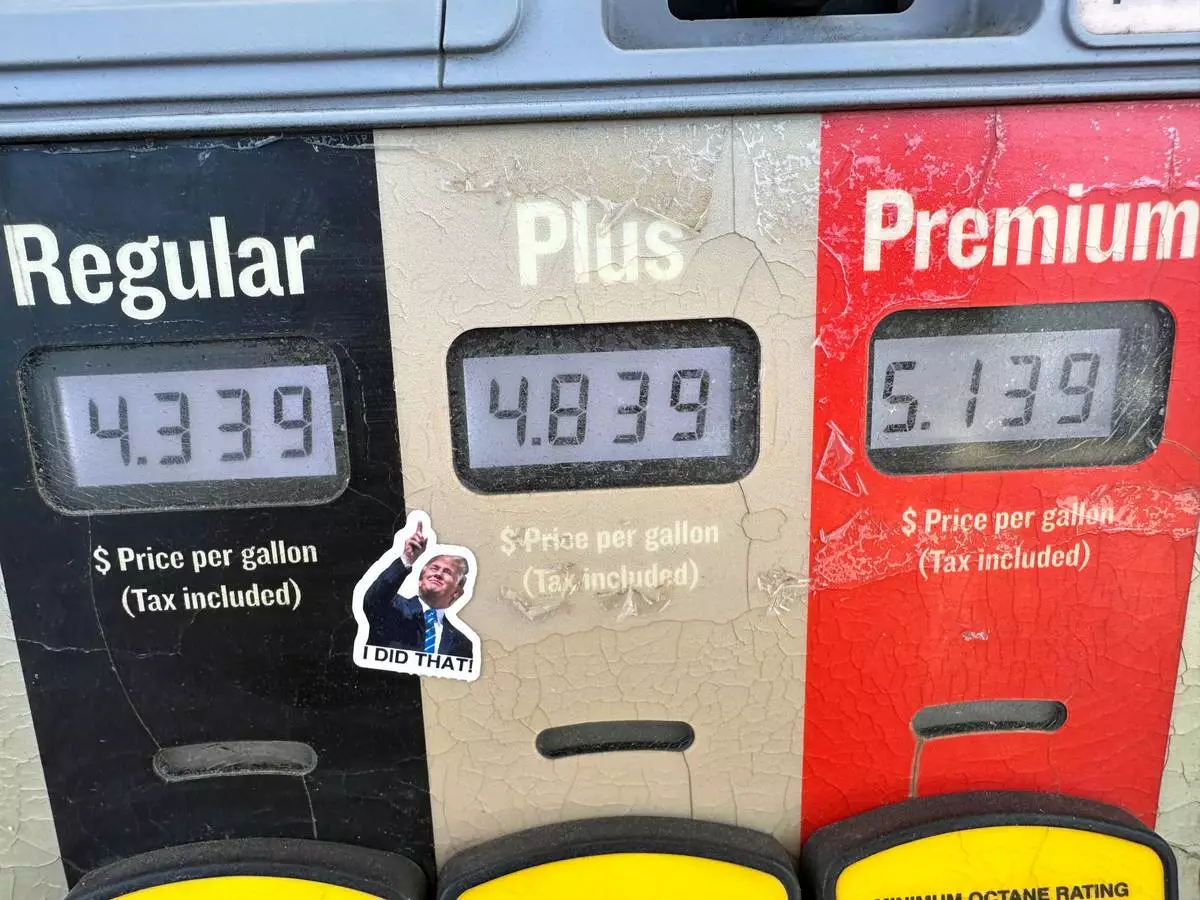
A sticker with the image of President Donald J. Trump points to the electronically-displayed per-gallon prices for the various grades of gasoline available from a pump at a Conoco station Saturday, May 30, 2026, in Denver. (AP Photo/David Zalubowski)
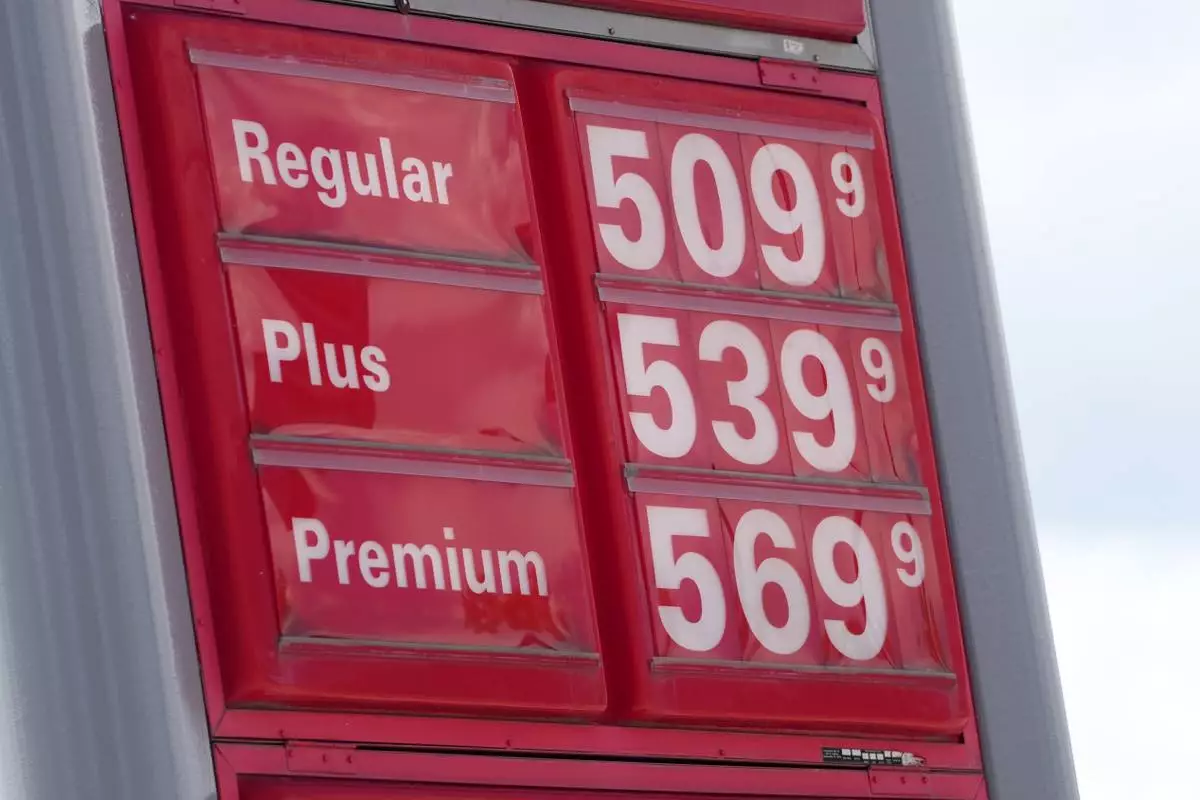
The per-gallon prices for the various grades of gasoline available at a gas station are displayed on a sign above the pumps, Sunday, May 24, 2026, in southeast Denver. (AP Photo/David Zalubowski)
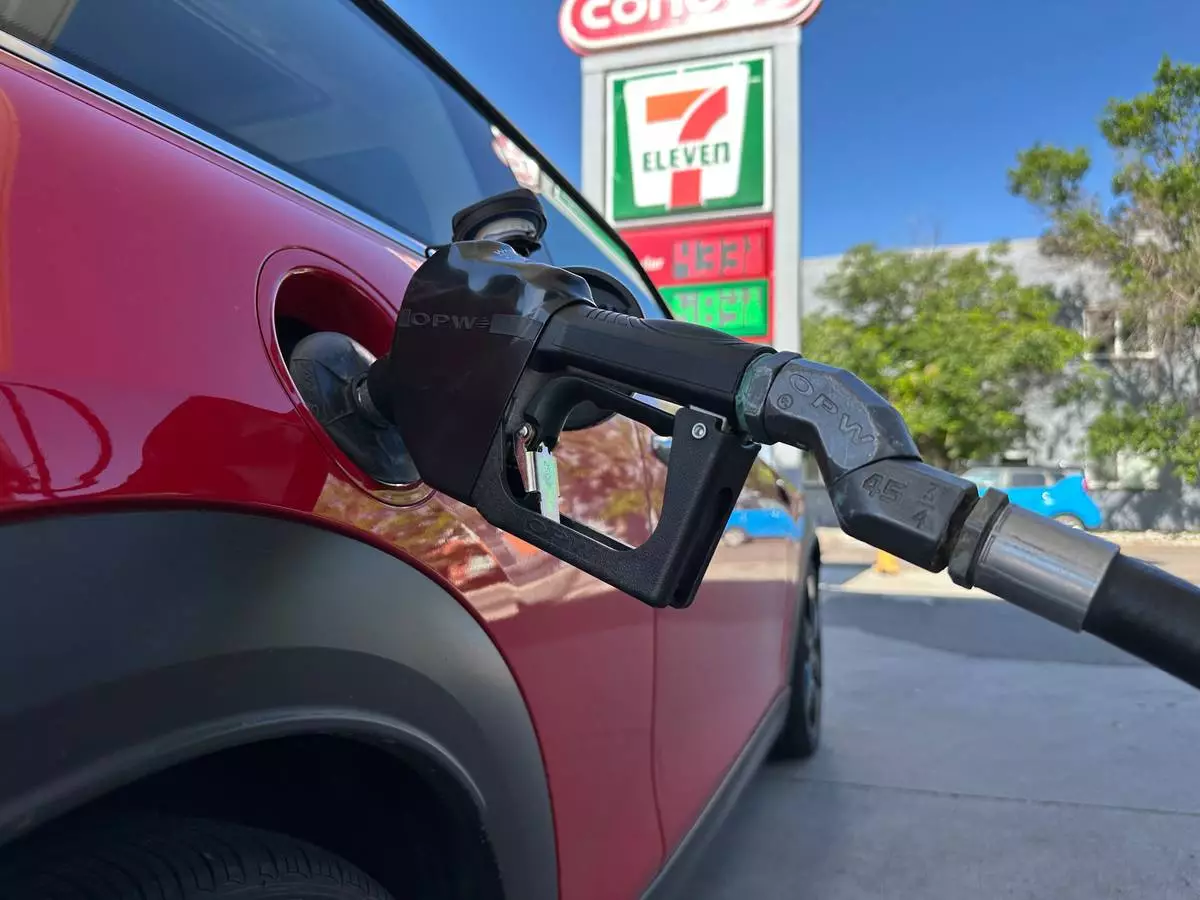
A motorist fills up the tank of a vehicle at a Conoco gasoline station Saturday, May 30, 2026, in Denver. (AP Photo/David Zalubowski)
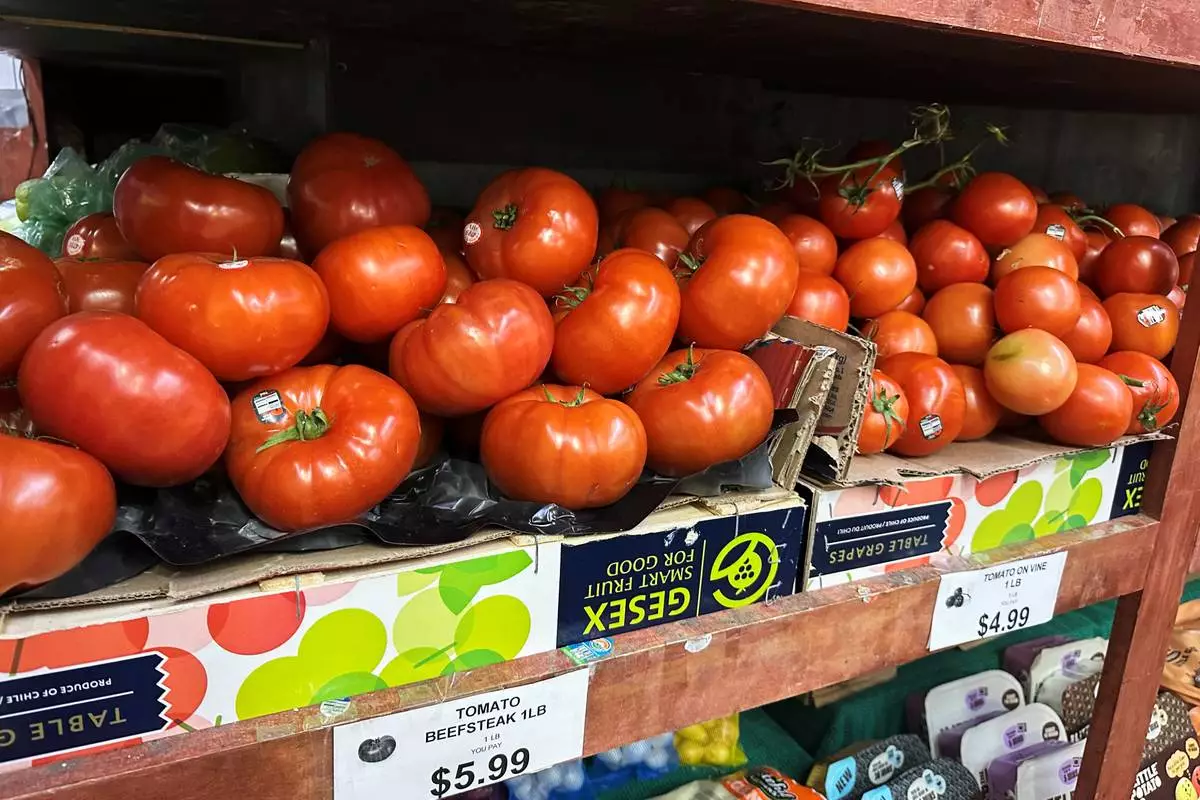
Tomatoes await customers on the shelves of a supermarket in New York on Tuesday, May 26, 2026. (AP Photo/Matt Sedensky)