CHIPPEWA FALLS, Wisc. (AP) — The U.S. military said it shot down four Iranian drones that were launched toward the Strait of Hormuz on Friday and then struck some of the Islamic Republic’s coastal surveillance radar sites in response, raising the risk to a shaky ceasefire as the Trump administration ramps up pressure on Iran.
“The attack drones posed an immediate threat to regional maritime traffic,” U.S. Central Command said on social media.
The military is enforcing a blockade on Iranian ports in response to Tehran’s chokehold on the crucial corridor for global oil and natural gas shipments, which has sent energy prices spiking and posed political problems for President Donald Trump's Republican Party ahead of the midterm congressional elections.
U.S. Central Command said it hit the radar sites, including an island in the strait, “to defend against further attacks.”
It was the latest in back-and-forth attacks that have strained the tenuous ceasefire in the war and efforts to reach a deal to extend that truce. Earlier this week, Iranian drones heavily damaged a passenger terminal at Kuwait’s main airport, killing one person, wounding dozens and briefly closing the airfield.
Despite the attacks raising new concerns that the ceasefire could collapse, Trump told reporters Friday that “the situation with Iran seems to be going quite well.”
“We’re going to come out of Iran very quickly and it’s going to be very strong one way or the other, whether it’s a piece of paper or the very tough way,” Trump said at an event with farmers in Wisconsin. “The very tough way is maybe the easier way, but we’re going to come out, and your fertilizer prices are going to go way down, just like they were four months ago.”
Trump increasingly appears to be boxed in on a conflict that has settled into a holding pattern. U.S. and Iranian negotiators reached a tentative agreement a week ago to extend the ceasefire by 60 days and start a new round of talks on Iran’s nuclear program. But Trump has called for unspecified changes and Iranian officials have shown no public signs of signing off on the deal.
Asked on Friday why it was taking so long, Trump told NBC’s “Meet the Press” it was because “it’s a very hard thing for them,” citing their “great independence” and the fact that “they’re strong, they’re proud.”
“There are things they never thought they’d be doing that they’re going to have to do. They’ve got no choice, and it takes a little while,” he said in the interview.
Trump said the Iranians still have 21% to 22% of their missiles.
His administration also has touted the latest ceasefire agreed to this week by the Lebanese government and Israel after U.S.-brokered talks in Washington. However, the Iranian-backed Hezbollah militant group has rejected the agreement and new attacks have put it at further risk.
The Israeli military on Friday struck multiple parts of southern Lebanon and issued evacuation warnings for nine villages, including one that has sheltered thousands of people displaced by the fighting. The strikes killed nine people in six locations in southern Lebanon, the state news agency reported.
The Israeli military said two soldiers were wounded, one severely, in an encounter Friday with militants in southern Lebanon.
The fighting in Lebanon, where Israeli forces have seized large swaths of the south, also threatens efforts to end the Iran war and reopen the Strait of Hormuz because Iran has demanded that any lasting truce extend to Lebanon.
Besides the drone interception in the Strait of Hormuz, the U.S. military said earlier Friday that its forces boarded a sanctioned oil tanker linked to Iran in the Indian Ocean as the United States seeks to prevent Iran from profiting off its oil and other goods.
The U.S. also targeted Iran’s energy sector with new sanctions on a group of people, firms and tankers.
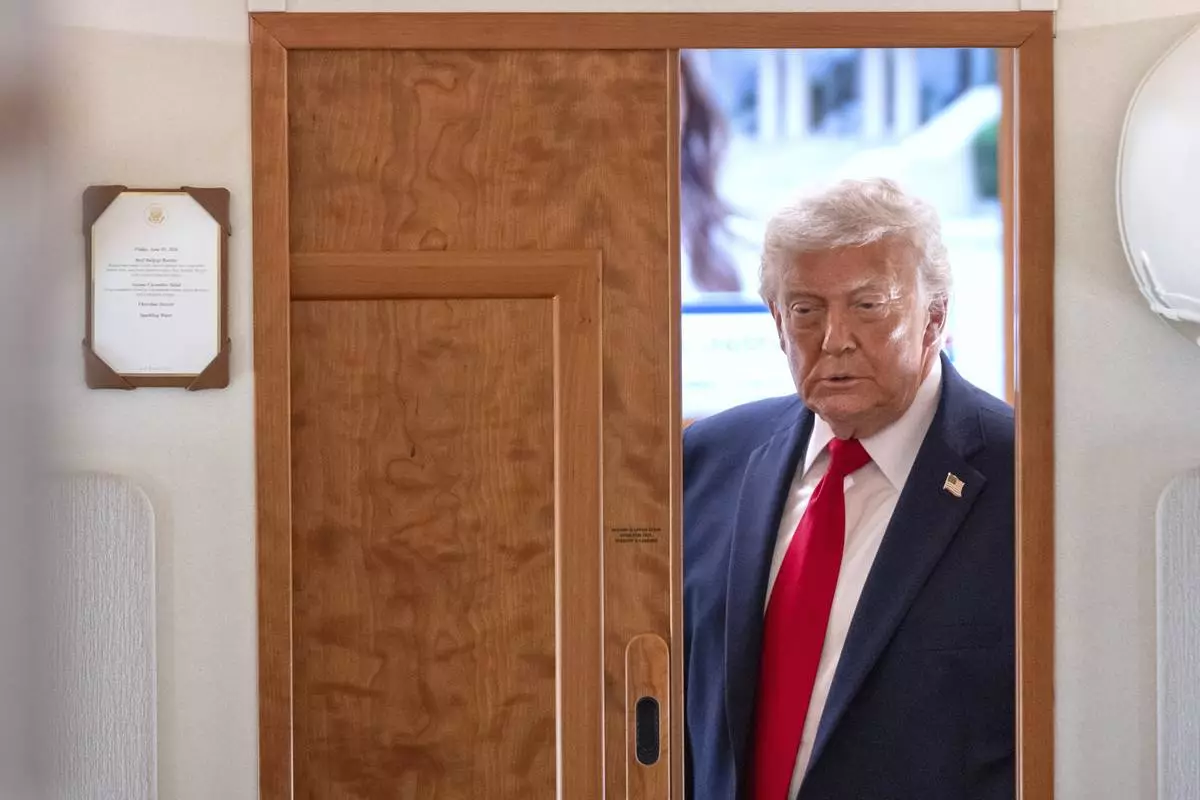
President Donald Trump arrives to speak to reporters aboard Air Force One en route from Joint Base Andrews, Md., to Eau Claire, Wis., Friday, June 5, 2026. (AP Photo/Mark Schiefelbein)

People gather on paddleboards in shallow water as cargo and service vessels are anchored in the Strait of Hormuz off Bandar Abbas, Iran, Monday, June 1, 2026. (Amirhosein Khorgooi/ISNA via AP)

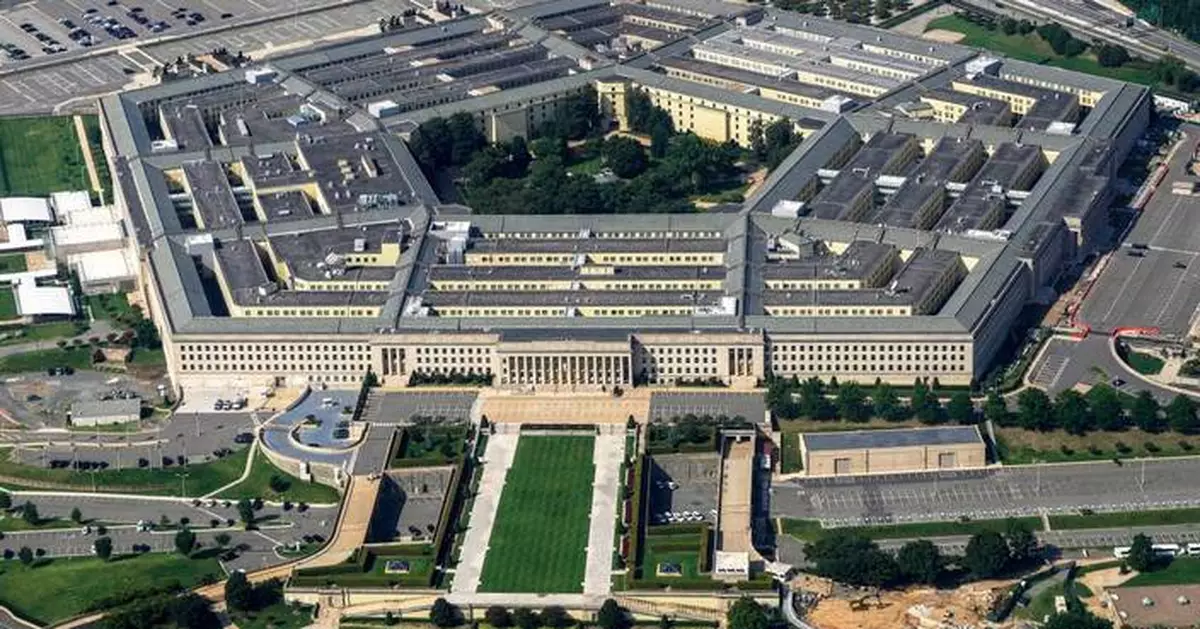
FILE - The Pentagon is viewed from the window of an airplane Aug. 27, 2023, in Washington. (AP Photo/Carolyn Kaster, File)
BUENOS AIRES, Argentina (AP) — Carlos Alberto Solari, the Argentine singer-songwriter known as “the Indio” who led Patricio Rey y sus Redonditos de Ricota, one of the country's most popular and influential rock groups, died Friday. He was 77.
Solari, who had struggled with Parkinson’s disease for at least a decade, was found dead near an indoor pool at his house in the provincial town of Ituzaingó, about 30 kilometers (18 miles) west of the Argentine capital, Buenos Aires, authorities said, without identifying a cause of death.
His family confirmed his death on social media, saying they would hold a public funeral to allow people to bid farewell to the rock legend. Fans began gathering at his home, with some bearing flowers and wearing T-shirts printed with his nickname. Crowds filled a large plaza in downtown Buenos Aires to mourn, commune and sing Solari's hit songs. People wept. Strangers hugged.
Eros Ruarte, 19, said he woke up Friday to his mother breaking the bad news.
“'I said, no, mom, you can't say that.' I couldn't believe it, that the Indio had died. ... He is the biggest idol in the world. I grew up listening to him," he said from the impromptu wake. “I heard his songs from my mom, my uncle.”
As the lead singer of Patricio Rey y sus Redonditos de Ricota — known more simply as “Los Redondos” — Solari became a countercultural icon for disaffected Argentines coming of age as their country transitioned from a bloody military dictatorship to a democracy characterized by newfound freedoms but also instability and hyperinflation in the 1980s.
During the consumerist frenzy that gripped Argentina the 1990s, under the free-market policies of then-President Carlos Saul Menem, Solari's classic rock anthems, punchy dance tunes and cryptic lyrics gave voice to a spirit of rebellion against the excesses of capitalism and influences of foreign powers. Los Redondos released 10 studio albums, eschewing major record labels to maintain artistic independence.
The band broke up in 2001, but Solari found continued success as a solo artist, releasing five more albums under his own name that mixed mainstream rock and electronic influences and drawing hundreds of thousands of fans to parks and stadiums across Argentina.
At a massive concert in 2016, he announced that he had been diagnosed with Parkinson’s disease. “Mr. Parkinson is nipping at my heels. But here I am,” he said. The crowd went wild. He later retired from touring, speaking candidly in interviews about the debilitating effects of the disease.
Tributes poured in from politicians, artists and soccer stars across the country.
The Argentine Soccer Association said Solari's voice “became a popular rallying cry” and “echoed in the stands” of the soccer-crazed country.
The Grandmothers of Plaza de Mayo, a prominent activist group which sought to find relatives who had been killed or “disappeared” by the 1976-83 dictatorship, said the singer “inspired society as a whole to doubt, to question and to think critically.”
Cristina Fernández de Kirchner, Argentina's former president who is serving a corruption sentence under house arrest, posted one of his famous lyrics on social media, popularized as a call to live courageously: “Just living costs you your life.”
Solari is survived by his wife, Virginia Mones Ruiz, and 25-year-old son Bruno.
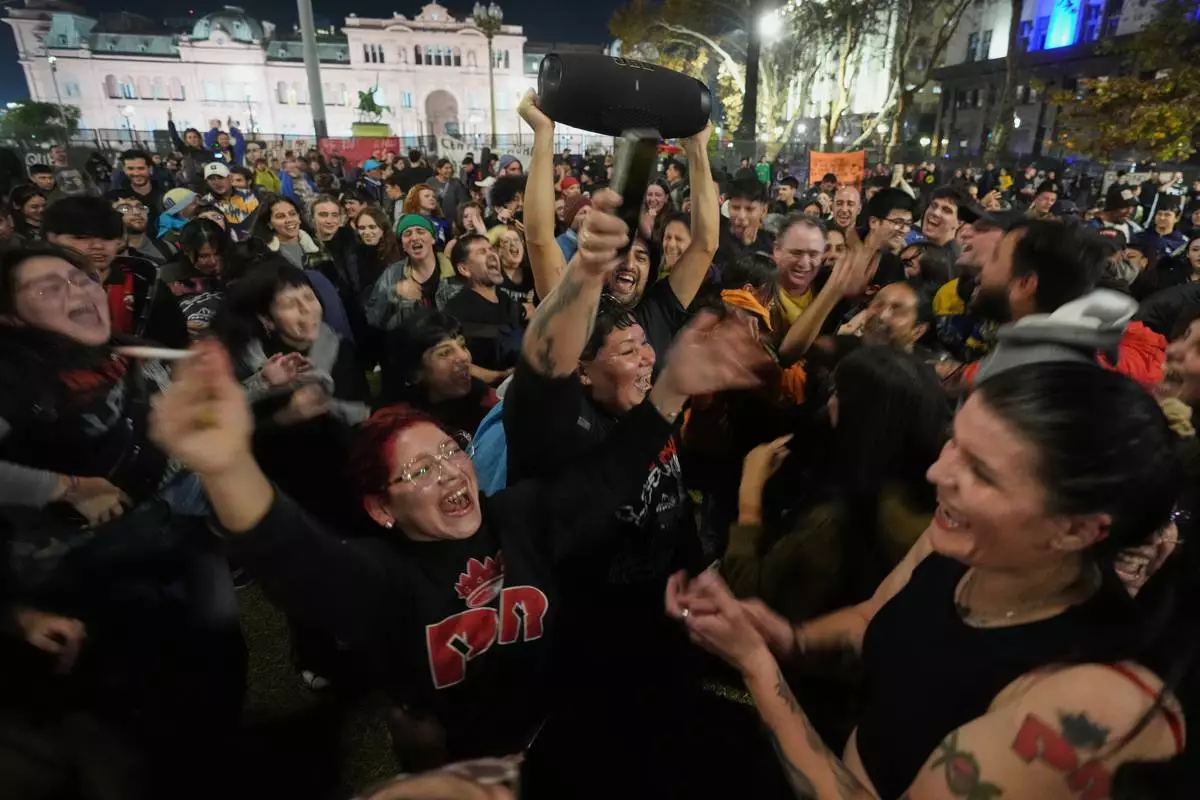
People gather to remember Carlos Alberto Solari, the Argentine singer-songwriter known as "the Indio" who led Patricio Rey y sus Redonditos de Ricota, on the day of his death, at Plaza de Mayo square in Buenos Aires, Argentina, Friday, June 5, 2026. (AP Photo/Gustavo Garello)
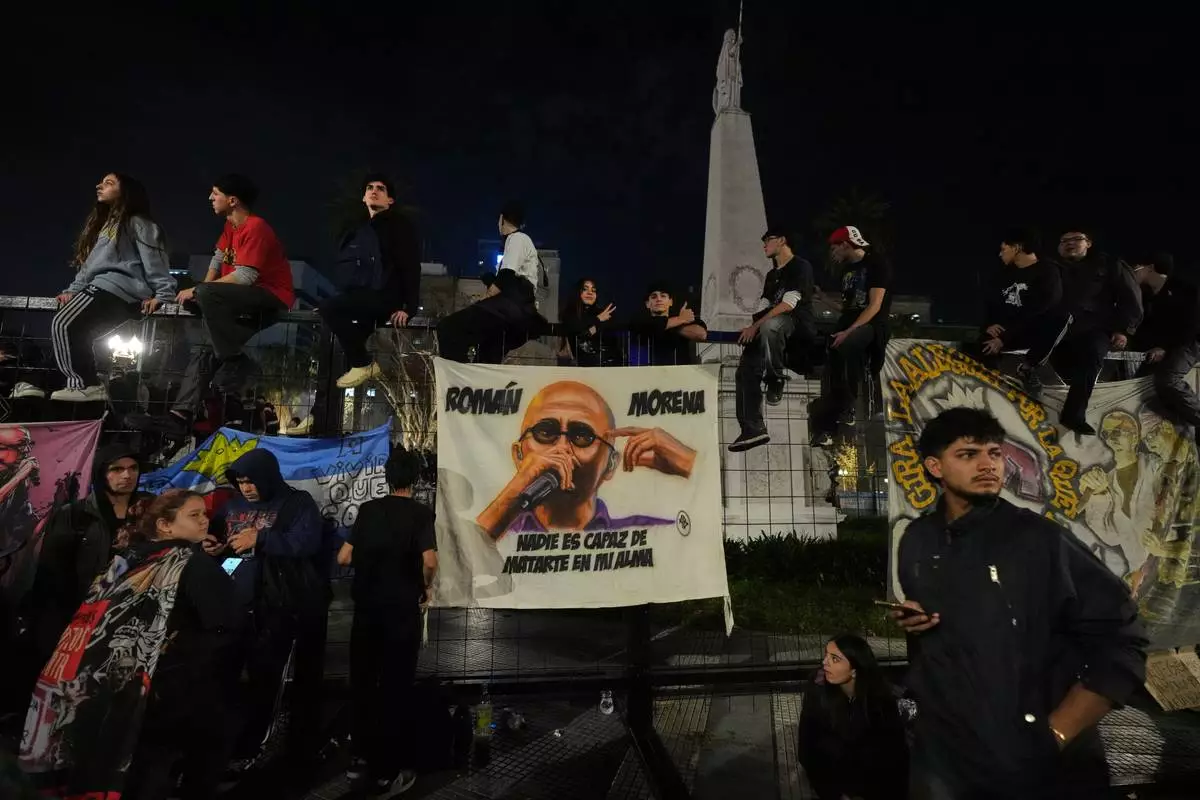
People gather near a drawing depicting Carlos Alberto Solari, the Argentine singer-songwriter known as "the Indio" who led Patricio Rey y sus Redonditos de Ricota, on the day of his death, at Plaza de Mayo square in Buenos Aires, Argentina, Friday, June 5, 2026. (AP Photo/Gustavo Garello)
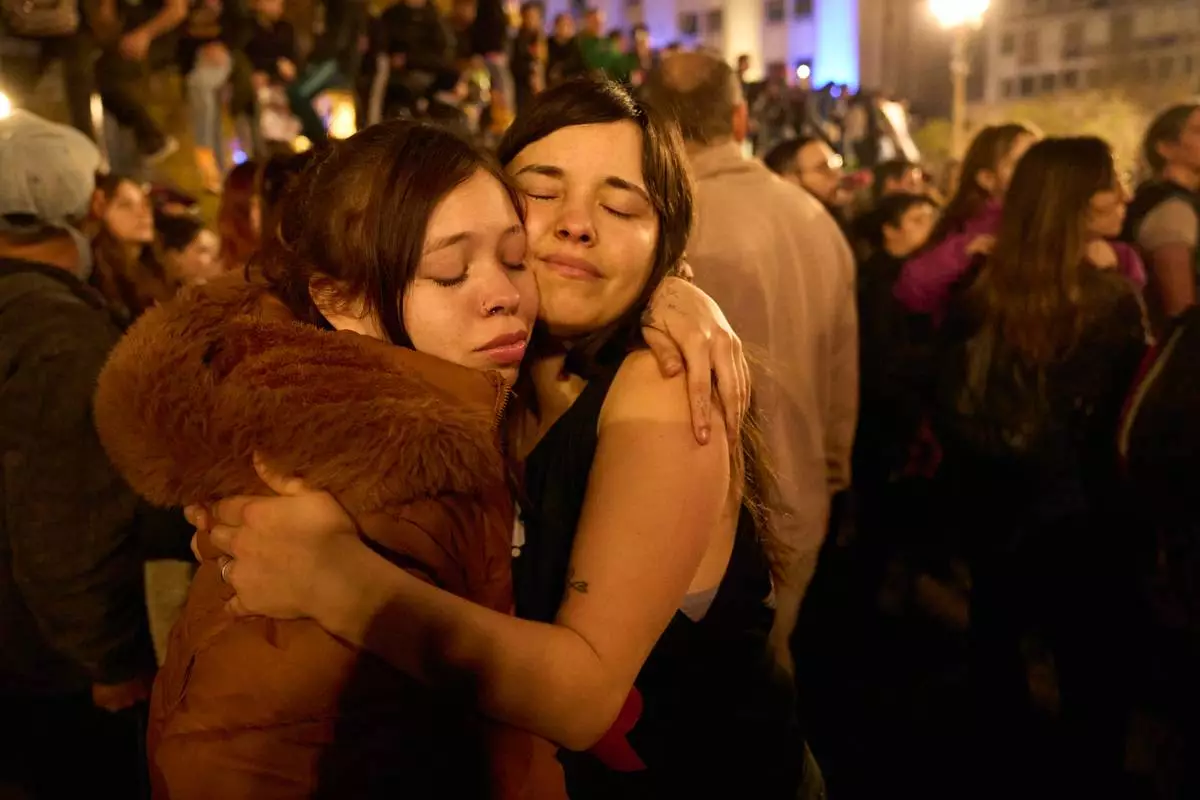
People gather to remember Carlos Alberto Solari, the Argentine singer-songwriter known as "the Indio" who led Patricio Rey y sus Redonditos de Ricota, on the day of his death, at Plaza de Mayo square in Buenos Aires, Argentina, Friday, June 5, 2026. (AP Photo/Victor R. Caivano)
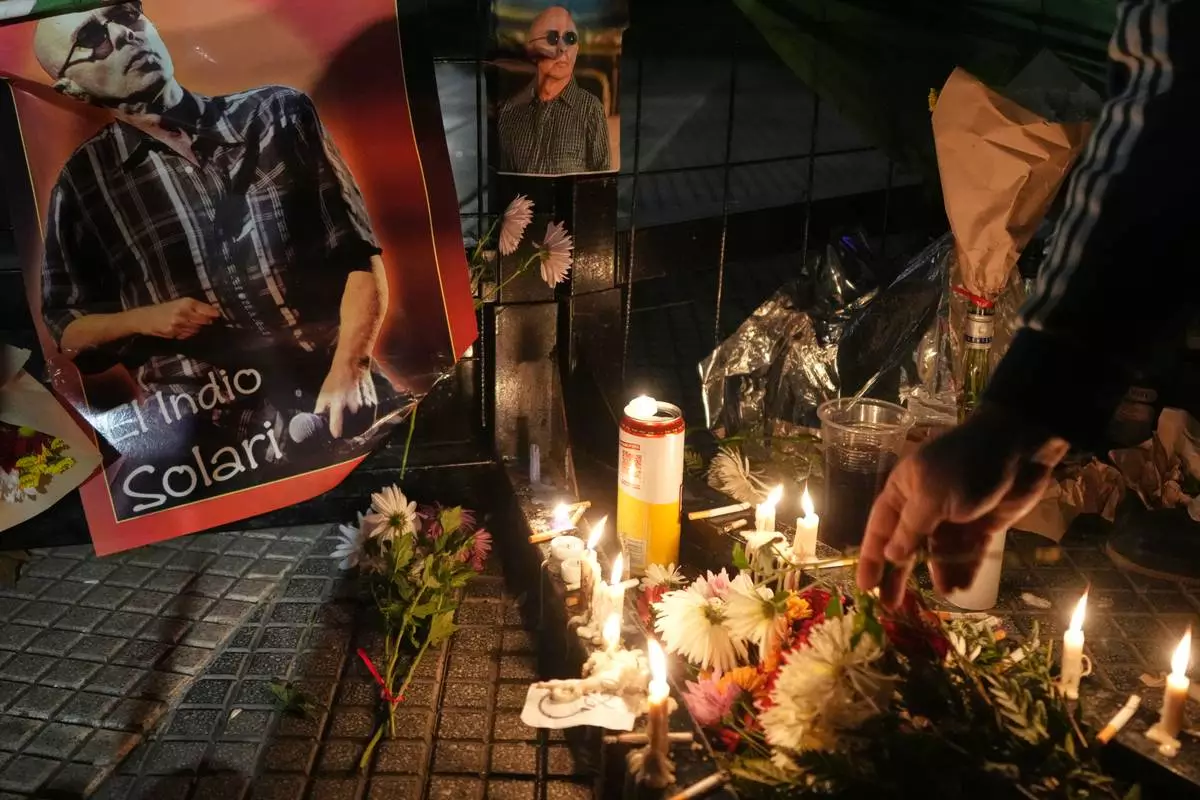
A person lights a candle near a picture of Carlos Alberto Solari, the Argentine singer-songwriter known as "the Indio" who led Patricio Rey y sus Redonditos de Ricota, on the day of his death, at Plaza de Mayo square in Buenos Aires, Argentina, Friday, June 5, 2026. (AP Photo/Gustavo Garello)
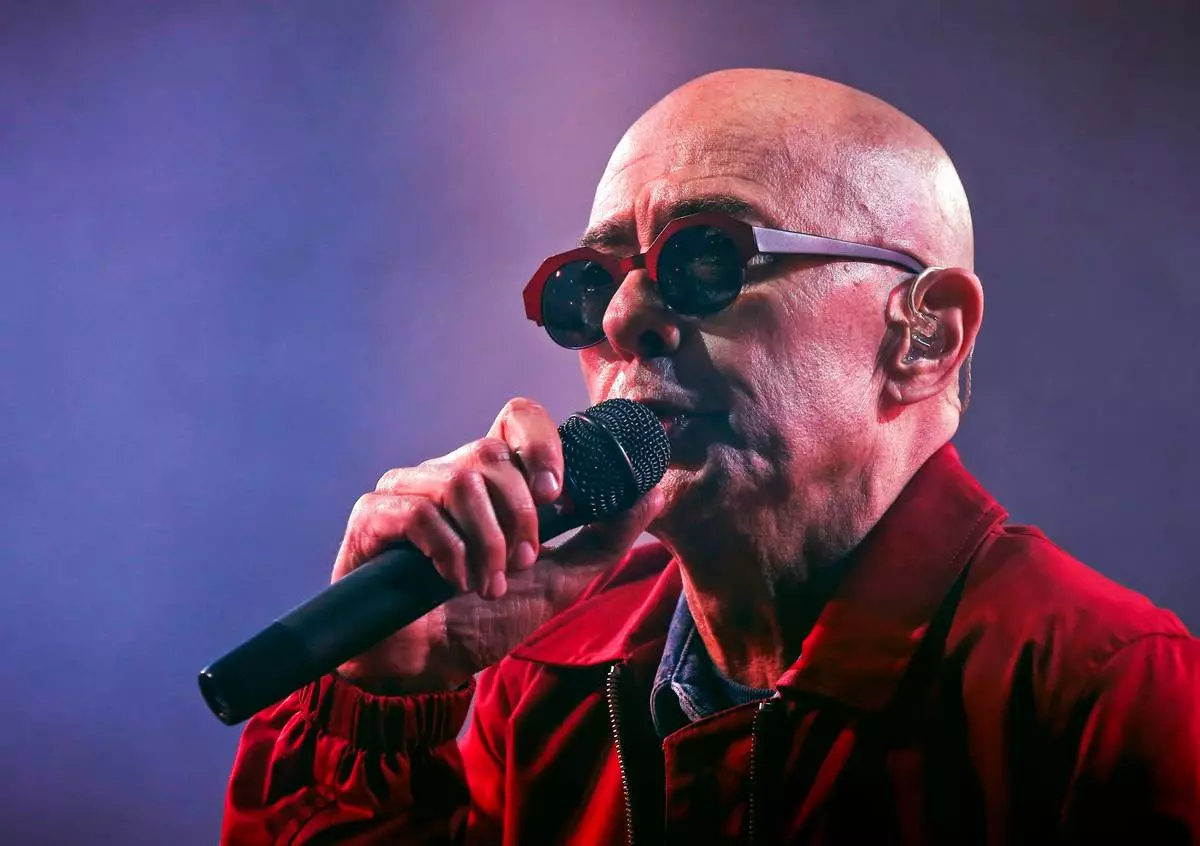
FILE - Argentine singer Indio Solari performs in Olavarria, Argentina, March 11, 2017. (AP Photo/Hernan Leonardi, File)