Israeli forces and settlers carried out a total of 1,659 violations in the West Bank during May, said a monthly report from the Palestine Liberation Organization's Wall and Settlement Resistance Commission.
The Commission's head, Mu'ayyad Sha'ban, said the Israeli forces carried out 1,108 attacks, while the settlers carried out 551.
According to Sha'ban, the form of the attacks varied, including direct physical violence, uprooting of trees, burning of fields, denial of farmers' access to their land, seizure of property, and demolition of homes and agricultural structures.
Sha'ban said that the pattern of attacks clearly reveals the adoption of systematic policies aimed at imposing a coercive, expulsive environment. He said these policies translate into forced displacement operations.
Sha'ban said the displacement of families and destruction of property, land, and trees constitutes a compound crime targeting both people and place, adding that these actions are part of a project of gradual de facto annexation managed through organized escalation of violence.
Sha'ban said that the Israeli settlers attempted to establish 12 new settlement outposts since the beginning of May.
In addition, the Israeli forces carried out 70 demolition operations in May targeting 155 facilities and distributed 51 demolition notifications for Palestinian facilities, Sha'ban said.

Israeli forces, settlers carry out over 1,600 attacks in West Bank during May: report
Slovak President Peter Pellegrini visited the world's first embodied intelligence robot 4S store, known as Robot Mall, at Beijing E-Town on Tuesday.
Pellegrini is paying a state visit to China from July 27 to 29 at the invitation of Chinese President Xi Jinping. He toured highlights of this year's Humanoid Robot Half Marathon Competition and interacted with humanoid and medical robots during a stop at Robot Mall.
Expressing amazement at China's robotics achievements, the Slovak president said he believes the cutting-edge technology showcased at the venue will find its way into households in the near future.
Robot Mall is designed to support the transition of robotics from technological innovation to real-world application. Its exhibition highlights how robots are entering homes and industrial scenarios, including education, delivery, companionship, entertainment, and daily services. When touring the exhibition, Pellegrini also shared his views on China-Slovakia cooperation in cutting-edge technologies.
"Slovakia is a small country, but things which are developed in China can be used already in Slovakia. So I think we have to find a way how to implement them as soon as possible into our daily life, into our companies and so on," he said.
Chinese investment in Slovakia has continued to grow in recent years, particularly in high-tech industries, green energy, and innovation-driven sectors.
Analysts say closer cooperation in modern technology and research will remain a key topic during his visit to China.
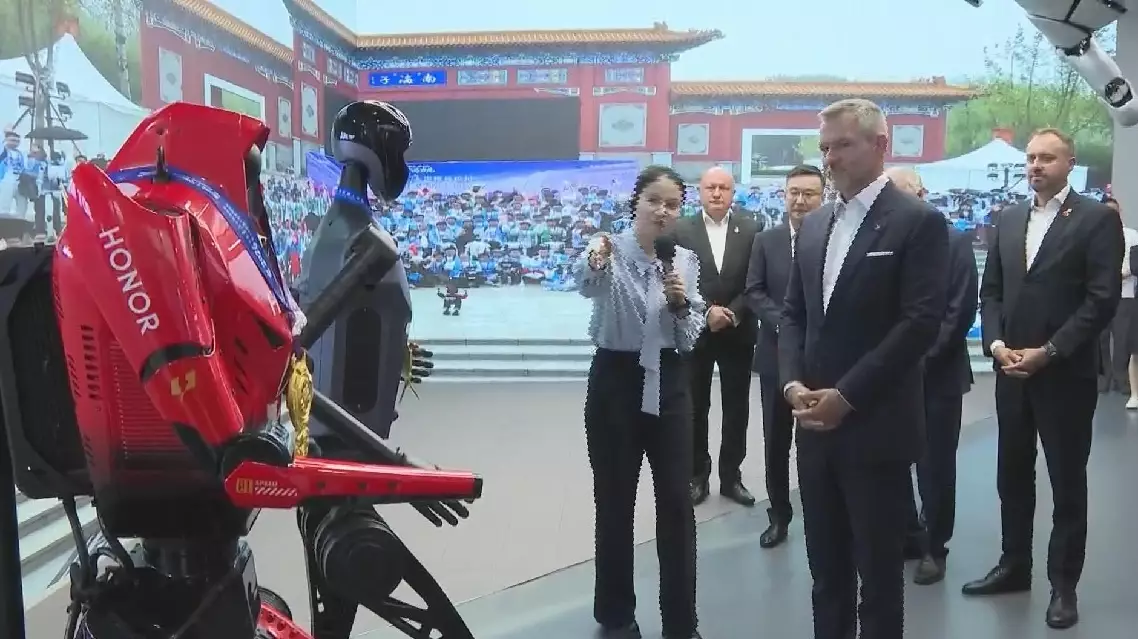
Slovak President visits robot mall at Beijing E-Town
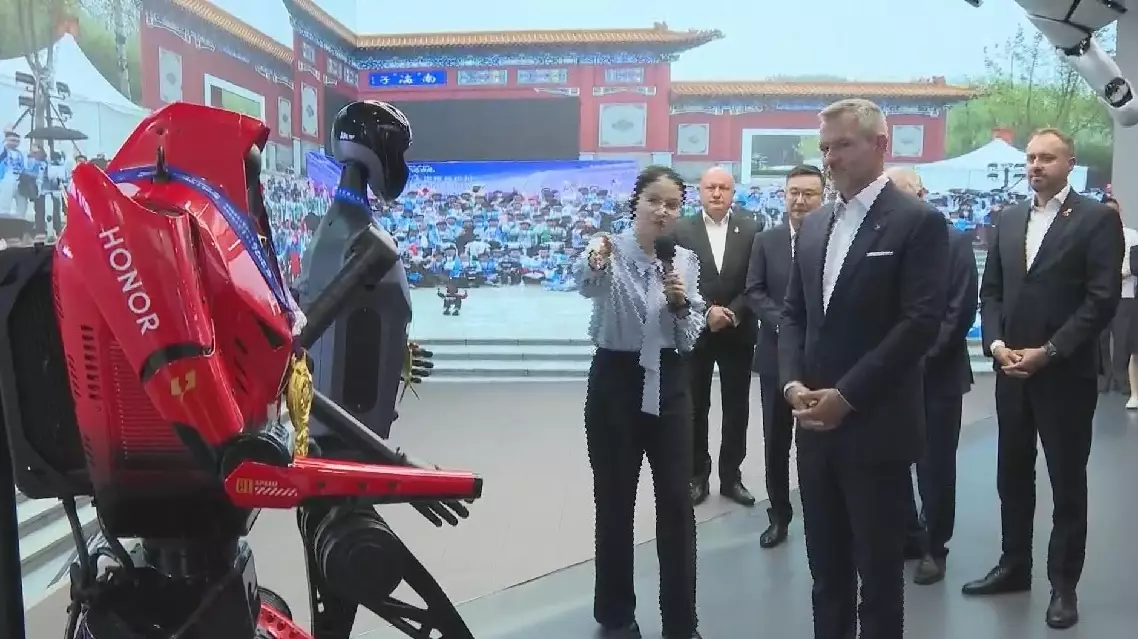
Slovak President visits robot mall at Beijing E-Town