Skip to Content Facebook Feature Image

Initial results show Prime Minister Kurti's party won most votes in early election in Kosovo

News

Initial results show Prime Minister Kurti's party won most votes in early election in Kosovo
News

News

Initial results show Prime Minister Kurti's party won most votes in early election in Kosovo

2026-06-08 06:43 Last Updated At:11:53

PRISTINA, Kosovo (AP) — Prime Minister Albin Kurti's party won the most votes in an early parliamentary election in Kosovo on Sunday, early results showed. But it remained unclear whether the outcome will bring an end to a political impasse in the small Balkan nation seeking to move closer to the European Union and NATO.

The vote was Kosovo's third in less than 18 months. It was scheduled after the main political parties failed to agree by a March deadline on who should replace former President Vjosa Osmani. The first inconclusive election in February 2025 left the country without a functioning government for much of last year, forcing a second election in December.

More Images
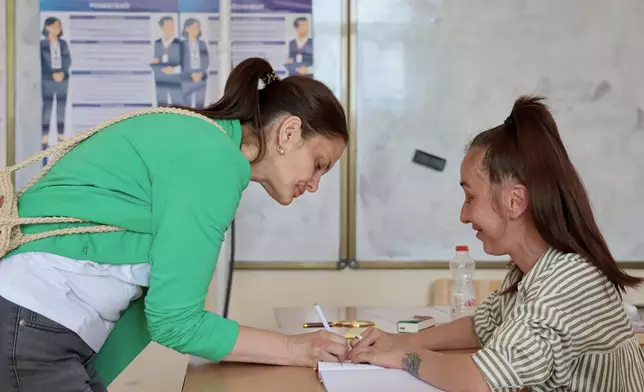
A voter signs an election document at a polling station for an early parliamentary election, the third in 18 months, in the northern Serb-dominated part of ethnically divided town of Mitrovica, Kosovo, Sunday, June 7, 2026. (AP Photo/Dejan Simicevic)
A voter signs an election document at a polling station for an early parliamentary election, the third in 18 months, in the northern Serb-dominated part of ethnically divided town of Mitrovica, Kosovo, Sunday, June 7, 2026. (AP Photo/Dejan Simicevic)
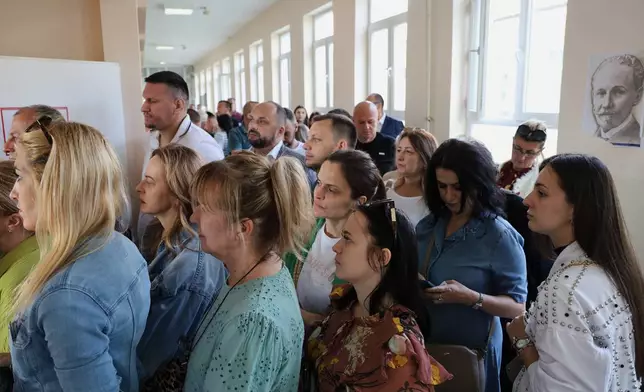
People wait in line at a polling station for an early parliamentary election, the third in 18 months, in the northern Serb-dominated part of ethnically divided town of Mitrovica, Kosovo, Sunday, June 7, 2026. (AP Photo/Dejan Simicevic)

People wait in line at a polling station for an early parliamentary election, the third in 18 months, in the northern Serb-dominated part of ethnically divided town of Mitrovica, Kosovo, Sunday, June 7, 2026. (AP Photo/Dejan Simicevic)

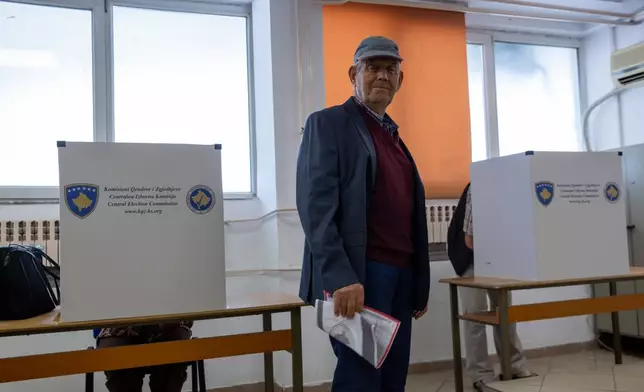
A man votes during parliamentary election in Kosovo capital Pristina, on Sunday, June 7, 2026. (AP Photo/Visar Kryeziu)
A man votes during parliamentary election in Kosovo capital Pristina, on Sunday, June 7, 2026. (AP Photo/Visar Kryeziu)

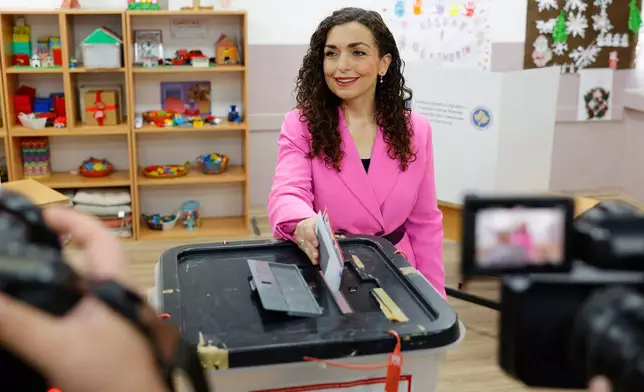
Kosovo's former president Vjosa Osmani votes during parliamentary election in Kosovo capital Pristina, on Sunday, June 7, 2026. (AP Photo/Blerim Berisha)
Kosovo's former president Vjosa Osmani votes during parliamentary election in Kosovo capital Pristina, on Sunday, June 7, 2026. (AP Photo/Blerim Berisha)

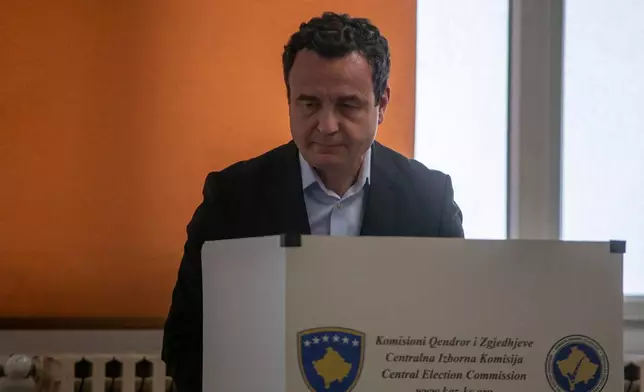
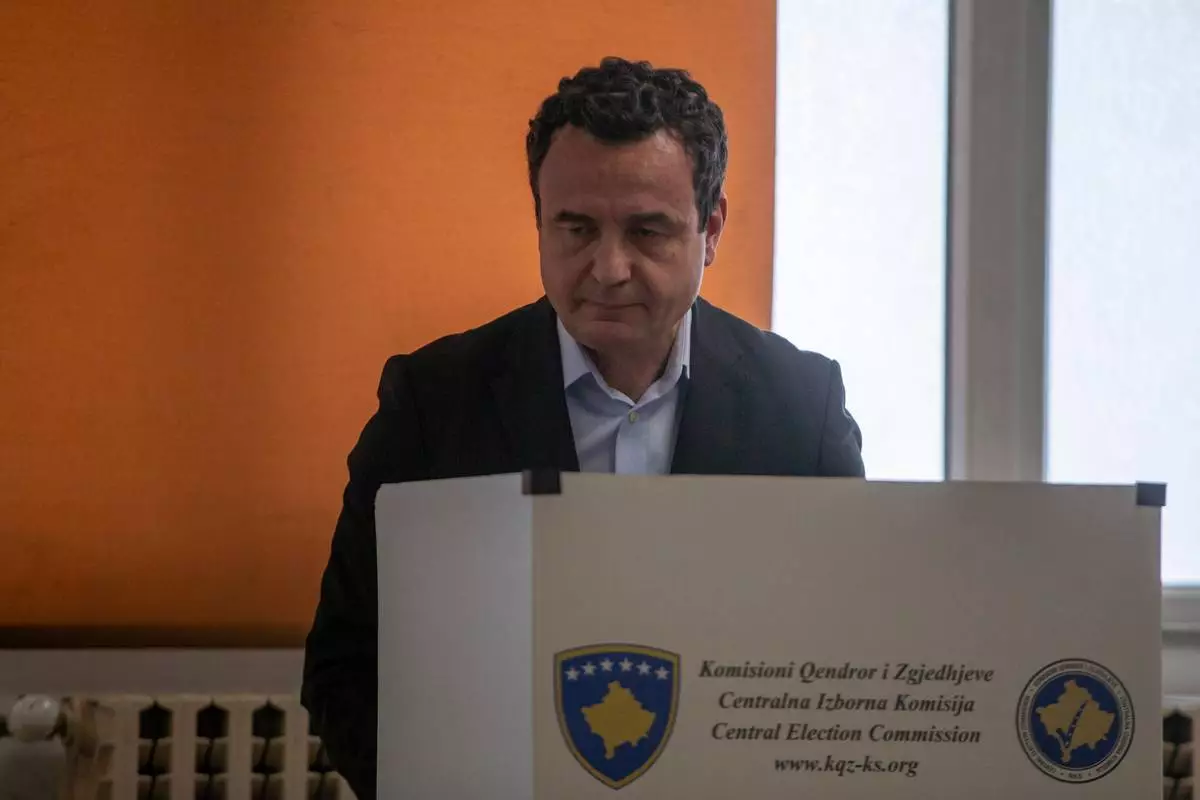
Kosovo's acting Prime Minister and Vetevendosje party leader Albin Kurti votes during parliamentary election in Kosovo capital Pristina, on Sunday, June 7, 2026. (AP Photo/Visar Kryeziu)
Kosovo's acting Prime Minister and Vetevendosje party leader Albin Kurti votes during parliamentary election in Kosovo capital Pristina, on Sunday, June 7, 2026. (AP Photo/Visar Kryeziu)

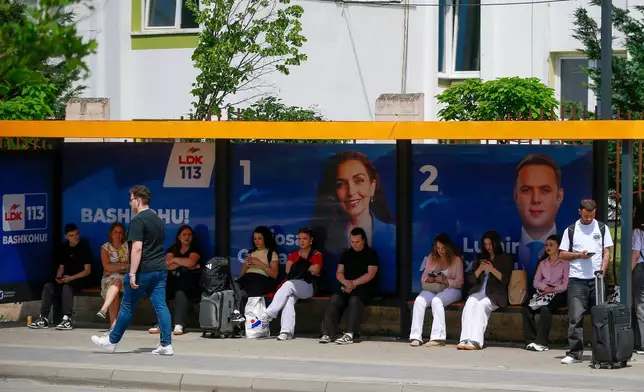
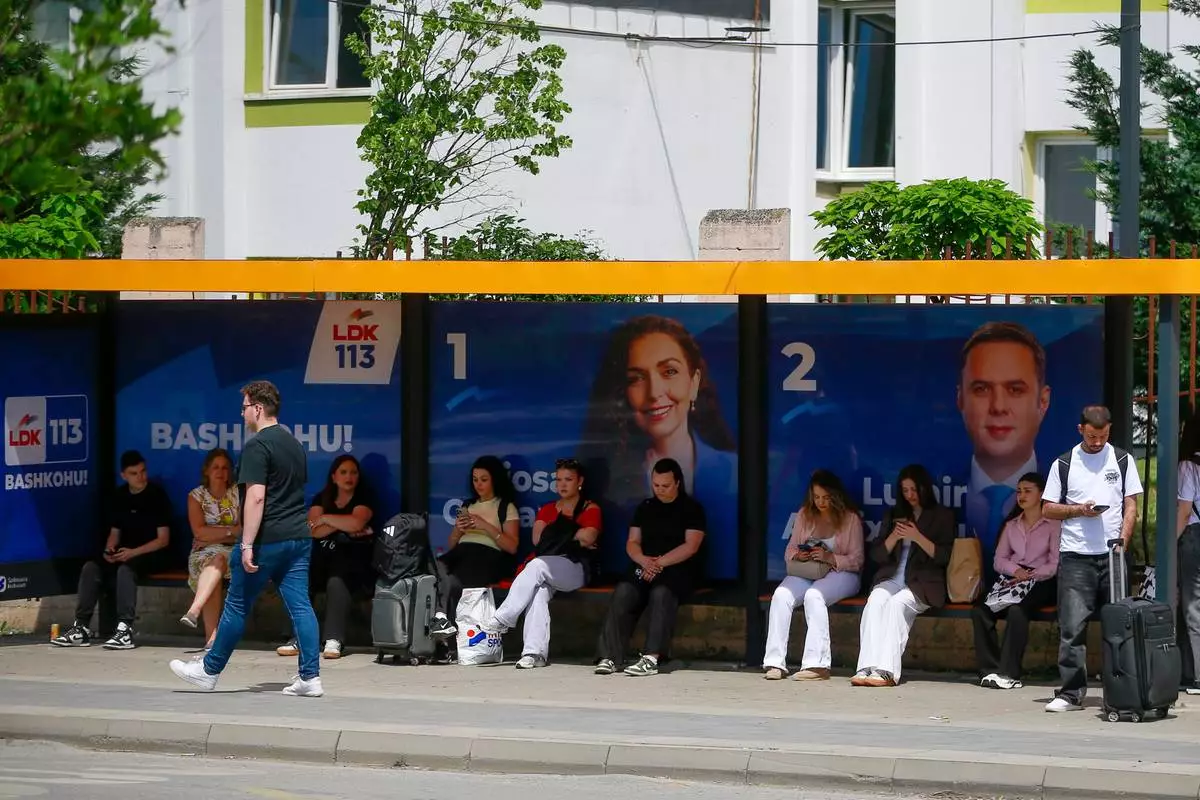
People wait at a bus station displaying election posters in capital Pristina, Kosovo, Friday, June 5, 2026, ahead of snap parliamentary elections on June 7. (AP Photo/Visar Kryeziu)
People wait at a bus station displaying election posters in capital Pristina, Kosovo, Friday, June 5, 2026, ahead of snap parliamentary elections on June 7. (AP Photo/Visar Kryeziu)

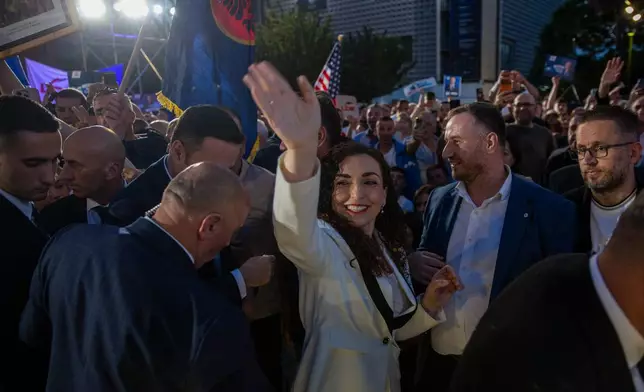
Vjosa Osmani, Kosovo former president, waves to supporter at the closing political rally of the Democratic League of Kosovo (LDK), in capital Pristina on Friday, June 5, 2026. (AP Photo/Visar Kryeziu)
Vjosa Osmani, Kosovo former president, waves to supporter at the closing political rally of the Democratic League of Kosovo (LDK), in capital Pristina on Friday, June 5, 2026. (AP Photo/Visar Kryeziu)

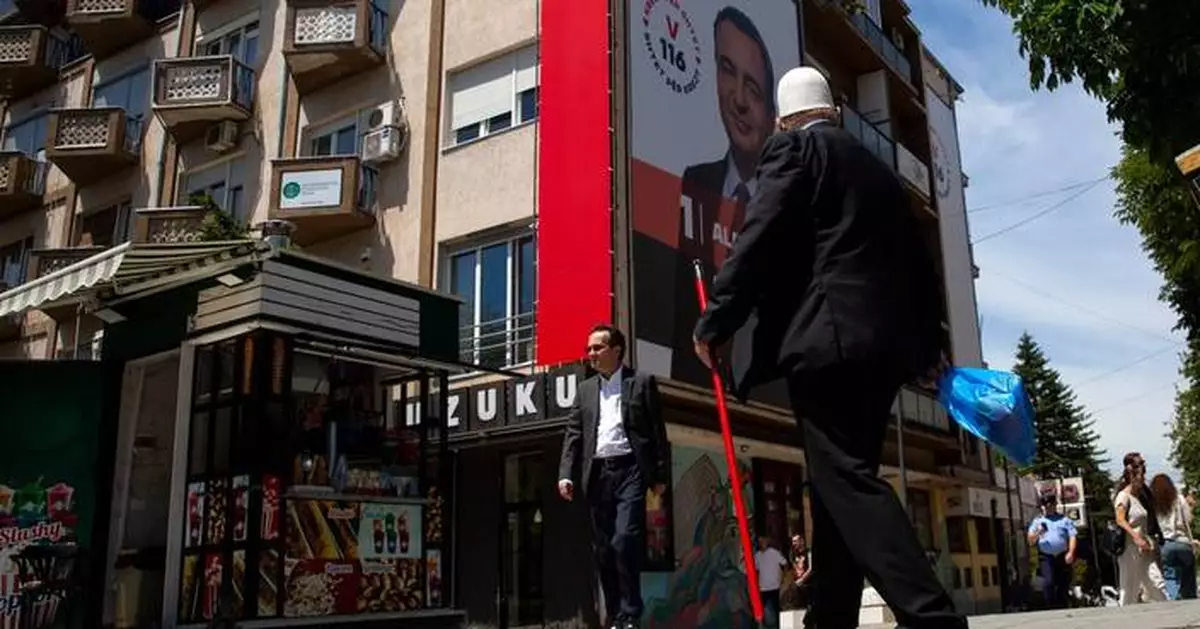
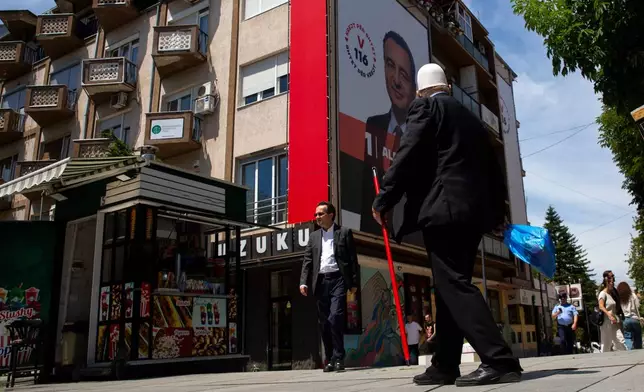
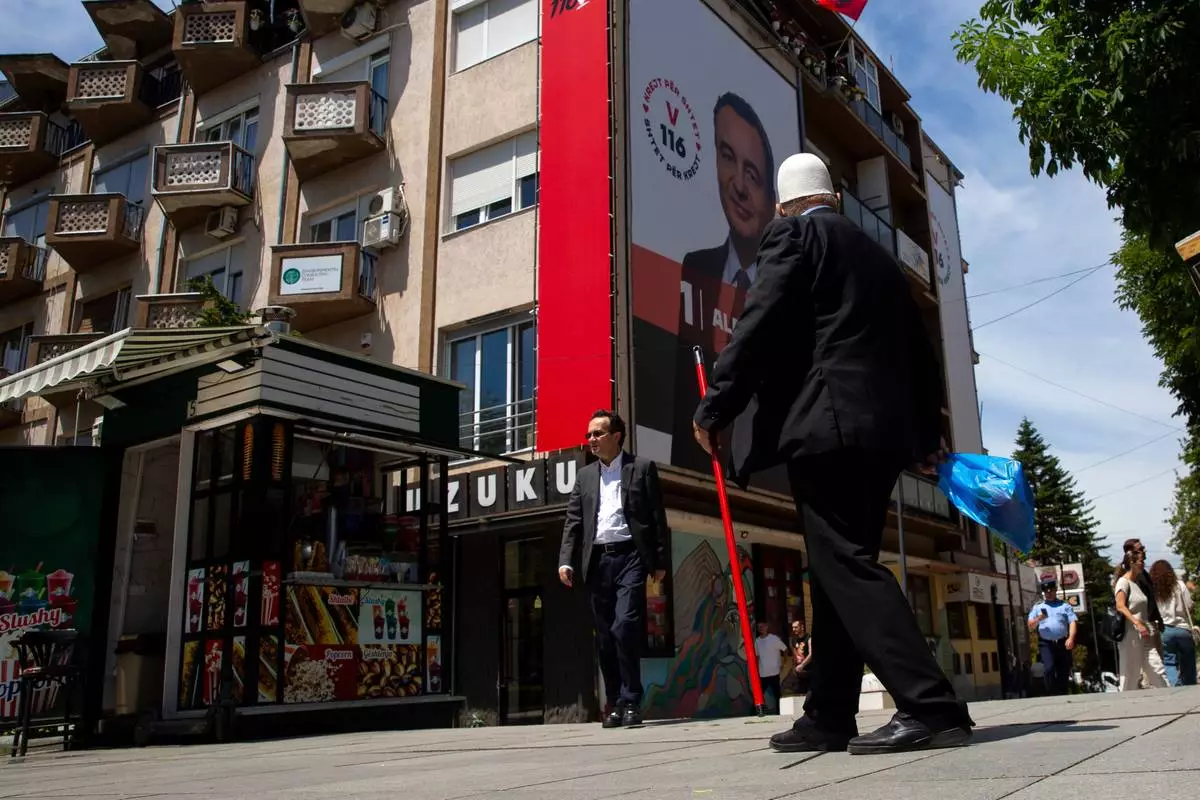
People pass by a giant election poster of acting prime minister Albin Kurti, in capital Pristina, Kosovo, Friday, June 5, 2026, ahead of snap parliamentary elections on June 7. (AP Photo/Visar Kryeziu)

People pass by a giant election poster of acting prime minister Albin Kurti, in capital Pristina, Kosovo, Friday, June 5, 2026, ahead of snap parliamentary elections on June 7. (AP Photo/Visar Kryeziu)

Kurti's ruling Vetevendosje party won around 43% of the votes followed by the Democratic Party of Kosovo with 21,7% and the Democratic League of Kosovo with 18%, the state election authorities said after counting nearly 90% of the ballots cast on Sunday. The final tally also will need to include some 100,000 votes of Kosovars living abroad.

Kurti and his party had a comfortable majority of more than 50% of the votes in a previous early election in December. Coupled with a lower turnout, the fall in support appears to reflect voter disappointment with mainstream politicians who have kept the small Balkan nation in a state of a prolonged crisis.

The political stalemate has negatively affected Kosovo’s economy, already hit hard by the global energy crisis and rising fuel prices. Kosovo, one of the youngest and poorest countries in Europe, declared independence from Serbia in 2008, after a 1998-99 war that ended in a NATO bombing that forced Serbia to withdraw.

Kosovo’s president is elected by at least 80 lawmakers in the 120-member assembly, requiring a broader political consensus. The newly elected lawmakers will face the same task once the new assembly is formed after Sunday's vote despite a reshuffle in the their numbers.

Kurti told supporters in Pristina that the election confirmed the dominance of his party. He promised to “communicate, meet and cooperate with all political parties ... because public interest comes first for us.”

The main opposition parties have accused Kurti of seeking to impose full control over all political institutions in the country.

Osmani joined the opposition LDK in the election, having turned against Kurti after he refused to back her for a second term. Osmani earlier Sunday expressed “great optimism” that the election will “take us out of the repeated crisis that has damaged our country, both domestically and beyond our borders.”

While the key players blamed each other for the crisis, their inability to reach a compromise has fueled frustration among Kosovo’s just under 2 million voters, who want the government to focus on the economy and living standards instead.

The turnout on Sunday was 36,3% while it was nearly 45% in December.

Arton Smajli, 42, a resident of the capital, Pristina, said that “we are tired, but the will for change is greater than that.”

Sejdi Shala, 73, was also optimistic that the election will bring “stability of the institutions and the society.”

The institutional vacuum, without a stable government, has delayed access to the EU and other international funds available to the country. European Council President António Costa, during a visit last week, urged Kosovo to end the political stalemate and unite over the goal of EU integration.

Kosovo has been recognized by the United States and most EU countries, but not by Serbia and its allies, Russia and China. Pristina and Belgrade have been told that they must mend relations to move forward with their EU membership bids.
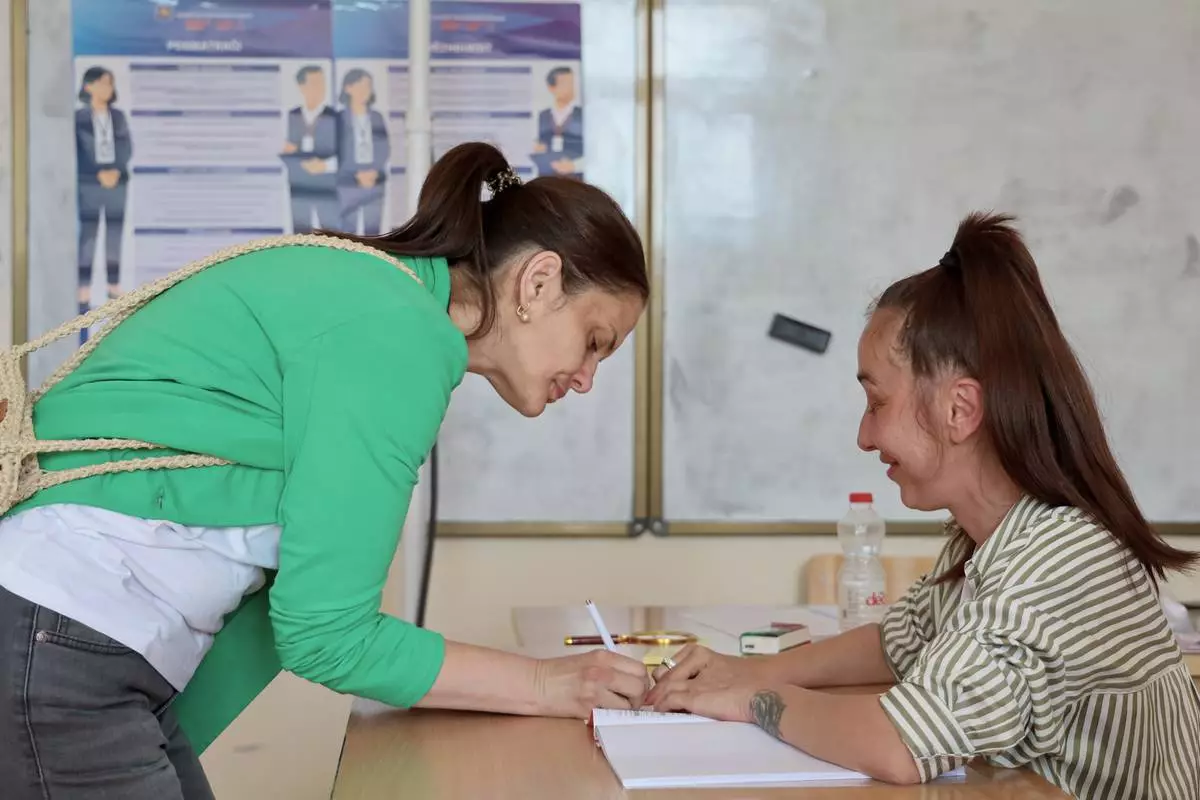
A voter signs an election document at a polling station for an early parliamentary election, the third in 18 months, in the northern Serb-dominated part of ethnically divided town of Mitrovica, Kosovo, Sunday, June 7, 2026. (AP Photo/Dejan Simicevic)
A voter signs an election document at a polling station for an early parliamentary election, the third in 18 months, in the northern Serb-dominated part of ethnically divided town of Mitrovica, Kosovo, Sunday, June 7, 2026. (AP Photo/Dejan Simicevic)
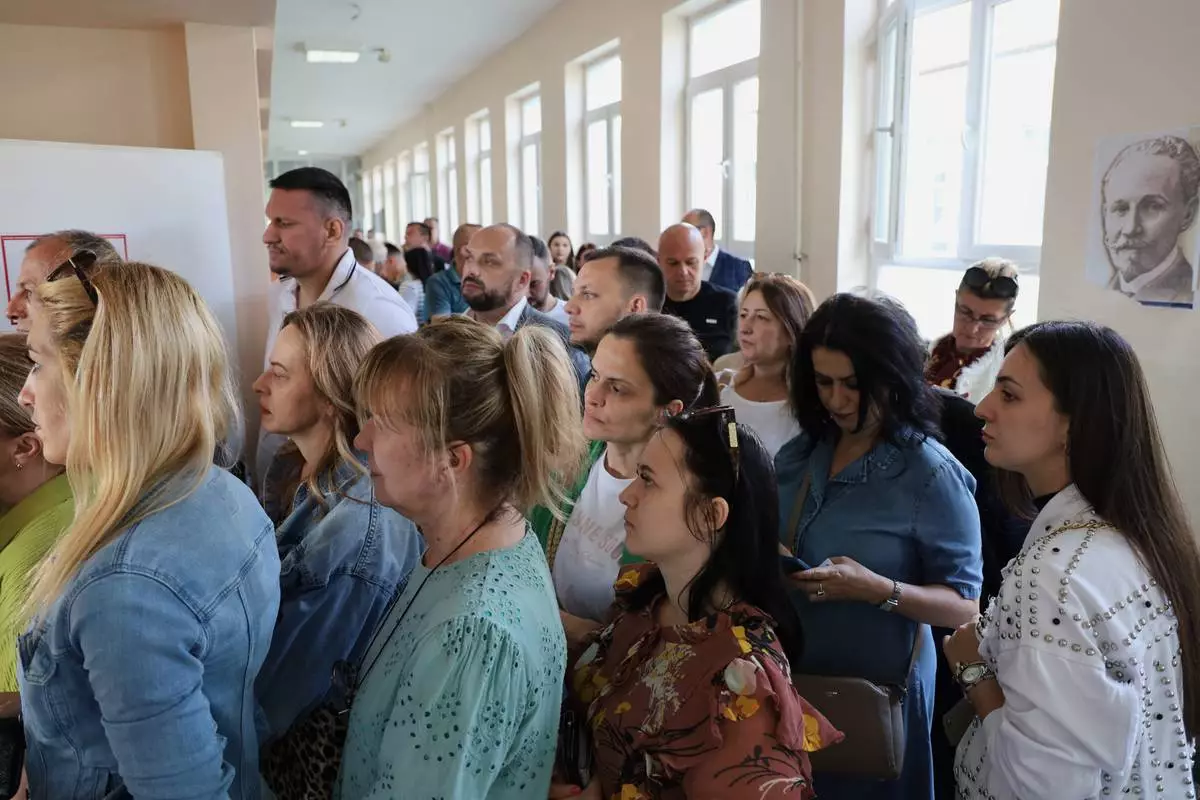
People wait in line at a polling station for an early parliamentary election, the third in 18 months, in the northern Serb-dominated part of ethnically divided town of Mitrovica, Kosovo, Sunday, June 7, 2026. (AP Photo/Dejan Simicevic)

People wait in line at a polling station for an early parliamentary election, the third in 18 months, in the northern Serb-dominated part of ethnically divided town of Mitrovica, Kosovo, Sunday, June 7, 2026. (AP Photo/Dejan Simicevic)

A man votes during parliamentary election in Kosovo capital Pristina, on Sunday, June 7, 2026. (AP Photo/Visar Kryeziu)
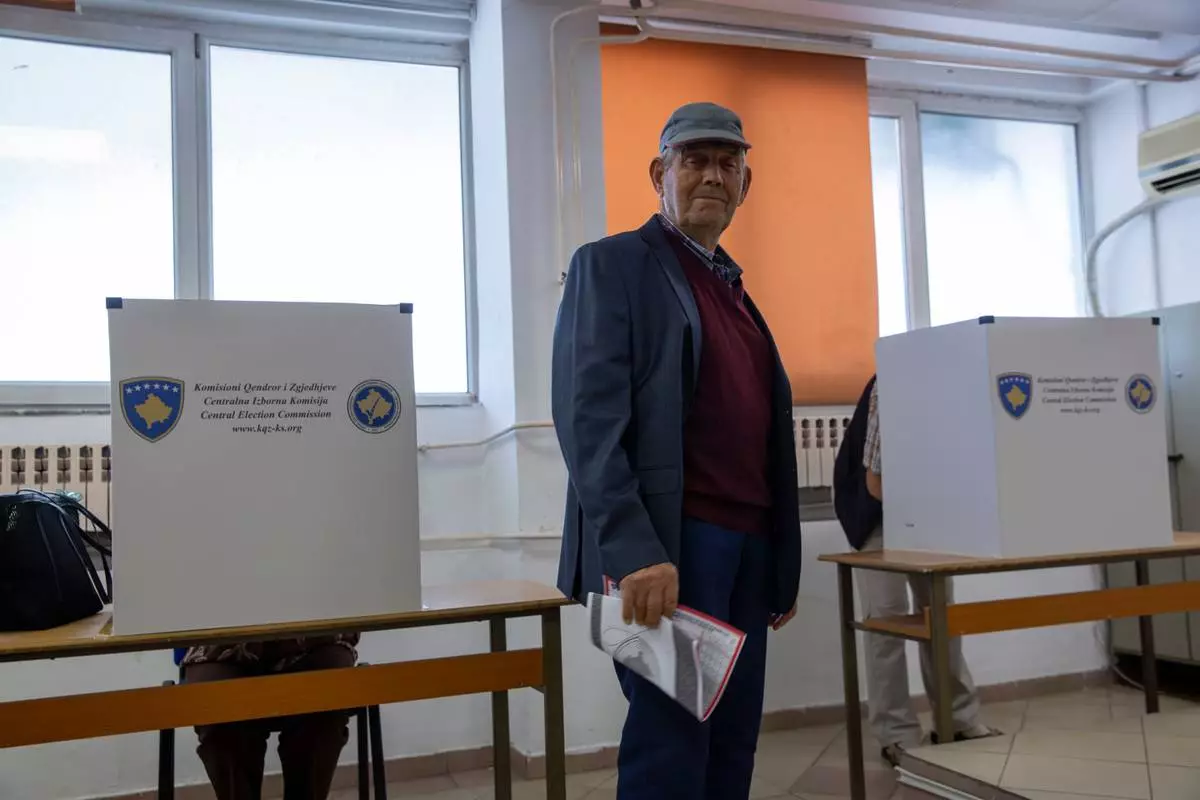
A man votes during parliamentary election in Kosovo capital Pristina, on Sunday, June 7, 2026. (AP Photo/Visar Kryeziu)

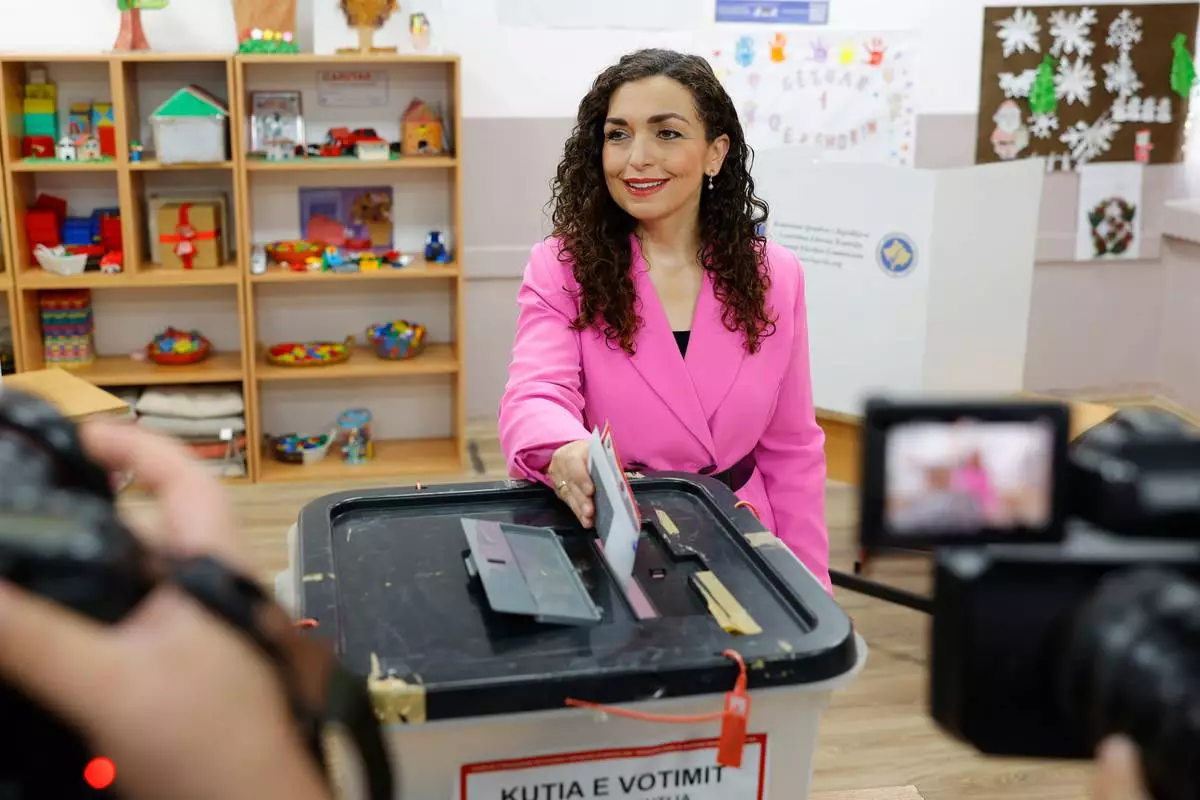
Kosovo's former president Vjosa Osmani votes during parliamentary election in Kosovo capital Pristina, on Sunday, June 7, 2026. (AP Photo/Blerim Berisha)
Kosovo's former president Vjosa Osmani votes during parliamentary election in Kosovo capital Pristina, on Sunday, June 7, 2026. (AP Photo/Blerim Berisha)

Kosovo's acting Prime Minister and Vetevendosje party leader Albin Kurti votes during parliamentary election in Kosovo capital Pristina, on Sunday, June 7, 2026. (AP Photo/Visar Kryeziu)
Kosovo's acting Prime Minister and Vetevendosje party leader Albin Kurti votes during parliamentary election in Kosovo capital Pristina, on Sunday, June 7, 2026. (AP Photo/Visar Kryeziu)

People wait at a bus station displaying election posters in capital Pristina, Kosovo, Friday, June 5, 2026, ahead of snap parliamentary elections on June 7. (AP Photo/Visar Kryeziu)

People wait at a bus station displaying election posters in capital Pristina, Kosovo, Friday, June 5, 2026, ahead of snap parliamentary elections on June 7. (AP Photo/Visar Kryeziu)

Vjosa Osmani, Kosovo former president, waves to supporter at the closing political rally of the Democratic League of Kosovo (LDK), in capital Pristina on Friday, June 5, 2026. (AP Photo/Visar Kryeziu)
Vjosa Osmani, Kosovo former president, waves to supporter at the closing political rally of the Democratic League of Kosovo (LDK), in capital Pristina on Friday, June 5, 2026. (AP Photo/Visar Kryeziu)

People pass by a giant election poster of acting prime minister Albin Kurti, in capital Pristina, Kosovo, Friday, June 5, 2026, ahead of snap parliamentary elections on June 7. (AP Photo/Visar Kryeziu)

People pass by a giant election poster of acting prime minister Albin Kurti, in capital Pristina, Kosovo, Friday, June 5, 2026, ahead of snap parliamentary elections on June 7. (AP Photo/Visar Kryeziu)

BUNIA, Congo (AP) — At least a dozen attacks on health facilities and workers have been recorded during Congo's Ebola outbreak as safety fears restrict the response in the worst-affected region, authorities said Saturday.

Many health workers and other frontline workers in Ituri province have also gone on strike over unpaid salaries, further complicating response efforts in what’s been declared the fastest-growing Ebola outbreak on record. So far 2,181 cases have been recorded, including 864 deaths.

The Bundibugyo virus responsible for this outbreak is less common than others that cause Ebola disease, and there is no approved vaccine or treatment.

Many of the attacks have been carried out by angry mobs who have stormed treatment centers or targeted response teams in the field, Pierre Akilimali, incident manager for the Ebola response, said at a press briefing in Bunia, the capital of Ituri.

The attacks are not limited to healthcare teams and affect frontline workers like burial teams, according to Dr. Adelard Lufongola, operations manager for the Ebola response.

“Members of the various response teams have been held captive in some health zones. Teams responsible for safe and dignified burials have been threatened and continue to be threatened in some cemeteries and within several communities,” Lufongola said at the briefing.

Ebola spreads in the human population through contact with bodily fluids such as vomit, blood or semen, and with contaminated surfaces and materials. Traditional funerals in which loved ones wash and prepare bodies have been restricted, which has angered some residents.

In Ituri, which accounts for around 90% of all cases, health and aid workers have been seen leaving remote communities considered hot spots and heading to Bunia in recent days, locals told The Associated Press.

U.N. spokesman Stéphane Dujarric on Thursday told reporters that humanitarian actors are “deeply concerned by escalating violence” impacting the Ebola response and that access to treatment centers and surrounding communities remains constrained.

“The worsening security situation has forced several humanitarian partners involved in the Ebola response to temporarily relocate staff to Bunia which is relatively safer,” he said.

The most recent attack recorded was on Wednesday, when residents in the town of Nyakunde attacked a hospital and touched an Ebola treatment center nearby.

Officials said treatment and care resumed on Thursday at the center after its occupants, including some patients, fled in the aftermath of the attack. Concerns, however, remained about risks of transmission amid the chaos.

“I fear that the aid workers involved in combating this Ebola outbreak are going to leave the area. This risks making the task of eradicating the outbreak more difficult,” said Christophe Munyanderu, a civil society leader in Ituri’s Irumu territory.

Rubble set on fire as health workers involved in Congo's Ebola response go on strike as they protest over payment issues in Bunia, Congo, Wednesday, July 15, 2026. (AP Photo/Constant Same Bagalwa)

Rubble set on fire as health workers involved in Congo's Ebola response go on strike as they protest over payment issues in Bunia, Congo, Wednesday, July 15, 2026. (AP Photo/Constant Same Bagalwa)

Recommended Articles