Rangers at the Xishuangbanna Asian Elephant Conservation and Management Center in southwest China's Yunnan Province recently captured rare drone footage showing clear fetal movements in a pregnant wild elephant.
The expecting mother is part of the famous "short-nose family" of wild Asian elephants. The footage clearly shows the elephant's abdomen rising and falling rhythmically as her unborn calf moves inside her.
The "short-nose family" gained international fame in 2020 when 16 members of the herd embarked on an epic 17-month, 1,300-kilometer trek from Xishuangbanna before returning to their habitat. During that journey, the herd saw baby elephants born and young males leave the group. By the time they returned south in 2021, the core group had 14 members.
Since then, the family has continued to thrive. Two new calves have already been born this year, bringing the total herd size to 21.
According to experts, the Asian elephant has a gestation period of 18 to 22 months, typically giving birth to a single calf.
Current monitoring shows the "short-nose family" is active in the Mengyang area of the Xishuangbanna National Nature Reserve and its surrounding areas, where the group remains stable and frequently interacts with other elephant herds.

Rare footage shows pregnant wild Asian elephant's fetal movements
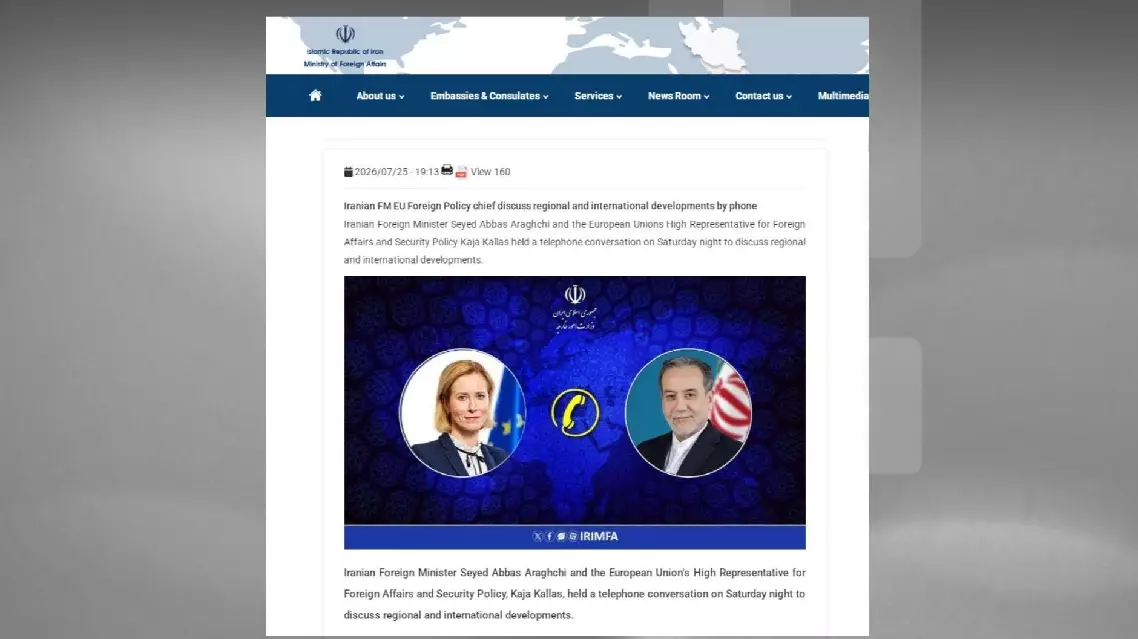
Iran's Foreign Minister Seyed Abbas Araghchi on Saturday called on the European Union (EU) to take "decisive" action against Ukraine's targeting of an Iranian commercial ship in the Caspian Sea.
He made the remarks in a phone call with EU foreign policy chief Kaja Kallas, in which the two sides discussed the latest regional developments, according to a statement by the Iranian Foreign Ministry.
Araghchi condemned the Ukrainian attack, urging the EU, UN Security Council, and international community to hold its "perpetrators" and supporters to account, according to the statement.
The two sides also addressed developments in the Strait of Hormuz, stressing the need for diplomatic initiatives to manage regional tensions, it added.
In a separate statement, the ministry said it summoned Ukraine's charge d'affaires in Tehran on Saturday over the attack, formally delivering a note of protest condemning the "hostile and criminal" act.
Earlier in the day, the ministry said the Ukrainian attack had caused the vessel to explode, killing a sailor and wounding another.
The ministry said Iran has never intervened in the conflict between Russia and Ukraine, adding the strike could further "spread the flames of the war and insecurity in a dangerous manner."
Also on Saturday, Ukrainian President Volodymyr Zelensky said his country's forces had hit a Russian warship and vessels used for transporting Iran-linked military cargo in the Caspian Sea.
Iran urges "decisive" EU action over Ukrainian attack on Iranian ship