Artificially intelligence (AI) has transformed testing of toxic chemicals into what appears to be an easier but more efficiency process at a laboratory in Lianyungang City, east China's Jiangsu Province.
Scenes once confined to science fiction have become reality at this darkened lab, where robotic arms work with precision under the glow of blinking instrument lights, with no human in sight.
This is China's first AI-powered "dark lab" (fully automated, unmanned laboratory) focused on testing acrylonitrile, a colorless, highly toxic, and volatile liquid monomer. This vital industrial chemical is used primarily as a building block to create durable and versatile thermoplastic polymers.
Inside the lab, samples are loaded, tested, analyzed and disposed of all without human intervention. Guided by a smart AI "brain," 87 precision instruments and 56 robots work in sync to complete a full testing process in just three and a half hours.
"Behind this system is a powerful 'brain' guiding the entire equipment, including a visual recognition system that sends real-time operation data to the 'brain,' and the scheduling system takes over, finding the fastest and most efficient route for the turnover of each sample bottle at the work station," said He Bin, a technician at the Beijing Dynaflow Lab Solutions Co., Ltd., a leading Chinese provider of full-lifecycle smart laboratory solutions and a pioneer in the "dark lab" sector.
Besides speeding up testing, the AI lab also significantly improves accuracy, with massive amounts of testing data automatically archived and fully traceable.
For Shenghong Petrochemical in Lianyungang, which produces 1.04 million tons of acrylonitrile annually, the benefits brought by the lab are substantial.
"We've calculated that the lab cuts at least 50 percent of our staff workload in a year, which saves us around 6 million yuan (about 890,000 U.S. dollars) in direct costs. The value of data processing is immeasurable," said Liu Hailang, deputy manager for intelligent operations at Shenghong Petrochemical.
Before the the application of AI at the lab, workers had to wear goggles, gas masks, protective suits and gloves in operation, yet would still face unavoidable exposure to hazardous materials. Handling thousands of samples daily was both risky and exhausting.
This establishment of this smart lab has put an end to that. Dozens of workers at Shenghong Petrochemical, including Xue Feng, have now switched from frontline analysts to technical roles such as equipment maintenance.
"The establishment of the 'dark lab' was originally intended to completely separate the human staff from the dangerous samples to eliminate the risk of direct contact. During automated testing, you just need to monitor the system. If it's running properly, you don't need to intervene. It helps improve our employees' skills and enhance their value, which is what we hope to see," said Xue, who works as an acrylonitrile analysis engineer at the company.
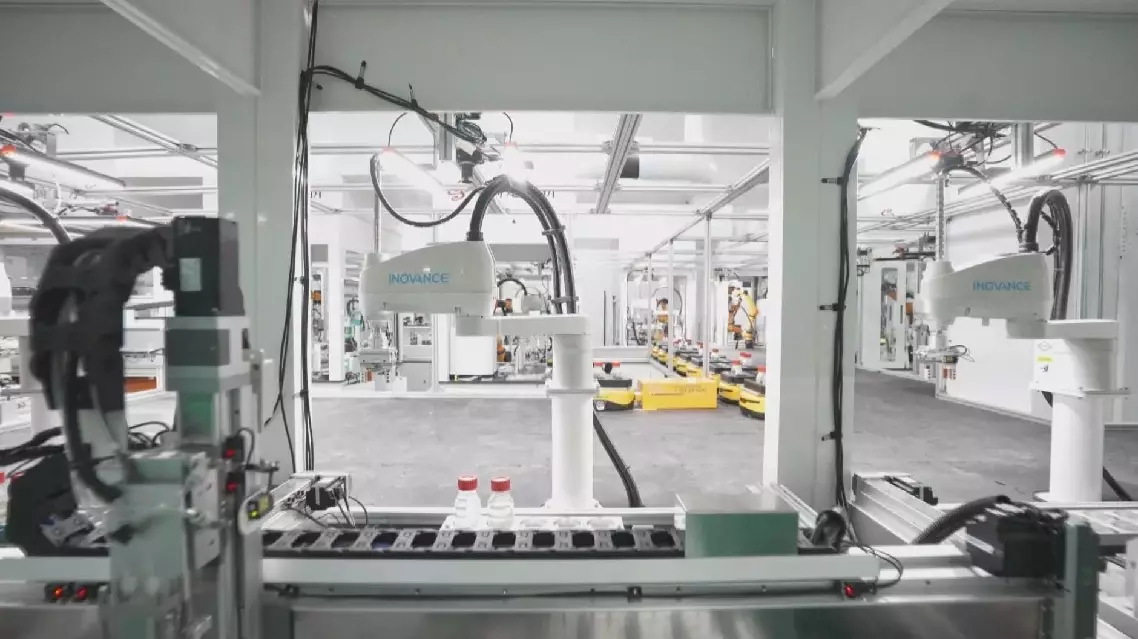
China's AI-powered "dark lab" revolutionizes chemical testing
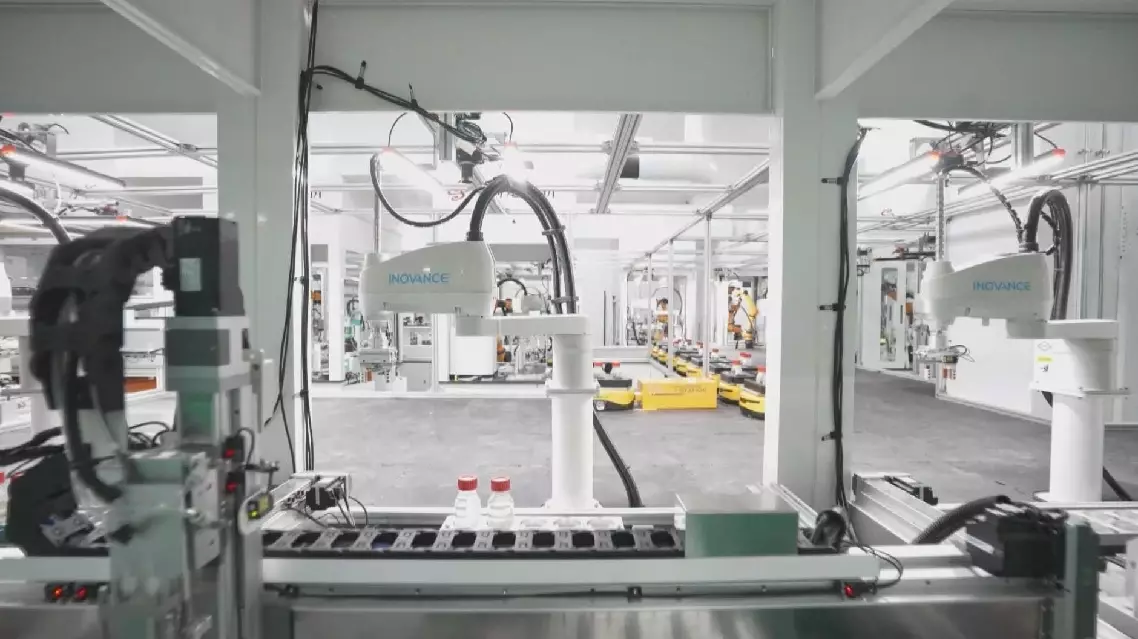
China's AI-powered "dark lab" revolutionizes chemical testing