COPENHAGEN (AP) — Business in the front, party in the back.
A packed Danish crowd celebrated on Saturday the much-maligned but enduring mullet hairstyle, defined by very short hair at the front and longer hair at the back.
Click to Gallery
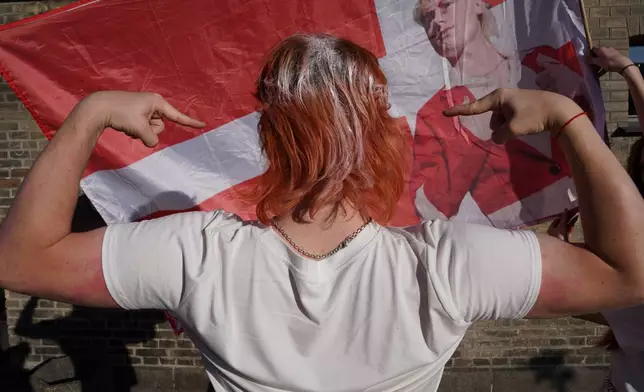
Competitor Aksel Toft points to his mullet, styled to resemble the Danish flag, at Denmark's Mullet Championship in central Copenhagen, Saturday, June 6, 2026. (AP Photo/James Brooks)
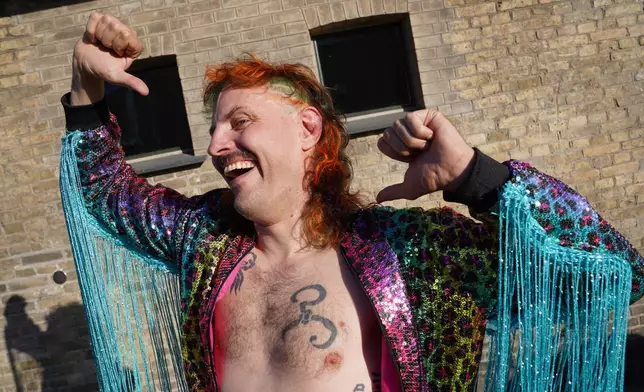
Competitor Martin Sedolf performs as character pro wrestler "Benny Bacchus", at Denmark's Mullet Championship in central Copenhagen, Saturday, June 6, 2026. (AP Photo/James Brooks)
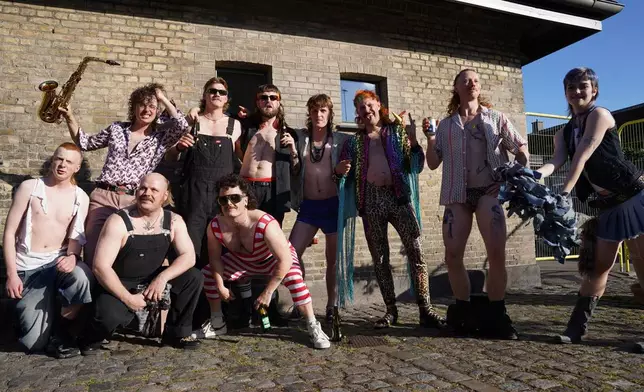
Competitors at Denmark's Mullet Championship in Copenhagen, Saturday, June 6, 2026. (AP Photo/James Brooks)
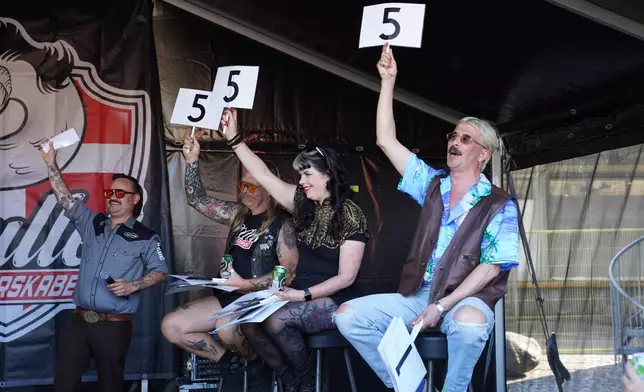
Judges hold scorecards at Denmark's Mullet Championship in central Copenhagen, Saturday, June 6, 2026. (AP Photo/James Brooks)
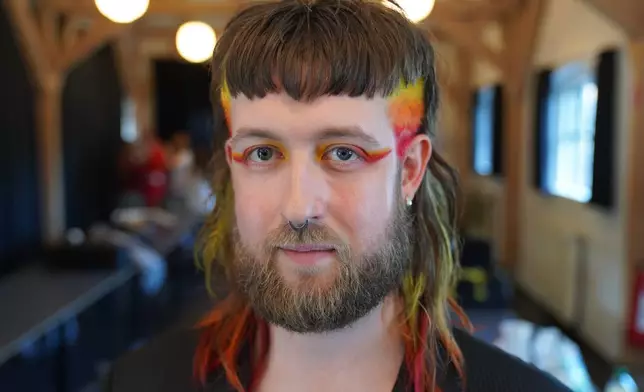
A competitor looks on during Denmark's Mullet Championship, in Copenhagen, Saturday, June 6, 2026. (AP Photo/James Brooks)
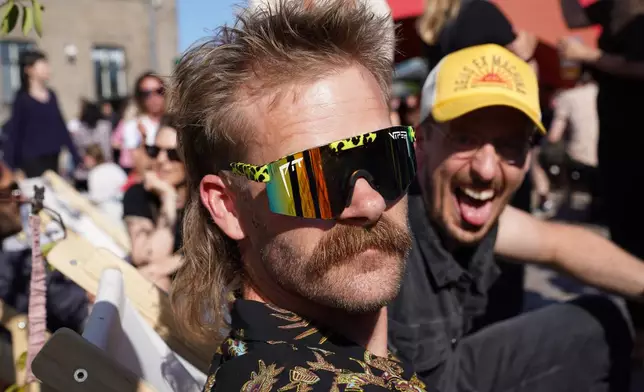
An attendee at Denmark's Mullet Championship looks on in Copenhagen, Saturday, June 6, 2026. (AP Photo/James Brooks)
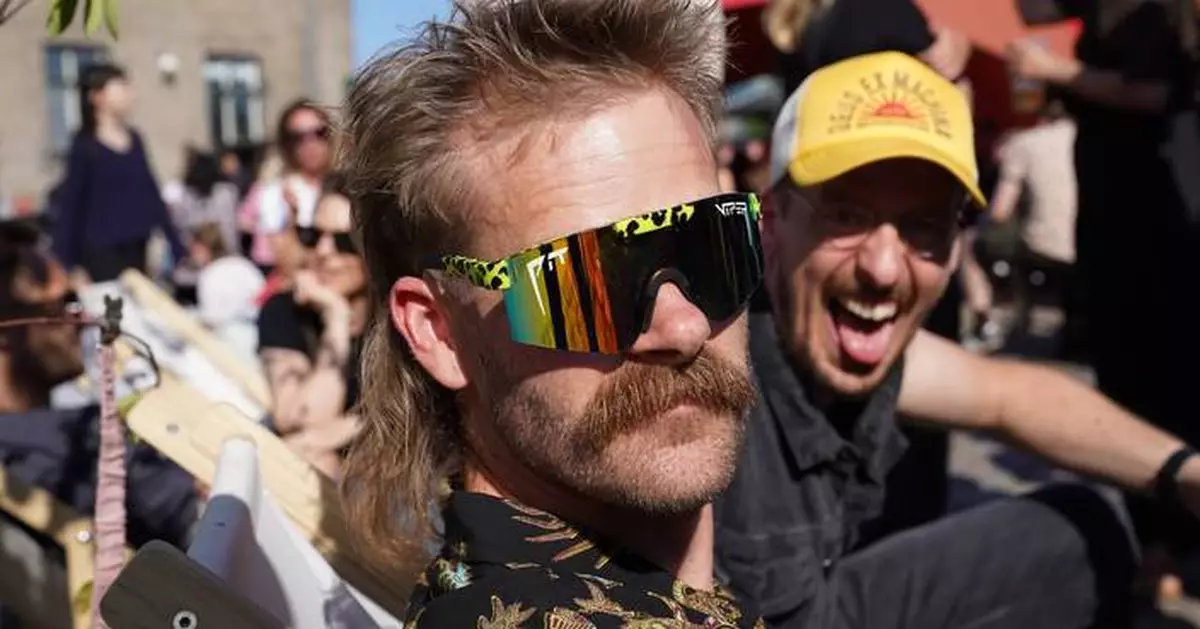
Denmark’s raucous 2026 Mullet Championship, presented on an outdoor stage in central Copenhagen, attracted 12 well-coiffed competitors and more than a thousand spectators to the evening’s “mane” event.
Organizer Steffen Stiw Weber, a 37-year-old electrician, said the championships, now in their fourth year, began after he had a hair transplant and chose to grow out a mullet.
After realizing he couldn’t compete in a mullet competition in the United States because he wasn’t a U.S. citizen, Stiw Weber started his own in Denmark.
“I was like, OK, I have to do it on my own here in Denmark,” he said while smiling.
Competitors in Saturday’s championships were evaluated on their cuts’ style, uniqueness, and overall performance and “mullet moves,” explained judge Bobby Agren.
Contestants were given 60 seconds each to perform on stage to showcase their cuts.
“I like the finesse, the twist, the nostalgia. I like it if it looks ridiculous or maybe ugly in a beautiful way,” said Agren, who owns two hair salons in Copenhagen.
“I think in our culture, when everything must … be perfect on social media and everything like that, I think that’s why people have to stand out from the crowd,” said Stiw Weber.
The event featured an array of over-the-top performances, including beer-swilling, body-popping, and a live saxophone show. One competitor even wore a mullet haircut styled to resemble the Danish flag.
The crowd screamed and chanted with their energy seemingly feeding directly into the various performers on stage.
After every performance, judges held up scorecards to distribute points to the competitors.
Forty-three-year-old construction worker Thomas Berg eventually took home the top prize after wowing judges by frantically jumping on a trampoline while clad in neon green gym wear. He completed his mullet haircut with an orange headband. “I think it’s just funny. It’s just a big party,” said a smiling Berg after collecting his prize. “It’s just nice to be a bit outside the box.”
Though mullets have likely been around longer than there have been barbers, the Oxford English Dictionary cites hip-hop legends the Beastie Boys for helping popularize the term mullet with the song “Mullet Head” on their 1994 recording “Ill Communication.”
The short-in-the-front, long-in-the-back coiffure was popularized by ice hockey players and ’80s musicians, but later fell out of favor.
Fashion magazine Vogue reportedly once described the mullet as “history’s most divisive hairstyle.”
But in recent years, the mullet has seen a global resurgence — British magazine i-D declared 2020 “the year of the mullet” as the COVID-19 pandemic shuttered hair salons and lockdown-weary citizens let their locks flow.
Numerous mullet competitions are now staged around the world. Belgium hosted the European Mullet Cup last month.
“It comes back every 20-30 years. There’s always a circular motion in fashion,” said Agren, the Denmark mullet competition judge.
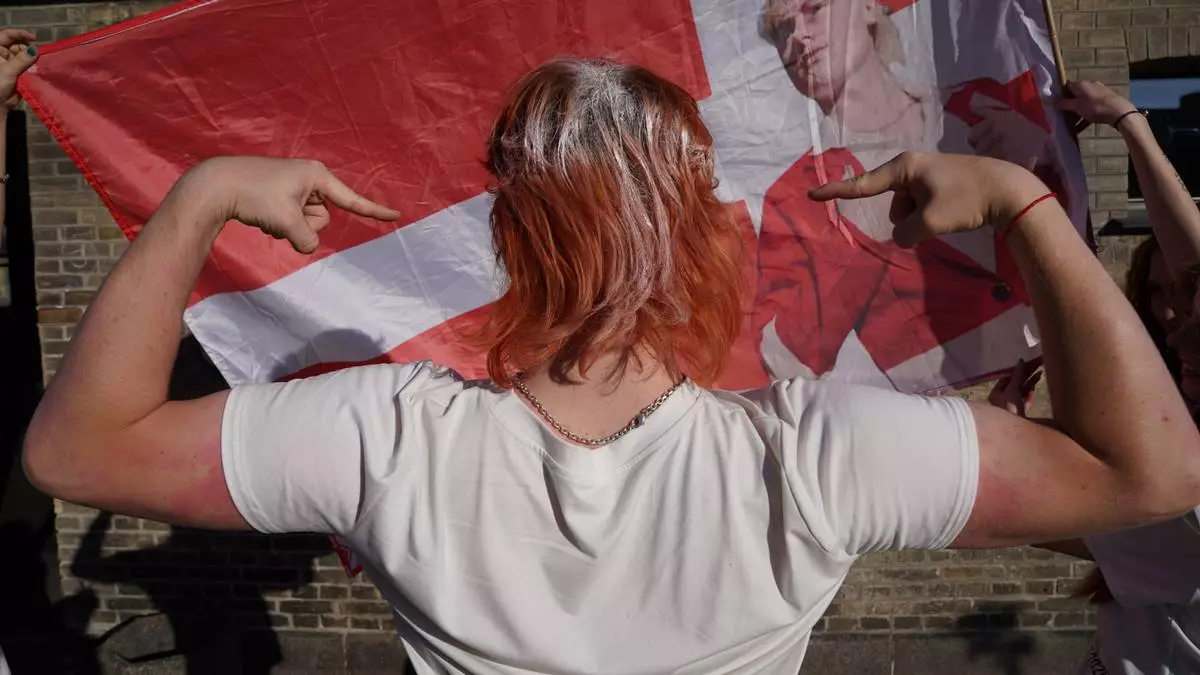
Competitor Aksel Toft points to his mullet, styled to resemble the Danish flag, at Denmark's Mullet Championship in central Copenhagen, Saturday, June 6, 2026. (AP Photo/James Brooks)
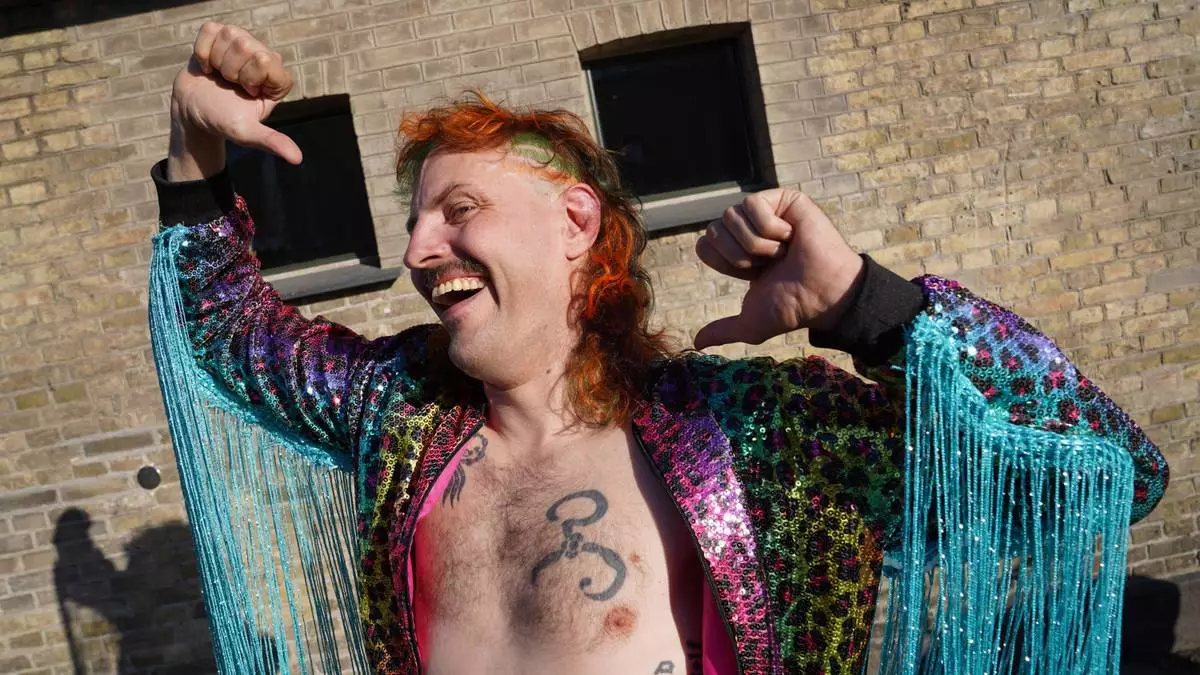
Competitor Martin Sedolf performs as character pro wrestler "Benny Bacchus", at Denmark's Mullet Championship in central Copenhagen, Saturday, June 6, 2026. (AP Photo/James Brooks)
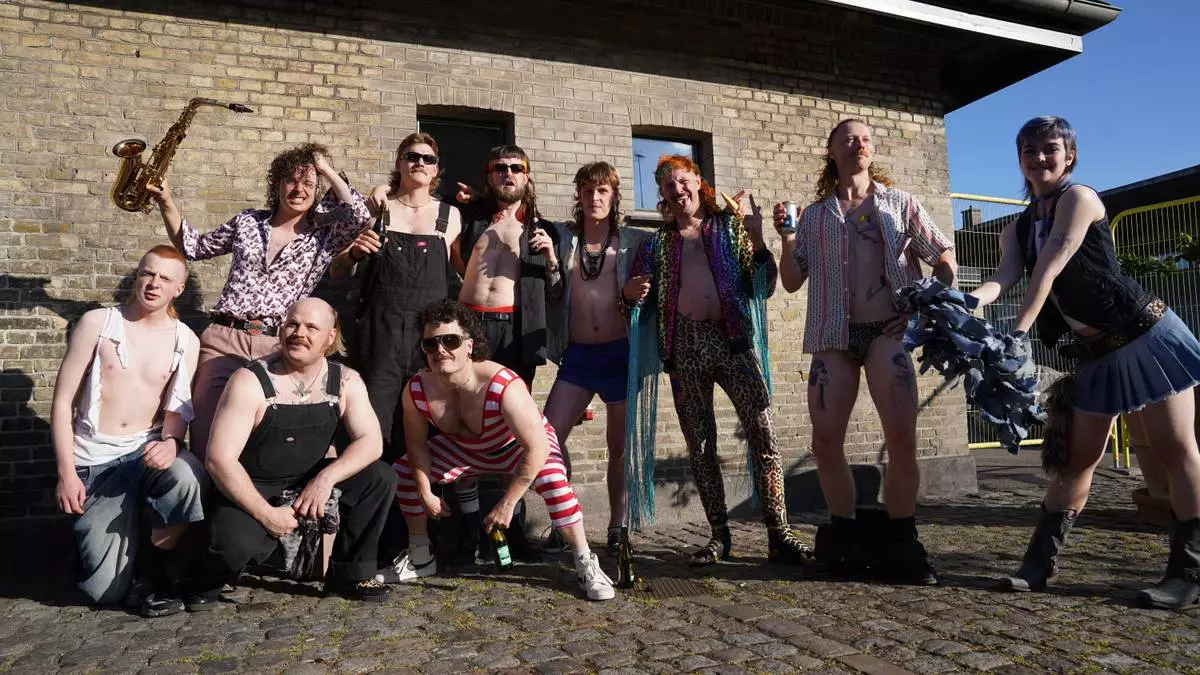
Competitors at Denmark's Mullet Championship in Copenhagen, Saturday, June 6, 2026. (AP Photo/James Brooks)
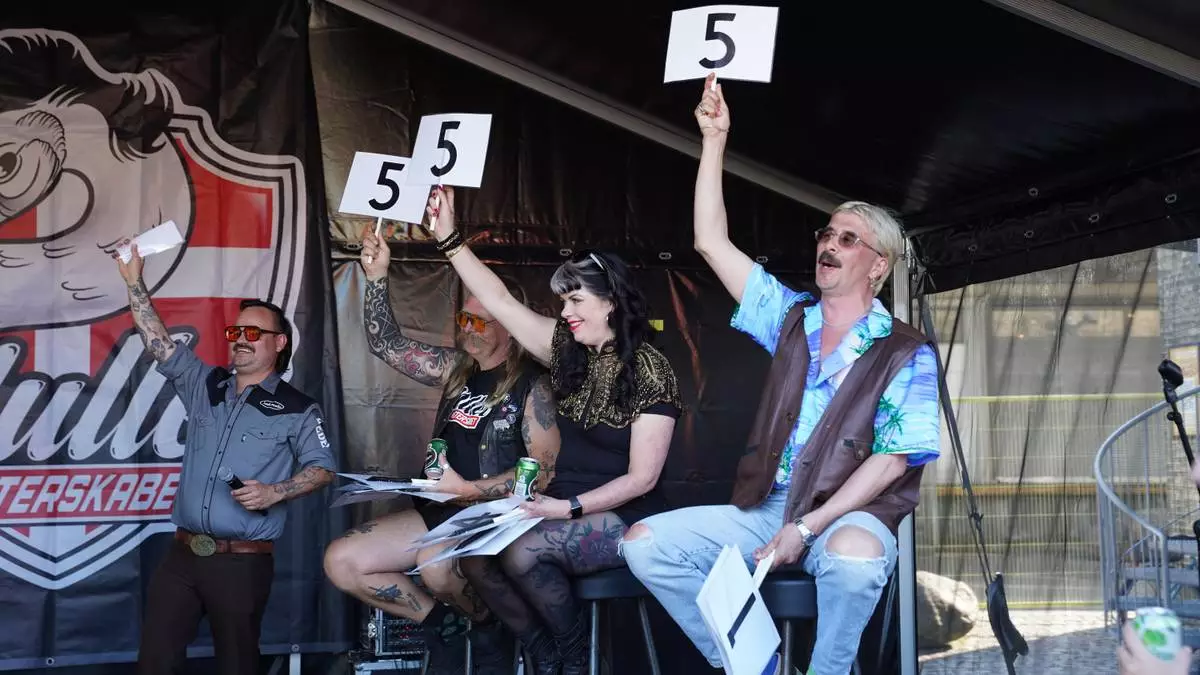
Judges hold scorecards at Denmark's Mullet Championship in central Copenhagen, Saturday, June 6, 2026. (AP Photo/James Brooks)
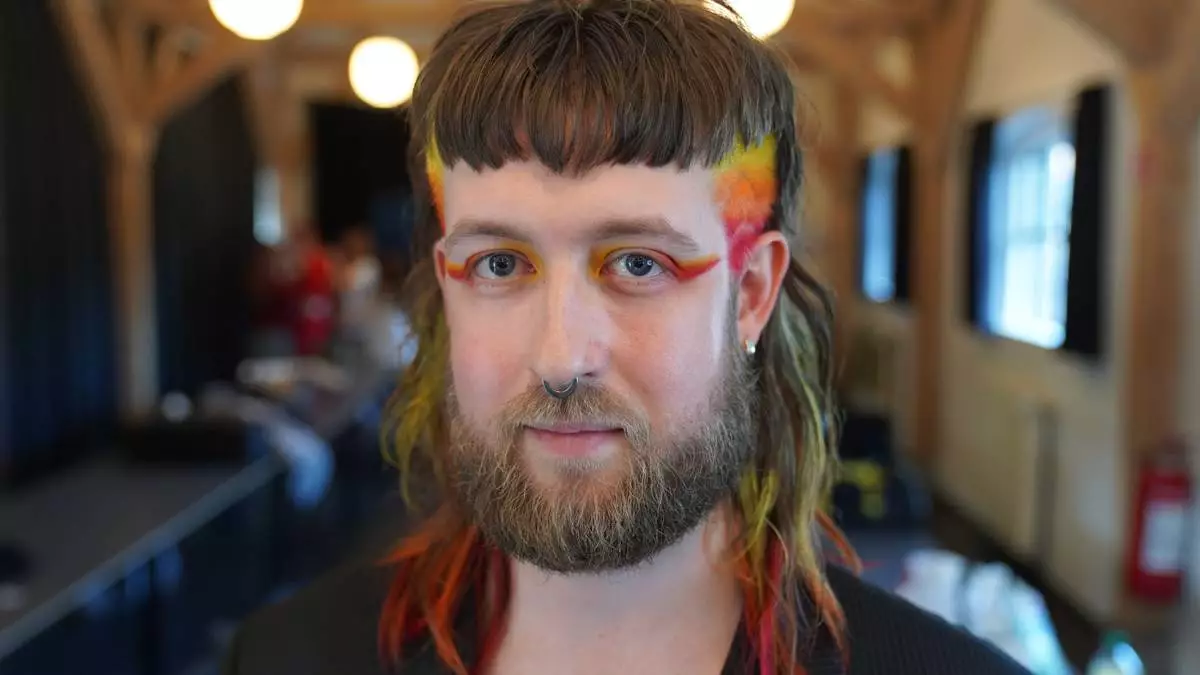
A competitor looks on during Denmark's Mullet Championship, in Copenhagen, Saturday, June 6, 2026. (AP Photo/James Brooks)
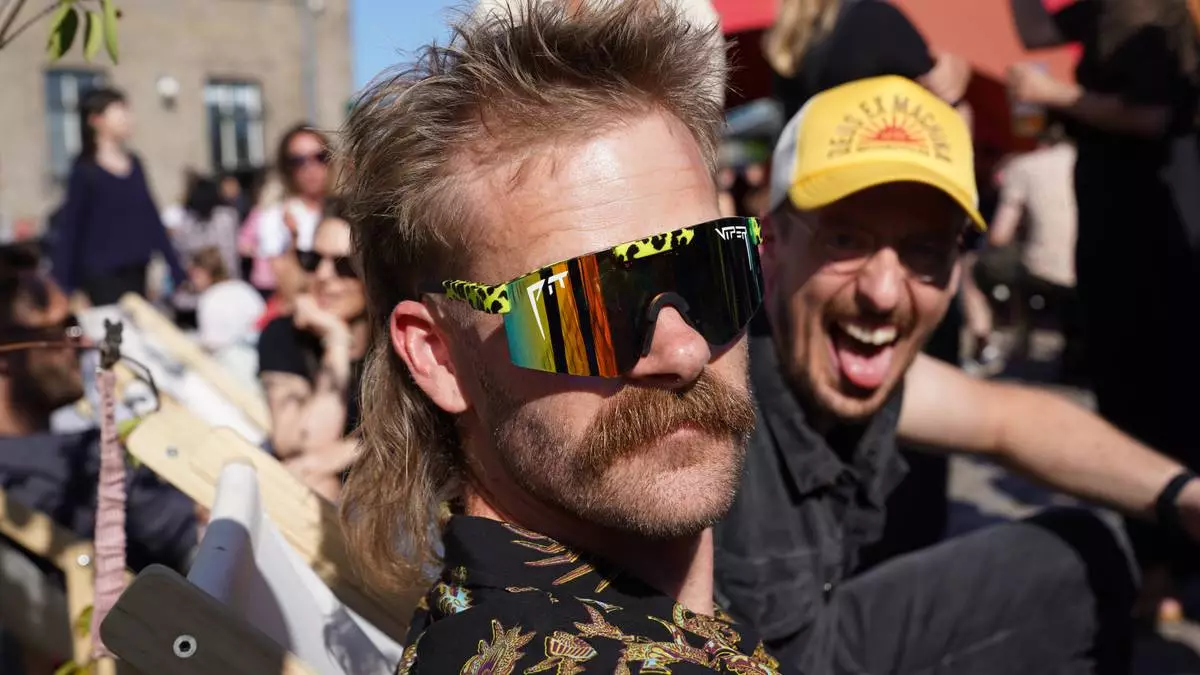
An attendee at Denmark's Mullet Championship looks on in Copenhagen, Saturday, June 6, 2026. (AP Photo/James Brooks)
BERLIN (AP) — For Ali Darwich, the deadly attack on the Berlin Pride Festival was an attack on the city of Berlin and everything it stands for: its diversity, its tolerance and its belief in freedom.
On a personal level, it also was an attack on everything the Berliner embodies.
“Born a Muslim, living as a gay man, working as a police officer," Darwich said, as he tried holding back the tears, “this terror attack touches so many aspects of who I am.”
Saturday night's van ramming and stabbing near Berlin’s Pride festival that left one person dead and many others wounded was believed to have been an Islamic extremist terror attack, authorities said.
The suspect in the attack was killed by police Sunday evening in a Berlin suburb. Authorities said Abdul Ballout, a 21-year-old German citizen with Lebanese roots, apparently ran toward officers with a sharp instrument, and police fired at least one shot.
On Sunday, Darwich, 34, watched sadly as more and more members of the LGBTQ+ community came to Tiergarten park, where the attack took place. They put down flowers, hugged each other and looked in disbelief at the crashed van, which still stood cordoned off behind dozens of police officers.
Like Darwich, many of them had been celebrating life and love just hours earlier, protesting for equality and warning of an increase of hate crimes against their community.
“I was wearing my rainbow-colored shirt, carried a banner at the parade saying ‘Why are some people afraid of love but not of hate?,’ and was about to go to an afterparty last night, when friends started calling me to check if I was OK,” he said.
When he understood that there had been an attack, he canceled the party and went home filled with sorrow. But it was only after he woke up on Sunday morning that he truly grasped the significance of the attack.
“I asked myself, why as a police officer I did not run to the scene of the crash to help my colleagues. I asked myself as a gay if we will have to live with more fear now even though we are already experiencing bullying and hatred. I asked myself as a Muslim if our community will be exposed to even more racism now.”
Darwich, who was born in Berlin and has Lebanese and Palestinian roots, expressed worry that the attack would polarize German society even more.
“I’m actually feeling desperate this morning," said Darwich, who also works as a gay Muslim influencer and posts many videos on social media that usually try to strike a positive note. “We can’t get rid of the hatred some people feel, and it’s just getting worse and worse.”
But at the same time, he said he did not want to let hate win and that deep inside he still hoped that "the people of Berlin will make the best of it, that they will work together, and that, hopefully, all of this will lead to an even better Berlin.”
Others, who had come to the impromptu vigil at Tiergarten, also expressed anger and shock, but also resilience.
“We are simply stunned by what happened yesterday,” said Andre Lehmann, a top official with the main national LGBTQ+ association, LSVD+. “This suspected attack hits the heart of the queer community.”
The attack “affects people who took to the street in Berlin this weekend to fight for their rights, their diversity and their rights, and of course with that it is a political act and does not just affect people celebrating,” he said.
Lehmann said that there has been “a tenfold increase of anti-queer hate crime in Germany within a few years.” He added that “for years, to be honest, nothing has happened and also, to be honest, for years there has been no outcry from society.”
Ashley Jump, a 26-year-old U.K. resident, had traveled to Berlin for Saturday’s Pride parade but had left the celebrations before the attack. Jump, still in shock, returned Sunday to leave flowers at a memorial near the crime scene.
“They’ll never erase us, we’ll never be gone,” they said, their voice shivering from pain. “As long as humanity has existed, we’ve existed. And as long as humanity exists, we will exist. We will not be removed.”
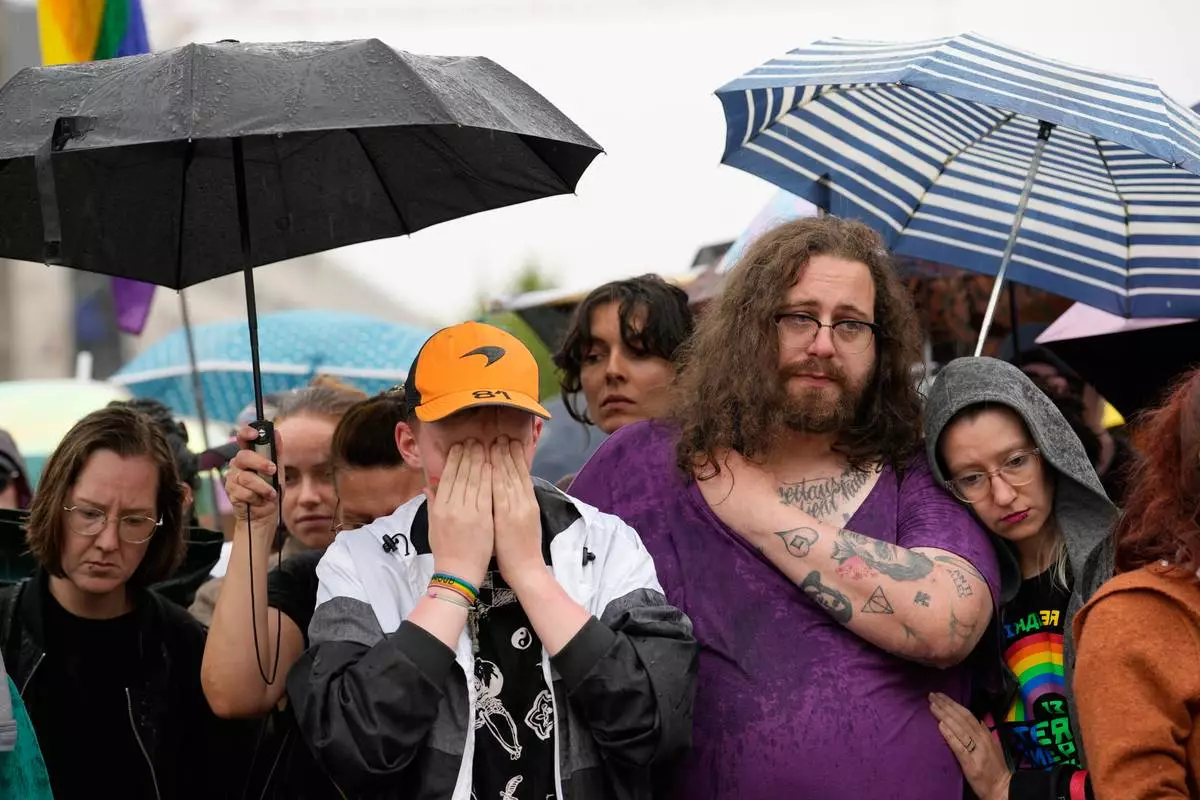
People gather outside the Brandenburg Gate for a demonstration in support of LGBTQ+ after a car rammed into a crowd at the Pride March in Berlin, Sunday, July 26, 2026. (AP Photo/Ebrahim Noroozi)
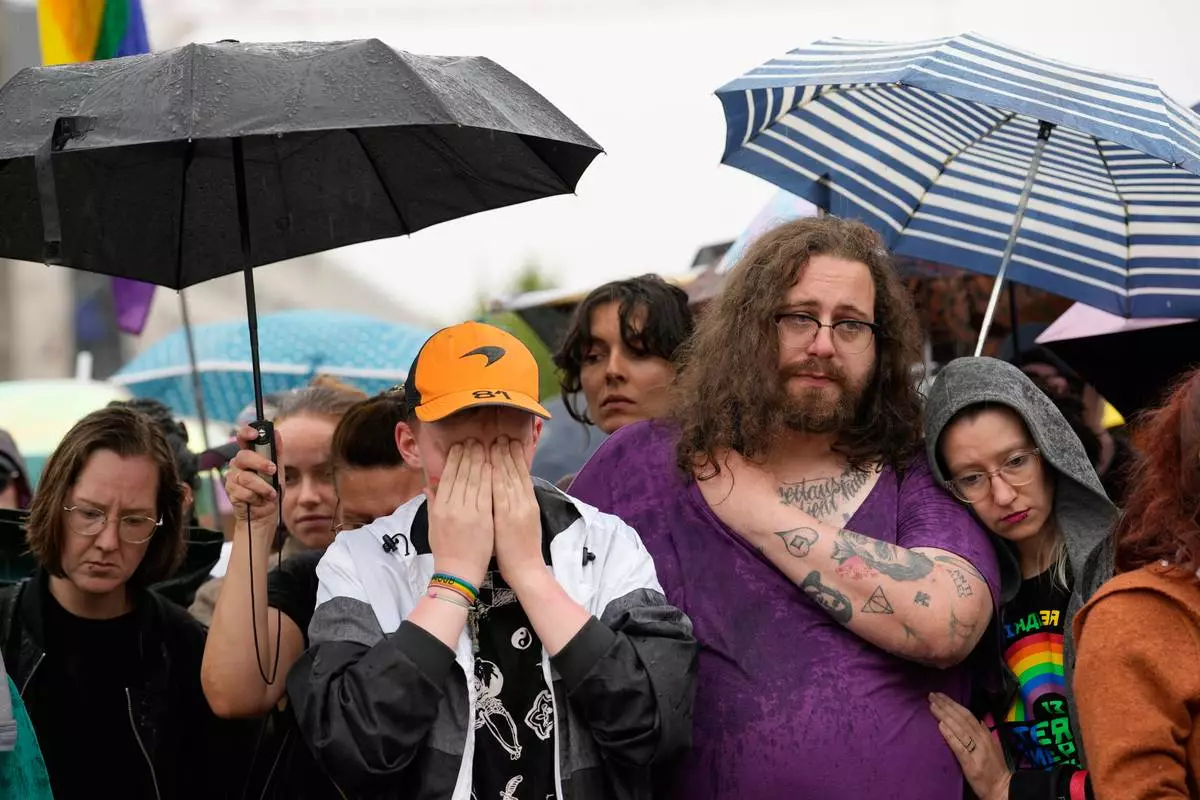
People gather outside the Brandenburg Gate for a demonstration in support of LGBTQ+ after a car rammed into a crowd at the Pride March in Berlin, Sunday, July 26, 2026. (AP Photo/Ebrahim Noroozi)
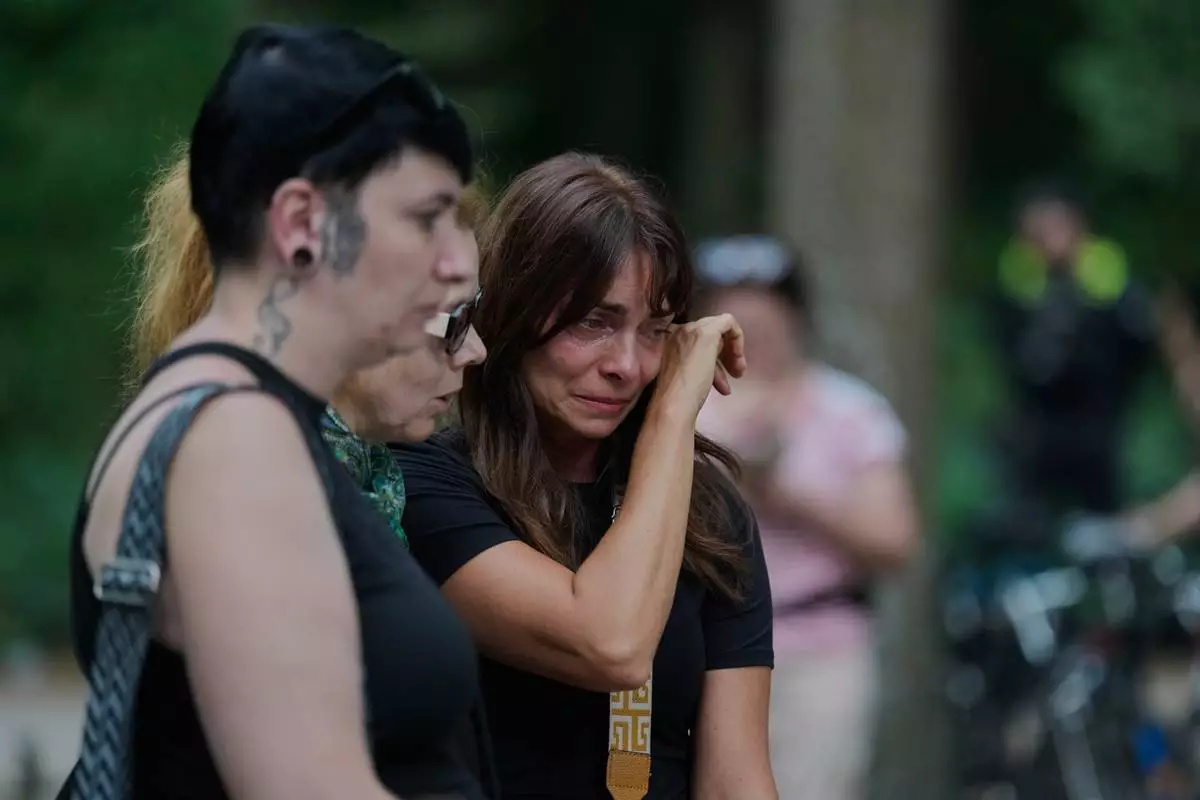
People attend the memorial site commemorating the victims near the scene where a car rammed into a crowd near the Pride March in Berlin, Germany, Sunday, July 26, 2026. (AP Photo/Markus Schreiber)
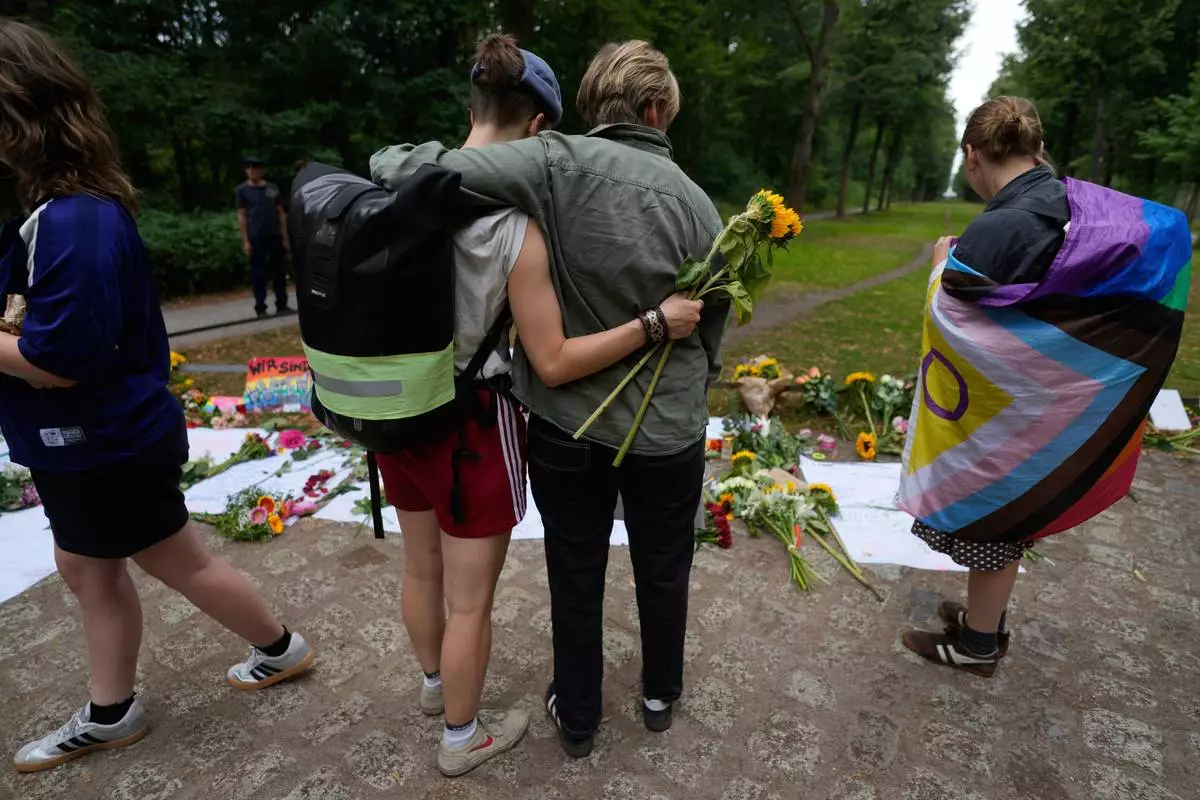
Two people hug at the memorial site commemorating the victims near the scene where a car rammed into a crowd at the Pride March in Berlin, Germany, Sunday, July 26, 2026. (AP Photo/Markus Schreiber)
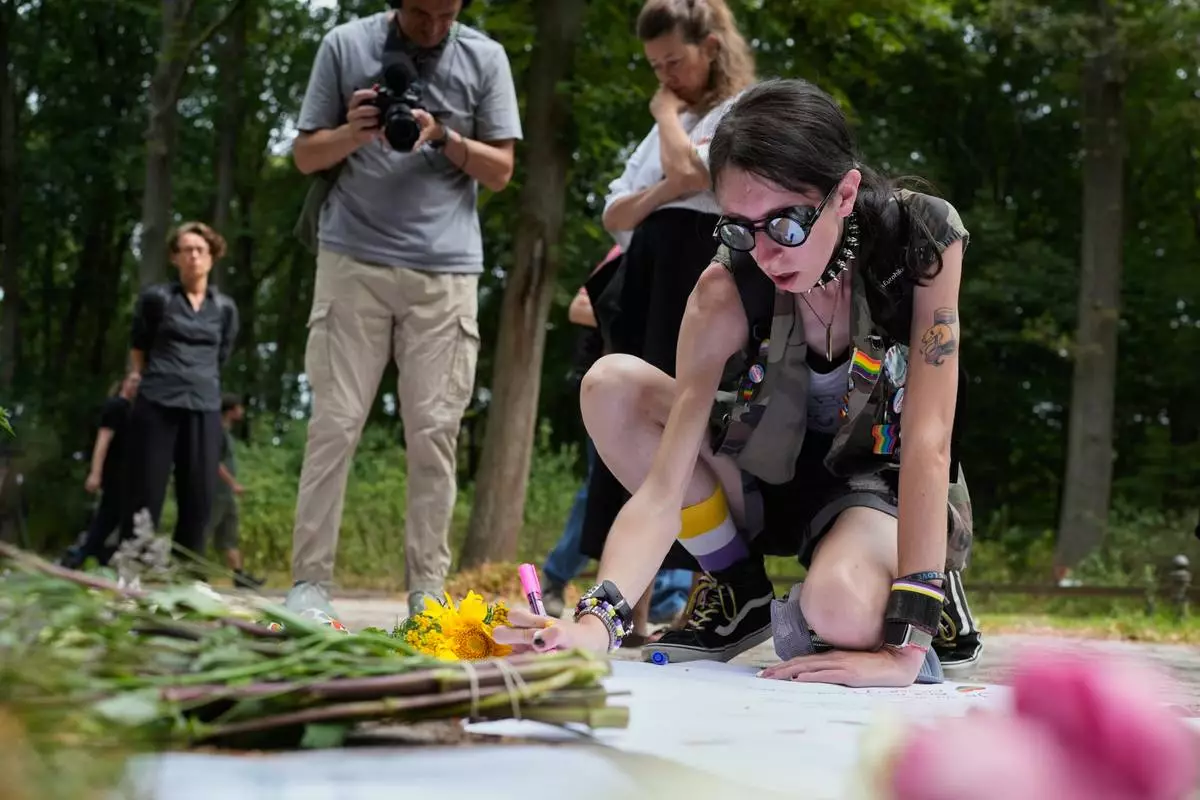
Ashley Jump lays flowers near the scene where a car rammed into a crowd near the Pride March in Berlin, Germany, Sunday, July 26, 2026. (AP Photo/Markus Schreiber)
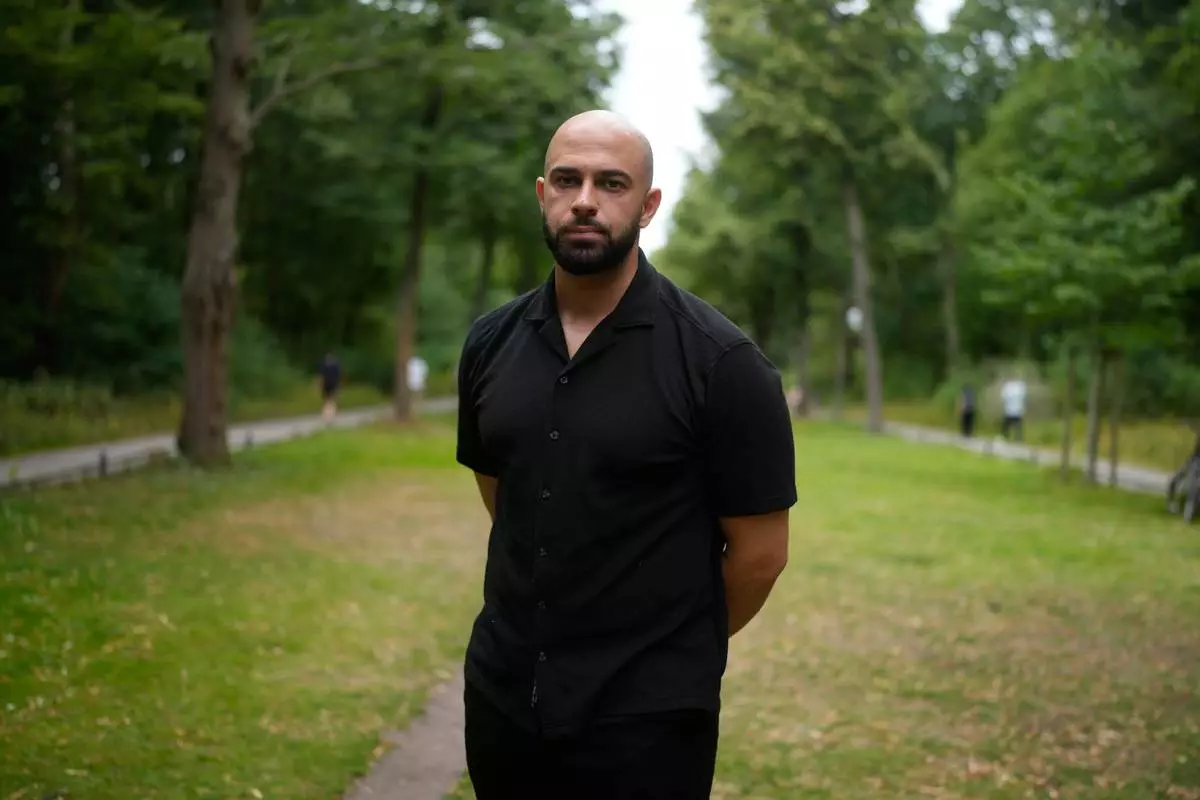
Police officer Ali Darwich poses for a portrait near the scene where a car rammed into a crowd at the Pride March in Berlin, Germany, Sunday, July 26, 2026. (AP Photo/Markus Schreiber)