A search for suspects in Ohio who opened fire near a busy street festival stretched into Sunday after 12 people were wounded in the weekend shooting that sent crowds scrambling for cover in a historic Toledo neighborhood.
Each of the dozen victims — ranging from teenagers to people in their 60s — were in stable condition, the Toledo Police Department said Sunday. No arrests have been made and authorities have not identified any potential suspects.
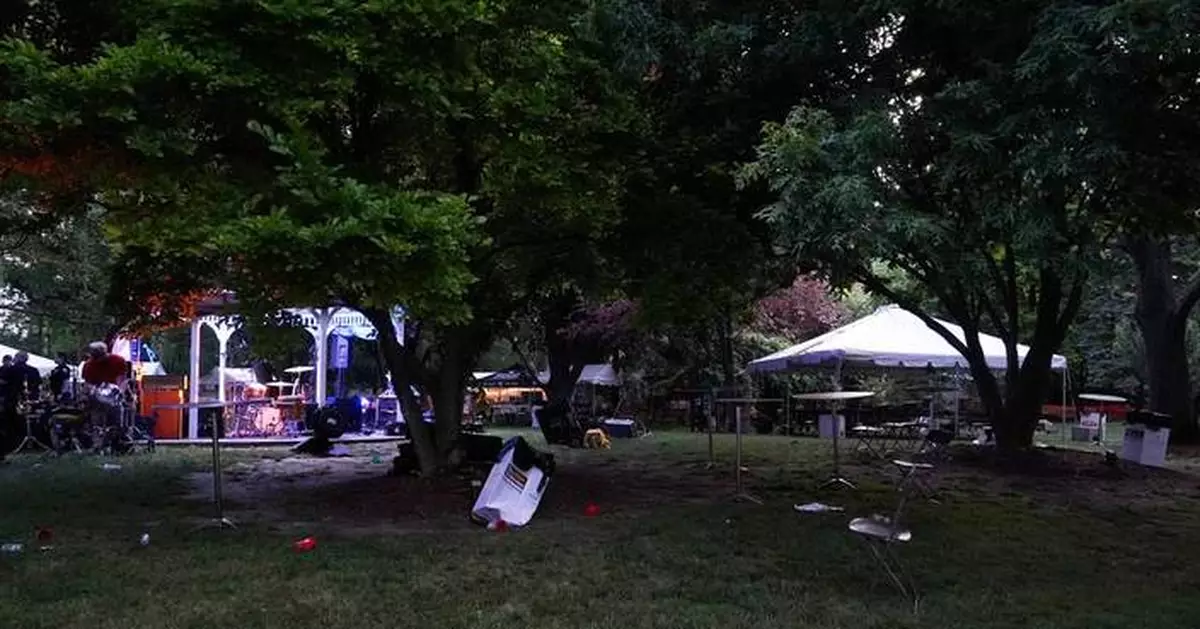
The gunfire erupted Saturday near the Old West End Festival, a popular annual summer gathering along streets dotted with Victorian homes. Videos posted to social media showed people running at the sound of gunfire and medics tending to the wounded in a park filled with event tents and food trucks.
Toledo Deputy Police Chief Joe Heffernan has said it appeared that at least two people fired weapons and were “probably shooting at each other.”
As the search for the shooters wore on, Lucas County Prosecutor Julia Bates vowed “justice will be swift and strong.”
“Those who were frightened, traumatized or harmed by this violence will remain at the forefront of our efforts. I’ve felt outrage before, but this is personal,” Bates said in a statement. "This is my home. These are my friends and neighbors. It is not OK.”
In a brief update posted to social media Sunday, Toledo police said investigators were continuing to make progress and were following multiple leads. Authorities have urged festivalgoers to come forward with any photos or videos that might have caught a glimpse of the suspects.
Hundreds of people were at the festival, an annual two-day celebration in Toledo’s historic district featuring live music, food vendors, home tours and shopping. Located in northwest Ohio near the western edge of Lake Erie, Toledo is about 55 miles (90 kilometers) southwest of Detroit.
“As far as violence, this is over the top, right?” Toledo police Lt. Dan Gerken said Saturday. “Twelve people being shot, that’s the most I’ve been to a scene. I’ve been to a lot of scenes, but this is way over the top.”
The remainder of the festival was canceled Sunday. Organizers said “it would not be compassionate, responsible or possible" to continue through the weekend.
“We are heartbroken about those that were injured at the Old West End Festival,” the festival said in a statement.
The victims ranged in age from 14 to 61, with most of them in their early 20s. Fire Chief Allison Armstrong said it was difficult for emergency responders to get the injured to the hospital due to closed roads and traffic leaving the festival, but all were transported within an hour.
Kevin Berry was sitting in the neighborhood arboretum listening to live music with friends when he heard gunshots ring out.
“Everybody hit the deck,” he said.
When Berry looked back up, he saw a gun being tossed to the ground less than 50 feet (15 meters) away from him. Officers who were already on site for the festival responded immediately.
Berry, who has medical training and served in the Navy, walked around looking for anyone who might need help and saw at least five people with gunshot wounds.
George Kral, the city’s safety director, said the Old West End Festival is one of the most iconic festivals in Toledo.
“And it’s a shame that something like this had to ruin it," Kral said.
The Ohio shooting was one of at least two episodes of mass gun violence in the U.S. over the weekend.
In Kansas City, Missouri, nine adults were injured in a shooting early Saturday, police said. Officers dispatched to the area about 10 miles (16 kilometers) south of downtown found a large crowd dispersing. Police said none of the victims had life-threatening injuries and that no suspects were in custody.
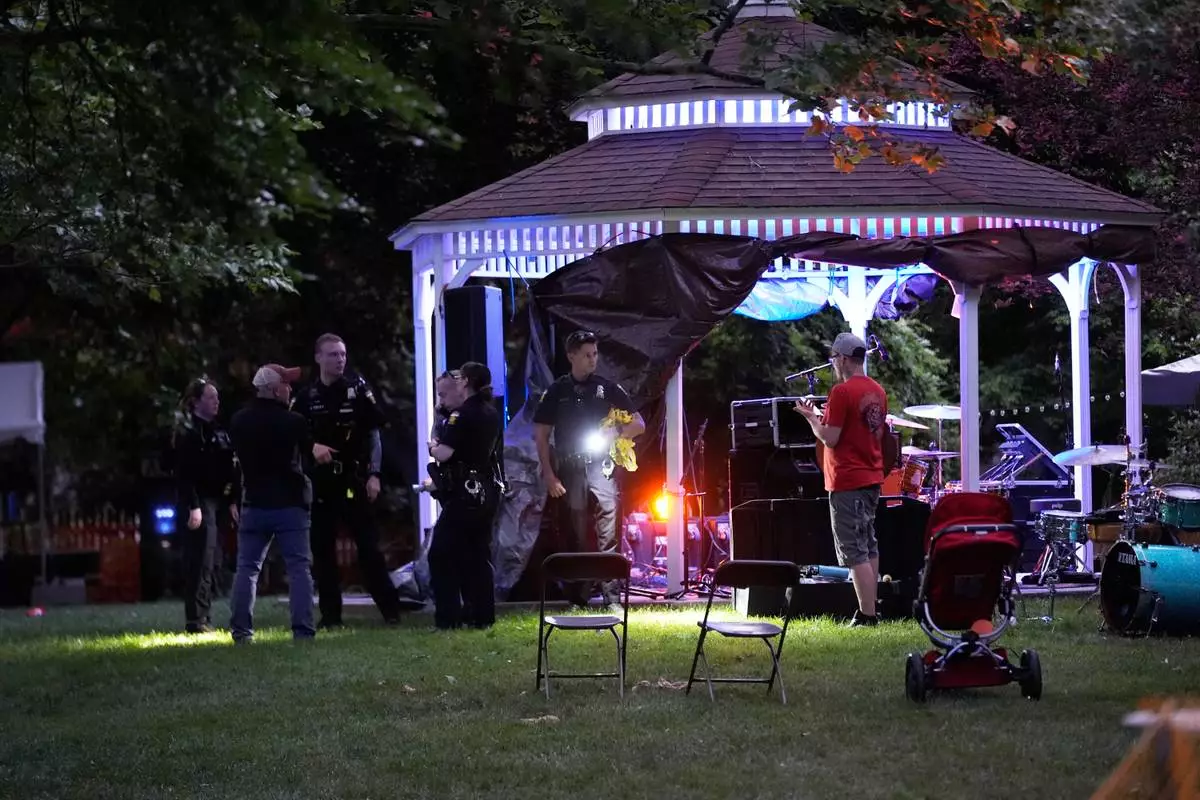
Police investigate where multiple people were shot at a community festival at Agnes Reynolds Jackson Arboretum Saturday, June 6, 2026, in Toledo, Ohio. (AP Photo/Paul Sancya)
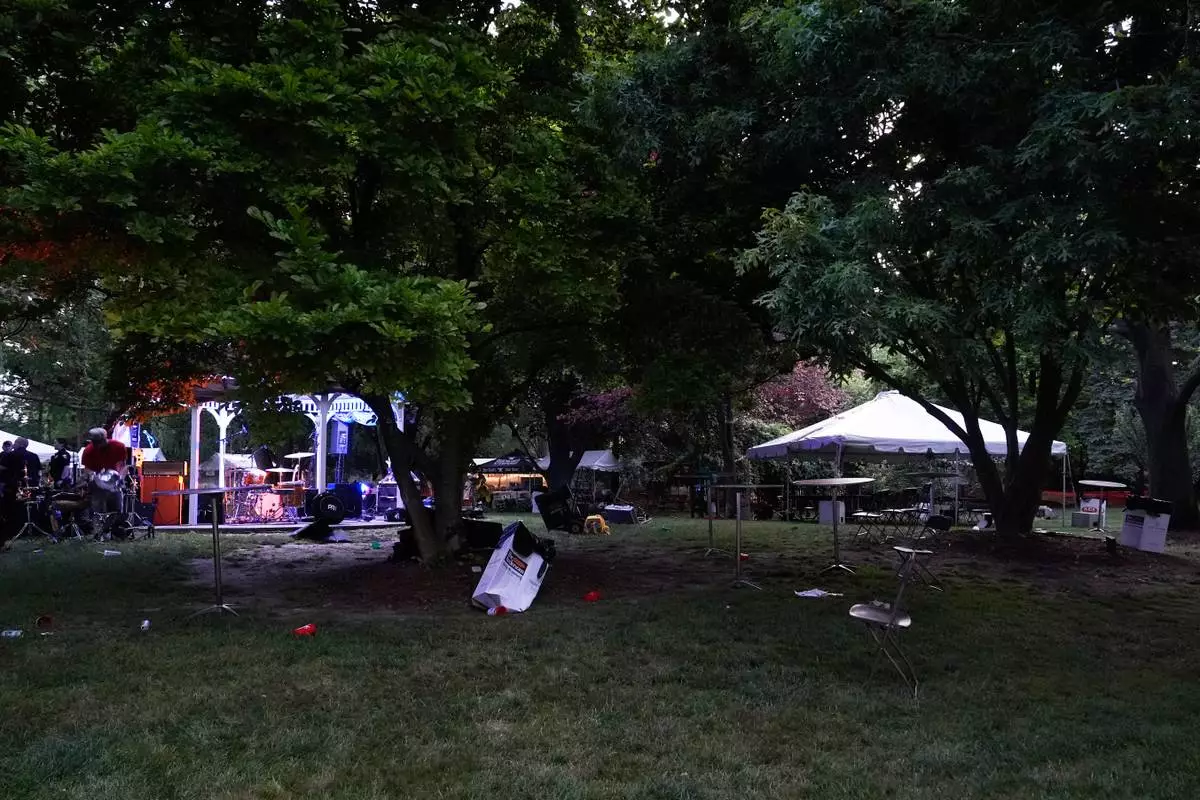
The Agnes Reynolds Jackson Arboretum is shown where multiple people were shot at a community festival Saturday, June 6, 2026, in Toledo, Ohio. (AP Photo/Paul Sancya)
CAIRO (AP) — Mediators are still working with Iran and the United States on brokering a deal to end the fighting and open the Strait of Hormuz — even after U.S. President Donald Trump publicly rejected Iran's latest proposal, three regional officials and a senior U.S. official told The Associated Press.
The indirect talks were expected to resume on Monday and come as the conflict that's caused global economic damage and badly battered Iran enters its eighth month. Multiple efforts to allow safe shipping on one of the world's most crucial waterways have failed.
The officials divulged that the behind-the-scenes efforts continue even after Trump spurned an Iranian proposal to reopen the strait in a week if the U.S. agreed to lift its blockade of Iranian ports, release frozen Iranian assets and waive sanctions on Iranian oil sales, among other conditions.
Iranian Foreign Minister Abbas Araghchi, however, remained in New York after last week's gathering of world leaders at the U.N. General Assembly. He said he was awaiting “definitive” word from mediators of Trump's rejection. Qatar has been mediating.
Despite Trump’s often bellicose rhetoric, he remains open to pursuing a non-military resolution to the conflict if one can be achieved, said the senior U.S. official.
But the official stressed there's a measure of doubt about whether Iran can be persuaded to ultimately meet Trump's conditions for a deal.
The officials were not authorized to comment publicly and spoke on the condition of anonymity about the behind-the-scenes diplomatic negotiations.
Two of the officials speaking to the AP confirmed that mediators are working with both sides on a proposal that would include reopening the strait and lifting the U.S. blockade, and then removing sanctions.
According to the draft text being discussed, the strait would reopen in accordance with a separate deal that Iran has been discussing with Oman, on the other side of the strait, and it would include no tolls — something Tehran has pursued. That deal seeks to temporarily manage shipping traffic on what was seen as an international waterway before the war.
Despite Trump’s public comments, the U.S. has not officially rejected the current proposal, indicating that his remarks may have been a negotiating tactic, according to the officials.
One regional official said the U.S. is seeking Iranian concessions on its nuclear program, including allowing inspectors to enter the country. Under the Memorandum of Understanding the two sides signed in June that collapsed within days, Iran's nuclear program was meant to be discussed over a 60-day period.
One official reported positive signals coming from both sides. A second reported “slight progress” over the weekend. The third said mediators are still trying “to soften” the positions of both sides.
The White House did not immediately respond to a request for comment.
While Iran’s latest proposal echoes the June deal, a key difference is speed.
Araghchi told a closed-door meeting on the sidelines of the U.N. General Assembly last week that Tehran had pitched the deal as benefiting Trump in the midterm elections. Araghchi later told journalists that “the seven-day timeline will start as soon as the United States accepts this plan.”
Both the U.S. and Iran have been hurting economically — the U.S. from high oil prices as Iran attacks ships on the strait, and Tehran from the naval blockade and a growing number of U.S. sanctions that bottle up its oil sales. Brent crude, the international standard, is above $108.
For months, the two sides have been trying to outlast the other, while regional countries endure missile and drone attacks as Tehran claims to target U.S. military assets in the region.
Reflecting Iran's impatience, a rare statement on Monday attributed to the theocracy's Supreme Leader Ayatollah Mojtaba Khamenei noted the “painful blows” that enemy forces have received near the strait. “Before long, the Arabian Sea, too, will be rid of them,” the statement added.
Tehran's latest proposal again sought to end the fighting on all fronts, including in Lebanon. But a new front has emerged in recent weeks as Iran-backed Houthi rebels in Yemen are now perched on another crucial waterway, the Bab el-Mandeb Strait at the southern entrance to the Red Sea. That has further pressured global energy markets.
Iran argues that the Houthis have their own demands, and that their conflict with neighboring Saudi Arabia is separate from the U.S.-Iran war, but Iranian officials said they are willing to help in finding a settlement between the Houthis and the Saudis, one of the officials said.
Lee reported from Washington. Associated Press writers Collin Binkley in Washington and AP Middle East editor Victoria Eastwood contributed to this report.
AP STANDARDS: The AP only uses anonymous sources when the information is vital to the news report and not opinion or speculation. The information must be unavailable except under the conditions of anonymity imposed by the source. The source must be reliable, in a position to have accurate information and approved by news managers.
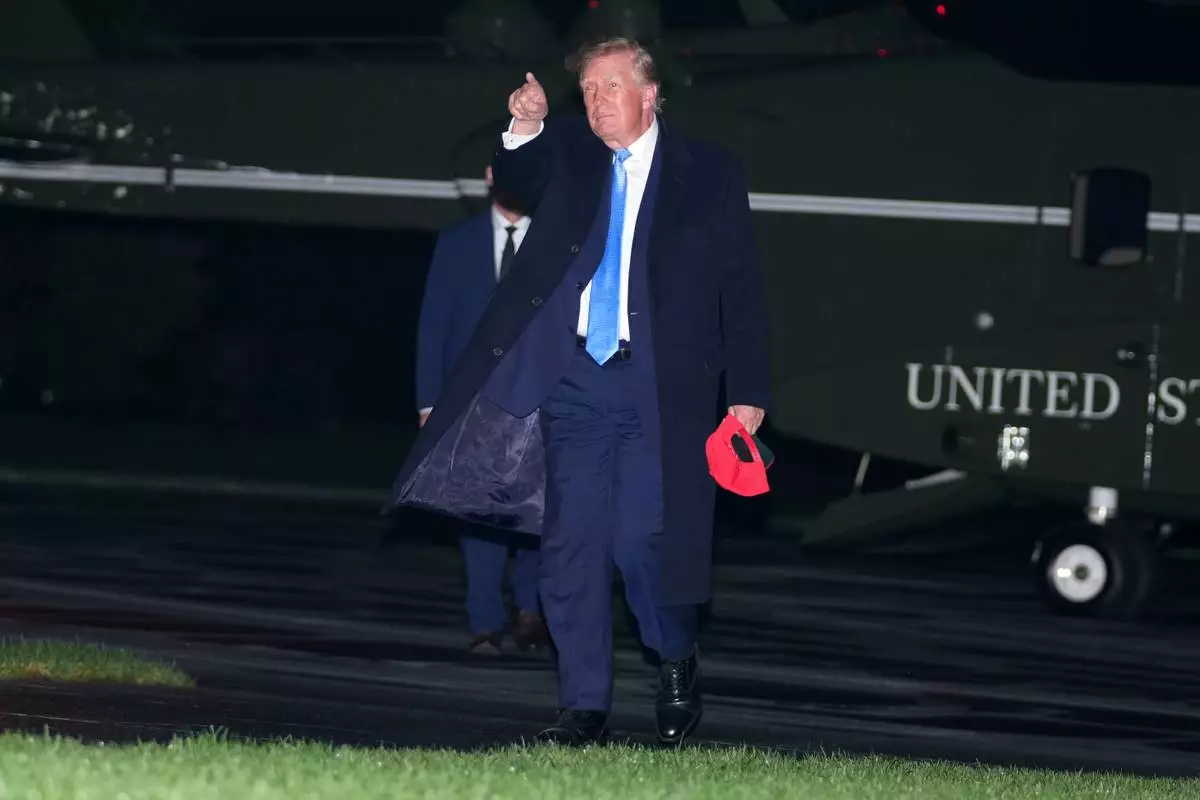
President Donald Trump walks on the South Lawn of the White House after arriving on Marine One, Sunday, Sept. 27, 2026, in Washington. (AP Photo/Allison Robbert)
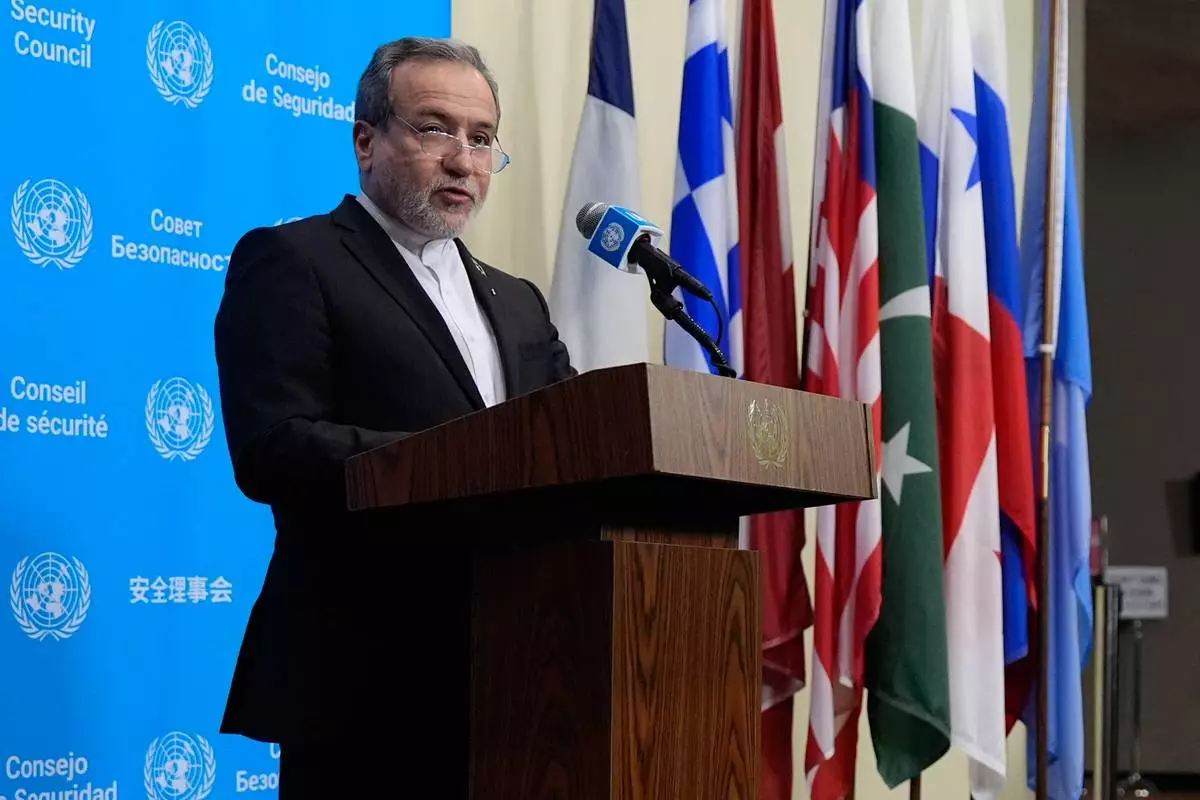
Iran's Foreign Minister Abbas Araghchi speaks to the media during the 81st session of the United Nations General Assembly at United Nations headquarters, Friday, Sept. 25, 2026. (AP Photo/Yuki Iwamura)