TIJUANA, Mexico (AP) — Iran defender Ehsan Hajsafi criticized soccer's governing body after the team arrived in Mexico on Sunday with some members of their entourage still lacking U.S. visas, before three World Cup group matches in the United States later this month.
The team's participation in the World Cup, jointly hosted by the United States, Mexico and Canada, has been complicated by the Iran war. Problems with processing visas earlier led Iran to move its training base from Tucson, Arizona, to Tijuana, Mexico, which is on the border with California.
Click to Gallery
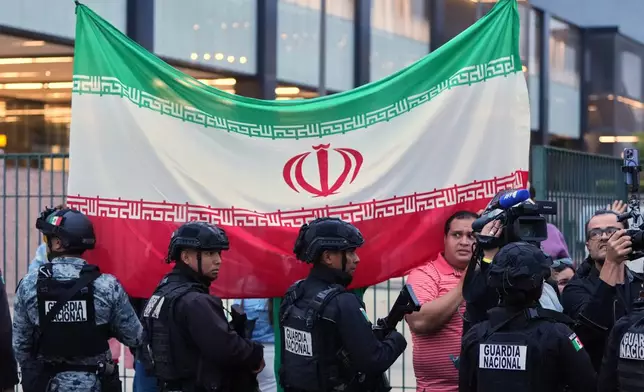
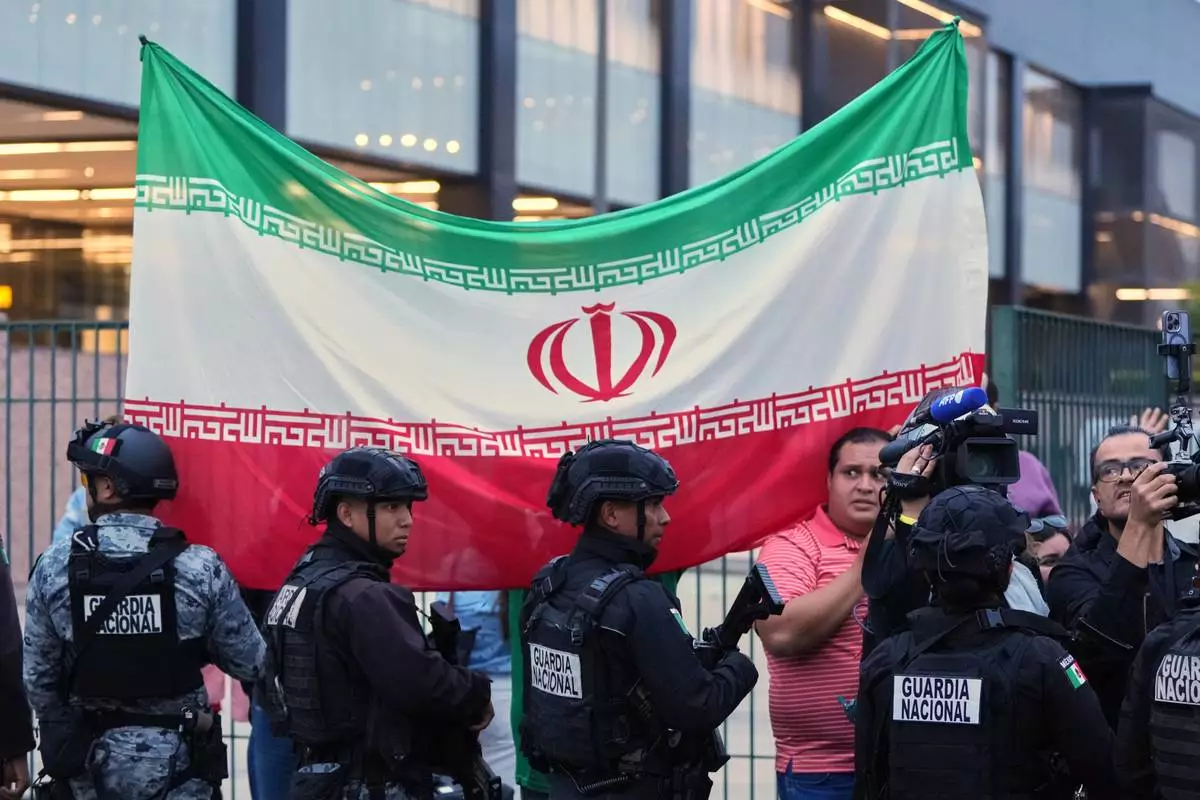
Fans for team Iran wave as players arrive for the World Cup soccer tournament in Tijuana, Mexico, Sunday, June 7, 2026. (AP Photo/Gregory Bull)
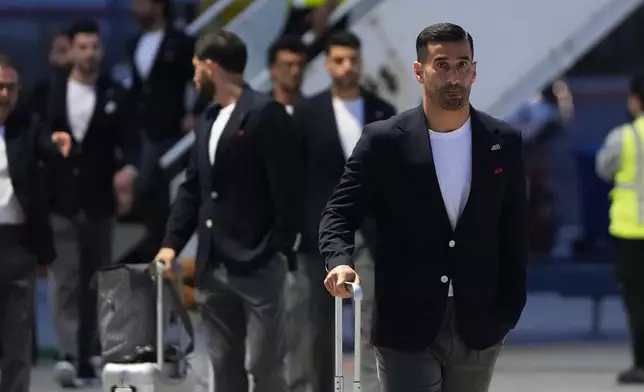
Iran's Ehsan Hajisafi, right, arrives with his teammates for the World Cup soccer tournament in Tijuana, Mexico, Sunday, June 7, 2026. (AP Photo/Gregory Bull)
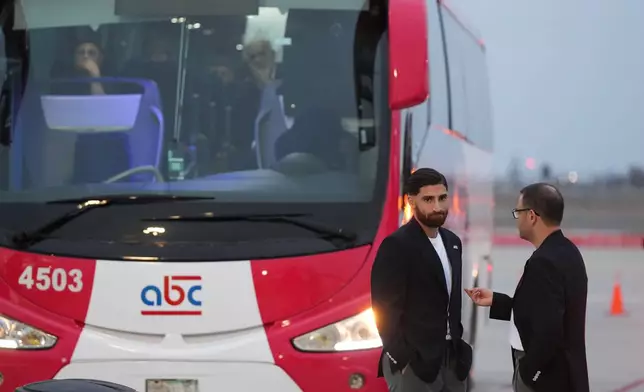
Iran's Alireza Jahanbakhsh, second from right, talks with a team official as he arrives with his teammates for the World Cup soccer tournament in Tijuana, Mexico, Sunday, June 7, 2026. (AP Photo/Gregory Bull)
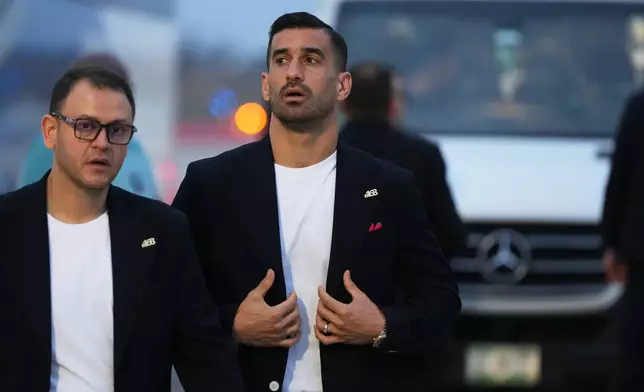
Iran's Ehsan Hajisafi, center, walks with a team official as he arrives with his teammates for the World Cup soccer tournament in Tijuana, Mexico, Sunday, June 7, 2026. (AP Photo/Gregory Bull)
Iran's Ehsan Hajisafi, left, arrives with his teammates for the World Cup soccer tournament in Tijuana, Mexico, Sunday, June 7, 2026. (AP Photo/Gregory Bull)
“First of all, we’re very happy that the team has finally arrived, and we’re delighted about that,” Hajsafi said. "Thank God, the team’s condition is very good.
“With everything that happened, visas were eventually issued. Personally, however, I do have a complaint about FIFA. Why did it take so long? As far as I understand, visas were issued only to the players and a few members of the coaching staff.”
Some members of Iran's entourage are still without U.S. visas before games in Los Angeles and Seattle. Those include the Iranian Football Federation’s secretary-general, Hedayat Mombeini, and its vice president, Mehdi Mohammad Nabi.
“Unfortunately, several key members of our coaching staff, whose roles are very important within the team, were not granted visas,” Hajsafi said. "That includes the team manager, the executive director and the media director, all of whom play very important roles.
“From here, I would like to ask FIFA to address this issue so that, God willing, the situation can be resolved in the coming days.”
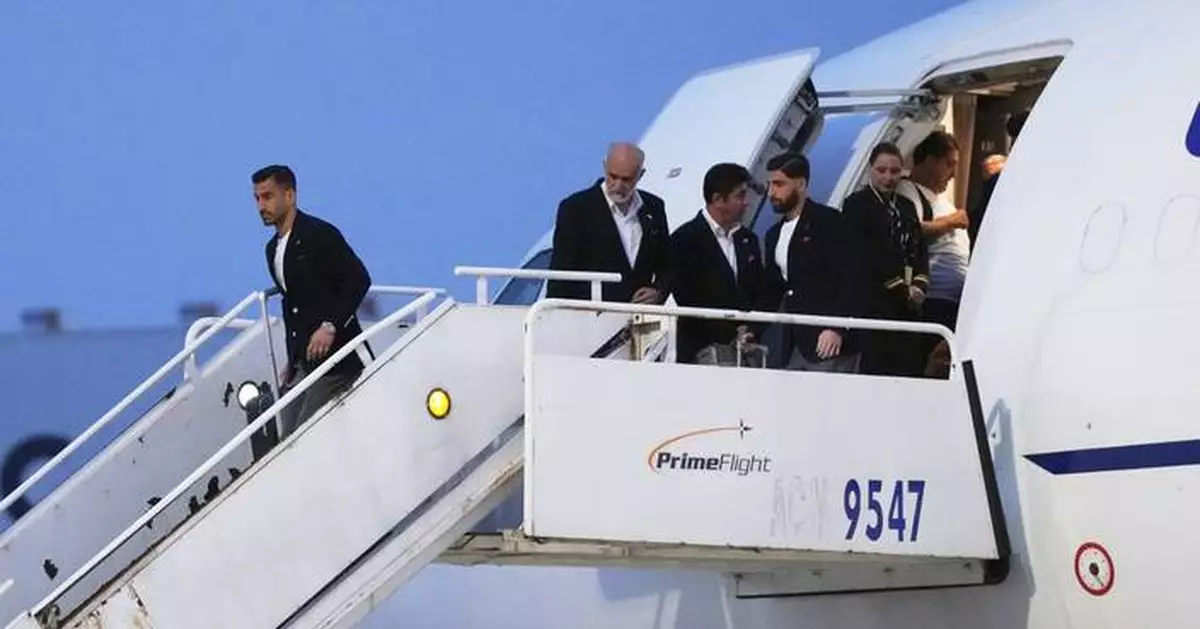
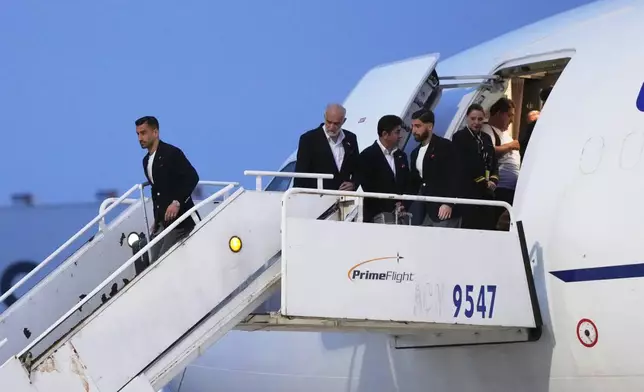
Iran had been training in the Turkish city of Antalya. The team flew directly to Tijuana, Mexico, which is just south of San Diego, on a private jet from the Mediterranean city’s airport.
Hajsafi was the first player to exit the plane with markings for German charter airline USC, which arrived at about 5:05 a.m. He led the team, dressed in blue blazers over white T-shirts, through a brief security check with Mexican officials and dogs before boarding a bus.
The bus stopped briefly at the entrance to the Tijuana airport, where around 20 or so Iran fans waved flags.
Iran plays its first two games in Inglewood, California, against New Zealand on June 15, and Belgium six days later, then heads to Seattle to face Egypt on June 26. Iran and the U.S. could meet in the round of 32 on July 3 in Arlington, Texas, if both teams come second in their groups.
In March, U.S. President Donald Trump had discouraged Iran from participating in the tournament, saying he didn’t think it was “appropriate” and raising concerns over players’ “life and safety.” A day later, Iran’s national team pushed back, saying “no one can exclude” it from playing.
Iran finalized its team on Monday, including 17 home-based players whose clubs haven’t played since February because of the war. Star forward Sardar Azmoun was dropped in March, reportedly because of a social media post that angered Iranian authorities during the war.
Iran’s sports minister said in March that it would “not be possible” for the team to participate in the World Cup, but the republic’s soccer federation said in May that it was moving ahead with a team. The federation had insisted that all players and staff be granted visas, including those who had military service in the Islamic Revolutionary Guard Corps.
AP World Cup coverage: https://apnews.com/hub/fifa-world-cup
Fans for team Iran wave as players arrive for the World Cup soccer tournament in Tijuana, Mexico, Sunday, June 7, 2026. (AP Photo/Gregory Bull)
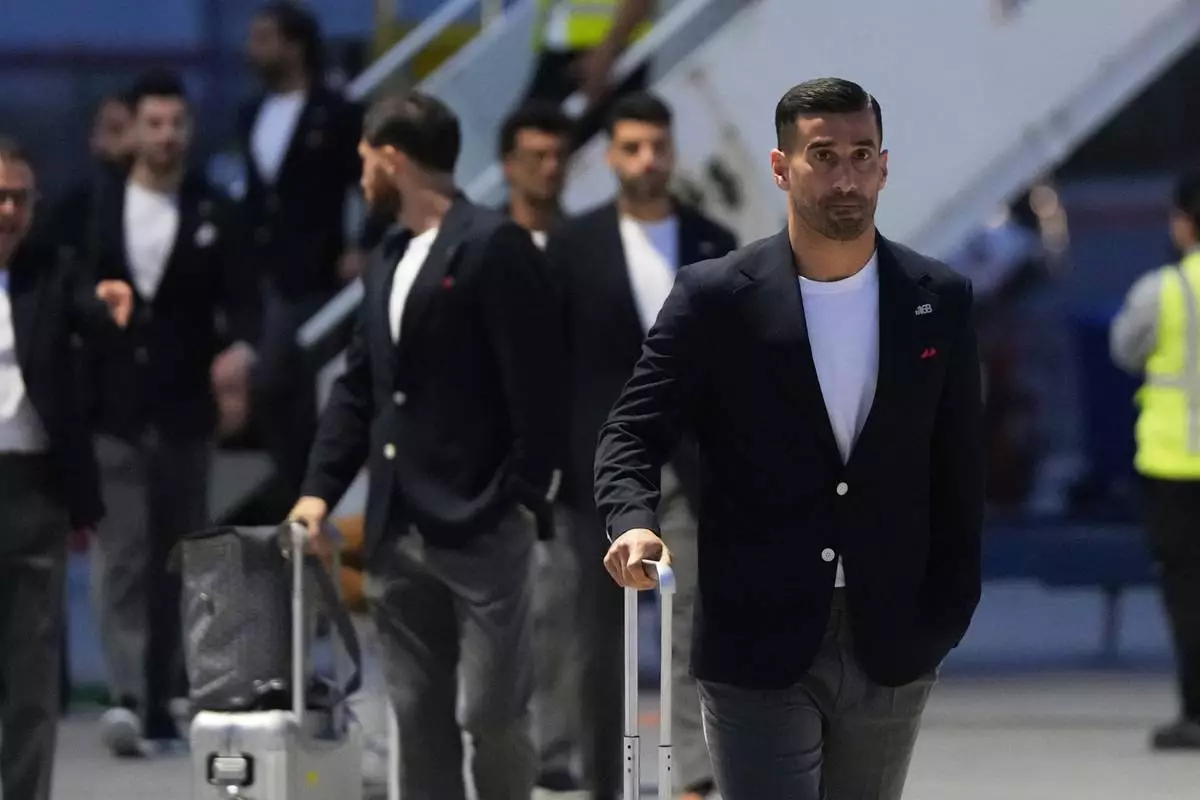
Iran's Ehsan Hajisafi, right, arrives with his teammates for the World Cup soccer tournament in Tijuana, Mexico, Sunday, June 7, 2026. (AP Photo/Gregory Bull)
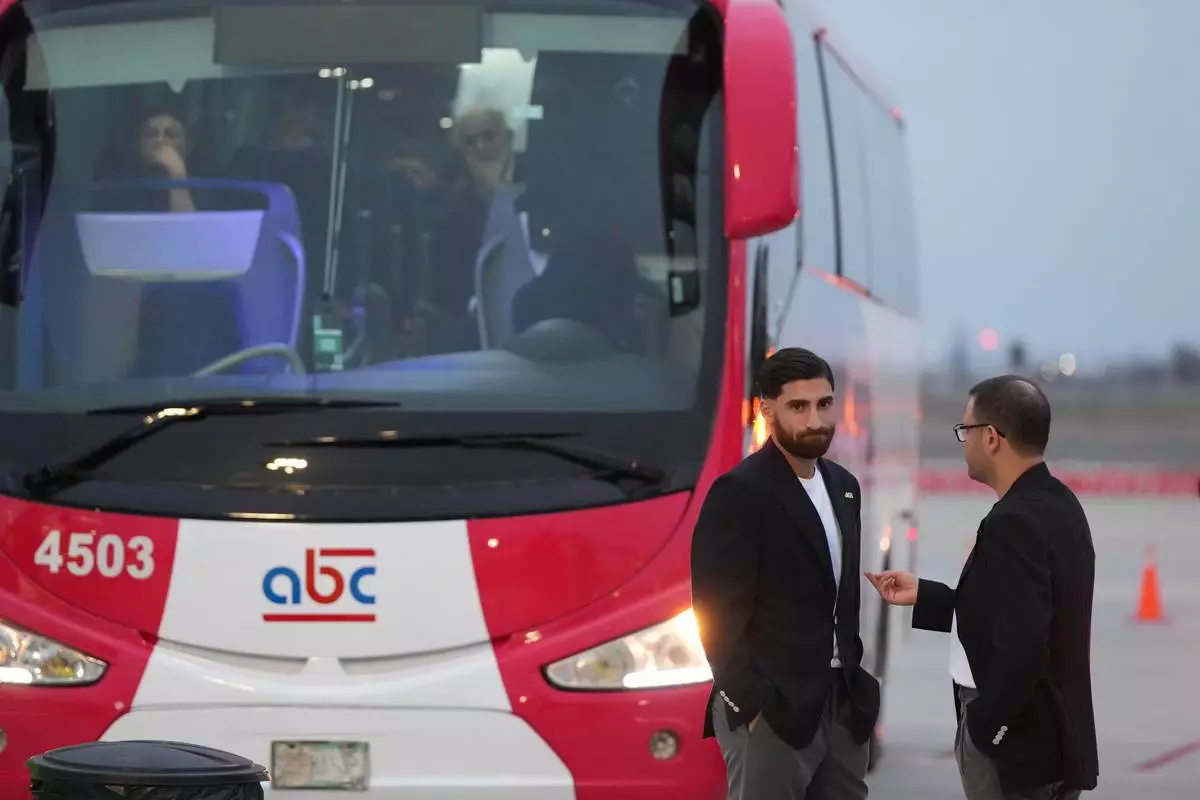
Iran's Alireza Jahanbakhsh, second from right, talks with a team official as he arrives with his teammates for the World Cup soccer tournament in Tijuana, Mexico, Sunday, June 7, 2026. (AP Photo/Gregory Bull)
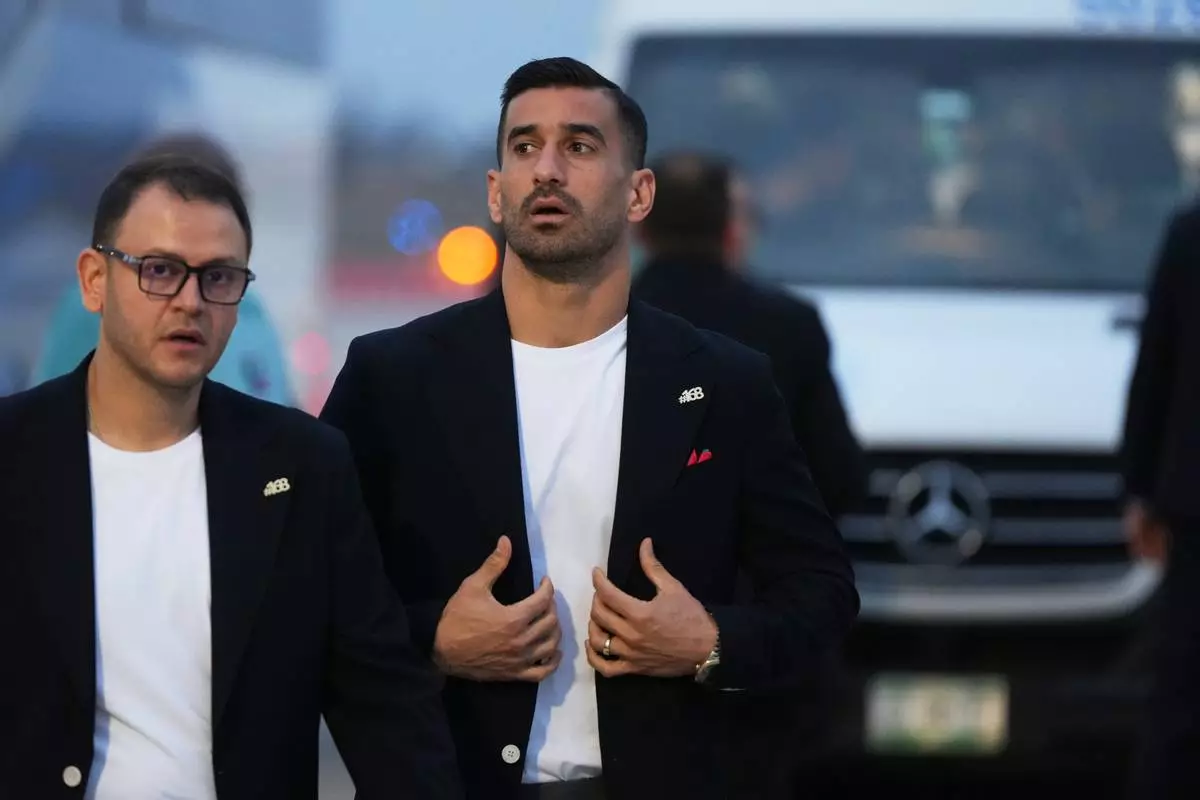
Iran's Ehsan Hajisafi, center, walks with a team official as he arrives with his teammates for the World Cup soccer tournament in Tijuana, Mexico, Sunday, June 7, 2026. (AP Photo/Gregory Bull)
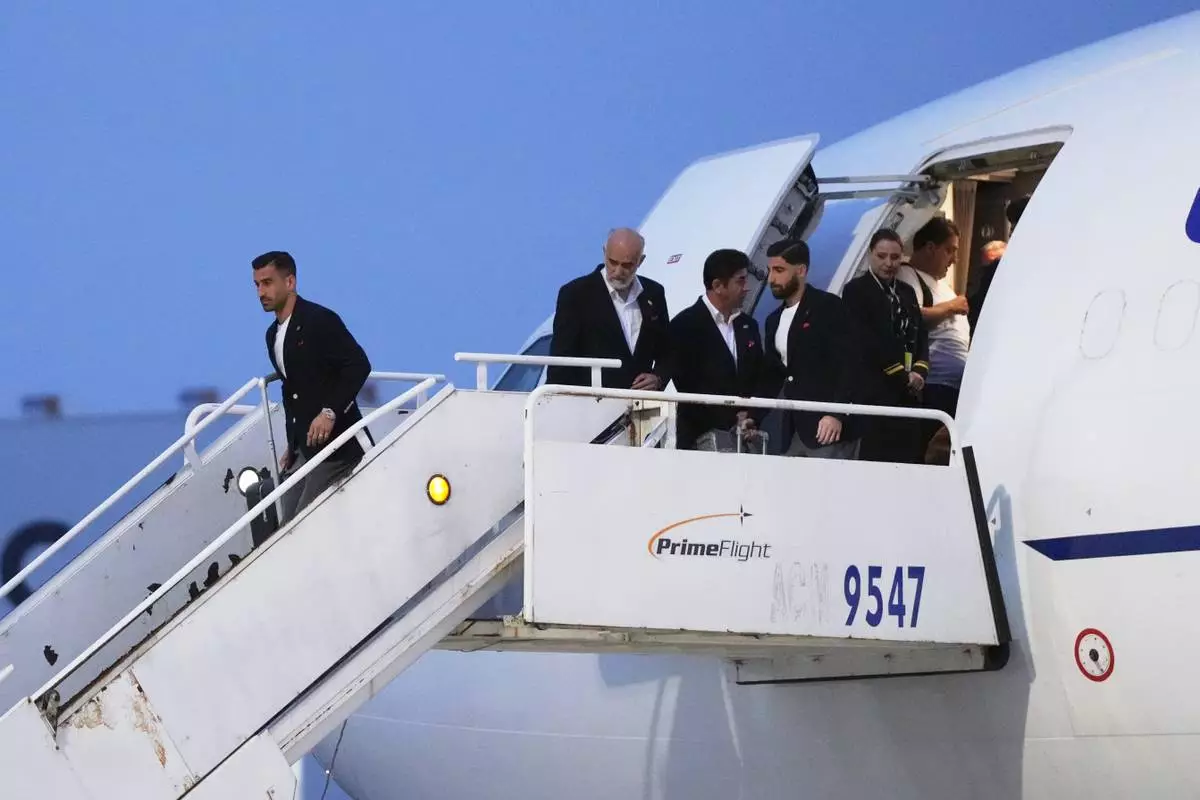
Iran's Ehsan Hajisafi, left, arrives with his teammates for the World Cup soccer tournament in Tijuana, Mexico, Sunday, June 7, 2026. (AP Photo/Gregory Bull)
BERLIN (AP) — A van slammed into people gathered for Berlin’s famed Pride festival on Saturday night, killing one person, injuring at least 16 others and prompting police to call off the celebrations and a concert in the German capital hours after they had begun.
Berlin police said they have identified a suspect who has not been arrested and he has ties to Islamic groups in the German capital.
“The suspect is known to police. He is known to us as a member of Islamic circles here in Berlin, and our search for this person is proceeding at full speed,” said police spokesman Florian Nath. He did not identify the suspect by name.
Nath added that “we still have no information whatsoever regarding his specific motives, the exact sequence of events, or his role in the crime itself.”
Earlier, police said some of the victims had life-threatening injuries. In a post on X, police called on everyone to leave the site of the event immediately as ambulances and firefighters attended to the victims.
According to police, a white van had driven into the Tiergarten park around 10 p.m., which is next to the route that the pride march had passed along earlier, and hit several people before colliding with a tree. Police could not say how many officers had been deployed to the scene but that it was “definitely a lot of police.”
Overall, more than 2,200 police officers have been on duty in Berlin since Saturday morning to protect the pride parade and other LGBTQ+ events in the city.
Police were conducting witness interrogations at the park during the night and were investigating accounts that in addition to the crash some victims appeared to have suffered stab wounds — but that it was too early to draw any conclusion from those accounts.
Berlin Mayor Kai Wegner expressed shock, saying that “following a peaceful and vibrant pride parade, the rally for a tolerant and peaceful Berlin was attacked in the most brutal manner.”
“This is an attack on our free and cosmopolitan society,” Wegner said. “I have confidence in the police and security authorities, who will be working around the clock to investigate.”
Meanwhile, authorities called on possible witnesses to come forward and share with police any video or photos they might have taken at the scene of the attack.
The city also activated a crisis hotline for people missing friends or family members.
Hundreds of thousands of people had come to Berlin on Saturday to celebrate at Berlin’s pride parade, known in Germany as Christopher Street Day. It’s one of Europe’s largest LGBTQ+ celebrations.
The pride event in front of the city’s Brandenburg Gate, near Tiergarten, was called off around 10:15 p.m. and a band’s performance on stage was interrupted. People were urged to go home and to avoid taking the route through the park.
Before the incident, people had celebrated peacefully, marching through the city for hours, dancing to loud music, and cheering around 80 floats that participated in the parade.
Julian Miethig, who had attended the LGBTQ+ party at the Brandenburg Gate earlier, said he had just wanted to go to an afterparty when he heard from a friend that “something bad happened there and there are a lot of fire trucks, a lot of emergency vehicles, ambulances.”
He said he went to Tiergarten and was shocked that something like this could have happened at Berlin’s pride celebrations.
“It’s a dark day for the community,” he said.
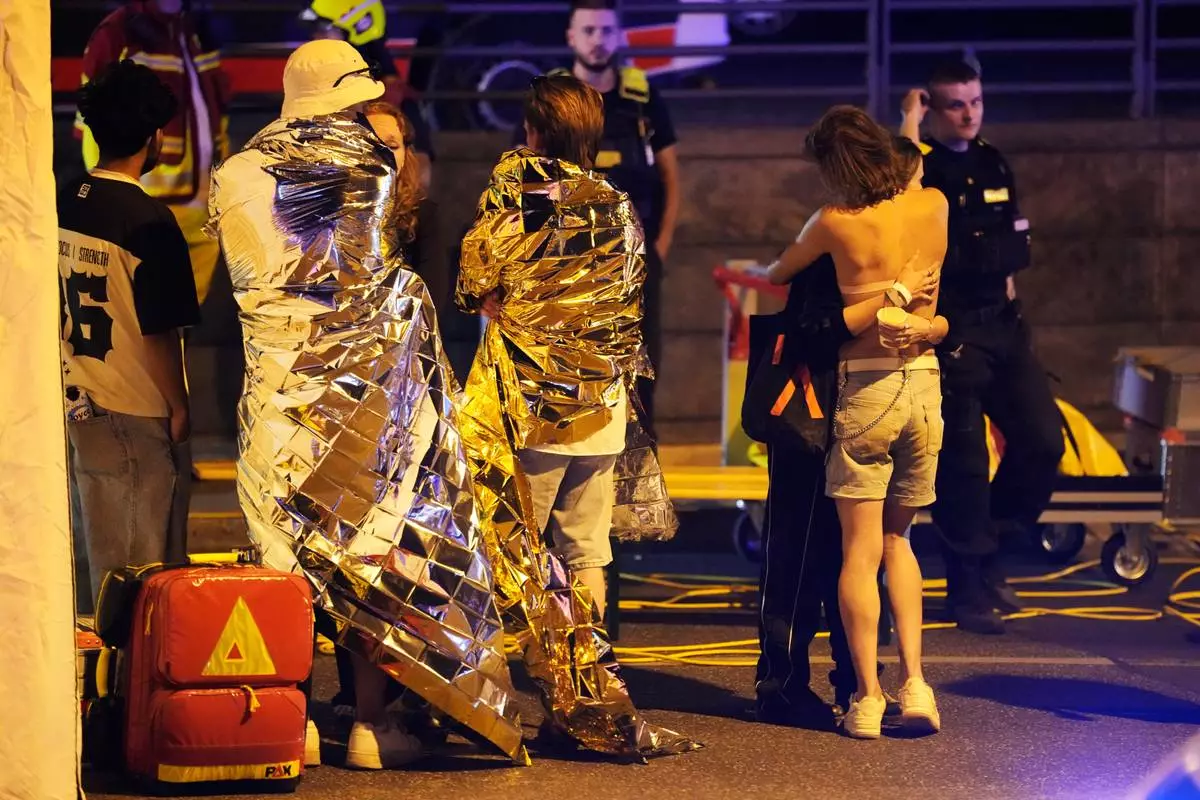
Two people embrace near others wearing thermal blankets as they stand near emergency personnel in Berlin, early Sunday, July 26, 2026, following the cancellation of Christopher Street Day festivities. (AP Photo/Markus Schreiber)
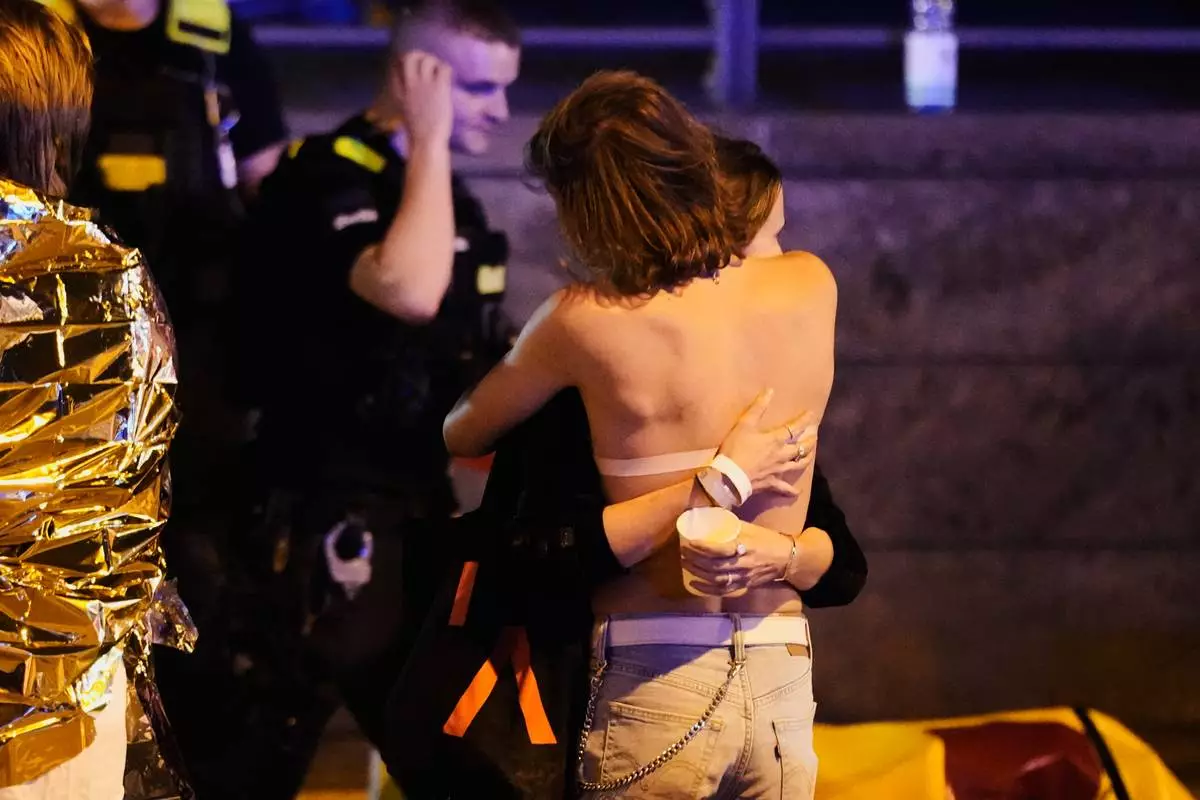
Two people embrace near others wearing thermal blankets as they stand near emergency personnel in Berlin, early Sunday, July 26, 2026, following the cancellation of Christopher Street Day festivities. (AP Photo/Markus Schreiber)
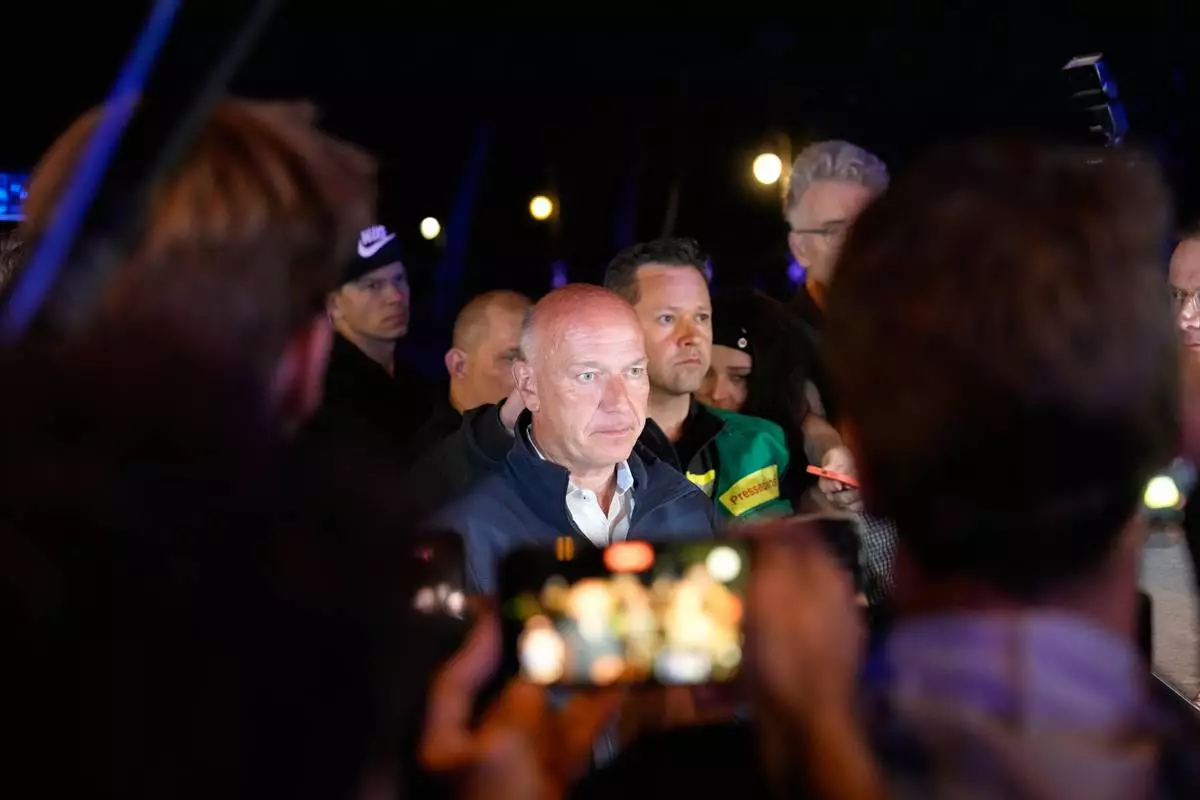
Mayor Kai Wegner speaks to the media in Berlin, early Sunday, July 26, 2026, following the cancellation of Christopher Street Day festivities. (AP Photo/Markus Schreiber)
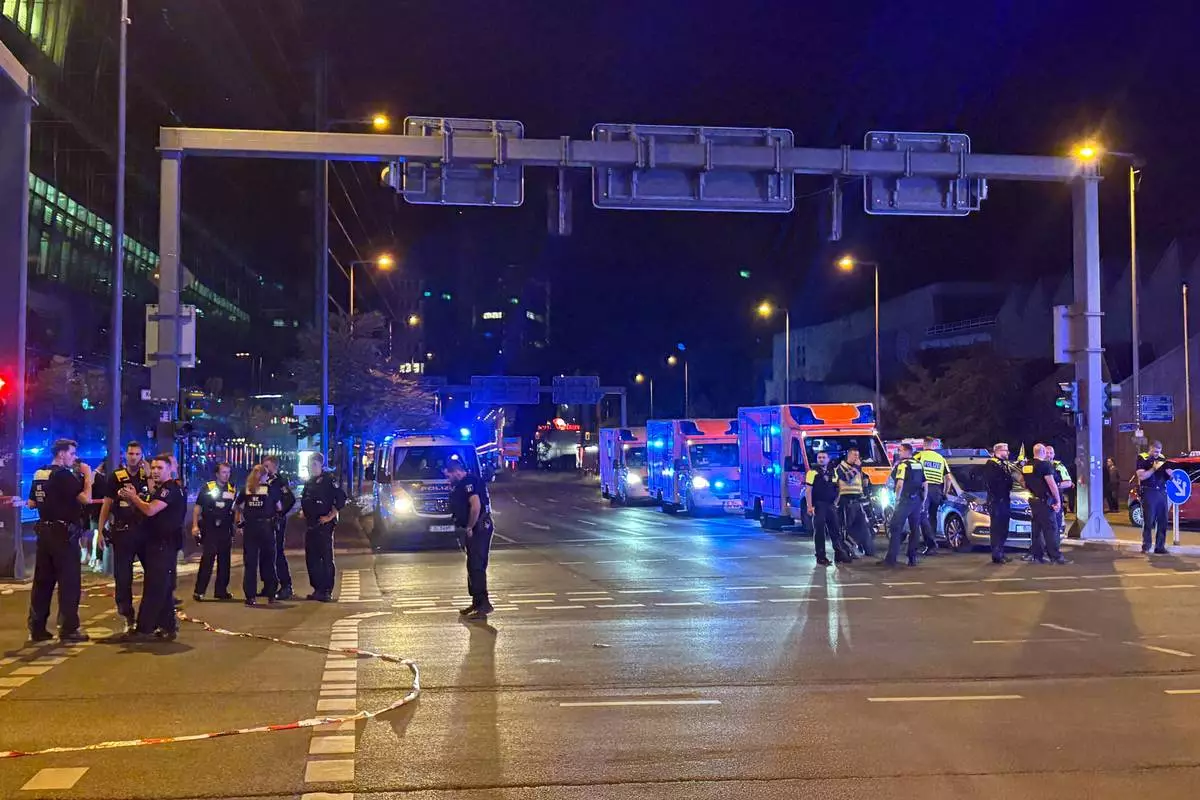
Emergency personnel gather at an intersection following the cancellation of Christopher Street Day activities in Berlin, on Saturday, July 25, 2026. (AP Photo/Fanny Brodersen)
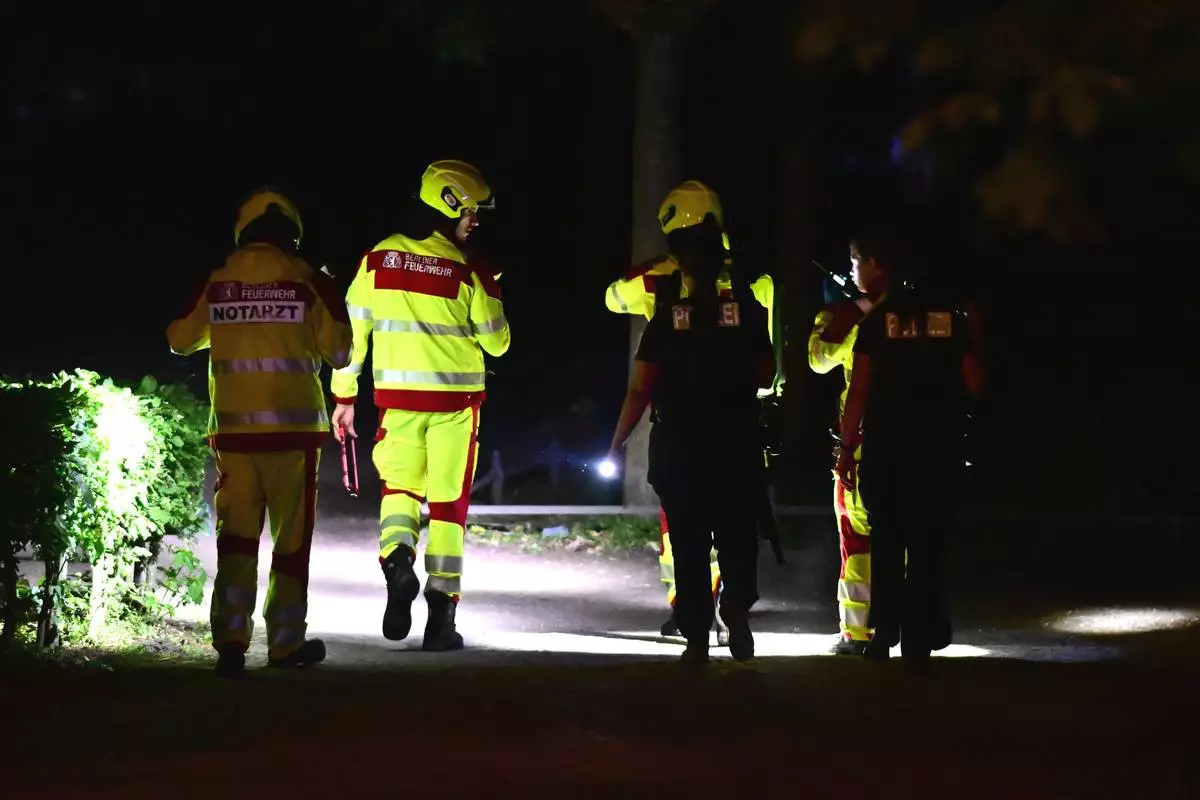
Emergency personnel use flashlights following the cancellation of Christopher Street Day in the Tiergarten area of Berlin on Saturday, July 25, 2026. (Fabian Sommer/dpa via AP)
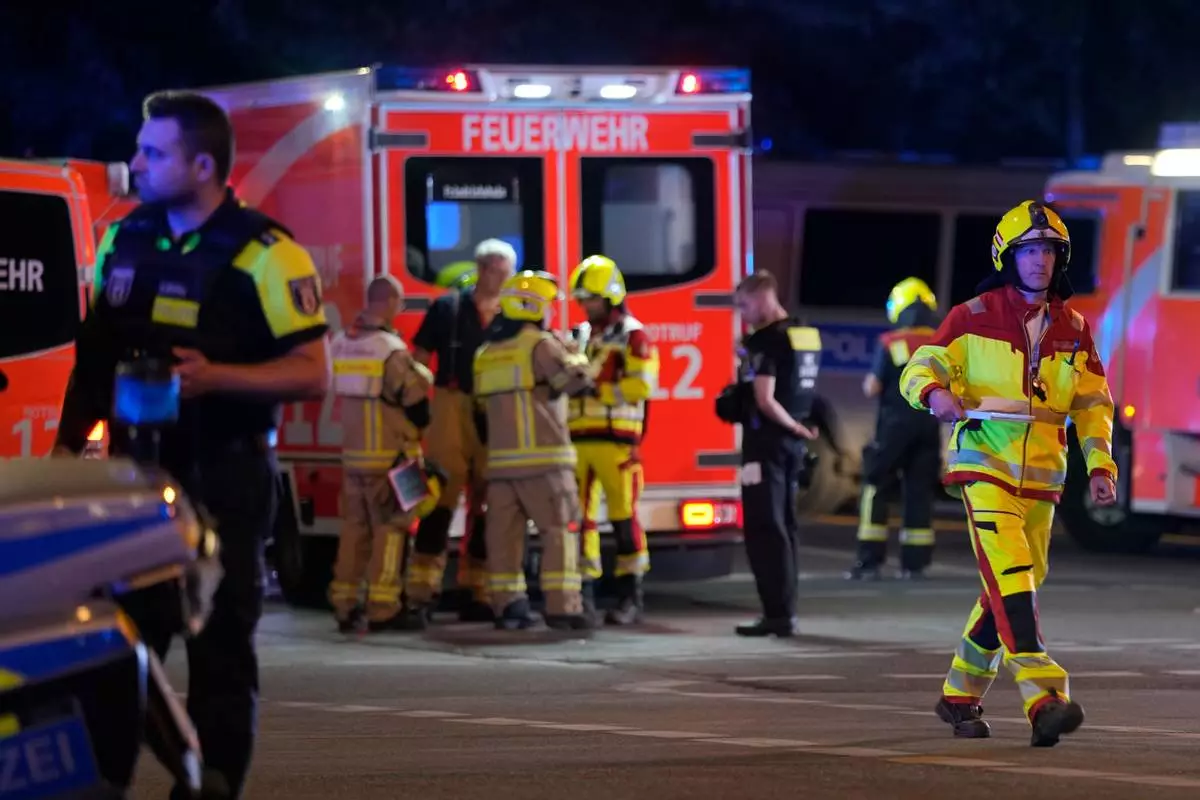
Emergency personnel gather following the cancellation of Christopher Street Day festivities in Berlin, on Saturday, July 25, 2026. (AP Photo/Markus Schreiber)
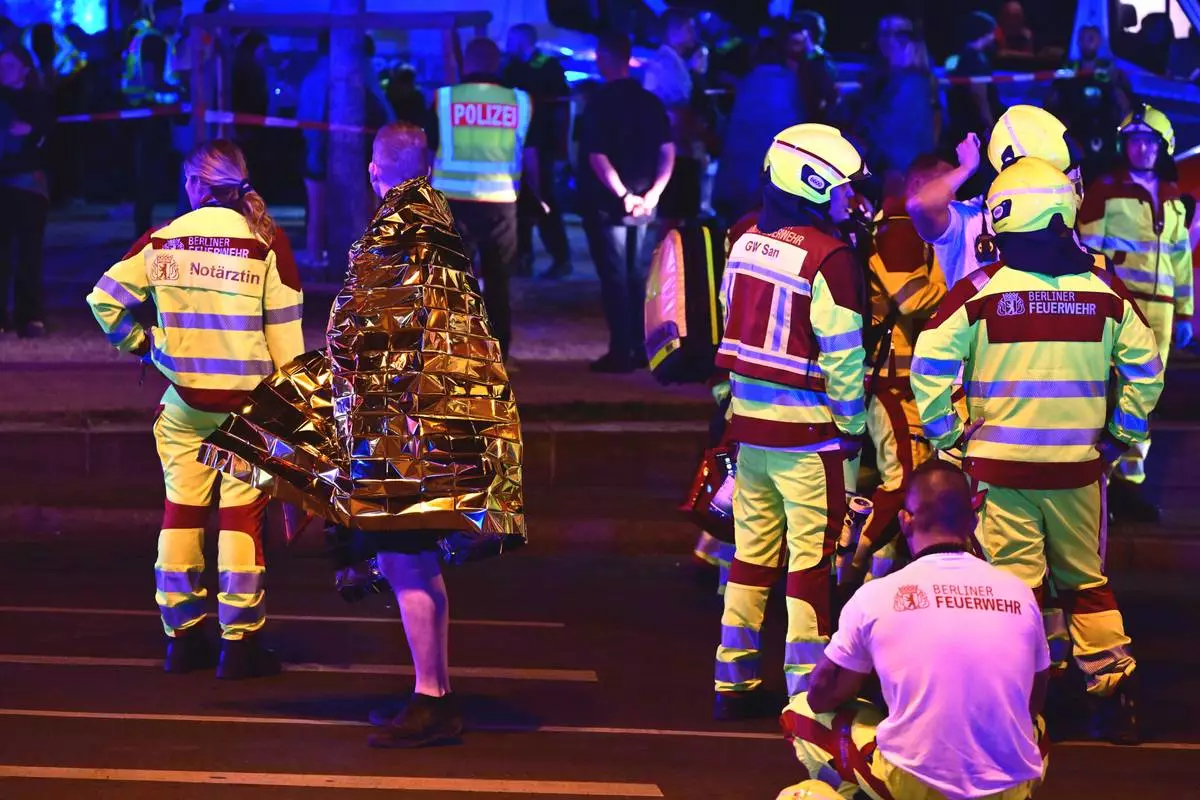
A person wrapped in a thermal blanket stands near emergency personnel following the cancellation of Christopher Street Day festivities in Berlin, on Saturday, July 25, 2026. (Fabian Sommer/dpa/dpa via AP)
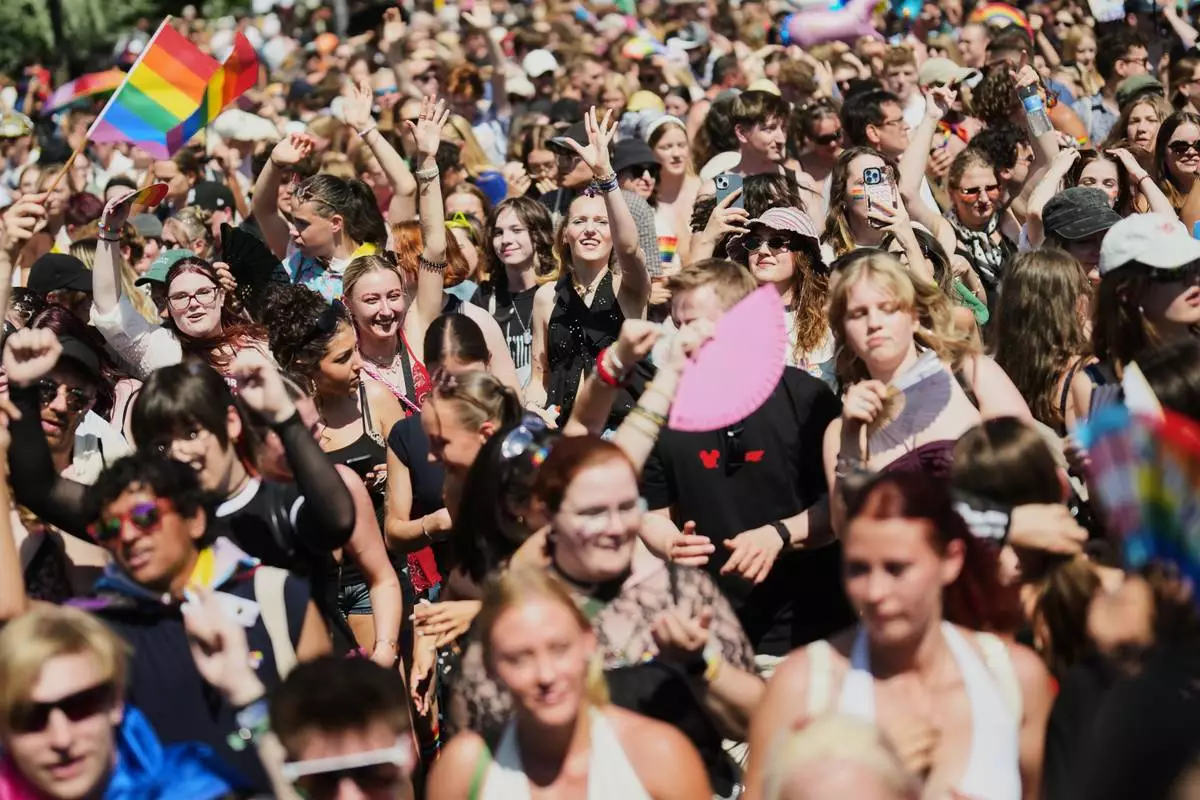
The crowd celebrate during the Pride March in Berlin, Germany, Saturday, July 25, 2026. (AP Photo/Markus Schreiber)
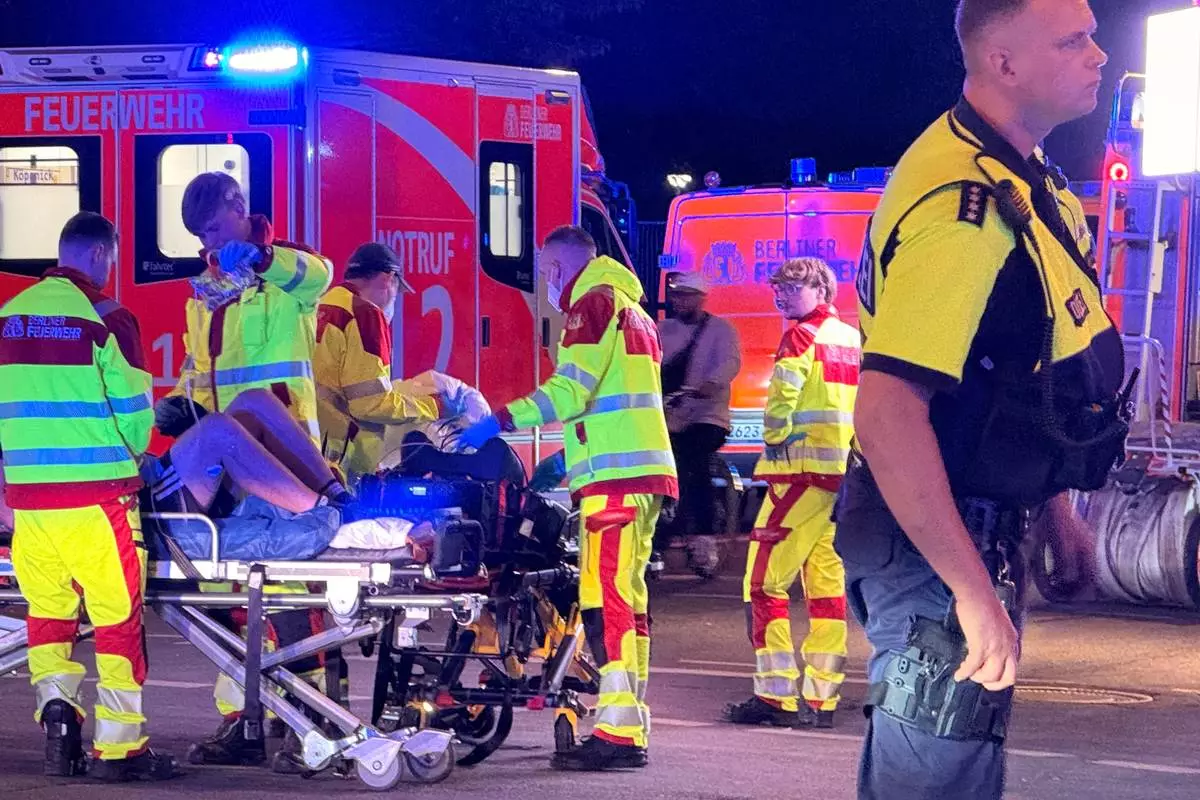
Emergency personnel tend to a person on a stretcher following the cancellation of Christopher Street Day in Berlin on Saturday, July 25, 2026. (Andreas Rabenstein/dpa via AP)
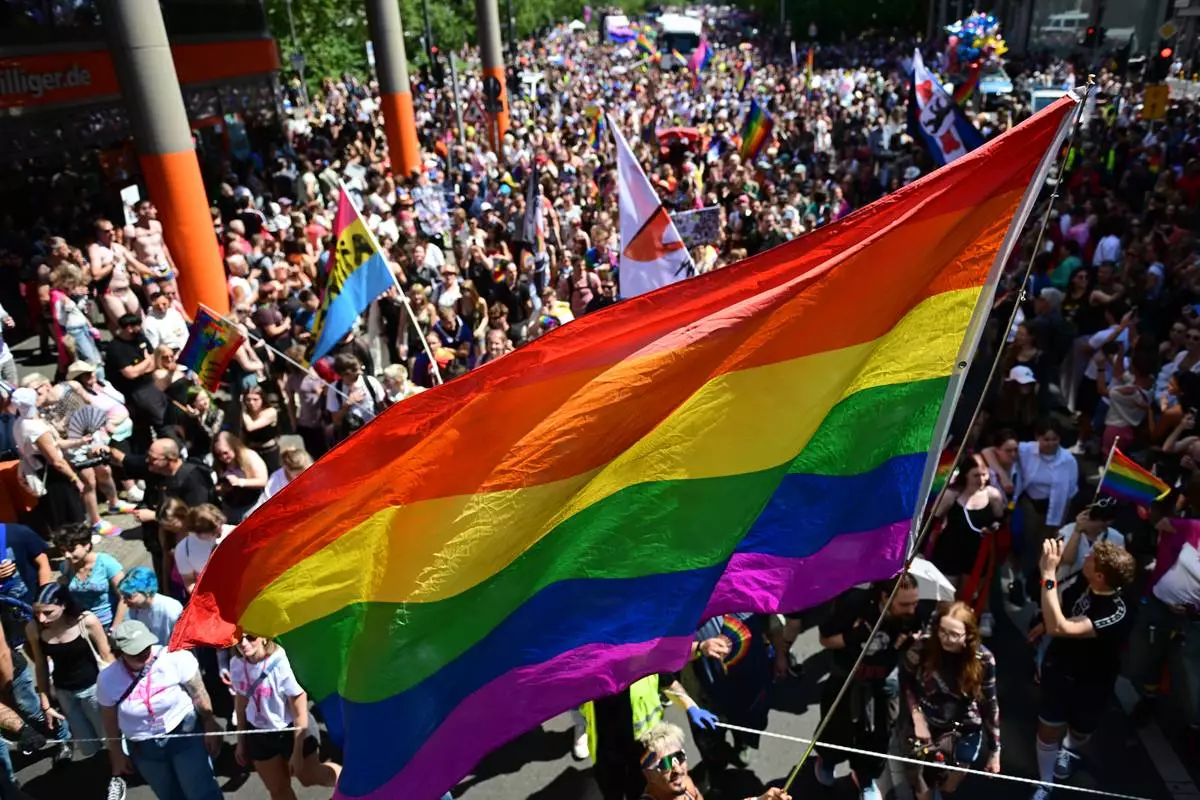
People march with a rainbow flag during the Christopher Street Day parade in Berlin, on Saturday, July 25, 2026. (Fabian Sommer/dpa via AP)
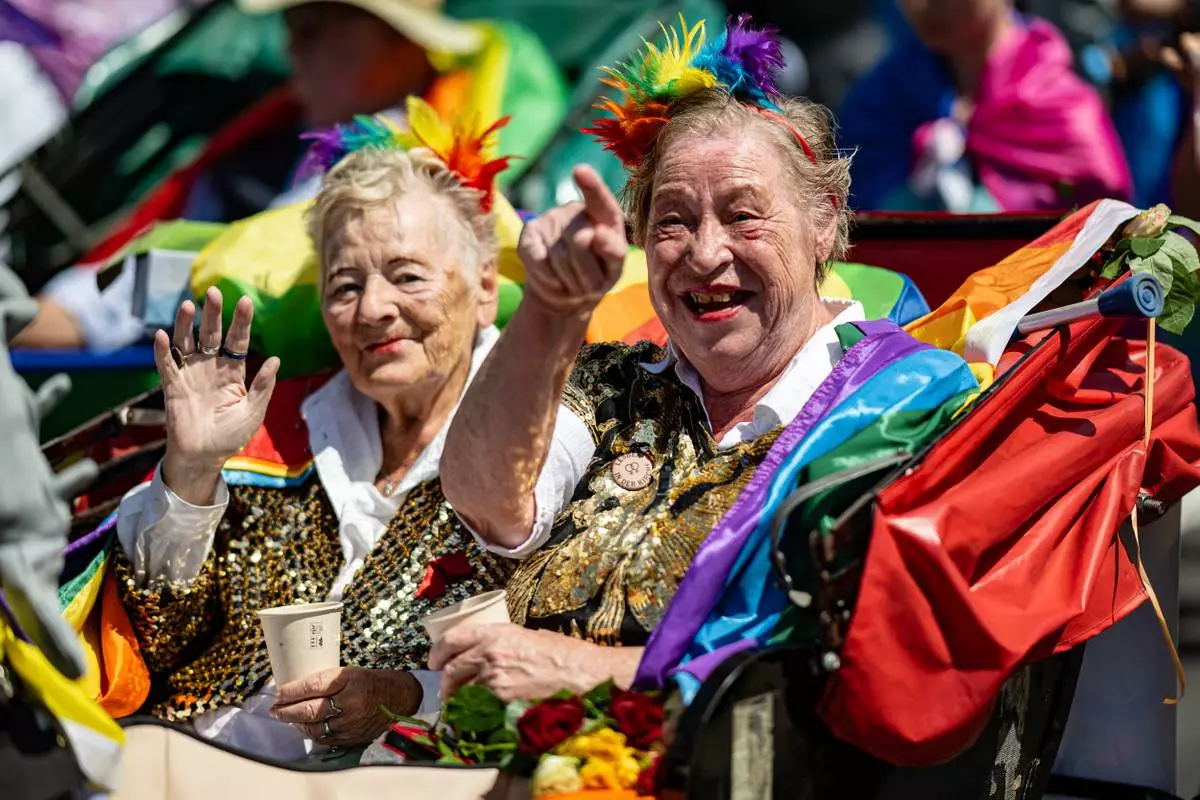
People wave during the Christopher Street Day parade in Berlin, on Saturday, July 25, 2026. (Fabian Sommer/dpa via AP)
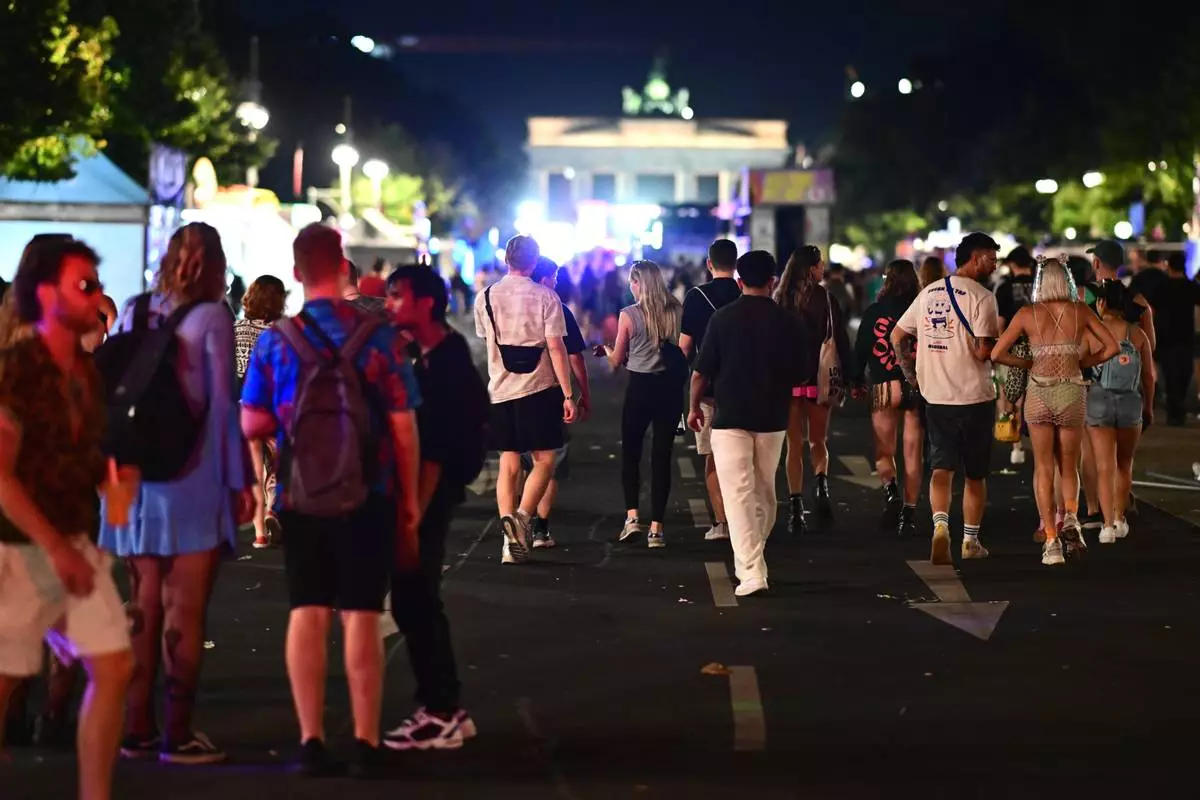
People stand on 17 June Street following the cancellation of Christopher Street Day in Berlin, on Saturday, July 25, 2026. (Fabian Sommer/dpa via AP)
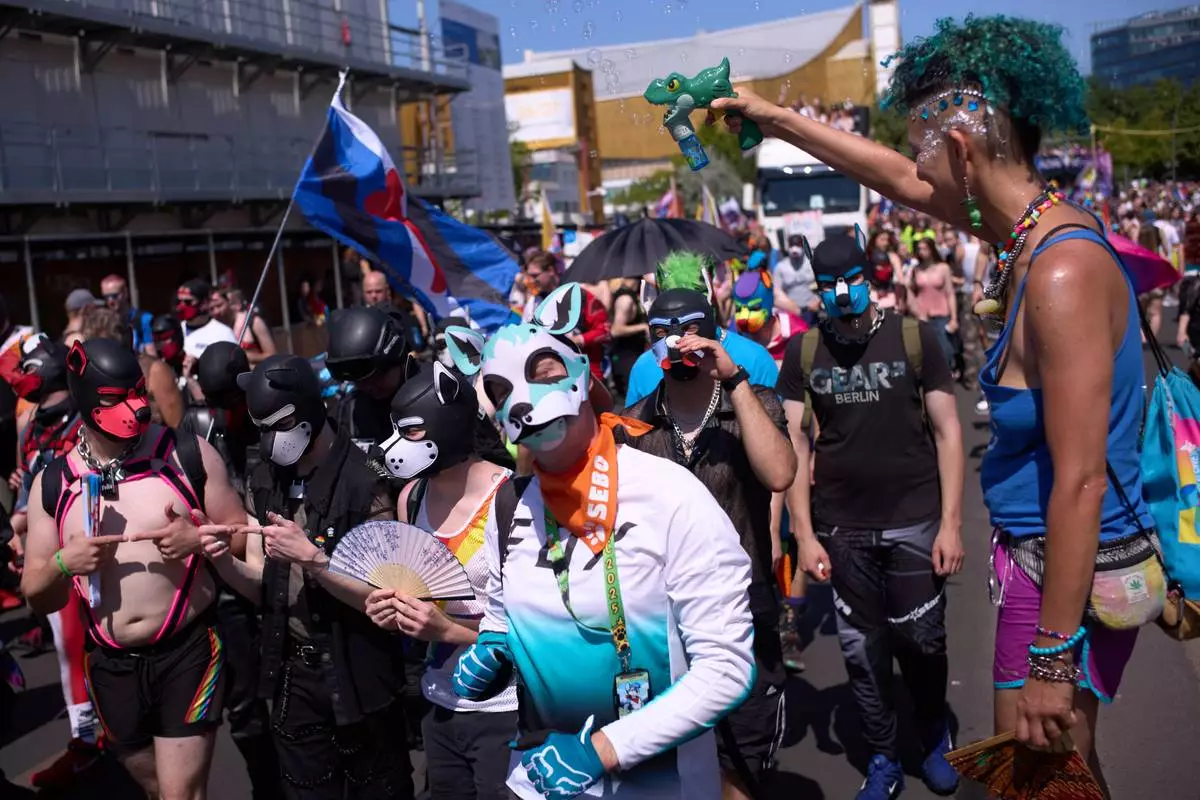
Participants with dog masks attend the Pride March in Berlin, Germany, Saturday, July 25, 2026. (AP Photo/Markus Schreiber)
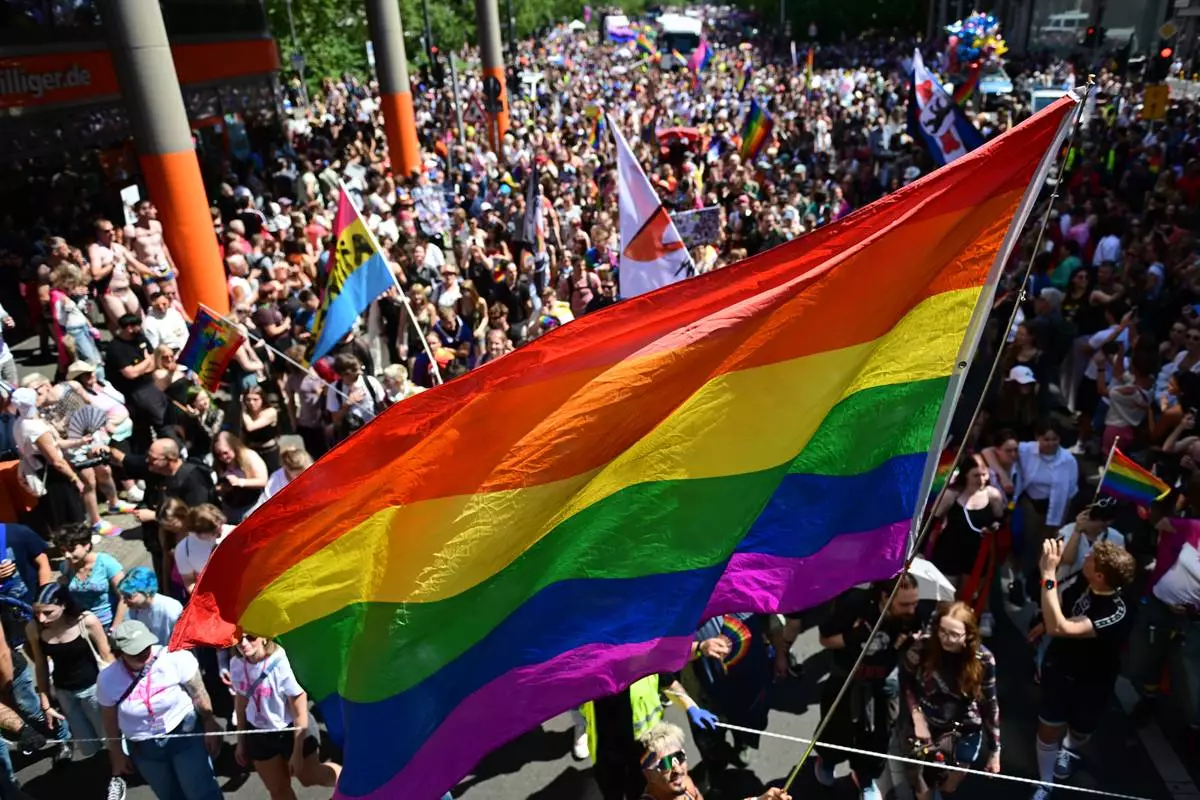
People march with a rainbow flag during the Christopher Street Day parade in Berlin, on Saturday, July 25, 2026. (Fabian Sommer/dpa via AP)
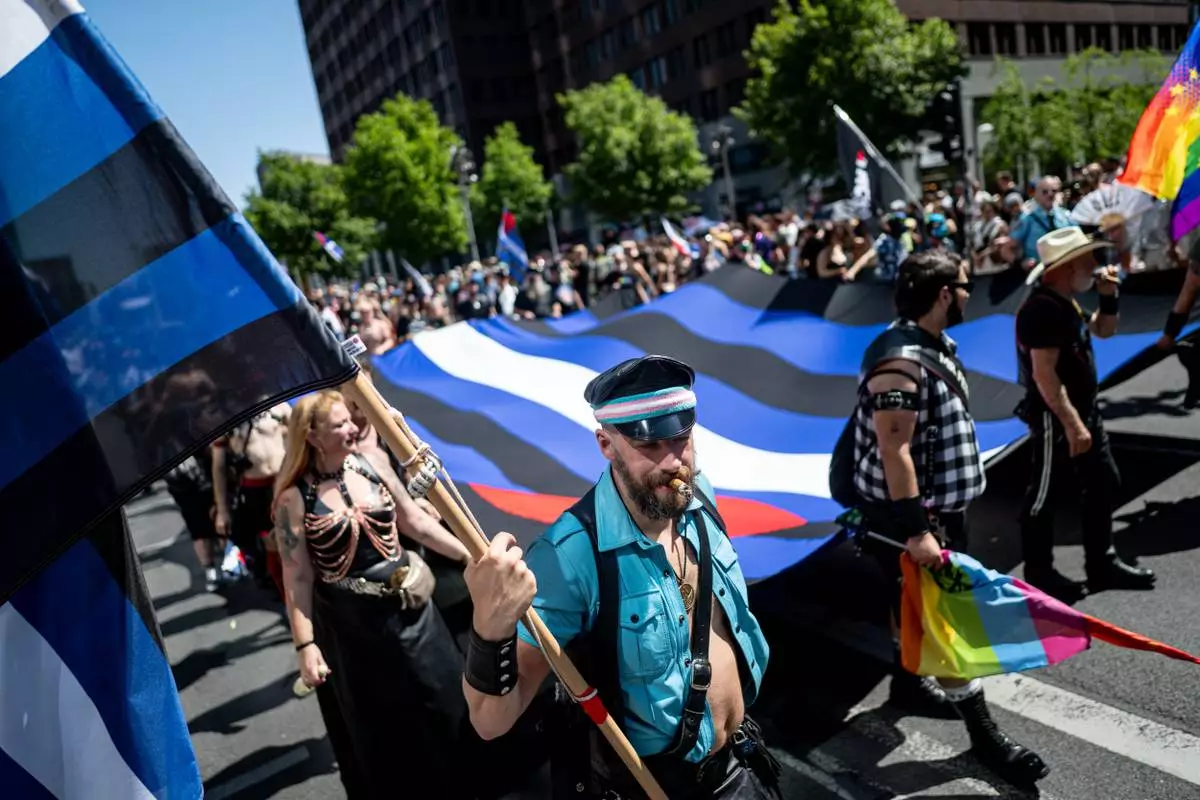
People carry a "Leather Pride Flag" during the Christopher Street Day parade in Berlin, on Saturday, July 25, 2026. (Fabian Sommer/dpa via AP)
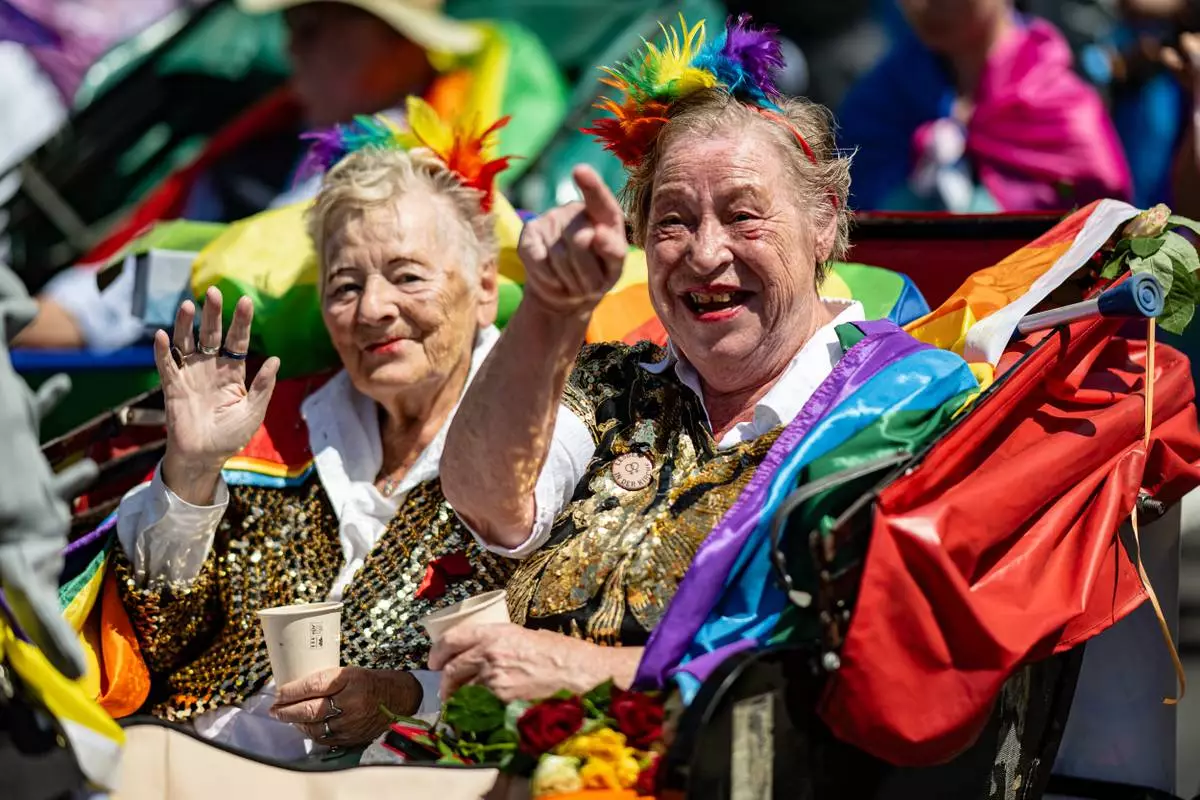
People wave during the Christopher Street Day parade in Berlin, on Saturday, July 25, 2026. (Fabian Sommer/dpa via AP)
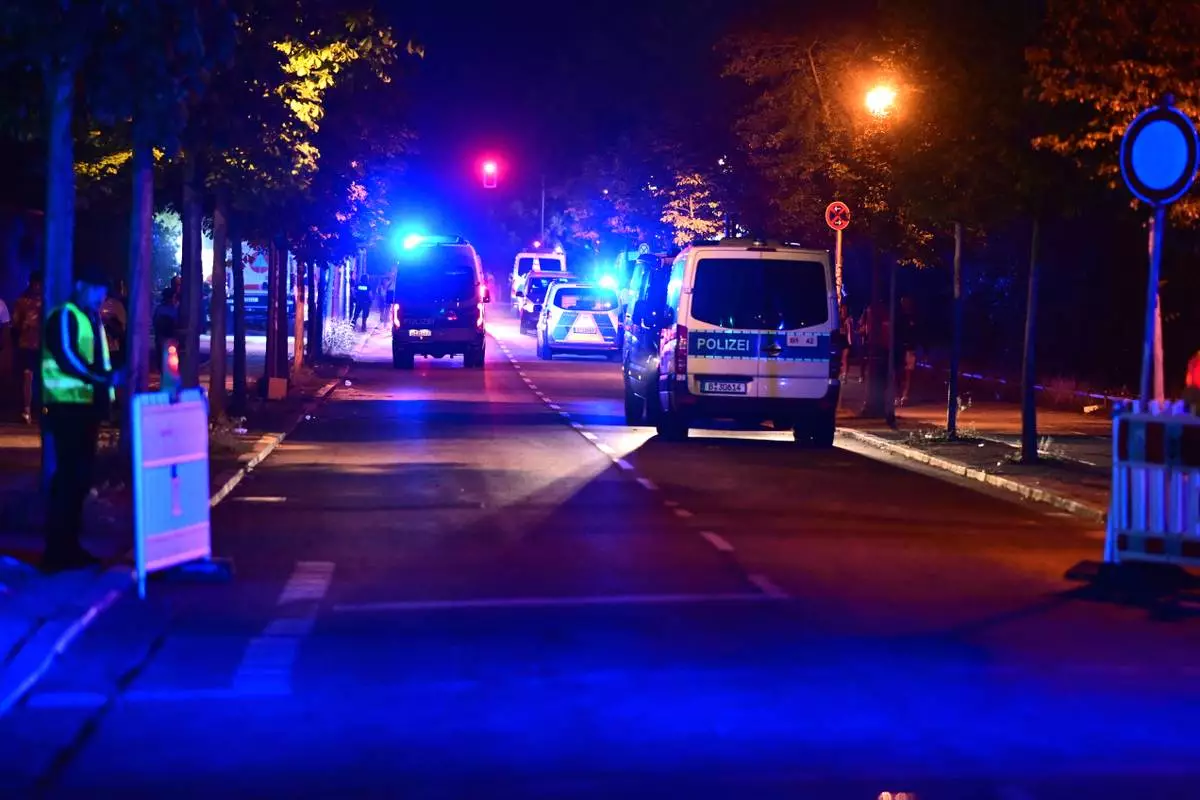
Police officers are on the scene following the cancellation of Christopher Street Day in Berlin, on Saturday, July 25, 2026. (Fabian Sommer/dpa/dpa via AP)