Solid-state battery technology is now being applied to flying cars, a kind of low-altitude aircraft enabling an innovative transportation means to achieve safe, long-range and economical flight, with mutual synergies accelerating the industrialization process.
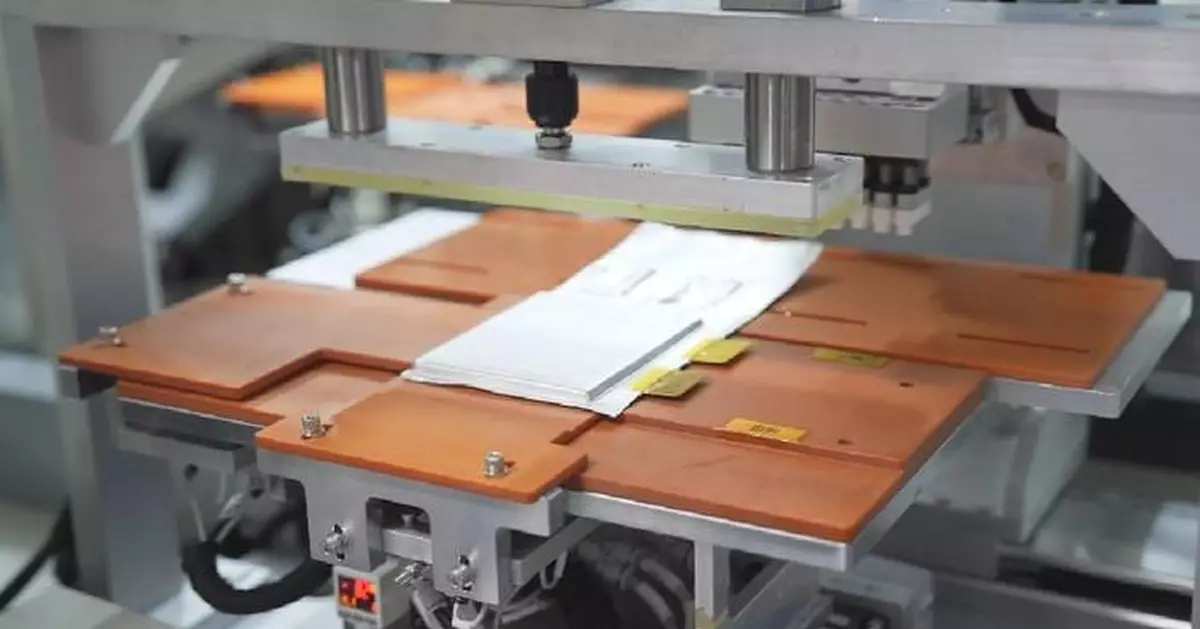
At a pilot production line for solid-state batteries in the tech hub of Shenzhen City, south China's Guangdong Province, engineers showed a battery cell roughly the size of a smartphone. Despite its compact form, the battery boasts high energy density, strong power output and enhanced safety performance. Its energy density is 1.5 times that of conventional ternary lithium batteries.
According to developers, a single solid-state battery of the size of a regular smart phone could power a 500-kilogram electric vertical takeoff and landing (eVTOL) aircraft for approximately half a kilometer.
"This is our solid-state battery pilot production line, which is now fully operational. We expect the batteries produced this year to be used in our [clients'] low-altitude aircraft. For these aircraft, the batteries can offer a longer range and greater payload capacity. Once mass production is achieved, costs are expected to fall to about twice that of liquid lithium batteries," said Xu Zhongling, head of the research institute at Sunwoda Mobility Energy Technology Co., Ltd.
Unlike traditional lithium-ion batteries that rely on liquid electrolytes, solid-state batteries use solid electrolytes, meeting the higher safety standards required for flying cars.
"This is our core solid-state electrolyte material -- the solid-state electrolyte membrane. At present, we have reached mass production capability. It is non-flammable and can self-extinguish if ignited. We also incorporate solid-state electrolytes into both the anode and cathode to ensure efficient movement in lithium-ion [conduction]," Xu said.
So far, most flying cars in the industry rely on high energy-density liquid lithium batteries. Solid-state batteries are transitioning from laboratory research to mass production despite challenges existing in materials and manufacturing yield rates.
"In the short term, liquid- and semi-solid-state batteries will remain the mainstream. Fully solid-state batteries represent a promising future technology. In the meantime, these three technologies are likely to develop in parallel over the long run. And China is already at the forefront internationally in solid-state battery research, development and application demonstration," said Chen Zhongwei, director of the State Key Laboratory of Catalysis at the Dalian Institute of Chemical Physics of the Chinese Academy of Sciences.
Solid-state batteries power future of flying cars in China