Skip to Content Facebook Feature Image

Stevanato Group Introduces Deora™, a Pen Injector for Subcutaneous Delivery in Diabetes and Weight Management

Business

Stevanato Group Introduces Deora™, a Pen Injector for Subcutaneous Delivery in Diabetes and Weight Management
Business

Business

Stevanato Group Introduces Deora™, a Pen Injector for Subcutaneous Delivery in Diabetes and Weight Management

2026-06-08 18:30 Last Updated At:18:40

PIOMBINO DESE, Italy--(BUSINESS WIRE)--Jun 8, 2026--

Stevanato Group S.p.A. (NYSE: STVN), a leading global provider of drug containment, drug delivery, and diagnostic solutions for the pharmaceutical, biotechnology, and life sciences industries, today introduced Deora™, a new proprietary pen injector platform targeting incretin-based therapies, as well as supporting other originator and biosimilar drug development programs.

This press release features multimedia. View the full release here: https://www.businesswire.com/news/home/20260608096966/en/

Deora™ is a multi-use, fixed-dose pen injector featuring a simple pull-push mechanism for dose setting and delivery: the user pulls to set the dose, then pushes to inject. This intuitive sequence eliminates the need for manual dose selection, reducing common sources of use error and supporting consistent drug delivery across multiple administrations. The platform is compatible with standard 1.5 mL and 3 mL cartridges and accommodates fixed-dose volumes up to 0.75 mL.

“With Deora™, we are broadening our product offering in therapeutic areas experiencing strong global demand and favorable market momentum,” said Michele Monico, President of Drug Delivery Systems and In Vitro Diagnostics at Stevanato Group. "We believe there is space for a simple, multi-use device that enhances the patient experience while simultaneously reducing the pressure on supply chain scale-up. Our belief has been supported by early customer interest, and we are providing our pharmaceutical partners with evaluation units to support early-stage testing and development activities.”

The device architecture provides flexibility across multiple fixed-dose configurations while minimizing the need for design changes across variants. In addition, it is designed to integrate seamlessly into existing supply chains, enabling efficient industrialization and scalable manufacturing.

“Deora™ further expands Stevanato Group’s proprietary portfolio of drug delivery devices, providing a solution designed for multi-dose therapies requiring consistent administration and ease of use in a familiar pen format,” added Michele Monico. “Customers can now choose from different hand-held device platforms – Alina®, Aidaptus®, and Deora™ – to address a broad range of therapeutic needs.”

Deora™ leverages Stevanato Group’s established manufacturing capabilities, with production aligned to support future commercialization. Drawing on its end-to-end expertise across glass manufacturing, analytical services, and device engineering, Stevanato Group offers fully integrated solutions that can simplify development for pharmaceutical partners.

Together, these characteristics position Deora™ as a platform intended to support partners as they advance early development programs and prepare for future scale-up.

About Stevanato Group

Founded in 1949, Stevanato Group is a leading global provider of drug containment, drug delivery and diagnostic solutions to the pharmaceutical, biotechnology and life sciences industries. The Group delivers an integrated, end-to-end portfolio of products, processes and services that address customer needs across the entire drug life cycle at each of the development, clinical and commercial stages. Stevanato Group’s core capabilities in scientific research and development, its commitment to technical innovation and its engineering excellence are central to its ability to offer value added solutions to clients. To learn more, visit: www.stevanatogroup.com.

Forward-Looking Statements

This press release may include forward-looking statements. The words “strong”, “experiencing”, “believe”, “are providing”, “position”, “advance”, “intended”, “prepare”, “future”, and similar expressions (or their negative) identify certain of these forward-looking statements. These forward-looking statements are statements regarding the Company's intentions, beliefs or current expectations concerning, among other things, the investments the Company expects to receive, the expansion of manufacturing capacity, the Company’s plans regarding its presence in the U.S. market, business strategies, the Company’s capacity to meet future market demands and support preparedness for future public health emergencies, and results of operations. The forward-looking statements in this press release are based on numerous assumptions regarding the Company’s present and future business strategies and the environment in which the Company will operate in the future. Forward-looking statements involve inherent known and unknown risks, uncertainties and contingencies because they relate to events and depend on circumstances that may or may not occur in the future and may cause the actual results, performance or achievements of the Company to be materially different from those expressed or implied by such forward-looking statements. Many of these risks and uncertainties relate to factors that are beyond the Company's ability to control or estimate precisely, such as future market conditions, currency fluctuations, the behavior of other market participants, the actions of regulators and other factors such as the Company's ability to continue to obtain financing to meet its liquidity needs, changes in the political, social and regulatory framework in which the Company operates or in economic or technological trends or conditions. Readers should therefore not place undue reliance on these statements, particularly not in connection with any contract or investment decision. Except as required by law, the company assumes no obligation to update any such forward-looking statements.
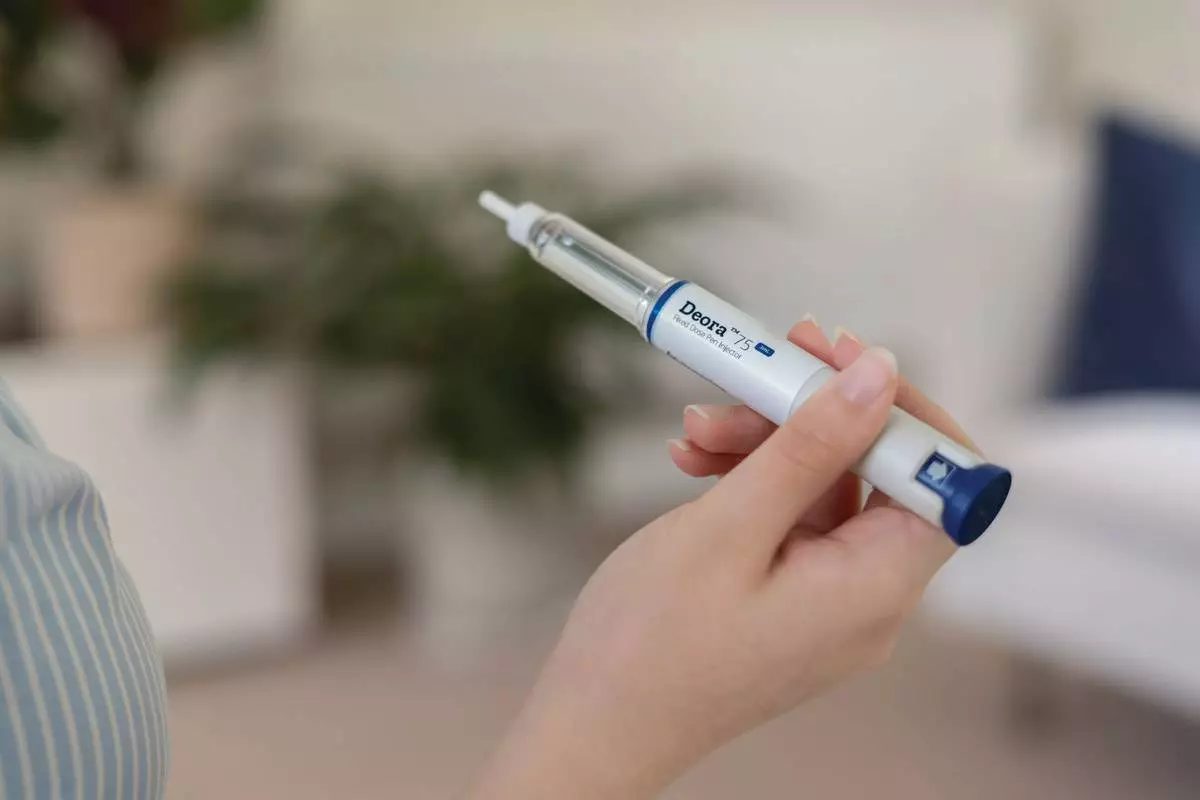
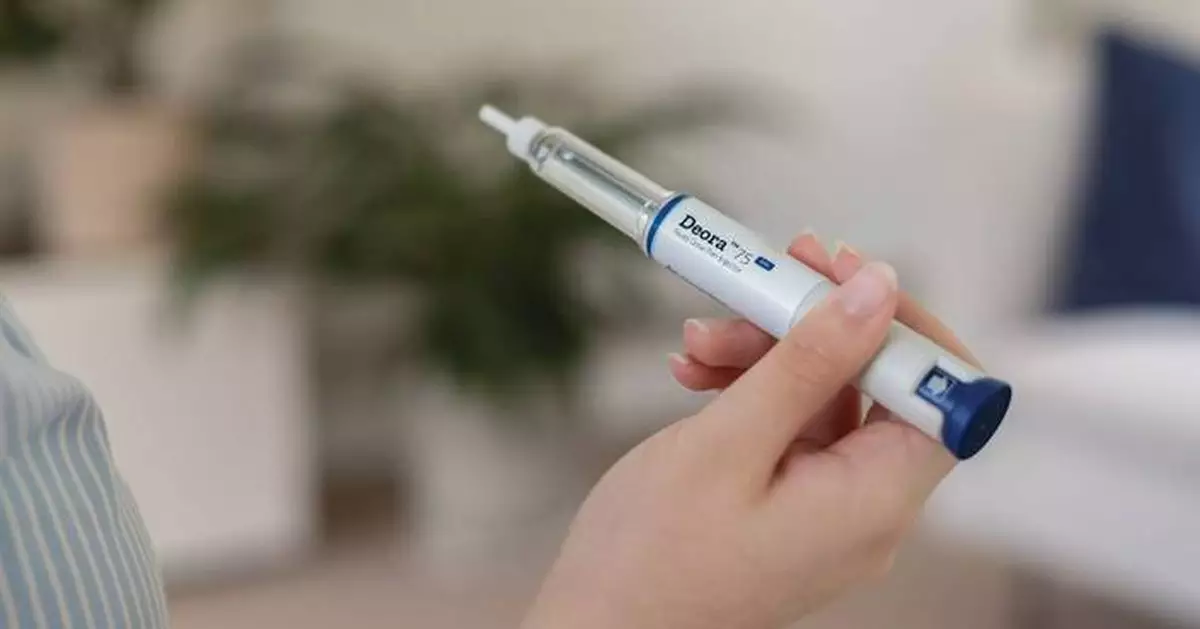
Deora™ is Stevanato Group’s multi-use, fixed-dose pen injector designed for subcutaneous drug delivery in therapies such as diabetes and weight management. Featuring an intuitive pull‑push mechanism, the device simplifies dose administration by eliminating the need for manual dose selection: users pull to set the dose and push to inject, supporting consistent delivery across multiple administrations. The platform accommodates fixed-dose volumes up to 0.75 mL and is compatible with standard 1.5 mL and 3 mL cartridges, offering flexibility across a range of therapeutic applications. Engineered with patient usability in mind, Deora™ provides tactile, visual, and audible feedback during operation, helping reduce common sources of use error. Its architecture is designed to integrate seamlessly into existing supply chains, enabling efficient industrialization and scalable manufacturing for pharmaceutical partners

Deora™ is Stevanato Group’s multi-use, fixed-dose pen injector designed for subcutaneous drug delivery in therapies such as diabetes and weight management. Featuring an intuitive pull‑push mechanism, the device simplifies dose administration by eliminating the need for manual dose selection: users pull to set the dose and push to inject, supporting consistent delivery across multiple administrations. The platform accommodates fixed-dose volumes up to 0.75 mL and is compatible with standard 1.5 mL and 3 mL cartridges, offering flexibility across a range of therapeutic applications. Engineered with patient usability in mind, Deora™ provides tactile, visual, and audible feedback during operation, helping reduce common sources of use error. Its architecture is designed to integrate seamlessly into existing supply chains, enabling efficient industrialization and scalable manufacturing for pharmaceutical partners
LIMA, Peru (AP) — A razor-thin presidential runoff left Peruvians without a clear winner Monday, with conservative politician Keiko Fujimori and nationalist congressman Roberto Sánchez virtually tied.

With 93% of ballots tallied, the figures showed Fujimori received 8.75 million votes, or 50.095%, while Sánchez earned 8.73 million votes, or 49.905%.

The winner will be the South American country's ninth president in 10 years. Fujimori, daughter of a disgraced former president, and Sánchez, an ally of an imprisoned ex-president, were on the runoff’s ballot after beating 33 other candidates in the vote in April, but neither earned even 20% of support. Electoral authorities took more than a month to declare them winners of that contest.

Roberto Burneo, the country’s chief electoral authority, asked voters and political organizations to “act with democratic responsibility” as the tallying process continues. He said the outcome will be available within 30 days.

In the capital, Lima, voter turnout throughout the day appeared lower than in the previous contest, with practically no lines in many voting centers, despite voting being mandatory. The slow counting pace is due to a law that requires each ballot and each tally sheet, which summarizes the votes from each polling station, to be taken to one of more than 100 offices to be tallied. Additionally, ballots and tally sheets must arrive in Lima from 63 countries to be counted.

Crime, particularly extortion, was the overarching concern for voters. A 2025 national survey carried out by the state’s National Institute of Statistics and Informatics found that 84% of respondents in urban areas feared becoming victims of a crime in the following 12 months.

Experts attribute the increasing power of organized crime in Peru to the profits that decades-old criminal groups are earning from illegal gold mining in the Andes and the Amazon.

And the candidates' crime-fighting proposals were not enough to make inroads with voters, many of whom associate each aspiring president with controversial Peruvian politicians.

Fujimori is linked to the authoritarian and corrupt legacy of the government of her late father, Alberto Fujimori, in the 1990s. She became Peru's first lady in 1994 after her parents’ separation.

Sánchez is one of the closest allies of imprisoned former President Pedro Castillo, whom many perceive as corrupt and chaotic. Castillo’s 16-month term saw more than 70 Cabinet changes.

Official results from April’s election showed Fujimori received 17% of the vote and Sánchez got 12%. A nationwide poll conducted a week before the election by the firm Ipsos found that similar shares of voters were supporting the candidates, with about 3 in 10 saying they were undecided.

Food vendor Magali Quiquia said she cast a blank ballot because she did not find either candidate convincing,

“Five years ago, I was disappointed by Castillo with his corruption, and ... Roberto Sánchez is the same," Quiquia, 44, said. She added that she believes “Fujimori hasn’t done anything either” despite her party having multiple seats in Congress.

Voting is mandatory for Peruvians aged 18 to 70. Failure to do so results in a fine of up to $32.

More than 27 million people are registered. Of those, about 1.2 million were expected to cast ballots from abroad, mainly in the United States and Argentina.

For most of her fourth presidential campaign, Fujimori promised to crack down on crime. Her proposals included implementing technology to track extortion, militarizing borders and increasing the presence of police and military personnel in high-risk areas. Fujimori, 51, also said that prisoners will be required to work and “repay society” should she win.

In the only debate before the runoff, Fujimori defended her father’s government and promised to defeat crime just as he defeated the Shining Path, a violent extremist group. After the vote counting began, she told her supporters to remain calm.

Fujimori on Monday told her more than 100 legal representatives throughout Peru that they would have to “fight” and “analyze” any ballot under dispute, but that she would respect “the results, whoever the winner may be.” She said results show a great division among voters, adding that party leaders must “build bridges” after the election is over.

Meanwhile, Sánchez, a former minister now popular with rural voters, during the campaign pledged to combat corruption within the police force and promote reforms that would enable the military to support security efforts. The 57-year-old, who wears a wide-brimmed peasant hat gifted by Castillo, told debate viewers that he would be open to “all options to generate jobs and progress” but also emphasized his support for Chinese investments.

He appeared on a Lima hotel balcony on Sunday and thanked the Indigenous communities, farmers and other supporters “who have decided to come and reclaim the government for the people.”

The runoff’s winner will be sworn in to a five-year term on July 28.

Garcia Cano reported from Mexico City.

Follow AP’s coverage of Latin America and the Caribbean at https://apnews.com/hub/latin-america

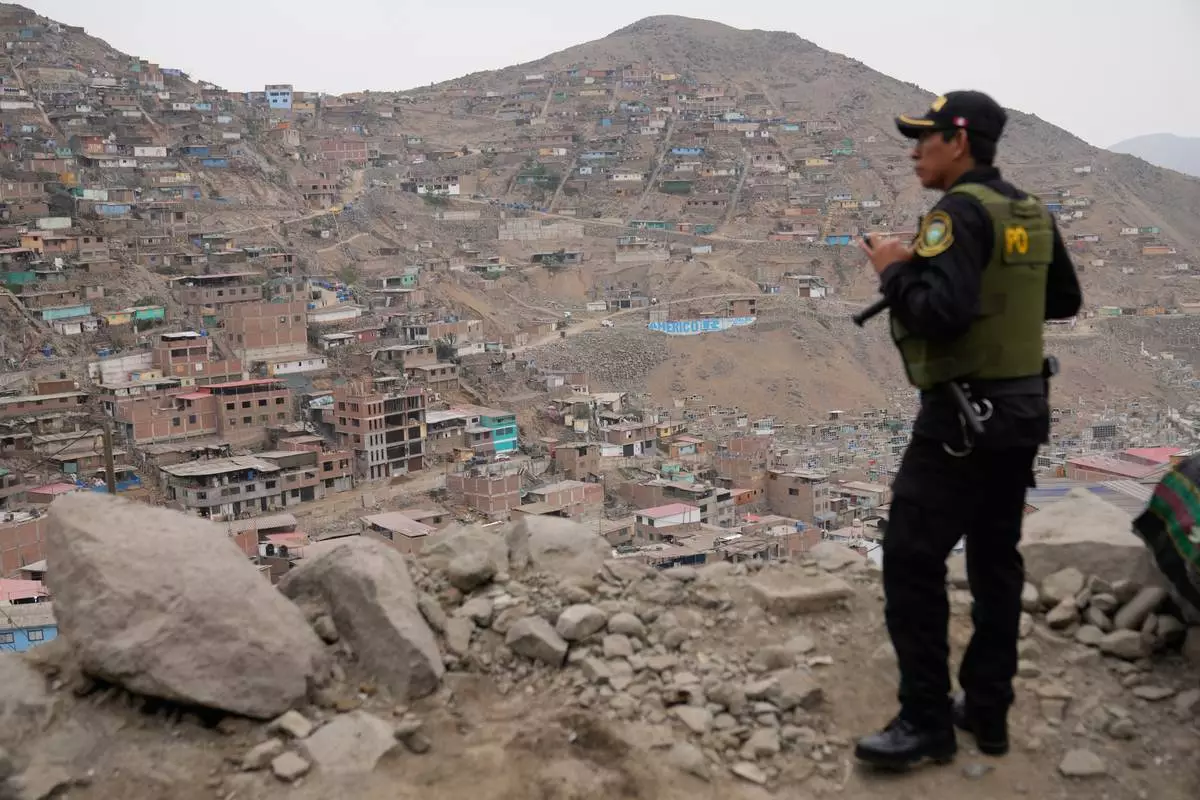
A police officers guard the site where presidential candidate Keiko Fujimori of the Popular Force party meets supporters for breakfast during the presidential runoff election in Lima, Peru, Sunday, June 7, 2026. (AP Photo/Martin Mejia)

A police officers guard the site where presidential candidate Keiko Fujimori of the Popular Force party meets supporters for breakfast during the presidential runoff election in Lima, Peru, Sunday, June 7, 2026. (AP Photo/Martin Mejia)

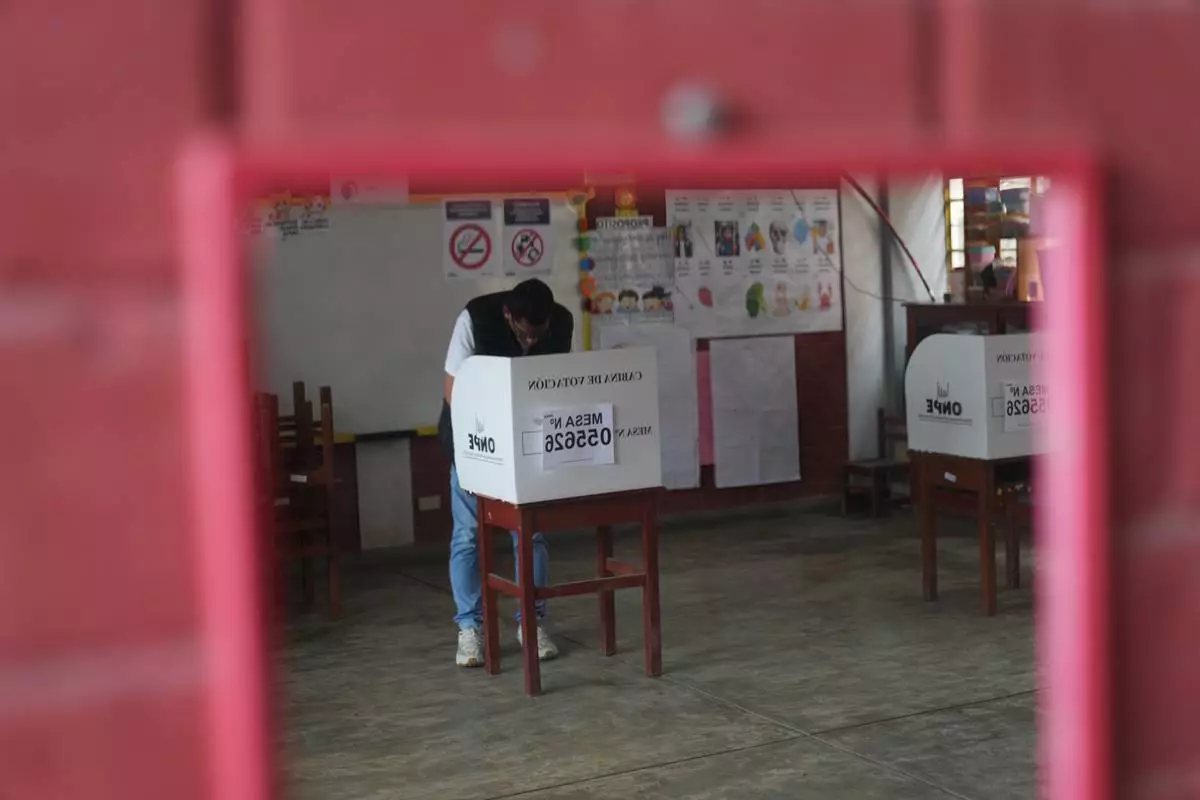
A voter marks his ballot during the presidential runoff election in Lima, Peru, Sunday, June 7, 2026. (AP Photo/Rodrigo Abd)

A voter marks his ballot during the presidential runoff election in Lima, Peru, Sunday, June 7, 2026. (AP Photo/Rodrigo Abd)

Presidential candidate Keiko Fujimori, of the Popular Force party, waves after voting during the presidential runoff election in Lima, Peru, Sunday, June 7, 2026. (AP Photo/Martin Mejia)

Presidential candidate Keiko Fujimori, of the Popular Force party, waves after voting during the presidential runoff election in Lima, Peru, Sunday, June 7, 2026. (AP Photo/Martin Mejia)

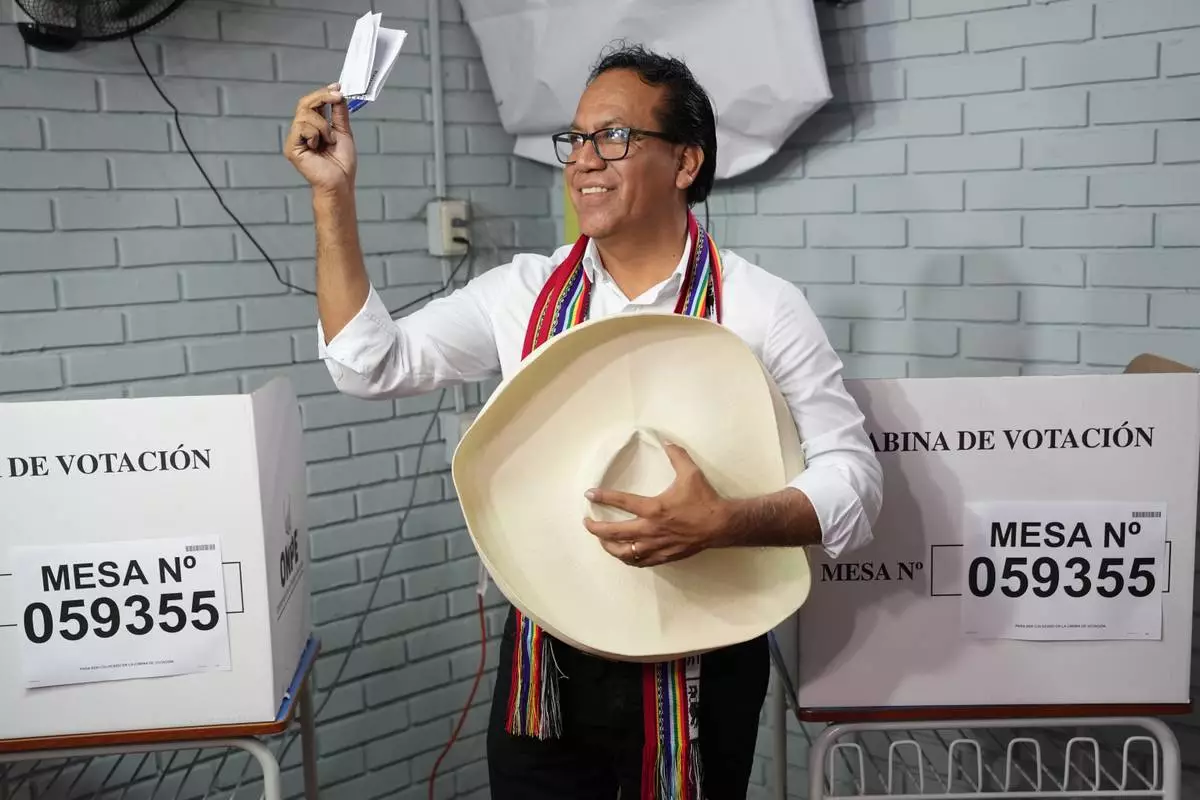
Presidential candidate Roberto Sanchez of the Together for Peru party shows his ballot during the presidential runoff election in Lima, Peru, Sunday, June 7, 2026. (AP Photo/Miguel Paredes)

Presidential candidate Roberto Sanchez of the Together for Peru party shows his ballot during the presidential runoff election in Lima, Peru, Sunday, June 7, 2026. (AP Photo/Miguel Paredes)

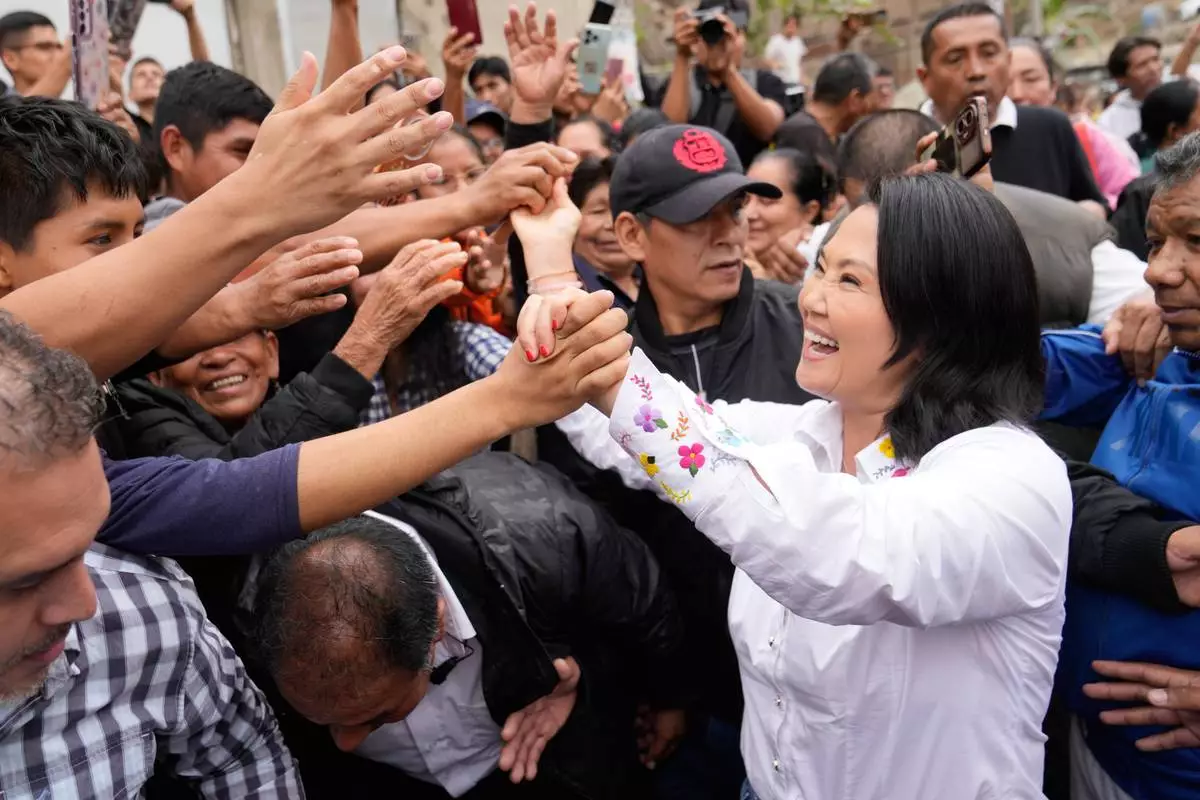
Presidential candidate Keiko Fujimori, of the Popular Force party, greets supporters before voting in the presidential runoff election in Lima, Peru, Sunday, June 7, 2026. (AP Photo/Martin Mejia)

Presidential candidate Keiko Fujimori, of the Popular Force party, greets supporters before voting in the presidential runoff election in Lima, Peru, Sunday, June 7, 2026. (AP Photo/Martin Mejia)

Recommended Articles