NEW YORK (AP) — Gordon S. Wood, the eminent and prolific scholar who forged a highly influential and sharply debated narrative of the country’s early years of independence through such prize-winning works as “The Creation of the American Republic” and “The Radicalism of the American Revolution,” has died. He was 92.
Wood, a professor emeritus at Brown University, died Sunday after being struck by a car in a supermarket parking lot in East Providence, Rhode Island, according to police.
Author of dozens of books and essays, Wood never gained the mass audience of historians like David McCullough and Doris Kearns Goodwin, but his findings became standard references for discussions about the formation of the U.S. and the legacy of the revolution. Many peers regarded the white-haired, mild-looking Wood as the embodiment of the learned, traditional historian, guided by facts rather than ideology.
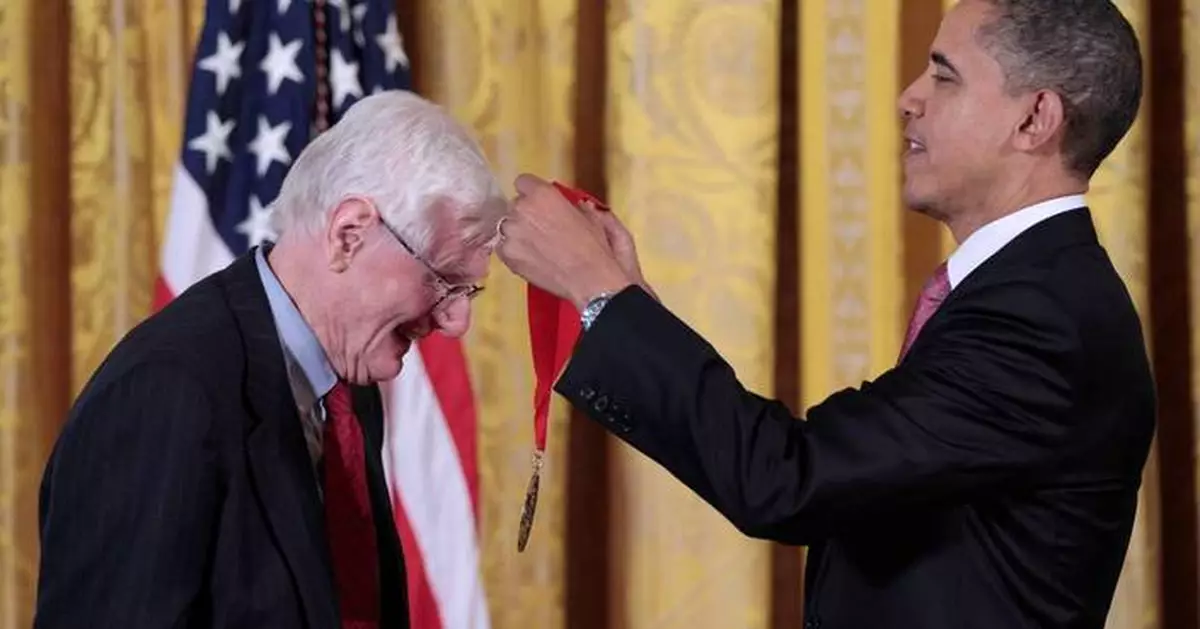
In 2011, President Barack Obama presented him a National Humanities Medal “for scholarship that provides insight into the founding of the nation and the drafting of the U.S. Constitution.”
In recent years, younger academics increasingly alleged that Wood was too well-established, the epitome of the old-school historian who minimized the lives of slaves, women and Indigenous people. John L. Brooke, a history professor at Ohio State University, would fault him for “a distinct avoidance of interpretative paradox and complexity,” even as he cited Wood’s “scale and scholarly enterprise.”
His success was immediate and lasting. His first book, “The Creation of the American Republic,” won the Bancroft Prize in 1970 and lived on with generations of students who embraced and contended with Wood’s findings that the Constitution was unintentionally subversive, a document devised by elites that led to “the destruction of the very social world they had sought to maintain.”
His “The Radicalism of the American Revolution” won the Pulitzer in 1993 and the epic “Empire of Liberty” was a finalist in 2009.
Wood did welcome scholarly breakthroughs, notably Annette Gordon-Reed’s “persuasive contextual case” that the enslaved Sally Hemings bore some of Thomas Jefferson’s children. In “Empire of Liberty,” which covered the years 1789 to 1815, he included lengthy passages on slavery and called it a cancer “eating away at the message of liberty and equality.”
At other times, Wood angrily resisted new approaches. He was a prominent critic of The New York Times’ Pulitzer Prize winning 1619 Project and its contention — later amended — that maintaining slavery was a key motivation for the American Revolution. He alleged that the project encouraged a sense “victimhood” and feeling “aggrieved,” even as he acknowledged he hadn’t read most of it. He would counter that the founders, even such plantation owners as Jefferson and James Madison, believed — mistakenly — that slavery would die a natural death and the revolution itself energized the American abolitionist movement.
“We all want justice, but not at the expense of truth,” he wrote in 2019, adding, in a widely disputed statement, “I don’t know of any colonist who said that they wanted independence in order to preserve their slaves.”
Wood was born into history: His hometown, Concord, Massachusetts, had been the residence of Ralph Waldo Emerson, Henry David Thoreau and Louisa May Alcott, among others. But his passion for the subject he later mastered did not arise until college. Wood found his high school history education unbearable, suffering through classes in which the teacher simply read from a textbook.
Wood did admire his Latin instructor, who encouraged him to attend Tufts University, from which he graduated summa cum laude. He received a master’s and Ph.D. from Harvard University and studied under a celebrated Revolutionary War historian Bernard Bailyn, whose documentation of the intellectual forces behind independence in his landmark “The Ideological Origins of the American Revolution” Wood would build upon in “The Creation of the American Republic.”
In his introduction to “The Idea of America,” published in 2011, Wood looked back on his own work and the evolution of scholarship in his lifetime. He noted the many errors of the country’s founders but warned against scolding historical figures because of mistakes which seem obvious now, what he and others call “Presentism.”
“The drama, indeed the tragedy of history, comes from our understanding of the tension that existed between the conscious wills and intentions of the participants in the past and the underlying conditions that constrained their actions and shaped their future,” he wrote.
“If the study of history teaches anything, it teaches us the limitations of life. It ought to produce prudence and humility.”
Associated Press writer Michael Casey contributed to this report from Boston.
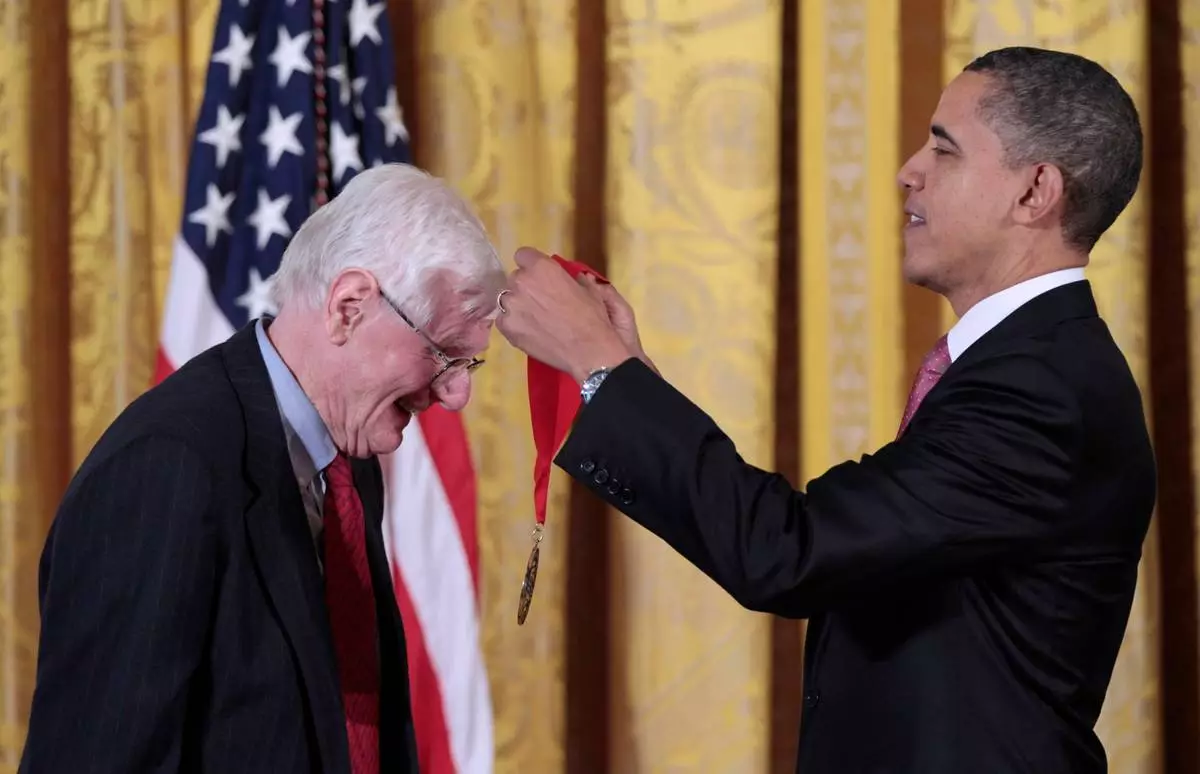
FILE - President Barack Obama presents a National Humanities Medal to author, historian and Brown University professor emeritus, Gordon Wood, during a ceremony in the East Room of the White House in Washington on March 2, 2011. (AP Photo/Pablo Martinez Monsivais, File)
LIMA, Peru (AP) — A razor-thin presidential runoff left Peruvians without a clear winner Monday, with conservative politician Keiko Fujimori and nationalist congressman Roberto Sánchez virtually tied.
With 93% of ballots tallied, the figures showed Fujimori received 8.75 million votes, or 50.095%, while Sánchez earned 8.73 million votes, or 49.905%.
The winner will be the South American country's ninth president in 10 years. Fujimori, daughter of a disgraced former president, and Sánchez, an ally of an imprisoned ex-president, were on the runoff’s ballot after beating 33 other candidates in the vote in April, but neither earned even 20% of support. Electoral authorities took more than a month to declare them winners of that contest.
Roberto Burneo, the country’s chief electoral authority, asked voters and political organizations to “act with democratic responsibility” as the tallying process continues. He said the outcome will be available within 30 days.
In the capital, Lima, voter turnout throughout the day appeared lower than in the previous contest, with practically no lines in many voting centers, despite voting being mandatory. The slow counting pace is due to a law that requires each ballot and each tally sheet, which summarizes the votes from each polling station, to be taken to one of more than 100 offices to be tallied. Additionally, ballots and tally sheets must arrive in Lima from 63 countries to be counted.
Crime, particularly extortion, was the overarching concern for voters. A 2025 national survey carried out by the state’s National Institute of Statistics and Informatics found that 84% of respondents in urban areas feared becoming victims of a crime in the following 12 months.
Experts attribute the increasing power of organized crime in Peru to the profits that decades-old criminal groups are earning from illegal gold mining in the Andes and the Amazon.
And the candidates' crime-fighting proposals were not enough to make inroads with voters, many of whom associate each aspiring president with controversial Peruvian politicians.
Fujimori is linked to the authoritarian and corrupt legacy of the government of her late father, Alberto Fujimori, in the 1990s. She became Peru's first lady in 1994 after her parents’ separation.
Sánchez is one of the closest allies of imprisoned former President Pedro Castillo, whom many perceive as corrupt and chaotic. Castillo’s 16-month term saw more than 70 Cabinet changes.
Official results from April’s election showed Fujimori received 17% of the vote and Sánchez got 12%. A nationwide poll conducted a week before the election by the firm Ipsos found that similar shares of voters were supporting the candidates, with about 3 in 10 saying they were undecided.
Food vendor Magali Quiquia said she cast a blank ballot because she did not find either candidate convincing,
“Five years ago, I was disappointed by Castillo with his corruption, and ... Roberto Sánchez is the same," Quiquia, 44, said. She added that she believes “Fujimori hasn’t done anything either” despite her party having multiple seats in Congress.
Voting is mandatory for Peruvians aged 18 to 70. Failure to do so results in a fine of up to $32.
More than 27 million people are registered. Of those, about 1.2 million were expected to cast ballots from abroad, mainly in the United States and Argentina.
For most of her fourth presidential campaign, Fujimori promised to crack down on crime. Her proposals included implementing technology to track extortion, militarizing borders and increasing the presence of police and military personnel in high-risk areas. Fujimori, 51, also said that prisoners will be required to work and “repay society” should she win.
In the only debate before the runoff, Fujimori defended her father’s government and promised to defeat crime just as he defeated the Shining Path, a violent extremist group. After the vote counting began, she told her supporters to remain calm.
Fujimori on Monday told her more than 100 legal representatives throughout Peru that they would have to “fight” and “analyze” any ballot under dispute, but that she would respect “the results, whoever the winner may be.” She said results show a great division among voters, adding that party leaders must “build bridges” after the election is over.
Meanwhile, Sánchez, a former minister now popular with rural voters, during the campaign pledged to combat corruption within the police force and promote reforms that would enable the military to support security efforts. The 57-year-old, who wears a wide-brimmed peasant hat gifted by Castillo, told debate viewers that he would be open to “all options to generate jobs and progress” but also emphasized his support for Chinese investments.
He appeared on a Lima hotel balcony on Sunday and thanked the Indigenous communities, farmers and other supporters “who have decided to come and reclaim the government for the people.”
The runoff’s winner will be sworn in to a five-year term on July 28.
Garcia Cano reported from Mexico City.
Follow AP’s coverage of Latin America and the Caribbean at https://apnews.com/hub/latin-america
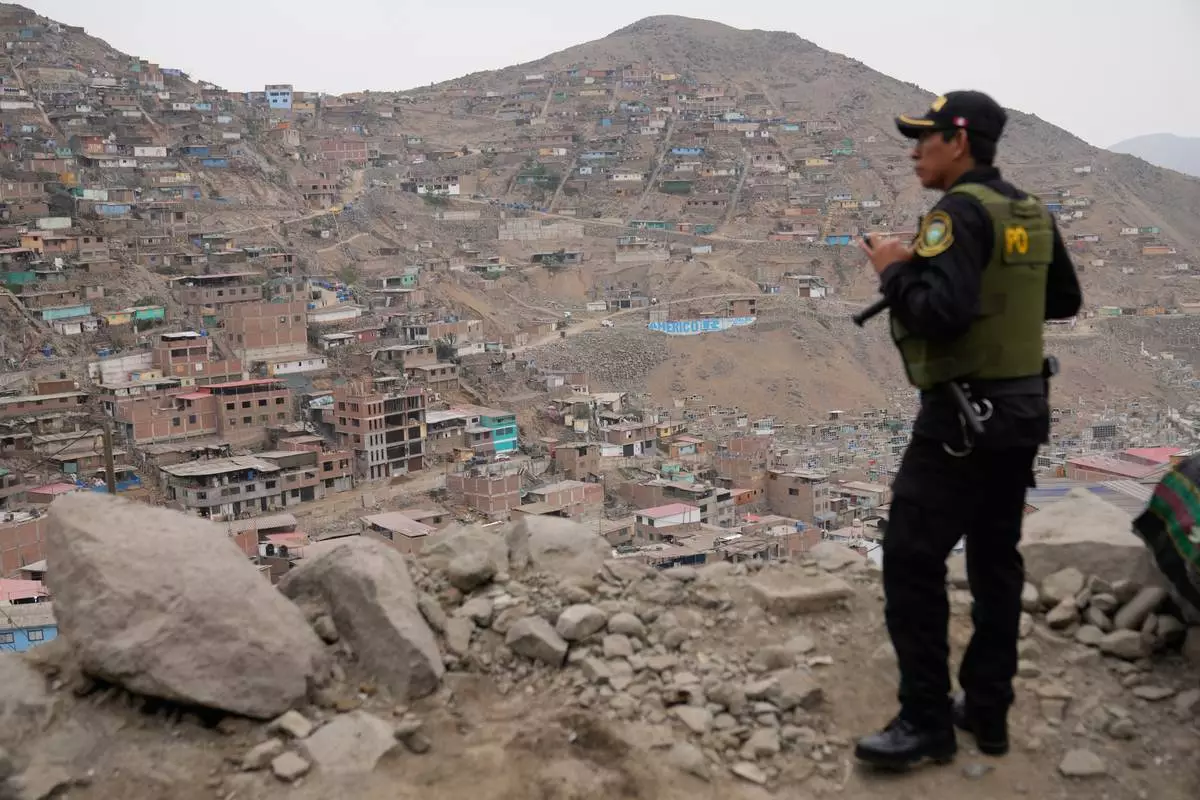
A police officers guard the site where presidential candidate Keiko Fujimori of the Popular Force party meets supporters for breakfast during the presidential runoff election in Lima, Peru, Sunday, June 7, 2026. (AP Photo/Martin Mejia)
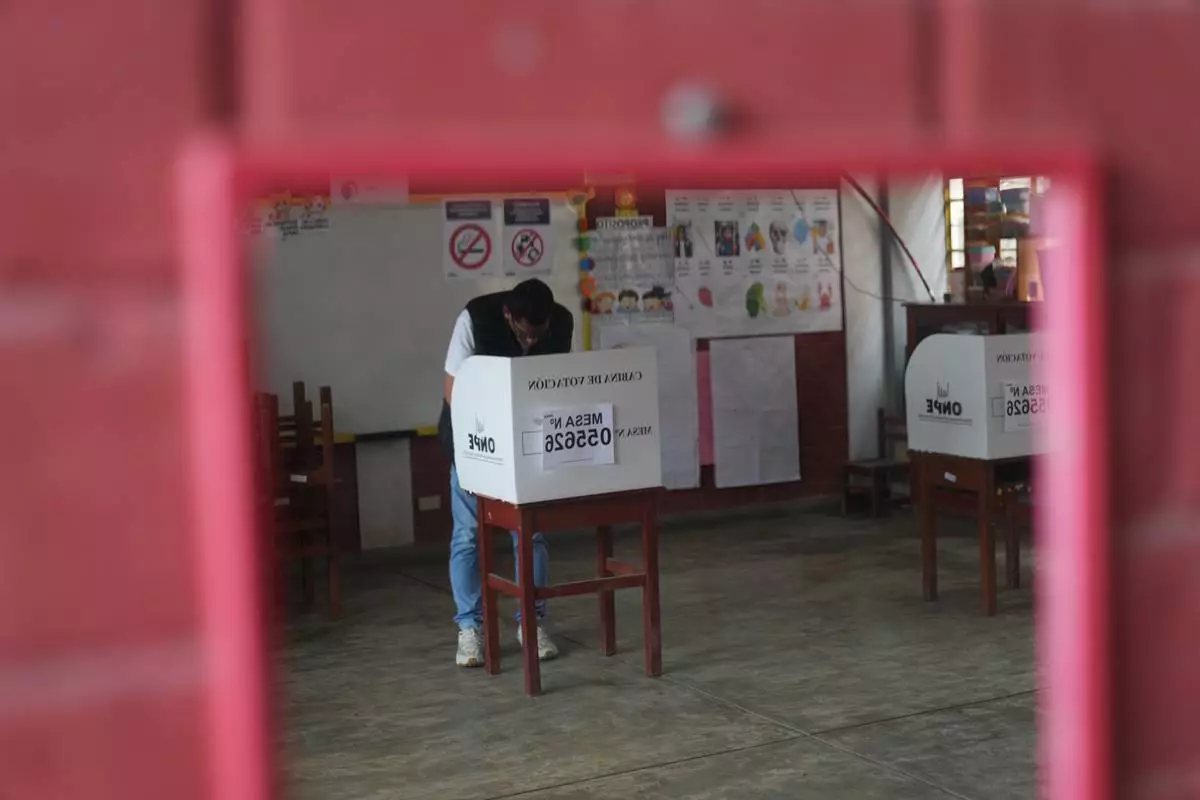
A voter marks his ballot during the presidential runoff election in Lima, Peru, Sunday, June 7, 2026. (AP Photo/Rodrigo Abd)
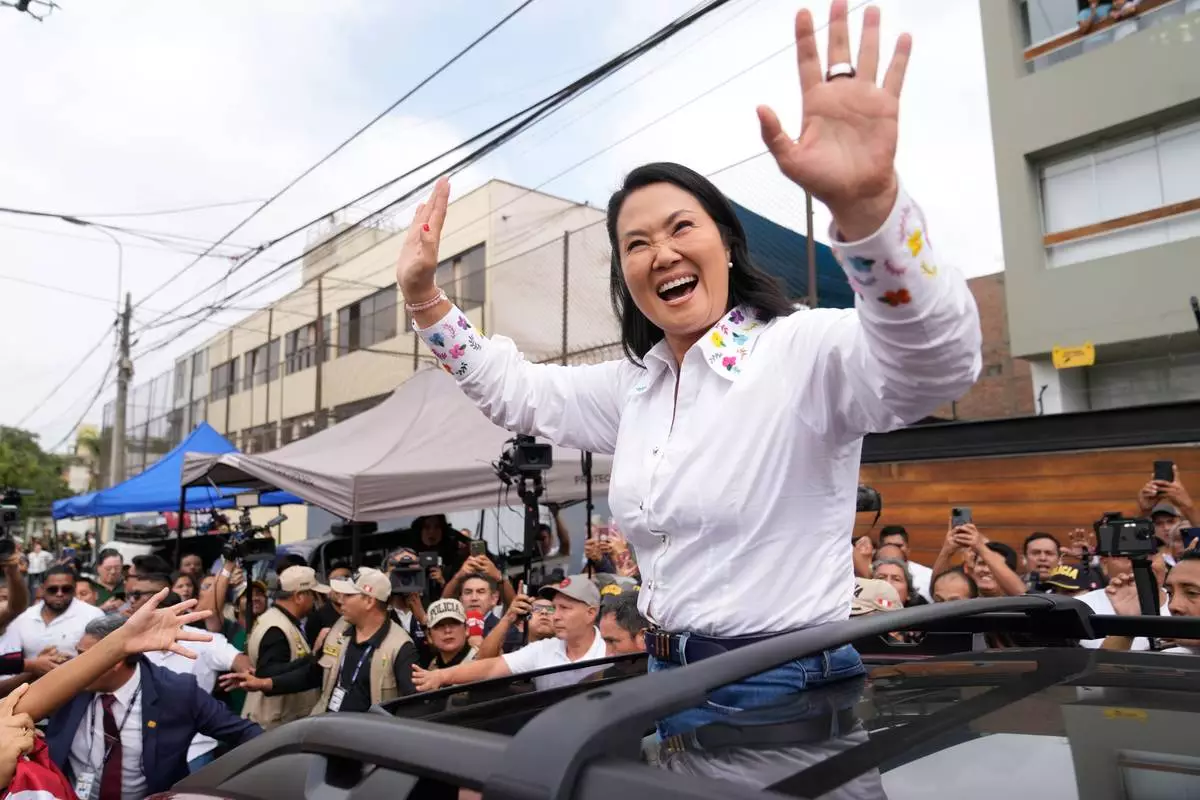
Presidential candidate Keiko Fujimori, of the Popular Force party, waves after voting during the presidential runoff election in Lima, Peru, Sunday, June 7, 2026. (AP Photo/Martin Mejia)
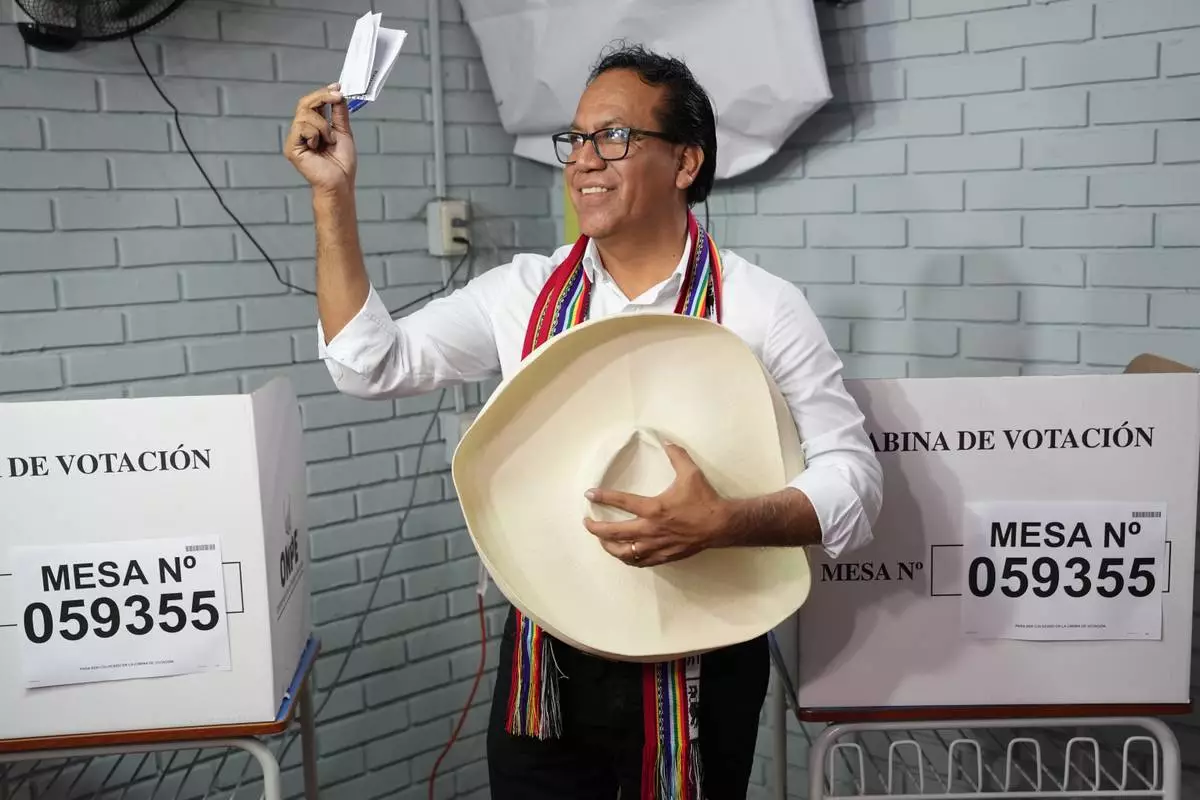
Presidential candidate Roberto Sanchez of the Together for Peru party shows his ballot during the presidential runoff election in Lima, Peru, Sunday, June 7, 2026. (AP Photo/Miguel Paredes)
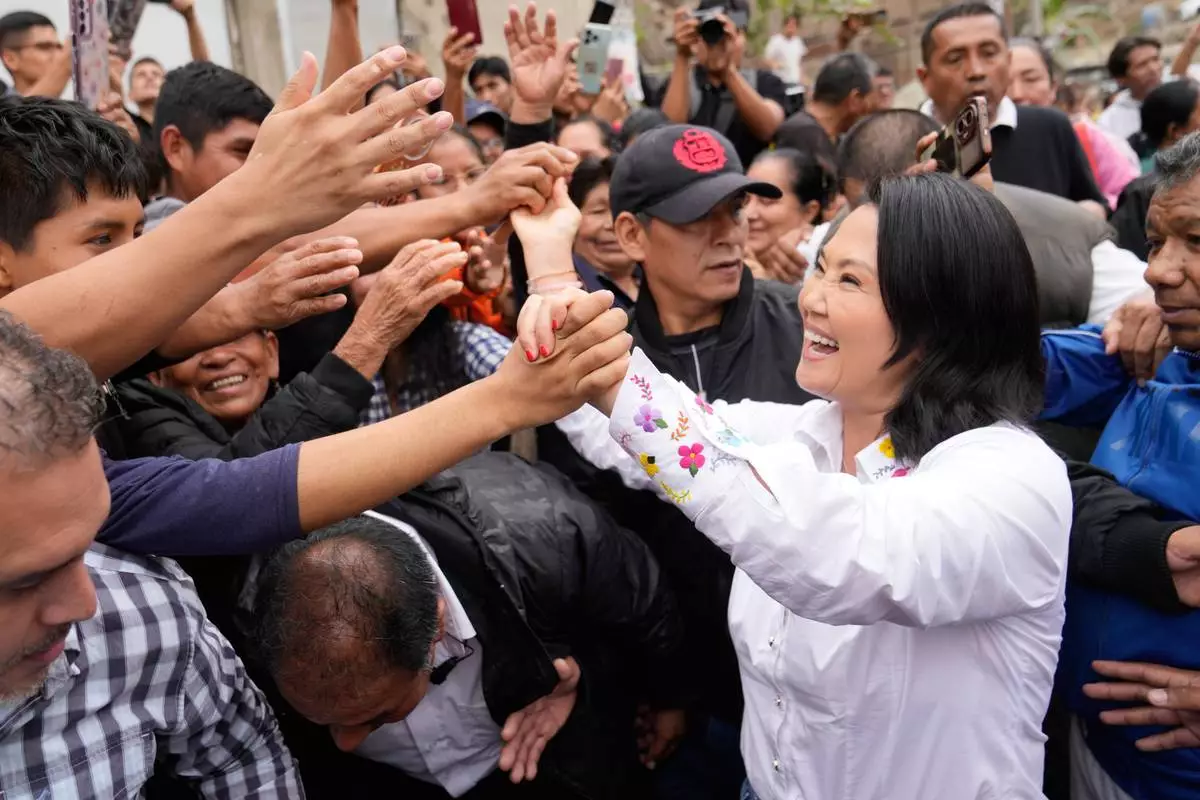
Presidential candidate Keiko Fujimori, of the Popular Force party, greets supporters before voting in the presidential runoff election in Lima, Peru, Sunday, June 7, 2026. (AP Photo/Martin Mejia)