Skip to Content Facebook Feature Image

Strong Indonesian Demand Reinforces Malaysia Healthcare's Growth at Malaysia Fair 2026

Business

Strong Indonesian Demand Reinforces Malaysia Healthcare's Growth at Malaysia Fair 2026
Business

Business

Strong Indonesian Demand Reinforces Malaysia Healthcare's Growth at Malaysia Fair 2026

2026-06-09 10:06 Last Updated At:10:25

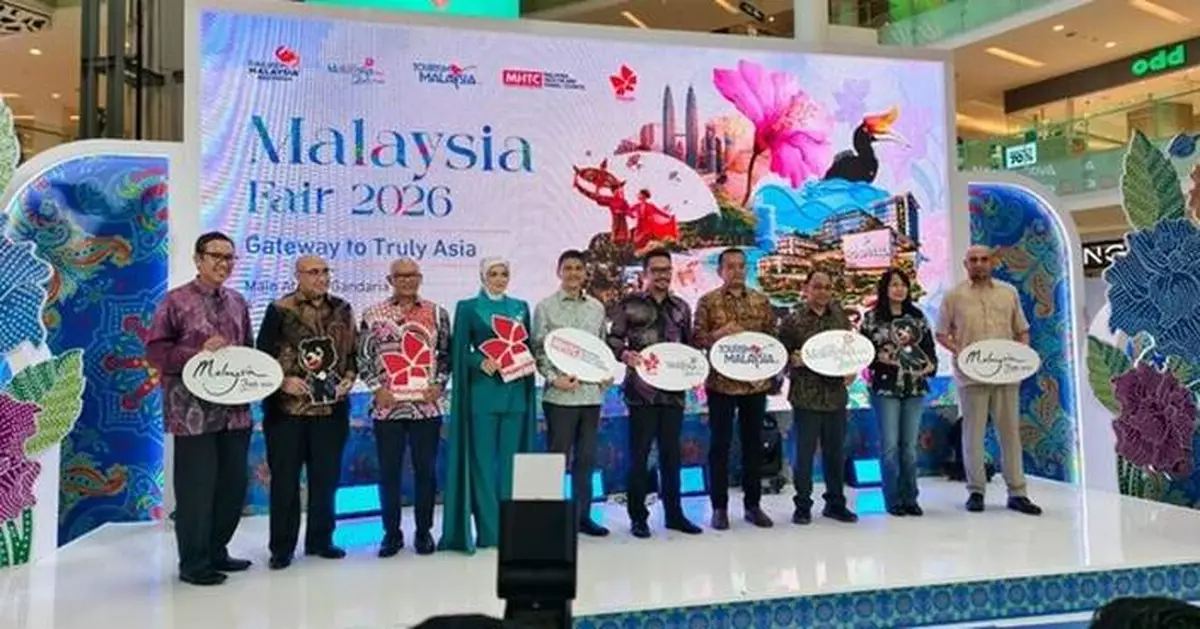
JAKARTA, Indonesia, June 9, 2026 /PRNewswire/ -- Malaysia Healthcare Travel Council (MHTC), together with Tourism Malaysia, recorded strong visitor engagement at Malaysia Fair Jakarta 2026, held from 4 to 7 June 2026 at Gandaria City, underscoring sustained interest among Indonesian consumers in Malaysia's healthcare, wellness and travel offerings. Organised in conjunction with Malaysia Year of Medical Tourism 2026 (MYMT 2026), themed "Healing Meets Hospitality", the initiative brings together healthcare providers, tourism stakeholders and educational institutions under one roof, offering Indonesian visitors exclusive access to world-class healthcare services, travel experiences and study opportunities.

A key highlight of the fair was the participation of 20 Malaysian healthcare providers including MHTC's Flagship Medical Tourism Hospitals namely Island Hospital Penang, Institut Jantung Negara, Mahkota Medical Centre, and Subang Jaya Medical Centre, alongside its member hospitals such as Alpha IVF & Women's Specialists, Ampang Puteri Specialist Hospital, Cengild G.I Medical Centre, Damansara Specialist Hospital, Damansara Specialist Hospital 2, GenPrime Everlink Fertility Centre, Hospital Picaso, MSU Medical Centre, Northern Heart Hospital Penang, OasisEye Specialists, Optimax Eye Specialist Centre, Penang Adventist Hospital, Puteri Specialist Hospital, Regency Specialist Hospital, Sunway Medical Centre, and Sunway Medical Centre Penang.

For those looking to book vacations, seven top travel agencies, including Dwidaya Tour, TX Travel, Habibi Tours, Baltic Golf & Travel Specialist, A&L Holidays, AWB Cruise, and Golden Rama Tours & Travel, are on-site, offering curated leisure packages alongside the official airline partner, Malaysia Airlines. Beyond health and travel, renowned higher education institutions such as Taylor's University, UCSI University, INTI International University, Todak Academy, and MILA University are on hand to consult with prospective students and parents. Visitors are given a range of travel and medical offerings to choose from, spanning specialist healthcare services, wellness experiences, tourism packages and destination showcases, as well as direct engagements with Malaysian healthcare providers.

"Malaysia Fair 2026 reflects our continued commitment to strengthening Malaysia Healthcare's presence in Indonesia, particularly in Jakarta, as one of our most important and high-potential markets. Through this platform, we aim to bring trusted Malaysian healthcare closer to Indonesian communities while reinforcing Malaysia's position as a preferred destination for quality healthcare, compassionate care, and seamless patient experience," said Mr Suriaghandi Suppiah, Chief Executive Officer of MHTC.

The fair was officially launched in the presence of MHTC's brand ambassador, Dato' Sri Siti Nurhaliza, whose participation underscored Malaysia's broader efforts to promote the country's medical tourism industry through a combination of medical excellence, hospitality, and cultural familiarity. As one of Malaysia's most recognised public figures with a strong following in Indonesia, Dato' Sri Siti Nurhaliza highlighted the importance of leveraging people-to-people connections to strengthen confidence in Malaysia's healthcare among regional audiences. "My TTC journey took almost 10 years, and I understand how important it is for patients to receive not only quality treatment but also reassurance, understanding, and hope throughout the process. As a Malaysian, I am proud to help share the strengths of Malaysia Healthcare with our friends in Indonesia and the wider region," she said.

The initiative comes at a time when Indonesia remains Malaysia Healthcare's largest and most important source market. In 2025 alone, Indonesia contributed approximately RM2.2 billion in healthcare travel revenue to Malaysia, representing a 23% year-on-year increase in revenue and a 16% increase in healthcare traveller arrivals compared to 2024. Meanwhile, over 970,000 Indonesian healthcare travelers visited Malaysia, indicating ongoing trust in Malaysia's healthcare system. Major treatment areas for Indonesian patients include health screening, gastroenterology, cancer treatment, endocrinology, cardiology, and orthopaedic surgery, highlighting Malaysia's capability to provide wide-ranging and specialized care for regional patients. 

The event is also supported by strategic partners including Econolab, JavaMifi, Sheraton Grand Jakarta Gandaria City Hotel and Batik Air, whose participation further enhances the overall visitor experience and strengthens cross-industry collaboration in support of Malaysia Healthcare's outreach efforts in Indonesia.

ENDS

For media inquiries and further information, please contact:

Siti Hamidah Mohd Najib
Senior Executive, PR and Media Unit
Communications
+603 8776 6168
hamidah.m@mhtc.org.my

Mohamad Shahizam Fauzi                                                 
Head, Communications
+603 8776 6168                                                                   
shahizam.f@mhtc.org.my

About Malaysia Healthcare Travel Council

Malaysia Healthcare Travel Council (MHTC), established in 2009 under the purview of the Ministry of Health (MOH) Malaysia, is entrusted with developing and nurturing the "Malaysia Healthcare" brand. MHTC enhances, coordinates, and promotes Malaysia's healthcare travel industry by fostering industry collaborations and building valuable public-private partnerships both domestically and internationally. With 82 member hospitals nationwide, MHTC continues to elevate the healthcare travel ecosystem through strong branding, seamless patient experiences, and strategic market initiatives. In line with these efforts, MHTC is spearheading the Malaysia Year of Medical Tourism (MYMT) 2026, the nation's first dedicated year to celebrate and advance healthcare travel. MYMT 2026 serves as a milestone initiative to showcase Malaysia's world-class healthcare offerings, strengthen its position as the premier global healthcare destination, and highlight the industry's significant contribution to the national economy. MHTC's website: https://www.malaysiahealthcare.org.


JAKARTA, Indonesia, June 9, 2026 /PRNewswire/ -- Malaysia Healthcare Travel Council (MHTC), together with Tourism Malaysia, recorded strong visitor engagement at Malaysia Fair Jakarta 2026, held from 4 to 7 June 2026 at Gandaria City, underscoring sustained interest among Indonesian consumers in Malaysia's healthcare, wellness and travel offerings. Organised in conjunction with Malaysia Year of Medical Tourism 2026 (MYMT 2026), themed "Healing Meets Hospitality", the initiative brings together healthcare providers, tourism stakeholders and educational institutions under one roof, offering Indonesian visitors exclusive access to world-class healthcare services, travel experiences and study opportunities.

A key highlight of the fair was the participation of 20 Malaysian healthcare providers including MHTC's Flagship Medical Tourism Hospitals namely Island Hospital Penang, Institut Jantung Negara, Mahkota Medical Centre, and Subang Jaya Medical Centre, alongside its member hospitals such as Alpha IVF & Women's Specialists, Ampang Puteri Specialist Hospital, Cengild G.I Medical Centre, Damansara Specialist Hospital, Damansara Specialist Hospital 2, GenPrime Everlink Fertility Centre, Hospital Picaso, MSU Medical Centre, Northern Heart Hospital Penang, OasisEye Specialists, Optimax Eye Specialist Centre, Penang Adventist Hospital, Puteri Specialist Hospital, Regency Specialist Hospital, Sunway Medical Centre, and Sunway Medical Centre Penang.

For those looking to book vacations, seven top travel agencies, including Dwidaya Tour, TX Travel, Habibi Tours, Baltic Golf & Travel Specialist, A&L Holidays, AWB Cruise, and Golden Rama Tours & Travel, are on-site, offering curated leisure packages alongside the official airline partner, Malaysia Airlines. Beyond health and travel, renowned higher education institutions such as Taylor's University, UCSI University, INTI International University, Todak Academy, and MILA University are on hand to consult with prospective students and parents. Visitors are given a range of travel and medical offerings to choose from, spanning specialist healthcare services, wellness experiences, tourism packages and destination showcases, as well as direct engagements with Malaysian healthcare providers.

"Malaysia Fair 2026 reflects our continued commitment to strengthening Malaysia Healthcare's presence in Indonesia, particularly in Jakarta, as one of our most important and high-potential markets. Through this platform, we aim to bring trusted Malaysian healthcare closer to Indonesian communities while reinforcing Malaysia's position as a preferred destination for quality healthcare, compassionate care, and seamless patient experience," said Mr Suriaghandi Suppiah, Chief Executive Officer of MHTC.

The fair was officially launched in the presence of MHTC's brand ambassador, Dato' Sri Siti Nurhaliza, whose participation underscored Malaysia's broader efforts to promote the country's medical tourism industry through a combination of medical excellence, hospitality, and cultural familiarity. As one of Malaysia's most recognised public figures with a strong following in Indonesia, Dato' Sri Siti Nurhaliza highlighted the importance of leveraging people-to-people connections to strengthen confidence in Malaysia's healthcare among regional audiences. "My TTC journey took almost 10 years, and I understand how important it is for patients to receive not only quality treatment but also reassurance, understanding, and hope throughout the process. As a Malaysian, I am proud to help share the strengths of Malaysia Healthcare with our friends in Indonesia and the wider region," she said.

The initiative comes at a time when Indonesia remains Malaysia Healthcare's largest and most important source market. In 2025 alone, Indonesia contributed approximately RM2.2 billion in healthcare travel revenue to Malaysia, representing a 23% year-on-year increase in revenue and a 16% increase in healthcare traveller arrivals compared to 2024. Meanwhile, over 970,000 Indonesian healthcare travelers visited Malaysia, indicating ongoing trust in Malaysia's healthcare system. Major treatment areas for Indonesian patients include health screening, gastroenterology, cancer treatment, endocrinology, cardiology, and orthopaedic surgery, highlighting Malaysia's capability to provide wide-ranging and specialized care for regional patients. 

The event is also supported by strategic partners including Econolab, JavaMifi, Sheraton Grand Jakarta Gandaria City Hotel and Batik Air, whose participation further enhances the overall visitor experience and strengthens cross-industry collaboration in support of Malaysia Healthcare's outreach efforts in Indonesia.

ENDS

For media inquiries and further information, please contact:

Siti Hamidah Mohd Najib
Senior Executive, PR and Media Unit
Communications
+603 8776 6168
hamidah.m@mhtc.org.my

Mohamad Shahizam Fauzi                                                 
Head, Communications
+603 8776 6168                                                                   
shahizam.f@mhtc.org.my

About Malaysia Healthcare Travel Council

Malaysia Healthcare Travel Council (MHTC), established in 2009 under the purview of the Ministry of Health (MOH) Malaysia, is entrusted with developing and nurturing the "Malaysia Healthcare" brand. MHTC enhances, coordinates, and promotes Malaysia's healthcare travel industry by fostering industry collaborations and building valuable public-private partnerships both domestically and internationally. With 82 member hospitals nationwide, MHTC continues to elevate the healthcare travel ecosystem through strong branding, seamless patient experiences, and strategic market initiatives. In line with these efforts, MHTC is spearheading the Malaysia Year of Medical Tourism (MYMT) 2026, the nation's first dedicated year to celebrate and advance healthcare travel. MYMT 2026 serves as a milestone initiative to showcase Malaysia's world-class healthcare offerings, strengthen its position as the premier global healthcare destination, and highlight the industry's significant contribution to the national economy. MHTC's website: https://www.malaysiahealthcare.org.


** This press release is distributed by PR Newswire through automated distribution system, for which the client assumes full responsibility. **
Strong Indonesian Demand Reinforces Malaysia Healthcare's Growth at Malaysia Fair 2026


Strong Indonesian Demand Reinforces Malaysia Healthcare's Growth at Malaysia Fair 2026

  • More than eight in ten people surveyed across Asia (83%) say inflation has made it harder for them to meet their monthly costs.
  • Cost of everyday essentials is soaring; rising grocery prices are affecting 95% of people surveyed, followed by utilities (94%), transport fuel (92%), healthcare (91%) and cooking fuel (91%).
  • As a result, just 25% of those surveyed are highly resilient, down from 32% in 2025. Only 13% feel fully secure about their financial position.
  • Faced with a short-term budget squeeze, more than half of respondents (55%) are planning no further than a year ahead.
  • Nearly two-thirds (61%) would not cope beyond six months in the event of a sudden loss of income.
  • Households with higher financial literacy are more likely to feel confident (by 49 percentage points), more likely to feel optimistic (by 43 points), and less likely to experience frequent stress (by 14 points) about the economic environment.

HONG KONG, June 9, 2026 /PRNewswire/ -- Sun Life Asia today released its third Financial Resilience Index: Asia navigates rising costs, revealing new insights into the impact of the cost-of-living crisis across the region. As high inflation continues to impact the global economy, this year's report shows that rising living costs are putting sustained pressure on families, weakening financial resilience and leaving households less prepared for the future. Budgets are significantly strained, with more than eight in ten people surveyed (83%) saying inflation has made it harder to cover their monthly costs.

Cost of living pressure hits household finances

The findings highlight inflation's real-world impact as geopolitical and macroeconomic headwinds, including Middle East tensions and the resulting oil price shock, squeeze family budgets. Rising everyday costs are the most immediate pressure on households in Asia, with grocery prices affecting 95% of people, followed by utilities (94%), transport fuel (92%), cooking fuel (91%) and healthcare (91%).

Nearly half (48%) of those surveyed say rising costs are the biggest barrier to taking control of their finances, highlighting how much financial decision-making in 2026 is shaped by affordability, and more than eight in 10 (83%) say it is harder to cover their monthly expenses. In response, households are making short-term trade-offs to balance the books, yet these compromises are coming at the expense of long-term financial security and the ability to weather future storms.

David Broom, Chief Client and Distribution Officer at Sun Life Asia, said, "What stands out this year is not just the scale of cost pressure but how it is changing financial behaviour. Rising living costs are forcing people to rethink how they manage their money on a day-to-day basis, with the price of food, fuel, and household bills placing increasing pressure on budgets.  As a result, many people are becoming more focused on short-term financial decisions, and that shift is starting to affect their financial resilience."

Fewer families firmly positioned to withstand financial pressure

In an uncertain economic environment, the proportion of highly resilient households has fallen from 32% in 2025 to 25% this year. As families live with a reduced financial buffer, only 13% say they feel fully secure about their financial situation, down from 19% last year, underscoring the scale of the financial impact across Asia.

In response to rising everyday expenses, people are shortening financial planning horizons and making decisions that compromise their long-term stability. Short-term decisions are becoming a key driver of declining resilience across the region; one in four respondents are drawing down savings, 27% are reducing or skipping essential spending, and 10% have paused retirement contributions.

Managing day-to-day expenses is the top priority for 53% of people over the next 12 months, ahead of saving, investing, or long-term planning. More than half (55%) of people have no financial plan or are planning no further than a year ahead, and 61% would not be able to cope for more than six months without external financial support in the event of job loss or illness.

Financial literacy fuels confidence

While cost-of-living pressures are widespread across Asia, their impact is not felt evenly. Financial literacy emerges as a key differentiator, with those who have stronger knowledge and skills significantly more likely to feel confident about their financial situation and optimistic about the future, despite current challenges.

Households with higher financial literacy are more likely to feel confident (by 48 percentage points), more likely to feel optimistic (by 43 points), and less likely to experience frequent stress (by 14 points). These differences are also reflected in behaviour, as households with stronger financial capability are more likely to plan ahead and maintain longer-term financial habits, while others remain focused on immediate costs.

Against a challenging economic backdrop, access to financial information has expanded significantly, including the growing use of generative AI tools in financial decision-making. Around two-thirds (60%) of respondents say they use GenAI tools regularly for financial advice compared to 18% in 2025. However, greater access to information has not consistently translated into stronger financial confidence or preparedness across the board. Strong financial literacy remains a key differentiator in how households react to economic pressure.

In volatile times, household financial resilience is becoming increasingly uneven across Asia. While cost pressures affect households across all income levels, differences in financial knowledge and access to guidance are influencing how people respond, with those better informed more likely to sustain confidence and stay focused on longer-term goals despite ongoing pressures.

Broom said, "As financial decisions become more short-term, the risk is that people lose sight of longer-term outcomes. Even with more access to information and tools, navigating complex financial decisions still requires guidance. This is where professional financial advice continues to play an important role in helping people turn short-term choices into long-term plans." 

The full report is available here.

About this survey

The research surveyed more than 6,000 respondents across Hong Kong SAR, Indonesia, Malaysia, the Philippines, Singapore, and Vietnam, and highlights trends in financial planning, literacy, risk appetite, and the role of professional advice in building long-term resilience in May 2026.

The Index categorises households into low, moderate, and high resilience groups based on how secure they feel and how they manage their finances. It highlights the behaviours and attitudes that distinguish those who are prepared for shocks from those who are more vulnerable.

The Index looks at five key aspects of everyday financial life:

  • Financial security: whether households feel secure or insecure in their current situation
  • Planning horizon: how far ahead they plan, from only a few months to more than five years
  • Emergency preparedness: their ability to cope with unexpected financial shocks
  • Financial literacy: how well they understand personal finance concepts and rate their own knowledge
  • Confidence in long-term goals: whether they feel able to meet future financial commitments

Together, these dimensions provide a fuller picture of how households are managing today's pressures, and how prepared they are for what comes next.

About Sun Life

Sun Life is a leading international financial services organization providing asset management, wealth, insurance and health solutions to individual and institutional Clients. Sun Life has operations in a number of markets worldwide, including Canada, the U.S., the United Kingdom, Ireland, Hong Kong, the Philippines, Japan, Indonesia, India, China, Australia, Singapore, Vietnam, Malaysia and Bermuda. As of March 31, 2026, Sun Life had total assets under management of $1.58 trillion. For more information, please visit www.sunlife.com.

Sun Life Financial Inc. trades on the Toronto (TSX), New York (NYSE) and Philippine (PSE) stock exchanges under the ticker symbol SLF.

Media relations contact: Adam Welch, Director, Communications, Asia, M: +852 9071 1821, E: adam.welch@sunlife.com

  • More than eight in ten people surveyed across Asia (83%) say inflation has made it harder for them to meet their monthly costs.
  • Cost of everyday essentials is soaring; rising grocery prices are affecting 95% of people surveyed, followed by utilities (94%), transport fuel (92%), healthcare (91%) and cooking fuel (91%).
  • As a result, just 25% of those surveyed are highly resilient, down from 32% in 2025. Only 13% feel fully secure about their financial position.
  • Faced with a short-term budget squeeze, more than half of respondents (55%) are planning no further than a year ahead.
  • Nearly two-thirds (61%) would not cope beyond six months in the event of a sudden loss of income.
  • Households with higher financial literacy are more likely to feel confident (by 49 percentage points), more likely to feel optimistic (by 43 points), and less likely to experience frequent stress (by 14 points) about the economic environment.

HONG KONG, June 9, 2026 /PRNewswire/ -- Sun Life Asia today released its third Financial Resilience Index: Asia navigates rising costs, revealing new insights into the impact of the cost-of-living crisis across the region. As high inflation continues to impact the global economy, this year's report shows that rising living costs are putting sustained pressure on families, weakening financial resilience and leaving households less prepared for the future. Budgets are significantly strained, with more than eight in ten people surveyed (83%) saying inflation has made it harder to cover their monthly costs.

Cost of living pressure hits household finances

The findings highlight inflation's real-world impact as geopolitical and macroeconomic headwinds, including Middle East tensions and the resulting oil price shock, squeeze family budgets. Rising everyday costs are the most immediate pressure on households in Asia, with grocery prices affecting 95% of people, followed by utilities (94%), transport fuel (92%), cooking fuel (91%) and healthcare (91%).

Nearly half (48%) of those surveyed say rising costs are the biggest barrier to taking control of their finances, highlighting how much financial decision-making in 2026 is shaped by affordability, and more than eight in 10 (83%) say it is harder to cover their monthly expenses. In response, households are making short-term trade-offs to balance the books, yet these compromises are coming at the expense of long-term financial security and the ability to weather future storms.

David Broom, Chief Client and Distribution Officer at Sun Life Asia, said, "What stands out this year is not just the scale of cost pressure but how it is changing financial behaviour. Rising living costs are forcing people to rethink how they manage their money on a day-to-day basis, with the price of food, fuel, and household bills placing increasing pressure on budgets.  As a result, many people are becoming more focused on short-term financial decisions, and that shift is starting to affect their financial resilience."

Fewer families firmly positioned to withstand financial pressure

In an uncertain economic environment, the proportion of highly resilient households has fallen from 32% in 2025 to 25% this year. As families live with a reduced financial buffer, only 13% say they feel fully secure about their financial situation, down from 19% last year, underscoring the scale of the financial impact across Asia.

In response to rising everyday expenses, people are shortening financial planning horizons and making decisions that compromise their long-term stability. Short-term decisions are becoming a key driver of declining resilience across the region; one in four respondents are drawing down savings, 27% are reducing or skipping essential spending, and 10% have paused retirement contributions.

Managing day-to-day expenses is the top priority for 53% of people over the next 12 months, ahead of saving, investing, or long-term planning. More than half (55%) of people have no financial plan or are planning no further than a year ahead, and 61% would not be able to cope for more than six months without external financial support in the event of job loss or illness.

Financial literacy fuels confidence

While cost-of-living pressures are widespread across Asia, their impact is not felt evenly. Financial literacy emerges as a key differentiator, with those who have stronger knowledge and skills significantly more likely to feel confident about their financial situation and optimistic about the future, despite current challenges.

Households with higher financial literacy are more likely to feel confident (by 48 percentage points), more likely to feel optimistic (by 43 points), and less likely to experience frequent stress (by 14 points). These differences are also reflected in behaviour, as households with stronger financial capability are more likely to plan ahead and maintain longer-term financial habits, while others remain focused on immediate costs.

Against a challenging economic backdrop, access to financial information has expanded significantly, including the growing use of generative AI tools in financial decision-making. Around two-thirds (60%) of respondents say they use GenAI tools regularly for financial advice compared to 18% in 2025. However, greater access to information has not consistently translated into stronger financial confidence or preparedness across the board. Strong financial literacy remains a key differentiator in how households react to economic pressure.

In volatile times, household financial resilience is becoming increasingly uneven across Asia. While cost pressures affect households across all income levels, differences in financial knowledge and access to guidance are influencing how people respond, with those better informed more likely to sustain confidence and stay focused on longer-term goals despite ongoing pressures.

Broom said, "As financial decisions become more short-term, the risk is that people lose sight of longer-term outcomes. Even with more access to information and tools, navigating complex financial decisions still requires guidance. This is where professional financial advice continues to play an important role in helping people turn short-term choices into long-term plans." 

The full report is available here.

About this survey

The research surveyed more than 6,000 respondents across Hong Kong SAR, Indonesia, Malaysia, the Philippines, Singapore, and Vietnam, and highlights trends in financial planning, literacy, risk appetite, and the role of professional advice in building long-term resilience in May 2026.

The Index categorises households into low, moderate, and high resilience groups based on how secure they feel and how they manage their finances. It highlights the behaviours and attitudes that distinguish those who are prepared for shocks from those who are more vulnerable.

The Index looks at five key aspects of everyday financial life:

  • Financial security: whether households feel secure or insecure in their current situation
  • Planning horizon: how far ahead they plan, from only a few months to more than five years
  • Emergency preparedness: their ability to cope with unexpected financial shocks
  • Financial literacy: how well they understand personal finance concepts and rate their own knowledge
  • Confidence in long-term goals: whether they feel able to meet future financial commitments

Together, these dimensions provide a fuller picture of how households are managing today's pressures, and how prepared they are for what comes next.

About Sun Life

Sun Life is a leading international financial services organization providing asset management, wealth, insurance and health solutions to individual and institutional Clients. Sun Life has operations in a number of markets worldwide, including Canada, the U.S., the United Kingdom, Ireland, Hong Kong, the Philippines, Japan, Indonesia, India, China, Australia, Singapore, Vietnam, Malaysia and Bermuda. As of March 31, 2026, Sun Life had total assets under management of $1.58 trillion. For more information, please visit www.sunlife.com.

Sun Life Financial Inc. trades on the Toronto (TSX), New York (NYSE) and Philippine (PSE) stock exchanges under the ticker symbol SLF.

Media relations contact: Adam Welch, Director, Communications, Asia, M: +852 9071 1821, E: adam.welch@sunlife.com

** This press release is distributed by PR Newswire through automated distribution system, for which the client assumes full responsibility. **

Sun Life Asia Financial Resilience Index: Financial Security Declines as Cost-of-Living Pressure Bites

Sun Life Asia Financial Resilience Index: Financial Security Declines as Cost-of-Living Pressure Bites

Sun Life Asia Financial Resilience Index: Financial Security Declines as Cost-of-Living Pressure Bites

Sun Life Asia Financial Resilience Index: Financial Security Declines as Cost-of-Living Pressure Bites

Sun Life Asia Financial Resilience Index: Financial Security Declines as Cost-of-Living Pressure Bites

Sun Life Asia Financial Resilience Index: Financial Security Declines as Cost-of-Living Pressure Bites

Recommended Articles