NEW YORK (AP) — A U.S. Customs and Border Protection agency official is set to testify in federal court Tuesday about the U.S. government's plans for refunding billions of dollars that importers paid before the Supreme Court ruled that President Donald Trump illegally imposed certain tariffs on goods from most other countries.
Court of International Trade Judge Richard Eaton said he wanted to hear details that would help him decide whether to order the government to speed up and expand its system for issuing tariff refunds. The Justice Department subsequently appealed an earlier order by Eaton to make all businesses that paid the now-defunct import taxes eligible for refunds plus interest.
The Justice Department argued in a court document that only companies that were parties in any of the more than 2.500 lawsuits that challenged the tariffs were legally entitled to seek refunds.
With the dispute now in the hands of the U.S. Court of Appeals for the Federal Circuit, Tuesday's hearing may provide more clarity about the next phase of the refund process.
Eaton ordered Customs and Border Protection in March to create a system by which “all importers of record” could apply for their share of the $166 billion CBP estimated it had collected before the Supreme Court struck down the global tariffs.
The agency launched the online system April 20, saying it would first review applications from importers whose tax bills had not been finalized.
Claims for refunds totaling $89.6 billion had been accepted for processing as of June 1, according to CBP, and the agency reported last month that it had so far directed the Treasury Department to issue $20.6 billion in refunds.
The pace and scope of the process became a contentious matter, however, when Eaton directed CBP Commissioner Rodney Scott to appear in court to discuss the agency's timeline for complying with the judge's “universal” order. The Justice Department objected and asked if one of Scott's deputies could attend the hearing instead.
When Eaton insisted on hearing directly from the head of the agency, Justice Department lawyers appealed both that mandate and the judge's broader ruling on refund eligibility. On Thursday, the Federal Circuit agreed to temporarily suspend the requirement for Scott to testify.
Eaton agreed to hear from Susan Thomas, the agency's executive assistant commissioner for trade.
The hearing is expected to focus on CBP's capability and willingness to open the refund process to companies with tariff payments that date back the farthest.
So far, the agency has limited applications to businesses that either did not have their tax bills finalized by the time the Supreme Court struck down Trump's “reciprocal” tariffs in late February or whose bills had been settled within the preceding 80 days.
In a court declaration ahead of the hearing, Thomas said CBP was developing a way to handle refunds involving older shipments but would not process cases beyond the 80-day window while Eaton's order requiring for all duty payers was on appeal.
“Should the court’s order become final and require reliquidation of entries of all importers, CBP intends to fully comply with the court’s final decision as expeditiously as possible,” she wrote.
At issue is the agency's detailed and deadline-driven process for reviewing and clearing customs declarations on new imports.
When foreign goods enter the U.S., importers or customs brokers acting on their behalf estimate the amount of tariffs owed and make a deposit toward the final bill. CBP then has 314 days — and up to four years, if necessary — to review the declared goods, determine the actual amount owed, and either require more or less than the deposit.
The taxed merchandise then is pronounced “liquidated.” Importers have 180 days to protest CBP’s determination. Goods typically can't be reassessed after that point.
Eaton has said he is holding Tuesday's hearing “to ascertain if it is the government's policy to return all of the unlawfully collected duties either by complying with the court’s order, or by some other means.”
Lawyers for the five companies behind the lawsuit that produced the judge's order said it would be unconstitutional for them to pay less tariffs than other companies that also paid the invalidated duties, which the Supreme Court held Trump improperly imposed by citing an emergency powers law to usurp Congress' taxmaking authority.
The companies have asked Eaton to certify their case as a class action on behalf of “potentially tens of thousands of identically situated importers.”
Meghann Supino, a partner at the law firm Ice Miller, said she thinks CBP will continue to build out the technology needed to refund all tariffs, but “whether they open it up to non-litigants and importers that do not have orders for their own sake is going to continue to be an issue with the appeal.”
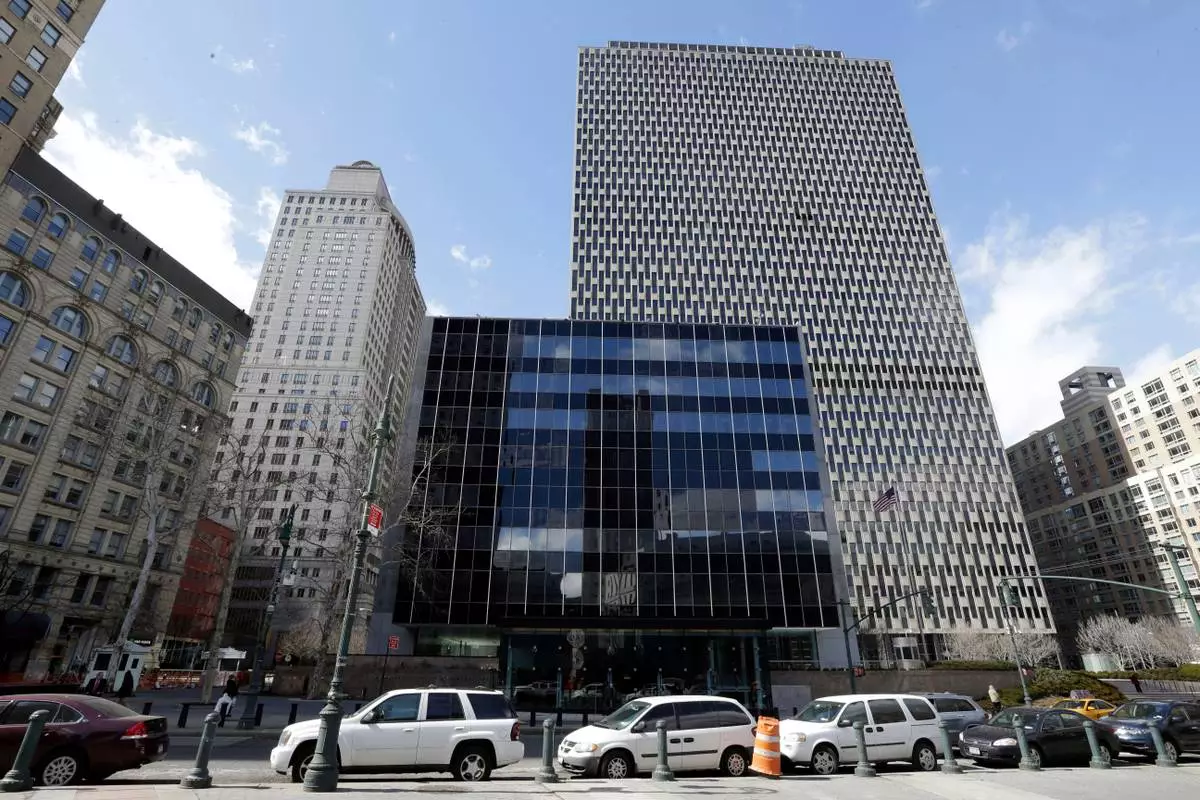
FILE - The United States Court of International Trade is seen in front of the Jacob K. Javits Federal building in this, March 18, 2015 photo, in New York. (AP Photo/Mary Altaffer, file)