NEW YORK (AP) — Knicks coach Mike Brown criticized the officiating in Game 3 of the NBA Finals after the San Antonio Spurs shot 24 free throws in the second half to New York's eight.
“I never thought I’d see that in an NBA Finals game, and I saw it tonight,” Brown said.
The Spurs won 115-111 on Monday night to cut the Knicks' lead in the series to 2-1. It was New York's first loss in 46 days, ending a 13-game postseason winning streak.
Brown credited the Spurs for their performance and listed some things the Knicks did poorly. But he said the officiating made a difference in the game.
“San Antonio is a great team. They are a great team, OK. It’s going to lower our odds big time, big time, if we play Game 4 and in the second half, they get 24 free-throw attempts to our eight. Maybe we were fouling. Maybe we were fouling. But they fouled, too.
“There were a lot of things that we didn’t do that we did in Game 1 and Game 2,” Brown added. “But to go 24 free-throw attempts in the second half, that’s 48 for the game, if you think about the way they called that second half, compared to eight. All the shots we took, we got fouled four times, roughly, for eight free-throw attempts.”
Mikal Bridges had to go to the bench early after picking up two quick fouls and Jalen Brunson had to do the same in the third quarter when he picked up his fourth. The Spurs shot 14 free throws in the third quarter to the Knicks' three.
“There are a lot of things we can do better and we are going to have to do better, but the same breath, like I said, hopefully they will see some more fouls called against them, so it’s not 24-8,” Brown said. “This is a four-point ballgame. Four-point ballgame. One-possession ballgame going down the stretch. It’s tough to overcome.”
The Spurs finished 25 for 32 for the game, while the Knicks were 18 for 22. Told about Brown's comments, Knicks center Karl-Anthony Towns said the referees weren't the problem.
“That didn’t cost us the game,” he said. “Turned the ball over. Didn’t execute. Didn’t do what got us 13 straight wins in a row. That’s how you lose a game.”
AP NBA: https://apnews.com/hub/NBA

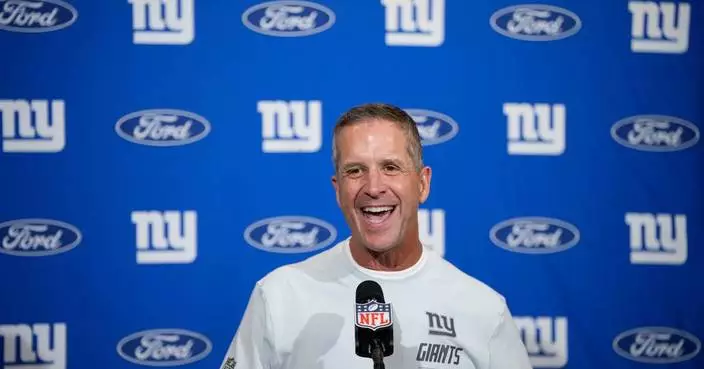
New York Knicks head coach Mike Brown reacts during Game 3 of the NBA Finals basketball series against the San Antonio Spurs, Monday, June 8, 2026, in New York. (AP Photo/Ross D. Franklin)
DUBLIN (AP) — Europe will send a team of diplomats from five countries and the European Union to the next round of Ukraine peace talks, the head of the European Council said Friday after a summit dominated by European efforts to avoid being shut out of U.S.-led negotiations on ending the almost five-year war.
European Council President Antonio Costa said the continent will be represented by the EU and five members of the “coalition of the willing” that backs Ukraine: the U.K., France, Germany, Italy and Poland.
Leaders debated whether Europe should be represented by one person or a team at a summit of the 27-nation European Union in Dublin. They have been concerned that a U.S.-backed process will leave them sidelined and Kyiv vulnerable as Moscow and Washington decide the fate of a conflict that has roiled the continent.
Ukraine is eager for support from its European allies. It's reluctant to leave the talks solely in the hands of a U.S. administration that has often seemed to lean toward Moscow’s views. Russia does not want European countries involved in direct negotiations, complaining they are financing and supplying Ukraine’s military effort.
European leaders also distrust U.S. President Donald Trump to negotiate on their behalf after a series of tense standoffs over trade, Greenland and conflicts in Iran and Ukraine.
“Without Europeans, there is no support for Ukraine,” French President Emmanuel Macron said Thursday at a meeting of the European Political Community in Dublin. “There is no more U.S. support.”
“At the end of the day, we will be the ones to define and decide for our future security as Europeans,” he said.
After Thursday’s meeting of the EPC, a larger group than the EU with members including the U.K. and Ukraine, Macron's office published what he called a “historic declaration” by 40 European nations affirming support for Ukraine and the continent’s collective security.
It affirmed that “the path to peace in Ukraine should be decided with Ukraine and that any matter affecting European security should be decided with the Europeans.”
European leaders fear Russian President Vladimir Putin will press Trump to back a peace settlement that weakens not just Ukraine but broader European security. Putin has demanded NATO troops be pulled back from Russia’s borders and that no European forces be deployed in Ukraine.
As envoys from Washington, Moscow and Kyiv met in Abu Dhabi, several European countries, including the U.K., France and Germany, attended discussions nearby.
U.S. envoy Jared Kushner and Ukrainian President Volodymyr Zelenskyy said after they met in Dublin late Thursday that Europe would be part of the next round of talks. Zelenskyy said Europe would send a negotiating team, adding, “They will have a voice.”
“We cannot conclude this deal without the Europeans being at the table,” Kushner said. He said Putin “is willing to give it a try.”
Kremlin spokesperson Dmitry Peskov said Thursday that Europe must first name a representative. “The Europeans squabble like spiders in a jar.”
Supporters of a single envoy, such as Italian Prime Minister Giorgia Meloni, argued that the absence of a united European voice has allowed individual countries or small groups to engage in freelance diplomacy.
“There are too many different groupings discussing the issue,” she said.
Meloni has criticized a series of seemingly uncoordinated initiatives, including an October call to Putin by Finnish President Alexander Stubb and Norwegian Prime Minister Jonas Gahr Støre, that she said could undermine European interests.
Martin said that European representation at the negotiations “can't just be European Union.”
“It's a European continentwide issue,” he said, pointing to the role of Norway and Britain in supporting Ukraine.
The question of who represents Europe is an old one. Europe itself is loosely defined. Is it the 27-nation EU, the 32-nation NATO military alliance made up mostly of European countries, the 29-nation Schengen zone, or the 47-nation European Political Community?
That has long frustrated Washington.
After this week's U.S.-brokered talks between Ukraine and Russia in the United Arab Emirates, Kushner said that “if Europe could identify one person to speak on their behalf, that would be a bigger achievement than getting the Russians to include them in the negotiation.”
That echoes the famous question often misattributed to former U.S. Secretary of State Henry Kissinger: “Who do I call if I want to call Europe?”
The decision to send a team, rather than an individual, allows for participation by members of the “coalition of the willing,” a group of nations that have pledged to underpin a future ceasefire with military support. That includes the U.K., which left the EU in 2020.
Poland is a voice for nations on the EU's eastern flank that face constant hybrid threats from Russia, including influence campaigns and disruptive drones.
It was not immediately clear who would represent the EU's institutions. Speculation had centered on Costa and the EU's top diplomat, Kaja Kallas.
Earlier this year, Costa faced criticism within the EU after his office set up a hush-hush back-channel with Moscow.
Kallas, a former prime minister of Estonia, laid claim to the envoy role Friday, saying, “I’m the one who is representing Europe in the foreign and security policy.”
“I know that the Russians don’t want me, but, you know, do we have a say, who is representing Russia?” she said. “We can’t send any person that has no institutional role like the Americans are sending.”
Some leaders deeply distrust the U.S.-brokered talks.
“In my opinion, calling them negotiations is an exaggeration,” Polish Prime Minister Donald Tusk said Thursday. “We will not build a new security architecture simply because the Russian president, or someone in the United States, wishes it.”
With Trump due to head to Beijing next week to meet Putin, German Chancellor Friedrich Merz said European leaders feared another “Anchorage moment,” a reference to the Alaska summit where they were stunned by Trump's overtures to the Russian leader in the absence of Ukrainian or European envoys.
“Please, no surprises,” Merz said. “Continue to play in team Europe and in the team with Ukraine.”
Latvian Prime Minister Andris Kulbergs noted that Europe is larger than Russia in population, economy and military might.
“We as Europe have to grow some bigger balls," he said.
Associated Press writers Geir Moulson in Berlin, Lorne Cook in Brussels and Colleen Barry in Milan contributed to this report.
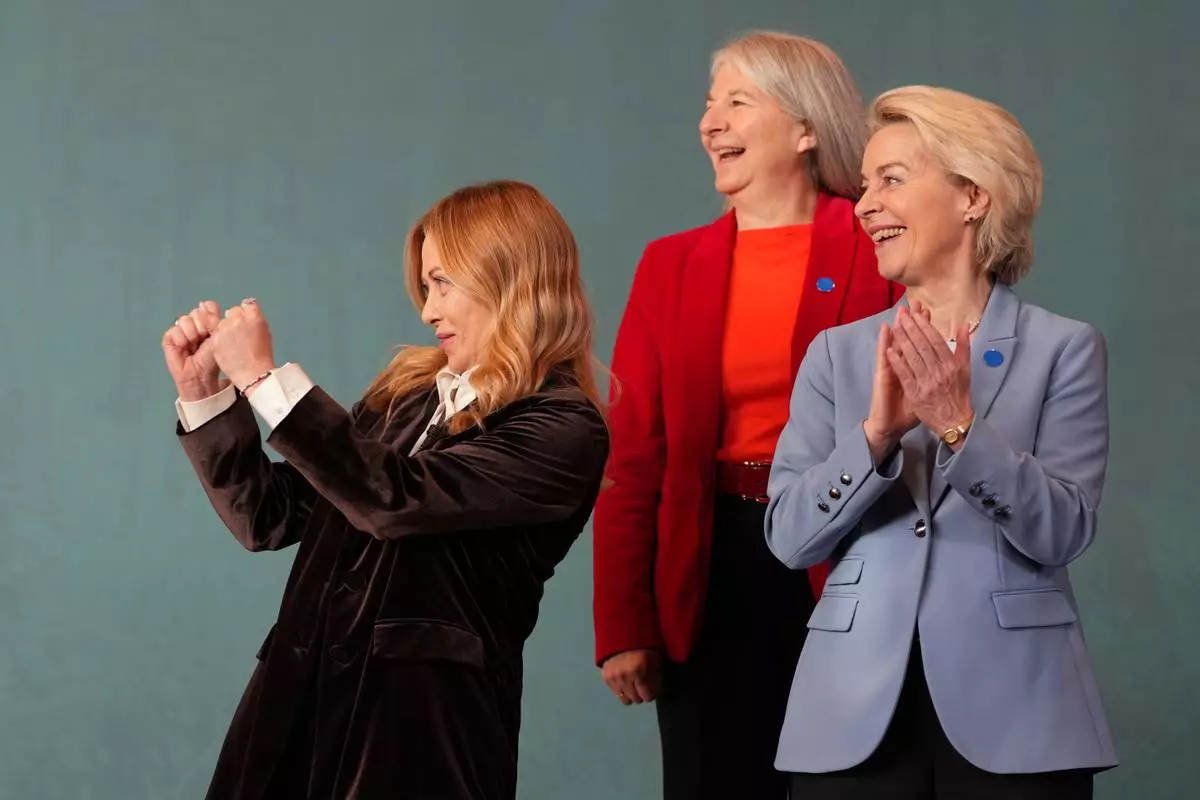
Italy's Prime Minister Giorgia Meloni, left, and European Commission President Ursula von der Leyen, right, gesture ahead of the group photo during the EU Summit in Dublin, Friday, Nov. 13, 2026.(AP Photo/Virginia Mayo)
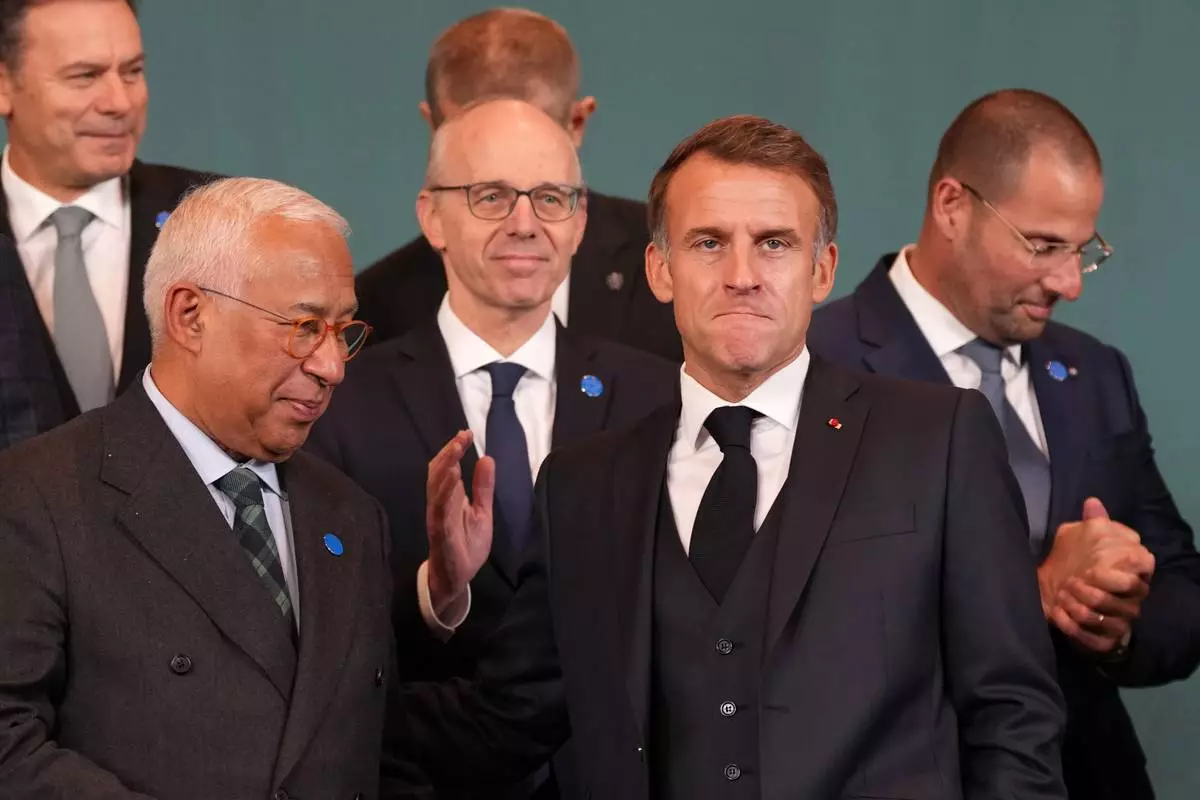
French President Emmanuel Macron stands next to European Council President Antonio Costa during the EU Summit in Dublin, Friday, Nov. 13, 2026.(AP Photo/Virginia Mayo)
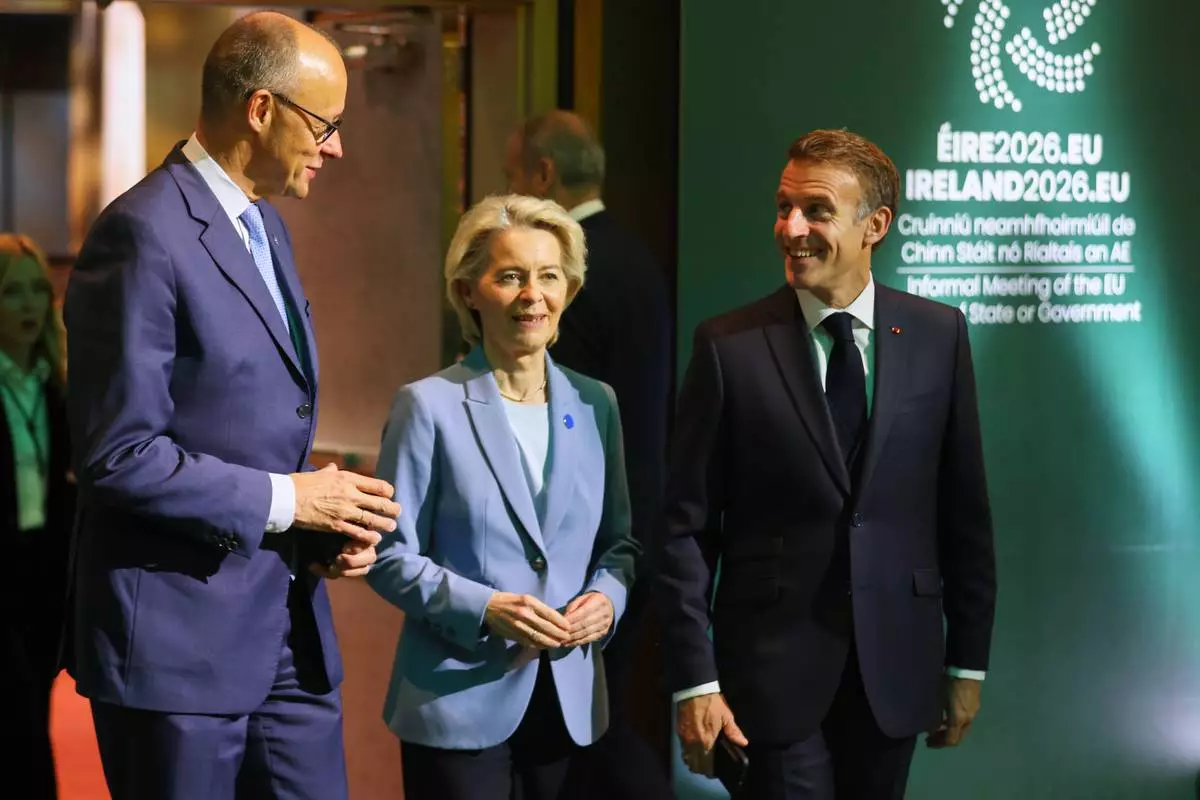
Germany's Chancellor Friedrich Merz, from left, European Commission President Ursula von der Leyen and French President Emmanuel Macron chat during the EU Summit in Dublin, Friday, Nov. 13, 2026.(AP Photo/Peter Morrison)
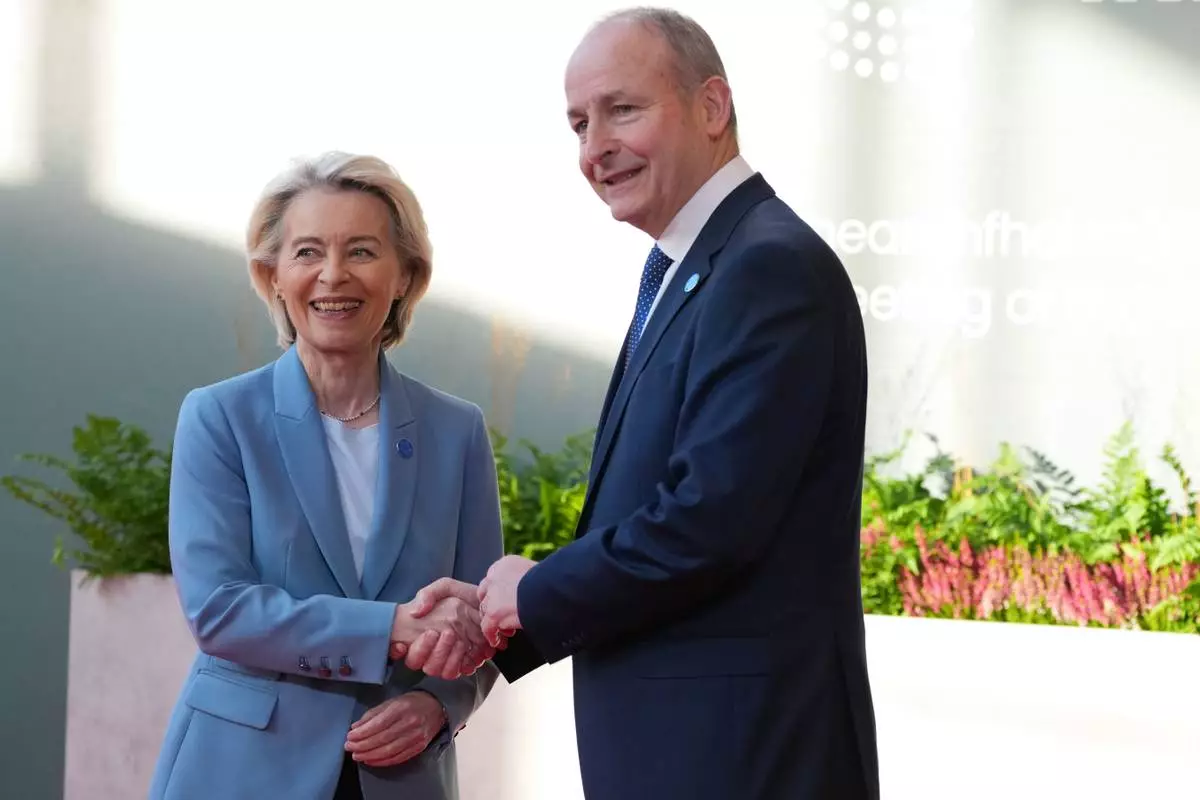
Ireland's Prime Minister Micheál Martin welcomes European Commission President Ursula von der Leyen to the EU Summit in Dublin, Friday, Nov. 13, 2026.(AP Photo/Virginia Mayo)
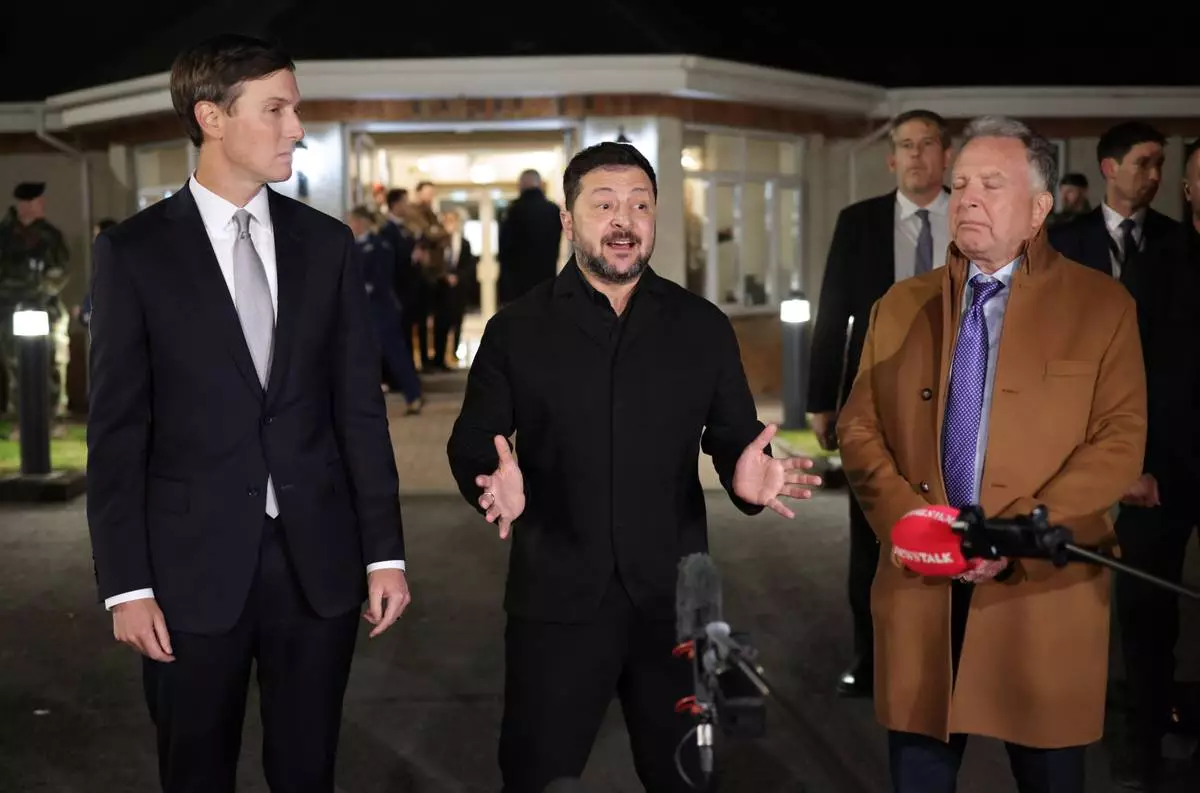
U.S. special envoys Steve Witkoff, right, Jared Kushner, U.S. President Donald Trump's son-in-law, left, and Ukraine's President Volodymyr Zelenskyy speak to the media at the airport in Dublin, Thursday, Nov. 12, 2026.(AP Photo/Peter Morrison)
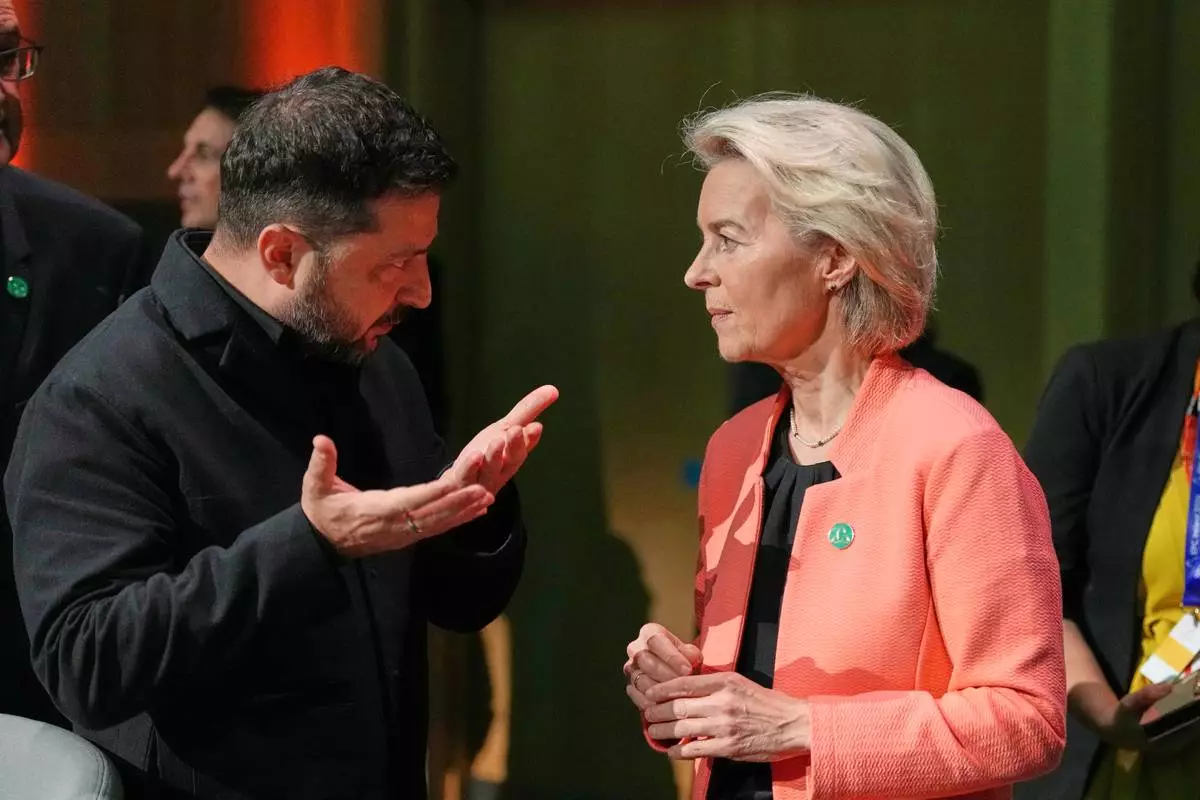
Ukraine's President Volodymyr Zelenskyy, left, speaks with European Commission President Ursula von der Leyen during a meeting of the European Political Community (EPC), in Dublin, Thursday, Nov. 12, 2026. (AP Photo/Virginia Mayo)
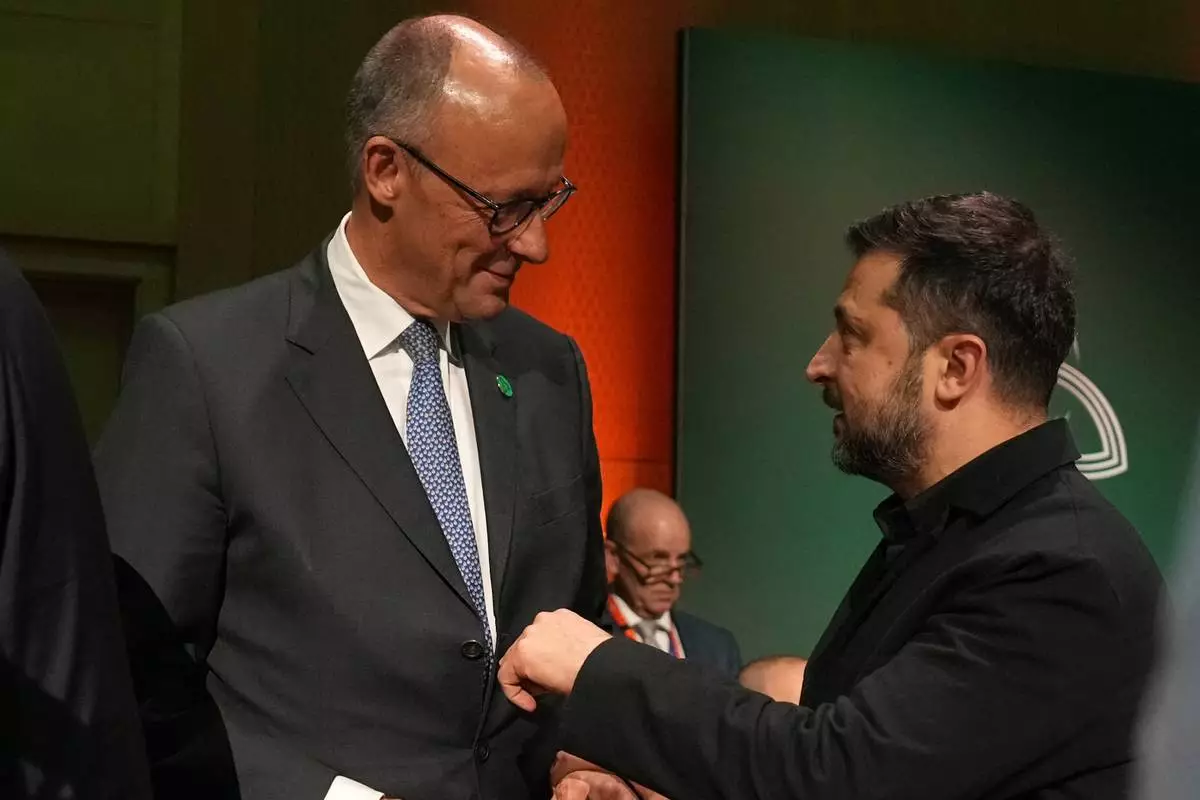
Ukraine's President Volodymyr Zelenskyy, right, speaks with Germany's Chancellor Friedrich Merz during a round table meeting of the European Political Community (EPC), in Dublin, Thursday, Nov. 12, 2026. (AP Photo/Virginia Mayo)
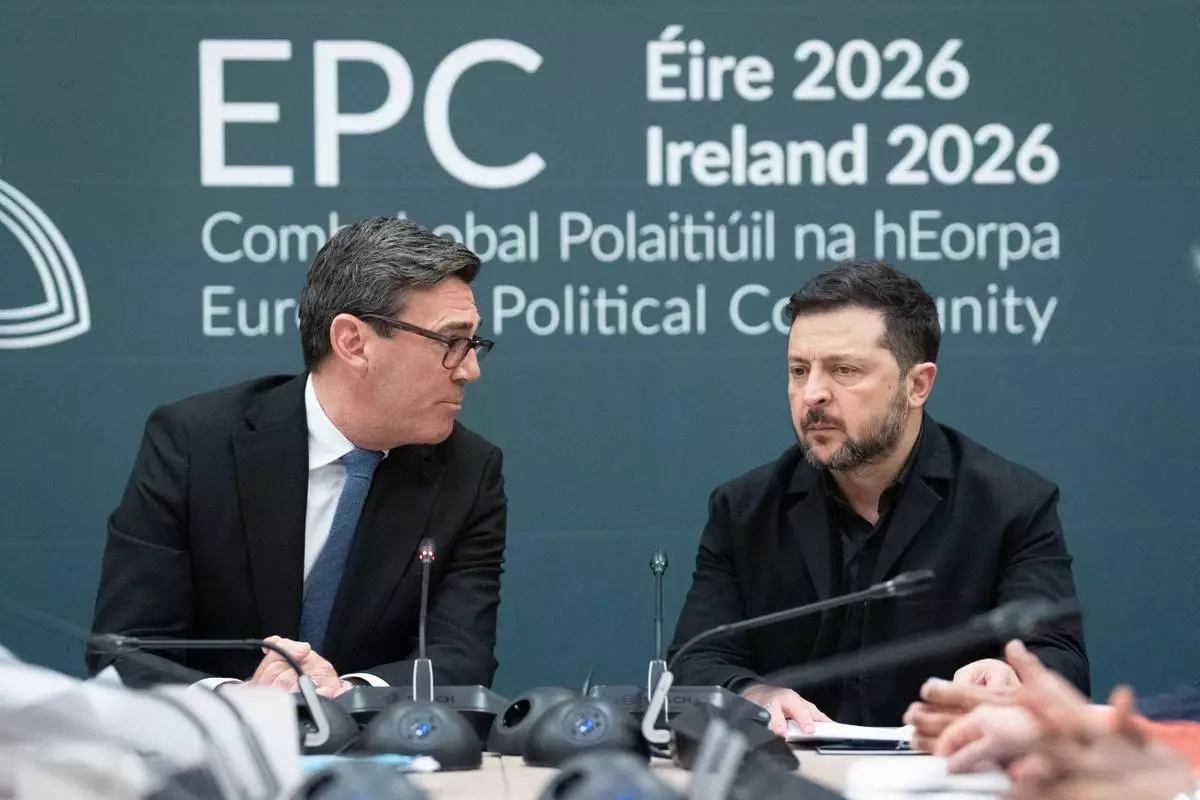
Britain's Prime Minister Andy Burnham, left, sits next to the President of Ukraine Volodymyr Zelenskyy, with other European leaders in attendance, during the Ukraine security meeting as part of the European Political Community (EPC) summit in Dublin, Ireland, Thursday, Nov. 12, 2026. (Stefan Rousseau/PA via AP, Pool)
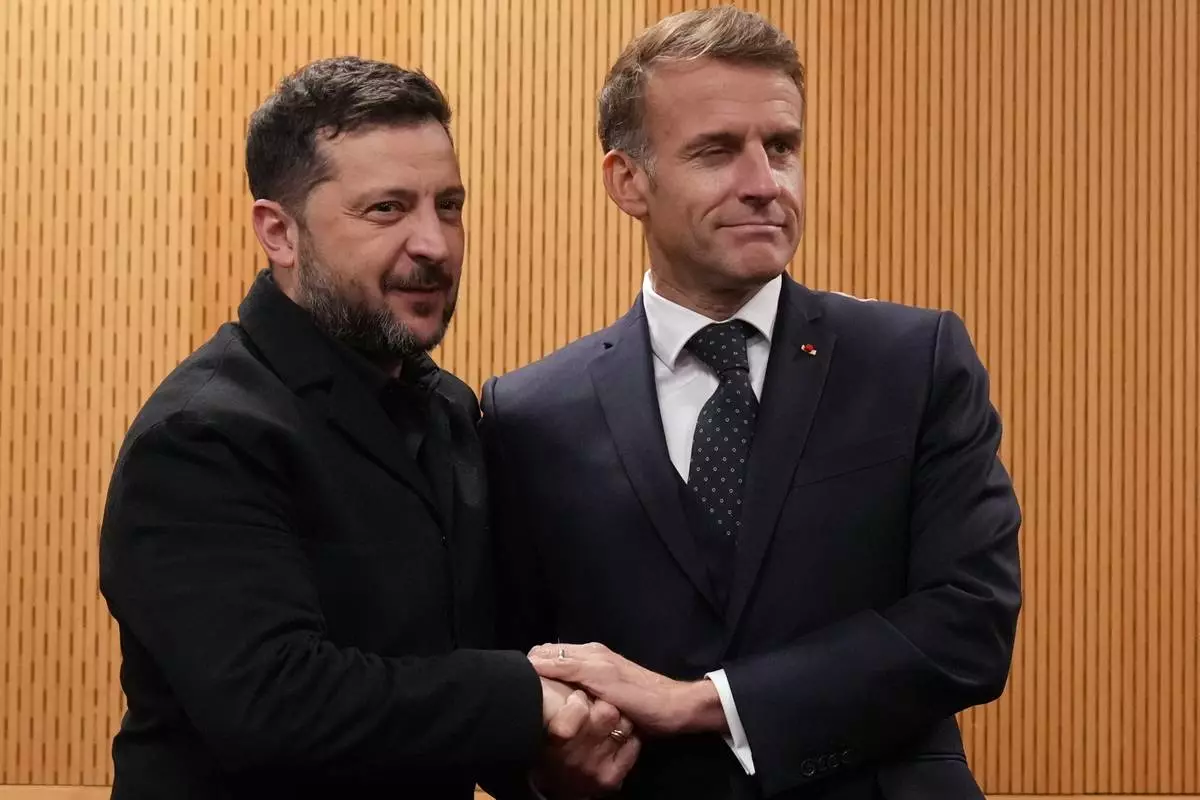
Ukraine's President Volodymyr Zelenskyy and French President Emmanuel Macron meet during the European Political Community (EPC) Summit in Dublin, Thursday, Nov. 12, 2026.(AP Photo/Virginia Mayo)
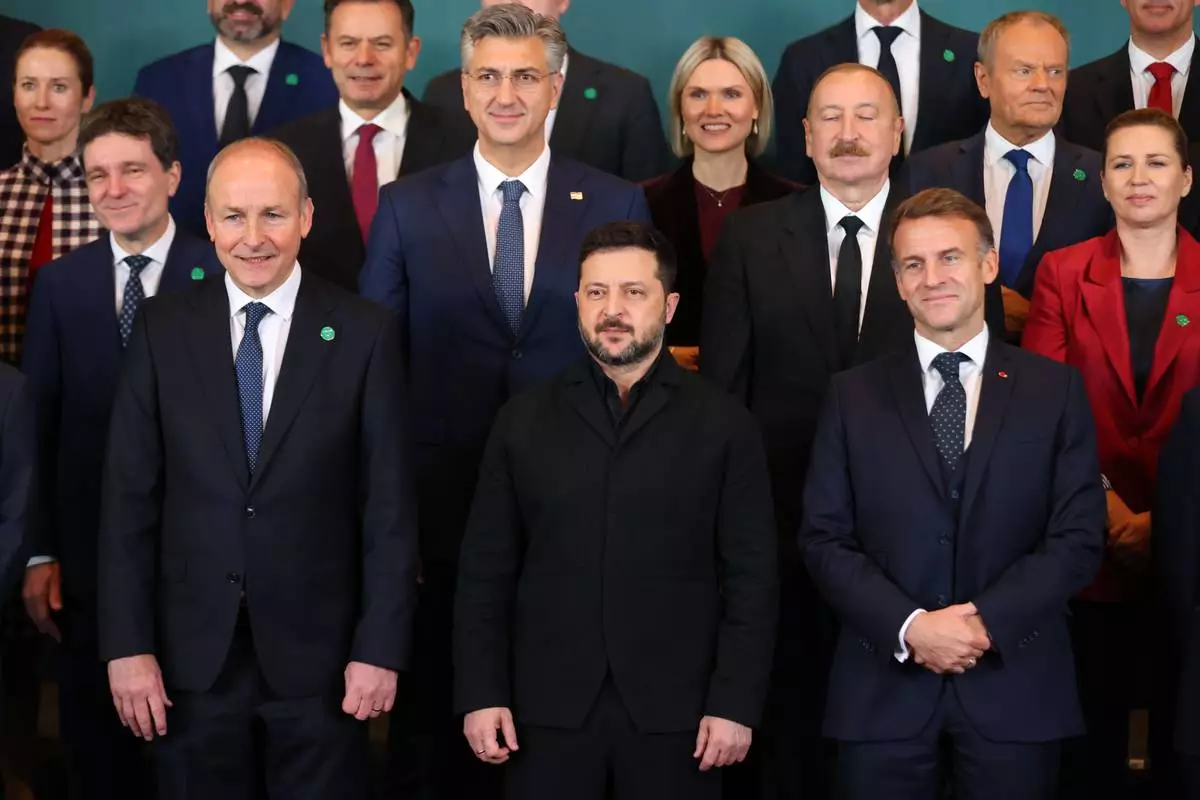
Ukraine's President Volodymyr Zelenskyy stands next to French President Emmanuel Macron, right, and Ireland's Prime Minister Micheál Martin as they pose for a family photo of all participants during the European Political Community (EPC) Summit in Dublin, Thursday, Nov. 12, 2026.(AP Photo/Peter Morrison)