Skip to Content Facebook Feature Image

IQM Announces Novel Quantum Error Correction Approach Toward Fault-Tolerant Quantum Computing

Business

IQM Announces Novel Quantum Error Correction Approach Toward Fault-Tolerant Quantum Computing
Business

Business

IQM Announces Novel Quantum Error Correction Approach Toward Fault-Tolerant Quantum Computing

2026-06-09 15:03 Last Updated At:15:10

MUNICH & ESPOO, Finland--(BUSINESS WIRE)--Jun 9, 2026--

IQM Quantum Computers, the global leader in superconducting quantum computers, has developed a novel quantum error-correcting code that achieves up to three orders of magnitude lower logical error rates than the surface code, also requiring up to eight times fewer physical qubits.

This press release features multimedia. View the full release here: https://www.businesswire.com/news/home/20260609533201/en/

Unlike many alternative high-performance quantum error-correction approaches, the new code also maintains a comparatively low hardware complexity, marking a significant advancement toward scalable fault-tolerant quantum computing.

Quantum error correction remains one of the defining challenges in the race toward practical quantum computing. Errors introduced by noise must be corrected faster than they accumulate, a requirement that previous approaches demanded either complex hardware or significant performance trade-offs, which IQM's codes address both constraints simultaneously.

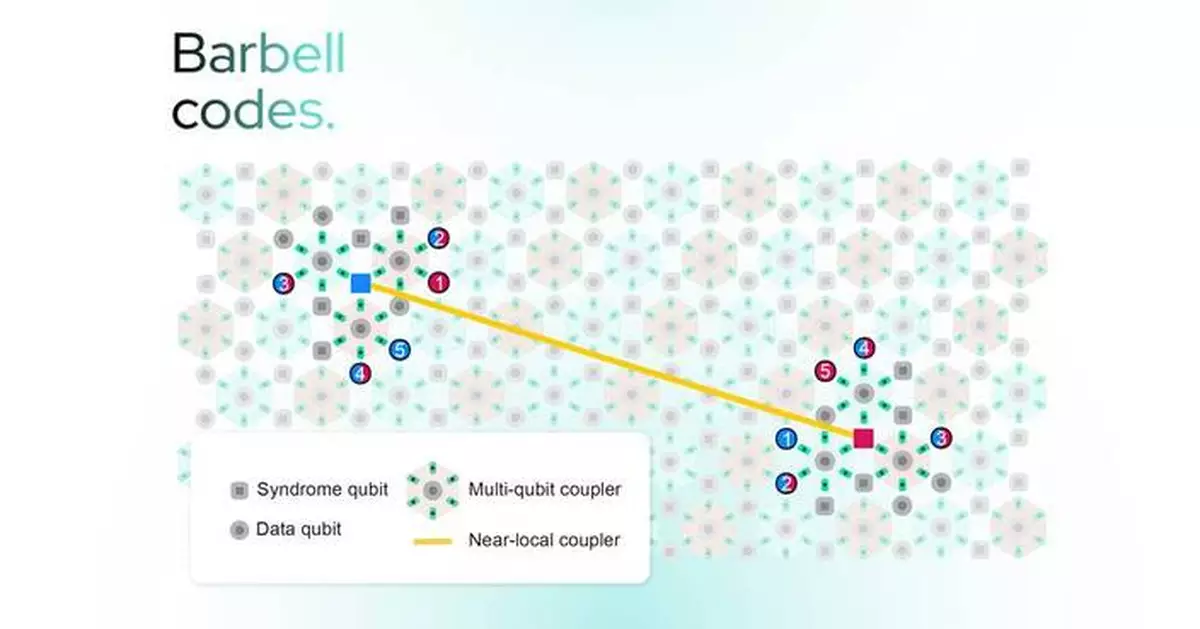
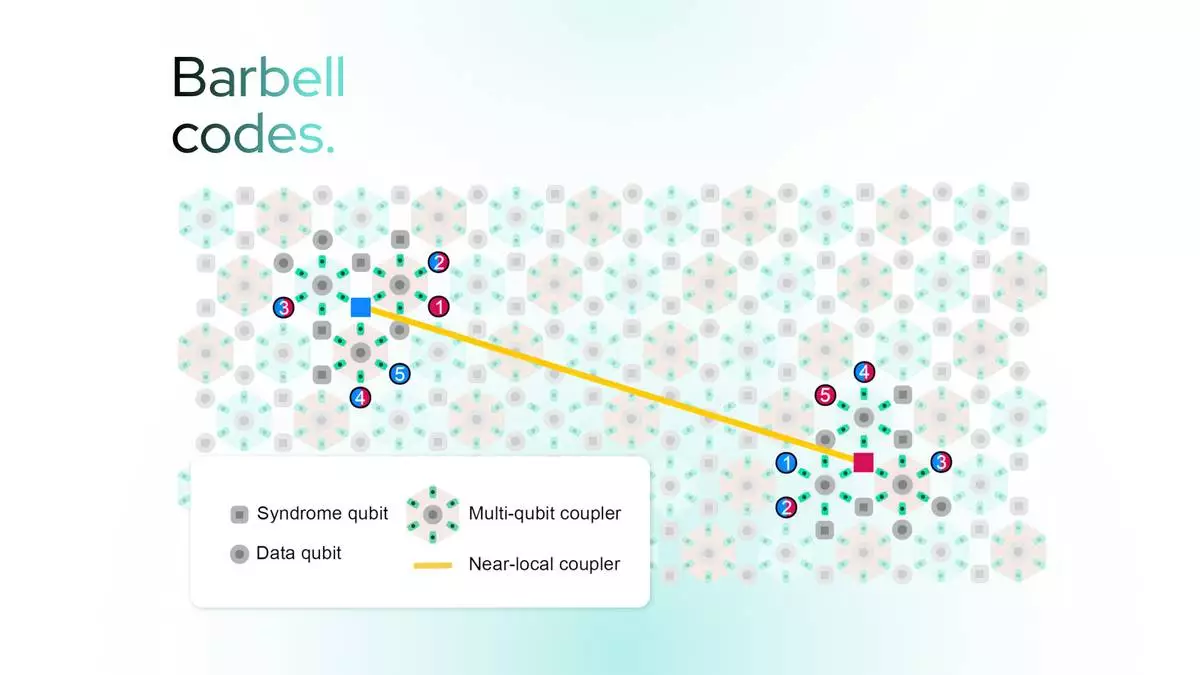
IQM´s breakthrough technology, called barbell codes, is a family of quantum low-density parity-check (QLDPC) codes tailored to IQM's Constellation, a unique quantum processor topology with enhanced planar connectivity where each qubit can natively interact to 12 other qubits; vs. four qubits in a conventional square grid topology, but only requiring three couplers for the computational qubits and six for the central elements.

By exploiting qubit connectivity and requiring only a single long coupler connection for every other qubit, barbell codes make high-performance error correction with dramatically reduced hardware complexity a reality.

The development details and numerical performance analysis published by the IQM team on arXiv demonstrate a major advancement in quantum computing. Barbell codes are constructed by connecting two sites of standard planar Constellation connectivity with a single long coupler for every second qubit, thereby providing the capability for generating entanglement between such pairs.

Therefore, this unique design eliminates the need for additional long-range crossing couplers on open boundary conditions — simplifying fabrication without compromising performance. The result is a solution engineered not for ideal laboratory conditions, but for the practical realities of superconducting qubit manufacturing.

“We are pioneering the next chapter in quantum computing,” said Jan Goetz, CEO and Co-founder of IQM Quantum Computers. "Our approach offers a highly competitive path to scalable quantum error correction with superconducting qubits, paving the way for large-scale, fault-tolerant quantum computers."

IQM has sold more quantum systems than any other manufacturer and will deploy 150-qubit systems to customers later this year. The company has further announced IQM Halocene, an advanced quantum computer for error correction codes.

The barbell codes approach aligns with the company's development roadmap, positioning IQM on a credible path to fault-tolerant quantum systems with hundreds of high-precision logical qubits and possibility of quantum advantage across multiple industries.

IQM recently announced increased commitments to its PIPE, driven by upsized investor demand ahead of its planned Nasdaq listing through a merger with Real Asset Acquisition Corp. (Nasdaq: RAAQ).

About IQM Quantum Computers

IQM Quantum Computers is a global leader in superconducting quantum computers, delivering full-stack quantum computers and cloud platform access to research institutions, universities, high-performance computing centers, national laboratories and enterprises worldwide. IQM's on-premises deployment model gives customers direct ownership and control of their quantum infrastructure. Founded in 2018, headquartered in Finland with major operations in Munich, it has over 400 employees. IQM operates across Europe, Asia, and North America. IQM has filed an F-4 registration statement to the SEC with the intention to become the first publicly listed European quantum company on Nasdaq Global Exchange in the U.S by merging with Real Asset Acquisition Corp. (Nasdaq: RAAQ).
IQM´s breakthrough technology, called barbell codes.

IQM´s breakthrough technology, called barbell codes.

MEUDON, France--(BUSINESS WIRE)--Jun 9, 2026--

With increasing cyber risks and the rapid evolution of digital public services, Estonia is reinforcing the security, durability and adaptability of the documents that underpin its digital society: identity cards, residence permit cards, e-resident digital identity cards, diplomatic identity cards, certificates of AIP (Applicant for International Protection). Backed by Thales’ decades of expertise in secure identity technologies, the new programme introduces stronger protection against fraud, upgraded electronic features and the ability to respond quickly to emerging cybersecurity threats.

This press release features multimedia. View the full release here: https://www.businesswire.com/news/home/20260608624209/en/

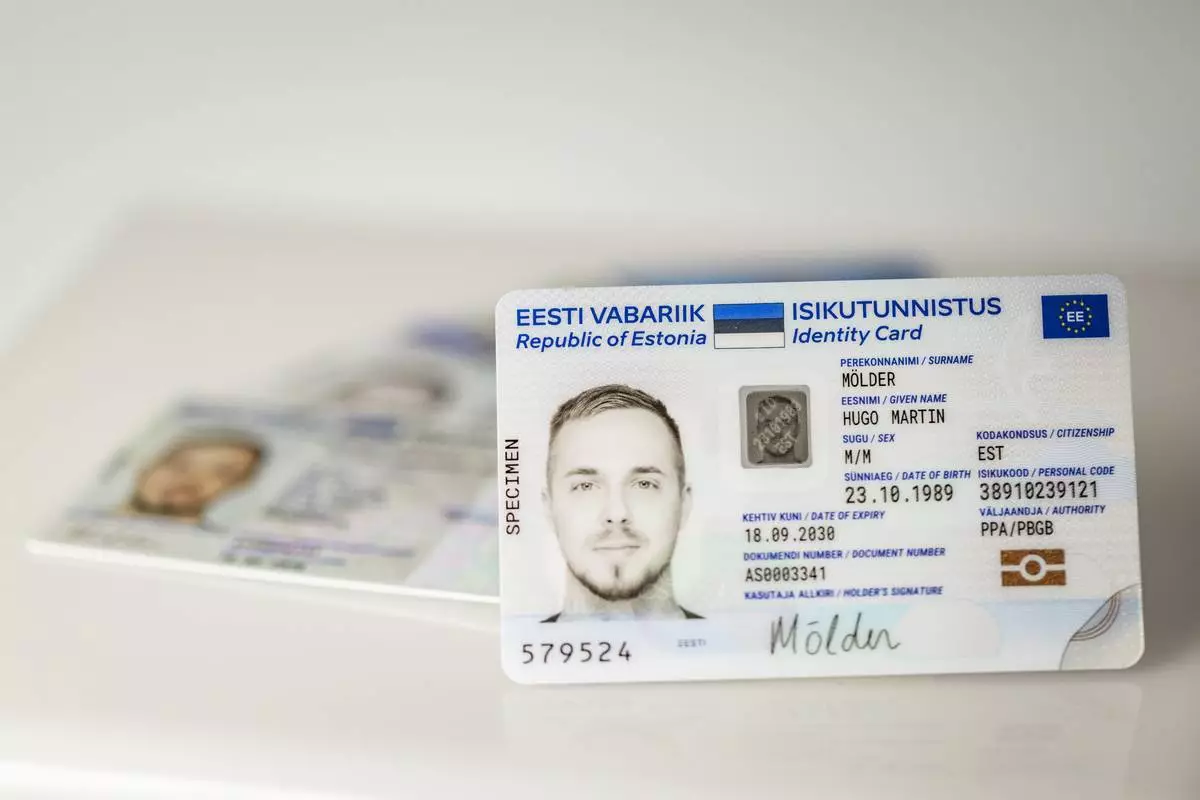
At the heart of the programme is Estonia’s new national eID card, designed by Thales to blend strong physical protection with robust digital security. Its materials, visual features and advanced security techniques make the card instantly recognisable, easy to verify, and highly resistant to tampering or counterfeiting (including the use of translucent polycarbonate with transparent edges and multiple optical features).

Beyond physical security, Estonia’s new electronic identity documents benefit from upgradeable software. Should new cybersecurity risks emerge, already-issued cards can be remotely updated, ensuring citizens’ digital transactions remain protected over time without replacing the card itself. For end-users, the experience remains simple: the card works as their key to secure online services, digital signatures, banking, healthcare access, interactions with government portals, and even seamless travel through eGates at borders.

Behind the scenes, Thales ensures full operations from card issuance to lifecycle management, and guarantees that:

As a trusted leader in digital identity and cybersecurity, Thales provides a solution fully compliant with eIDAS (the European Union regulation governing electronic identification and eServices), providing citizens with the highest standards of security and interoperability, and seamless access to digital services across Europe.

Liis Valk, Head of Identity and Status Bureau Estonian Police and Border Guard Board commented :“Estonia’s digital ecosystem depends on the trust citizens place in their identity documents. With this new generation of eID cards, we are strengthening both physical and digital security while ensuring people can continue using our services with confidence. Thales’ expertise has enabled us to bring world-class security features to every citizen.”

“Estonia has long been a pioneer in digital identity, and we are proud to support the next chapter of this remarkable journey. These new cards combine advanced document design with strong cybersecurity foundations, ensuring resilience against emerging threats,” added Nathalie Gosset, VP Identity and Biometric Solutions, Thales. “Together, we are helping to build a secure, future-proof identity framework for all residents and citizens.”

1 Earlier this year, Estonia’s new-generation eID card has been awarded the “ Best New National eID Card ” at High Security Printing EMEA conference in Morocco.

About Thales

Thales (Euronext Paris: HO) is a global leader in advanced technologies for the Defence, Aerospace, and Cyber & Digital sectors. Its portfolio of innovative products and services helps address several major challenges: sovereignty, security, sustainability and inclusion.

The Group allocates €4.5 billion per year in Research & Development in key areas, particularly for critical environments, such as Artificial Intelligence, Cybersecurity, Quantum and Cloud technologies.

Thales has more than 85,000 employees in 65 countries. In 2025, the Group generated sales of €22.1 billion.

© Reelika Riimand - Estonian Police and Border Guard Board

© Reelika Riimand - Estonian Police and Border Guard Board

Recommended Articles