FIFA has revoked the ticket allocation for Iran fans at the team’s three World Cup games in the United States, the national soccer federation claimed Tuesday.
Each federation for the 48 teams taking part is entitled to receive and distribute 8% of stadium capacity for each of its games at the World Cup, adding up to several thousands of tickets.
Just days before Iran opens its World Cup — on June 15 at the 70,000-seat Los Angeles Rams’ stadium in Inglewood against New Zealand — the federation claimed in a statement reported by semi-official state media that it was now unable to provide any tickets to its supporters.
The claim adds to the turmoil between Iranian soccer, FIFA and tournament co-host the U.S., which began military attacks on Iran on Feb. 28.
FIFA has total authority over ticketing operations at the World Cup, yet the Iranian soccer body suggested “the United States has now taken steps to obstruct the presence of Iranian supporters at the stadiums.”
“This incident raises serious questions about the influence of non-sporting and political considerations on the organization of the world’s biggest football event,” the Iranian soccer federation said.
FIFA was approached for comment.
Iran’s team is now based in the Mexican border city of Tijuana instead of its pre-war plan to train in Tucson, Arizona. It is the team's seventh appearance at a men's World Cup.
Some federation officials also have been denied visas to enter the U.S., where Iran also plays Belgium in Inglewood on June 21 and then Egypt in Seattle on June 26.
Federations of World Cup teams typically sell their ticket allocation to the most loyal fans who attend games at home and away.
“However, in an unexpected move, the allocation granted to Iran’s football federation has been withdrawn, and under the current circumstances the federation is unable to offer even a single ticket to national team supporters,” the federation said.
Iran residents were subject to a travel ban by the U.S. government since last year and were unlikely to get entry visas for the World Cup. It was unclear how many tickets in Iran’s allocation were sold since the tournament draw was made in December to the country's diaspora including in the U.S.
If Iranian tickets have been revoked, FIFA would have just days to sell about 5,600 tickets for the Iran-New Zealand game on Monday. The FIFA sales site on Tuesday showed rows of field-level seats available at $450 each though numbered in dozens rather than hundreds.
Still, FIFA president Gianni Infantino stated in 2017 — when U.S. soccer officials were preparing a co-hosting bid with Canada and Mexico they won the following year — that fans must have access to the tournament.
“It’s obvious when it comes to FIFA competitions as well (that) any team, including the supporters and the officials of that team, who would qualify for a World Cup need to have access to the country, otherwise there is no World Cup,” Infantino said nine years ago. “That is obvious.”
U.S. policy toward World Cup visitors is becoming a strong theme before the games begin on Thursday.
A FIFA-appointed match referee from Somalia was denied entry to the U.S. in Miami at the weekend and on Monday he was cut from the 104-game tournament that starts in Mexico City.
An Iraq player was detained for several hours on arriving in Chicago and a photographer traveling with the delegation was denied entry.
“The disruption is such that one has to ask who is running the World Cup. Is it FIFA or is it the U.S. government with its racially charged immigration policies?” Piara Powar, the head of FIFA's anti-discrimination monitoring partner, said on Tuesday in a statement.
“Before a ball has been kicked,” said Powar, executive director of the Fare Network, “the sense that this World Cup is anything but the celebration of global humanity a World Cup should be is beginning to take over.”
AP World Cup: https://apnews.com/hub/fifa-world-cup
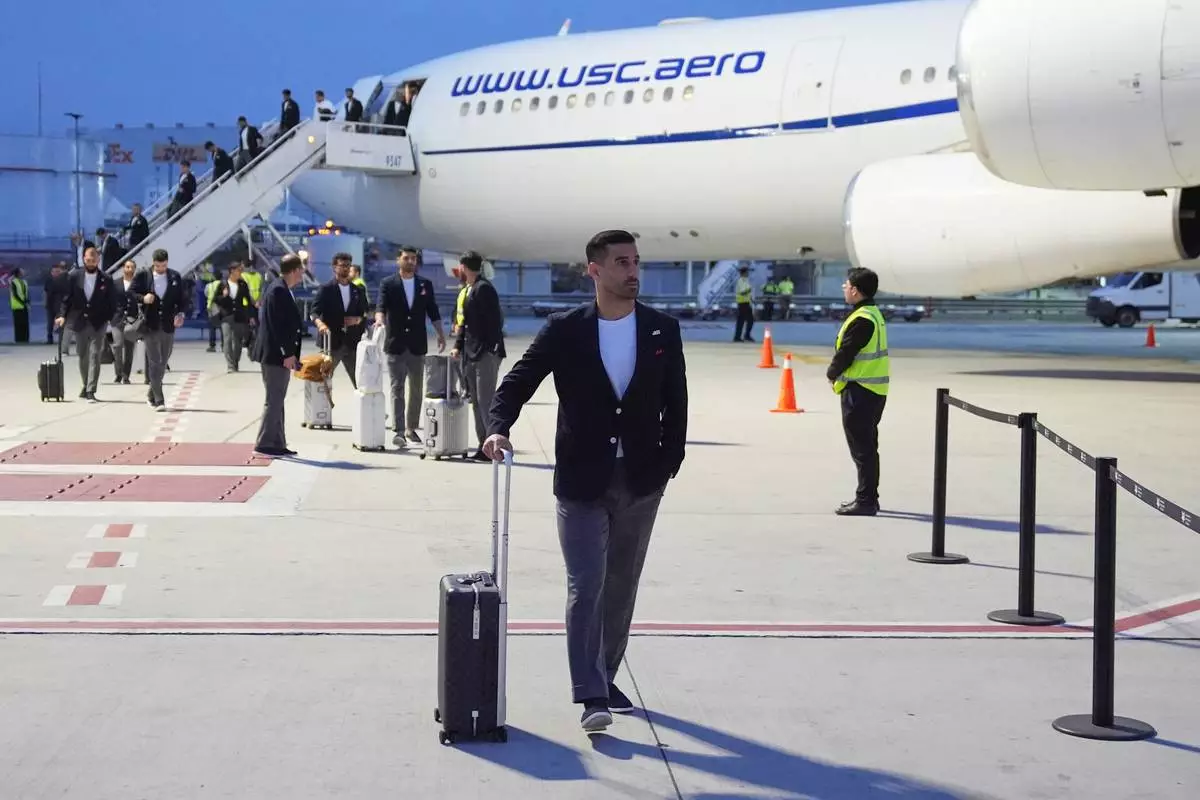
Iran's Ehsan Hajisafi arrives with his teammates for the World Cup soccer tournament in Tijuana, Mexico, Sunday, June 7, 2026. (AP Photo/Gregory Bull)

Fans for team Iran wave as players arrive for the World Cup soccer tournament in Tijuana, Mexico, Sunday, June 7, 2026. (AP Photo/Gregory Bull)
WASHINGTON (AP) — House Republicans will look to get nearly $70 billion for immigration enforcement over the finish line Tuesday, enough to fund a pair of Homeland Security agencies through the next three years and the rest of President Donald Trump's time in office.
Speaker Mike Johnson will need near perfect attendance and unity on his side to complete weeks of action on the bill. The legislation got sidetracked when Republicans sought to include $1 billion for enhanced security on the White House grounds, including for Trump's new ballroom, and the Trump administration tried to create a nearly $1.8 billion fund to compensate allies of the president who claim they have been unjustly investigated and prosecuted. Those proposals proved politically toxic and were scrapped.
Now, the bill is focused entirely on immigration enforcement, a topic that Republicans have treated as a defining issue between the two major political parties and one they hope will carry them to victory in this year's midterm elections. The bill provides $38 billion for Immigration and Customs Enforcement, $26 billion for the Border Patrol and another $5 billion to cover unforeseen costs, fueling Trump's deportation agenda.
“It's long overdue,” said Johnson, R-La., of the bill. “We have to fund border security and immigration enforcement, and it's sad that Republicans have to do it on our own.”
The funding comes on top of the nearly $140 billion that the Republican-controlled Congress gave ICE and Customs and Border Protection last year as part of Trump's tax and spending cuts bill.
Democrats objected to giving the agencies more money without significant changes in the way they operate after the deaths of Alex Pretti and Renee Good in Minneapolis. For example, Democrats insisted that agents be required to display their ID badges during enforcement operations and that they get a judicial warrant before entering private property. Instead, the funding will come with virtually no strings attached.
House Democratic Leader Hakeem Jeffries vowed his party would oppose the package.
“We believe that taxpayer dollars should be used to make life more affordable for the American people – not give ICE another $70 billion blank check so that they can unleash brutality on American citizens and violently target law-abiding immigrant communities,” said Jeffries of New York.
The package is the result of a monthslong standoff in Congress after Democrats refused to fund the Department of Homeland Security in the wake of the immigration enforcement actions in Minneapolis and other American cities, leading to the longest shutdown in agency history.
Negotiations had been underway with the White House to alter ICE operations as Democrats were demanding. When those negotiations failed, Republicans turned to a complicated procedural maneuver to get around the filibuster and pass the immigration funding with no Democratic votes.
If approved, the package would next go to Trump for his signature, all but assuring an essentially uninterrupted flow of funds for his immigration enforcement and deportation agenda into 2029.
The Senate completed its work on the legislation last week during an all-night session that extended into the early morning hours Friday. The final 52-47 vote on the bill was nearly party line, with Sen. Lisa Murkowski of Alaska the only Republican to oppose it.
The money will come at a pivotal time for the Department of Homeland Security, which is under new leadership after Trump replaced Kristi Noem with new Secretary Markwayne Mullin in March.
While Mullin has vowed to keep the department out of the headlines, the administration is under pressure from anti-immigration advocates to deliver on Trump’s campaign promise of the largest deportation operation in American history.
So far, the administration has not hit its goal of 1 million deportations a year, but Trump’s border czar, Tom Homan, has promised more to come, including hinting at immigration enforcement actions in New York, the nation's biggest city, which is heavily Democratic.
At the same time, the administration is making it more difficult for legal immigrants to remain in the U.S. by working to end Temporary Protective Status, changing the processes for obtaining green cards and leaving some Dreamers — the young people who were brought illegally to the U.S. as children — reporting delays in renewing their status, which allows them to stay and work.
On the House side, Johnson has little margin for error. Republicans can afford to lose only a couple of votes if every lawmaker is present. GOP leadership opted to avoid any hiccups and sent lawmakers home last week rather than take up the bill early Friday once the Senate had completed its all-nighter.
The bill is just a slim package, without the hundreds of pages of details and directives that typically come from Congress when it provides funding for agencies.
Leading up to the vote, Democrats portrayed DHS as an agency that has used its new resources to buy private jets for its leadership, warehouse immigrants in deplorable conditions and attack U.S. citizens.
“To give these rogue agencies another $70 billion now when they still have $100 billion in the bank from last year would implicate all of us in the escalating corruption and shameful actions of this department," said Rep. Jamie Raskin of Maryland, the ranking Democratic member on the House Judiciary Committee.
Republicans countered that they were fulfilling their duty to safeguard the nation and support the men and women charged with enforcing the law.
“Democrats can say whatever they want, but what it’s about is public safety. What’s it about is keeping Americans safe,” said Rep. Michelle Fischbach, R-Minn.
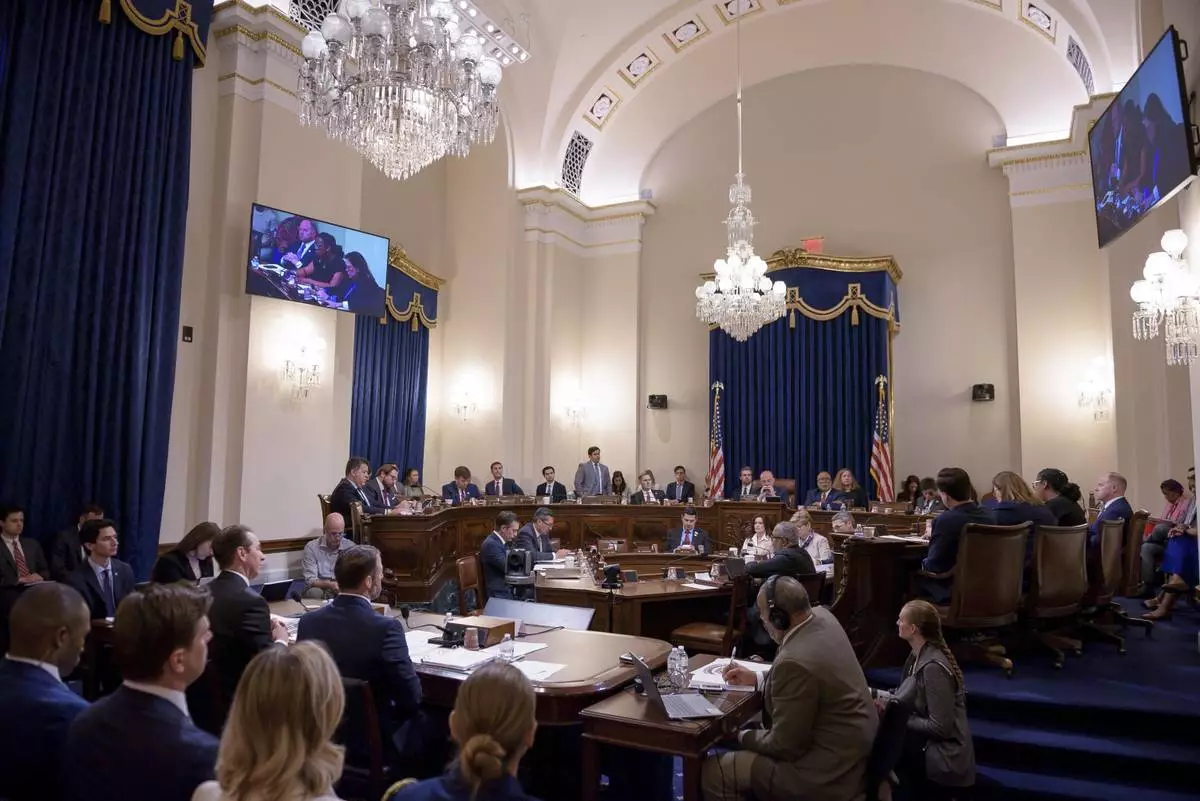
Homeland Security Secretary Markwayne Mullin, lower left, testifies before the House Committee on Homeland Security during a hearing on the Fiscal 2027 budget request for the Department of Homeland Security, in Washington, Wednesday, June 3, 2026. (AP Photo/Cliff Owen)
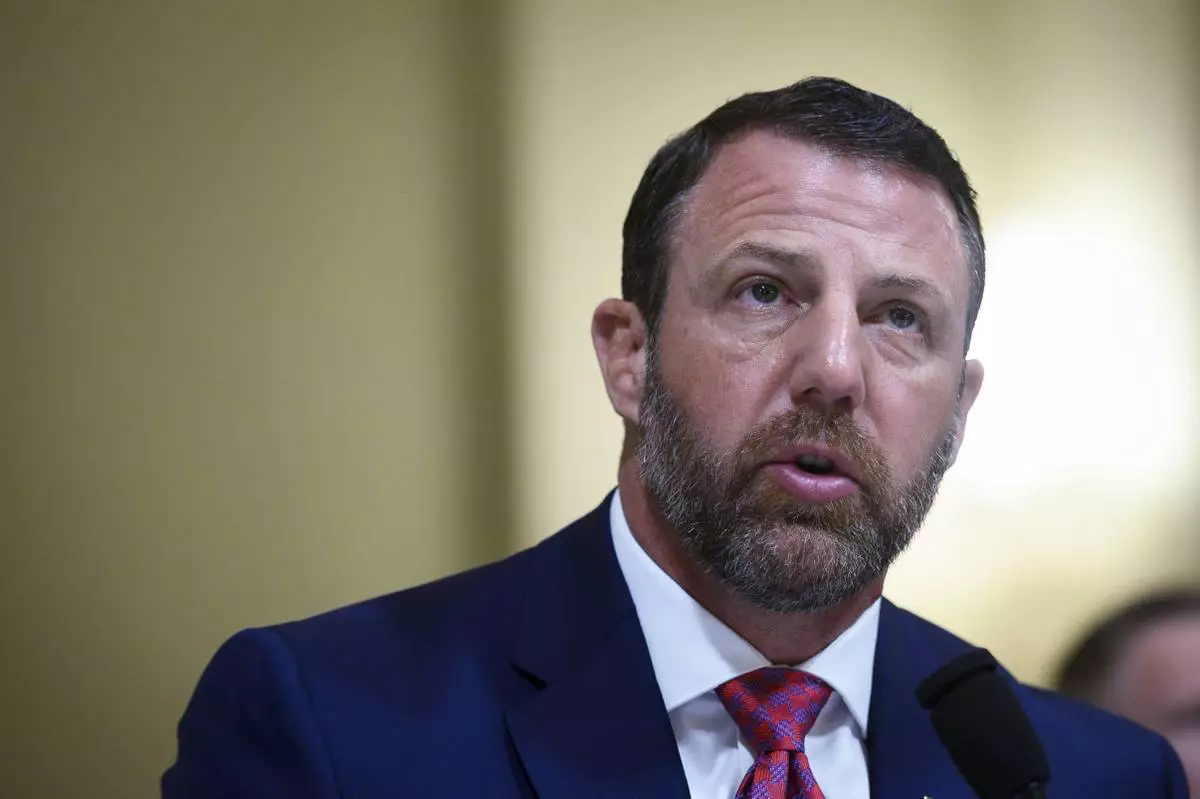
Homeland Security Secretary Markwayne Mullin testifies before the House Committee on Homeland Security during a hearing on the Fiscal 2027 budget request for the Department of Homeland Security, in Washington, Wednesday, June 3, 2026. (AP Photo/Cliff Owen)
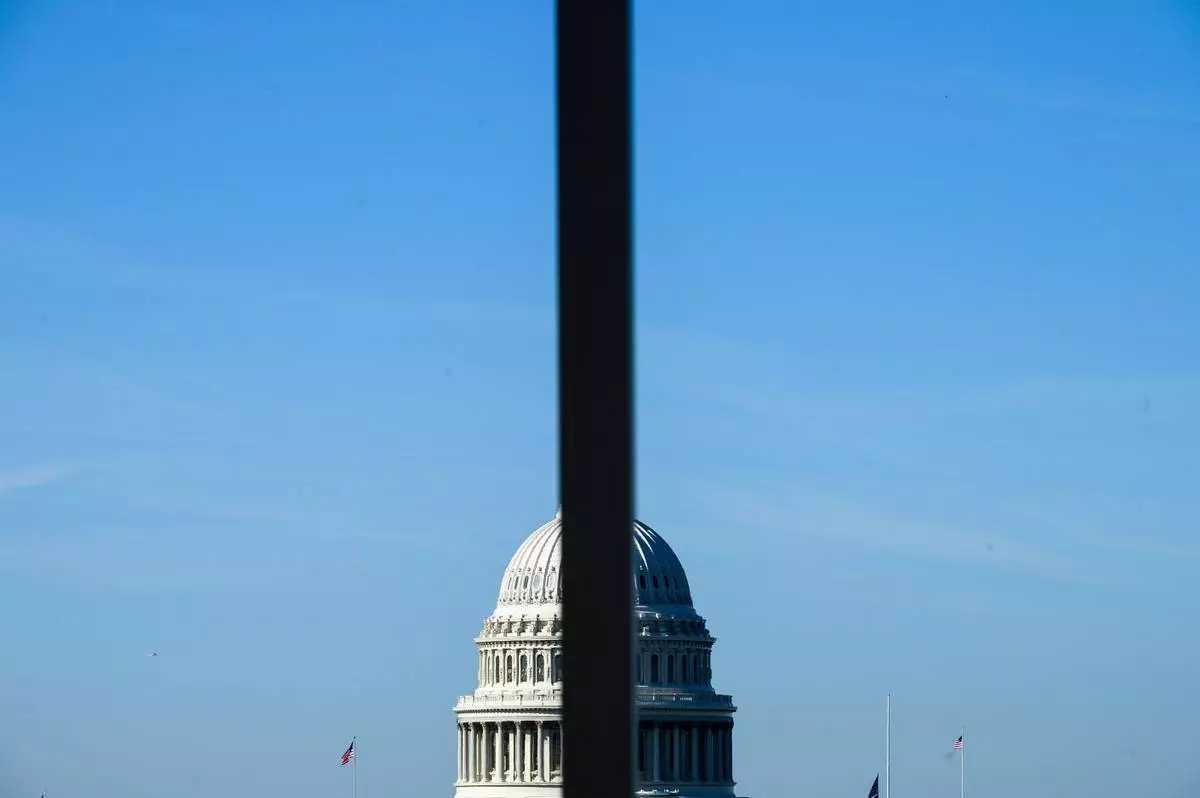
The U.S. Capitol is seen behind a light pole, on Capitol Hill in Washington, Wednesday, June 3, 2026. (AP Photo/Cliff Owen)
FILE - The seal of U.S. Department of Homeland Security is seen before a news conference at ICE Headquarters in Washington, May 21, 2025. (AP Photo/Jose Luis Magana, File)
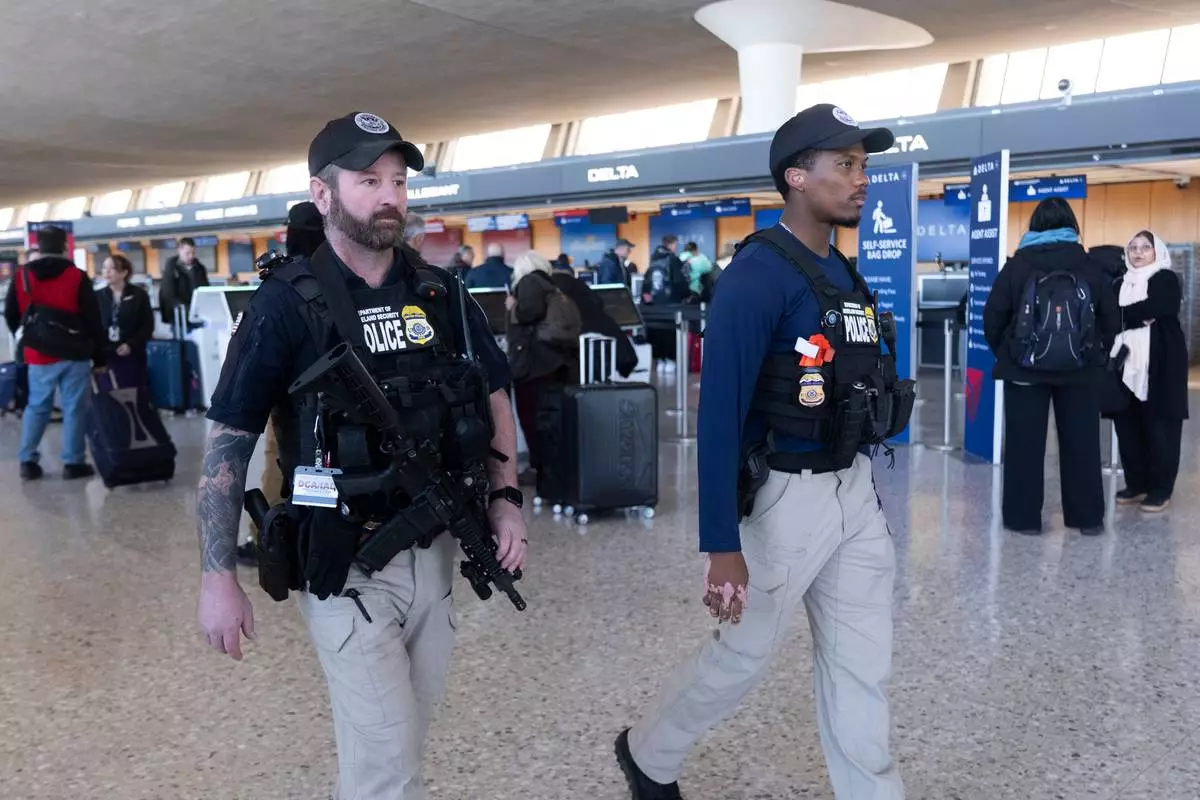
FILE - Department of Homeland Security, Transportation Security Administration, Federal Air Marshals, patrol around Washington Dulles International Airport, in Chantilly, Va., Tuesday, March 24, 2026. (AP Photo/Manuel Balce,File)