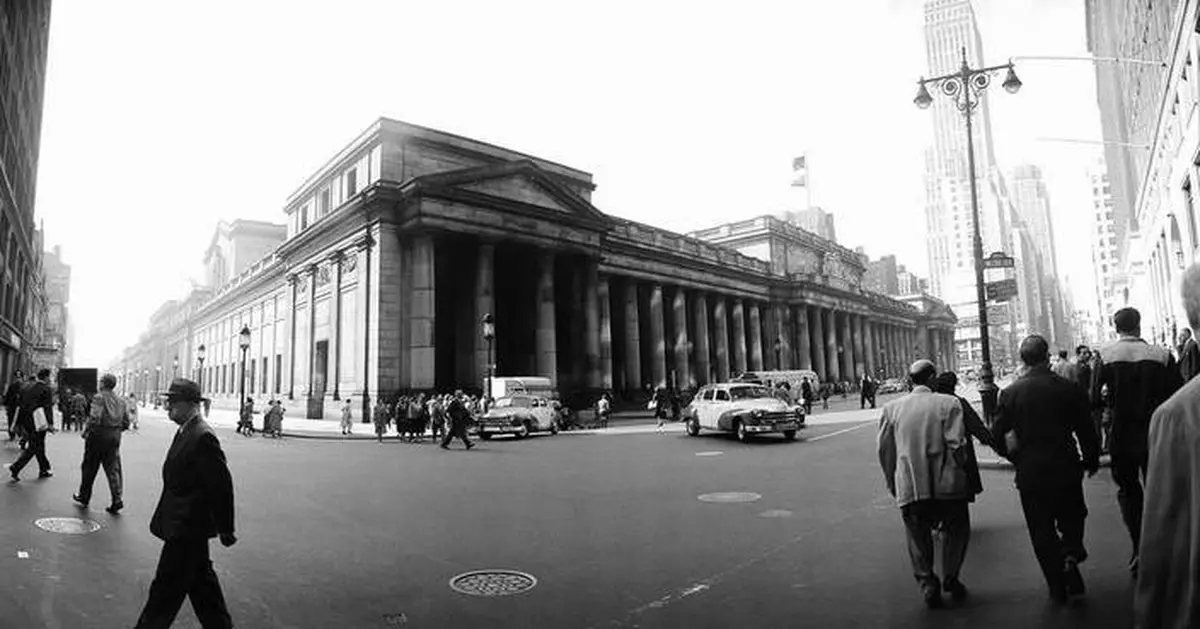
NEW YORK (AP) — When Manhattan's original Pennsylvania Station was demolished in 1963, it marked the undignified end to one of America’s great public works, a monolithic Beaux Arts train terminal with Roman-style columns and a spacious central waiting area that was at the time the city's largest indoor space.
In its place rose Madison Square Garden — home of NBA’s New York Knicks and NHL’s New York Rangers — while train commuters were forced underground into gloomy, claustrophobic, low-ceilinged corridors when the redesign was completed in 1968.
“Through Pennsylvania Station one entered the city like a god,” the architectural historian Vincent Scully famously lamented. “One scuttles in now like a rat.”
But a dramatic new vision for the busiest transit hub in the Western Hemisphere calls for a return to the original station's grandeur from 1910.
Renderings released Monday feature a rectangular stone facade lined with imposing columns along a grand entryway. Inside, a sunlight-drenched concourse boasts soaring ceilings more than 50 feet (15 meters) high in places. There are bronze finishes and other ornamental details, like a bas-relief of the city’s famous skyline and a large station clock.
Inside one entryway, an inside wall bears the seal and name of President Donald Trump, who had Amtrak assume control of the project last year after decades of political infighting among transit agencies and opposition to moving MSG from billionaire owner James Dolan.
Trump has floated renaming his hometown station in his honor as he’s sought to burnish his legacy through public works projects, from a massive new White House ballroom to a triumphal arch.
For now, though, the name etched across the proposed grand facade would still read “Pennsylvania Station,” according to the renderings. They were released by Amtrak, which owns the terminal, and Penn Transformation Partners, the design and development consortium picked for the project.
The proposed design draws from the ornate, Beaux-Arts design of Grand Central Terminal, the city’s other major rail hub, as well as Art Deco landmarks like the Empire State Building and Rockefeller Center, according to lead design architect Vishaan Chakrabarti.
The vision, he said, is to restore Penn Station’s place among the pantheon of the city’s greatest landmarks.
“There was this fearless embrace of ornament and decoration that in some ways we’ve lost,” Chakrabarti said. “We want to bring some of that sense of craftsmanship back.”
The redesign is projected to cost roughly $8 billion, and construction is targeted to begin before the end of 2027, officials said Monday. Penn Station would remain in operation throughout as the project progresses in phases over about six years.
More than 600,000 commuters traverse the rail hub on any given workday, or more than the three major international airports that serve greater New York City — John F. Kennedy, LaGuardia and Newark Liberty — combined.
Plans floated over the decades have called for relocating MSG, but the plan is for the “World’s Most Famous Arena” to remain in place. A theater owned by MSG and built directly above the tracks, however, would have to be razed.
The developers and MSG's owner have reached an agreement on this critical point, but the final terms — including payment — are still being negotiated. That's according to Andy Byford, a former New York City subway chief who Amtrak named as a special adviser to oversee the redevelopment.
Transit advocates complain the process has been shrouded in secrecy.
“It’s really important that there be public input and involvement,” said Lisa Daglian, who heads a group that advises the Metropolitan Transportation Authority, which operates New York’s subway and two commuter rail systems.
“We don’t need another megamall or monument and certainly not at the cost of billions in local revenue or by putting existing services at risk,” added Danny Pearlstein of the transit advocacy group Riders Alliance.
Byford said more details will be revealed in the months ahead, including a more detailed breakdown of costs, as the developers refine the preliminary designs and the project goes through the extensive federal environmental review process.
But he vowed no fare hikes to cover project costs and no plans for the government to condemn and take surrounding properties to expand the station, as some have suggested.
At Penn Station on Tuesday, John Schoen was among the regular riders who welcomed the prospect of a more inviting commute.
“The city needs new looks. This is old,” the 55-year-old Long Island resident said. “Let’s do it. Move forward.”
Others, though, wondered how construction might worsen their commutes. James Culhane, another Long Island rider, noted parts of the station received a significant face-lift in recent years that brought in new eateries, more natural light and other improvements.
“Things are operating as well as they can be,” said the 24-year-old opera stagehand. “Just use the money elsewhere.”
Follow Philip Marcelo at https://x.com/philmarcelo
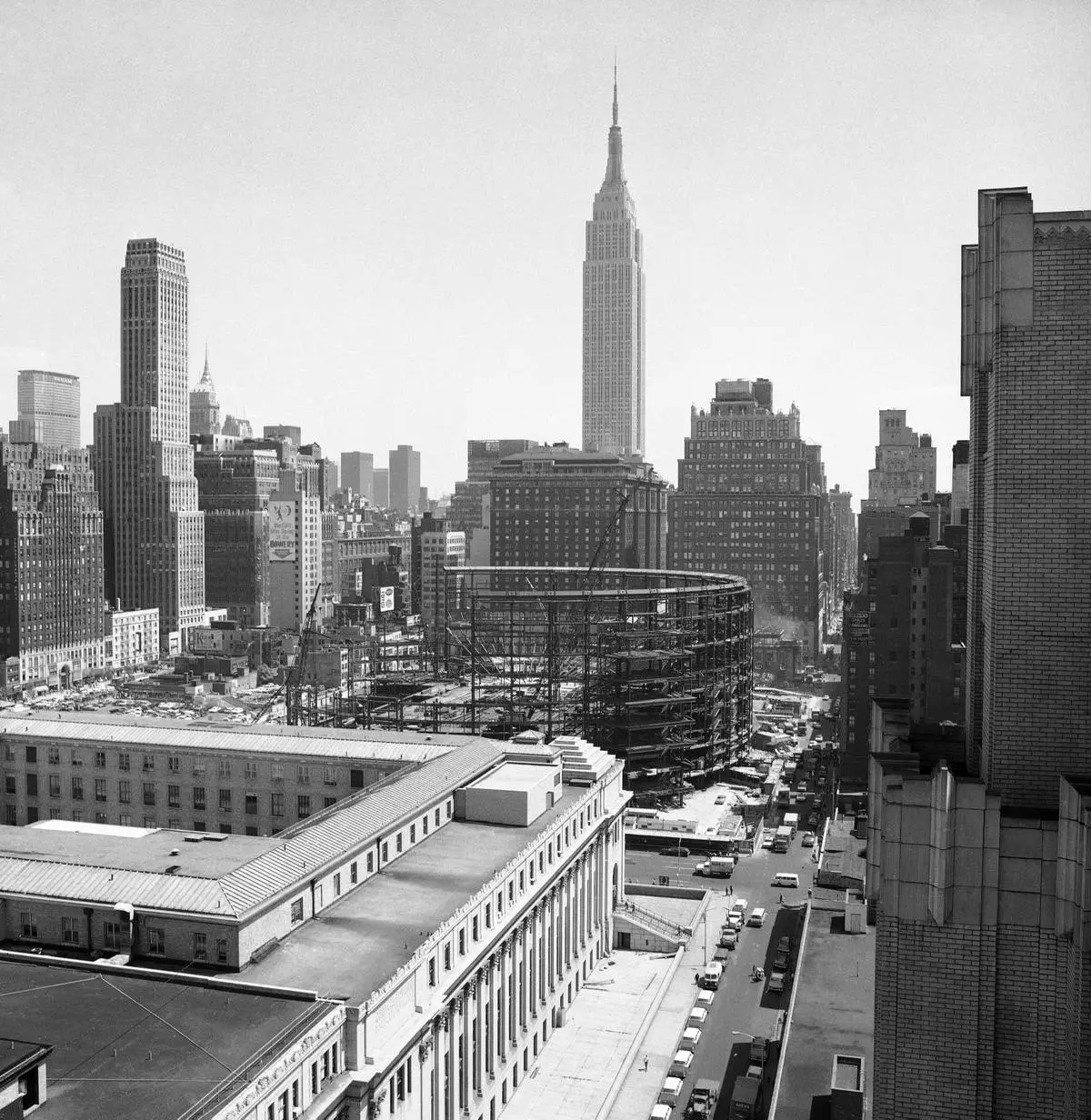
FILE - Structural steel that will become the new Madison Square Garden is constructed on the location of the demolished, historic Penn Station in New York City, Aug. 29, 1966. (AP Photo/Anthony Camerano, File)
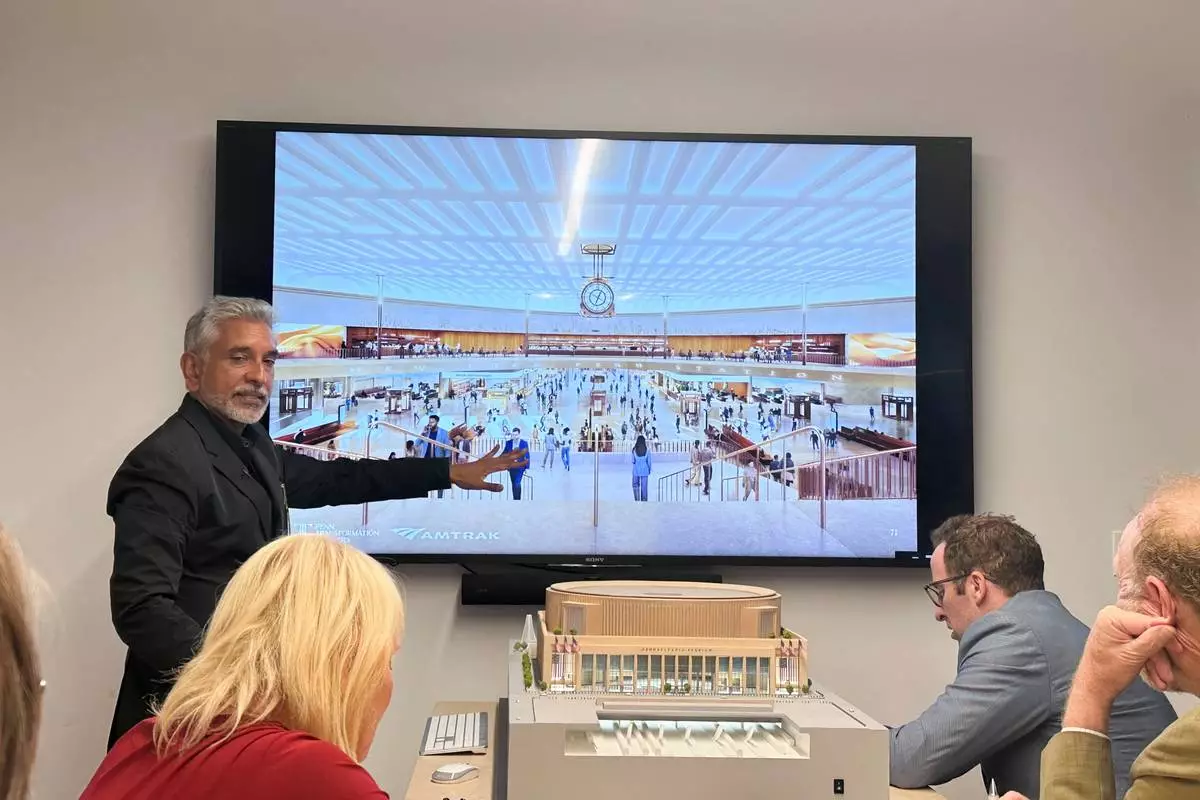
Vishaan Chakrabarti, one of the leaders of the team awarded the project to dramatically redesign New York City's Penn Station, presents architectural designs during a presentation Monday, June 8, 2026, in New York. (AP Photo/Philip Marcelo)
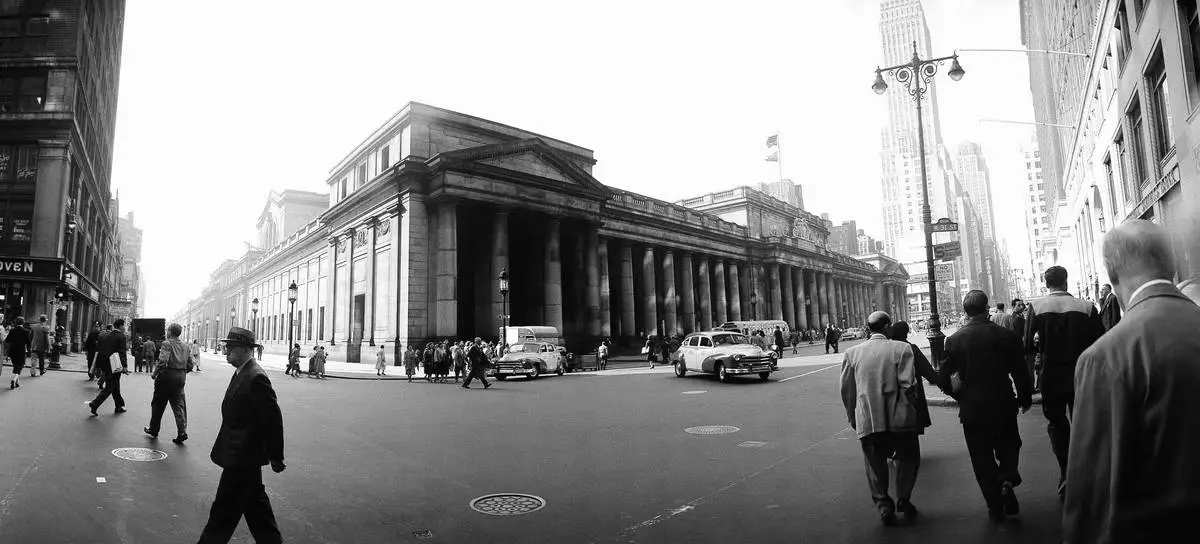
FILE - The old Penn Station in New York is shown in this June 3, 1955 wide-angle photo. (AP Photo/John Lent, File)
NEW YORK (AP) — Another sell-off for high-flying artificial-intelligence stocks is dragging Wall Street sharply lower on Tuesday.
The S&P 500 dropped 1.7% after careening between an early gain of 1% and a loss of 2.3%, sinking further from its all-time high set a week ago. The Nasdaq composite was 2.9% lower, and the Dow Jones Industrial Average was down 408 points, or 0.8%, as of 1 p.m. Eastern time.
Indexes swung lower as companies selling computer chips, memory and other building blocks of the AI boom broke from early gains to losses. Micron Technology went from a jump of 4.2% to a drop of 7.6%, for example. That's a day after it soared 9.9% and two days after it plunged 13.3%.
The computer memory company’s stock has already tripled so far this year, raising criticism that it’s gone too far, too fast. Following last week’s industrywide sell-off, the question is whether AI stocks broadly are heading for a long downturn or just needed a shake-out to get rid of excessive optimism.
Marvell Technology dropped 13.3%, and Advanced Micro Devices sank 8.7% after both AI winners also erased early-morning gains. Nvidia's fall of 3.1% was one of the heaviest weights on the S&P 500 because the chip company is Wall Street's largest company by value and thus its most influential.
All the while, several big-name AI companies are racing to list their stocks on a U.S. exchange and sell them at high prices. OpenAI, the maker of ChatGPT, said Monday it was the latest to file confidential paperwork with U.S. regulators for an initial public offering. SpaceX's IPO could happen later this week.
The weakness for AI stocks drowned out the benefit Wall Street got from easing oil prices. More stocks in the S&P 500 actually rose than fell, despite the sharp drop for the overall index, as the price for a barrel of Brent crude oil sank 2.7% to $91.66.
Oil prices have swung as hopes rise and fade that the United States and Iran can reach a deal to reopen the Strait of Hormuz. A reopening would allow oil tankers to resume delivering crude from the Persian Gulf to customers worldwide.
Oil prices pared their losses, though, after President Donald Trump said Iran was responsible for downing an American military helicopter near the Strait of Hormuz and that the United States “must” respond to the attack.
High oil prices caused by the war with Iran have already created a painful acceleration of inflation for U.S. shoppers. They have also pushed bond yields higher worldwide, raising the pressure on stock prices.
Treasury yields eased a bit Tuesday with the fade in oil prices. The yield on the 10-year Treasury fell to 4.54% from 4.56% late Monday. But it’s still well above its 3.97% level from just before the war with Iran.
The latest monthly updates on U.S. inflation will arrive later in the week, with one on consumer prices coming Wednesday and one on wholesale prices coming Thursday.
Inflation is high enough, and the U.S. job market looks strong enough, that traders on Wall Street largely expect the Federal Reserve will have to raise its main interest rate at least once by the end of this year. Higher interest rates would keep a lid on inflation, but they would also threaten to slow economies and undercut prices for stocks and all kinds of other investments.
The average long-term U.S. mortgage rate has already recently climbed to its highest level in nine months, and high costs to borrow money could discourage the building of AI data centers that are fueling the U.S. economy's growth.
On Wall Street, J.M. Smucker jumped 11.2% after reporting a stronger profit for the latest quarter than analysts expected.
The company behind the Folgers, Hostess and other brands benefited from higher prices charged for coffee and sweet baked goods. It joined the long list of U.S. companies delivering stronger profit growth than analysts expected, which has helped drive the S&P 500 to record after record this year.
Nuvalent soared 39.2% after GSK agreed to buy the biotech company for $10.6 billion. The shares of U.K.-based GSK that trade in New York added 0.9%.
In stock markets abroad, indexes dipped in Europe following bigger moves in Asia.
South Korea’s Kospi jumped 8.2% and nearly recovered Monday’s plunge of 8.3%. It’s been beholden to the performance of big tech stocks like SK Hynix and Samsung Electronics.
AP Business Writers Matt Ott and Elaine Kurtenbach contributed to this report.
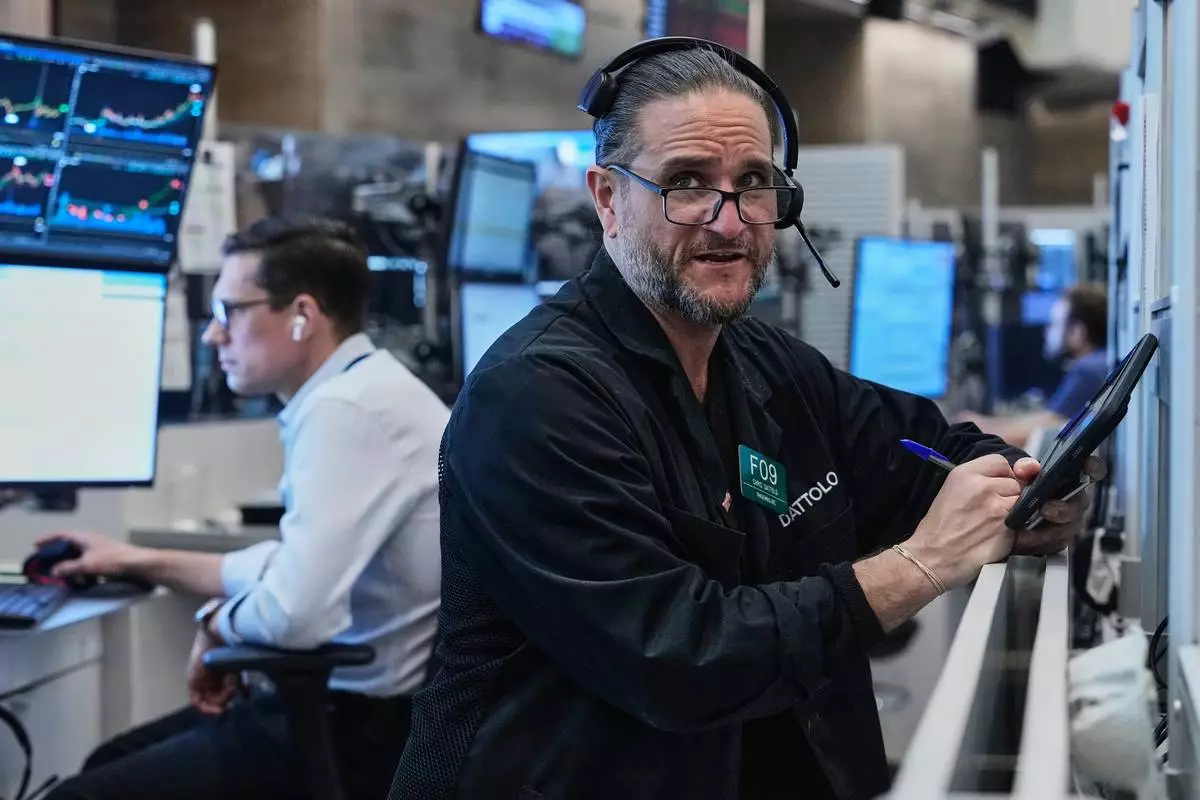
Options trader Chris Daytona, right, works on the floor of the New York Stock Exchange, Wednesday, June 3, 2026. (AP Photo/Richard Drew)
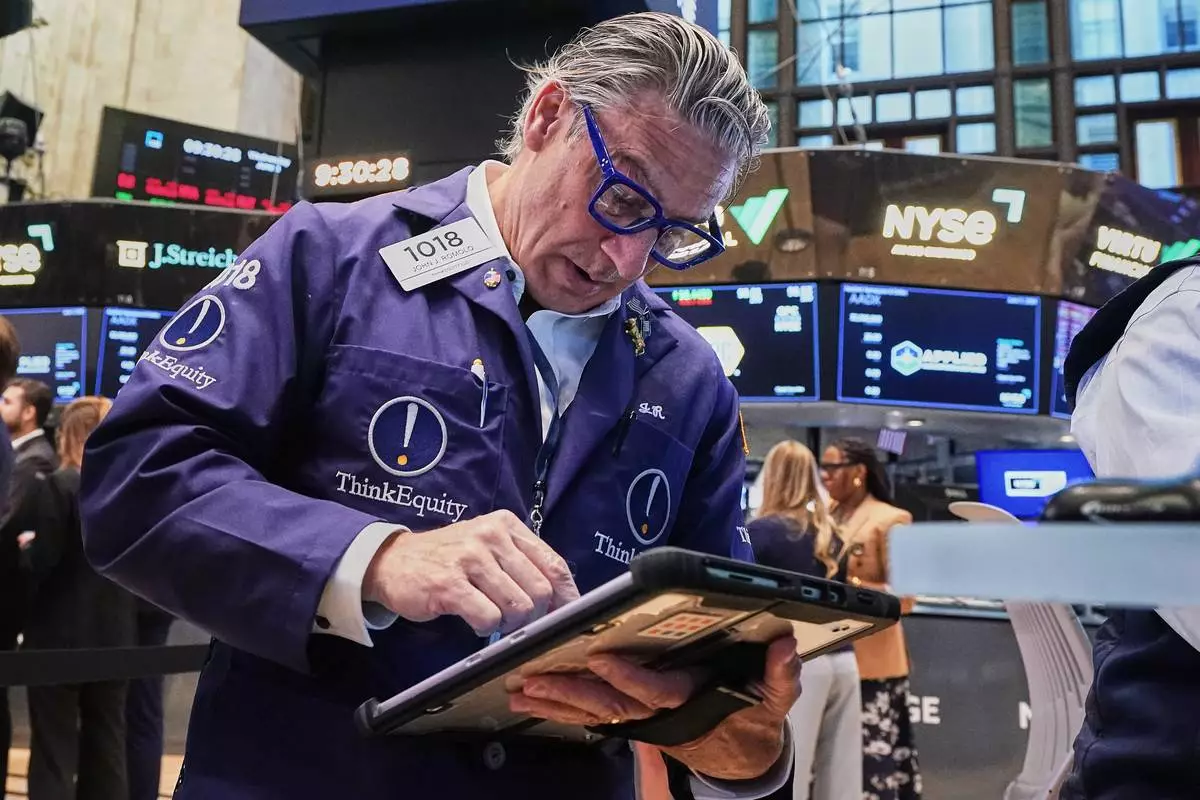
Trader John Romolo works on the floor of the New York Stock Exchange, Wednesday, June 3, 2026. (AP Photo/Richard Drew)
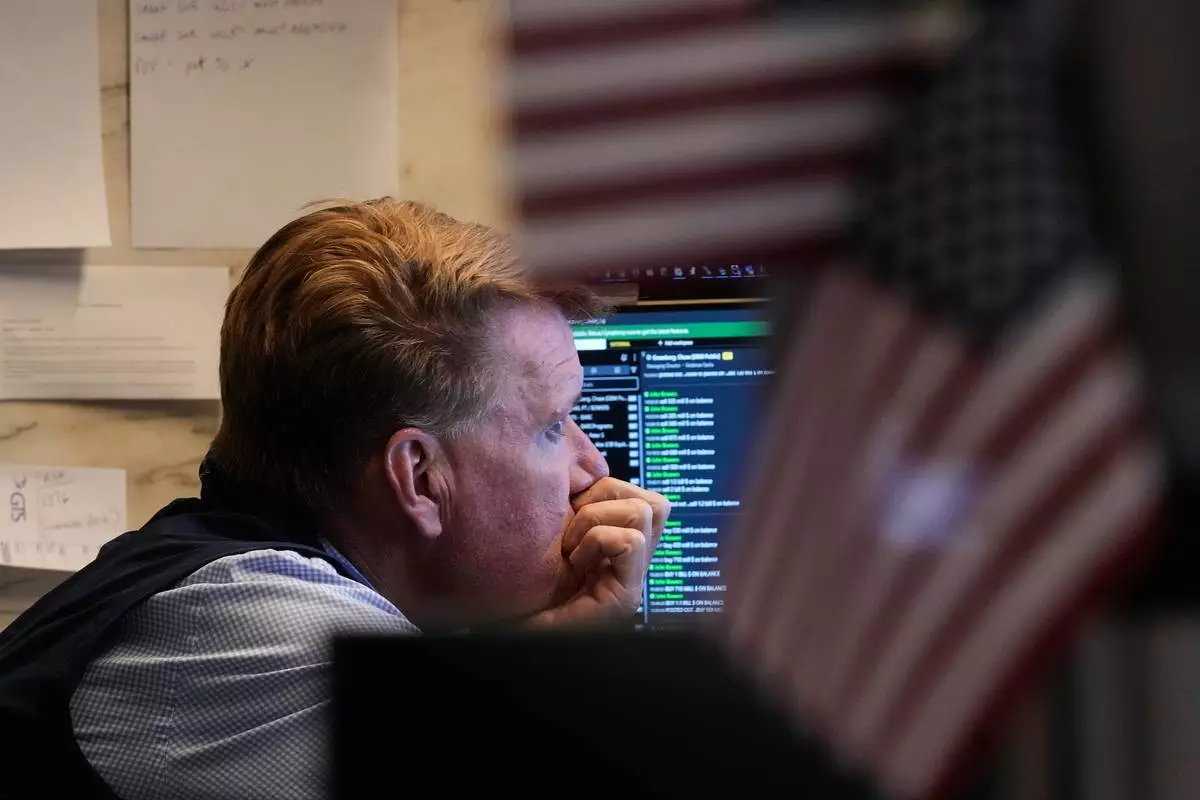
Trader John Bowers works on the floor of the New York Stock Exchange, Wednesday, June 3, 2026. (AP Photo/Richard Drew)
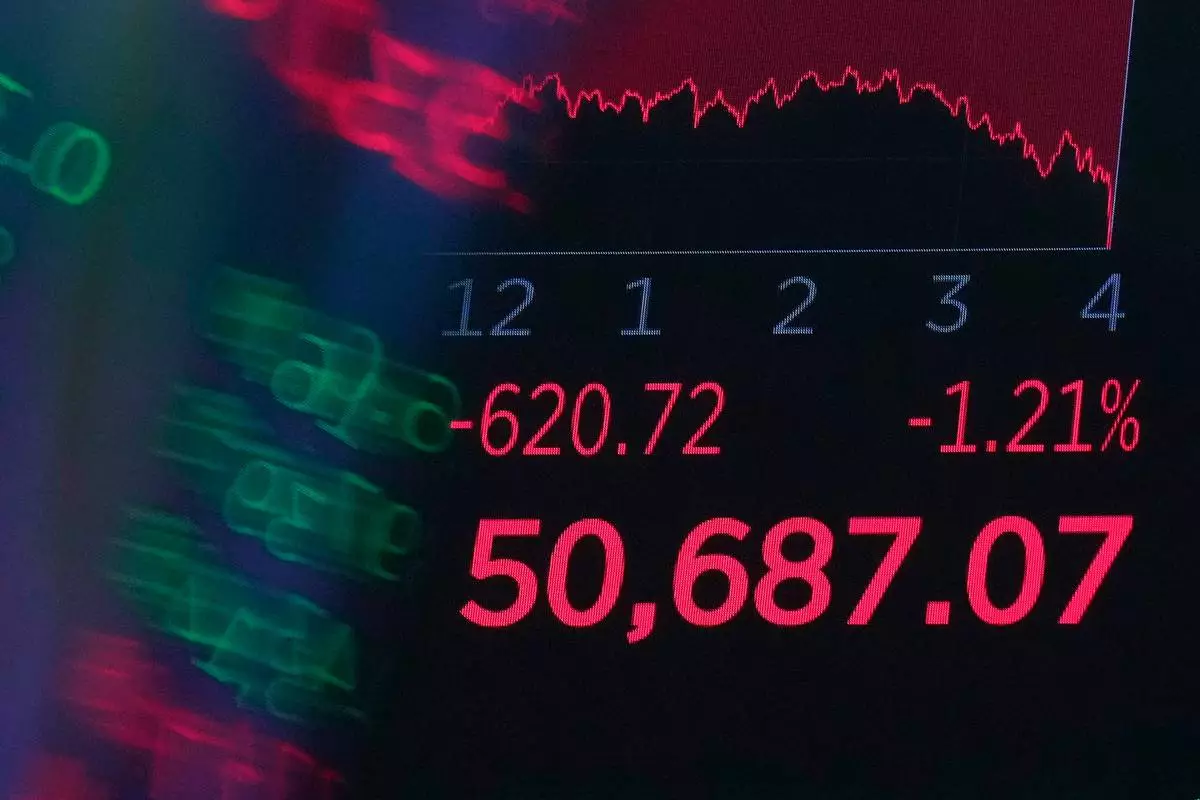
A board above the trading floor of the New York Stock Exchange displays the closing number for the Dow Jones industrial average, Wednesday, June 3, 2026. (AP Photo/Richard Drew)
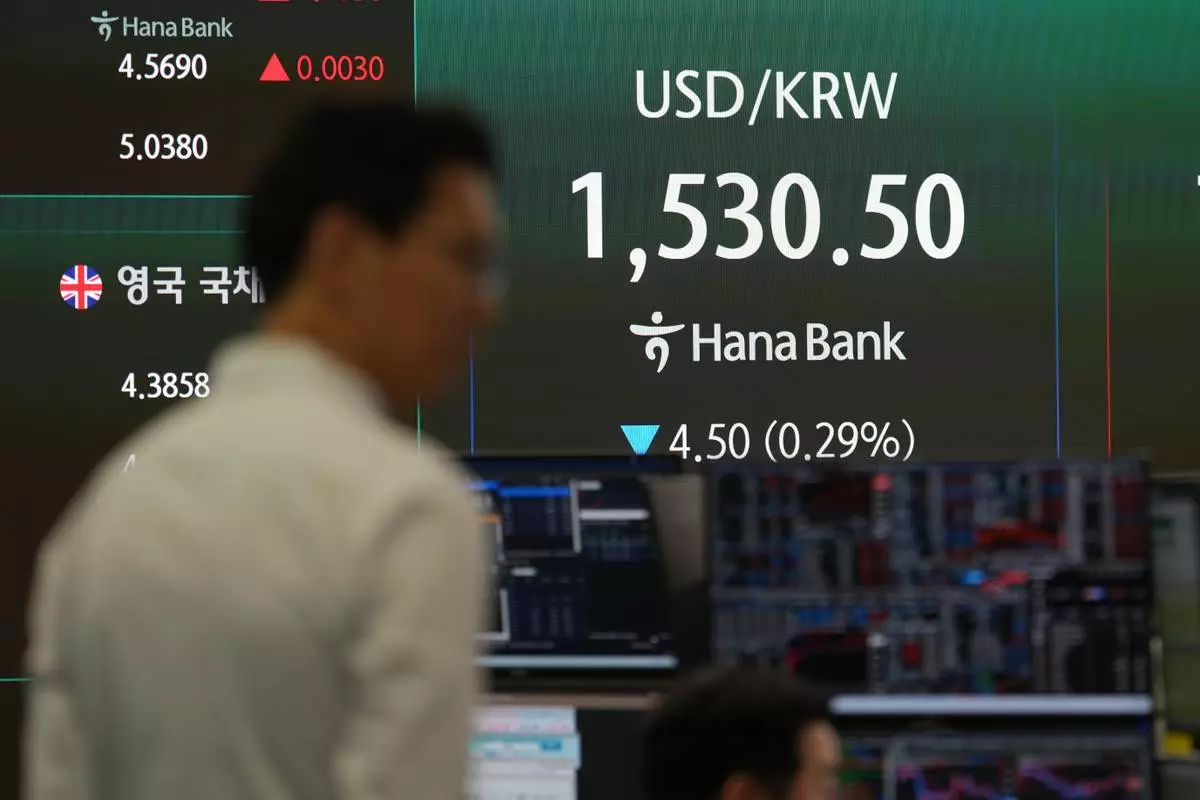
A dealer stands near the screens showing the foreign exchange rate between U.S. dollar and South Korean won at a dealing room of Hana Bank in Seoul, South Korea, Tuesday, June 9, 2026. (AP Photo/Lee Jin-man)

People stand near the screens showing the Korea Composite Stock Price Index (KOSPI) and the foreign exchange rate between U.S. dollar and South Korean won at a dealing room of Hana Bank in Seoul, South Korea, Tuesday, June 9, 2026. (AP Photo/Lee Jin-man)
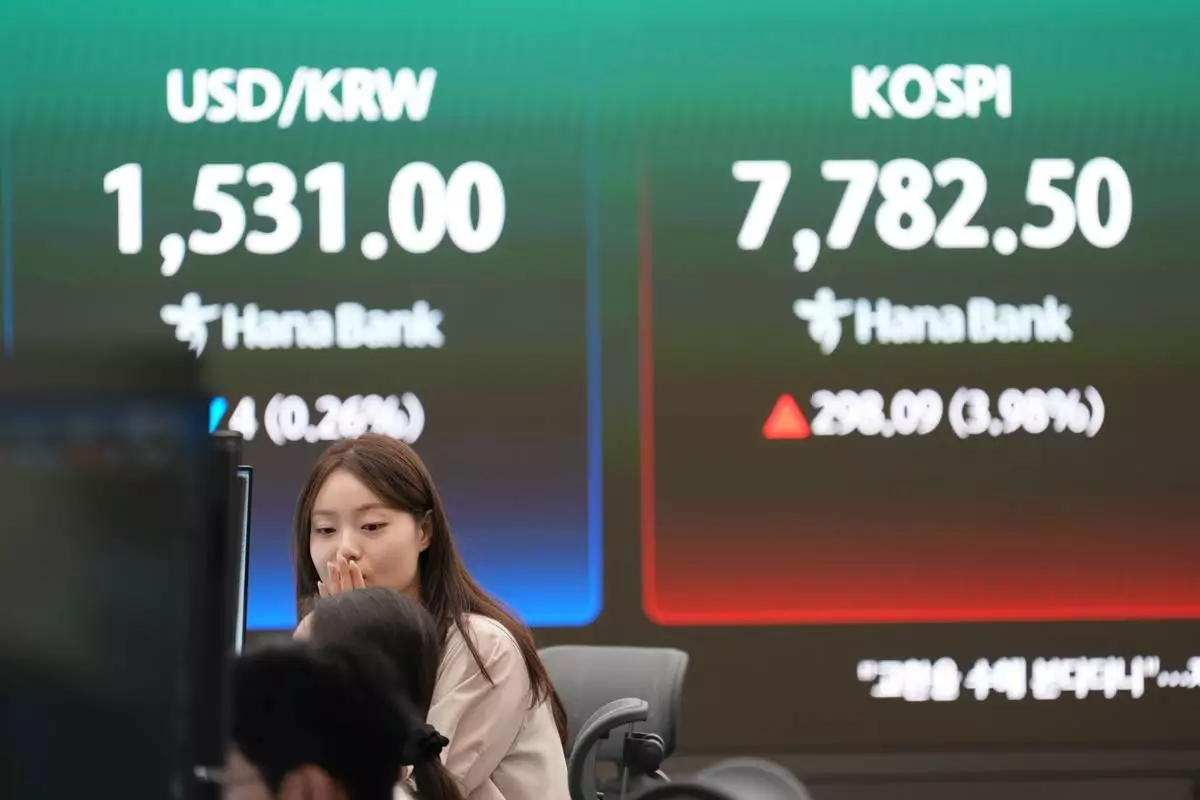
A dealer talks near the screens showing the Korea Composite Stock Price Index (KOSPI) and the foreign exchange rate between U.S. dollar and South Korean won at a dealing room of Hana Bank in Seoul, South Korea, Tuesday, June 9, 2026. (AP Photo/Lee Jin-man)
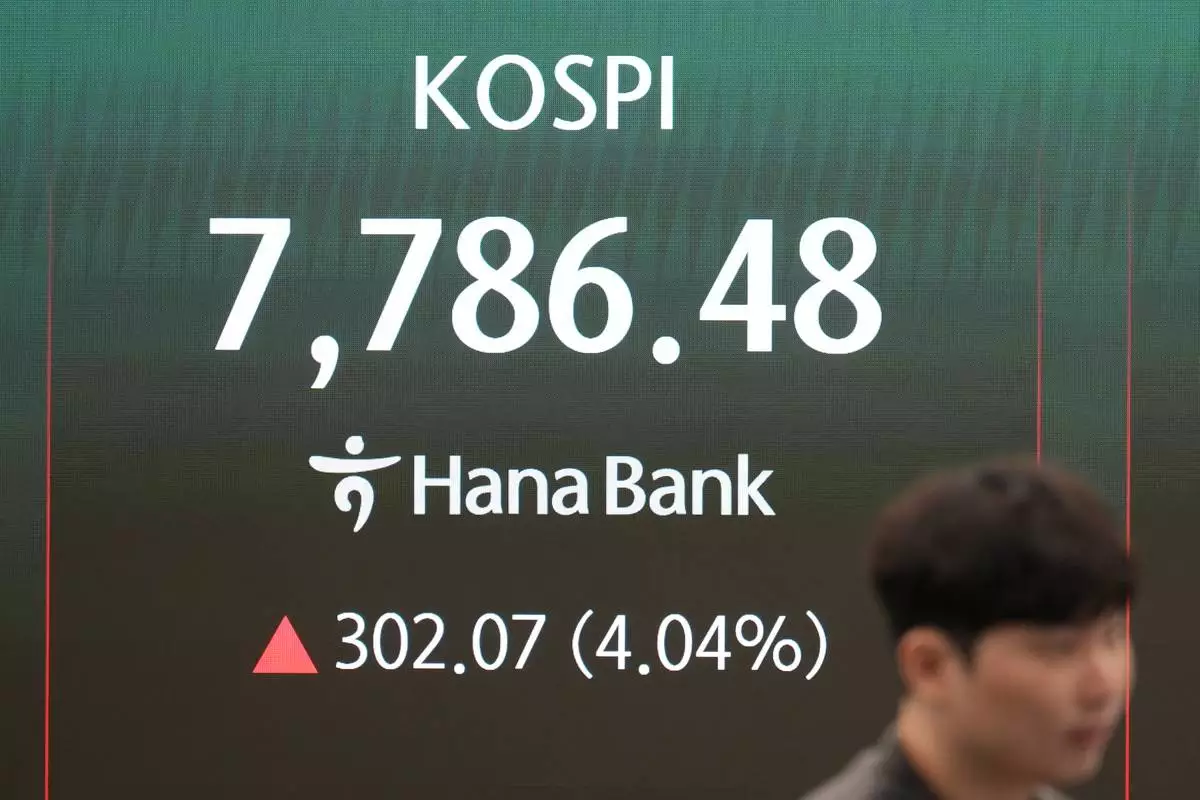
A dealer stands near the screen showing the Korea Composite Stock Price Index (KOSPI) at a dealing room of Hana Bank in Seoul, South Korea, Tuesday, June 9, 2026. (AP Photo/Lee Jin-man)