Skip to Content Facebook Feature Image

A banned group’s call for a strike halts business and transport across Pakistan-administered Kashmir

News

A banned group’s call for a strike halts business and transport across Pakistan-administered Kashmir
News

News

A banned group’s call for a strike halts business and transport across Pakistan-administered Kashmir

2026-06-09 22:35 Last Updated At:22:40

MUZAFFARABAD, Pakistan (AP) — Shops and businesses shut down, and public transport halted across Pakistan-administered Kashmir on Tuesday after a call for a strike by a recently banned group, known for violent protests.

The Joint Awami Action Committee 's call follows clashes on Sunday in the city of Rawalakot between the group's supporters and security personnel that left seven dead. The violence erupted after the Supreme Court of Pakistan-administered Kashmir ruled that 12 legislative seats reserved for Kashmiri refugees living in Pakistan are constitutionally protected and cannot be abolished without a constitutional amendment.

More Images
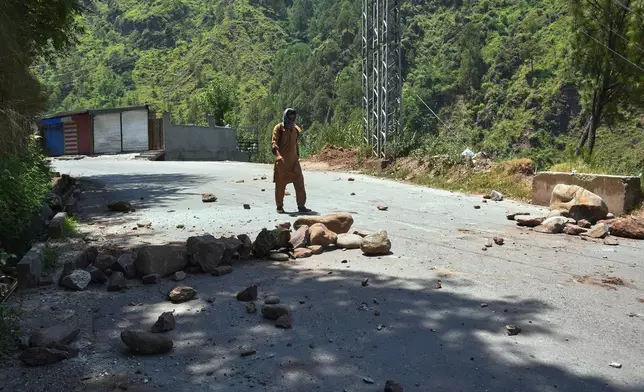
A local resident walks through a road barricaded with stones by protesters during a strike called by an outlawed alliance of activist groups "Joint Awami Action Committee" (JAAC) demanding greater political rights and the abolition of 12 legislative refugee seats, on the outskirts of Muzaffarabad, the capital of Pakistan-administered Kashmir, Tuesday, June 9, 2026. (AP Photo/M.D. Mughal)
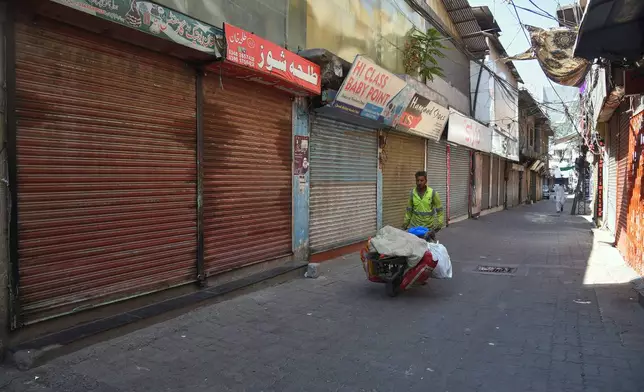
A local resident walks through a road barricaded with stones by protesters during a strike called by an outlawed alliance of activist groups "Joint Awami Action Committee" (JAAC) demanding greater political rights and the abolition of 12 legislative refugee seats, on the outskirts of Muzaffarabad, the capital of Pakistan-administered Kashmir, Tuesday, June 9, 2026. (AP Photo/M.D. Mughal)
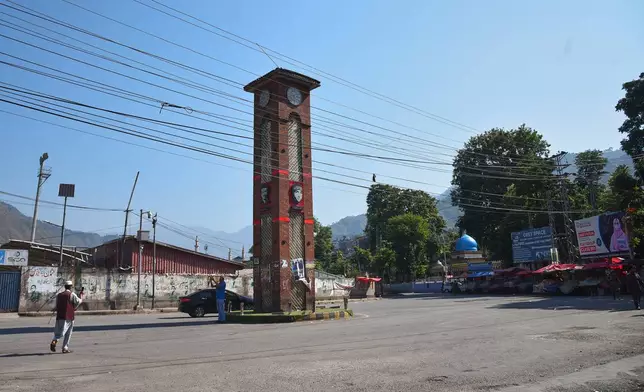
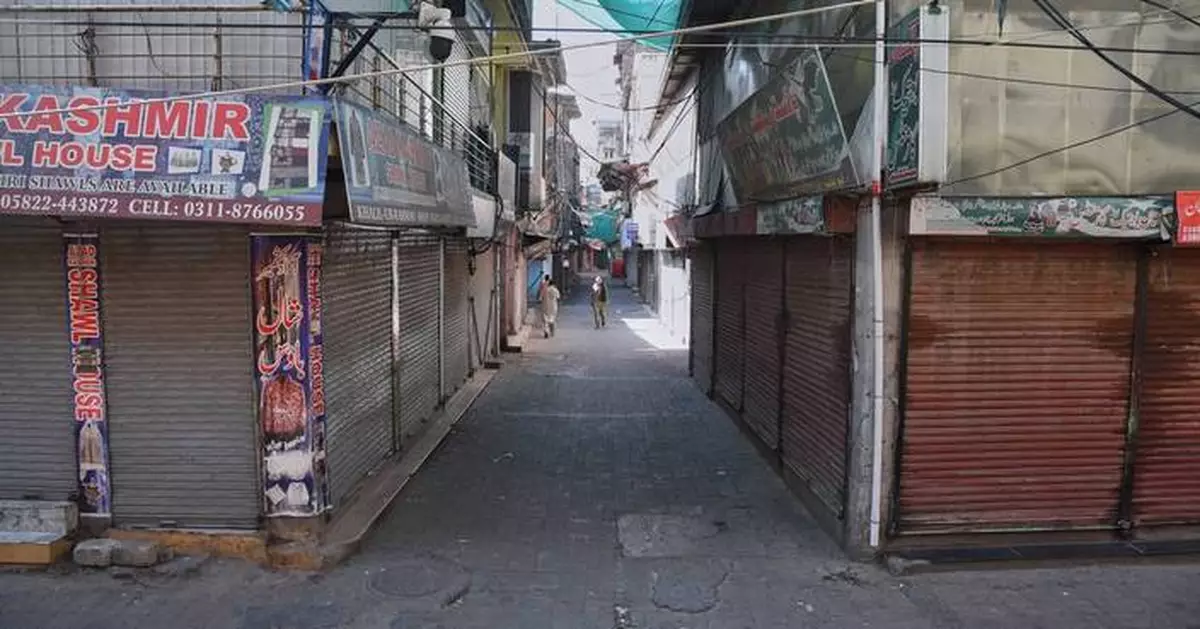
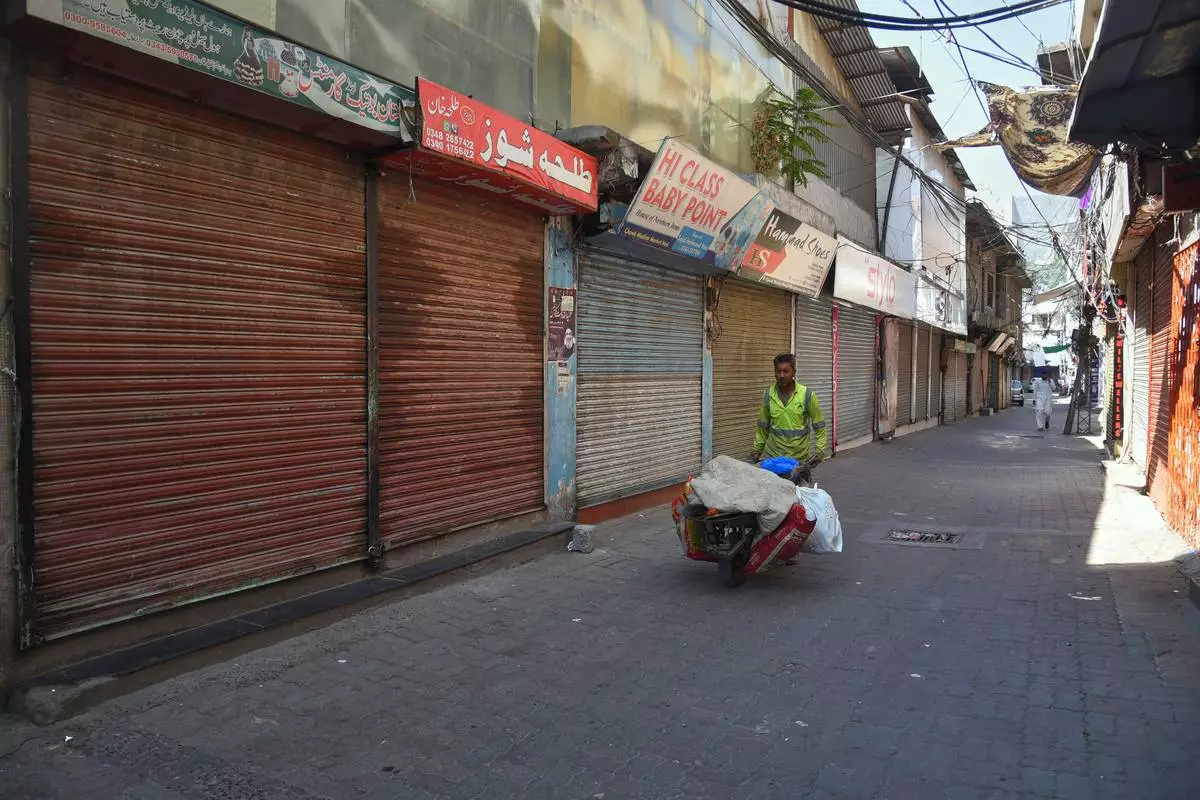
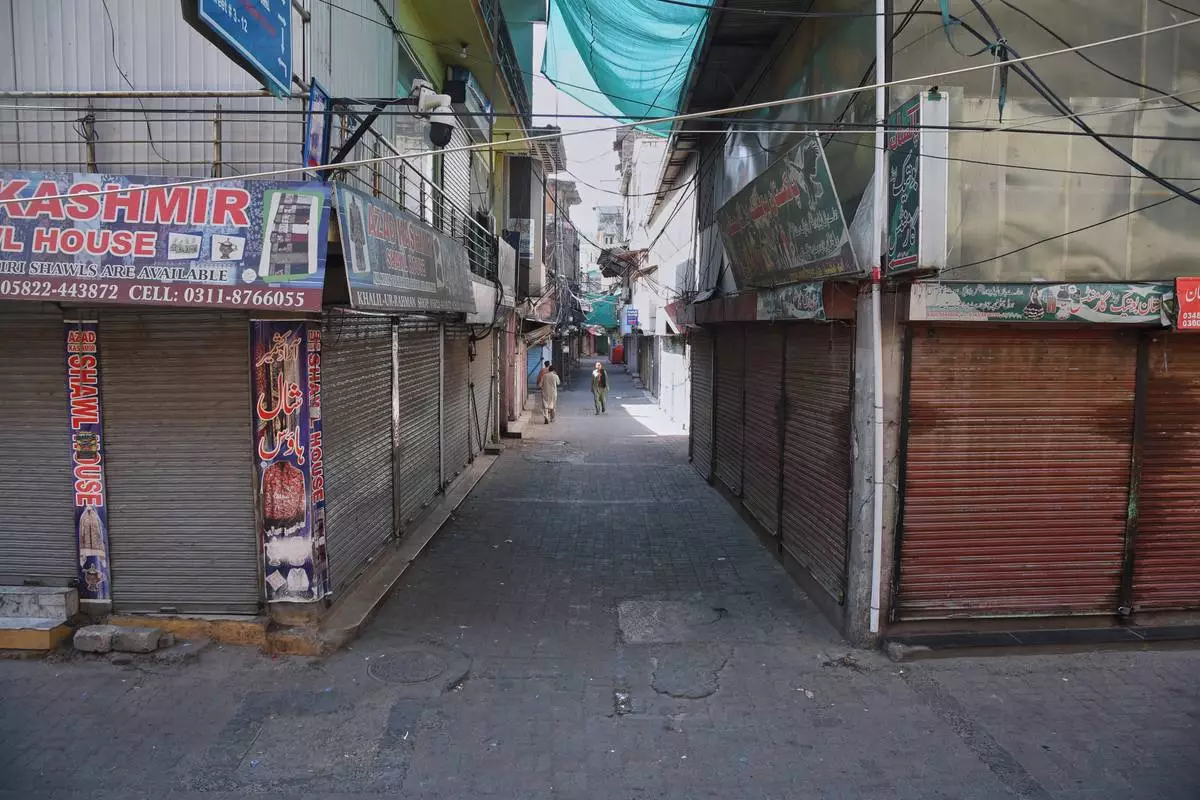
Local residents walk through a closed market during a strike called by an outlawed alliance of activist groups "Joint Awami Action Committee" (JAAC) demanding greater political rights and the abolition of 12 legislative refugee seats, in Muzaffarabad, the capital of Pakistan-administered Kashmir, Tuesday, June 9, 2026. (AP Photo/M.D. Mughal)
Local residents walk through a closed market during a strike called by an outlawed alliance of activist groups "Joint Awami Action Committee" (JAAC) demanding greater political rights and the abolition of 12 legislative refugee seats, in Muzaffarabad, the capital of Pakistan-administered Kashmir, Tuesday, June 9, 2026. (AP Photo/M.D. Mughal)
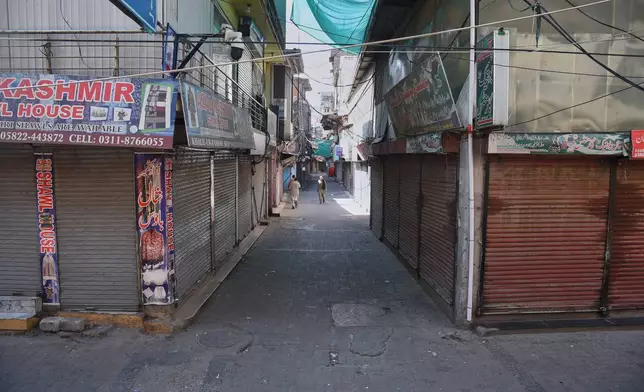
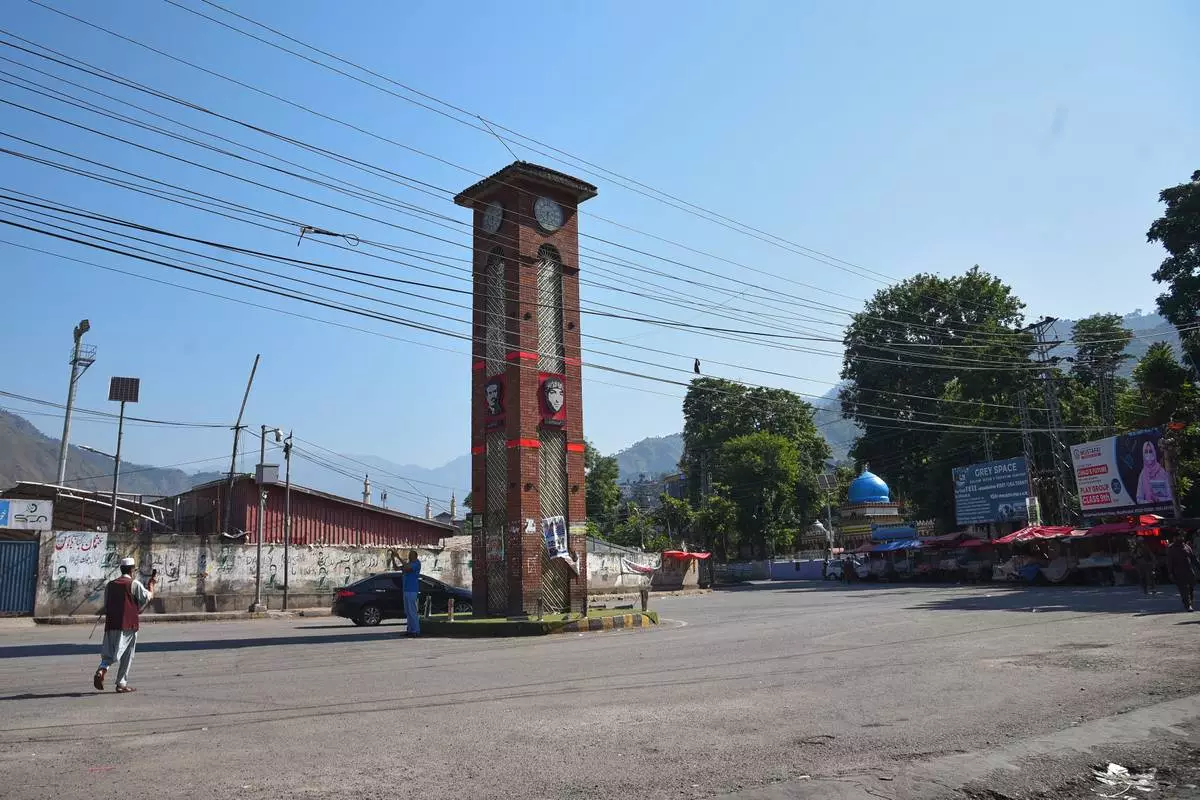
Local residents walk on an empty road during a strike called by an outlawed alliance of activist groups "Joint Awami Action Committee" (JAAC) demanding greater political rights and the abolition of 12 legislative refugee seats, in Muzaffarabad, the capital of Pakistan-administered Kashmir, Tuesday, June 9, 2026. (AP Photo/M.D. Mughal)

Local residents walk on an empty road during a strike called by an outlawed alliance of activist groups "Joint Awami Action Committee" (JAAC) demanding greater political rights and the abolition of 12 legislative refugee seats, in Muzaffarabad, the capital of Pakistan-administered Kashmir, Tuesday, June 9, 2026. (AP Photo/M.D. Mughal)

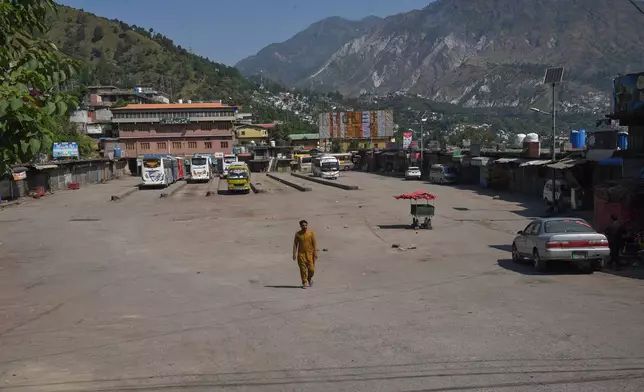
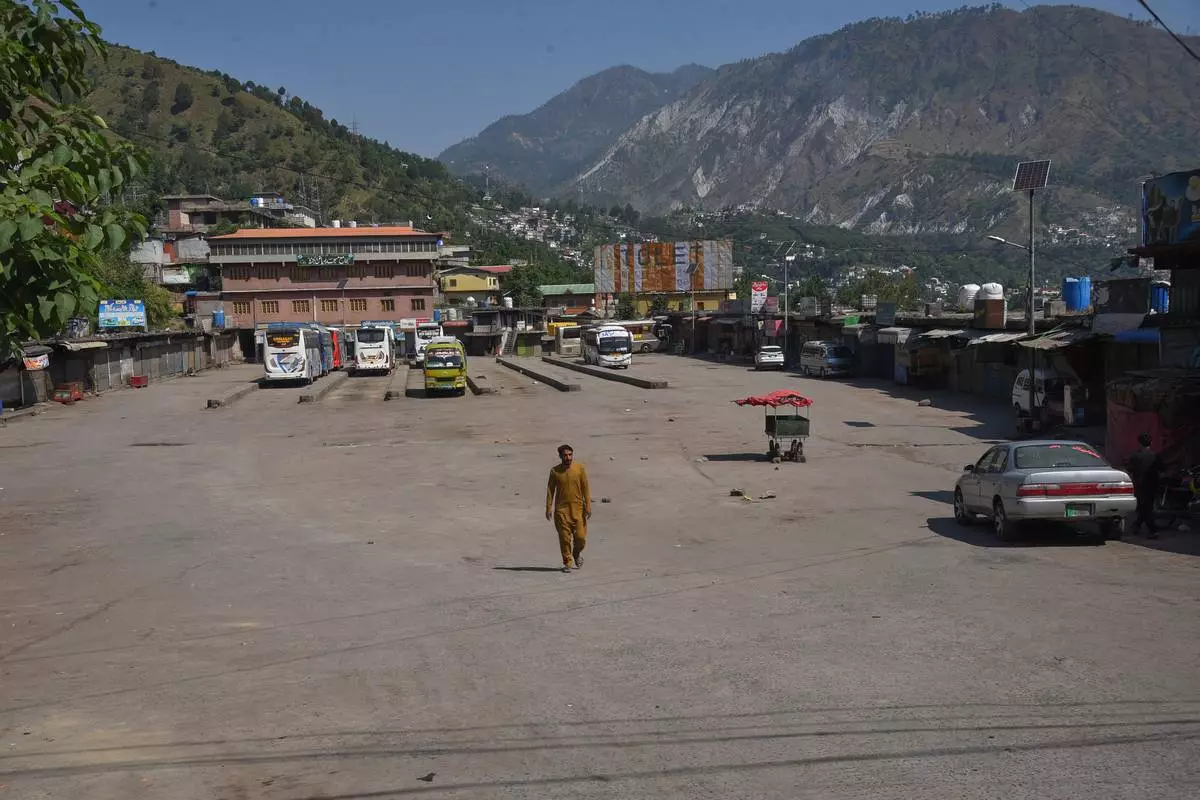
A local resident walks through a deserted bus terminal during a strike called by an outlawed alliance of activist groups "Joint Awami Action Committee" (JAAC) demanding greater political rights and the abolition of 12 legislative refugee seats, in Muzaffarabad, the capital of Pakistan-administered Kashmir, Tuesday, June 9, 2026. (AP Photo/M.D. Mughal)

A local resident walks through a deserted bus terminal during a strike called by an outlawed alliance of activist groups "Joint Awami Action Committee" (JAAC) demanding greater political rights and the abolition of 12 legislative refugee seats, in Muzaffarabad, the capital of Pakistan-administered Kashmir, Tuesday, June 9, 2026. (AP Photo/M.D. Mughal)

Local residents walk through a closed market during a strike called by an outlawed alliance of activist groups "Joint Awami Action Committee" (JAAC) demanding greater political rights and the abolition of 12 legislative refugee seats, in Muzaffarabad, the capital of Pakistan-administered Kashmir, Tuesday, June 9, 2026. (AP Photo/M.D. Mughal)

Local residents walk through a closed market during a strike called by an outlawed alliance of activist groups "Joint Awami Action Committee" (JAAC) demanding greater political rights and the abolition of 12 legislative refugee seats, in Muzaffarabad, the capital of Pakistan-administered Kashmir, Tuesday, June 9, 2026. (AP Photo/M.D. Mughal)

The JAAC, formed in 2003, demands greater political rights for the people of Kashmir and the abolition of the refugee seats.

Residents of the regional capital, Muzaffarabad, and other towns told The Associated Press markets were largely empty and bus terminals deserted on Tuesday. However, it wasn’t clear if people were taking part in the strike or avoiding public spaces out of fear of renewed clashes.

Authorities have deployed additional police and security personnel in the region and suspended internet services in major cities to prevent people from joining the march.

The group called for Tuesday's “long march” from Rawalakot to Muzaffarabad and a strike before the recent violence. Witnesses said thousands of supporters gathered in the eastern city of Mirpur to travel to Rawalakot, where Shaukat Nawaz Mir and other JAAC leaders were expected to begin the march toward Muzaffarabad.

The regional government ordered on Tuesday sedition charges be filed against Mir and another leader of the group, Mehran Arshad Khawaja, accusing them of inciting rebellion through speeches and online content.

Both have been prominent figures in anti-government protests in the region in recent years.

Earlier on Tuesday, the government announced a reward of 10 million rupees ($35,000) for information leading to the arrest of four wanted members of the group, including Mir, and said the identities of informants would remain confidential.

Meanwhile, police said they “arrested five suspects” during a raid in Muzaffarabad and seized weapons and hand grenades. The statement said an investigation was ongoing and that preliminary evidence suggested some of the five were in contact with “a hostile intelligence agency from a neighboring country,” without providing further details.

Police and the regional government accused armed supporters of the JAAC of opening fire on officers during Sunday’s clashes, the deadliest the region has seen in years. During similar unrest last year, several officers were abducted and tortured after being taken captive.

The regional government banned the JAAC last week, citing concerns about public order and security, and detained dozens of its supporters.

Regional Prime Minister Faisal Mumtaz Rathore said Monday he remained open to talks with the group’s representatives. He said the government had accepted most of the JAAC’s demands during last year's negotiations, except for the abolition of refugee seats and the end of benefits given to government officials and ministers, which, due to constitutional constraints, have to be addressed by the Legislative Assembly.

The refugee seats are kept for people who migrated to Pakistan from Indian-controlled Kashmir decades ago and are intended to represent communities displaced by the long-running conflict over the Himalayan region. The JAAC argues that they give disproportionate influence to people living outside the territory.

The Himalayan region of Kashmir is divided between Pakistan and India, both of which claim it in its entirety and have fought two wars over the territory since gaining independence from British rule in 1947.

Tensions have been rising for weeks ahead of elections scheduled for next month.

The current Legislative Assembly has completed its term, and political debate has intensified over the future of the refugee seats following the court ruling.
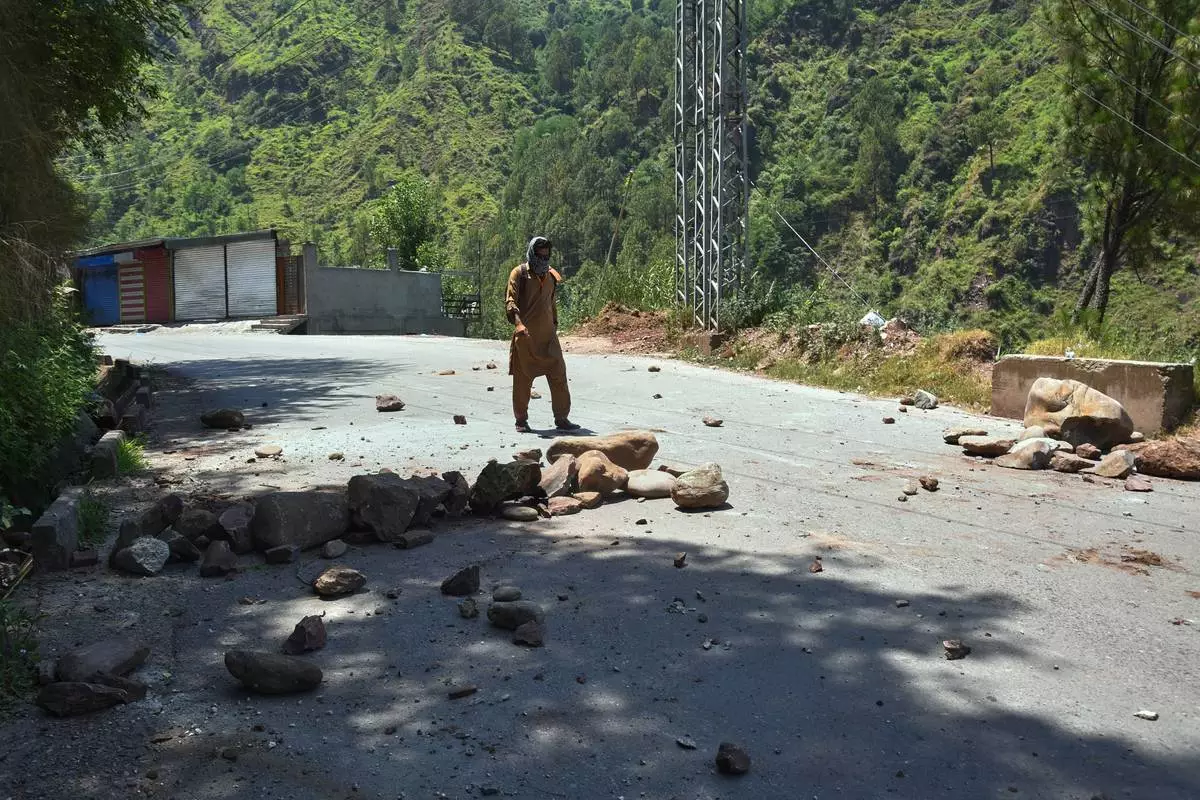
A local resident walks through a road barricaded with stones by protesters during a strike called by an outlawed alliance of activist groups "Joint Awami Action Committee" (JAAC) demanding greater political rights and the abolition of 12 legislative refugee seats, on the outskirts of Muzaffarabad, the capital of Pakistan-administered Kashmir, Tuesday, June 9, 2026. (AP Photo/M.D. Mughal)
A local resident walks through a road barricaded with stones by protesters during a strike called by an outlawed alliance of activist groups "Joint Awami Action Committee" (JAAC) demanding greater political rights and the abolition of 12 legislative refugee seats, on the outskirts of Muzaffarabad, the capital of Pakistan-administered Kashmir, Tuesday, June 9, 2026. (AP Photo/M.D. Mughal)
Local residents walk through a closed market during a strike called by an outlawed alliance of activist groups "Joint Awami Action Committee" (JAAC) demanding greater political rights and the abolition of 12 legislative refugee seats, in Muzaffarabad, the capital of Pakistan-administered Kashmir, Tuesday, June 9, 2026. (AP Photo/M.D. Mughal)
Local residents walk through a closed market during a strike called by an outlawed alliance of activist groups "Joint Awami Action Committee" (JAAC) demanding greater political rights and the abolition of 12 legislative refugee seats, in Muzaffarabad, the capital of Pakistan-administered Kashmir, Tuesday, June 9, 2026. (AP Photo/M.D. Mughal)
Local residents walk on an empty road during a strike called by an outlawed alliance of activist groups "Joint Awami Action Committee" (JAAC) demanding greater political rights and the abolition of 12 legislative refugee seats, in Muzaffarabad, the capital of Pakistan-administered Kashmir, Tuesday, June 9, 2026. (AP Photo/M.D. Mughal)

Local residents walk on an empty road during a strike called by an outlawed alliance of activist groups "Joint Awami Action Committee" (JAAC) demanding greater political rights and the abolition of 12 legislative refugee seats, in Muzaffarabad, the capital of Pakistan-administered Kashmir, Tuesday, June 9, 2026. (AP Photo/M.D. Mughal)
A local resident walks through a deserted bus terminal during a strike called by an outlawed alliance of activist groups "Joint Awami Action Committee" (JAAC) demanding greater political rights and the abolition of 12 legislative refugee seats, in Muzaffarabad, the capital of Pakistan-administered Kashmir, Tuesday, June 9, 2026. (AP Photo/M.D. Mughal)
A local resident walks through a deserted bus terminal during a strike called by an outlawed alliance of activist groups "Joint Awami Action Committee" (JAAC) demanding greater political rights and the abolition of 12 legislative refugee seats, in Muzaffarabad, the capital of Pakistan-administered Kashmir, Tuesday, June 9, 2026. (AP Photo/M.D. Mughal)
Local residents walk through a closed market during a strike called by an outlawed alliance of activist groups "Joint Awami Action Committee" (JAAC) demanding greater political rights and the abolition of 12 legislative refugee seats, in Muzaffarabad, the capital of Pakistan-administered Kashmir, Tuesday, June 9, 2026. (AP Photo/M.D. Mughal)
Local residents walk through a closed market during a strike called by an outlawed alliance of activist groups "Joint Awami Action Committee" (JAAC) demanding greater political rights and the abolition of 12 legislative refugee seats, in Muzaffarabad, the capital of Pakistan-administered Kashmir, Tuesday, June 9, 2026. (AP Photo/M.D. Mughal)
NEW YORK (AP) — The U.S. stock market is ticking higher Tuesday as artificial-intelligence stocks regain more of their sudden and sharp losses from last week, while oil prices ease.

The S&P 500 rose 0.2% and pulled back within 2.5% of its all-time high set a week ago. The Dow Jones Industrial Average was up 195 points, or 0.4%, as of 10:15 a.m. Eastern time, and the Nasdaq composite was close to flat.

Companies selling computer chips, memory and other building blocks of the AI boom again helped lift the market.

Micron Technology rose 0.7%, for example, a day after jumping 9.9% and two days after plunging 13.3%. The computer memory company’s stock has already tripled so far this year, raising criticism that it’s gone too far, too fast. Following last week’s industrywide sell-off, the question is whether AI stocks are heading for a long downturn or just needed a shake-out to get rid of excessive optimism.

The biggest gain in the S&P 500 came from J.M. Smucker, which jumped 11.5% after reporting a stronger profit for the latest quarter than analysts expected. The company behind the Folgers, Hostess and other brands benefited from higher prices charged for coffee and sweet baked goods. It joined the long list of U.S. companies delivering stronger profit growth than analysts expected, which has helped drive the S&P 500 to record after record this year.

Nuvalent soared 38.8% after GSK agreed to buy the biotech company for $10.6 billion. The shares of U.K.-based GSK that trade in New York added 0.6%.

Wall Street, meanwhile, got some relief from falling oil prices. The price for a barrel of Brent crude oil dropped 3.3% to $91.14 after briefly topping $98 the day before.

Prices have swung up and down as hopes fade and rise that the United States and Iran can reach a deal to reopen the Strait of Hormuz. That would allow oil tankers to resume delivering crude from the Persian Gulf to customers.

The drop in oil prices helped stocks of airlines, which have been punished by soaring fuel costs. U.S. airlines spent more than $6 billion on jet fuel in April, up 78% from a year earlier, according to government data. United Airlines rose 3%, and Delta Air Lines climbed 2.8%.

To make up for their higher fuel bills, airlines have been raising their own airfares. It’s part of the broad, painful acceleration of inflation hitting U.S. shoppers because of the war with Iran. The high oil prices are also pushing up bond yields worldwide, raising the pressure on stock prices.

Treasury yields eased a bit Tuesday with the fade in oil prices. The yield on the 10-year Treasury dipped to 4.54% from 4.56% late Monday. But it’s still well above its 3.97% level from just before the war with Iran.

The latest monthly updates on U.S. inflation will arrive later in the week, with one on consumer prices coming Wednesday and one on wholesale prices coming Thursday.

Inflation is high enough, and the U.S. job market looks strong enough, that traders on Wall Street largely expect the Federal Reserve will have to raise its main interest rate at least once by the end of this year. Higher interest rates would keep a lid on inflation, but they would also threaten to slow economies and undercut prices for stocks and all kinds of other investments.

The average long-term U.S. mortgage rate has already recently climbed to its highest level in nine months, and high costs to borrow money could discourage the building of AI data centers that are fueling the U.S. economy's growth.

In stock markets abroad, indexes rose in much of Europe following bigger moves in Asia.

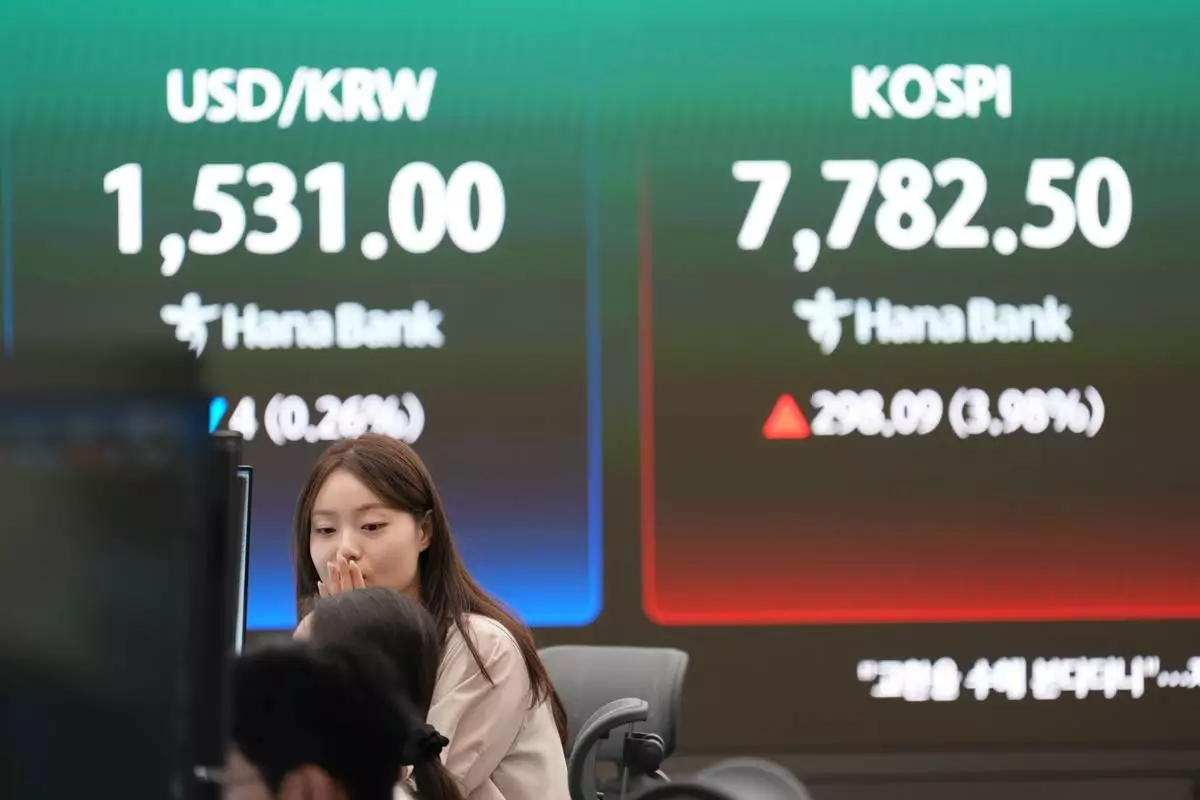
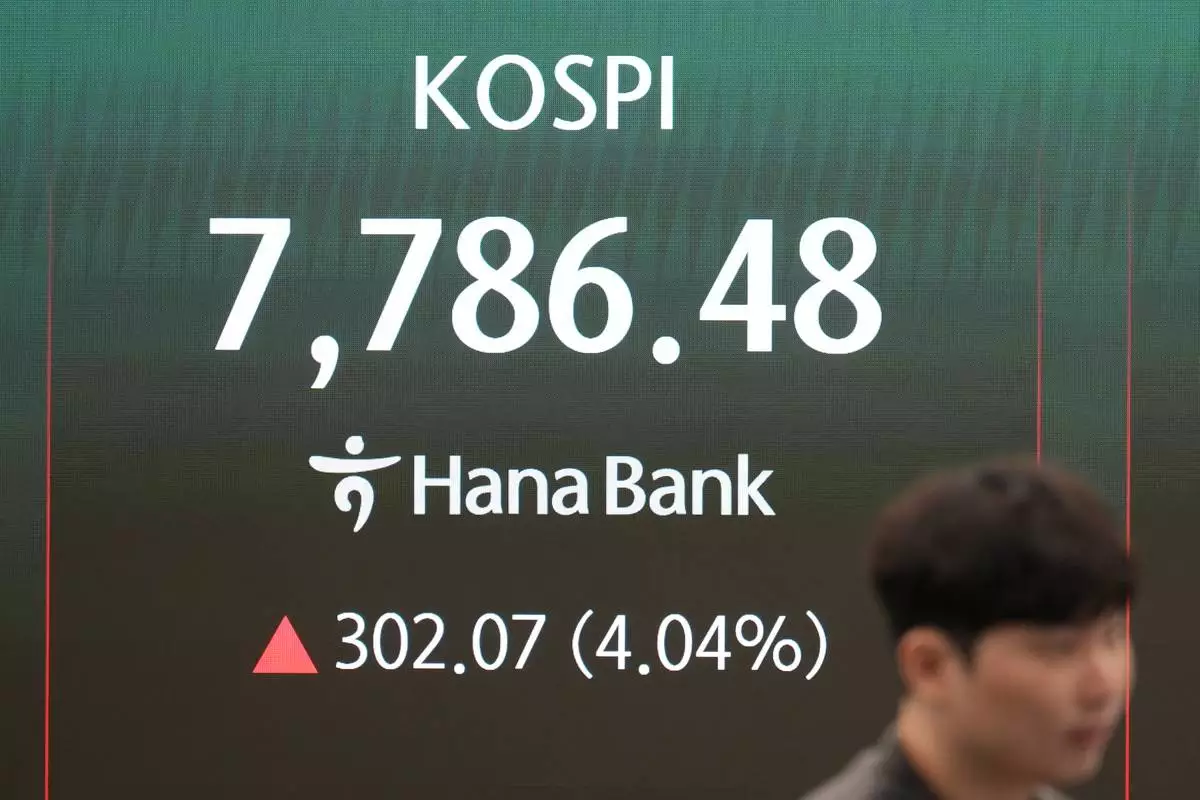
South Korea’s Kospi jumped 8.2% and nearly recovered Monday’s plunge of 8.3%. It’s been beholden to the performance of big tech stocks like SK Hynix and Samsung Electronics.

AP Business Writers Matt Ott and Elaine Kurtenbach contributed to this report.

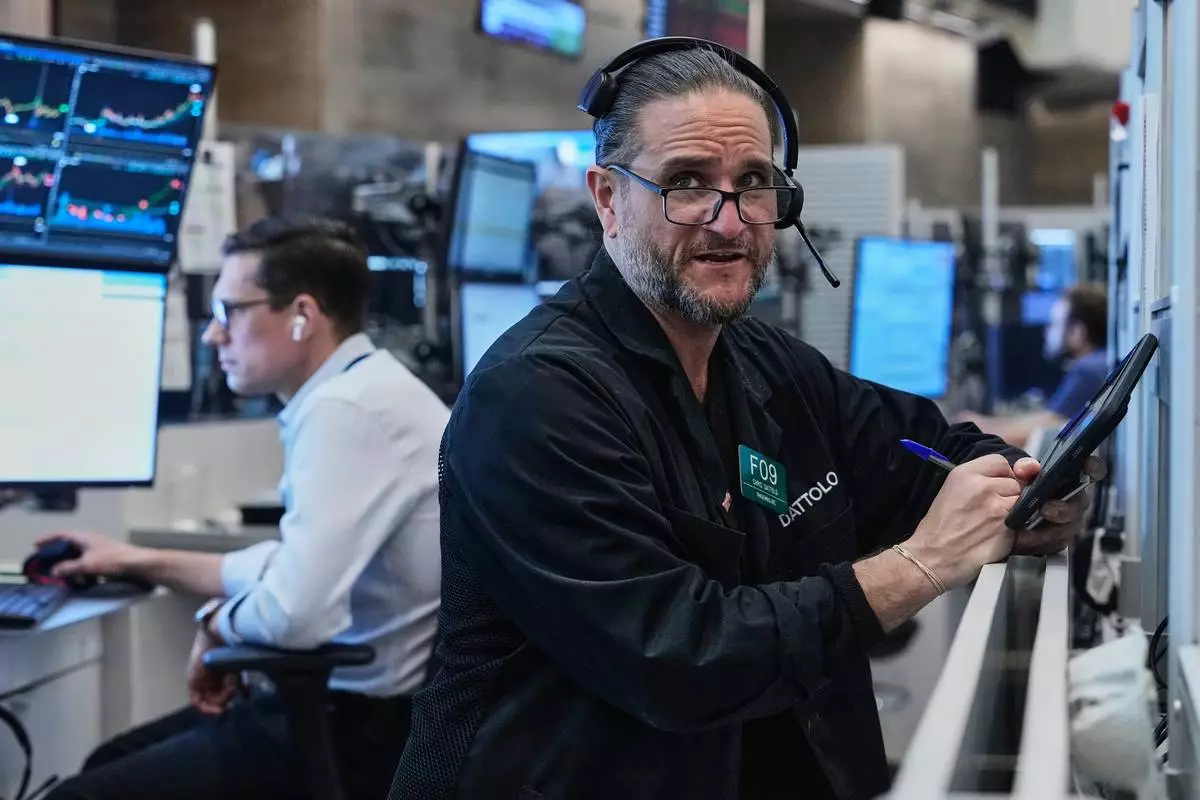
Options trader Chris Daytona, right, works on the floor of the New York Stock Exchange, Wednesday, June 3, 2026. (AP Photo/Richard Drew)

Options trader Chris Daytona, right, works on the floor of the New York Stock Exchange, Wednesday, June 3, 2026. (AP Photo/Richard Drew)

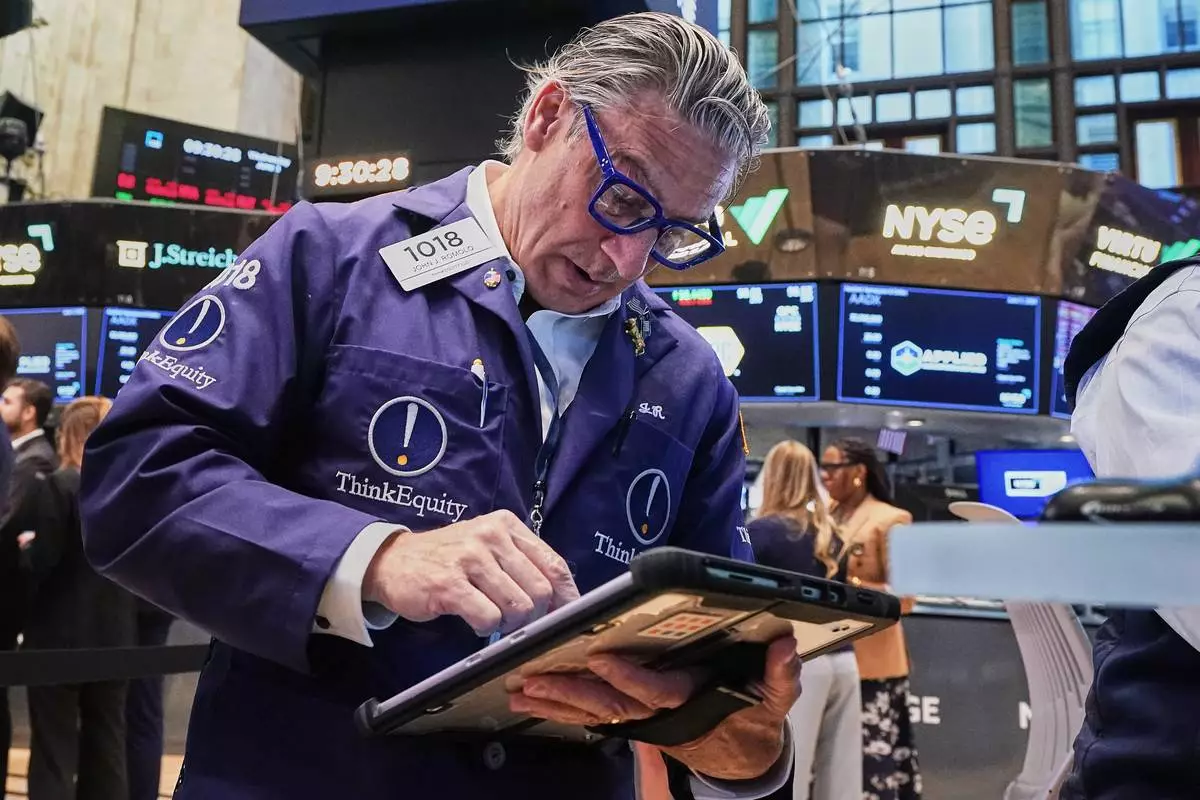
Trader John Romolo works on the floor of the New York Stock Exchange, Wednesday, June 3, 2026. (AP Photo/Richard Drew)

Trader John Romolo works on the floor of the New York Stock Exchange, Wednesday, June 3, 2026. (AP Photo/Richard Drew)

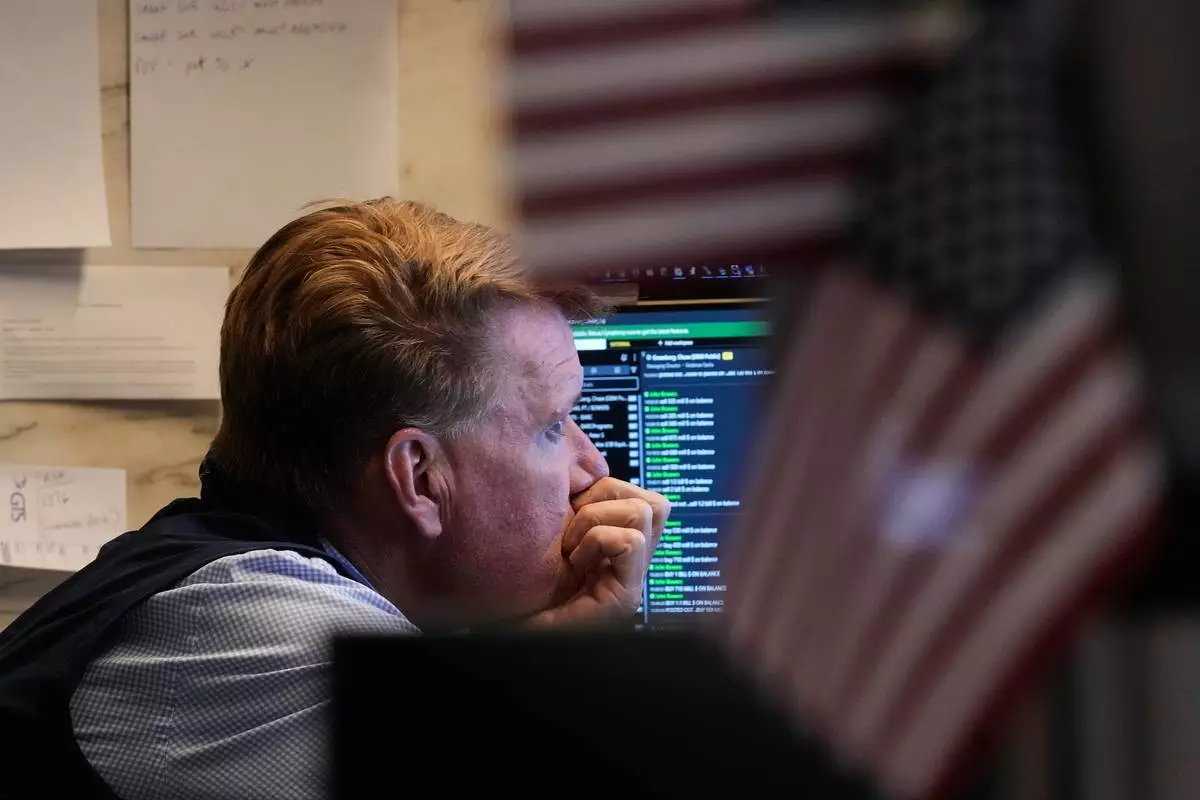
Trader John Bowers works on the floor of the New York Stock Exchange, Wednesday, June 3, 2026. (AP Photo/Richard Drew)

Trader John Bowers works on the floor of the New York Stock Exchange, Wednesday, June 3, 2026. (AP Photo/Richard Drew)

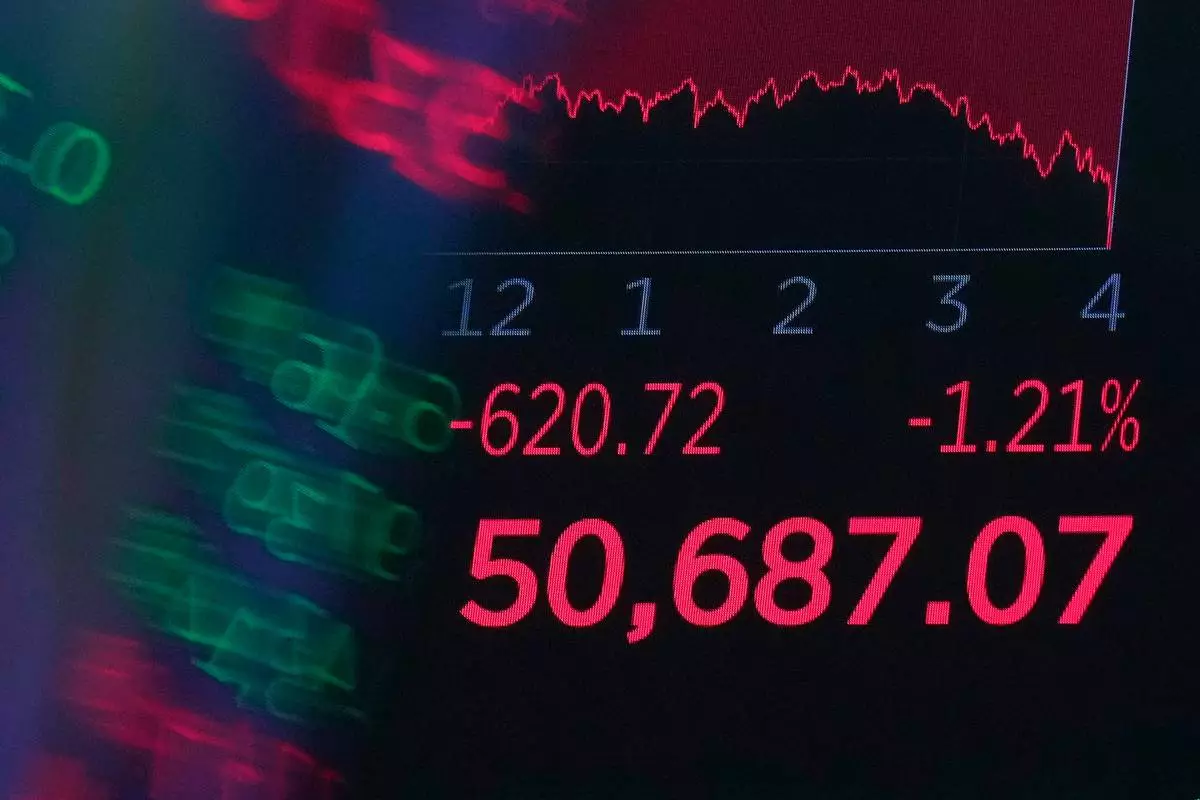
A board above the trading floor of the New York Stock Exchange displays the closing number for the Dow Jones industrial average, Wednesday, June 3, 2026. (AP Photo/Richard Drew)

A board above the trading floor of the New York Stock Exchange displays the closing number for the Dow Jones industrial average, Wednesday, June 3, 2026. (AP Photo/Richard Drew)

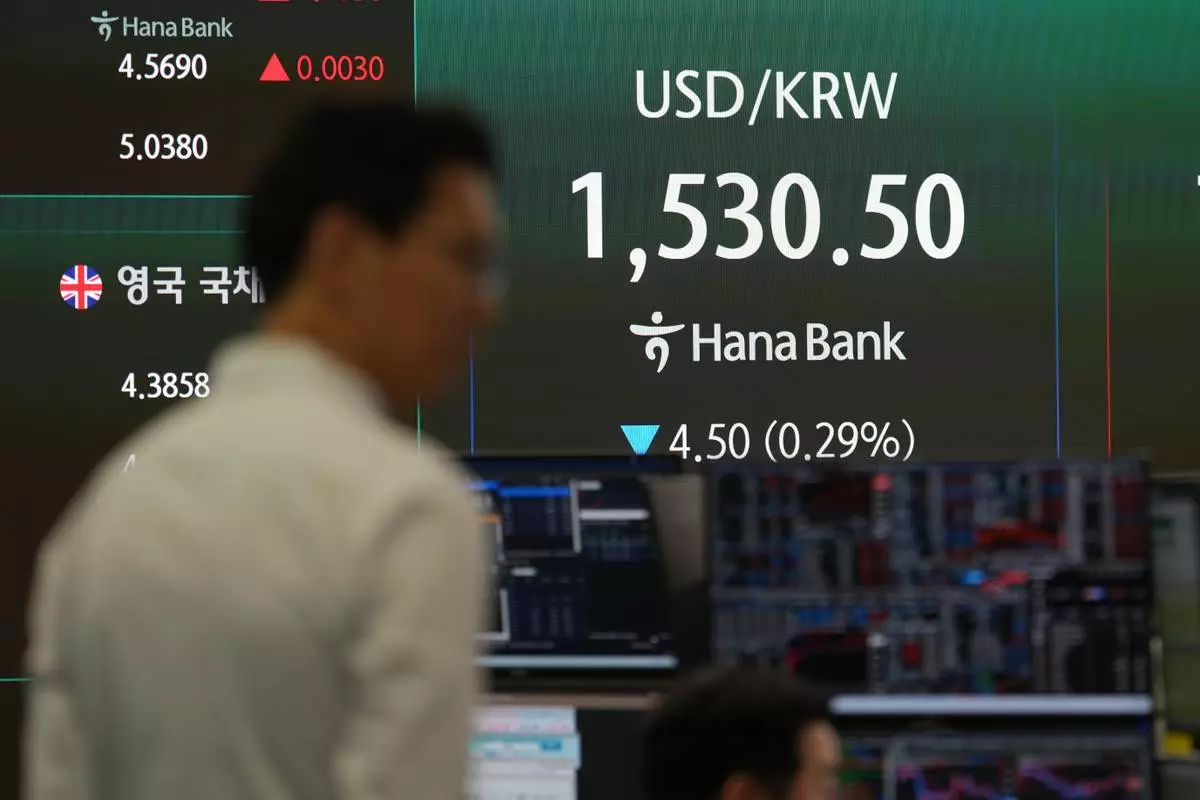
A dealer stands near the screens showing the foreign exchange rate between U.S. dollar and South Korean won at a dealing room of Hana Bank in Seoul, South Korea, Tuesday, June 9, 2026. (AP Photo/Lee Jin-man)

A dealer stands near the screens showing the foreign exchange rate between U.S. dollar and South Korean won at a dealing room of Hana Bank in Seoul, South Korea, Tuesday, June 9, 2026. (AP Photo/Lee Jin-man)

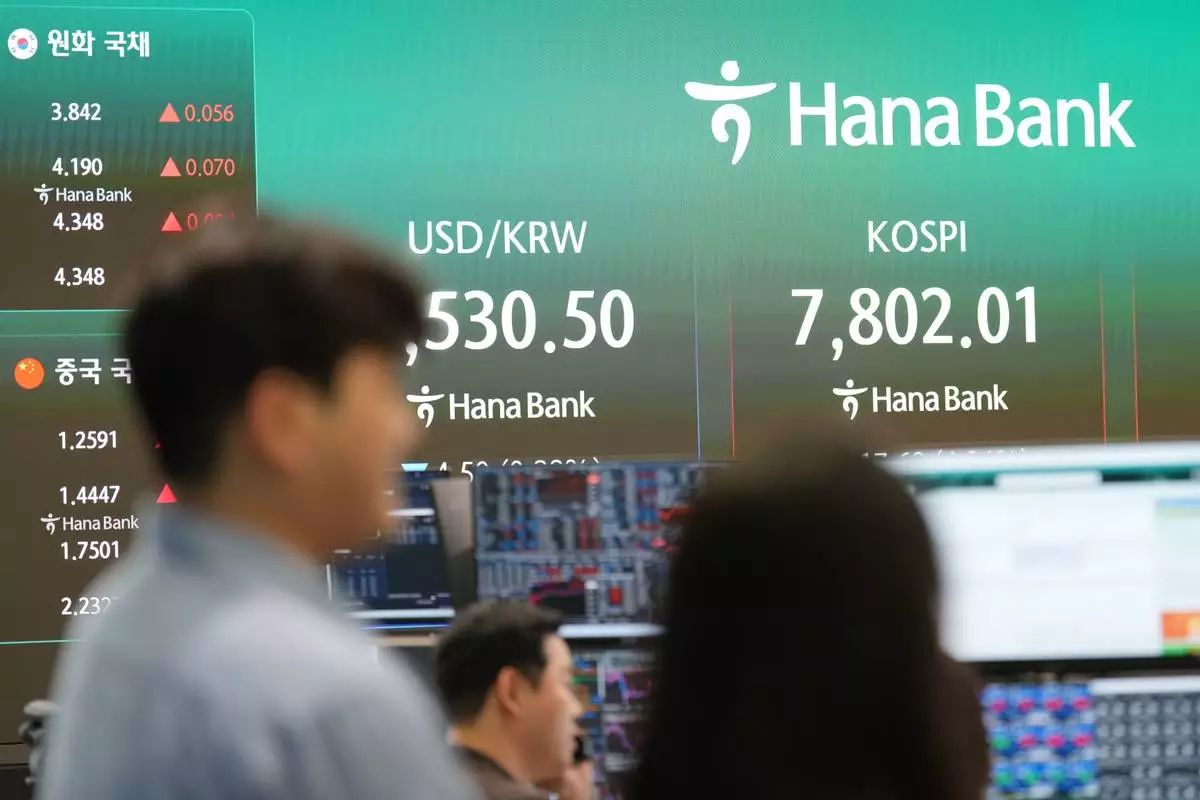
People stand near the screens showing the Korea Composite Stock Price Index (KOSPI) and the foreign exchange rate between U.S. dollar and South Korean won at a dealing room of Hana Bank in Seoul, South Korea, Tuesday, June 9, 2026. (AP Photo/Lee Jin-man)

People stand near the screens showing the Korea Composite Stock Price Index (KOSPI) and the foreign exchange rate between U.S. dollar and South Korean won at a dealing room of Hana Bank in Seoul, South Korea, Tuesday, June 9, 2026. (AP Photo/Lee Jin-man)

A dealer talks near the screens showing the Korea Composite Stock Price Index (KOSPI) and the foreign exchange rate between U.S. dollar and South Korean won at a dealing room of Hana Bank in Seoul, South Korea, Tuesday, June 9, 2026. (AP Photo/Lee Jin-man)

A dealer talks near the screens showing the Korea Composite Stock Price Index (KOSPI) and the foreign exchange rate between U.S. dollar and South Korean won at a dealing room of Hana Bank in Seoul, South Korea, Tuesday, June 9, 2026. (AP Photo/Lee Jin-man)

A dealer stands near the screen showing the Korea Composite Stock Price Index (KOSPI) at a dealing room of Hana Bank in Seoul, South Korea, Tuesday, June 9, 2026. (AP Photo/Lee Jin-man)

A dealer stands near the screen showing the Korea Composite Stock Price Index (KOSPI) at a dealing room of Hana Bank in Seoul, South Korea, Tuesday, June 9, 2026. (AP Photo/Lee Jin-man)

Recommended Articles