CAMBRIDGE, Mass. (AP) — Humanoid robots struggling with tasks like grasping a cup have a new teacher — a person wearing an ultrasound wristband that captures the movement of muscles, tendons and ligaments beneath the skin.
Researchers at the Massachusetts Institute of Technology developed the tool to collect data of human hand motion that could eventually help robots achieve the dexterity that has been difficult for machines to master.
“Imagine people doing housework,” said Xuanhe Zhao, an MIT professor of mechanical engineering. “We can use the data obtained by our system to train a robot to do exactly (that) housework with this dexterous hand motion.”
As much of the tech world is still captivated with artificial intelligence assistants that are taking on computer-based tasks, Zhao is among the scientists trying to imbue AI with more sensory data from the physical world.
Beyond housework, the technology could help with other tasks that require flexing fingers and hands, such as surgery.
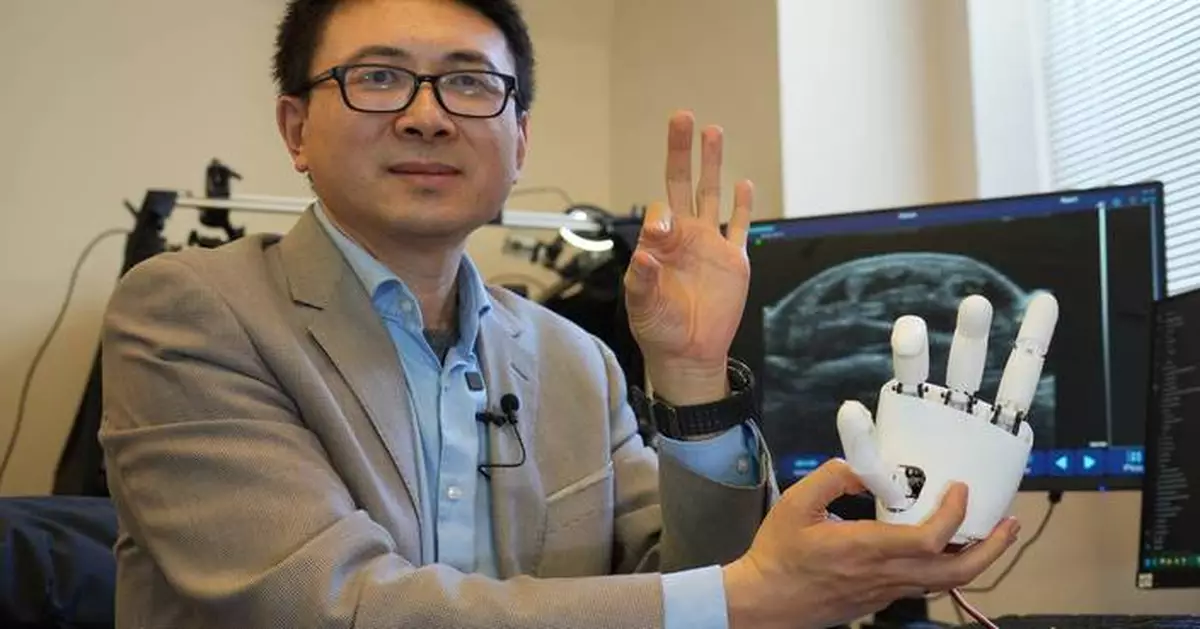
The wristband uses high-frequency sound waves to “see” through its wearer's skin. It relays images of the muscle and tendon movements to a computer that uses AI to enable a nearby robotic hand to mimic the gestures.
An AI algorithm is trained to decode images generated by the device into what engineers call degrees of freedom – specific ways a joint can bend or rotate. The human hand has 22 of them.
In earlier systems, tracking even a fraction of those movements was a significant challenge.
In laboratory demonstrations with eight volunteers, developers showed the wristband could precisely mirror hand gestures – including all 26 letters in American Sign Language – within 120 milliseconds.
The wristband can operate wirelessly, meaning the controlling person and the receiving robot need not be in the same room.
Beyond remote control, the team sees a path toward using the wristband to build huge datasets of human motion that could eventually enable humanoids to learn dexterous tasks without human guidance.
AP Technology Writer Matt O'Brien contributed to this report.
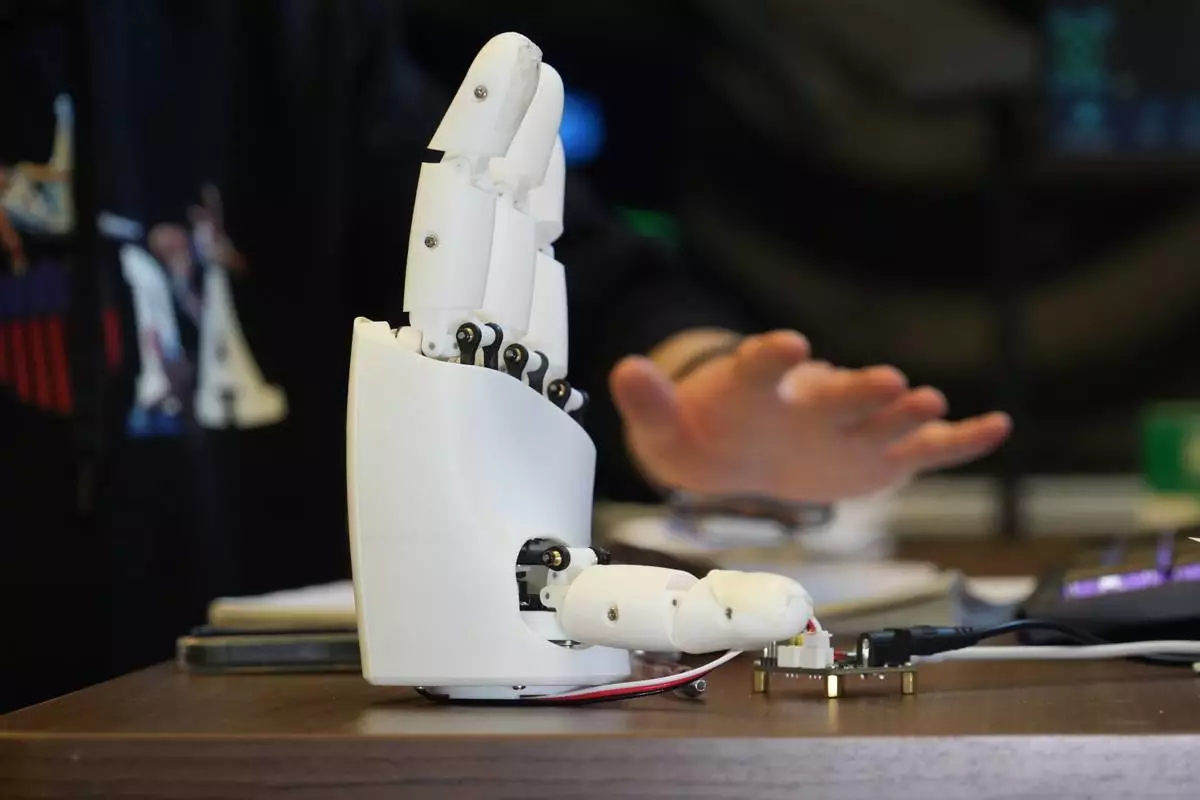
Massachusetts Institute of Technology mechanical engineering graduate student Dian Li demonstrates how an ultrasound wristband can help a robotic hand mimic full hand motions in Cambridge, Mass, on Tuesday, April 14, 2026. (AP Photo/Rodrique Ngowi)
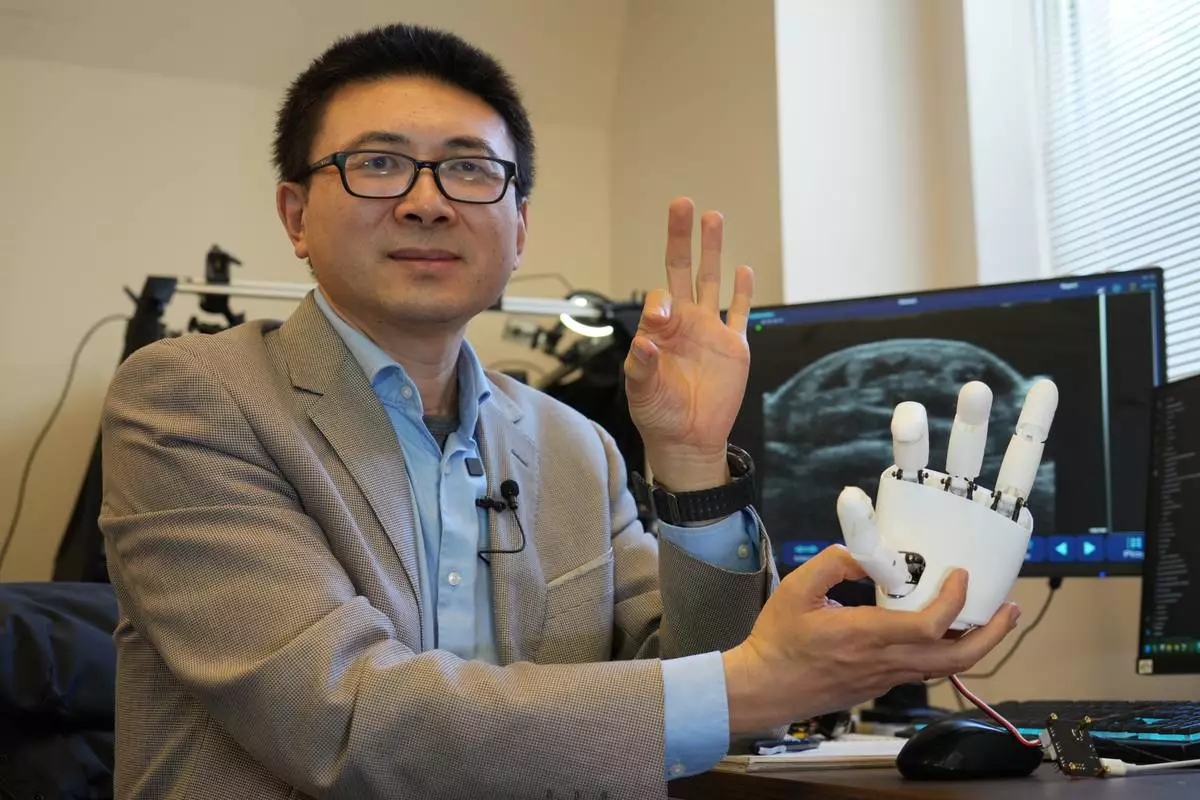
Xuanhe Zhao, professor of mechanical engineering at the Massachusetts Institute of Technology, poses for a portrait with an ultrasound wristband that can help a robotic hand mimic full hand motions in Cambridge, Mass, on Tuesday, April 14, 2026. (AP Photo/Rodrique Ngowi)
NEW YORK (AP) — The Marguerite Casey Foundation plans to donate at least $500 million over the next decade, increasing its annual payout as leaders try to spur more urgent grantmaking throughout philanthropy — especially given what it calls the sector's “suffering” under President Donald Trump's policies.
The White House's cuts to federal funding, attacks on civil society and dismantling of diversity programs have amounted to what the National Council of Nonprofits calls an “existential crisis.” But funders' responses have been lacking in the view of many nonprofit executives. Where, some ask, are the sorts of emergency funds launched when the coronavirus pandemic tested nonprofits?
Most private foundations pay out about 5% of their assets annually, the minimum required by the Internal Revenue Service. Debates rage over whether that contribution limit should be increased. Any higher, the philanthropic consensus goes, and foundations would risk shortening their life spans.
The Marguerite Casey Foundation did significantly increase donations in 2025, taking the rare step of dipping into its endowment to give $130 million. That experience confirmed what Carmen Rojas, its president and CEO, believed: Her duty to ensure the foundation's perpetuity is not at odds with her obligation to adequately bankroll the communities they support.
“A very practical lesson is that we could give out more money and exist for a long time,” she told The Associated Press.
The Seattle-based foundation, created in 2001 with funds from United Parcel Service founder Jim Casey, has an uncommon model. Invite-only grants cover one quarter of their beneficiaries' budgets for five years.
They broadly fund “community-based organizations” that organize to make sure “government works for everybody," according to Rojas. That includes groups focused on issues of economic well-being such as housing and quality jobs as well as news outlets such as the advocacy journalism nonprofit More Perfect Union and the National Trust for Local News.
Another portfolio supports city- and state-level experiments aiming to make governments more responsive to local needs. The foundation recently contributed $3 million to New York City Mayor Zohran Mamdani's private fund for his universal free child care proposal.
Rojas expects to provide the same unsolicited support for existing grantees and said they will likely identify new recipients as the payout increases. The new annual baseline of $50 million marks a 50% increase over the previous decade's average, according to the foundation. Public tax filings show annual donations ranged between $23 million and $57 million since 2019.
It's part of Rojas' bid for a more “offensive” approach to philanthropy. She said the charitable sector often takes a “defensive posture” that focuses on responding to threats. Gifts — such as their support for NYC's Mayor's Fund — intend to show the public “our government can be delivering more for you.”
“We have to be able to deliver for people, in meaningful ways, the things that they need to live a good life," Rojas said.
Foundation leaders are also making a rhetorical point.
Many charities decline to donate more than the 5% minimum required by law, treating it as a ceiling rather than a floor. Trustees, acting on obligations to ensure the foundation exists forever to support its charitable purpose, avoid drawing from their endowments.
Activist Abigail Disney and other philanthropists have lobbied recently to increase the legally required minimum by a percentage point or so. Foundations, they argue, aren't merely financial institutions. They are tax-exempt social welfare groups with duties to their missions — which some say aren't served by existing philanthropic practices.
The Marguerite Casey Foundation wants to be a case study. Its endowment started around $870 million last year, according to Daniel Gould, its vice president of investments and operations. Within a year, he said, they'd made back the endowment funds spent on last year's grantmaking push. As of April 2026, he said, the endowment size stood at about $825 million.
In years with strong financial markets — defined by Gould as at least 10% investment returns, the historical average for the U.S. stock market — they will give even more.
“Endowments are resilient,” Gould said. “That resilience should be translated into increased grantmaking.”
They've achieved that resilience while simultaneously adjusting their investment strategy. Over half the endowment is managed by members of underrepresented racial groups, according to Gould. They've also divested from private prisons, predatory lenders, weapons manufacturers, data center developers and other companies they believe harm the communities served by their nonprofit grantees.
Philanthropies should use the full weight of their resources to advance their missions, according to Rojas.
“If it is our job to be charitable organizations, then we should act charitably, right?" she said, adding that "either we are charitable organizations, or we are investment firms that do 5% charity work."
The Robert Wood Johnson Foundation also offered rapid response grants last year as the Trump administration reduced federal research funding. In North Carolina, the Kate B. Reynolds Charitable Trust granted about $10 million more than usual.
The MacArthur Foundation pledged in 2025 to increase its giving for two years, similarly citing the “crisis” created by the Trump administration’s policies. President John Palfrey said last year’s cuts are having their worst effects now. The foundation plans to continue with its higher rate of spending — which fell around 7% last year, or $190 million more than anticipated.
Still, a February survey of 380 nonprofits found that most respondents consider it harder to secure foundation grants. The Trump administration's discontinuation of federal grant programs has left nonprofits scrambling for more money from a smaller funding pool. At the same time, many nonprofits are seeing heightened demand for their services after sweeping changes to Medicaid and food assistance programs.
Some funders are moving more cautiously after the White House's crackdown on “left-wing terrorism,” threats to revoke universities' tax-exempt status and desire to install staff at a criminal justice nonprofit that received funds appropriated by Congress.
It's not hyperbolic to say nonprofits are “under attack,” according to Center for Effective Philanthropy President Phil Buchanan, whose group led the "State of Nonprofits 2026” report. Increased spending is “perfectly reasonable” at a time of great need, he said, emphasizing that the resources exist. U.S. foundation assets have more than doubled over the last quarter century after adjusting for inflation, according to the Federal Reserve Bank of St. Louis.
“You can't step up for everybody,” Buchanan said. “But figure out who you can step up for.”
Palfrey sees recent federal actions as attacks on "the freedom to give.” He cites the Department of Justice indictment against the Southern Poverty Law Center, a civil rights nonprofit whose work tracking extremist groups has prompted a Republican-led congressional inquiry into allegations of fraud. Major investment firms dropped SPLC from their lists of nonprofits that receive donations from charitable accounts.
The precedent could financially ruin “good” nonprofits with the "mere whiff of an investigation," according to Palfrey.
“These are powerful and negative chilling effects on the charitable nonprofit sector,” the MacArthur Foundation president told AP in May. “And they are ones that we ought to resist with every fiber of our being.”
Associated Press coverage of philanthropy and nonprofits receives support through the AP’s collaboration with The Conversation US, with funding from Lilly Endowment Inc. The AP is solely responsible for this content. For all of AP’s philanthropy coverage, visit https://apnews.com/hub/philanthropy.
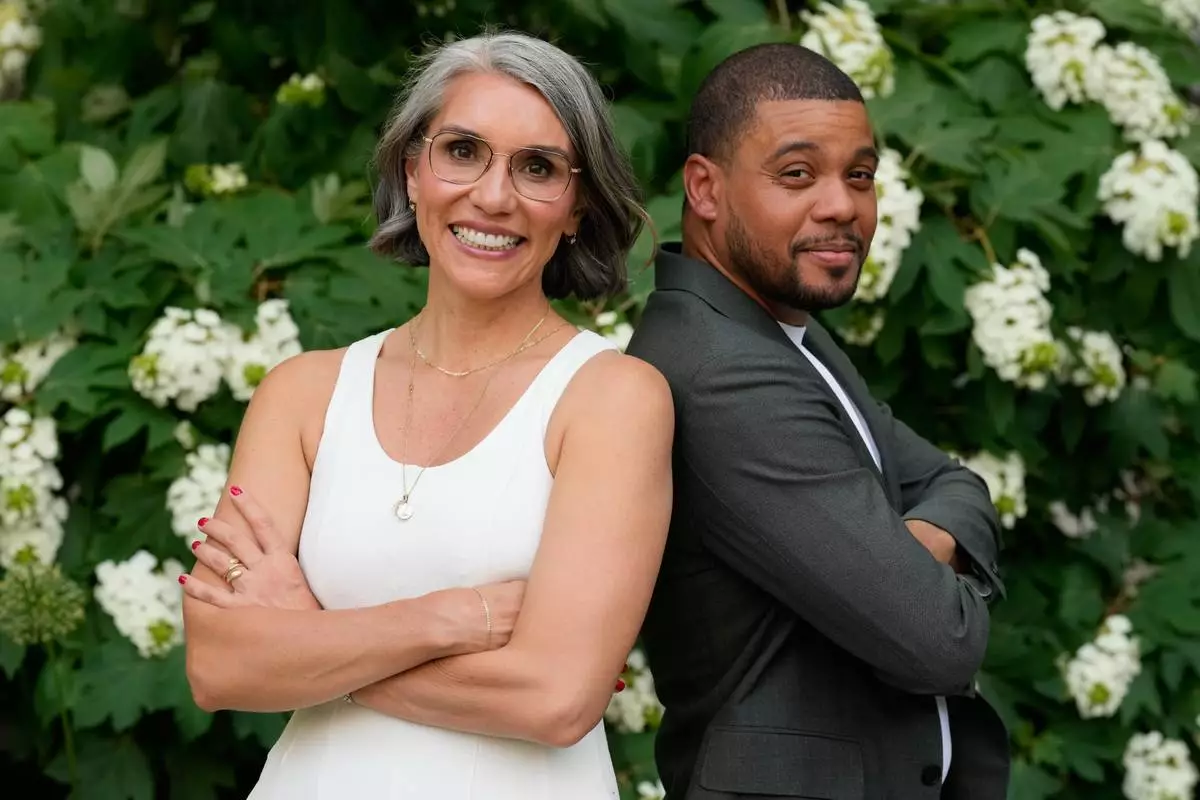
Carmen Rojas, CEO of the Marguerite Casey Foundation, and Daniel Gould, vice president of investments at the foundation, pose for a picture in New York, Thursday, June 4, 2026. (AP Photo/Seth Wenig)
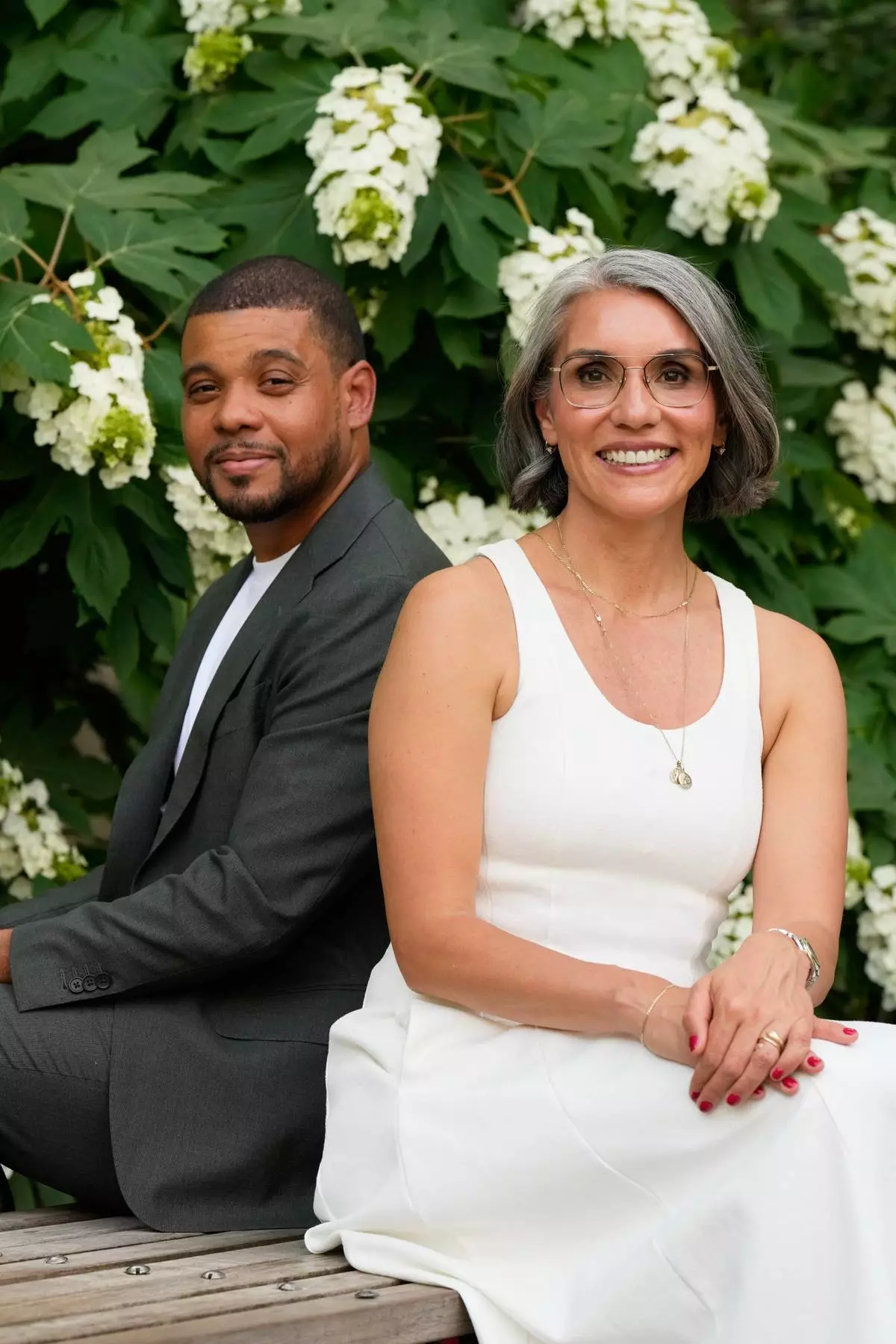
Carmen Rojas, CEO of the Marguerite Casey Foundation, and Daniel Gould, vice president of investments at the foundation, pose for a picture in New York, Thursday, June 4, 2026. (AP Photo/Seth Wenig)
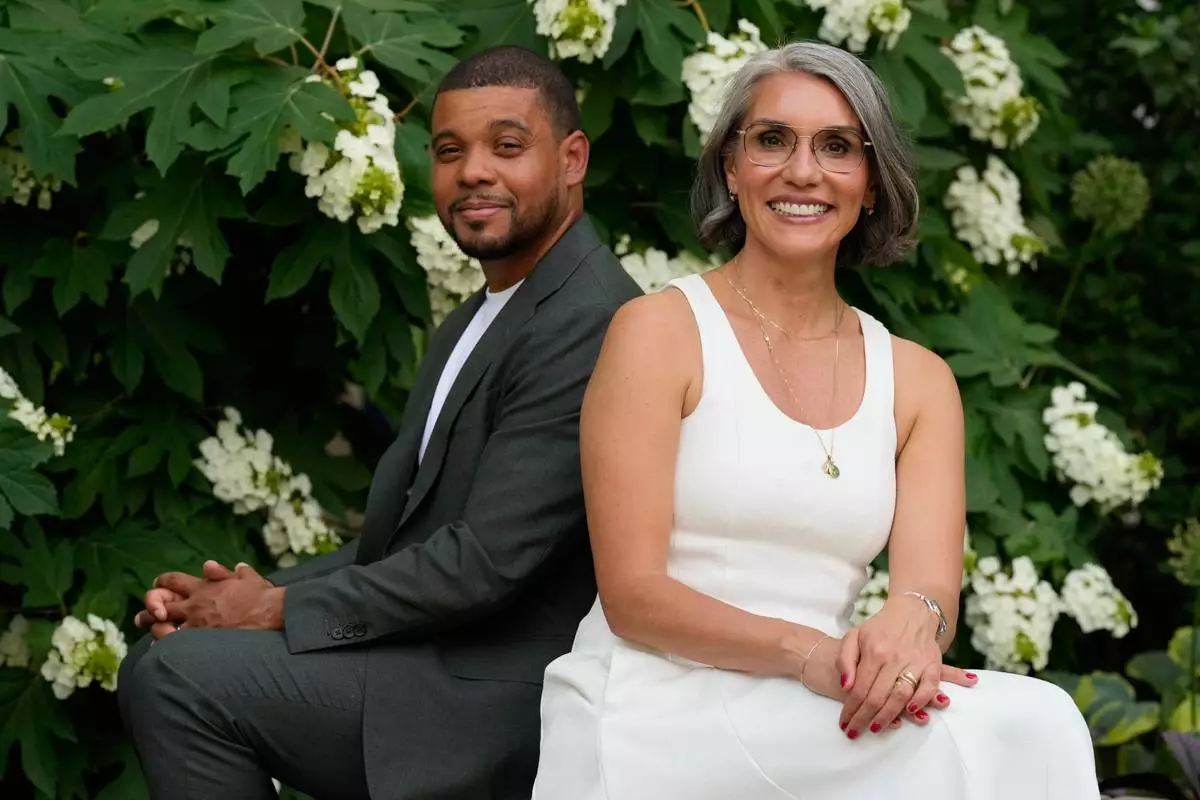
Carmen Rojas, CEO of the Marguerite Casey Foundation, and Daniel Gould, vice president of investments at the foundation, pose for a picture in New York, Thursday, June 4, 2026. (AP Photo/Seth Wenig)