Skip to Content Facebook Feature Image

Marguerite Casey Foundation plans to give at least $50M annually, a rare increase at a time of need

News

Marguerite Casey Foundation plans to give at least $50M annually, a rare increase at a time of need
News

News

Marguerite Casey Foundation plans to give at least $50M annually, a rare increase at a time of need

2026-06-09 20:38 Last Updated At:20:41

NEW YORK (AP) — The Marguerite Casey Foundation plans to donate at least $500 million over the next decade, increasing its annual payout as leaders try to spur more urgent grantmaking throughout philanthropy — especially given what it calls the sector's “suffering” under President Donald Trump's policies.

The White House's cuts to federal funding, attacks on civil society and dismantling of diversity programs have amounted to what the National Council of Nonprofits calls an “existential crisis.” But funders' responses have been lacking in the view of many nonprofit executives. Where, some ask, are the sorts of emergency funds launched when the coronavirus pandemic tested nonprofits?

Most private foundations pay out about 5% of their assets annually, the minimum required by the Internal Revenue Service. Debates rage over whether that contribution limit should be increased. Any higher, the philanthropic consensus goes, and foundations would risk shortening their life spans.

The Marguerite Casey Foundation did significantly increase donations in 2025, taking the rare step of dipping into its endowment to give $130 million. That experience confirmed what Carmen Rojas, its president and CEO, believed: Her duty to ensure the foundation's perpetuity is not at odds with her obligation to adequately bankroll the communities they support.

“A very practical lesson is that we could give out more money and exist for a long time,” she told The Associated Press.

The Seattle-based foundation, created in 2001 with funds from United Parcel Service founder Jim Casey, has an uncommon model. Invite-only grants cover one quarter of their beneficiaries' budgets for five years.

They broadly fund “community-based organizations” that organize to make sure “government works for everybody," according to Rojas. That includes groups focused on issues of economic well-being such as housing and quality jobs as well as news outlets such as the advocacy journalism nonprofit More Perfect Union and the National Trust for Local News.

Another portfolio supports city- and state-level experiments aiming to make governments more responsive to local needs. The foundation recently contributed $3 million to New York City Mayor Zohran Mamdani's private fund for his universal free child care proposal.

Rojas expects to provide the same unsolicited support for existing grantees and said they will likely identify new recipients as the payout increases. The new annual baseline of $50 million marks a 50% increase over the previous decade's average, according to the foundation. Public tax filings show annual donations ranged between $23 million and $57 million since 2019.

It's part of Rojas' bid for a more “offensive” approach to philanthropy. She said the charitable sector often takes a “defensive posture” that focuses on responding to threats. Gifts — such as their support for NYC's Mayor's Fund — intend to show the public “our government can be delivering more for you.”

“We have to be able to deliver for people, in meaningful ways, the things that they need to live a good life," Rojas said.

Foundation leaders are also making a rhetorical point.

Many charities decline to donate more than the 5% minimum required by law, treating it as a ceiling rather than a floor. Trustees, acting on obligations to ensure the foundation exists forever to support its charitable purpose, avoid drawing from their endowments.

Activist Abigail Disney and other philanthropists have lobbied recently to increase the legally required minimum by a percentage point or so. Foundations, they argue, aren't merely financial institutions. They are tax-exempt social welfare groups with duties to their missions — which some say aren't served by existing philanthropic practices.

The Marguerite Casey Foundation wants to be a case study. Its endowment started around $870 million last year, according to Daniel Gould, its vice president of investments and operations. Within a year, he said, they'd made back the endowment funds spent on last year's grantmaking push. As of April 2026, he said, the endowment size stood at about $825 million.

In years with strong financial markets — defined by Gould as at least 10% investment returns, the historical average for the U.S. stock market — they will give even more.

“Endowments are resilient,” Gould said. “That resilience should be translated into increased grantmaking.”

They've achieved that resilience while simultaneously adjusting their investment strategy. Over half the endowment is managed by members of underrepresented racial groups, according to Gould. They've also divested from private prisons, predatory lenders, weapons manufacturers, data center developers and other companies they believe harm the communities served by their nonprofit grantees.

Philanthropies should use the full weight of their resources to advance their missions, according to Rojas.

“If it is our job to be charitable organizations, then we should act charitably, right?" she said, adding that "either we are charitable organizations, or we are investment firms that do 5% charity work."

The Robert Wood Johnson Foundation also offered rapid response grants last year as the Trump administration reduced federal research funding. In North Carolina, the Kate B. Reynolds Charitable Trust granted about $10 million more than usual.

The MacArthur Foundation pledged in 2025 to increase its giving for two years, similarly citing the “crisis” created by the Trump administration’s policies. President John Palfrey said last year’s cuts are having their worst effects now. The foundation plans to continue with its higher rate of spending — which fell around 7% last year, or $190 million more than anticipated.

Still, a February survey of 380 nonprofits found that most respondents consider it harder to secure foundation grants. The Trump administration's discontinuation of federal grant programs has left nonprofits scrambling for more money from a smaller funding pool. At the same time, many nonprofits are seeing heightened demand for their services after sweeping changes to Medicaid and food assistance programs.

Some funders are moving more cautiously after the White House's crackdown on “left-wing terrorism,” threats to revoke universities' tax-exempt status and desire to install staff at a criminal justice nonprofit that received funds appropriated by Congress.

It's not hyperbolic to say nonprofits are “under attack,” according to Center for Effective Philanthropy President Phil Buchanan, whose group led the "State of Nonprofits 2026” report. Increased spending is “perfectly reasonable” at a time of great need, he said, emphasizing that the resources exist. U.S. foundation assets have more than doubled over the last quarter century after adjusting for inflation, according to the Federal Reserve Bank of St. Louis.

“You can't step up for everybody,” Buchanan said. “But figure out who you can step up for.”

Palfrey sees recent federal actions as attacks on "the freedom to give.” He cites the Department of Justice indictment against the Southern Poverty Law Center, a civil rights nonprofit whose work tracking extremist groups has prompted a Republican-led congressional inquiry into allegations of fraud. Major investment firms dropped SPLC from their lists of nonprofits that receive donations from charitable accounts.

The precedent could financially ruin “good” nonprofits with the "mere whiff of an investigation," according to Palfrey.

“These are powerful and negative chilling effects on the charitable nonprofit sector,” the MacArthur Foundation president told AP in May. “And they are ones that we ought to resist with every fiber of our being.”

Associated Press coverage of philanthropy and nonprofits receives support through the AP’s collaboration with The Conversation US, with funding from Lilly Endowment Inc. The AP is solely responsible for this content. For all of AP’s philanthropy coverage, visit https://apnews.com/hub/philanthropy.
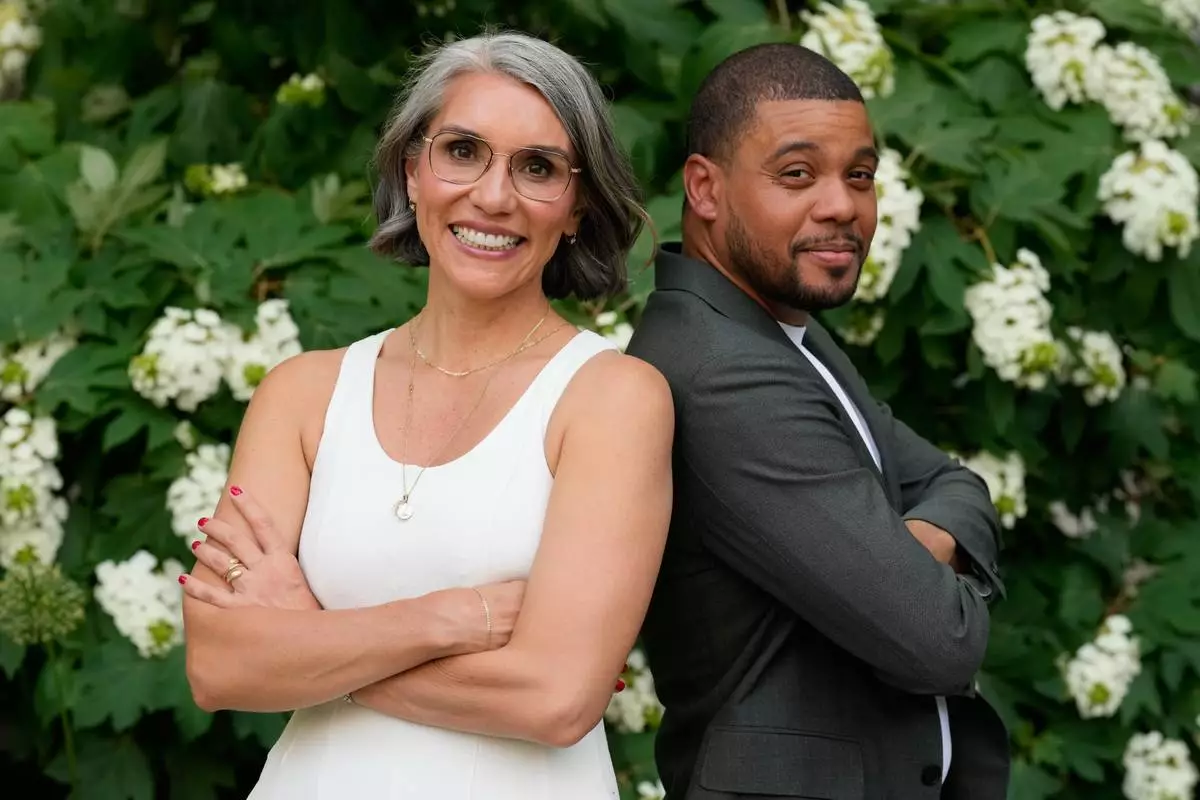
Carmen Rojas, CEO of the Marguerite Casey Foundation, and Daniel Gould, vice president of investments at the foundation, pose for a picture in New York, Thursday, June 4, 2026. (AP Photo/Seth Wenig)
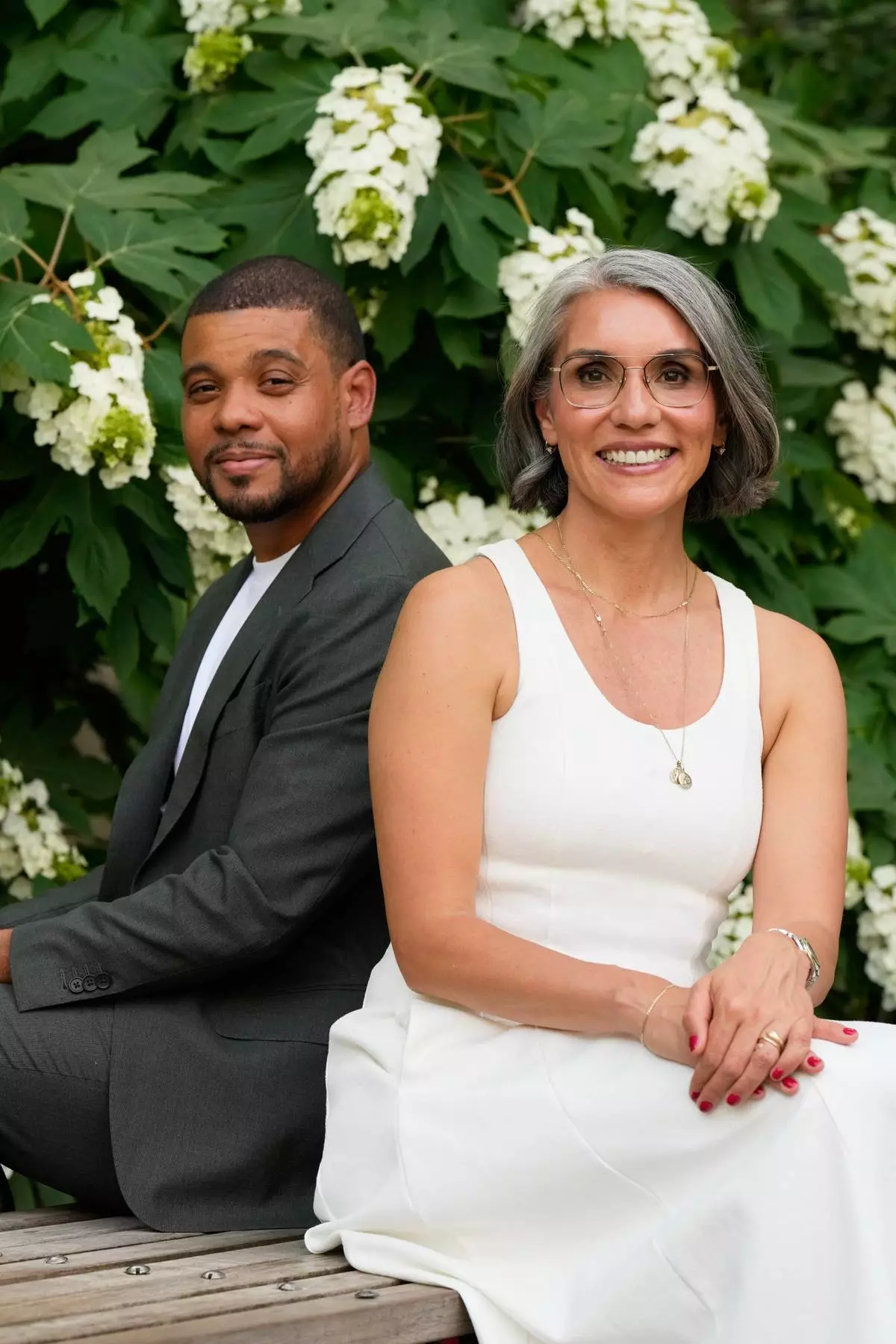
Carmen Rojas, CEO of the Marguerite Casey Foundation, and Daniel Gould, vice president of investments at the foundation, pose for a picture in New York, Thursday, June 4, 2026. (AP Photo/Seth Wenig)
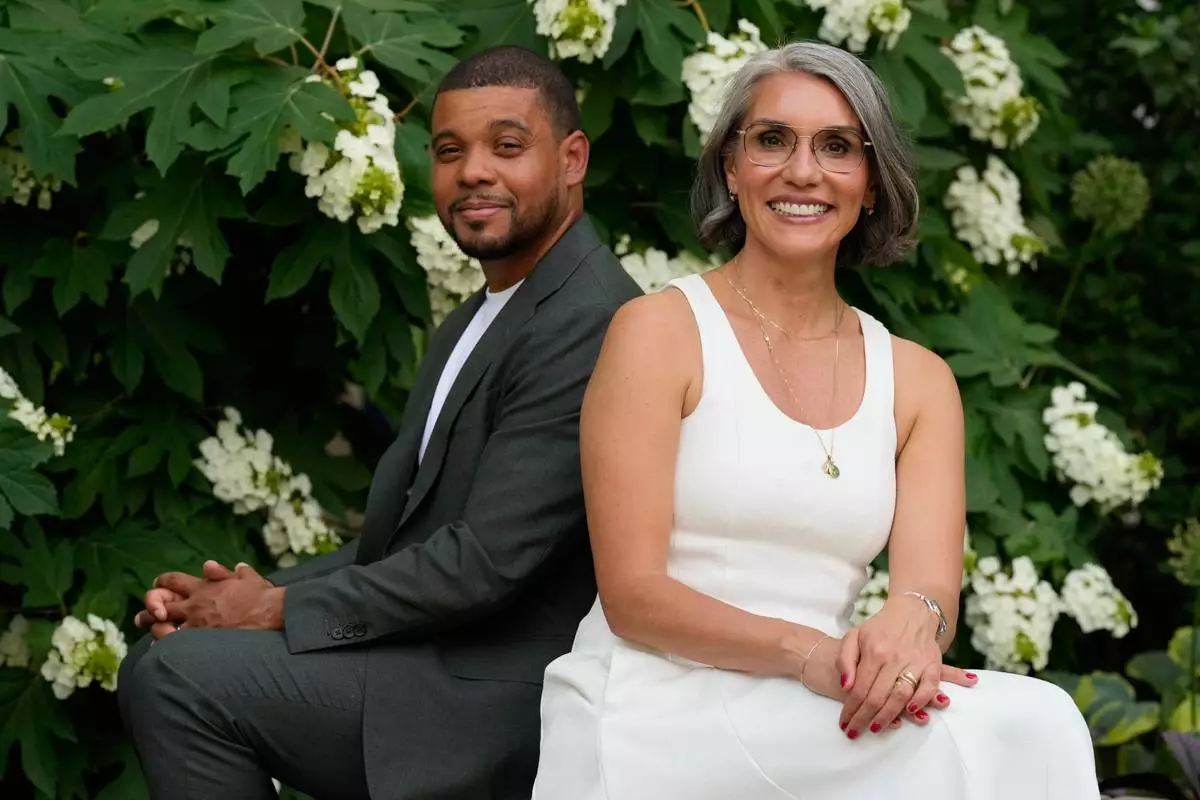
Carmen Rojas, CEO of the Marguerite Casey Foundation, and Daniel Gould, vice president of investments at the foundation, pose for a picture in New York, Thursday, June 4, 2026. (AP Photo/Seth Wenig)

Carmen Rojas, CEO of the Marguerite Casey Foundation, and Daniel Gould, vice president of investments at the foundation, pose for a picture in New York, Thursday, June 4, 2026. (AP Photo/Seth Wenig)
Carmen Rojas, CEO of the Marguerite Casey Foundation, and Daniel Gould, vice president of investments at the foundation, pose for a picture in New York, Thursday, June 4, 2026. (AP Photo/Seth Wenig)

Carmen Rojas, CEO of the Marguerite Casey Foundation, and Daniel Gould, vice president of investments at the foundation, pose for a picture in New York, Thursday, June 4, 2026. (AP Photo/Seth Wenig)
TEL AVIV, Israel (AP) — For over 2 1/2 years, hundreds of thousands of people in Gaza and Lebanon have lived in dread of Avichay Adraee’s next social media post.

Israel’s Arabic-language military spokesman has been the animated face of its campaigns and the main source of warnings ahead of strikes and major offensives. That has made him one of the most recognizable Israelis in the Arab world — a focus of fury as well as some fascination.

In social media videos shared to his 2.5 million followers across platforms, the colonel appears in military fatigues, gesticulating as he delivers official statements and mocks Israel’s enemies, often using satire or pop culture references, all in fluent Arabic.

In the wars sparked by Hamas’ Oct. 7, 2023, attack, his social media accounts have carried warnings for civilians to leave — sometimes at a moment's notice — areas shaded in red on maps of Gaza and Lebanon. Millions have paid heed, with hundreds of thousands seeking refuge in squalid tent camps.

Adraee, who is retiring this year, takes pride in his work. Asked to respond to the fact that many associate him with death and displacement, he said he has helped Arabs to better understand Israel's military operations.

“Because of these evacuation orders, many millions were saved,” he told The Associated Press. “There's no other army in the world that acts this way.”

Israel’s offensive in Gaza killed tens of thousands of Palestinians and displaced most of the population of some 2 million, often multiple times, before a fragile ceasefire took hold in October. Its latest war with the Iran-backed Hezbollah in Lebanon has killed some 3,500 people and displaced over 1.2 million.

Both campaigns have drawn allegations of war crimes and crimes against humanity, which Israel has adamantly denied, often through spokespeople like Adraee.

The grim warnings also have made him something of a celebrity. In Lebanon, a look-alike delivery driver posts satirical videos and pranks unsuspecting residents, showing the fear Adraee inspires.

“Avichay Adraee is the face of evil, to me and to the people of Gaza,” said Ayman Ahmad, a resident of Khan Younis in southern Gaza who has been displaced twice during the war. Few people in Gaza had heard of Adraee before the war, he said, but now everyone closely monitors his social media accounts.

“Once we see a new post from him, we know that a disaster is about to happen,” he said.

Adraee, 43, grew up in the mixed Jewish and Arab city of Haifa in northern Israel.

His father's family is part of the Jewish community that lived in the area for generations before Israel's establishment in 1948. His mother's family came to Israel from Iraq, among hundreds of thousands of Jews from centuries-old communities across the Middle East who emigrated to Israel to escape violence and persecution.

Adraee said he loved watching Egyptian soap operas on Israeli TV as a kid and that studying Arabic was “love at first sight.” He picked up some Arabic at home before studying the language in school and during a stint in military intelligence.

“My ability to speak and absorb Arabic is connected to my roots,” he said. “My grandmother and father were very proud when they saw me on TV speaking in Arabic.”

Adraee became the military’s first Arabic-language spokesperson in 2005, doing interviews with TV outlets, including regular appearances on the increasingly influential Al Jazeera.

He said 2011 marked a turning point with the rise of social media, which was used to great effect during the Arab Spring uprisings that year.

“People know me, we’ve been through so many wars,” he said. “But the revolution of social networks in 2011 allowed us to lean on the persona of Avichay.”

Adraee wants his videos to go viral, leaning on the casual nature of social media to get his message across.

The military's claim to have found Hamas infrastructure under a luxury hotel in Gaza made little impact, but Adraee said his satirical video of a Hamas leader leaving a Trip Advisor review for the tunnels was widely shared. He has sent birthday messages to singers and holiday greetings to Arab influencers, even exchanging public messages with Lebanese journalists who work for Hezbollah-linked outlets.

“We want people to be exposed to the really important and serious messages, the information we’re trying to convince them of, but if you want them to remember you, you have to be more creative,” he said. Social media, he said, allows him to “talk directly to the people, above the heads of the government.”

Fawaz Gerges, a professor of Middle East studies at the London School of Economics who was born in Lebanon, said Adraee's posts are “dreaded and feared because they really carry life and death implications for hundreds of thousands of people.”

Still, “you have some people basically who are fascinated by his personality because he’s now almost an official influencer for Israel,” he said.

Israel’s military has spokespeople in several languages, but only Adraee is famous enough to be known by his first name.

Gerges said it's part of a wider trend in which official spokespeople try to make their messages go viral.

The Hamas spokesman Abu Obeida was widely known for delivering fiery statements, sometimes cut with footage of attacks or Israeli hostages, before he was killed in an Israeli airstrike. Hamas and Hezbollah have released videos showing their attacks, cut with music and graphics.

Supporters of Iran's government have released AI-generated music videos with Lego characters mocking U.S. President Donald Trump. The White House has released its own videos celebrating strikes on Iran, featuring video game screenshots and movie clips.

It's not unusual for military spokespeople to have adversarial, if professional, relations with reporters. But Adraee has been accused of justifying the killing of some journalists.

The Committee to Protect Journalists says there is a “repeated pattern” in which Adraee “publicly labels Palestinian and Lebanese journalists as militants or terrorists — often without presenting verifiable evidence — before or after they are killed in Israeli strikes.”

After a strike in March killed three journalists in Lebanon, Adraee’s account published a photo of one of them, Ali Shoeib, in military fatigues. The image was later determined to be computer generated.

Adraee said it was a mistake not to label the photo as “illustrative,” but insisted Shoeib was a known Hezbollah operative who spied on Israeli positions while working as a reporter for a Hezbollah-linked outlet. Adraee presented no evidence he was involved in fighting. Israel says it does not target journalists.

At least 207 journalists have been killed in Gaza and 16 in Lebanon since 2023, according to the Committee to Protect Journalists.

After 20 years in the role, Adraee is retiring and will be replaced by Lt. Col. Ella Waweya, the military’s highest-ranking Muslim woman.

Last month, Adraee received one of the strangest messages of his long career.

A teenager in a Beirut suburb reached out on Instagram and told Adraee that her school was hiding weapons. Israel regularly bombs buildings it says are used by militants, so the message prompted panic, vehement denials by school officials and a search by the Lebanese military, which turned up nothing.

It was later revealed the girl was playing a joke with a friend and likely wanted to avoid going to class.

Adraee chalked up the whole situation as a win.

“The fact that the (Israeli military) spokesperson is someone you can write to on Instagram, that’s the whole story,” he said.

Associated Press writer Toqa Ezzidin in Cairo contributed.

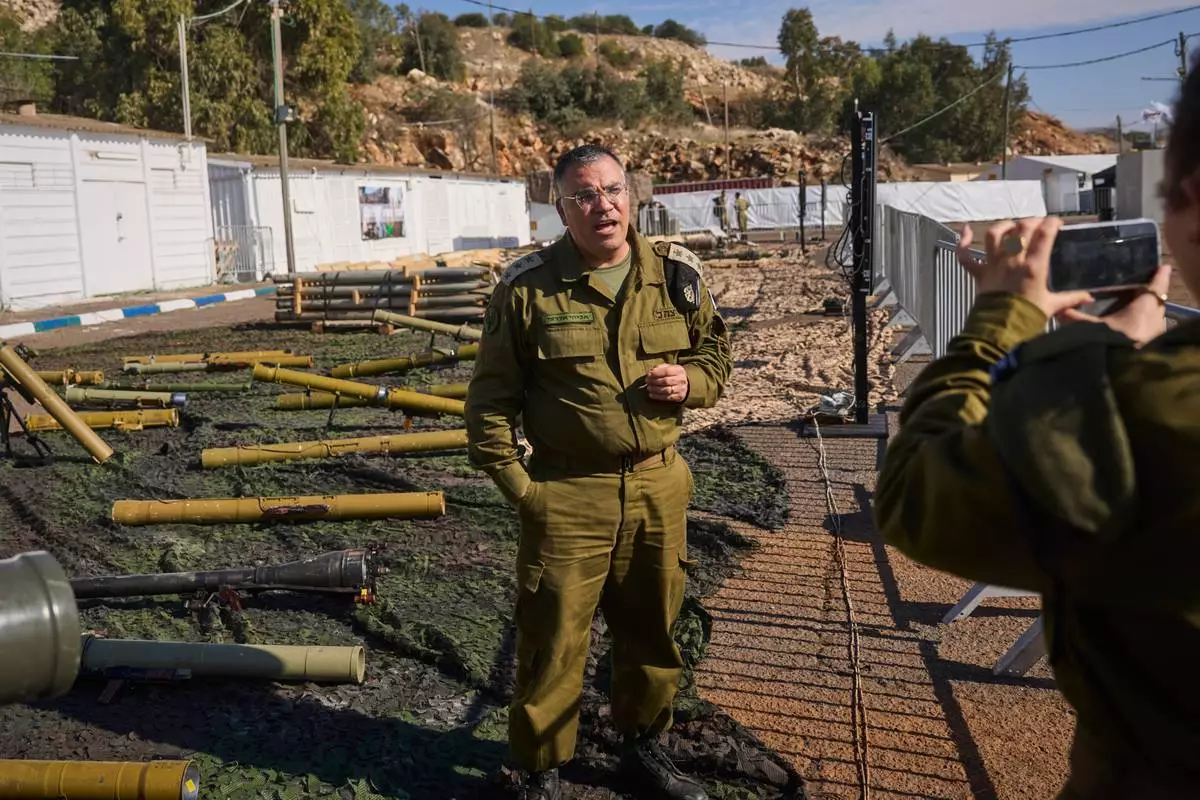
Avichay Adraee, the Israeli military’s Arabic language spokesman, stands beside weapons the army says were seized from Hezbollah in Lebanon, at an army base in northern Israel, Dec. 23, 2024. (AP Photo/Ohad Zwigenberg)

Avichay Adraee, the Israeli military’s Arabic language spokesman, stands beside weapons the army says were seized from Hezbollah in Lebanon, at an army base in northern Israel, Dec. 23, 2024. (AP Photo/Ohad Zwigenberg)

Recommended Articles