Skip to Content Facebook Feature Image

Talkspace Announces ‘Tee,’ the First Safe AI Agent Specifically Developed to Help Individuals Navigate Life’s Daily Mental Health Challenges

Business

Talkspace Announces ‘Tee,’ the First Safe AI Agent Specifically Developed to Help Individuals Navigate Life’s Daily Mental Health Challenges
Business

Business

Talkspace Announces ‘Tee,’ the First Safe AI Agent Specifically Developed to Help Individuals Navigate Life’s Daily Mental Health Challenges

2026-06-09 20:30 Last Updated At:20:51

NEW YORK--(BUSINESS WIRE)--Jun 9, 2026--

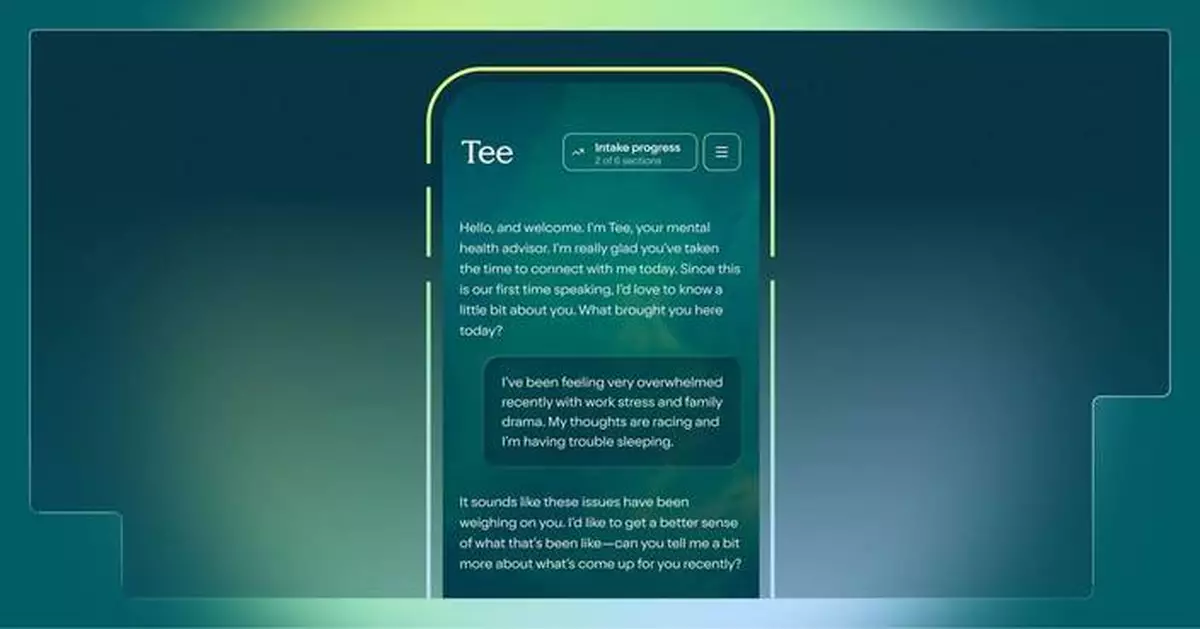
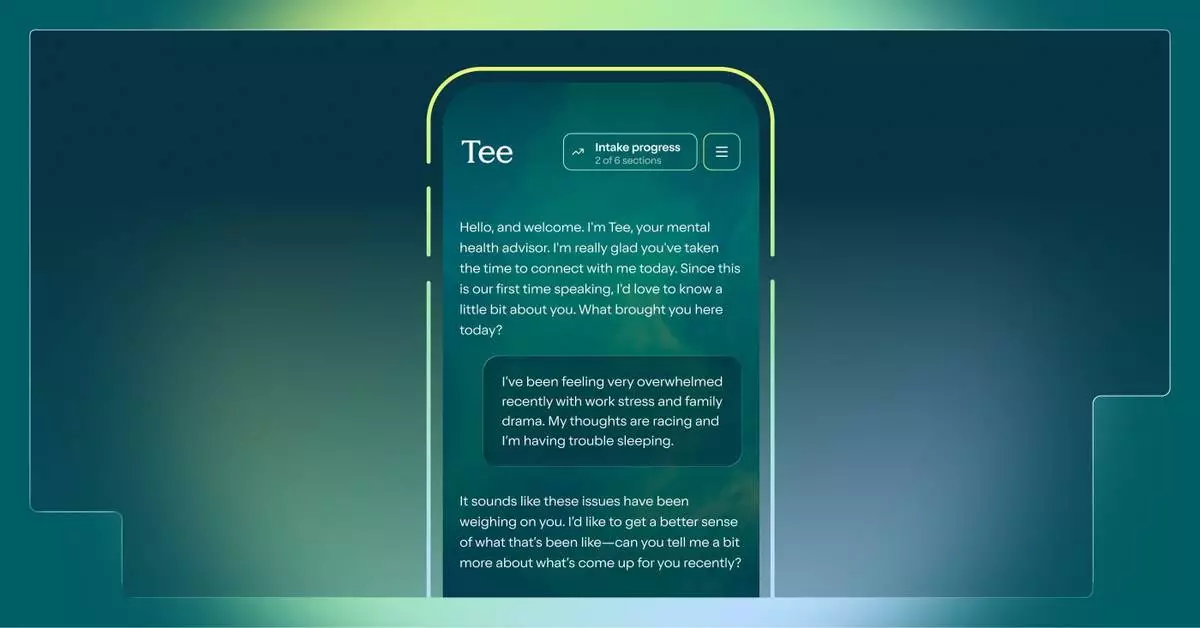
Talkspace (NASDAQ: TALK), a leading online behavioral healthcare provider, today announced Tee, a safe, fine-tuned large language model developed by mental health experts.

This press release features multimedia. View the full release here: https://www.businesswire.com/news/home/20260609734252/en/

With HIPAA-grade privacy protections, Tee has the ability to identify potential suicide risk, homicidal/violence risk, abuse risk and seven other mental health risk entities. It is the first model of its kind providing real-time oversight by licensed clinicians and immediate human intervention by a therapist as needed.

“Tee represents a fundamentally different approach to AI in mental health,” said Dr. Jon Cohen, CEO of Talkspace. “Millions of people are already using AI to talk through deeply personal issues, but most of those systems were never designed for that purpose. Tee provides a clinically-safe alternative to general purpose chatbots, setting a new industry standard for the responsible use of AI in mental-health support.”

“As more people turn to AI for support during some of their most vulnerable moments, we have to ensure all tools are designed with that level of responsibility in mind,” said Dr. Nikole Benders-Hadi, Chief Medical Officer at Talkspace. “We built Tee to bring clinical rigor and human oversight into that experience. The goal is to have a safe, supportive place for people to talk at any time, where their conversations are confidential and protected, while also ensuring that our clinicians appropriately recognize and escalate higher-risk situations."

Available 24/7 for individuals ages 18+, Tee offers a private, judgment-free space where anyone can talk through challenges in real time, whether they are dealing with stress, relationship issues, anxiety, or major life decisions.

By remembering past conversations, it builds continuity and self-awareness for patients, guiding them toward positive insights and steady progress. Tee is now available with a 7-day free trial, followed by a $19.99 monthly subscription. For more information and to sign up, visit talkspace.com/tee.

About Talkspace
Talkspace (NASDAQ: TALK) is a leading virtual behavioral healthcare provider committed to helping people lead healthier, happier lives through access to high-quality mental healthcare. Talkspace pioneered the ability to text with a licensed therapist from anywhere and now offers a comprehensive suite of mental health services, including therapy for individuals, teens, and couples, as well as psychiatric treatment and medication management (18+).

With Talkspace's core therapy offerings, members are matched with one of thousands of licensed therapists within days and can engage in live video, audio, or chat sessions, and/or unlimited asynchronous text messaging sessions.

All care offered at Talkspace is delivered through an easy-to-use, fully-encrypted web and mobile platform that meets HIPAA, federal, and state regulatory requirements. Most Americans have access to Talkspace through their health insurance plans, employee assistance programs, our partnerships with leading healthcare companies, or as a free benefit through their employer, school, or government agency.

For more information, visit www.talkspace.com.
Talkspace Announces ‘Tee,’ the First Safe AI Agent Specifically Developed to Help Individuals Navigate Life’s Daily Mental Health Challenges

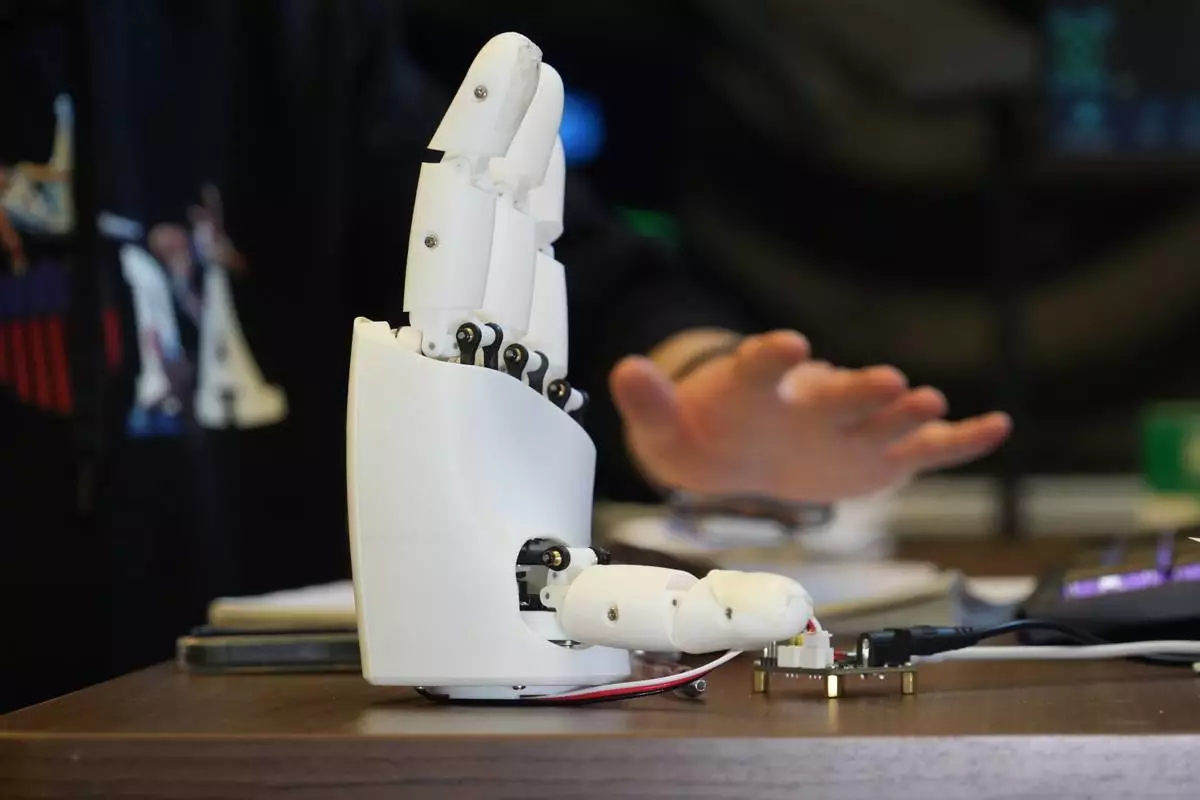
Talkspace Announces ‘Tee,’ the First Safe AI Agent Specifically Developed to Help Individuals Navigate Life’s Daily Mental Health Challenges
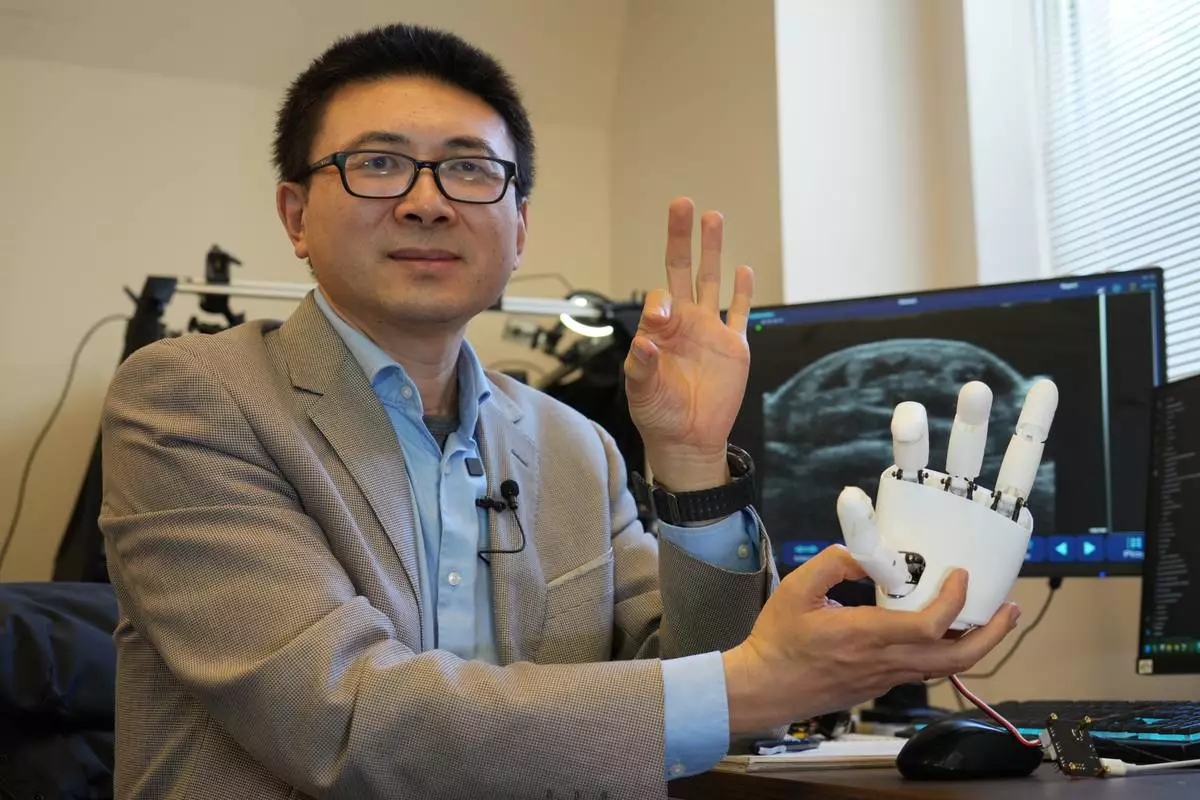
CAMBRIDGE, Mass. (AP) — Humanoid robots struggling with tasks like grasping a cup have a new teacher — a person wearing an ultrasound wristband that captures the movement of muscles, tendons and ligaments beneath the skin.

Researchers at the Massachusetts Institute of Technology developed the tool to collect data of human hand motion that could eventually help robots achieve the dexterity that has been difficult for machines to master.

“Imagine people doing housework,” said Xuanhe Zhao, an MIT professor of mechanical engineering. “We can use the data obtained by our system to train a robot to do exactly (that) housework with this dexterous hand motion.”

As much of the tech world is still captivated with artificial intelligence assistants that are taking on computer-based tasks, Zhao is among the scientists trying to imbue AI with more sensory data from the physical world.

Beyond housework, the technology could help with other tasks that require flexing fingers and hands, such as surgery.

The wristband uses high-frequency sound waves to “see” through its wearer's skin. It relays images of the muscle and tendon movements to a computer that uses AI to enable a nearby robotic hand to mimic the gestures.

An AI algorithm is trained to decode images generated by the device into what engineers call degrees of freedom – specific ways a joint can bend or rotate. The human hand has 22 of them.

In earlier systems, tracking even a fraction of those movements was a significant challenge.

In laboratory demonstrations with eight volunteers, developers showed the wristband could precisely mirror hand gestures – including all 26 letters in American Sign Language – within 120 milliseconds.

The wristband can operate wirelessly, meaning the controlling person and the receiving robot need not be in the same room.

Beyond remote control, the team sees a path toward using the wristband to build huge datasets of human motion that could eventually enable humanoids to learn dexterous tasks without human guidance.

AP Technology Writer Matt O'Brien contributed to this report.

Massachusetts Institute of Technology mechanical engineering graduate student Dian Li demonstrates how an ultrasound wristband can help a robotic hand mimic full hand motions in Cambridge, Mass, on Tuesday, April 14, 2026. (AP Photo/Rodrique Ngowi)

Massachusetts Institute of Technology mechanical engineering graduate student Dian Li demonstrates how an ultrasound wristband can help a robotic hand mimic full hand motions in Cambridge, Mass, on Tuesday, April 14, 2026. (AP Photo/Rodrique Ngowi)

Xuanhe Zhao, professor of mechanical engineering at the Massachusetts Institute of Technology, poses for a portrait with an ultrasound wristband that can help a robotic hand mimic full hand motions in Cambridge, Mass, on Tuesday, April 14, 2026. (AP Photo/Rodrique Ngowi)

Xuanhe Zhao, professor of mechanical engineering at the Massachusetts Institute of Technology, poses for a portrait with an ultrasound wristband that can help a robotic hand mimic full hand motions in Cambridge, Mass, on Tuesday, April 14, 2026. (AP Photo/Rodrique Ngowi)

Recommended Articles