WASHINGTON (AP) — President Donald Trump last year dramatically ratched up the fee for H-1B work visas to $100,000, saying it would protect American workers from losing their jobs to lower-paid foreigners.
But on Monday a federal judge struck down the fees, siding with 20 states and ruling that the Trump administration exceeded its authority by raising the fee without congressional approval.
Many tech companies and universities rely on the H-1B program to fill openings for skilled jobs, and universities use it to lure top researchers. But critics charge the visa program has been used to replace American tech workers. Here’s a look at the visa program, Trump’s fee and the court’s decision.
Created by the 1990 Immigration Act, they are a type of nonimmigrant visa, meant to allow American companies to bring in people with technical skills that are hard to find in the United States. The visas are not intended for people who want to stay permanently. Some eventually do, but only after transitioning to different immigration statuses.
An H-1B allows employers to hire foreign workers who have specialized skills and a bachelor’s degree or the equivalent. They are good for three years and can be extended another three years. Stephen Brown of Capital Economics estimated last year that there were around 700,000 H-1B visa holders in the United States along with another 500,000 dependents.
At least 60% of the H-1B visas approved since 2012 have been for computer-related jobs, according to the Pew Research Center. But hospitals, banks, universities and a wide range of other employers can and do apply for H-1B visas.
The number of new visas issued annually is capped at 65,000, plus an additional 20,000 for people with a master’s degree or higher. Those visas are handed out by a lottery. Some employers, such as universities and nonprofits, are exempt from the limits.
The White House announced the $100,000 feel last September. The application fee previously was $215, plus other processing charges. The higher fee took effect barely 24 hours after the announcement, and few companies have been willing to pay it.
Critics say they undercut American workers, luring people from overseas who are often willing to work for less than American tech workers do. Staffing companies such as Tata Consultancy Services often supply Indian workers to corporate clients. According to Pew, nearly three-quarters of those whose applications were approved in 2023 came from India.
"To take advantage of artificially low labor costs incentivized by the program, companies close their IT divisions, fire their American staff, and outsource IT jobs to lower-paid foreign workers,'' the White House said in its proclamation last year. In a 2020 report, the left-leaning Economic Policy Institute found that 60% of the H-1B positions certified by U.S. Labor Department are assigned wages below the median for the job.
Supporters of the program say H-1B visa holders increase companies' productivity and complement the work of native-born Americans.
U.S. District Court Judge Leo Sorokin in Boston ruled that the fee violated the Administrative Procedure Act, which governs how federal agencies develop and issue regulations. “The Court finds that the Policy imposes a tax on H-1B petitions without the requisite delegation by Congress,” Sorokin wrote, contradicting an earlier federal court ruling that upheld the fee hike and kept it in effect until September when it is scheduled to expire.
In the Boston case, the states argued that the policy impedes their ability to hire primary and secondary school educators and to staff public colleges and universities, will stymie academic research and will lead to a decline in medical workers.
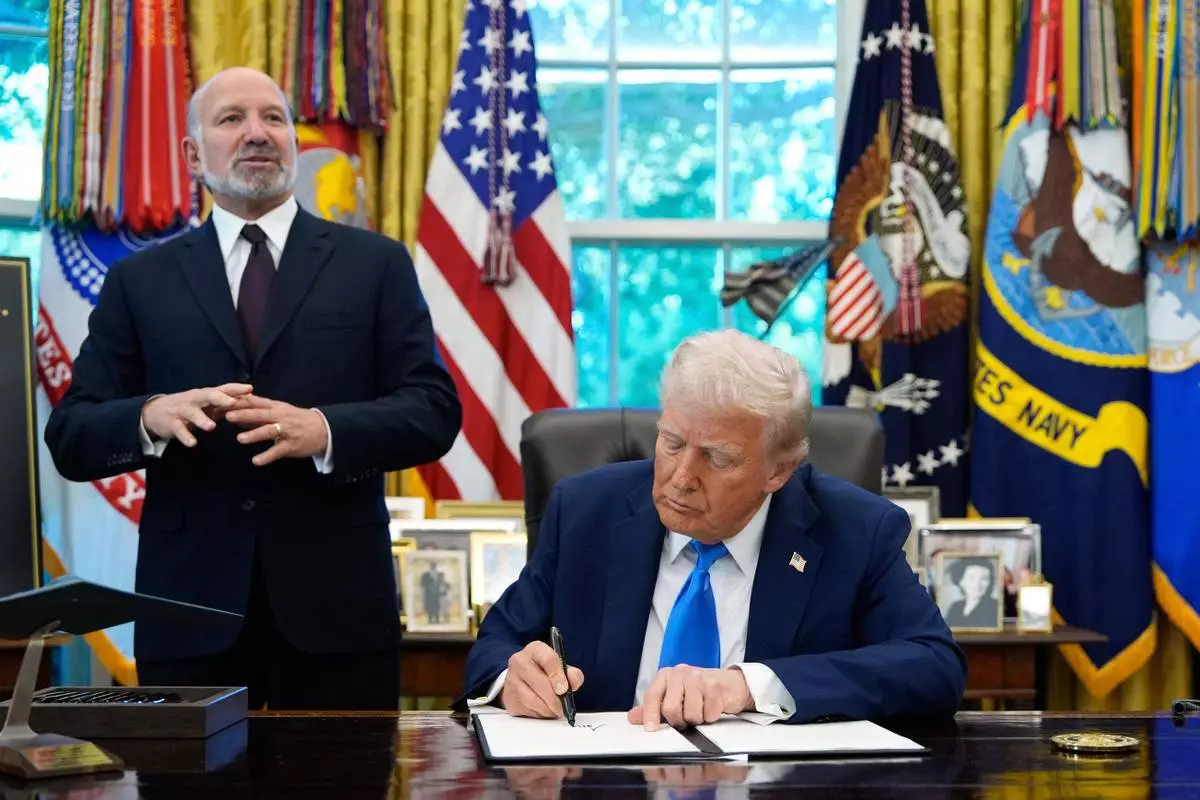
FILE - Commerce Secretary Howard Lutnick speaks as President Donald Trump signs the Gold Card executive order in the Oval Office of the White House, Sept. 19, 2025, in Washington. (AP Photo/Alex Brandon, File)
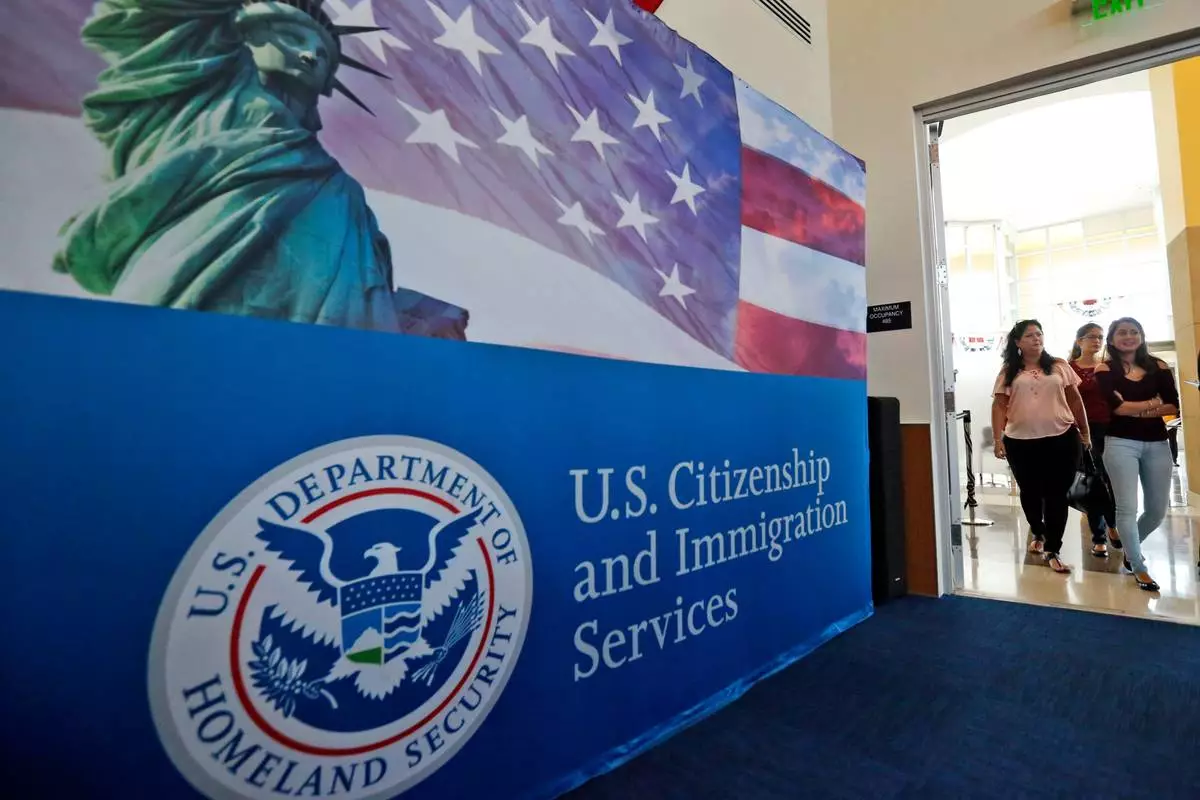
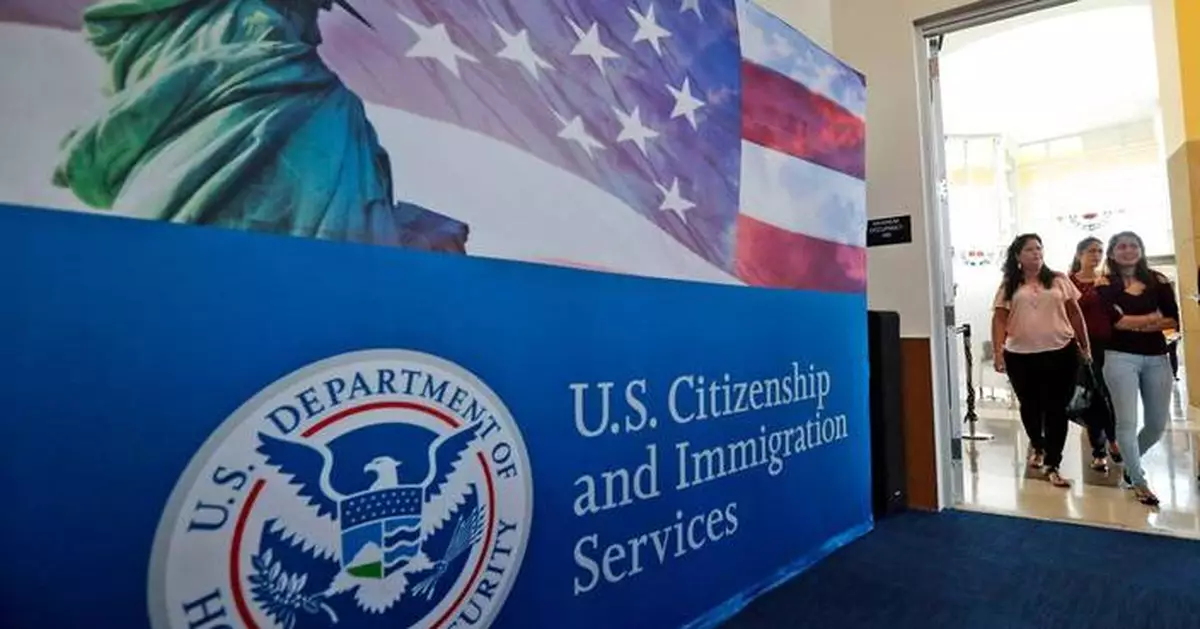
FILE - In this Aug. 17, 2018, file photo, people arrive before the start of a naturalization ceremony at the U.S. Citizenship and Immigration Services Miami Field Office in Miami. (AP Photo/Wilfredo Lee, File)
NEW YORK (AP) — Artificial-intelligence stocks are tumbling again on Tuesday, and the former superstars that had led the market to records are dragging Wall Street along with them.
The S&P 500 dropped 1.1% after erasing an early gain of 1% and pulled further from its all-time high set a week ago. The Dow Jones Industrial Average was down 283 points, or 0.6%, as of 11:35 a.m. Eastern time, and the Nasdaq composite was 1.9% lower.
Indexes swung lower as companies selling computer chips, memory and other building blocks of the AI boom broke from early gains to losses. Micron Technology went from an early jump of 4.2% to a drop of 4.9%, for example. That's a day after it soared 9.9% and two days after it plunged 13.3%.
The computer memory company’s stock has already tripled so far this year, raising criticism that it’s gone too far, too fast. Following last week’s industrywide sell-off, the question is whether AI stocks are heading for a long downturn or just needed a shake-out to get rid of excessive optimism.
The weakness for AI stocks drowned out the benefit Wall Street got from easing oil prices. The price for a barrel of Brent crude oil dropped 3.3% to $91.12 after briefly topping $98 the day before.
Oil prices have swung up and down as hopes fade and rise that the United States and Iran can reach a deal to reopen the Strait of Hormuz. A reopening would allow oil tankers to resume delivering crude from the Persian Gulf to customers worldwide.
The drop in oil prices helped stocks of airlines, which have been punished by soaring fuel costs. U.S. airlines spent more than $6 billion on jet fuel in April, up 78% from a year earlier, according to government data. Delta Air Lines rose 1.4%, and American Airlines climbed 1.8%.
To make up for their higher fuel bills, airlines have been raising their own airfares. It’s part of the broad, painful acceleration of inflation hitting U.S. shoppers because of the war with Iran. The high oil prices are also pushing bond yields higher worldwide, raising the pressure on stock prices.
Treasury yields eased a bit Tuesday with the fade in oil prices. The yield on the 10-year Treasury edged down to 4.55% from 4.56% late Monday. But it’s still well above its 3.97% level from just before the war with Iran.
The latest monthly updates on U.S. inflation will arrive later in the week, with one on consumer prices coming Wednesday and one on wholesale prices coming Thursday.
Inflation is high enough, and the U.S. job market looks strong enough, that traders on Wall Street largely expect the Federal Reserve will have to raise its main interest rate at least once by the end of this year. Higher interest rates would keep a lid on inflation, but they would also threaten to slow economies and undercut prices for stocks and all kinds of other investments.
The average long-term U.S. mortgage rate has already recently climbed to its highest level in nine months, and high costs to borrow money could discourage the building of AI data centers that are fueling the U.S. economy's growth.
On Wall Street, J.M. Smucker jumped 12.8% after reporting a stronger profit for the latest quarter than analysts expected.
The company behind the Folgers, Hostess and other brands benefited from higher prices charged for coffee and sweet baked goods. It joined the long list of U.S. companies delivering stronger profit growth than analysts expected, which has helped drive the S&P 500 to record after record this year.
United Natural Foods dropped 12.2% after reporting weaker revenue for the latest quarter than analysts expected.
Nuvalent soared 39% after GSK agreed to buy the biotech company for $10.6 billion. The shares of U.K.-based GSK that trade in New York added 0.6%.
In stock markets abroad, indexes were mixed in Europe following bigger moves in Asia.
South Korea’s Kospi jumped 8.2% and nearly recovered Monday’s plunge of 8.3%. It’s been beholden to the performance of big tech stocks like SK Hynix and Samsung Electronics.
AP Business Writers Matt Ott and Elaine Kurtenbach contributed to this report.
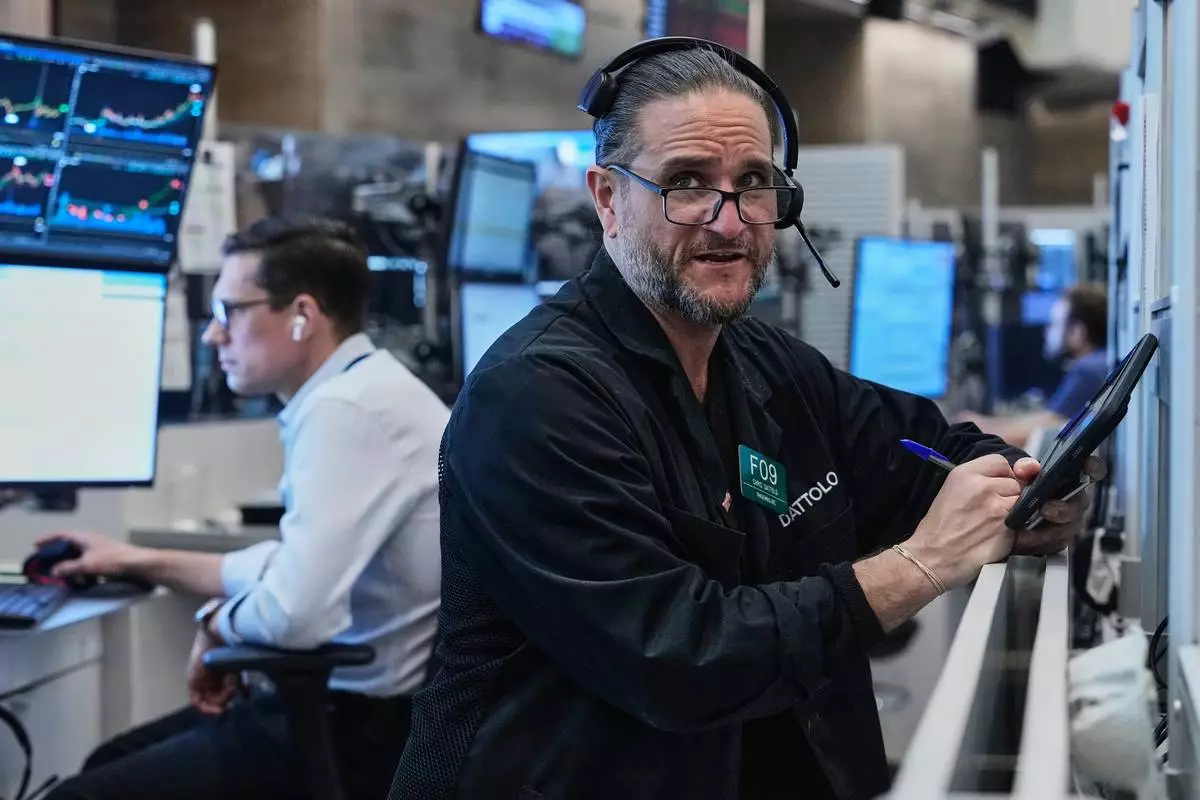
Options trader Chris Daytona, right, works on the floor of the New York Stock Exchange, Wednesday, June 3, 2026. (AP Photo/Richard Drew)
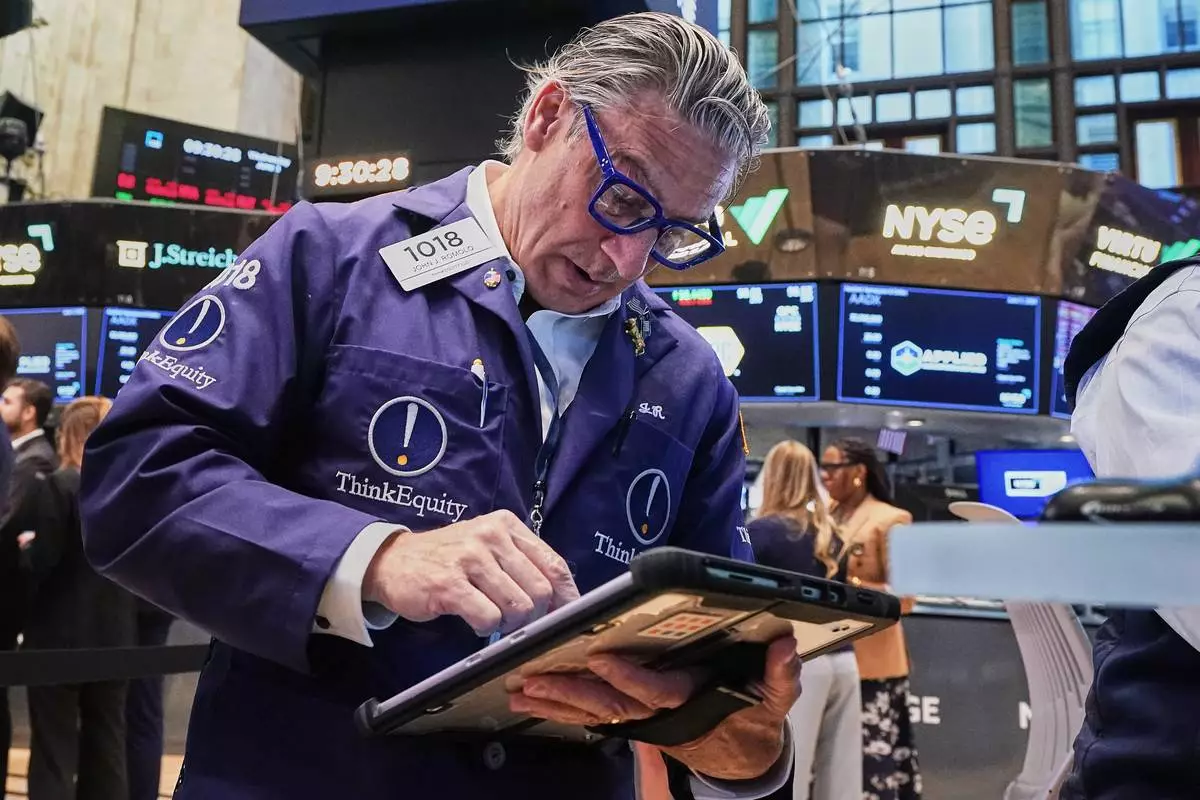
Trader John Romolo works on the floor of the New York Stock Exchange, Wednesday, June 3, 2026. (AP Photo/Richard Drew)
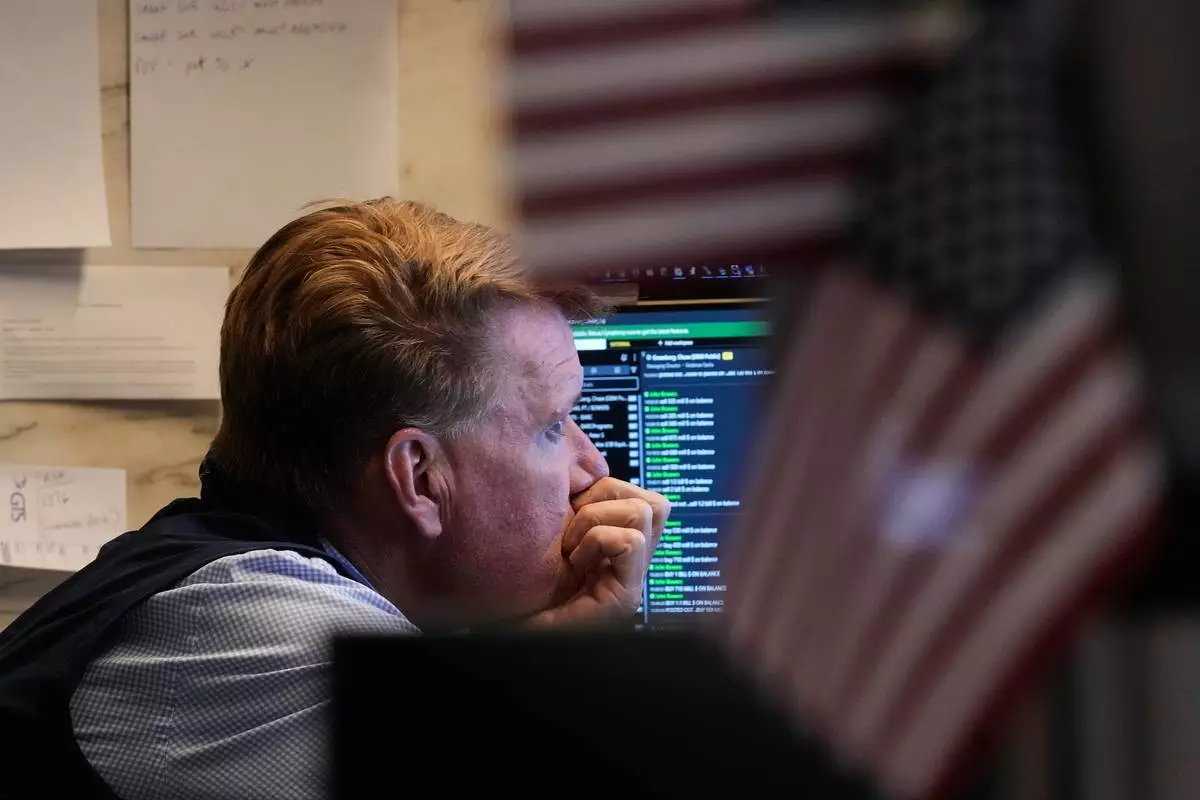
Trader John Bowers works on the floor of the New York Stock Exchange, Wednesday, June 3, 2026. (AP Photo/Richard Drew)
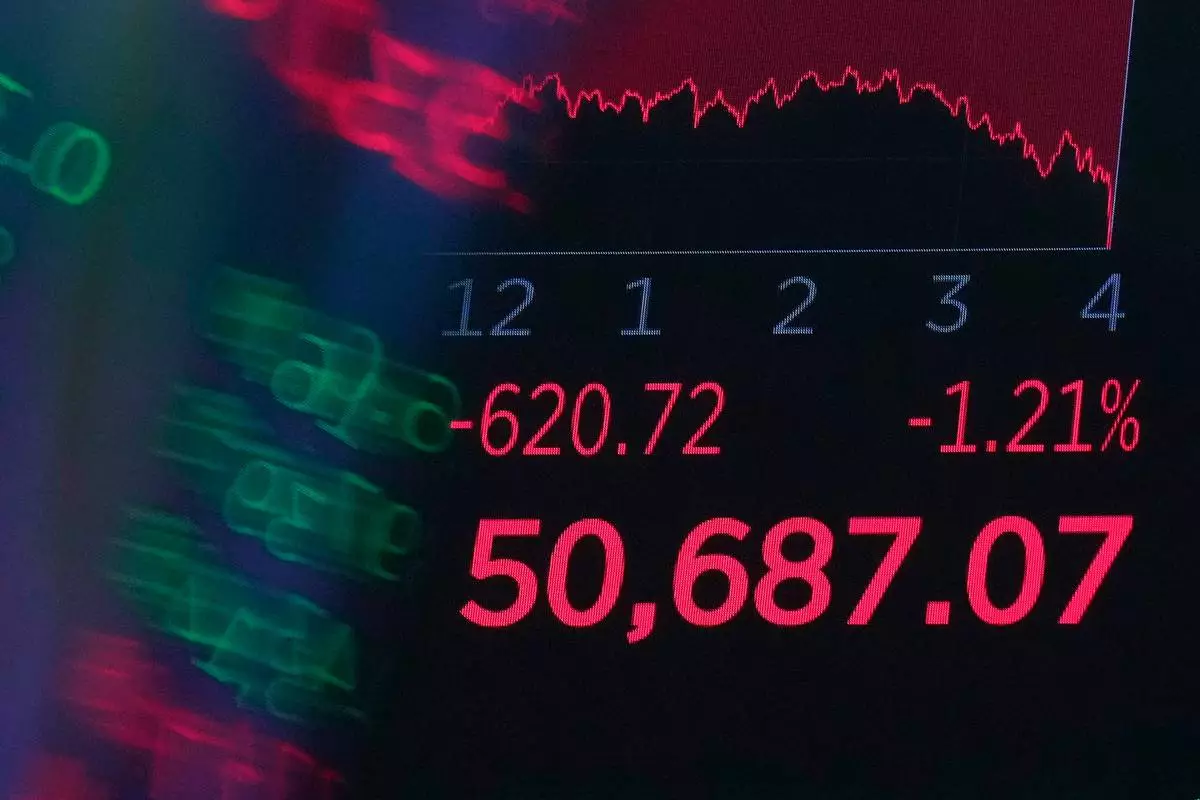
A board above the trading floor of the New York Stock Exchange displays the closing number for the Dow Jones industrial average, Wednesday, June 3, 2026. (AP Photo/Richard Drew)
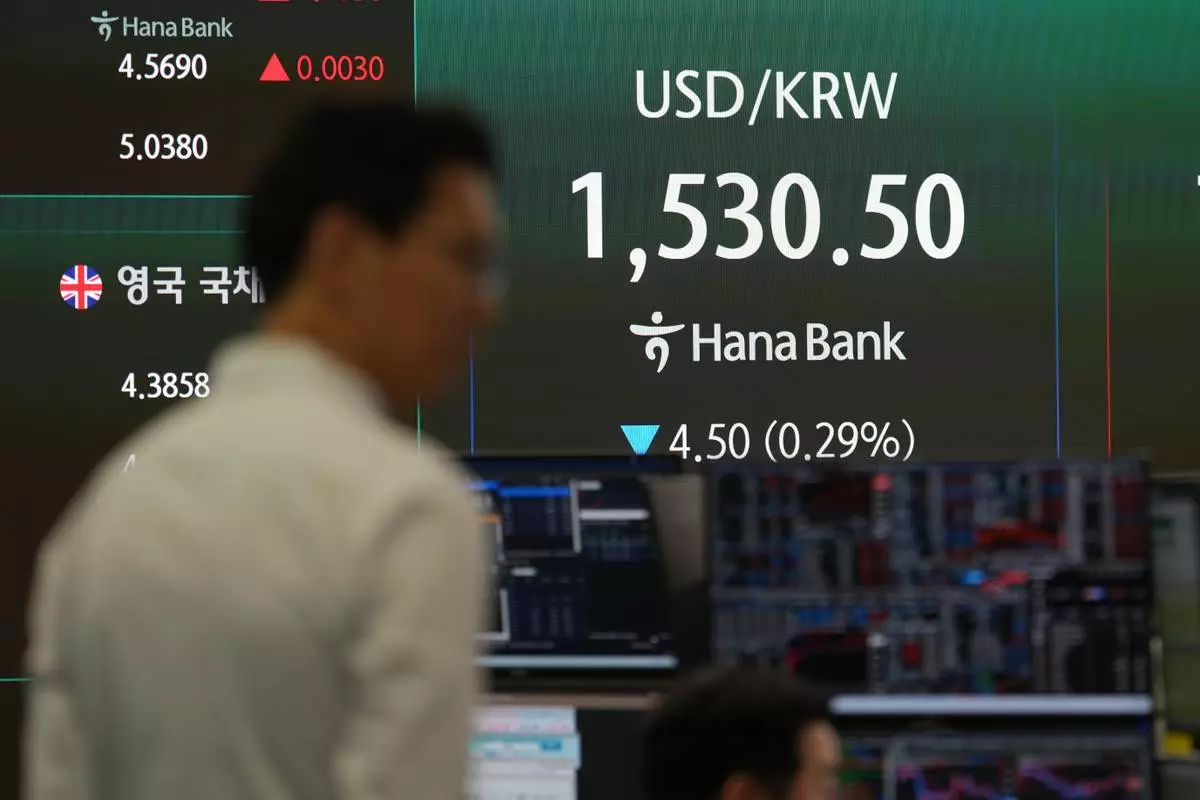
A dealer stands near the screens showing the foreign exchange rate between U.S. dollar and South Korean won at a dealing room of Hana Bank in Seoul, South Korea, Tuesday, June 9, 2026. (AP Photo/Lee Jin-man)
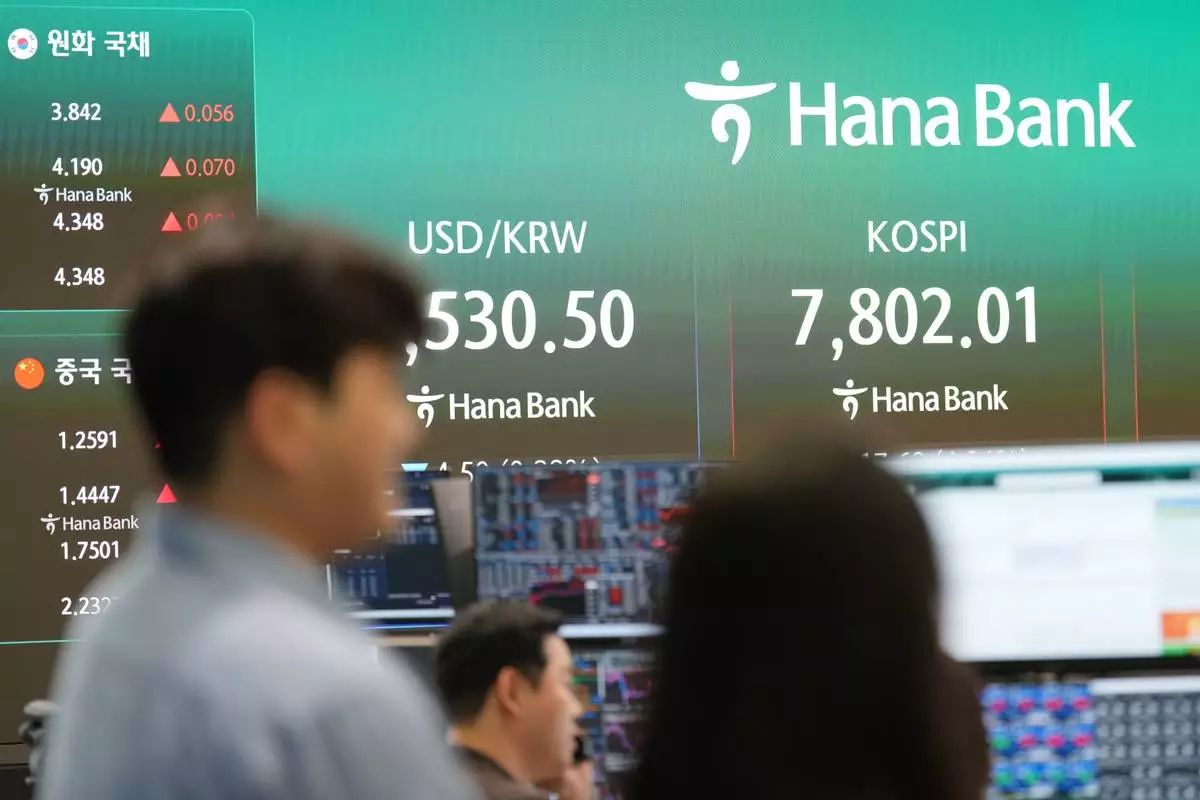
People stand near the screens showing the Korea Composite Stock Price Index (KOSPI) and the foreign exchange rate between U.S. dollar and South Korean won at a dealing room of Hana Bank in Seoul, South Korea, Tuesday, June 9, 2026. (AP Photo/Lee Jin-man)
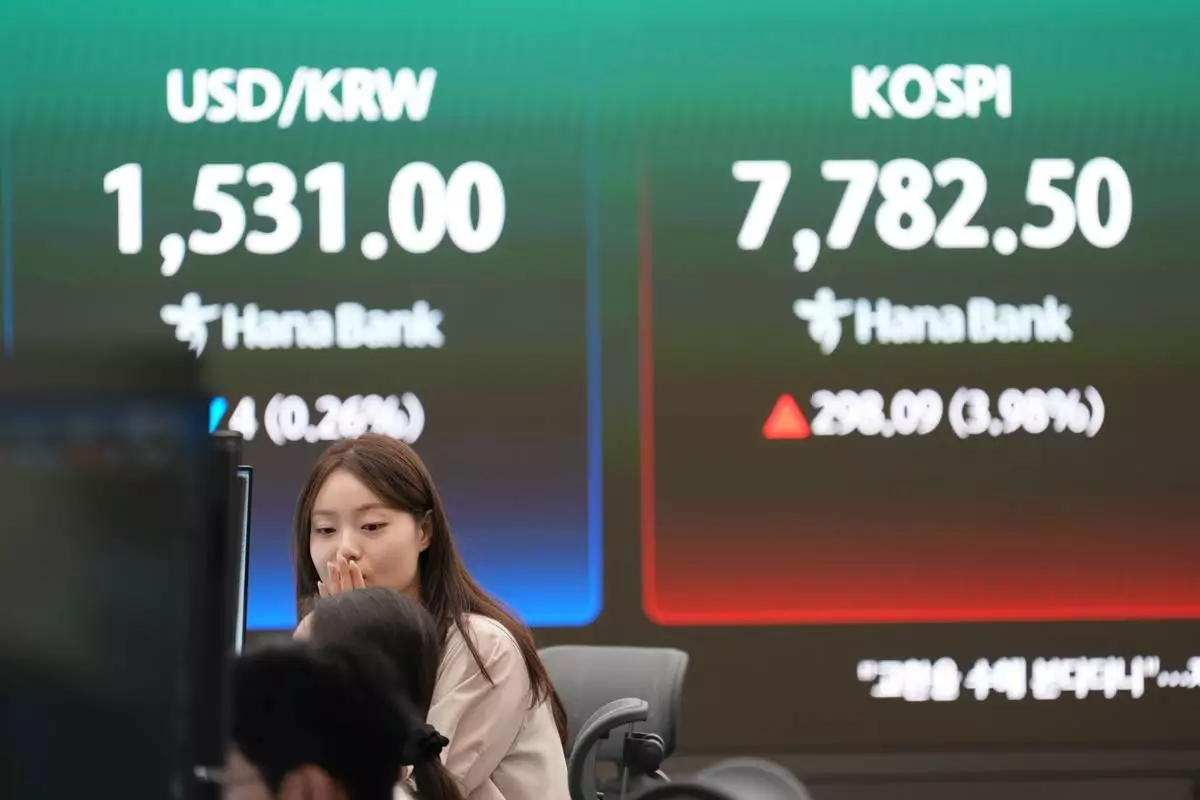
A dealer talks near the screens showing the Korea Composite Stock Price Index (KOSPI) and the foreign exchange rate between U.S. dollar and South Korean won at a dealing room of Hana Bank in Seoul, South Korea, Tuesday, June 9, 2026. (AP Photo/Lee Jin-man)
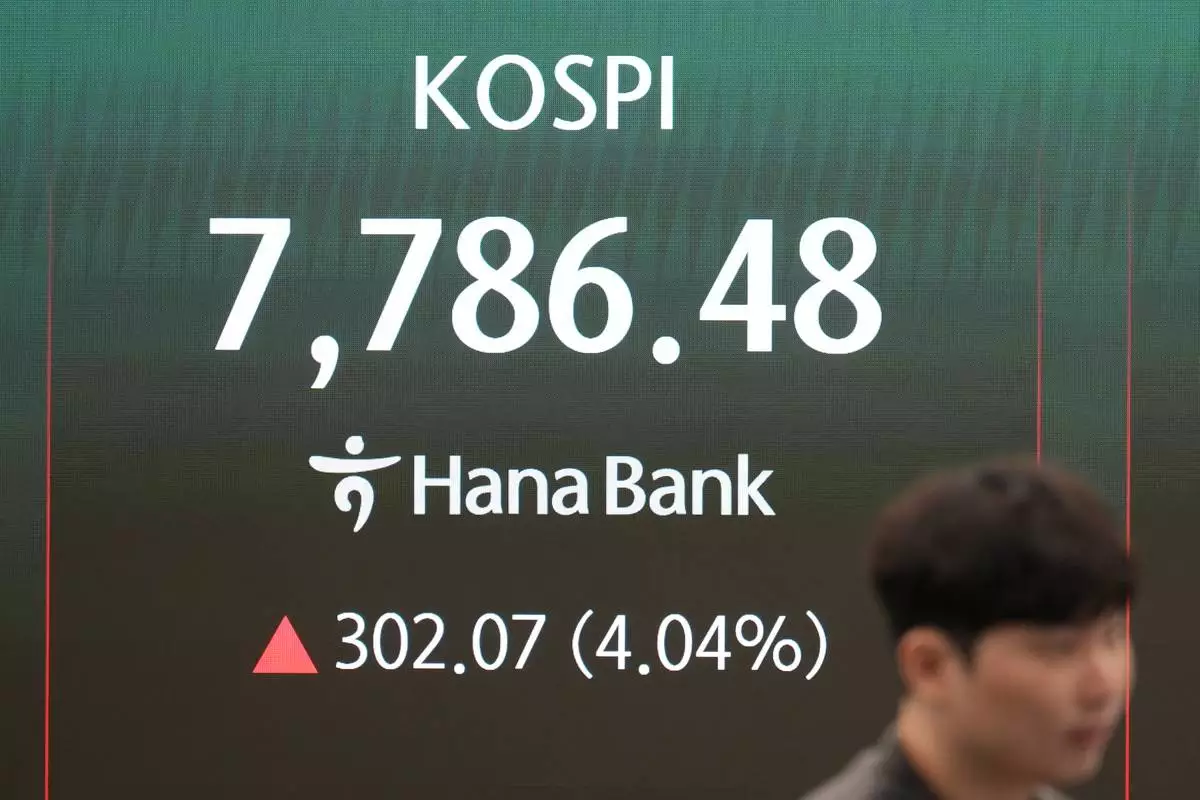
A dealer stands near the screen showing the Korea Composite Stock Price Index (KOSPI) at a dealing room of Hana Bank in Seoul, South Korea, Tuesday, June 9, 2026. (AP Photo/Lee Jin-man)