Skip to Content Facebook Feature Image

MLB's hitters are struggling to thrive after 35 in the age of analytics and increased velocity

Sport

MLB's hitters are struggling to thrive after 35 in the age of analytics and increased velocity
Sport

Sport

MLB's hitters are struggling to thrive after 35 in the age of analytics and increased velocity

2026-06-10 02:05 Last Updated At:02:10

PHOENIX (AP) — Nolan Arenado was slugging his way through the month of May when the Arizona Diamondbacks third baseman woke up one morning with an ailment that's familiar to those who felt invincible in their 20s but have advanced to their mid-to-late 30s.

His back hurt.

Not bad. Not enough to keep him out of the lineup. But it was one of those inexplicable moments that comes with being an aging Major League Baseball player — threatening to derail a hot streak for an eight-time All-Star who just turned 35.

“There's more aches and pains,” Arenado said. “There's just a little more work in the gym, getting prepared for the game, than there used to be. That's a learning curve.

"I've always been in the gym, always did that stuff, but there's definitely more maintenance.”

Arenado got past the minor back issue and is continuing a bounce-back season in the desert, batting .256 with eight homers and 30 RBIs through Monday's games. He's among a group of the 35-and-older crowd getting solid results at the plate, joining Los Angeles Dodgers veterans Freddie Freeman and Max Muncy, along with Houston's Christian Walker.

But it's a small club that's become smaller over the past decade.

MLB hitters who are 35 or older have combined to provide just 5.6 WAR (Wins Above Replacement, per FanGraphs) through roughly the first 1/3 of the season, continuing a trend that's accelerated over the past decade.

In the early 2000s, older stars were the norm in the big leagues. It peaked in 2003 when older hitters combined for 71.3 WAR, with a group highlighted by Barry Bonds, Frank Thomas, Kenny Lofton, Luis Gonzalez and Jeff Bagwell.

So what's changed?

Let's look at some of the reasons why MLB is skewing younger this days:

Baseball's analytical era can be traced back to the work of Bill James in the 1970s and 1980s, but terms like WAR, wOBA, BABIP, and OPS+ didn't start to become widespread in the big leagues until at least the late 2000s.

Suddenly, the eye test wasn't enough for MLB general managers. Cold, hard numbers were in.

And — overwhelmingly — those numbers showed that the best years for a big league hitter usually come from their mid-20s to early 30s.

That's directly correlated to MLB teams locking up young players to long-term contracts. Arizona's Corbin Carroll, Detroit's Kevin McGonigle, Pittsburgh's Konnor Griffin, Kansas City's Bobby Witt Jr. and Seattle's Julio Rodriguez are among dozens of promising players who were signed to lucrative deals well before they reach free agency.

Spending on veterans is no longer in vogue. Walker — a three-time Gold Glove first baseman who has hit nearly 200 career homers — signed with the Astros for a relatively modest $60 million, three-year deal after the 2024 season when he was 33 years old.

“I think it has a lot to do with the ability to measure guys’ value on the field,” Walker said. “For a long time, WAR didn’t exist, wRC+ wasn’t a stat, right? So, you went off of the optics or this guy’s a good clubhouse guy or he’s got experience, he’s been to a World Series.”

Today's young stars have come of age in a game where velocity is king, but it wasn't that way when Freeman and others broke through. The average MLB fastball in 2026 is north of 94 mph, with 18 qualified pitchers averaging at least 96. When Freeman debuted 17 years ago, the league-wide average was under 92 and no qualified pitchers averaged at least 96.

Arenado said that one of the first things that becomes tougher for MLB veterans is the ability to handle really good fastballs — particularly inside. It makes for tough matchups against pitchers like Milwaukee's Jacob Misiorowski, who routinely throws 100 mph.

“I feel like just the general age of the levels and the development is trending younger and younger,” Walker said. “And there might be something to that — like your best bullets might be when you’re 27 years old.”

Dodgers manager Dave Roberts has Freeman and Muncy in his lineup on nearly a daily basis. He also played in the big leagues until he was 36 years old, retiring in 2008, giving him some personal experience on the aging process.

“The hardest part is to expect and want the same output you've always had, but not be willing to change the equation,” Roberts said.

Roberts said the process is different for every player. Some need to work out more. Some less. Others need more sleep. Diet becomes more important. The tricky part is that the habits that brought you to the big leagues might not be the same ones that will keep you there in your mid-to-late 30s.

Walker, who didn't become a starter in the big leagues until he was 28, said he's embraced getting older and enjoys analyzing his blood tests that might signal what's causing vitamin deficiencies or inflammation. The tests also show how much alcohol might affect his body or the importance of a good night's sleep.

“For myself, no real magic recipe, just chalk it up to being a late bloomer,” Walker said. “My age is older than most guys, but service time isn’t. I haven’t been in the big leagues for 20 years or anything like that. Just fortunate that I still can help the team.”

Diamondbacks manager Torey Lovullo said he believed there were two main reasons Arenado was still having success in his 14th big league season. First, he gave credit to the D-backs' hitting coaches.

But maybe most importantly, Arenado has listened to those coaches, embraced change and found new ways to have success.

“There's an adjustment to work habits and mindset once you get to that level where things aren't as easy as they used to be,” Lovullo said. “Some say ‘I’ve had my career, it's not as easy as it once was, and I want to shut it down.'”

Later he added: "It's fun to watch Nolan Arenado have all this success, but he's worked his butt off. He's working as hard as any 22 or 23 year old we have on this team."

AP Sports Writer Kristie Rieken in Houston contributed to this story.

AP MLB: https://apnews.com/MLB
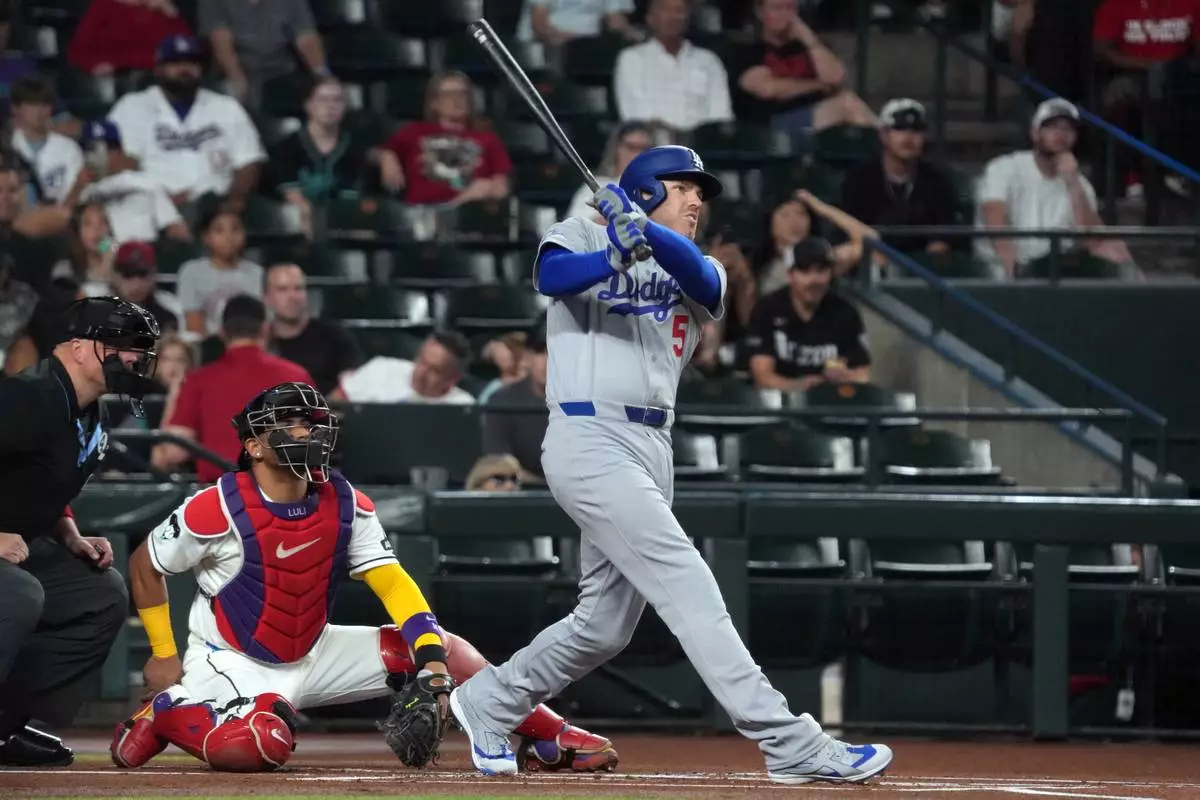
Los Angeles Dodgers' Freddie Freeman hits a two-run home run against the Arizona Diamondbacks in the first inning of a baseball game, Tuesday, June 2, 2026, in Phoenix. (AP Photo/Rick Scuteri)

Los Angeles Dodgers' Freddie Freeman hits a two-run home run against the Arizona Diamondbacks in the first inning of a baseball game, Tuesday, June 2, 2026, in Phoenix. (AP Photo/Rick Scuteri)
WASHINGTON (AP) — The Trump administration has warned more than 500 hospitals that they are failing to provide the public with basic pricing information — arguing that the lack of disclosure is keeping healthcare costs higher than they should be.

The Associated Press obtained exclusively the list of hospitals that since April have either received letters of warning or, in more severe cases, requests to submit plans to provide transparent pricing. Failing to comply with the warnings comes with penalties as high as $2 million annually for each recipient that doesn't create a plan to post clear pricing data.

The letters are meant to fix a fundamental problem that patients, employers and insurers might not know ahead of time the cost of blood work, an imaging test or another form of treatment, and as a result pay more than they should have. AP has posted the list of hospitals that have received letters.

A senior administration official who requested anonymity to provide the list said that President Donald Trump plans to tighten enforcement of price transparency standards made possible by a 2019 executive order signed by Trump. More hospitals are likely to receive letters regarding the absence of pricing data, the official said.

The warnings are the latest example of Trump leaning into the message that his administration is fixing the problem of healthcare expenses that can drain a family budget. It's a calculated pitch ahead of the November midterms at a time when affordability is a top concern for voters. But Trump is also vulnerable on this particular issue, as his administration allowed subsidies to lapse for people buying insurance through the 2010 Affordable Care Act, widely known as Obamacare.

Just 29% of U.S. adults approved of Trump's healthcare policies according to the most recent survey on the issue by The Associated Press-NORC Center for Public Affairs Research. The president fared slightly worse on that issue in the December survey than on the economy, immigration or his management of the federal government.

Gary Claxton, senior vice president and the director of the program on the healthcare marketplace at KFF, said that the pricing data is more useful for benefit consultants and others in the sector with access to additional information than it would be for consumers. But he said that the standards in reporting pricing data can still create difficulty in making accurate comparisons about the costs and quality of the services being provided.

“There’s a pretty widespread belief that prices are more divergent than they should be in a competitive market — and this is one way of trying to understand that more," Claxton said. “It’s moving in the right direction, but that doesn’t mean it has gotten to where it needs to be.”

The push for price transparency could have a particular impact on Republican strongholds like Texas, Florida, Indiana, Alabama and Louisiana, which are among the states with the highest count of hospitals that have not provided adequate information on the costs of medical services.

Texas had 42 hospitals that received warnings, more than any other state. Baptist Medical Center in San Antonio, Texas, among the state's largest hospitals with 1,585 beds, received a letter, as did the University of Texas MD Anderson Cancer Center in Houston.

Missouri-based Ascension, one of the country’s largest hospital systems, had 13 hospitals in multiple states that received letters. The Republican state of Indiana had 34 hospitals that received letters, nearly as many as the 38 in Democratic-led California, even though California has five times more people than Indiana.

Administration officials interviewed for this article noted that Christiana Hospital in Biden's home state of Delaware also received a warning letter.

The letters reflect two competing philosophies between Republicans and Democrats over how to handle the ballooning expense of healthcare, which is also a growing risk for the federal government's own balance sheet.

Biden's team put more emphasis on record enrollment in Obamacare programs that increased the percentage of people with health insurance. Biden also signed a bill that allowed the government to begin negotiating prices for some Medicare drugs directly with pharmaceutical companies. That program, which has continued into Trump’s second administration, has helped knock down the list prices of some of Medicare’s costliest drugs.

The Trump administration, by contrast, has focused more on trying to find ways to provide details on pricing — such as promoting the TrumpRx site for prescription drugs — betting that doing so will lead to better and more efficient spending on healthcare as the data gets crunched.

Critics have said Trump's negotiated prices on prescription drugs might not produce genuine savings for many Americans with insurance, while the administration has estimated savings in excess of $500 billion over 10 years.

With the various lists of hospital prices, the administration wants providers to make it easier to access the files and to ensure the information in them is legitimate, instead of being based on estimates or omitting numbers for key procedures.

The House Committee on Energy and Commerce has a hearing planned for Wednesday on price transparency.

“Transparency is the foundation of a healthcare system that rewards competition based on cost and quality,” Shawn Gremminger, CEO of the National Alliance of Healthcare Purchaser Coalitions, plans to say in his prepared remarks.

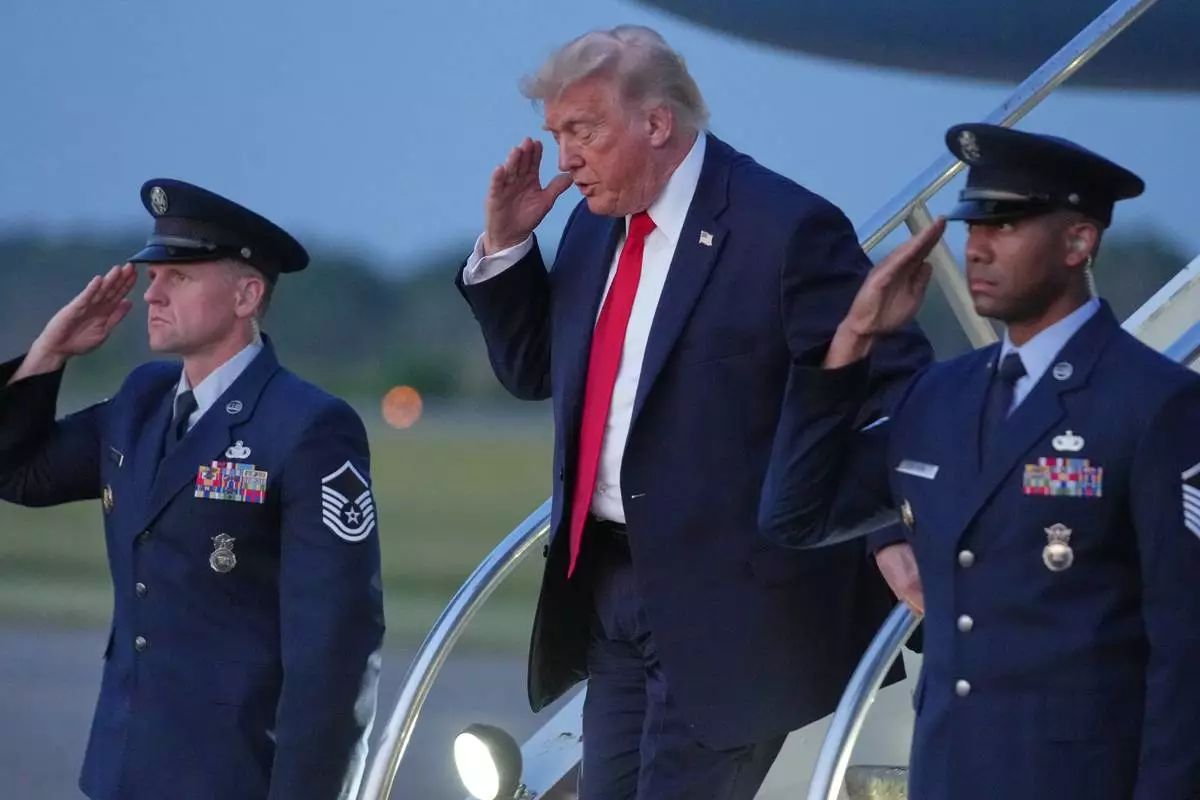
President Donald Trump arrives on Air Force One, Friday, June 5, 2026, at Morristown Airport in Morristown, N.J. (AP Photo/Mark Schiefelbein)

President Donald Trump arrives on Air Force One, Friday, June 5, 2026, at Morristown Airport in Morristown, N.J. (AP Photo/Mark Schiefelbein)

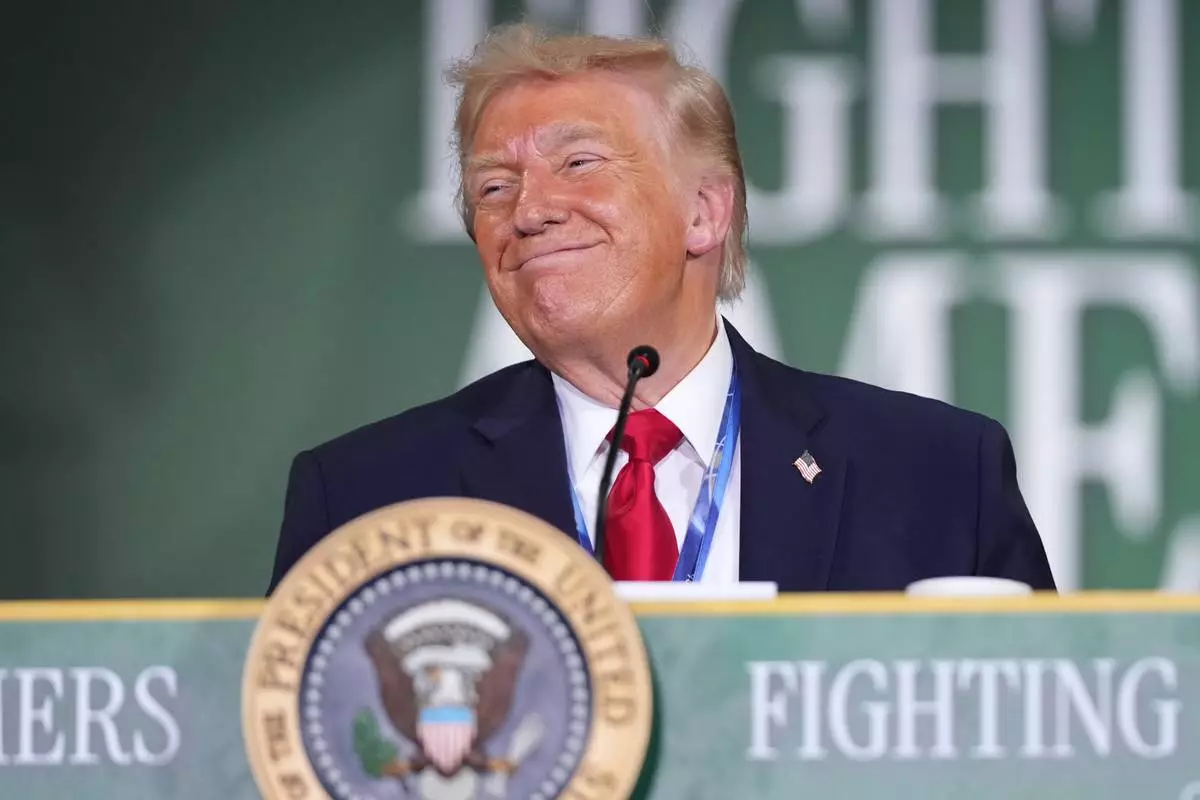
President Donald Trump listens during an event at Custer Farms in Chippewa Falls, Wis., Friday, June 5, 2026. (AP Photo/Mark Schiefelbein)

President Donald Trump listens during an event at Custer Farms in Chippewa Falls, Wis., Friday, June 5, 2026. (AP Photo/Mark Schiefelbein)

Recommended Articles