Confirmed Ebola cases in the Democratic Republic of the Congo (DRC) and Uganda have surpassed 600 as response efforts face operational constraints, the Africa Centers for Disease Control and Prevention (Africa CDC) said Tuesday.
In its latest outbreak update, the African Union's specialized continental public health agency said confirmed Ebola cases in the DRC and Uganda have reached 608, with the death toll climbing to 102 as of Monday.
Uganda has reported no new confirmed cases in the last 24 hours. In the DRC, 45 new confirmed cases were reported during the past 24 hours, bringing the total there to 589, according to the Africa CDC.
The Africa CDC warned that ongoing response efforts are "facing significant operational constraints," noting that health facilities in several affected areas are in poor condition and often lack potable water, incinerators, personal protective equipment, and decontamination supplies.
Insecurity, a shortage of ambulances, growing staffing pressures with some health workers unpaid or without incentives, and poor roads are further slowing access and response operations, it said, while highlighting the existing lack of community trust as "a critical challenge" jeopardizing ongoing response efforts.
The agency also expressed concern over the negative impacts of travel restrictions imposed on affected and at-risk African countries despite guidance from the World Health Organization and the Africa CDC.
The Africa CDC outlined several "immediate priorities," including strengthening community engagement and risk communication, fast-tracking multidisciplinary rapid response teams to high-risk areas, addressing gaps in infection prevention and safe burial, as well as enhancing surveillance and contact follow-up.

Ebola cases in DR Congo, Uganda surpass 600 amid operational constraints: Africa CDC

Ebola cases in DR Congo, Uganda surpass 600 amid operational constraints: Africa CDC
China on Thursday called on the international community to find a home for the Secretariat of the Agreement under the United Nations Convention on the Law of the Sea on the Conservation and Sustainable Use of Marine Biological Diversity of Areas beyond National Jurisdiction (BBNJ Agreement) best positioned for its efficient operation, pointing out problems with the joint candidature by Belgium and Chile.
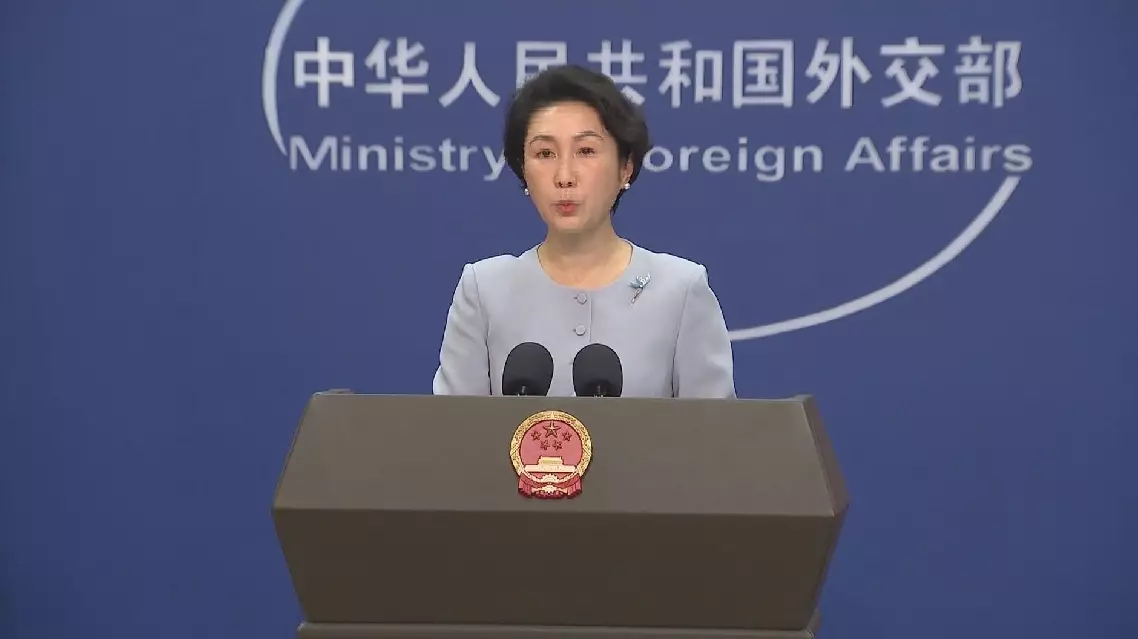
Chinese foreign ministry spokeswoman Mao Ning made the remarks at a regular press briefing after Belgium and Chile on Nov. 6 announced the decision to join their candidatures for the seat of the secretariat. This joint candidature provides for the secretariat being based in the city of Valparaíso, Chile, the Clearing-House Mechanism (CHM) will be installed in and operating from Brussels, and Brussels will host the meetings of the subsidiary bodies.
Mao said that earlier this year, China nominated Xiamen to bid for the seat of the Secretariat of the BBNJ Agreement, noting that the candidature has quickly received the support of the majority of the Parties to the Agreement.
"By seeking an unauthorized backroom deal on issues that should be determined by the Conference of the Parties (COP), the joint candidature is problematic in at least six aspects," the spokesperson said.
First, it contravenes the stipulations of the BBNJ Agreement. According to the agreement, the seat of the secretariat, the specific modalities for the operation of the CHM, including its installation, as well as where the subsidiary bodies hold their meetings shall all be determined by COP, and the CHM shall be managed by the secretariat, she said.
Belgium and Chile traded under the table what should be collectively determined by all Parties to the Agreement. This is a violation of the stipulations of the agreement and an act of disrespect to the authority of COP, Mao said.
Second, it contravenes procedural justice, Mao said, adding that the choice of the secretariat seat and the development of the CHM are two items of different nature scheduled to be collectively determined by COP through separate decisions.
The Belgium-Chile proposal bundles the two together in an attempt to force it as a package upon other Parties, which is against applicable procedural rules and a hijack of the Parties' will, she said.
Third, it contravenes established international practice. Stressing that the management of the CHM is a key mandate of the secretariat, Mao said in the practice established by other international treaties like the Convention on Biological Diversity, the secretariats and CHMs are located in the same place.
The Belgium-Chile proposal, which locates the Secretariat and the CHM separately across the ocean, will without a doubt raise the operation cost, lower management efficiency, and increase the financial burden on the Parties to the Agreement, Mao said.
Fourth, it contravenes equitable geographical distribution. The vast majority of major global institutions are based in Europe, with none located in Asia. Developing countries have been calling on global institutions to redress this long-existing injustice and bring about greater fairness and equity, the spokesperson said.
She said Brussels is already home to the headquarters of NATO and the EU. "If this non-coastal city were to host the CHM of an ocean-related treaty as well, it would further widen the digital divide to the detriment of the shared interests of the Global South."
Fifth, it contravenes fair competition. Noting the BBNJ Secretariat is tasked with contributing to global ocean governance, and the selection of its seat should be a fair and friendly process in keeping with the rules, Mao said the Belgium-Chile proposal, however, politicizes the bidding process and attempts to divide Parties into camps.
It not only undermines the principle of fair, friendly and healthy competition, but also negates the essence of multilateralism, she said.
Sixth, it contravenes the original commitment. Chile first made the bid citing its significance for the Global South. Yet according to the new proposal, Chile will no longer assume the substantive functions of the secretariat. Belgium, for its part, only seeks to host the CHM and thereby has in effect relinquished its bid for the secretariat seat, Mao said.
Stressing that the adoption and entry into force of the BBNJ Agreement is a victory of multilateralism, Mao said its implementation likewise needs to serve and advance the common well-being of all humanity.
"China firmly supports multilateralism and the cause of the UN, and is committed to promoting and improving global ocean governance. As one of the first signatories and Parties to the Agreement and the largest assessed-contributor to its budget, China has the will, capability and confidence to provide strong support and backing for the operation of the Secretariat. China is full ready. We look forward to working with all Parties to the Agreement to keep selection of the Secretariat seat proceeding in the right direction, and uphold the overall and fundamental interests of the international community, especially those of developing countries," Mao said.
China points to problems with Belgium-Chile joint candidature to host UN marine biodiversity secretariat