BOGOTA, Colombia (AP) — Colombian presidential candidate Abelardo de la Espriella on Tuesday urged prosecutors to investigate whether rebel groups coerced citizens in remote municipalities into voting for governing party candidate Sen. Iván Cepeda during the May 31 first-round presidential election.
De la Espriella’s campaign issued a statement saying that Cepeda secured more than 70% of the vote across 109 municipalities with active illegal armed groups, reaching as high as 97% in some locations. Cepeda’s camp didn't immediately respond to the accusations.
Cepeda, an ally of President Gustavo Petro and a former member of Colombia's communist party, has acted as a mediator between Colombia’s government and Marxist rebels. In the first round of the election, he won around 41% of the overall vote, which had 14 candidates on the ballot.
“These results, on their own, do not constitute definitive proof of a crime,” De la Espriella’s campaign said, noting it had filed a complaint with prosecutors. “But they should oblige authorities to investigate if there were threats, pressures or mechanisms to coerce voters and alter their freedom.”
De la Espriella, a conservative lawyer who supports U.S. President Donald Trump and calls himself “The Tiger,” came out in front in the first round with 43.7% of the vote, followed by Cepeda, who garnered 40.9%. The candidates will face off again in a runoff election on June 21 that will decide who will lead Colombia during the next four years.
A European Union electoral observation mission said that it had received complaints from voters who said that they were pressured by “government officials and illegal armed groups” during the May election, but the mission didn't specify which candidate people had been pressured to vote for.
Security has become one of the top concerns for voters in Colombia, along with corruption and the state of the nation’s healthcare system.
The municipalities where Cepeda got a large portion of the votes are located along Colombia’s Pacific coast, an area of the country that tends to support the current government.
Under Petro, a former member of the now defunct M-19 rebel group, Colombia’s government has attempted to stage peace talks with the nation's remaining rebel groups, under a strategy known as “total peace.”
Analysts say rebel groups have used ceasefires granted to them by the government to strengthen their grip over rural communities, where they run illicit ventures such as cocaine labs, tax legal businesses and threaten civilians who stand in their way.
Cepeda has said during the campaign that he favors the continuation of negotiations with rebel groups, even if he would adjust some of the methods. De la Espriella has promised to cancel the talks and take a more confrontational approach to rebel groups that includes using airplanes to spray coca fields with herbicides.
Trump recently endorsed de la Espriella on Truth Social, praising the 47-year-old lawyer as a “Smart, Strong and Tough Leader” who would be “tremendously successful” in restoring “LAW AND ORDER!”
Petro replied to Trump’s endorsement with a post on X, writing that “freedom dies” when one country intervenes in another’s affairs.
Follow AP’s coverage of Latin America and the Caribbean at https://apnews.com/hub/latin-america

Presidential candidate Abelardo de la Espriella of the Defenders of the Motherland movement salutes after voting during the presidential election in Barranquilla, Colombia, Sunday, May 31, 2026. (AP Photo/Fernando Vergara)
NEW YORK (AP) — More sudden reversals for high-flying artificial-intelligence stocks sent Wall Street reeling on Tuesday.
The S&P 500 fell 0.3% after careening between an early gain of 1% and a midday loss of 2.3%, pulling further from its all-time high set a week ago. The Dow Jones Industrial Average was up 106 points, or 0.2%, with a little less than an hour remaining in trading, and the Nasdaq composite was 1% lower.
Indexes swung lower after companies selling computer chips, memory and other building blocks of the AI boom broke from early gains to losses. Micron Technology went from a jump of 4.2% to a drop of 4.3%, for example. That's a day after it soared 9.9% and two days after it plunged 13.3%.
The computer memory company’s stock has already tripled so far this year, raising criticism that it’s gone too far, too fast. Following last week’s industrywide sell-off, the question is whether AI stocks broadly are heading for a long downturn or just needed a shake-out to get rid of excessive optimism.
Marvell Technology dropped 4.4%, and Advanced Micro Devices sank 9% after both AI winners also erased early-morning gains.
All the while, several big-name AI companies are racing to list their stocks on a U.S. exchange and sell them at high prices. OpenAI, the maker of ChatGPT, said Monday it was the latest to file confidential paperwork with U.S. regulators for an initial public offering. SpaceX's IPO could happen later this week.
The weakness for AI stocks drowned out the benefit Wall Street got from easing oil prices. More stocks in the S&P 500 rose than fell, despite the sharp swings for the overall index, as the price for a barrel of Brent crude oil sank 3% to $91.45.
Oil prices have swung as hopes rise and fade that the United States and Iran can reach a deal to reopen the Strait of Hormuz. A reopening would allow oil tankers to resume delivering crude from the Persian Gulf to customers worldwide.
Oil prices pared their losses, though, after President Donald Trump said Iran was responsible for downing an American military helicopter near the Strait of Hormuz and that the United States “must” respond to the attack.
High oil prices caused by the war with Iran have already created a painful acceleration of inflation for U.S. shoppers. They have also pushed bond yields higher worldwide, raising the pressure on stock prices.
Treasury yields eased a bit Tuesday with the fade in oil prices. The yield on the 10-year Treasury fell to 4.53% from 4.56% late Monday, though it’s still well above its 3.97% level from just before the war with Iran.
The latest monthly updates on U.S. inflation will arrive later in the week, with one on consumer prices coming Wednesday and one on wholesale prices coming Thursday.
Inflation is high enough, and the U.S. job market looks strong enough, that traders on Wall Street largely expect the Federal Reserve will have to raise its main interest rate at least once by the end of this year. Higher interest rates would keep a lid on inflation, but they would also threaten to slow the economy and undercut prices for stocks and all kinds of other investments.
The average long-term U.S. mortgage rate has already recently climbed to its highest level in nine months, and high costs to borrow money could discourage the building of AI data centers that are fueling the U.S. economy's growth.
On Wall Street, airline stocks flew higher after the drop in oil prices indicated less pressure on their fuel bills. American Airlines rose 4.9%, and Delta Air Lines gained 4%.
J.M. Smucker jumped 9.5% after reporting a stronger profit for the latest quarter than analysts expected. The company behind the Folgers, Hostess and other brands benefited from higher prices charged for coffee and sweet baked goods. It joined the long list of U.S. companies delivering stronger profit growth than analysts expected, which has helped drive the S&P 500 to record after record this year.
Nuvalent soared 39.1% after GSK agreed to buy the biotech company for $10.6 billion. The shares of U.K.-based GSK that trade in New York added 0.9%.
In stock markets abroad, indexes dipped in Europe following bigger moves in Asia.
South Korea’s Kospi jumped 8.2% and nearly recovered Monday’s plunge of 8.3%. It’s been beholden to the performance of big tech stocks like SK Hynix and Samsung Electronics.
AP Business Writers Matt Ott and Elaine Kurtenbach contributed to this report.
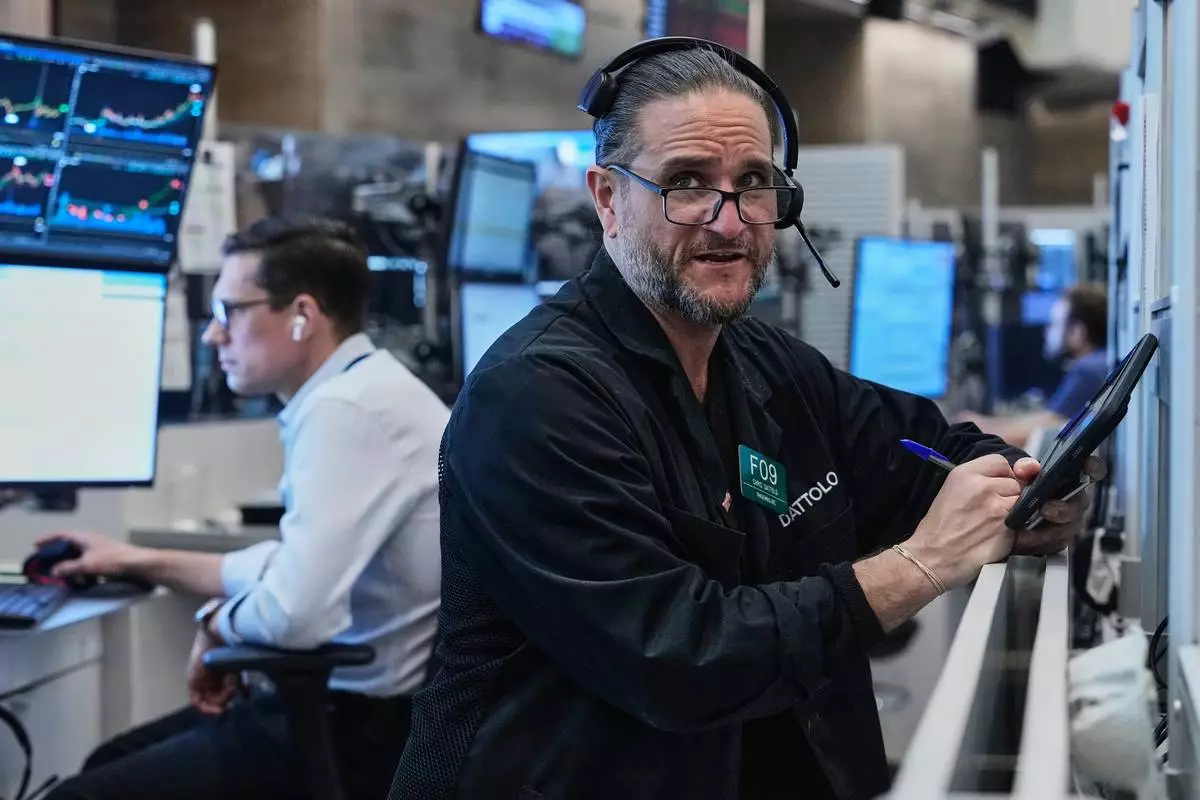
Options trader Chris Daytona, right, works on the floor of the New York Stock Exchange, Wednesday, June 3, 2026. (AP Photo/Richard Drew)
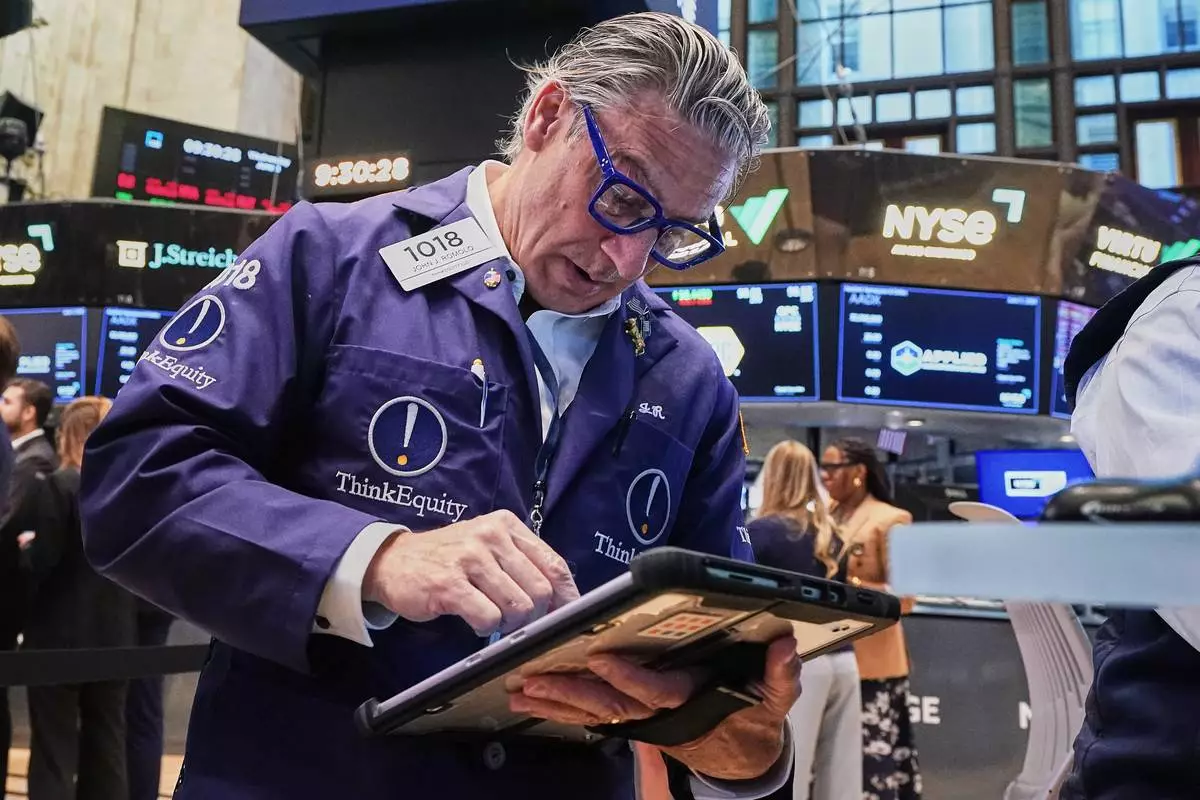
Trader John Romolo works on the floor of the New York Stock Exchange, Wednesday, June 3, 2026. (AP Photo/Richard Drew)
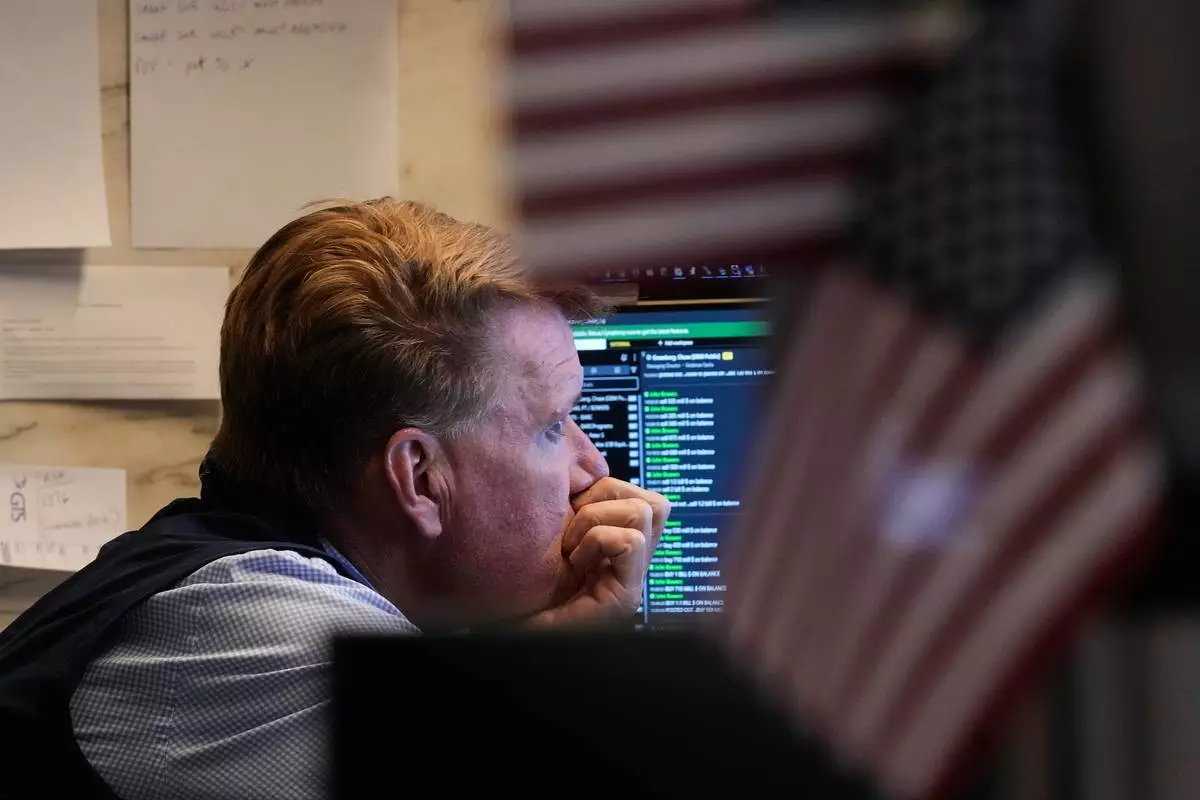
Trader John Bowers works on the floor of the New York Stock Exchange, Wednesday, June 3, 2026. (AP Photo/Richard Drew)
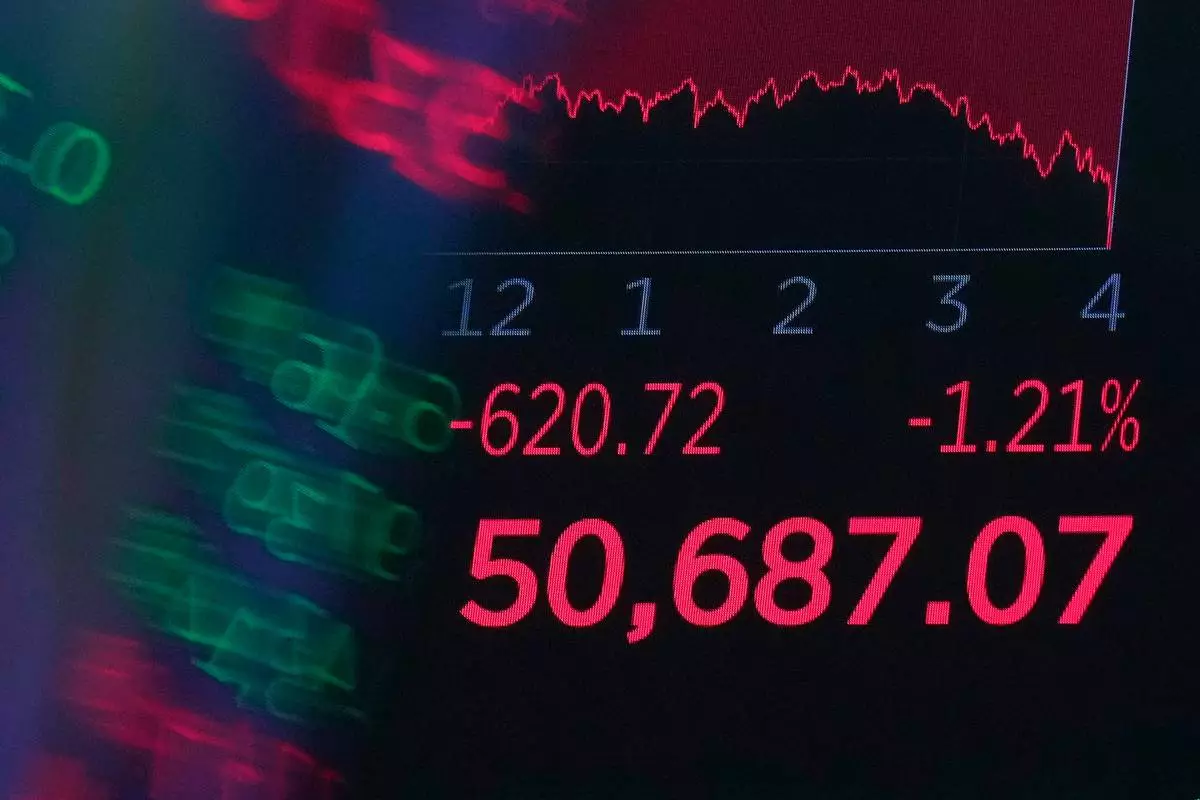
A board above the trading floor of the New York Stock Exchange displays the closing number for the Dow Jones industrial average, Wednesday, June 3, 2026. (AP Photo/Richard Drew)
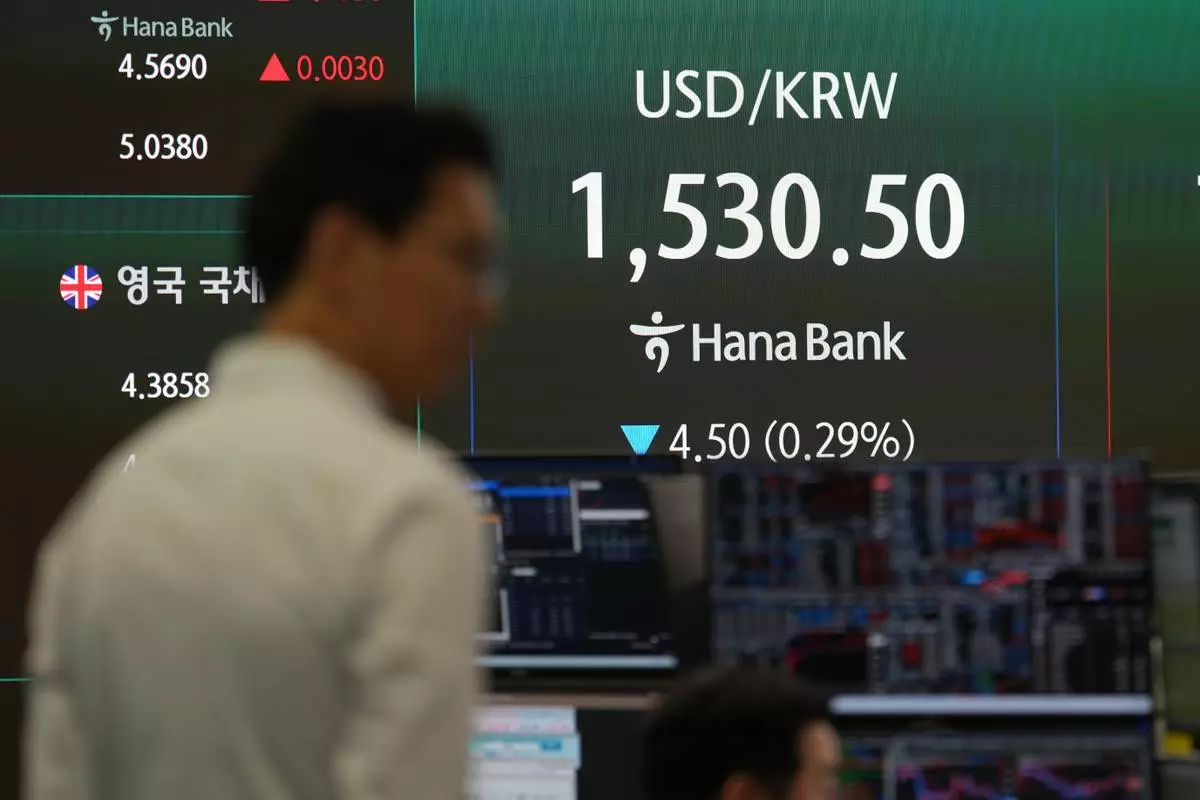
A dealer stands near the screens showing the foreign exchange rate between U.S. dollar and South Korean won at a dealing room of Hana Bank in Seoul, South Korea, Tuesday, June 9, 2026. (AP Photo/Lee Jin-man)
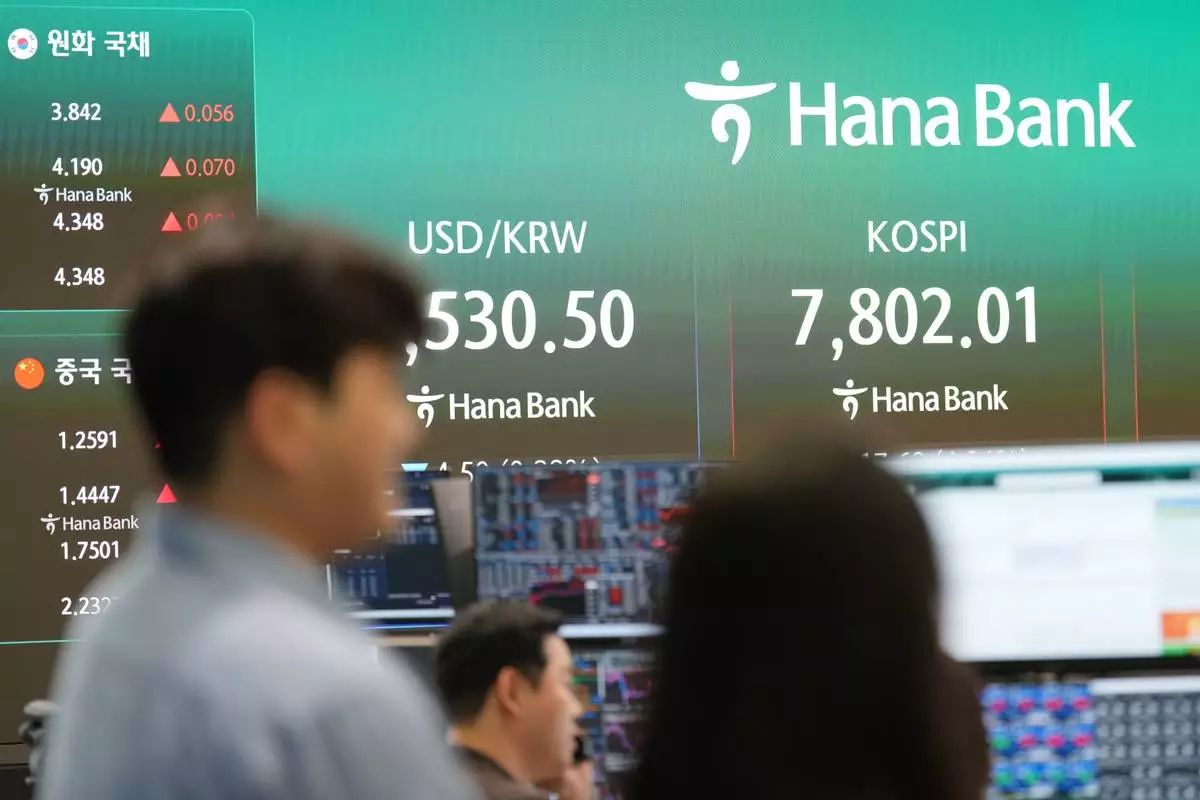
People stand near the screens showing the Korea Composite Stock Price Index (KOSPI) and the foreign exchange rate between U.S. dollar and South Korean won at a dealing room of Hana Bank in Seoul, South Korea, Tuesday, June 9, 2026. (AP Photo/Lee Jin-man)
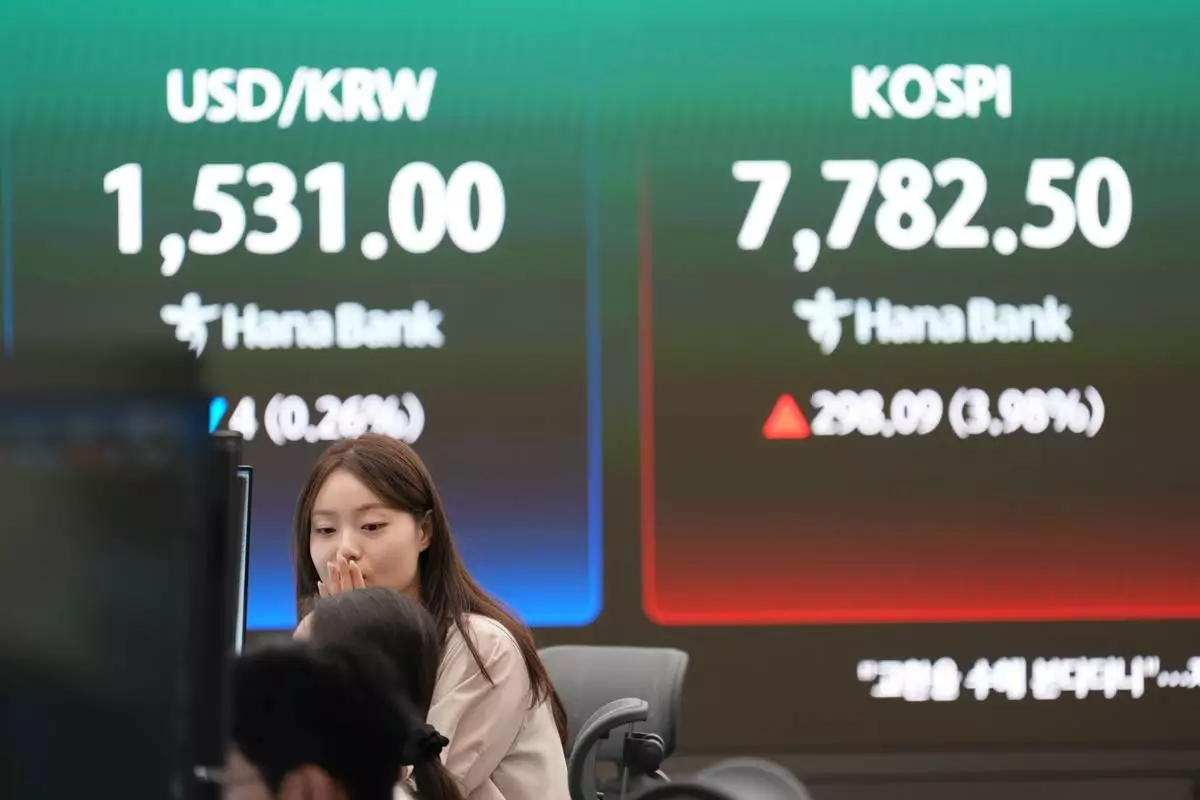
A dealer talks near the screens showing the Korea Composite Stock Price Index (KOSPI) and the foreign exchange rate between U.S. dollar and South Korean won at a dealing room of Hana Bank in Seoul, South Korea, Tuesday, June 9, 2026. (AP Photo/Lee Jin-man)
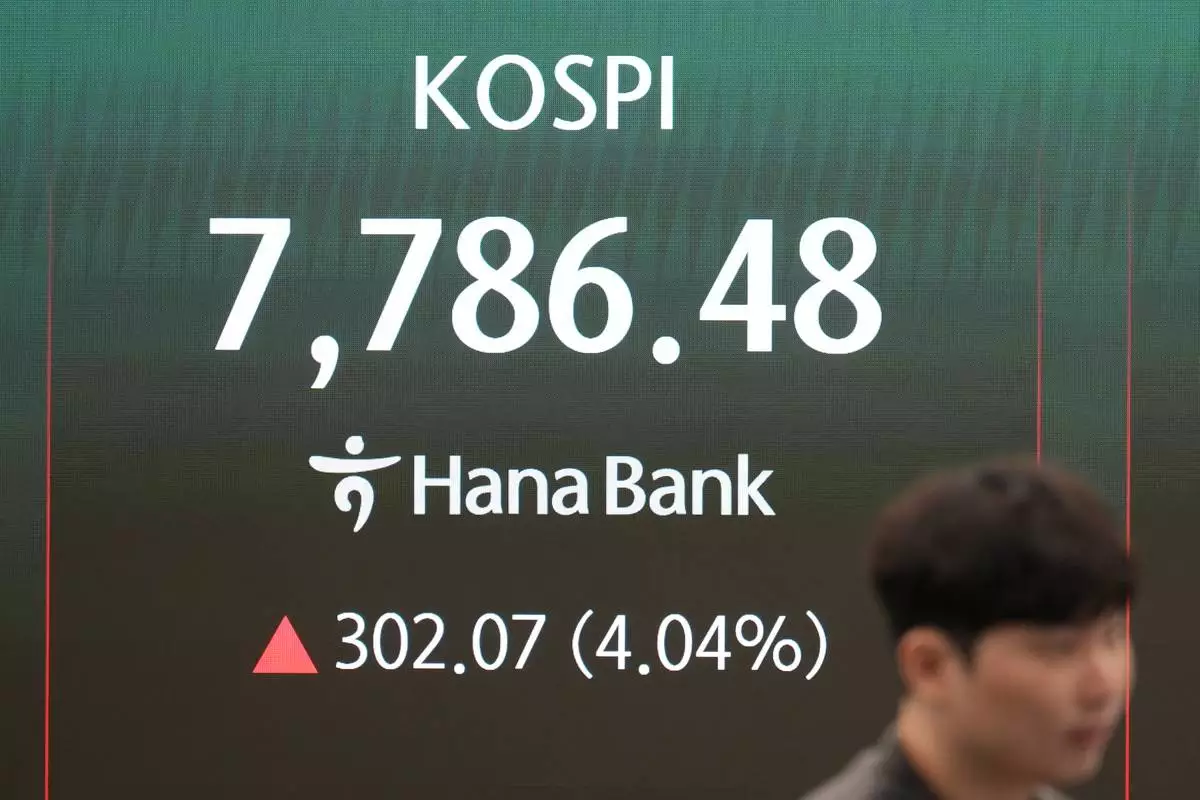
A dealer stands near the screen showing the Korea Composite Stock Price Index (KOSPI) at a dealing room of Hana Bank in Seoul, South Korea, Tuesday, June 9, 2026. (AP Photo/Lee Jin-man)