LOS ANGELES--(BUSINESS WIRE)--Jun 9, 2026--
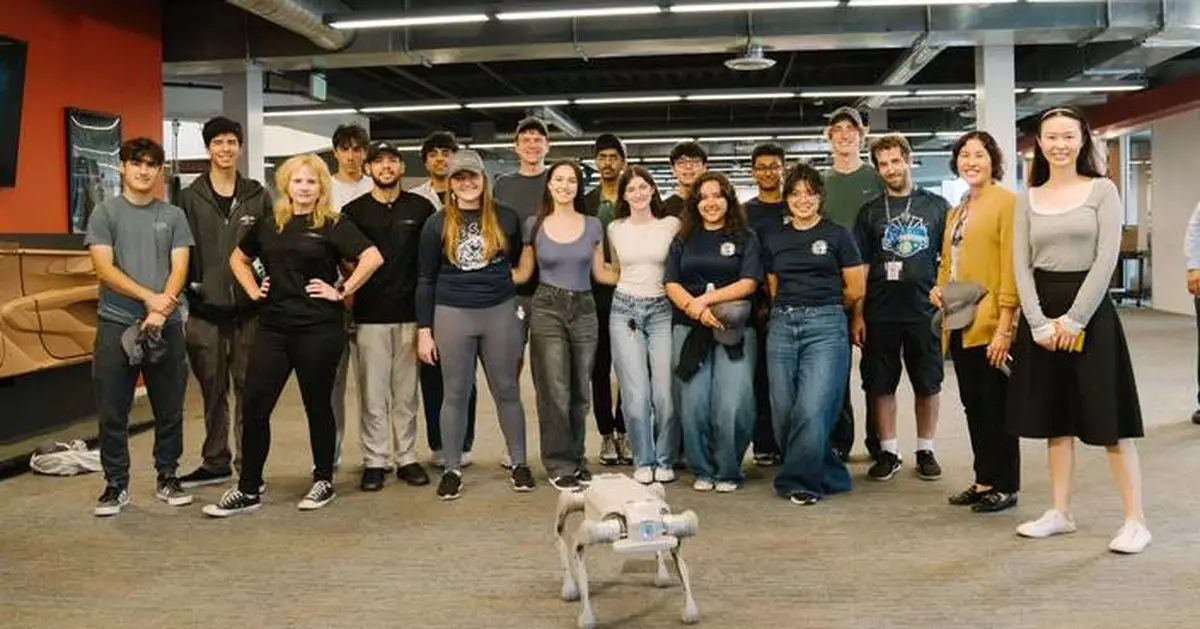
Faraday Future Intelligent Electric Inc. (NASDAQ: FFAI) (“Faraday Future”, “FF” or the “Company”), a California-based global Embodied AI (EAI) ecosystem company, welcomed students and faculty from El Segundo (CA) High School’s STEM program to its Global headquarters on June 4, 2026. The students participated in a number of activities including: viewing the Company’s FF 91 and FX Super One EV’s; having a tour of the Company’s new HQ facility in El Segundo, including the EV showroom and robotics showroom; met with the FF engineering team, and also watched several demonstrations of the Company’s newest humanoid and quadruped robots.
This press release features multimedia. View the full release here: https://www.businesswire.com/news/home/20260609735954/en/
The students also participated in a classroom-style educational session, led by FF’s employees, where they learned about topics such as open-source platforms, programmability, pre-programmed commands, robotic attachments (e.g., robotic arms), the newest technologies: ROS2, C++, Python, and an introduction to NAVI (FF’s educational open-source quadruped).
This visit highlights the Company’s deepening connection with the STEM / STEAM education ecosystem in Southern California. The visit provided a valuable platform to demonstrate and discuss FF’s innovative technologies, EV’s, including FF’s newest robotics initiatives, and their real-world applications as it continues to redefine the future of the robotics ecosystem in educational environments.
The Company will continue to invite school leaders and students to its Los Angeles HQ as it pushes forward with its strategy focused on EAI Robotics Education, expanding collaboration opportunities with schools, school districts, education institutions, STEM communities, and industry partners. FF will also continue to promote the deployment of education robots, AI innovation curricula, campus AI showcases, summer camps, and industry-academia collaboration scenarios. Looking ahead, the Company will continue advancing the development of a scaled EAI education ecosystem in the United States, helping more students become creators, builders, and future leaders in the AI era.
“This visit by high school students in the same city as our HQ allows us to connect with local students and educational leaders, while providing us a window to hear firsthand feedback of our robotics strategy as it will relate to students and future curriculum,” said Chris Chen, Co-CEO of FF AI-Robotics at FF. “We believe that education will become the first major scenario in the initial phase of the consumer robotics market as we move aggressively to build an EAI education ecosystem that serves both the B2C consumer market—including family education, companionship, and child development—and the B2B institutional education market.”
The Company is actively advancing robots from product showcases into real education scenarios, helping K-12 students, universities, education institutions, and innovation communities engage with, understand, and apply AI and embodied intelligence at an earlier stage. By integrating EAI Robotics products with education activities, the Company aims to provide students with a more intuitive and participatory AI learning experience, helping the next generation of AI Natives develop engineering thinking, creativity, and interdisciplinary collaboration skills.
ABOUT FARADAY FUTURE
Founded in 2014, Faraday Future (FF) is a U.S.-based Physical AI ecosystem company dedicated to reshaping the future of robotics and mobility solutions through AI innovation and technologies. FF focuses on two major product strategies within the Embodied AI (EAI) robotics business: EAI humanoid and bionic robots, and EAI automotive-focused robots. By building a Three-in-One ecosystem of “Device, Data, EAI Brain & Open-Source and Open Platform,” FF aims to create an evolutionary flywheel: scaled device delivery, data collection and training, continuous evolution of the EAI Brain, stronger product capability, and even larger-scale delivery and deployment. Through this flywheel, FF seeks to maximize its commercial value and lead to the advancement of Physical AI. For more information, please visit Faraday Future’s official website: https://www.ff.com/
FORWARD LOOKING STATEMENTS
This press release includes “forward looking statements” within the meaning of the safe harbor provisions of the United States Private Securities Litigation Reform Act of 1995. When used in this press release, the words “plan to,” “can,” “will,” “should,” “future,” “potential,” and variations of these words or similar expressions (or the negative versions of such words or expressions) are intended to identify forward-looking statements. These forward-looking statements, which include statements regarding potential future legal actions against alleged illegal market manipulation or similar improper activities, and FF’s entry into the embodied AI robotics market and robotics deliveries and development, involve a number of known and unknown risks, uncertainties, assumptions and other important factors, many of which are outside the Company’s control, which could cause actual results or outcomes to differ materially from those discussed in the forward-looking statements.
Important factors, that may affect actual results or outcomes include, among others: the Company’s ability to timely regain compliance with Nasdaq’s minimum bid requirement; the Company’s common stock will be suspended from trading on Nasdaq if it’s closing price is $0.10 or less for 10 consecutive trading days; the Company’s ability to continue as a going concern and improve its liquidity and financial position; the Company’s ability to pay its outstanding obligations, which it currently lacks; the availability of sufficient share capital to meet its current obligations and execute on its strategy, which the Company currently lacks; the agreement of stockholders to substantially increase the Company’s share capital, which could result in substantial additional dilution; the willingness of convertible debt investors to fund the Company while it lacks sufficient share capital for conversions; demand for the Company’s robotics products; the ability of B2B preorder companies to locate customers to purchase our robotics products, on which their nonbinding preorders substantially depend; competition in the robotics industry, which includes companies with far superior experience, funding and name recognition; the ability of the Company to build an EAI education ecosystem that serves both the B2C consumer market and the B2B institutional education market; the acceptance by teachers and students of the Company’s robotics products in the education market; the Company’s reliance on a single OEM for most of its robotics products; the Company’s ability to get the planned robotics products to comply with all applicable U.S. rules and regulations; the ability of the robotics OEM to timely supply robotics to the Company; tariff uncertainty for imported products, particularly from China; demand from automobile dealers for robotics products; the Company's ability to homologate FX vehicles for sale; the Company’s ability to secure the necessary funding to execute on the FX strategy, which is substantial; the Company’s ability to secure an occupancy certificate covering all of its Hanford facility; the Company's ability to remediate its material weaknesses in internal control over financial reporting and the risks related to the restatement of previously issued consolidated financial statements; the Company’s limited operating history and the significant barriers to growth it faces; the Company’s history of substantial losses and expectation of continued losses; the success of the Company’s payroll expense reduction plan; the Company’s ability to execute on its plans to develop and market its vehicles and the timing of these development programs; the Company’s estimates of the size of the markets for its vehicles and cost to bring those vehicles to market; the rate and degree of market acceptance of the Company’s vehicles; the Company’s ability to cover future warranty claims; the success of other competing manufacturers; the performance and security of the Company’s vehicles; current and potential litigation involving the Company; the Company’s ability to receive funds from, satisfy the conditions precedent of and close on the various financings described elsewhere by the Company; the result of future financing efforts, the failure of any of which could result in the Company seeking protection under the Bankruptcy Code; the Company’s indebtedness; the Company’s ability to use its “at-the-market” program; insurance coverage; general economic and market conditions impacting demand for the Company’s products; potential negative impacts of a reverse stock split; potential cost, headcount and salary reduction actions may not be sufficient or may not achieve their expected results; circumstances outside of the Company's control, such as natural disasters, climate change, health epidemics and pandemics, terrorist attacks, and civil unrest; risks related to the Company's operations in China; the success of the Company's remedial measures taken in response to the Special Committee findings; the Company’s dependence on its suppliers and contract manufacturer; the Company's ability to develop and protect its technologies; the Company's ability to protect against cybersecurity risks; and the ability of the Company to attract and retain employees, any adverse developments in existing legal proceedings or the initiation of new legal proceedings, and volatility of the Company’s stock price. You should carefully consider the foregoing factors and the other risks and uncertainties described in the “Risk Factors” section of the Company’s Form 10-Q for the quarter ended March 31, 2026, filed with the SEC on May 14, 2026, and Form 10-K filed with the SEC on March 31, 2026, and other documents filed by the Company from time to time with the SEC.
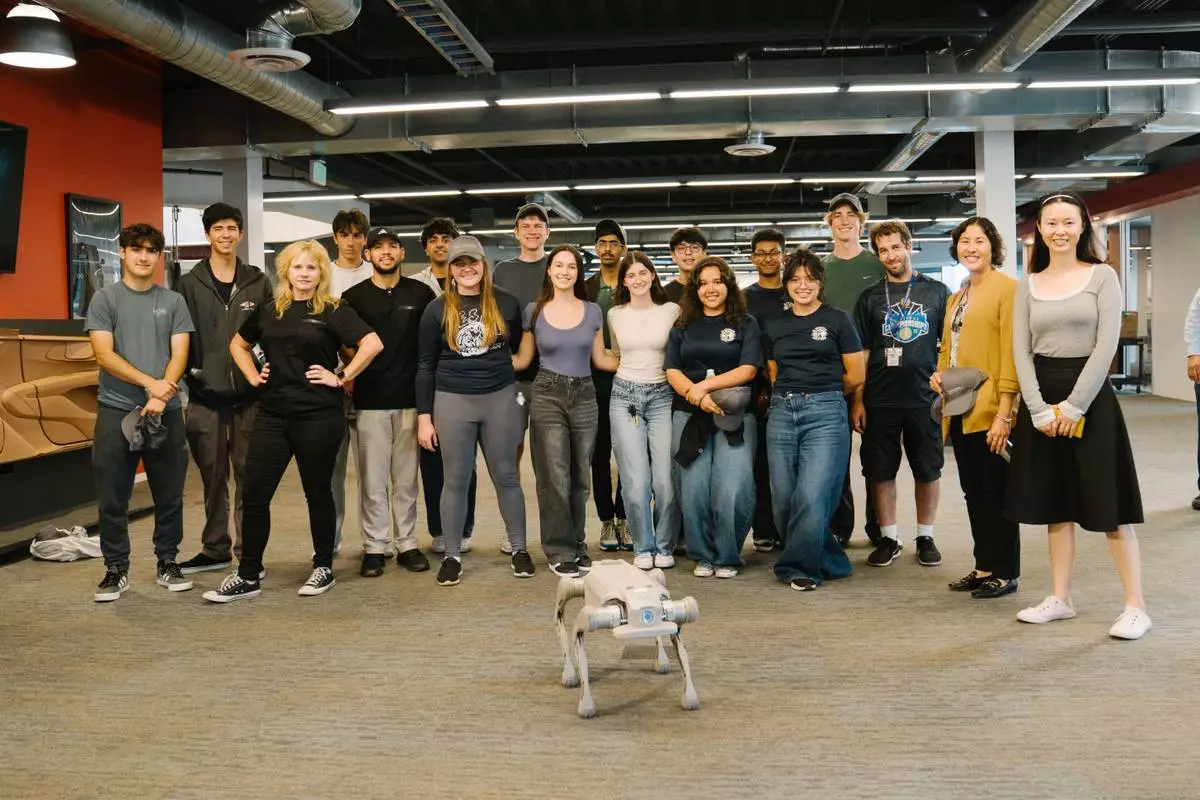
Faraday Future Welcomes Students From El Segundo School District’s High School STEM Program to its Global HQ to Discover More about the Company’s Latest EAI Robotics; Steadily Making Progress in Building the EAI Education Ecosystem
Voters across Maine, Nevada, South Carolina and North Dakota were casting ballots Tuesday in another day of primary elections in America, but much of the political world was focused on Maine’s high-stakes U.S. Senate contest.
The results aren't in question. Neither Republican incumbent Sen. Susan Collins nor Democratic challenger Graham Platner faces serious opposition for their party’s nomination. And yet Tuesday marks an especially significant moment for Platner, the embattled veteran and oyster farmer, who's fighting to rebuild his credibility in a campaign rocked by controversy.
Elsewhere, President Donald Trump’s clout within his party was being tested anew in states like South Carolina and Nevada, where he’s endorsed his favored candidates. Democrats hope to build momentum in Nevada in their broader push to reclaim key governor’s seats.
Here's the latest:
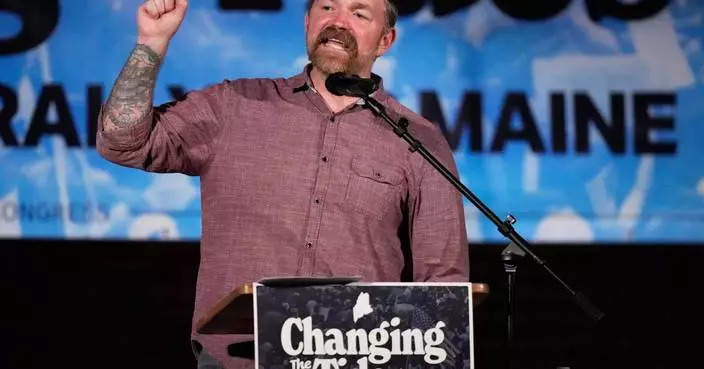
Platner is holding his event at Blue Hill YMCA in the town of Blue Hill, about 30 miles from his hometown of Sullivan. Supporters were gathering to hear a speech from Platner, which is expected after results come in.
Platner is expected to win the primary because his main competition, Democratic Gov. Janet Mills, suspended her campaign weeks ago. The winner will face longtime Republican Sen. Susan Collins.
The mood at his event is high, with the crowd expecting a victory and beginning to assemble in front of a podium where Platner will speak.
Las Vegas resident Laurie Trowbridge voted for Alexis Hill because of Hill’s stance on data centers. Hill has pledged to stop new tax abatements on data centers and require them to implement renewable energy policies.
“We don’t have enough water for data centers,” Trowbridge said. “And they pollute everything, and we can’t have it. We have enough problems in the state without adding that to it.”
Teresa Ray, also a Las Vegas resident, voted for Attorney General Aaron Ford because of his experience as a leader.
“He has shown me since he’s been attorney general that he’s going to be the one that should be able to lead Nevada into a better place than where we are now,” Ray said.
She hopes that if he is elected, he will be able to encourage other Democrats to “grow some spine” and send a better message to voters.
Juliana Palyak studied the Republican candidates for South Carolina governor for months. She didn’t like any of them.
Finally as primary day came, she said she decided to vote for self-funded businessman Rom Reddy.
“I do not want career politicians any more. I am tried of it,” Paylak said of the other four candidates who are all currently in elected office.
Her disgust extends to Trump, who has lost her support by going to war in Iran and not keeping other promises made during his campaign.
“His social media. It’s ridiculous,” Paylak said.
In-person Election Day voting concluded in Maine at 8 p.m. ET.
Comparable primaries from past elections can offer clues about when to expect the first vote results and how long the vote count might take.
In the 2024 general election, the AP first reported results at 8:44 p.m. ET, or 44 minutes after polls closed. About 50% of the total vote had been counted by 12:54 a.m. ET, and counting stopped for the night at 4:11 a.m. ET. By 3:13 p.m. ET the day after Election Day, about 90% of the vote had been counted.
Some of Maine’s primary elections could advance to ranked choice voting if no candidate wins a majority of first-choice votes. This could delay the release of final results for another week or two.
Hilton has made the case that the state desperately needs new leadership following more than 15 years of Democratic dominance.
He’ll face Democrat Xavier Becerra, a former state attorney general and Biden administration health secretary, whom The Associated Press previously determined had won enough votes. Election day was a week ago.
Hilton faces a challenging electorate in the November election, as California has nearly twice as many registered Democrats as Republicans. If elected he would be the first GOP candidate to win statewide office since 2006.
Gov. Joe Lombardo thanked campaign volunteers Tuesday afternoon in front of a Las Vegas polling location, taking pictures and signing supporters’ shirts as people huddled under a tent in the 94 degree heat.
The Republican governor, who is expected to easily win his primary, touted his record on improving education and “expanding upon the economy and the jobs front, healthcare, and public safety.” He said next on the list is working on affordable housing.
“We’re running again because we still got a lot of work to do in that space,” Lombardo said at his campaign’s booth. Along the sidewalk leading to the polling location, campaigns sent up booths in a last effort to sway voters.
Lombardo will likely face either Attorney General Aaron Ford or Washoe County Commissioner Alexis Hill in November.
Election day in California was one week ago, but candidates in the race for governor are still waiting to find out who will be paired in a November runoff for the state’s highest office.
Democrat Xavier Becerra qualified last week, but it’s still not clear if the second spot will be claimed by Republican Steve Hilton or Democrat Tom Steyer.
Becerra told reporters Tuesday that he was “anxious to find out who … is going to be in there with me.”
California has a notoriously slow vote count, and Becerra said, “I don’t think it’s a great thing that it takes such a long time.” But he also defended the system, saying he would oppose “anything that reduces a Californian’s chance to vote.”
Earlier in the day, Hilton said the vote-counting system that can sometimes take weeks or longer to determine a winner desperately needed a complete overhaul.
“It’s insane,” Hilton said.
Two of the GOP candidates said they felt the use of ranked choice voting in the GOP primary made for an uglier election season.
Maine uses the ranked the style of voting for some races, including governor primaries, though it will not be used in the general election for governor. Ranked voting could factor heavily in Tuesday’s results because there are seven Republican candidates and five Democrats.
Jonathan Bush, one of the Republican candidates, said the role of ranked choice voting is to “make people less trusting of our democracy right now.” Another Republican, Owen McCarthy, said it led to candidates attacking each other.
“The thing with ranked choice voting is it’s supposed to make the race nicer. It didn’t make the race nicer,” he said.
The state’s primaries seemed to be on the verge of being upended over Trump’s push to reshape congressional districts ahead of the November elections.
However, the Republican-controlled state Senate rejected a plan to cancel congressional votes and schedule a new primary under revised districts.
The new lines had been designed to help Republicans oust U.S. Rep. Jim Clyburn, currently seeking his 18th term and the state’s sole congressional Democrat.
Some senators, including Republicans, said it was simply too late to make a change. Last weekend, South Carolina Democrats celebrated during their annual fundraising dinner and convention.
The Maine Democratic Senate candidate has been scrutinized recently after reports that he sent sexually explicit text messages with several women while married to his wife, Amy Gertner.
Gertner has called news coverage of the issue “gossip.”
Genevieve McDonald, a then-campaign staffer for Platner, told The Associated Press that Platner was “sexting multiple women while married” and “the campaign tried to assess that as an election vulnerability.”
According to The Wall Street Journal, Gertner told the campaign in August about the messages, which she had discovered on Platner’s phone last year. Platner’s campaign team reportedly decided that the texts were private and being handled by the couple, who were married in 2023.
The two are in counseling, Gertner has said, and Platner has his own therapist.
Graham often faces primary challengers, and he’s vying against several on Tuesday. But leading up to this year’s primary, several Republicans bowed out before voting began.
André Bauer, a former South Carolina lieutenant governor nominated as ambassador to Belize in both of Trump’s terms, ended up shuttering his bid after only a month as an announced candidate.
And Paul Dans, a chief architect of Project 2025, bailed on the last day to remove his name from ballots.
Mark Lynch, a Greenville businessman, is still running. On social media, Trump has said Lynch “would be a DISASTER for the Republican Party” if elected.
Maine supporters of Graham Platner said Tuesday that ousting incumbent Republican Sen. Susan Collins was on their mind.
Merrill Poddle of Ellsworth, Maine, said he voted for Platner. He questioned how much Collins actually stands up to President Donald Trump.
“The only time that she’s ever voted against him, what he wants, is when she knew it was gonna pass anyway,” he said. “She always has concerns, but that’s about all she ever has.”
Anne Dickens, also of Ellsworth, said she’s backing Platner as well. She questioned whether Collins had a vision for Maine.
“I think that Susan Collins has had her chance. She’s been too conservative and too much with the Trump view,” she said.
Among the several quirks about Maine, it’s one of just two states that uses ranked choice voting for its statewide elections.
It’s a system, adopted in 2016, that allows Maine voters to rank their lesser choices.
If no candidate wins a majority of first-place votes, then other rounds of tabulation begin without the last-place finisher. That candidate’s votes are reallocated to other candidates based on the second-place choices of their voters. The process continues until one candidate has a majority.
The Senate Democratic primary election isn’t expected to head to ranked choice voting, but other races might, including the one for governor.
Democratic governor candidate Nirav Shah has campaigned asking to be voters’ second choice if he can’t be their first, joking in a recent ad that “second choices are still pretty good … most of the time!”
▶ Read more
No Democrat has held the congressional seat that represents Reno and rural northern Nevada, but Democrats aren’t ruling it out this year after longtime GOP Rep. Mark Amodei announced his retirement.
“A lot of things have to go our way in November, and I think we should be honest about that,” said Erik Jimenez, chair of the Democratic Party of Washoe County, the most populous county in the district. “But I’ll say from our volunteer base in Washoe and just rank-and-file voters across the district, we have never seen more people excited about Congressional District 2 than we do now.”
Former state lawmaker Teresa Benitez-Thompson and businessman and investor Greg Kidd are among those on the Democratic primary ballot. They've focused on the economy, healthcare and artificial intelligence regulations.
Democrats are banking on Trump’s growing unpopularity and the district’s large number of nonpartisan voters. In the Republican primary, they're hoping that Trump-backed candidate David Flippo will defeat James Settelmeyer, a former lawmaker with the backing of Gov. Joe Lombardo, believing it would be easier to draw a contrast.
North Dakota’s lone U.S. House member faces a partial rematch of her 2024 nomination race in a state primary Tuesday. Also on the ballot is a proposed amendment to the state constitution, while residents of Fargo will elect a new mayor.
Republican U.S. Rep. Julie Fedorchak seeks a second term. She faces another primary challenge from former foreign service officer Alex Balazs, who placed fourth in the 2024 contest with 4% of the vote behind her and others. Fedorchak went on to win the general election with 69% of the vote against Democrat Trygve Hammer, who also is running again and will face the winner of this year’s Republican primary.
Voters will also choose nominees for several top statewide offices, although candidates for most of those offices, such as secretary of state, state attorney general and state agriculture commissioner, are running unopposed.
Many of the state’s top elected offices, such governor, lieutenant governor, treasurer and both U.S. Senate seats, won’t be up for election until 2028 or later.
▶ Read more
More than a year before filing even opened for this year’s contests, Graham’s campaign said Sen. Tim Scott and Gov. Henry McMaster would chair his 2026 run.
Scott, South Carolina’s junior senator, chairs the National Republican Senatorial Committee.
McMaster is the state’s longest-serving governor, having been elected twice after serving the remaining two years of Nikki Haley’s term after she became Trump’s first ambassador to the United Nations.
Democrats and Republicans will pick nominees for governor to replace Mills as the Democrat’s time in office is winding to a close.
It’s a crowded field. Democrats are choosing between Maine Secretary of State Shenna Bellows; former Maine Senate President Troy Jackson; former Speaker of the Maine House of Representatives Hannah Pingree; energy executive Angus King III; and former director of the Maine Center for Disease Control and Prevention Nirav Shah.
Republicans will choose between former U.S. Assistant Secretary of State Bobby Charles; healthcare executive Jonathan Bush; former Maine Senate Majority Leader Garrett Mason; University of Maine System trustee Owen McCarthy; former Paris, Maine, selectman Robert Wessels; and businessmen David Jones and Ben Midgley.
Mills is termed out and will appear on the Democratic ballot for U.S. Senate, although she suspended her campaign weeks ago.
As Nevada voters participate in primary elections Tuesday, the state Democratic Party has launched a website — www.thelombardotrumpway.com/ — to highlight GOP Gov. Joe Lombardo’s connections to the White House.
The site is an effort to connect the governor to the economic fallout from Trump’s tariffs and the Iran war. Lombardo is considered one of the most vulnerable governors in the country.
The Democrats vying to challenge Lombardo include state Attorney General Aaron Ford, who has the backing of the Democratic congressional delegation and former Vice President Kamala Harris. He would be the first Black man elected governor of Nevada. He’s facing Democrat Alexis Hill, a county commissioner in northern Nevada who campaigned as a candidate willing to shake things up.
Republicans have held all statewide-elected positions in South Carolina for more than a decade, but several Democrats are competing in primaries Tuesday for some of the state’s top posts.
Annie Andrews, a Charleston pediatrician who unsuccessfully challenged U.S. Rep. Nancy Mace in 2022, is vying for the Democratic nomination to challenge Sen. Lindsey Graham. Also in that contest is Brandon Brown, a former HBCU vice president and owner of funeral homes in Greenville.
In the governor’s race, state Rep. Jermaine Johnson and Greenville businessman Billy Webster are running in the Democratic primary. They’re joined by Mullins McLeod, an attorney who withstood calls from party leaders that he quit the race following an arrest last year for disorderly conduct.
The South Carolina senator’s bid for a fifth term coincides with the war he’s pushed for years. Graham has a close relationship with Trump and they speak regularly about the conflict.
But as voters mull whether to send Graham back to Washington, they’re also reckoning with the ongoing war, which has caused fissures among some of Trump’s most vocal supporters.
Graham frequently pushes Trump to take even more aggressive action, at one point suggesting that the U.S. military seize Kharg Island, which is critical for Iran’s oil industry.
Rep. Nancy Mace says one of her supporters was assaulted at a Monday event with Lt. Gov. Pamela Evette, one of her rivals in South Carolina’s governor’s race.
The man was escorted from Evette’s rally, then walked the sidewalk speaking into a megaphone. Then another man wearing an Evette campaign hat is seen on video grabbing the device from his hands.
Court records show the Evette supporter, Blake Garrison Kirsch, was charged with third-degree assault and battery Tuesday. No attorney was listed. Evette’s campaign said Kirsch was not a staffer and had been removed from the campaign’s finance committee since the altercation.
Asked about the incident Tuesday, Evette told reporters after voting in Taylors she was “saddened” by the situation and doesn’t “tolerate violence on any level.”
Washoe County Commissioner Alexis Hill faces state Attorney General Aaron Ford, whose fundraising has dwarfed hers —$2.3 million compared to Hill’s $100,000. He also has the support of the entire Democratic congressional delegation and former Vice President Kamala Harris.
Hill, a local official in the county that includes Reno, has run a grassroots campaign, promising to shake up the status quo in the Democratic Party. Ford has largely ignored her, fixing his sights on the November election.
The winner will most likely face Republican Nevada Gov. Joe Lombardo, who's running for reelection.
Brenda Wood said she voted for Republicans in the primary because she doesn’t believe Platner’s campaign promises and expressed dissatisfaction with his party generally.
“I think the Democrats have been a disgrace to Maine for years,” she said.
Annette Babcock, also from Sullivan, said she supported Platner, whom she said she’s met a few times and likes because he’s not an established politician.
She did not sound concerned over recent controversies surrounding his campaign.
“The Republicans don’t have much moral high ground to stand on when they’re criticizing him for what he’s done when Trump is a convicted felon,” she said.
The road for the Democrats to take back the U.S. Senate goes through Maine. That road starts today.
The Democratic Party needs to net four seats to retake the Senate majority, and thinks some of its best chances are in states like Maine, North Carolina, Alaska and Ohio. The party is set to officially pick its nominee in Maine on Tuesday.
Oyster farmer and combat veteran Graham Platner is the party’s presumptive nominee because his main rival, Democratic Gov. Janet Mills, suspended her campaign weeks ago. Mills remains on the ballot. David Costello, who hasn't campaigned aggressively, is also on the ballot.
After voting at her precinct in Taylors on Tuesday, South Carolina Lt. Gov. Pamela Evette said she was confident about how her campaign for governor had gone.
But if she doesn’t win the primary outright and has to campaign for two more weeks in a runoff, the Republican said she’d work hard to win over voters who didn’t initially support her.
President Donald Trump is backing Evette’s bid and the candidate said that, while she thinks that will help her in this “proud Trump state,” she’ll focus primarily on her own stances, like cutting taxes and regulations.
Platner’s campaign has spent months navigating controversies about a tattoo of a Nazi symbol that he had covered up and his history of inflammatory online postings.
Platner has said he was drunk on leave with some fellow Marines many years ago when he got a skull and crossbones tattoo on his chest. He had it covered up last year after saying he learned that it was a Nazi image.
There has also been much attention on his former social media and Reddit posts, which were dismissive of military sexual assaults, insulting of police and rural residents and used homophobic slurs, for which he's apologized.

A person walks past a sign for a drive-through ballot drop-off outside the city hall in Las Vegas, Tuesday, June 9, 2026. (AP Photo/Jae C. Hong)
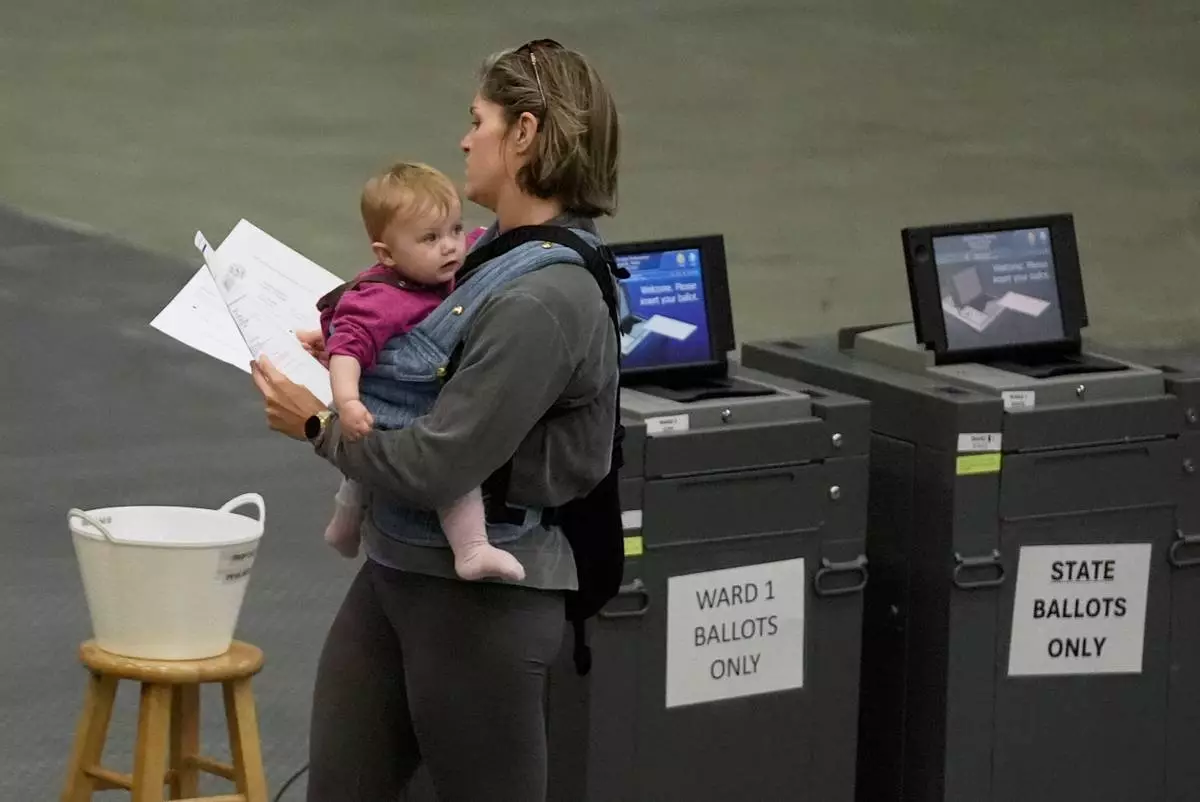
Lindsay Robinson, with daughter Scottie, walks to cast her ballots in the Maine Primary, Tuesday, June 9, 2026, in Augusta, Maine. (AP Photo/Robert F. Bukaty)
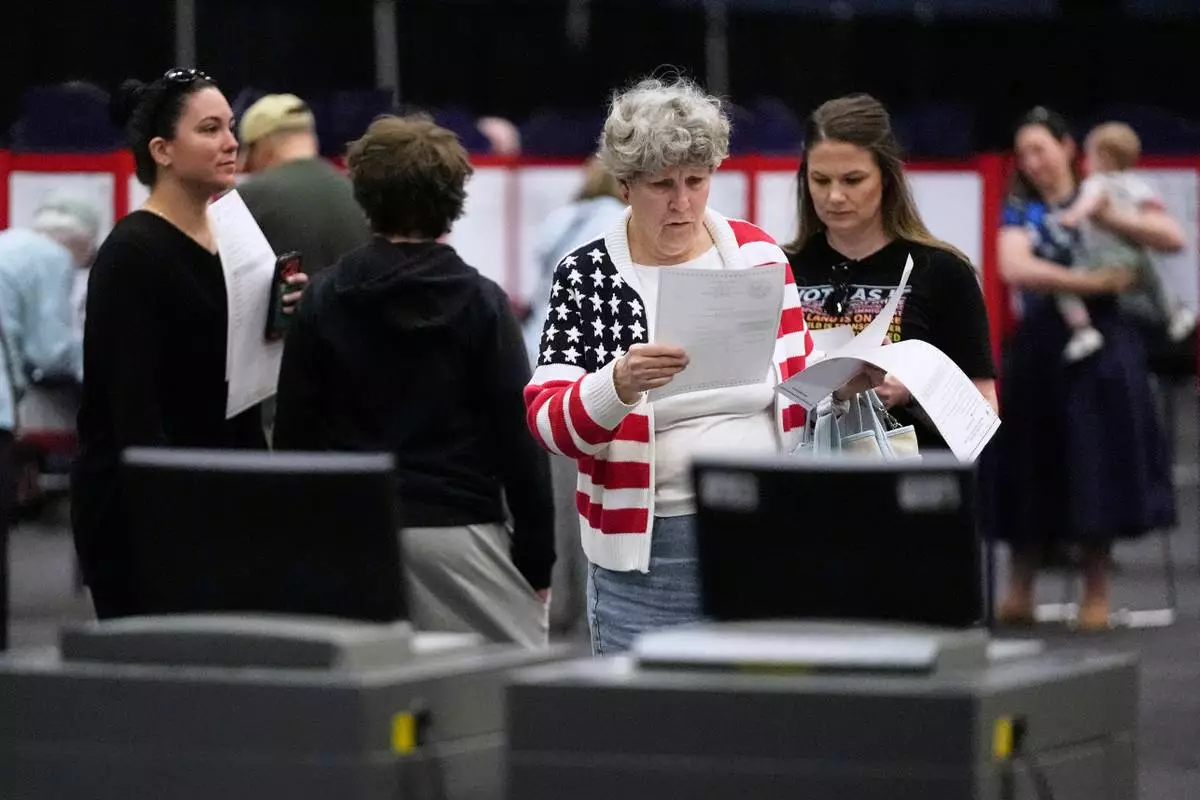
Mary Saunders looks over her choices one last time before casting her ballots in the Maine Primary, Tuesday, June 9, 2026, in Augusta, Maine. (AP Photo/Robert F. Bukaty)