DENVER (AP) — Cole Carrigg brings speed to the diamond and an aura of fearlessness to go with it.
No way he's dialing it back, either. Nor do the Colorado Rockies want him to as the rookie made his major league debut Tuesday night against the Chicago Cubs. The outfielder who now wears No. 16 — it was assigned to him — and batted seventh in the order plans to hold nothing back.
Click to Gallery
Colorado Rockies outfielder Cole Carrigg, right, who was called up from Triple A Albuquerque, warms up with outfielder Sterlin Thompson before a baseball game against the Chicago Cubs Tuesday, June 9, 2026, in Denver. (AP Photo/David Zalubowski)
Colorado Rockies outfielder Cole Carrigg warms up before a baseball game against the Chicago Cubs, Tuesday, June 9, 2026, in Denver. (AP Photo/David Zalubowski)
Colorado Rockies outfielder Cole Carrigg warms up before a baseball game against the Chicago Cubs, Tuesday, June 9, 2026, in Denver. (AP Photo/David Zalubowski)
Colorado Rockies outfielder Cole Carrigg warms up before a baseball game against the Chicago Cubs Tuesday, June 9, 2026, in Denver. (AP Photo/David Zalubowski)
Not his style anyway.
“He plays with his hair on fire,” Rockies manager Warren Schaeffer said. “We just want that to continue up here. Anytime he’s on the baseball field, anything can happen. Just want him to play without fear, have fun, play free, and just let his skills shine.”
Carrigg becomes the fifth Rockies player to make their big league debut this season. He will have a handful of family members, including mom and dad, along with friends and coaches in the stands to cheer.
He got a glimpse of this level during the World Baseball Classic while playing shortstop for Team Israel. He said facing Venezuela and Ronald Acuña Jr. in front of more than 20,000 fans was certainly an eye-opening experience.
“As loud as I could have ever imagined,” said Carrigg, who was taken in the CB-B round of the 2023 first-year player draft out of San Diego State University. “It definitely got me prepared, for sure.”
The 24-year-old was in the midst of quite a season for Triple-A Albuquerque, hitting .338 with 15 doubles, five triples, six homers, 42 RBIs and 30 stolen bases. He played outfield and mixed in some shortstop, too.
This after after a spring training in which he hit .387 and made a compelling case to possibly be on the Rockies roster. He just went to work.
“I think when you feel like you have a chance to be up here and a chance to help the team, and you know you’re kind of playing well, it’s hard not to look up here,” Carrigg said. “It’s hard to stay where your feet are. But I think that’s the best thing you can do is just keep using those opportunities in Triple-A to make sure that you’re ready for when you get here.”
He officially found out about his promotion over the weekend in front of his Isotopes teammates. Then again, he had an inkling the moment was about to arrive. Or, his teammate, Adael Amador, did anyway.
“Adael came up to me in the fifth inning of the game and he's like, “I think you’re getting called up, bro,'” Carrigg said. “I’m like, “What do you mean?' He’s like, ‘I got a feeling.’ He had a feeling.'"
About No. 16: Turns out one of his father's favorite players, Bo Jackson, donned that number while with the Kansas City Royals.
“That’s the first thing he said and I’m like, ‘That’s a pretty good number to have,’” Carrigg recounted.
Schaeffer's eager to see how his skills translate on the big league field.
“I mean, listen, he can run, he can hit from both sides and he can play instinctual center field, plays good shortstop, he steals bases,” said Schaeffer, who plans to use Carrigg as an outfielder. "A lot of people do that, but there’s not a lot of people that do that without fear. That’s part of his game.
“It’s one thing to have the tools, it’s another thing to use them, and he’s a guy that uses them.”
AP MLB: https://apnews.com/hub/mlb

Colorado Rockies outfielder Cole Carrigg, right, who was called up from Triple A Albuquerque, warms up with outfielder Sterlin Thompson before a baseball game against the Chicago Cubs Tuesday, June 9, 2026, in Denver. (AP Photo/David Zalubowski)

Colorado Rockies outfielder Cole Carrigg warms up before a baseball game against the Chicago Cubs, Tuesday, June 9, 2026, in Denver. (AP Photo/David Zalubowski)

Colorado Rockies outfielder Cole Carrigg warms up before a baseball game against the Chicago Cubs, Tuesday, June 9, 2026, in Denver. (AP Photo/David Zalubowski)

Colorado Rockies outfielder Cole Carrigg warms up before a baseball game against the Chicago Cubs Tuesday, June 9, 2026, in Denver. (AP Photo/David Zalubowski)
WASHINGTON (AP) — A bill to provide nearly $70 billion for immigration enforcement narrowly passed the House on Tuesday and now goes to President Donald Trump for his signature, bolstering the administration’s deportation agenda for the remainder of his time in the White House.
Republicans used their majority to get the bill over the finish line, funding a pair of Homeland Security agencies through the next three years. The bill passed by a vote of 214-212, over the objections of Democrats. Trump is expected to sign it into law on Wednesday.
The White House says the bill will provide $38 billion for Immigration and Customs Enforcement, $26 billion for the Border Patrol and another $5 billion to cover unforeseen costs. It frontloads routine annual funding, ensuring a virtually uninterrupted flow of money as the Trump administration seeks to deport some 1 million people per year.
Speaker Mike Johnson needed near-perfect attendance and unity on his side to complete weeks of action. The legislation got sidetracked over $1 billion for White House security, including for Trump’s new ballroom, and a $1.8 billion fund to compensate his allies who claim they have been unjustly investigated and prosecuted. Those proposals proved politically toxic and were scrapped.
Now, the bill is focused entirely on immigration enforcement, a topic that Republicans have treated as a defining issue between the two major political parties and one they hope will carry them to victory in this year's midterm elections.
“It's long overdue,” said Johnson, R-La., of the bill. “We have to fund border security and immigration enforcement, and it's sad that Republicans have to do it on our own.”
But Democratic Rep. Lloyd Doggett of Texas called it a “slush fund for ICE.”
The funding comes on top of the nearly $140 billion that the Republican-controlled Congress gave ICE and Customs and Border Protection last year as part of Trump's tax and spending cuts bill.
Democrats objected to giving the agencies more money without significant changes in the way they operate after the deaths of Alex Pretti and Renee Good in Minneapolis. For example, Democrats insisted that agents remove masks and be required to display their ID badges during enforcement operations and that they get a judicial warrant before entering private property. Instead, the funding will come with virtually no strings attached.
Democratic leader Hakeem Jeffries of New York said Republicans weren't focused on the top priorities of the American people and have cut access to Medicaid and nutrition assistance through Trump's earlier tax and spending cut bill.
“Republicans have now come back for more, to give ICE and Donald Trump's violent mass deportation machine another $70 billion blank check, with no oversight, no accountability and no guardrails,” Jeffries said.
House Majority Leader Steve Scalise countered that Democrats were not adequately supportive of law enforcement.
“Make no mistake, if you're voting yes, you're not only voting to secure America's border, you're voting to fund law enforcement,” Scalise said. “And if you vote no, you are voting to defund the police.”
The package is the result of a monthslong standoff in Congress after Democrats refused to fund the Department of Homeland Security in the wake of the immigration enforcement actions in Minneapolis and other American cities, leading to the longest shutdown in agency history.
Negotiations had been underway with the White House to alter ICE operations as Democrats were demanding. When those negotiations failed, Republicans turned to a complicated procedural maneuver to get around the filibuster and pass the immigration funding with no Democratic votes.
Rep. Jodey Arrington, R-Texas, the chairman of the Budget Committee, said the money would provide “regular, normal funding” that ICE and the Border Patrol would get through the annual budgeting process.
“And we’re going to do it, not for one year, but for three years, so we don’t end up here again.”
The Senate completed its work on the legislation last week during an overnight session on a nearly party-line vote, with Sen. Lisa Murkowski of Alaska the only Republican to oppose it.
The money will come at a pivotal time for the Department of Homeland Security, which is under new leadership after Trump replaced Kristi Noem with new Secretary Markwayne Mullin in March.
While Mullin has vowed to keep the department out of the headlines, the administration is under pressure from anti-immigration advocates to deliver on Trump’s campaign promise of the largest deportation operation in American history.
At the same time, the administration is making it more difficult for certain legal immigrants to remain in the U.S. with Temporary Protective Status or to obtain green cards.
On the House side, Johnson had little margin for error. Rep. Kevin Kiley, I-Calif., ended up siding with Democrats on the party-line vote.
Leading up to the vote, Democrats portrayed DHS as an agency that has used its new resources to buy private jets for its leadership, warehouse immigrants in deplorable conditions and attack U.S. citizens.
“Republican leadership likes to talk a lot about common sense, but where is the common sense in giving this federal agency essentially unlimited funds without a single reform in place?” asked Rep. Pete Aguilar, chair of the House Democratic Caucus.
Republicans countered that they were fulfilling their duty to safeguard the nation and support the men and women charged with enforcing the law.
“Democrats can say whatever they want, but what it’s about is public safety. What’s it about is keeping Americans safe,” said Rep. Michelle Fischbach, R-Minn.
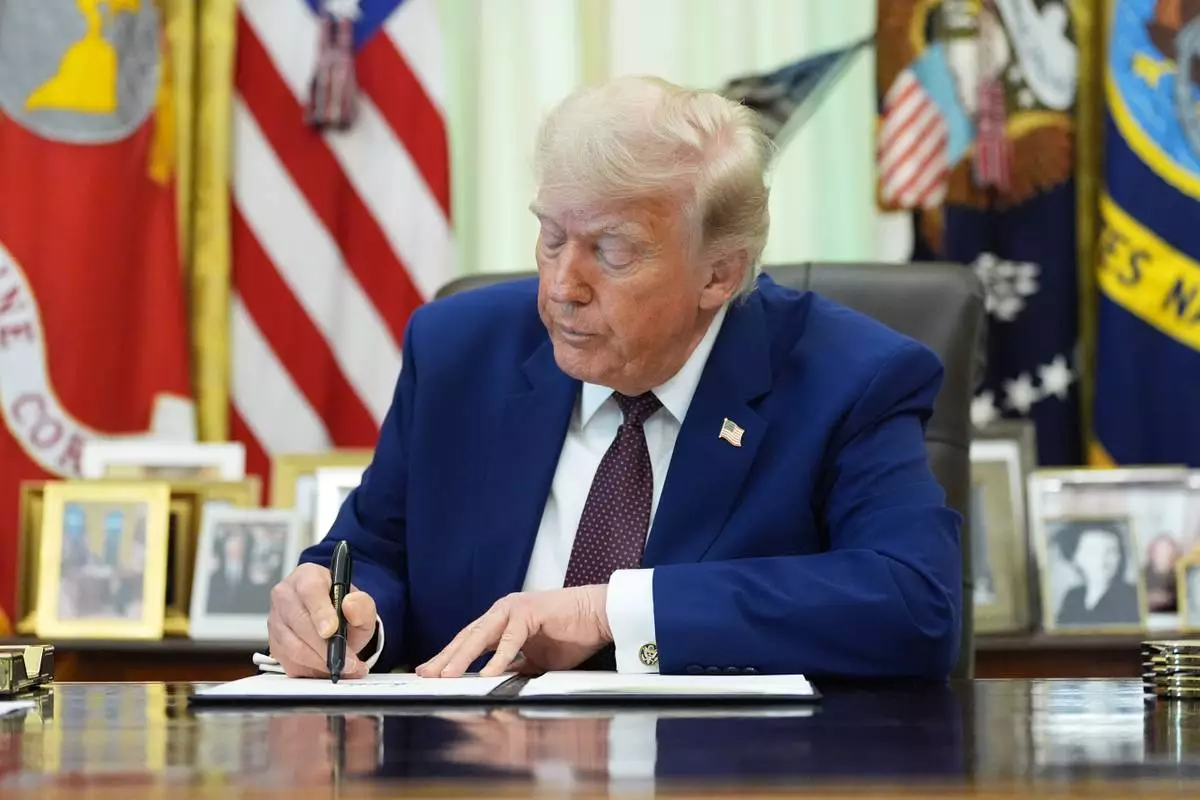
President Donald Trump signs an executive order in the Oval Office of the White House, Wednesday, June 3, 2026, in Washington. (AP Photo/Alex Brandon)
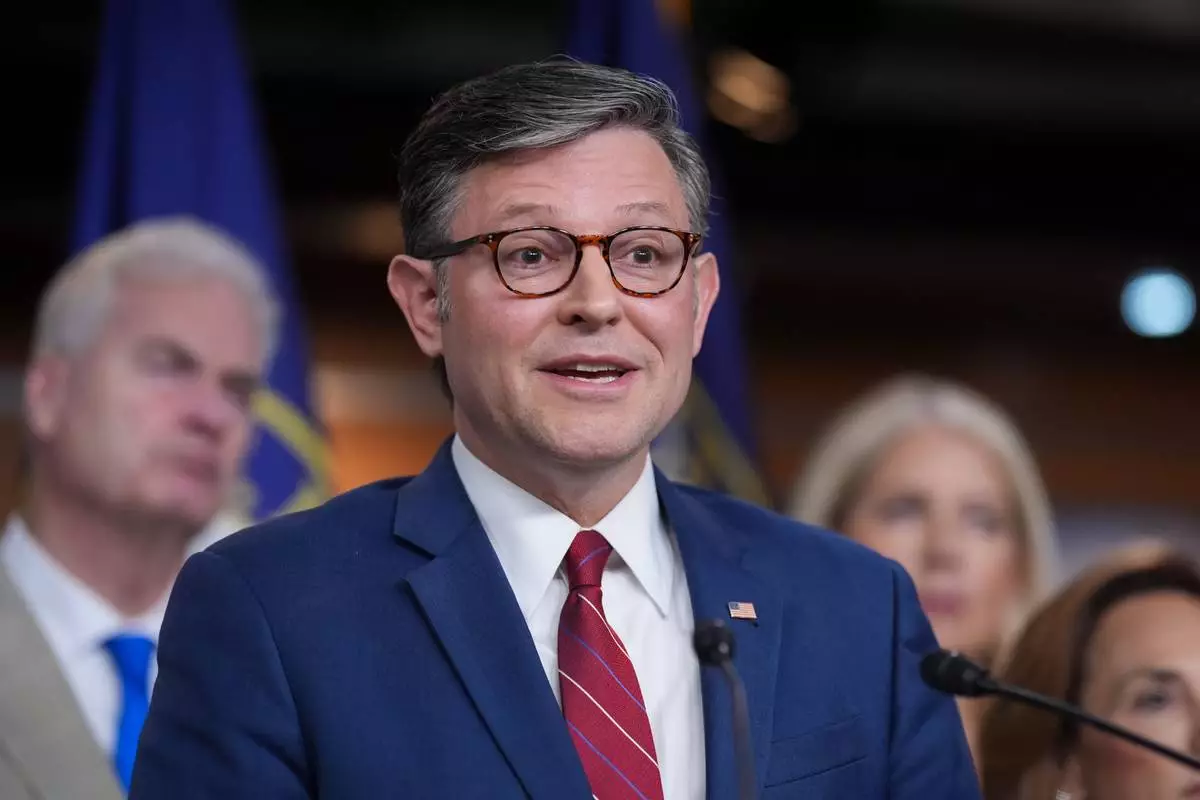
Speaker of the House Mike Johnson, R-La., joined by GOP leaders, talks to reporters at the Capitol in Washington, Wednesday, June 3, 2026. (AP Photo/J. Scott Applewhite)
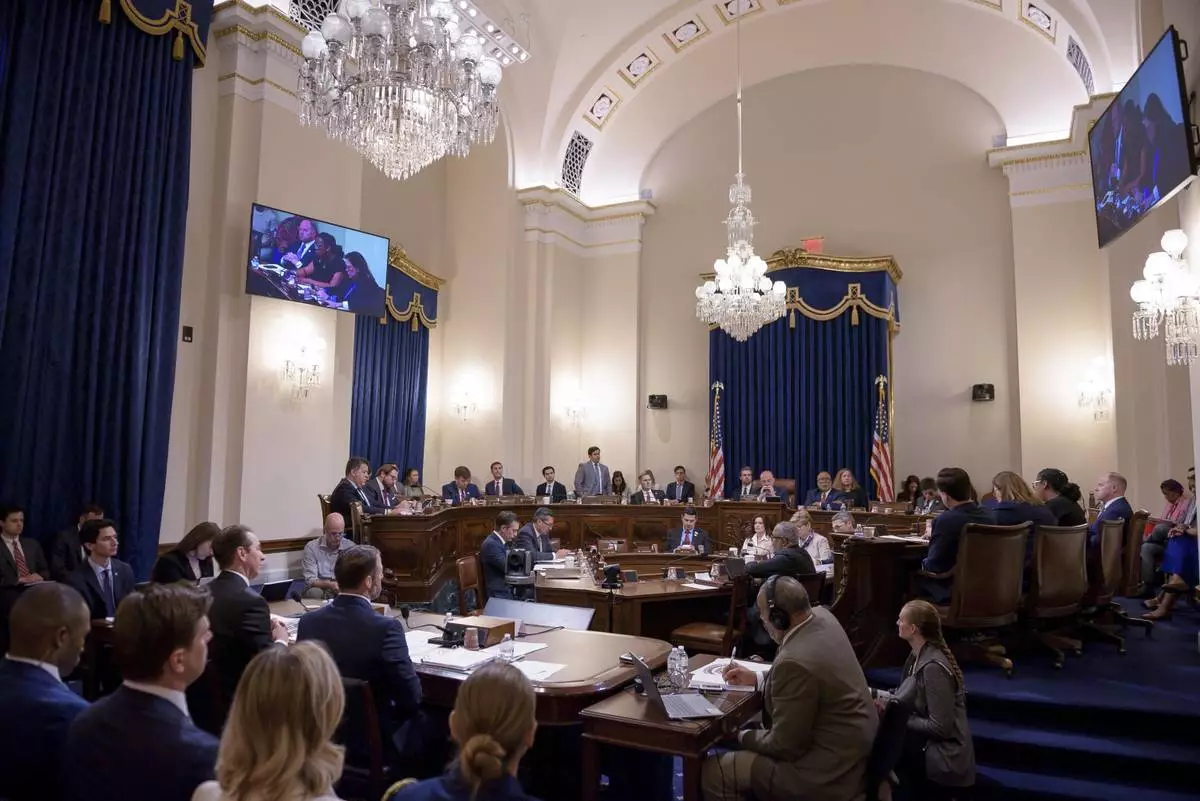
Homeland Security Secretary Markwayne Mullin, lower left, testifies before the House Committee on Homeland Security during a hearing on the Fiscal 2027 budget request for the Department of Homeland Security, in Washington, Wednesday, June 3, 2026. (AP Photo/Cliff Owen)
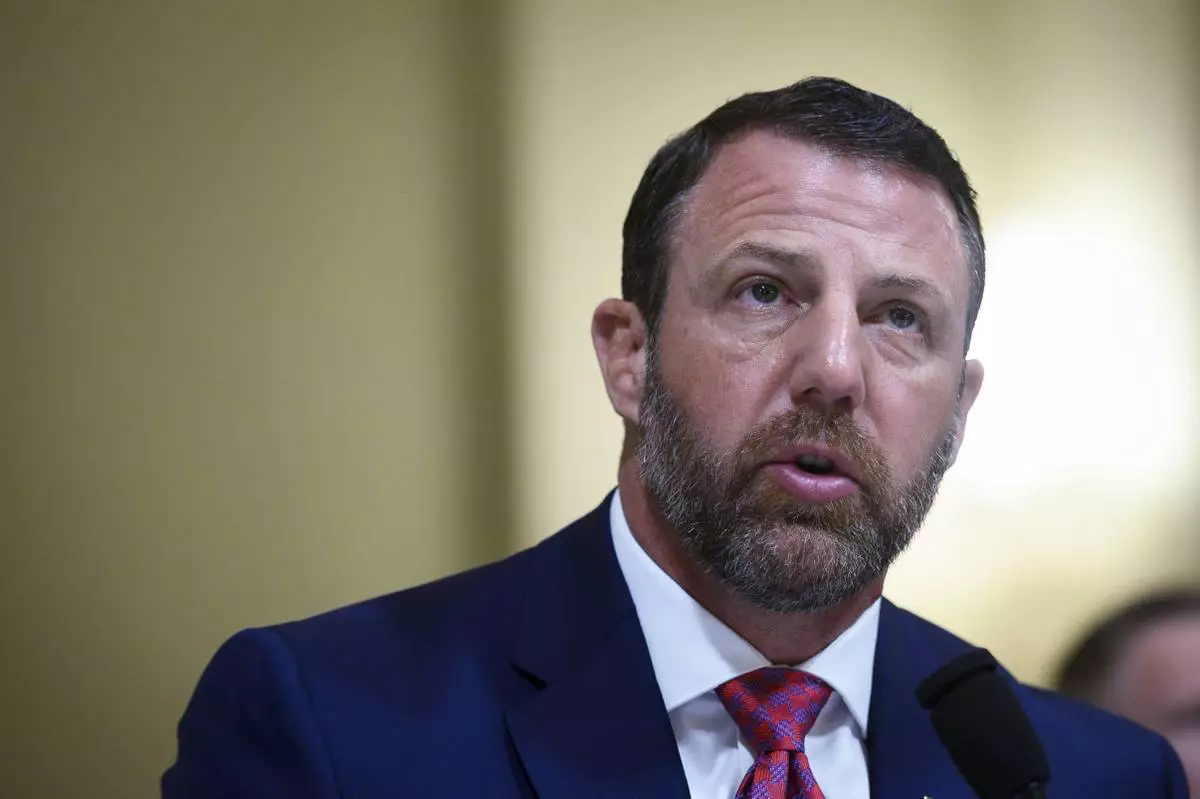
Homeland Security Secretary Markwayne Mullin testifies before the House Committee on Homeland Security during a hearing on the Fiscal 2027 budget request for the Department of Homeland Security, in Washington, Wednesday, June 3, 2026. (AP Photo/Cliff Owen)
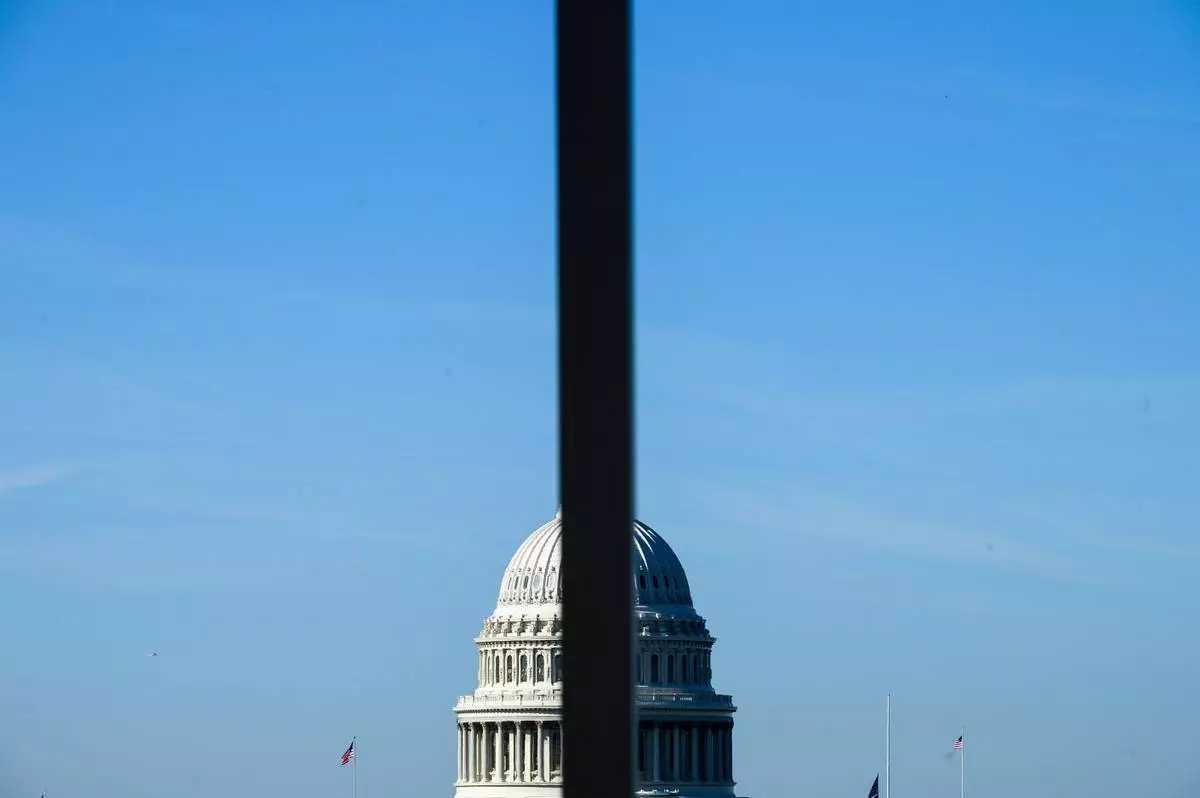
The U.S. Capitol is seen behind a light pole, on Capitol Hill in Washington, Wednesday, June 3, 2026. (AP Photo/Cliff Owen)
FILE - The seal of U.S. Department of Homeland Security is seen before a news conference at ICE Headquarters in Washington, May 21, 2025. (AP Photo/Jose Luis Magana, File)
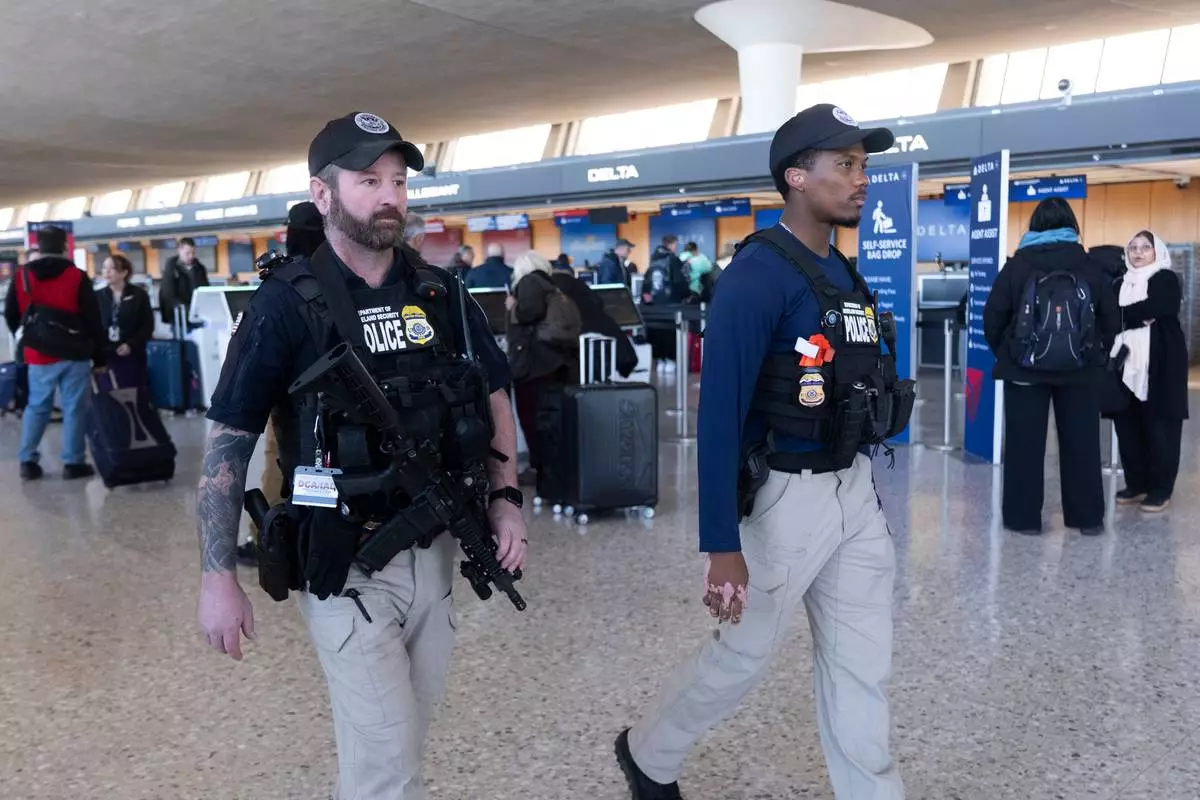
FILE - Department of Homeland Security, Transportation Security Administration, Federal Air Marshals, patrol around Washington Dulles International Airport, in Chantilly, Va., Tuesday, March 24, 2026. (AP Photo/Manuel Balce,File)