PITTSBURGH (AP) — Paul Skenes was bored and driving through the northern Pittsburgh suburbs on Monday — a rare in-season off day — when the Pirates ace caught the familiar lights of a baseball field out of the corner of his eye.
The next thing the reigning NL Cy Young winner knew, he was circling the parking lot, searching for a spot. Not long after, one of the brightest stars in the game was watching various Ingomar Little League teams practice.
The 24-year-old star tried to stay “incognito,” which is kind of hard to do in general when you're 6-foot-6 and 260 pounds and one of the brightest young stars in your sport. Soon enough, Skenes found his way onto the field in sandals, a T-shirt, and a pair of shorts, a sure sign that the typically well put-together Skenes hadn't planned on stopping in the first place.
Over the next two hours, he played catch, signed autographs, and remembered a time in his life when his relationship with the game was far simpler.
The impromptu practice went viral, as things tend to do when Skenes is involved. His girlfriend, former gymnast turned influencer and actress Livvy Dunne, s hared it on TikTok. A popular Pittsburgh DJ did the same on Instagram.
Skenes has learned to accept that attention comes with the territory, even when he's trying to avoid it.
“Should’ve worn some sunglasses and a fake moustache,” he joked.
Yes, Skenes is well aware of the core memory he created for the players at Ingomar Little League, about 20ish minutes north of PNC Park. Los Angeles Angels outfielder Garrett Anderson did the same for Skenes when the two briefly connected while Skenes was growing up in Southern California.
Yet just as importantly, with the Pirates in the midst of a losing streak that stretched to four after they were drilled 12-2 loss by Los Angeles on Tuesday — when the Dodgers exploded for 10 runs in the seventh immediately after Skenes departed — it offered Skenes a reminder of why he does what he does for a living.
“I went to watch some baseball, but you got to remember it’s just a game,” Skenes said. “There’s a lot of things that make it a business. It’s work. It’s a job for us, for sure, on some days more than others, but you got to remember you love the game and why you started playing it in the first place.”
Particularly during the times when that love can feel elusive during a difficult stretch like the one Skenes is in at the moment.
Despite limiting the two-time defending World Series champion Dodgers to two runs over six innings and retiring four-time MVP Shohei Ohtani all three times he faced him, Skenes remained winless over his last five starts after the bullpen imploded behind him.
Is Skenes in a slump? Only in comparison to the remarkably high bar he has set during his rapid ascent to one of the best pitchers in baseball. His ERA since May 17 is a pedestrian 4.50, more than double his career ERA up to that point.
Things were a little better, a little sharper against the Dodgers than they have been of late. He recorded seven strikeouts, and Los Angeles swung and missed at more than 15 of the 103 pitches he threw.
Skenes' fastball largely went where he wanted, when he wanted, and if Pirates second baseman Brandon Lowe can knock down a sharp grounder that instead deflected off his glove and into the outfield with two outs in the sixth that allowed Freddie Freeman to score and tie the game, Skenes might have exited with the lead.
Not that it mattered in the end. The 10-spot the Dodgers put up in the seventh made sure of that.
Still, Skenes is trying to keep things in perspective. The season is long. Every team struggles at some point. He is trying his best to remain focused on the process.
Asked why his fastball — which now sits more in the 97 mph range after frequently topping 100 as a rookie two years ago — looked better on Tuesday than it has in a while, he shrugged.
“Just a good day, I think,” he said. "Kinda comes and goes as the season goes. Just a good day with that.”
The lobs he threw to the Little Leaguers didn't have nearly that kind of velocity. They might have as much meaning, however, over the arc of a season that can sometimes feel more like a slog than a dream come true.
“We’ve all played those sandlot fields when we were nine,” he said, later adding, "The game looks different when it’s 200-foot fences and there are no ads out there, no fans out there, just playing for the love of the game.”
AP MLB: https://apnews.com/hub/MLB

Pittsburgh Pirates pitcher Paul Skenes delivers during the first inning of a baseball game against the Los Angeles Dodgers in Pittsburgh, Tuesday, June 9, 2026. (AP Photo/Gene J. Puskar)

Pittsburgh Pirates pitcher Paul Skenes delivers during the second inning of a baseball game against the Los Angeles Dodgers in Pittsburgh, Tuesday, June 9, 2026. (AP Photo/Gene J. Puskar)
WASHINGTON (AP) — Nevada, South Carolina and North Dakota hosted primary elections Tuesday, but much of the political world was focused on Maine's high-stakes U.S. Senate contest.
The results were never in question. Neither Republican incumbent Sen. Susan Collins nor Democratic challenger Graham Platner faced serious opposition for their party's nomination. And yet Tuesday marked an especially significant moment for Platner, the embattled veteran and oyster farmer, who is fighting to rebuild his credibility in a campaign rocked by controversy.
Elsewhere, President Donald Trump's clout within his party was tested anew in states like South Carolina and Nevada, where he endorsed his favored candidates. Democrats hoped to build momentum in Nevada as part of a broader push to reclaim key governor's seats.
Here's some of the biggest takeaways from Tuesday's primaries.
There is no question that Platner has repair work to do.
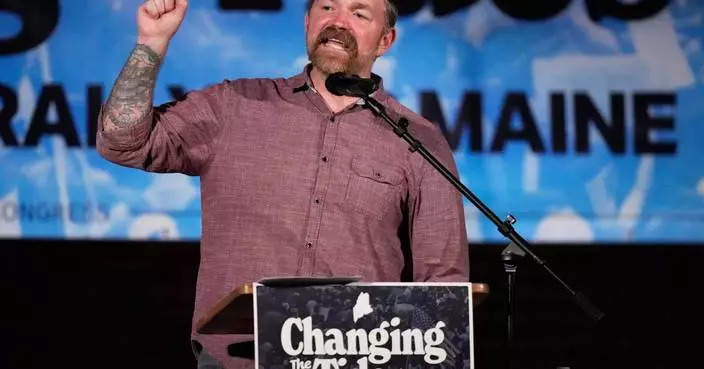
The Maine Democrat openly acknowledged as much Tuesday night, telling a room packed with cheering supporters that “people can change.”
“Any of those who feel let down or disappointed or disillusioned, it is my job to earn your trust, faith and support,” Platner said. He later added, “I’ve made mistakes in my life, mistakes that I regret, that I live with, that I continue to learn from.”
It was hardly a defiant message for a man who sits at the very center of the Democratic Party's fight to reclaim the Senate majority. Although he spent the closing minutes of his election-night speech attacking Collins, much of the night was choreographed to address other controversies.
It was barely a week ago when revelations surfaced that Platner had engaged in sexually explicit messages with multiple women while married. Allies wondered if more baggage would emerge, and then The New York Times reported new allegations about his behavior during previous relationships.
Platner's mother took the stage before he spoke. She declared: "I am very, very proud of my son. I’m proud of who he is." And then Platner's wife appeared at his side before and after his speech. They held hands, touched foreheads and kissed.
Platner's rival for the Democratic nomination, Maine Gov. Janet Mills, suspended her campaign in April after it became clear Platner was in a commanding position.
A much more difficult challenge lies ahead: earning his own party's trust as he tries to defeat Collins, who is running for her sixth term.
As the controversies surrounding Platner have mounted, his support among Democrats has remained intact.
His victory — and his party's response — underscores how much the party has changed in the Trump era. Democrats who once embraced a near-zero-tolerance approach to serious allegations of personal misconduct are increasingly prioritizing electability in their quest to return to power in Washington.
Jim Messina, who led former President Barack Obama’s reelection campaign, said “a star is born” after Platner's speech Tuesday night.
Few lawmakers illustrated the Democratic Party's evolution more clearly than Minnesota Sen. Tina Smith. On Monday night, Smith offered an unequivocal endorsement of Platner, saying that if she lived in Maine, “he’d have my support, no question.”
Smith arrived in the Senate in 2018 after replacing Sen. Al Franken, who resigned amid allegations of inappropriate touching and kissing during the height of the #MeToo movement.
She is joined by other Democrats who once derided Republicans’ acceptance of Trump and other controversial nominees, but now back Platner. Sens. Bernie Sanders and Elizabeth Warren have been — and continue to be — key supporters of Platner.
But not all Democrats appear comfortable. Sen. John Fetterman of Pennsylvania had pushed Maine voters to support Mills, even though she dropped out. Mills issued a statement Tuesday night that did not mention Platner's name. Rep. Josh Gottheimer of New Jersey pushed Platner to “get off” the ballot in a CNN interview.
Expect Democratic leaders to face a new round of difficult questions about their own standards in the days and weeks ahead.
The president was looking to rebound Tuesday from an embarrassing loss in Iowa last week, where his preferred candidate for governor was defeated in a rare rebuke from Republican primary voters.
But South Carolina’s Republican gubernatorial primary offered only an incomplete victory.
Trump-backed Lt. Gov. Pamela Evette was unable to secure a majority of the vote in the five-candidate field needed to avoid a runoff. She will face state Attorney General Alan Wilson on June 23.
As the results came in, Trump called Evette and pledged to help her over the next two weeks, according to a person familiar with the private conversation who was not authorized to discuss it publicly.
The night produced a more decisive result for one of Trump’s closest allies in Congress. Sen. Lindsey Graham avoided a runoff and secured the Republican Senate nomination over businessman Mark Lynch. Trump had warned that it would be a “DISASTER for the Republican Party” if Lynch won.
Meanwhile, in Nevada’s 2nd congressional district, Trump-backed retired Lt. Col. David Flippo is facing former state Sen. James Settelmeyer. Republican Rep. Mark Amodei, who announced his retirement from the seat, has endorsed Settelmeyer, as has the state’s governor, Republican Joe Lombardo.
Longtime South Carolina Rep. James Clyburn, who holds significant national political clout as the state’s lone Democratic House member, easily fended off a little-known primary challenger Tuesday.
Just weeks ago, it was unclear if Clyburn would make it to a 18th term in office. Republican lawmakers, backed by Trump, considered a congressional map that would have significantly altered Clyburn’s majority-Black district and made it harder for him to hold onto the seat. But the Republican-led state Senate rejected the effort, leaving his district largely intact.
Two Republicans are still competing for the chance to face Clyburn in November, but he is expected to be the overwhelming favorite in the general election. A win would likely ensure he plays a significant role in the lead-up to the 2028 presidential race.
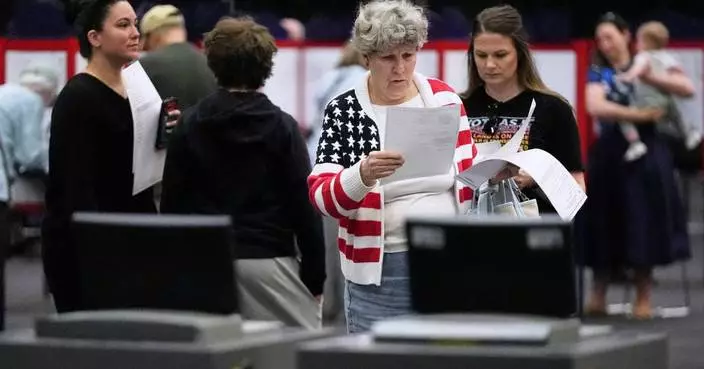
It took a full week for California's general election matchup for governor to become clear. The final results for Maine could take even longer. And key primary contests in South Carolina are headed to a June 23 runoff.
Despite what you may be reading on the internet, this is how U.S. democracy works. These differences in how votes are counted — and how long it takes — exist because the Constitution sets out broad principles for electing a national government, but leaves the details to the states.
Tallying votes collected by local officials in individual precincts can take a long time — especially in states like Maine that offer ranked-choice voting, or South Carolina, which requires a runoff if none of the candidates earn more than 50% of the vote.
In California, which held its primary elections last week, Republican Steve Hilton joined Democrat Xavier Becerra in qualifying for the November ballot for governor on Tuesday. Elections often take a long time to sort in the state, the nation's most populous, largely because officials designed their system to prioritize accessibility over speed.
In Maine's crowded primary for governor, five Democrats were in the running and the state will move to its ranked-choice system to determine the winner. Historically, the process has taken more than a week to resolve. And in South Carolina, the Trump-backed Lt. Gov. Pamela Evette and state Attorney General Alan Wilson emerged from the crowded primary on Tuesday and will compete in a runoff election in two weeks.
Peoples reported from New York.
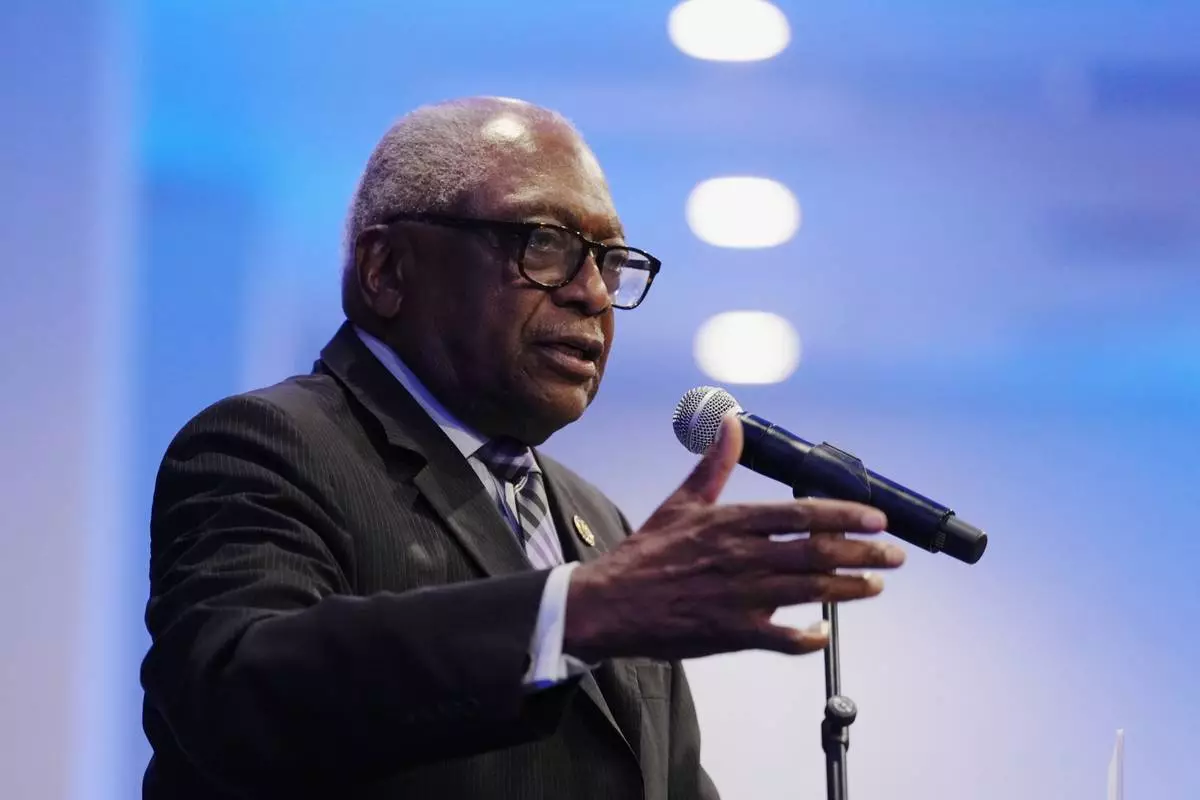
U.S. Rep. Jim Clyburn, D-S.C., speaks to attendees at the South Carolina Democratic Party's Blue Palmetto Dinner on Friday, May 29, 2026, in Columbia S.C. (AP Photo/Meg Kinnard)

Attendees celebrate as Democratic U.S. Senate candidate Graham Platner speaks during a primary election night watch party after winning the Democratic nomination Tuesday, June 9, 2026, in Blue Hill, Maine. (AP Photo/Robert F. Bukaty)
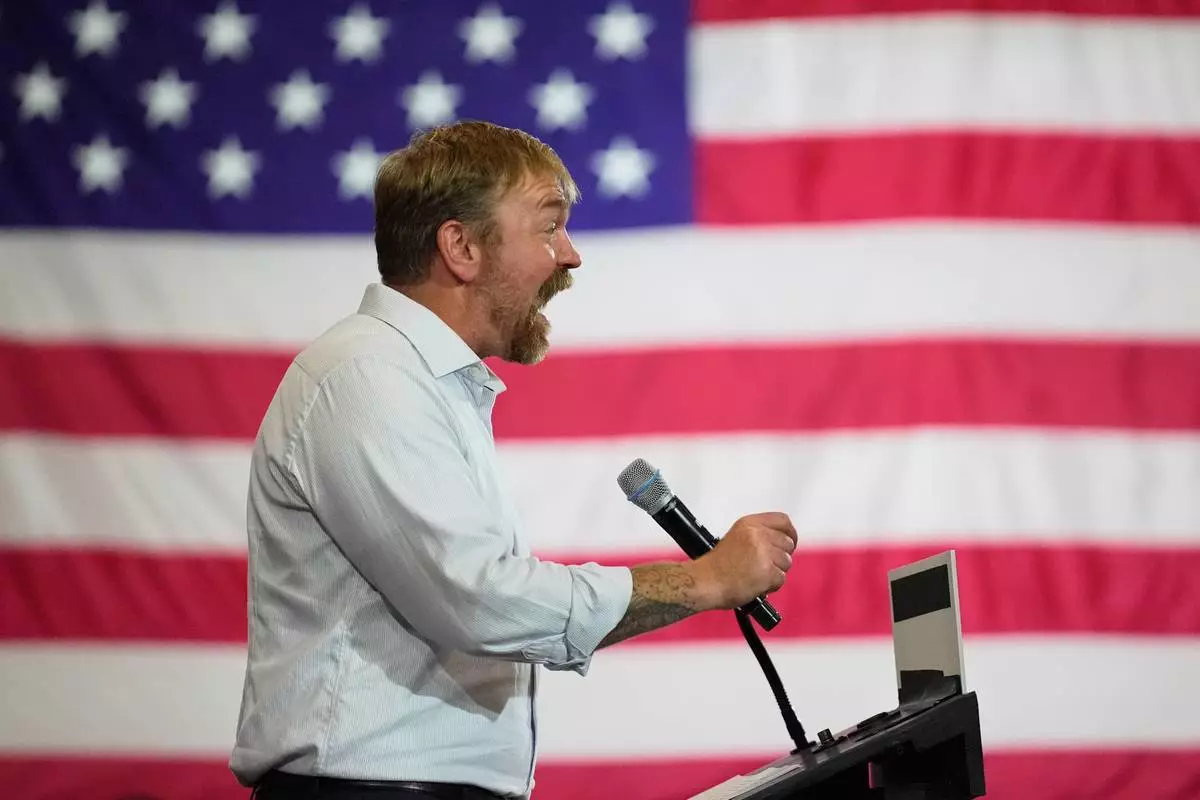
Democratic U.S. Senate candidate Graham Platner speaks during a primary election night watch party after winning the Democratic nomination Tuesday, June 9, 2026, in Blue Hill, Maine. (AP Photo/Robert F. Bukaty)

U.S. Rep. Jim Clyburn, D-S.C., speaks to attendees at the South Carolina Democratic Party's Blue Palmetto Dinner on Friday, May 29, 2026, in Columbia S.C. (AP Photo/Meg Kinnard)

Graham Platner, Democratic candidate for U.S. Senate, acknowledges applause at a campaign event Sunday, June 7, 2026, in Portland, Maine. (AP Photo/Robert F. Bukaty)
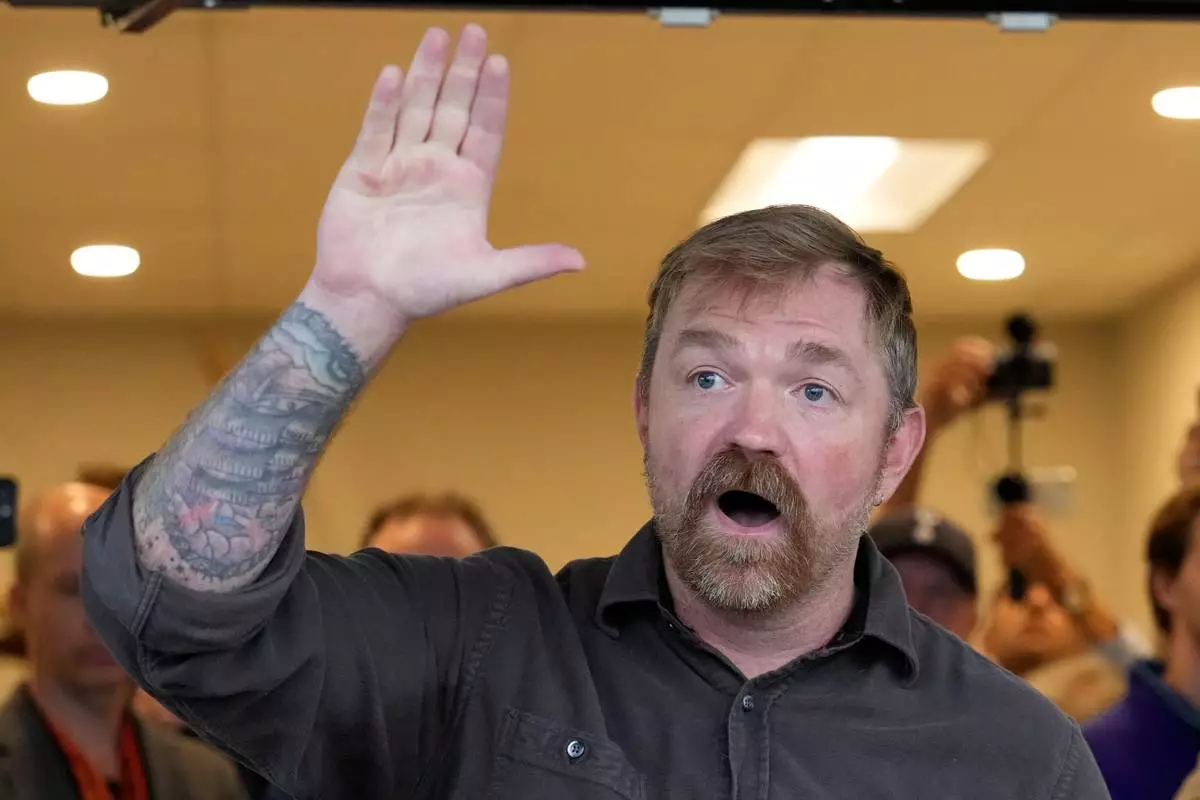
Graham Platner, Democratic candidate for U.S. Senate, speaks to an overflow crowd outside a campaign event Sunday, June 7, 2026, in Portland, Maine. (AP Photo/Robert F. Bukaty)