The court officials overseeing the NFL's $1 billion settlement fund for concussion-related injuries have barred five law firms from handling any more claims from former players, after finding that they fraudulently steered clients toward doctors willing to give them a Parkinson's disease diagnosis whether they exhibited symptoms or not.
The five firms represented or performed work involving 98 former players who in recent years sought six- to seven-figure payouts from the settlement for Parkinson’s disease claims, the special masters appointed to help oversee the settlement wrote in a report filed Monday in U.S. District Court in Philadelphia.
Of those, 37 remained pending and will now be denied, with a chance for the players to restart the claims process. But 57 were approved — totaling more than $95 million — before tips about suspicious activity prompted an audit. The attorneys' share of that came out to about $20 million, the report said, and additional firms may have been involved in similar actions.
The report called it “an organized scheme ... in which these law firms — and potentially others — circumvented the Settlement’s anti-fraud safeguards and laundered questionable Parkinson’s Disease diagnoses into payable claims.”
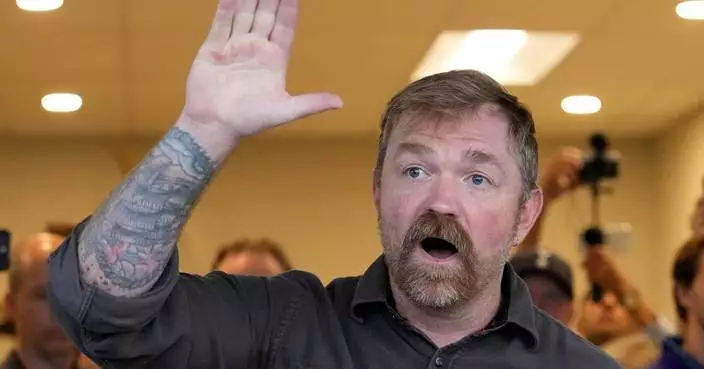
According to the report, the attorneys involved included Bart Oates, a former three-time Super Bowl champion with the New York Giants and San Francisco 49ers who earned his law degree while still playing in the NFL. Oates did not immediately return a message left by The Associated Press on his law firm voicemail seeking comment.
The NFL in 2013 agreed to establish the fund, meant to last for 65 years, to settle class-action allegations that it long hid what it knew about the neurological risks of playing after concussions. The plan offers retired players baseline testing and compensation of up to $5 million for the most serious illnesses linked to football concussions, including Alzheimer’s, Parkinson’s, amyotrophic lateral sclerosis and deaths involving chronic traumatic encephalopathy, or CTE.
The league has previously expressed concerns about doctor-shopping or other fraud in the disbursement of the money, while some attorneys representing players have accused the league of throwing up roadblocks for players seeking payment. A judge in 2019 terminated three of the four lawyers serving as class counsel after they objected to restrictions on geographical restrictions on the doctors who can evaluate retired players for dementia and other brain injuries.
“The NFL remains committed to ensuring that players and their families receive the benefits they deserve, and any misconduct threatens the integrity of the Settlement and the prompt payment of legitimate claims," league spokesman Brian McCarthy said in a statement to the AP. “We are pleased with the Special Masters’ Decision, which sends a clear message that fraud in the NFL Concussion Settlement Program will not be tolerated.”
Under the settlement, only doctors contracted with the claims program are allowed to render qualifying diagnoses; those doctors must be board-certified, have expertise in neurology, and comply with anti-influence rules designed to prevent fraud or kickbacks.
The report said that the law firms circumvented that requirement by recruiting retired players as clients and sending them to unapproved doctors who diagnosed them with Parkinson's and prescribed them a drug that suppresses the symptoms.
At one point, retired players waited in a hotel lobby in Dallas to meet with a traveling doctor who had rented a suite for the purpose of examining them for Parkinson’s, the report said. Another unapproved doctor used by the firms was neither board-certified nor known to be a movement disorders specialist, but even if he were, he would have been ineligible due to past bankruptcy, tax liens and civil judgments, it said.
After the diagnosis and prescription from an unapproved doctor, the law firms sent the clients to approved ones — who were hamstrung in making a decision about whether the former player had the disease, because the player was already on medication to suppress the symptoms, the report said. The approved doctors typically could rely only on the past medical history: the prior diagnosis and current prescription.
The report identified the law firms involved as Douglas Grossinger, Attorney at Law; Feder Law, LLC; Pro Athlete Law Firm, P.A.; Syme Law, PLLC; and Reppert Oates & Vytell, LLC. It said the practice began with Grossinger, who then recruited other attorneys to submit claims for him so as to avoid raising suspicion for submitting so many Parkinson's claims.
Oates did not farm out claims to other attorneys, but he engaged in a similar practice with diagnoses, the report said, with informants telling auditors that he “cold-called Retired NFL Players, promising a Diagnosis of Parkinson’s Disease” if the players switched from another law firm to his.
“By structuring their clients’ evaluations in this way, Mr. Grossinger and ROV deliberately put (approved) Physicians in a position where they had little choice but to defer to manufactured outside records,” the report said.
Grossinger, a New York-licensed attorney, declined to comment on the record when contacted by the AP. Pennsylvania-based Fred Feder said in a text message he would not make any statement without first consulting his lawyer. The AP could not immediately confirm contact information for Syme Law or Pro Athlete Law Firm.
Johnson reported from Seattle. AP Pro Football Writer Rob Maaddi contributed to this report.
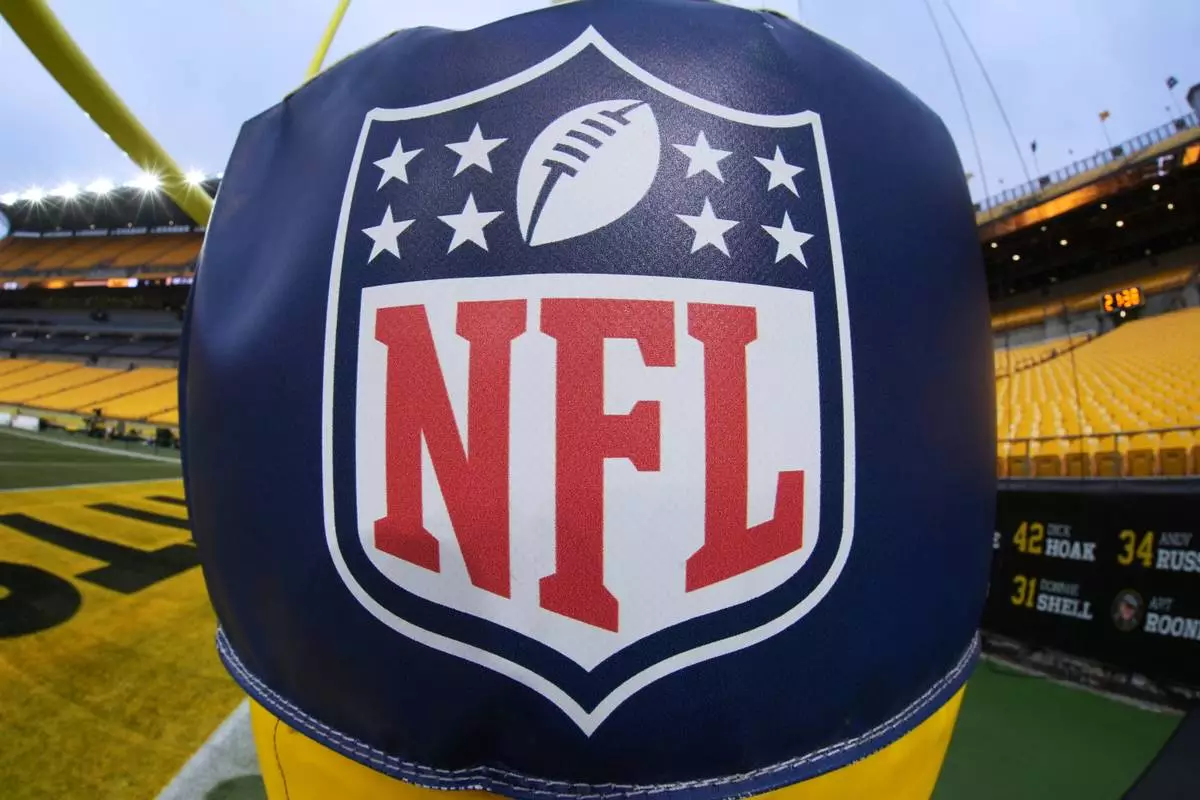
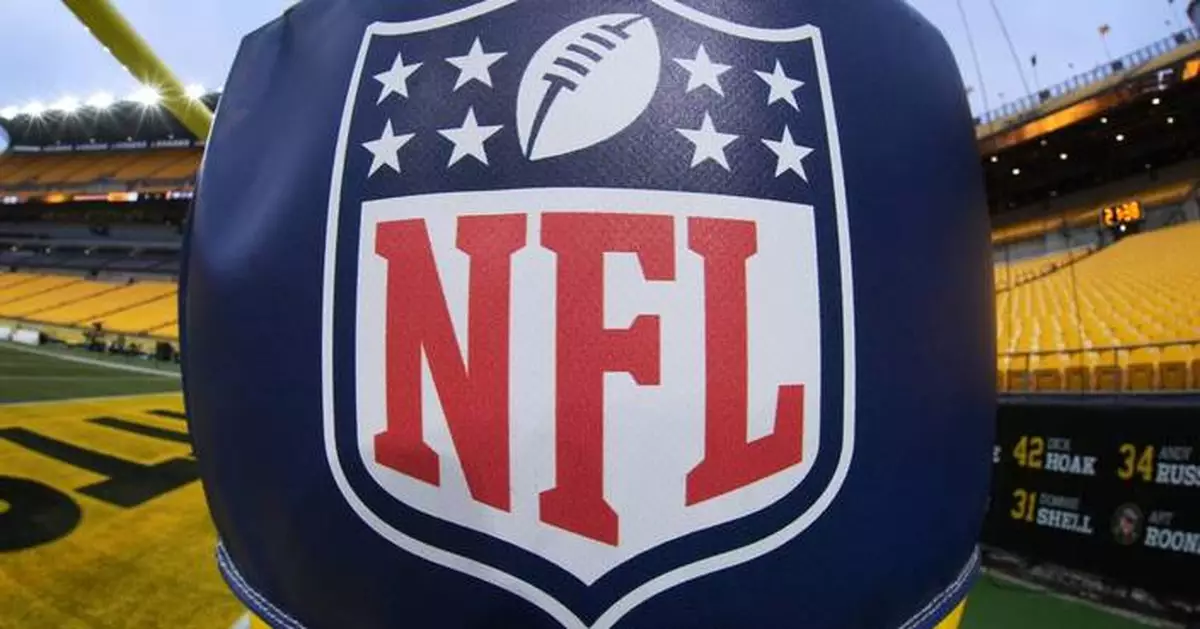
FILE - The NFL logo is displayed on a goal post at Acrisure Stadium before an NFL football game between the Pittsburgh Steelers and the Baltimore Ravens in Pittsburgh Jan. 4, 2026. (AP Photo/Gene J. Puskar, File)
DUBAI, United Arab Emirates (AP) — The United States launched airstrikes early Wednesday against Iran after blaming Tehran for the crash of an American attack helicopter, prompting new attacks from Iran and further widening the retaliatory strikes that threaten to derail talks to end to the war.
Iran launched attacks on sites in Bahrain, Kuwait, which both sounded alerts and fired air defenses in response. Jordan also reported shooting down five missiles that Iran shot at an air base hosting U.S. forces.
Since the U.S. and Israel started the war with attacks on Iran on Feb. 28, the conflict has shaken the global economy, driven up energy prices around the world and made many basics, including food, more expensive.
Officials have been unable to turn the April ceasefire into a deal to permanently end the conflict, particularly as Israel intensifies and expands its military campaign in Lebanon against the Iranian-backed militia Hezbollah.
The downing of the Apache attack helicopter and the strikes by the U.S. military further strained the ceasefire a day after Iran and Israel exchanged fire for the first time since the fragile truce took effect. Iranian state television said Tuesday that the Israeli attacks killed at least two members of the country’s air-defense units.
Fighter jets from the U.S. Air Force and Navy conducted the strikes in Iran, the U.S. military’s Central Command said, targeting “air defense, ground control stations, and surveillance radar sites.” Iran acknowledged strikes around Bandar Abbas and Qeshm Island, but gave no details on the damage.
“The operation was a proportional response to recent attacks on U.S. forces and international commercial ships transiting regional waters,” Central Command said.
Iran’s top diplomat said foreign military forces near its territory “are at constant risk” and later vowed that there would be a response to the new U.S. strikes.
Iranian forces “will leave no attack or threat unanswered,” Iranian Foreign Minister Abbas Araghchi said on X. “Leave our region if you want to be safe.”
Jordan said Wednesday it shot down five incoming missiles launched by Iran, which Iran said targeted the Muwaffaq Salti Air Base. That air base has hosted American F-35 fighter jets and other aircraft.
Jordan’s state-run Petra news agency carried the statement from its military, which added that there were no injuries in the attack and that explosives experts had examined the debris from the interceptions.
Elsewhere in the region, guards on board a cargo ship off the coast of Yemen in the Gulf of Aden exchanged fire with gunmen in a small boat and repelled their attack, the British military’s United Kingdom Maritime Trade Operations center said.
No group immediately claimed responsibility. Yemen’s Houthi rebels have said they will resume their attacks against Israel-affiliated ships moving through the Red Sea, while Somali pirates have also become more active in the region.
The U.S. Army AH-64 Apache attack helicopter that crashed went down near the Strait of Hormuz after colliding with an Iranian drone, according to a U.S. official, who spoke on condition of anonymity to discuss an ongoing investigation.
It wasn’t clear whether the collision was intentional, and official statements only said the crash is under investigation. CNN, CBS News and other outlets earlier reported the collision.
In the first known operation of its kind by the American military, a drone boat rescued both of the helicopter's aviators at 3:30 a.m. local time Tuesday, about two hours after their aircraft went down during a patrol off the coast of Oman, U.S. Central Command said.
Trump said both crew were “safe and uninjured.”
The U.S. service members were spotted and picked up by a drone boat that took them to another location on the water, where they were picked up by a helicopter, said Capt. Tim Hawkins, a spokesman for U.S. Central Command.
AH-64 Apache helicopters have been a key asset for the American military as it enforces a blockade on Iranian crude oil shipments and tankers, seeking to pressure Tehran into a deal. The helicopters have also been used by the United Arab Emirates to shoot down Iranian drones.
Before he accused Iran of downing the U.S. helicopter, Trump expressed renewed optimism over negotiations with Iran, but didn’t say why there was reason for optimism.
Mediators, led predominantly by Pakistan, have been trying for weeks to get a deal across the line. However, both Iran and the U.S. have taken hardline positions.
The U.S. wants to see Iran give up its stockpile of highly enriched uranium, which is believed to have been buried by American airstrikes during the 12-day war in 2025. But Iran is refusing that and demanding relief from sanctions. It also wants the release of frozen assets even before a final agreement is in place, something rejected by Trump.
Israel's military said on Wednesday it had launched multiple strikes in southern Lebanon over the past day, targeting Hezbollah infrastructure.
The continued fighting between Israel and Hezbollah is still a top Iranian priority, while Lebanon's government has been taking an increasingly hard line against Hezbollah but remains unable to disarm the powerful militia.
Associated Press writers David Rising in Bangkok; Michelle L. Price in New York; Will Weissert in Washington; Bassem Mroue in Beirut; Munir Ahmed in Islamabad; and Russ Bynum in Savannah, Georgia, contributed to this report.
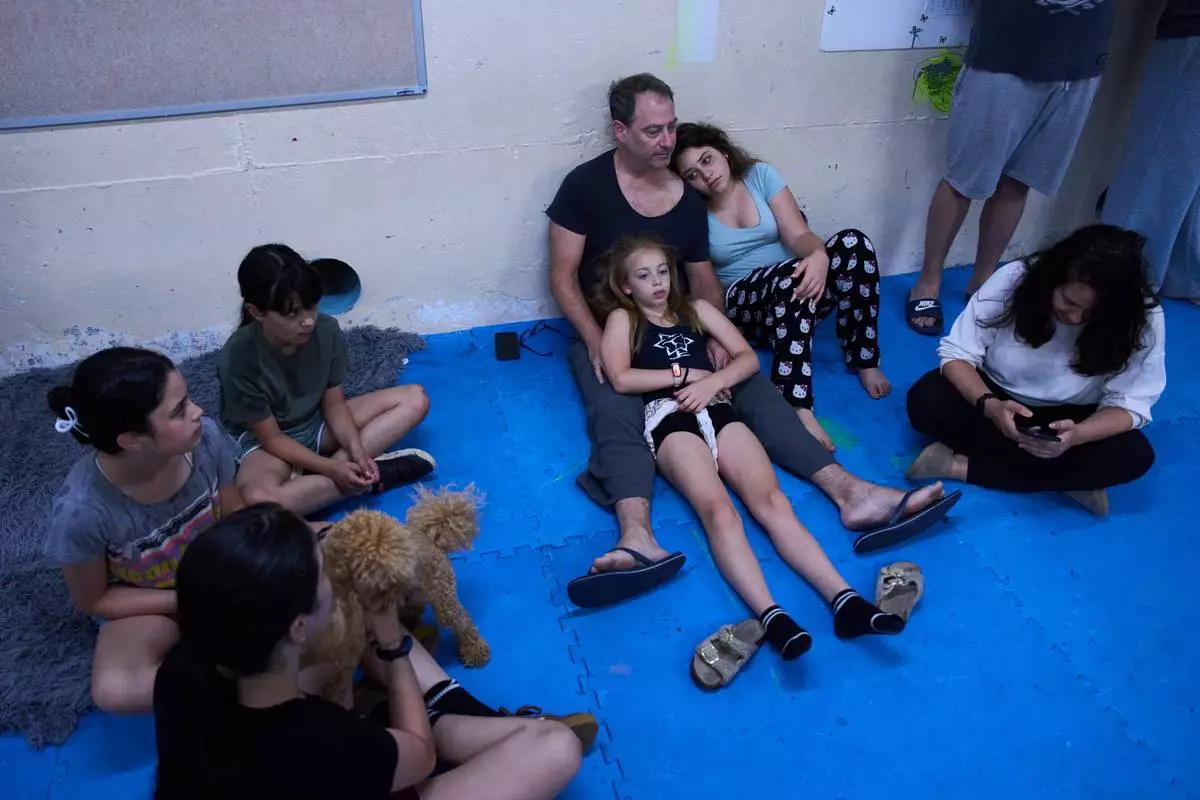
People take shelter as air raid sirens warn of incoming Iranian missiles in Ramat Gan, Israel, Monday, June 8, 2026. (AP Photo/Oded Balilty)
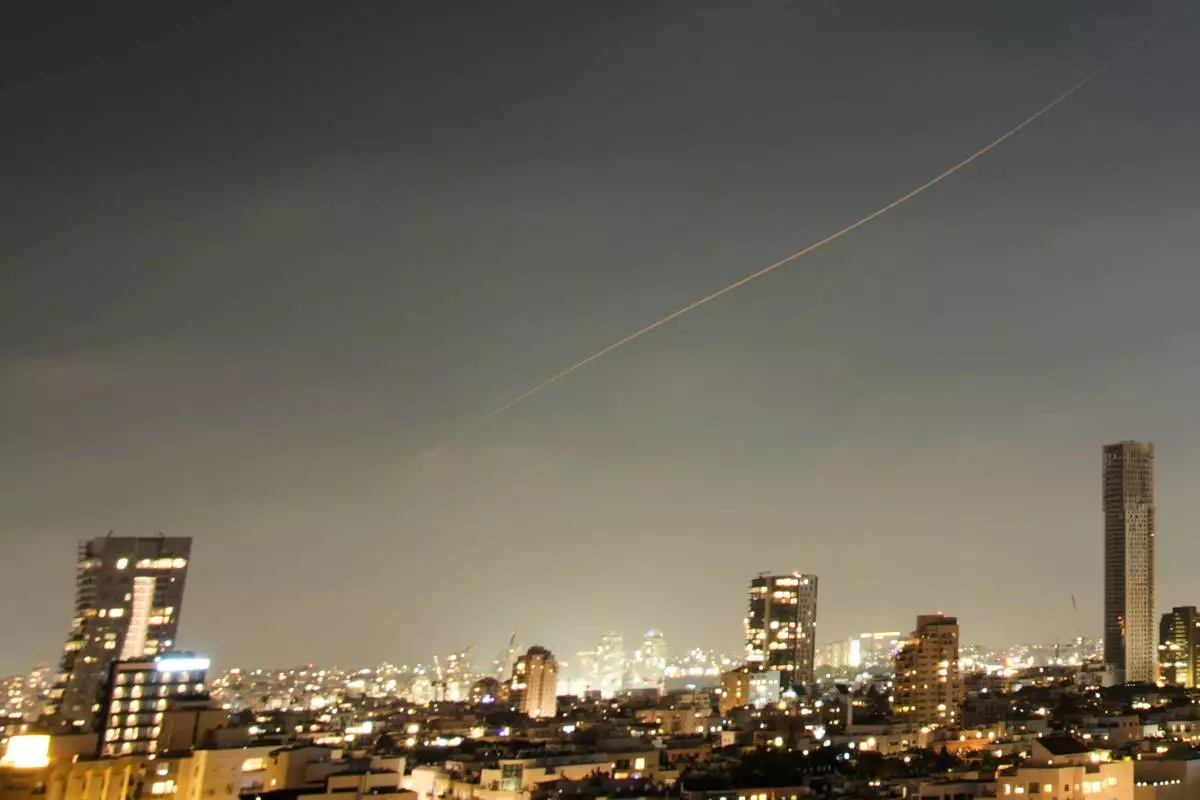
A projectile streaks through the sky over central Israel during an Iranian missile attack, Sunday, June 7, 2026. (AP Photo/Ohad Zwigenberg)
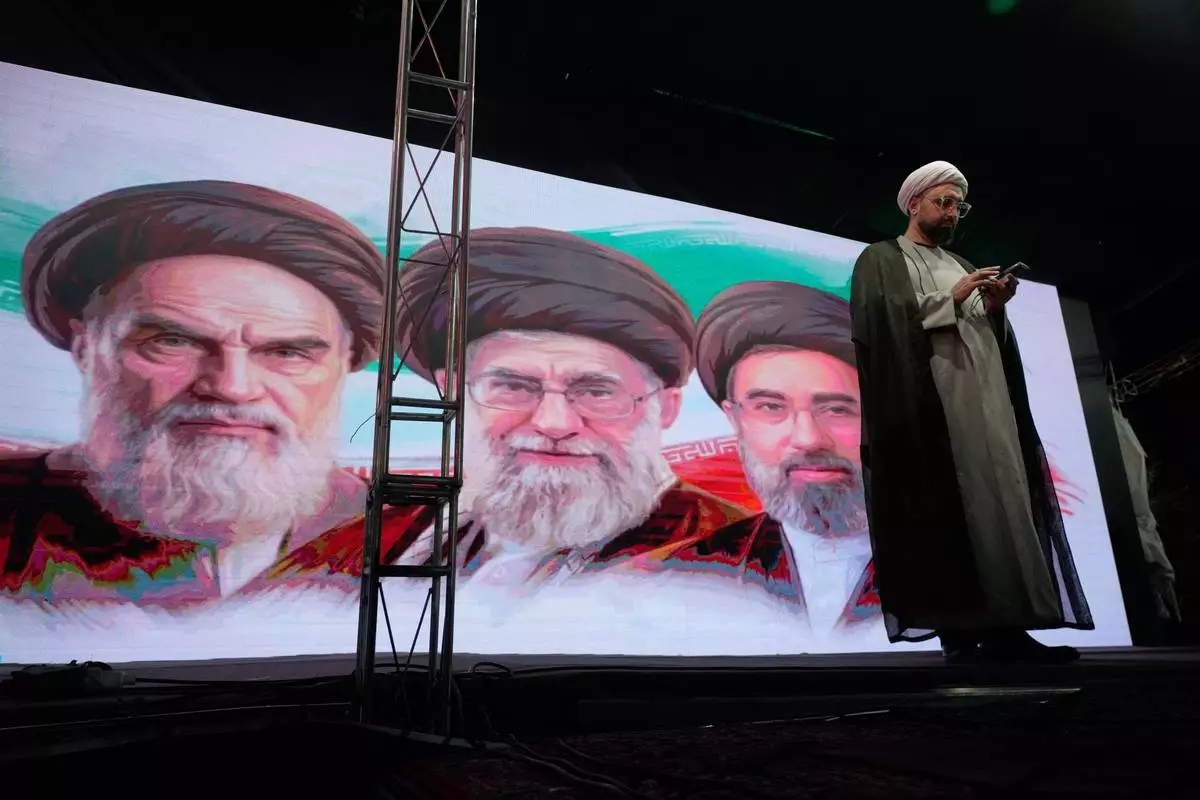
A cleric checks his cell phone on stage in front of a screen displaying portraits of the late Iranian revolutionary founder Ayatollah Khomeini, left, late Supreme Leader Ayatollah Ali Khamenei, center, and Supreme Leader Ayatollah Mojtaba Khamenei, during a pro-government gathering in Tehran, Iran, Sunday, June 7, 2026. (AP Photo/Vahid Salemi)
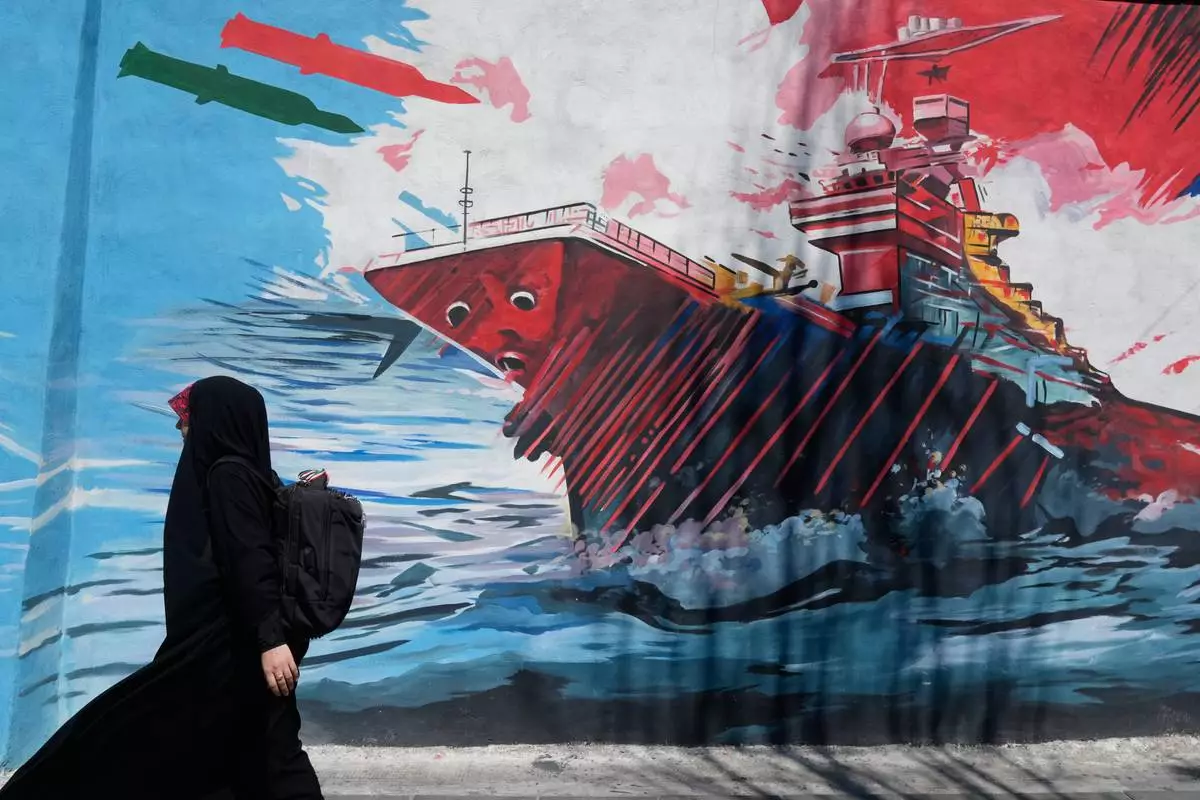
A woman walks past a mural depicting a U.S. aircraft carrier under missile attack in downtown Tehran, Iran, Monday, June 8, 2026. (AP Photo/Vahid Salemi)