Hong Kong Customs detects smuggling case involving cross-boundary goods vehicle with goods worth about $10 million
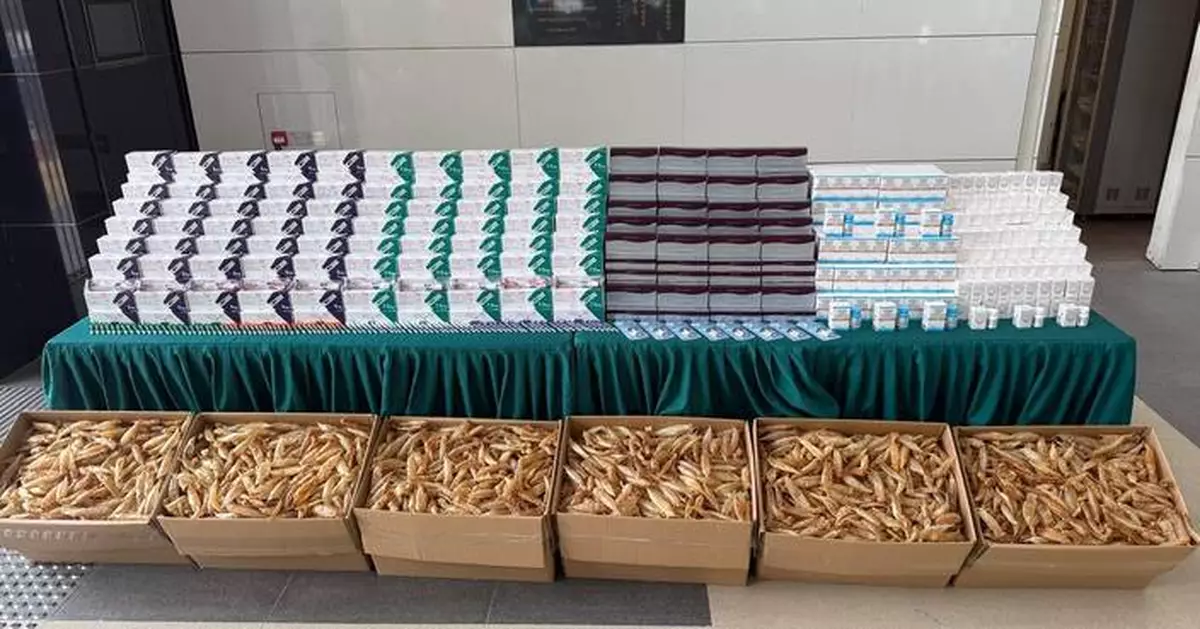
Hong Kong Customs detected a suspected a smuggling case involving a cross-boundary goods vehicle on June 4. Large batches of suspected smuggled goods with a total estimated market value of about $10 million were seized. A 39-year-old male driver in involved in the case was arrested.
Through intelligence analysis and risk assessment, a cross-boundary goods vehicle departing from Hong Kong for Macao was selected for inspection on June 4. Upon examination, Customs officers found a large batch of suspected smuggled goods, including suspected pharmaceutical products, weight loss injection products, cosmetic injection products and fish maws.
Being a government department primarily responsible for tackling smuggling activities, Customs has long been combating various smuggling activities on all fronts. Customs will keep up its enforcement action and continue to resolutely combat sea smuggling activities through proactive risk management and intelligence-based enforcement strategies, and carry out targeted anti-smuggling operations at suitable times to crack down on relevant crimes.
Smuggling is a serious offence. Under the Import and Export Ordinance, any person found guilty of importing or exporting unmanifested cargo is liable to a maximum fine of $2 million and imprisonment for seven years upon conviction.
Members of the public may report any suspected smuggling activities to Customs' 24-hour hotline 182 8080 or its dedicated crime-reporting email account(crimereport@customs.gov.hk) or online form (eform.cefs.gov.hk/form/ced002).
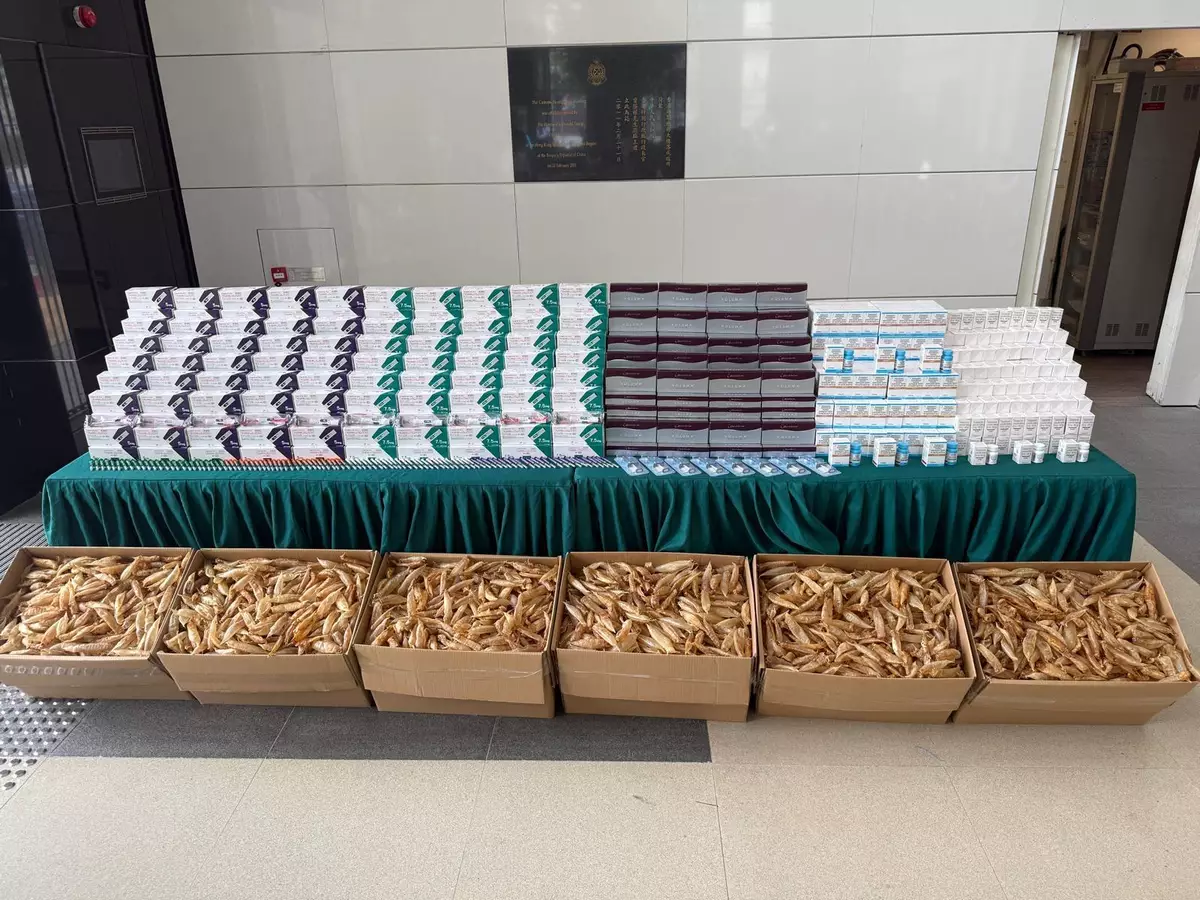
Hong Kong Customs detects smuggling case involving cross-boundary goods vehicle with goods worth about $10 million Source: HKSAR Government Press Releases
CHP investigates severe paediatric case of COVID-19 infection
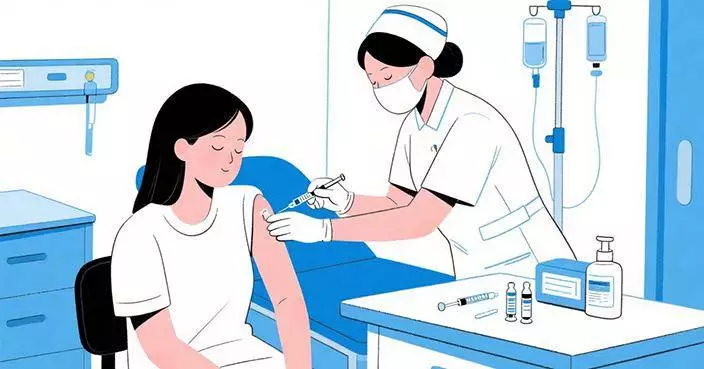
The Centre for Health Protection (CHP) of the Department of Health today (June 10) is investigating a severe paediatric case of COVID-19 infection, and appealed the public to observe good personal and environmental hygiene at all times to prevent influenza and other respiratory illnesses. The CHP reminds high-risk individuals to receive initial doses or booster doses of COVID-19 vaccination at appropriate times to minimise the risk of severe disease and death.
Case details
--------------
The case involves a 19-month-old boy with good past health. He developed a fever, runny nose, cough, shortness of breath and stridor on June 4. He was taken to a private clinic for medical attention on the next day (June 5) and was referred to the Accident and Emergency Department of Kwong Wah Hospital, where he was admitted to the paediatric intensive care unit for treatment. His respiratory specimen tested positive for the SARS-CoV-2 virus upon laboratory testing. The clinical diagnosis was COVID-19 complicated with croup. He remains hospitalised and is currently in critical condition.
The CHP's preliminary investigation revealed that the boy had not received COVID-19 vaccine and had mostly stayed in Hong Kong throughout the incubation period. His three household contacts remain asymptomatic so far.
Government's COVID-19 Vaccination Programme
-------------------------------------------------------------
"Scientific evidence shows that COVID-19 vaccines are effective in reducing the risk of severe disease and death. Although COVID-19 has become a common respiratory infection in Hong Kong and around the world, certain high-risk individuals, especially young children, who have not received their initial dose of the COVID-19 vaccine and have not developed immunity through natural infection, face a higher risk of serious complications if they become infected. I would like to specifically remind the public that individuals who have not yet received their initial dose of the COVID-19 vaccine (including children aged six months or above) should get vaccinated as soon as possible, while high-risk individuals (particularly the elderly and those with underlying comorbidities) should also receive booster dose at appropriate times for effective protection against COVID-19." said the Controller of the CHP, Dr Edwin Tsui.
"According to the latest surveillance data, while the overall local activity of COVID-19 still remains at a relatively low level, slight increases have been recorded continually since early May. The COVID-19 activity levels fluctuate, with an upsurge period generally occurred approximately every six to nine months in recent years. Each upsurge is associated with changes in predominant circulating variants and a decline in community herd immunity. It has been nearly a year since the end of the last periodic upsurge of COVID-19 activity in Hong Kong, and it cannot be ruled out that the overall COVID-19 activity will rise further in the coming one to two months," he added.
The shelf life of the vaccines provided under the Government's COVID-19 Vaccination Programme (the Programme) is going to expire. A new batch of vaccines will arrive in Hong Kong successively in the fourth quarter of 2026. During this transition period, eligible individuals will not be able to receive free COVID-19 vaccines through the Programme for a short period. As such, those in need are advised to make appointments as early as possible. Existing vaccination services will continue until the following dates:
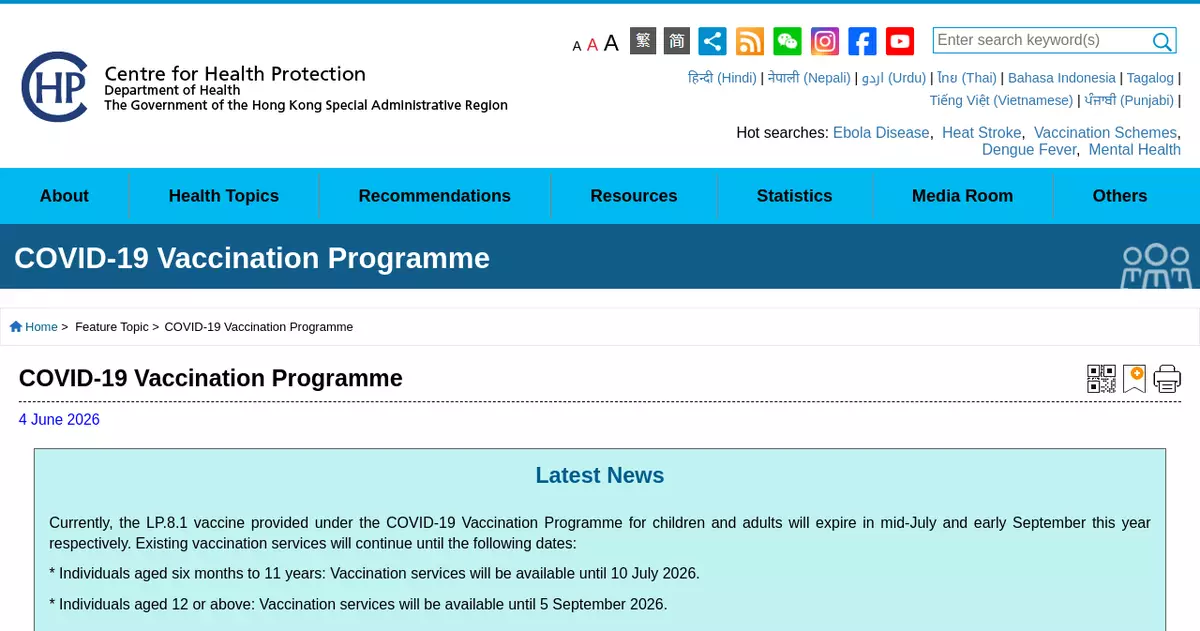 Individuals aged 6 months to 11 years: Vaccination services will be available until July 10, 2026.
Individuals aged 12 or above: Vaccination services will be available until September 5, 2026.
Individuals aged 6 months to 11 years: Vaccination services will be available until July 10, 2026.
Individuals aged 12 or above: Vaccination services will be available until September 5, 2026.
Apart from vaccination, in order to prevent COVID-19, influenza, and other respiratory illnesses as well as transmission in the community, the public should maintain strict personal and environmental hygiene at all times and note the following:
Patients can wear surgical masks to prevent transmission of respiratory viruses. Therefore, it is essential for persons who are symptomatic (even with mild symptoms) to wear a surgical mask;
High-risk persons (e.g. persons with underlying medical conditions or persons who are immunocompromised) should wear surgical masks when visiting public places. The general public should also wear a surgical mask when taking public transport or staying in crowded places. It is important to wear a mask properly, including performing hand hygiene before wearing and after removing a mask;
Avoid touching one's eyes, mouth and nose;
Practise hand hygiene frequently, wash hands with liquid soap and water properly whenever possibly contaminated;
When hands are not visibly soiled, clean them with 70 to 80 per cent alcohol-based handrub;
Cover the mouth and nose with tissue paper when sneezing or coughing. Dispose of soiled tissue paper properly into a lidded rubbish bin, and wash hands thoroughly afterwards;
Maintain good indoor ventilation;
Avoid sharing personal items;
When having respiratory symptoms, wear a surgical mask, consider to refrain from going to work or school, avoid going to crowded places and seek medical advice promptly; and
Maintain a balanced diet, perform physical activity regularly, take adequate rest, do not smoke and avoid overstress.
For more information on the COVID-19 Vaccination Programme and the latest recommendations on vaccine use, please refer to the CHP'swebsite.
Source: AI-found images