Inland Revenue (Amendment) (Tax Concessions for Shipping-related Activities and Physical Commodity Trading) Bill 2026 to be gazetted on Friday
The Inland Revenue (Amendment) (Tax Concessions for Shipping-related Activities and Physical Commodity Trading) Bill 2026 will be published in the Gazettethis Friday(June 12) to amend the Inland Revenue Ordinance (Cap. 112) to enhance the existing tax concessions for shipping-related activities and to introduce a new half-rate tax concession regime for physical commodity trading.
To facilitate the compliance of in-scope multinational enterprise groups with the BEPS (Base Erosion and Profit Shifting) 2.0 requirements - a new tax reform package formulated by the Organisation for Economic Co-operation and Development (OECD) - the Government proposes to introduce an additional option of a 15 per cent concessionary tax rate in the preferential tax regimes for shipping-related companies to elect on an annual basis, which will help save their compliance costs in completing the complex tax calculations under BEPS2.0 regarding their operations in Hong Kong.
In addition, to attract commodity traders to Hong Kong to propel the maritime services sector towards a more vibrant trajectory, the Bill proposes to provide a new half-rate profits tax concession for physical commodity trading, echoing the industry's calls to strengthen the local maritime services ecosystem. The aforementioned 15 per cent concessionary tax rate option also applies to the half-rate tax concession regime for physical commodity trading.
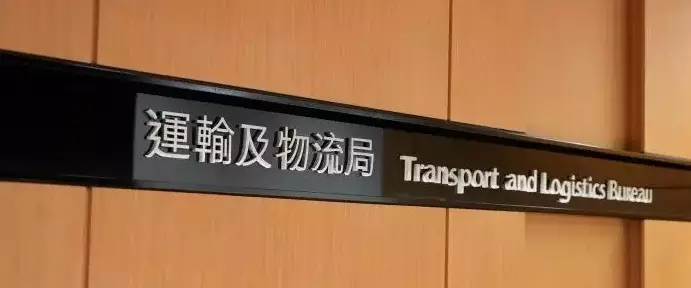
The Transport and Logistics Bureau, Photo source: reference image
A spokesperson for the Transport and Logistics Bureau said, "A favourable tax regime is a key factor in attracting shipping-related companies to Hong Kong. In light of changes in international tax rules, the Government has reviewed the existing tax concessions for shipping-related activities and proposed making enhancements in compliance with international tax rules, including the introduction of tax deduction arrangements in line with international standards, while ensuring that Hong Kong's preferential tax regimes for shipping-related activities maintain their competitiveness after the implementation of BEPS 2.0, thereby sustaining the development momentum of the high value-added maritime services industry in Hong Kong.
"Commodity traders form an integral part of the maritime services ecosystem and are key users of maritime services. The proposed new tax concession regime for commodity trading will give Hong Kong a distinct advantage in attracting commodity traders to set up or expand their businesses in Hong Kong, thereby injecting demand and impetus into the maritime services industry, and unlocking substantial new growth opportunities for our city in forging ahead with the vision of becoming a global maritime capital," the spokesperson added.
Since 2020, the Government has launched and been actively promoting a series of tax concessions to encourage more shipping-related companies to establish or expand their presence in Hong Kong, yielding tangible results. For the years of assessment 2020/21 to 2023/24, the number of qualifying ship lessors benefiting from the tax concessions has soared by five times.
Since the introduction of the aforementioned tax concessions, there have been new changes in the international tax landscape. In response to base erosion and profit-shifting risks arising from the digitalisation of the economy, the OECD has formulated BEPS 2.0. To implement this new tax reform package, Hong Kong has introduced the Hong Kong Minimum Top-up-Tax under the Inland Revenue Ordinance to require an in-scope multinational enterprise group to pay a top-up tax as from 2025 if the effective tax rate of the tax paid by its constituent entities in Hong Kong is less than 15 per cent.
The Bill will be introduced into the Legislative Council for first reading on June 24.

Photo source: reference image
Two persons arrested during joint anti-illegal worker operation by Immigration Department and Travel Industry Authority
The Immigration Department (ImmD) and the Travel Industry Authority (TIA) mounted a joint anti-illegal worker operation for two consecutive days,yesterday (July 27) and today (July 28) to combat illegal workers providing tourist guide and photo-taking services in Hong Kong. Two Mainland visitors, who were suspected illegal workers, were arrested.
As there have been suspected illegal workers utilising social media platforms to advertise tour guide and photo-taking services in Hong Kong, the ImmD and the TIA initiated an operation. Officers disguised as customers enquired about and booked services from the suspects. The suspects were subsequently arrested while providing such services in Hong Kong. The arrested illegal workers were women, aged 22 and 31. The ImmD will consider prosecution against them for the offence of breaching conditions of stay.
The ImmD and the TIA have also deployed officers to distribute leaflets to the public and visitors at tourist hotspots, conveying the message of "Don't employ illegal tour escort or tourist guides".
An ImmD spokesman said, "Any person who contravenes a condition of stay in force in respect of him or her shall be guilty of an offence. Also, visitors are not allowed to take employment in Hong Kong, whether paid or unpaid, without the permission of the Director of Immigration. Offenders are liable to prosecution and upon conviction face a maximum fine of $50,000 and up to two years' imprisonment. Aiders and abettors are also liable to prosecution and penalties."
The spokesman stressed that it is a serious offence to employ people who are not lawfully employable. Under the Immigration Ordinance, the maximum penalty for an employer employing a person who is not lawfully employable, i.e. an illegal immigrant, a person who is the subject of a removal order or a deportation order, an overstayer or a person who was refused permission to land, has been significantly increased from a fine of $350,000 and three years' imprisonment to a fine of $500,000 and 10 years' imprisonment to reflect the gravity of such offences. The director, manager, secretary, partner, etc, of the company concerned may also bear criminal liability. The High Court has laid down sentencing guidelines that the employer of an illegal worker should be given an immediate custodial sentence.
According to the court sentencing, employers must take all practicable steps to determine whether a person is lawfully employable prior to employment. Apart from inspecting a prospective employee's identity card, the employer has the explicit duty to make enquiries regarding the person and ensure that the answers would not cast any reasonable doubt concerning the lawful employability of the person. The court will not accept failure to do so as a defence in proceedings. It is also an offence if an employer fails to inspect the job seeker's valid travel document if the job seeker does not have a Hong Kong permanent identity card. Offenders are liable upon conviction to a maximum fine of $150,000 and to imprisonment for one year. In that connection, the spokesman would like to remind all employers not to defy the law by employing illegal workers. The ImmD will continue to take resolute enforcement action to combat such offences.
Under the existing mechanism, the ImmD will, as a standard procedure, conduct an initial screening of vulnerable persons, including illegal workers, illegal immigrants, sex workers and foreign domestic helpers, who are arrested during any operation with a view to ascertaining whether they are trafficking in persons (TIP) and/or forced labour victims. When any TIP and/or forced labour indicator is revealed in the initial screening, the ImmD officers will conduct a full debriefing and identification by using a standardised checklist to ascertain the presence of TIP and/or forced labour elements. Identified TIP and/or forced labour victims will be provided with various forms of support and assistance, including urgent intervention, medical services, counselling, shelter or temporary accommodation and other supporting services. The ImmD calls on TIP and/or forced labour victims to report crimes to the relevant departments immediately.
For reporting illegal employment activities, please call the dedicated hotline 185 185, fax at 2824 1166, emailanti_crime@immd.gov.hk, or submit the "Online Reporting of Immigration Offences" form atwww.immd.gov.hk.
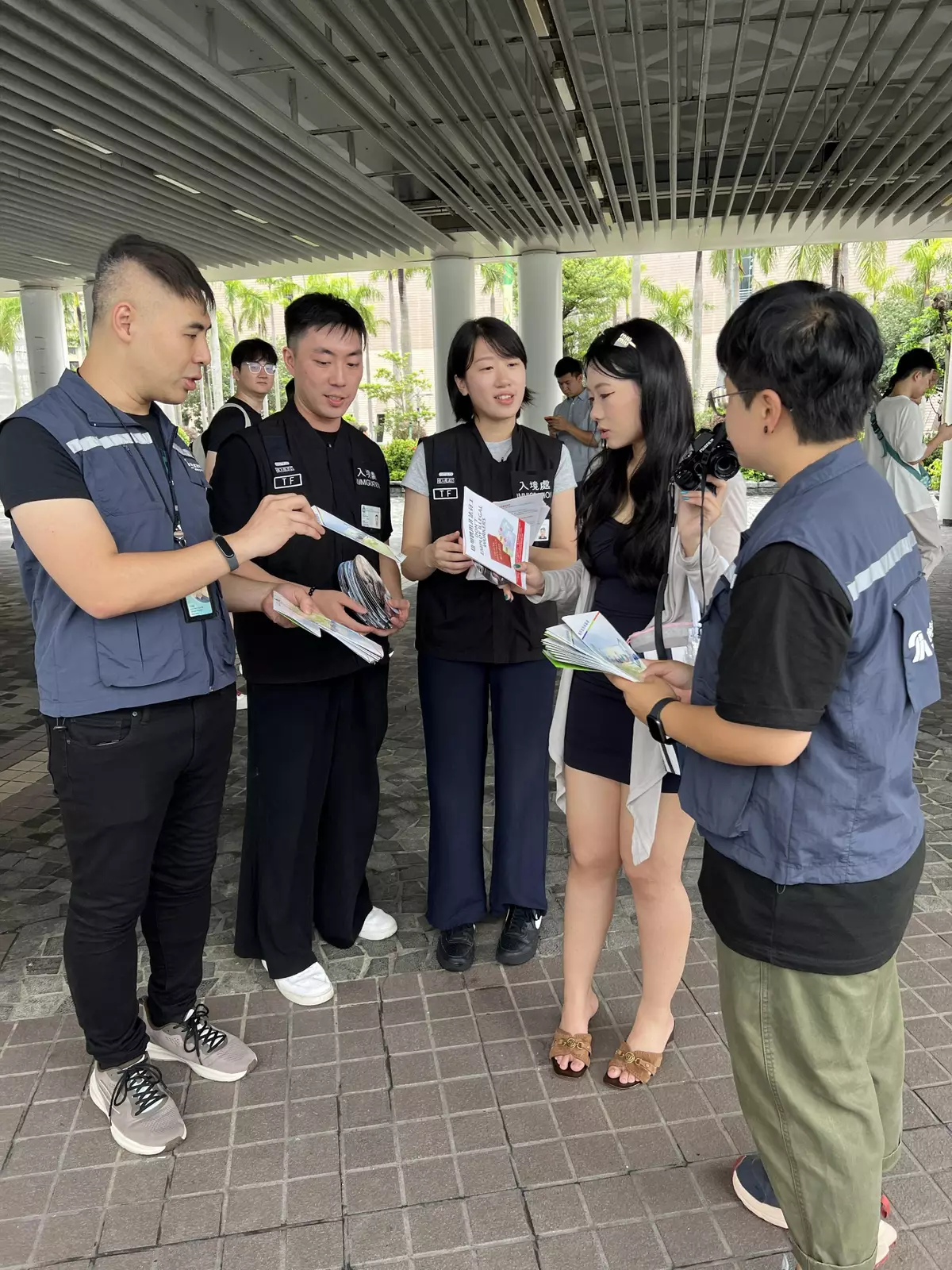
Two persons arrested during joint anti-illegal worker operation by Immigration Department and Travel Industry Authority Source: HKSAR Government Press Releases
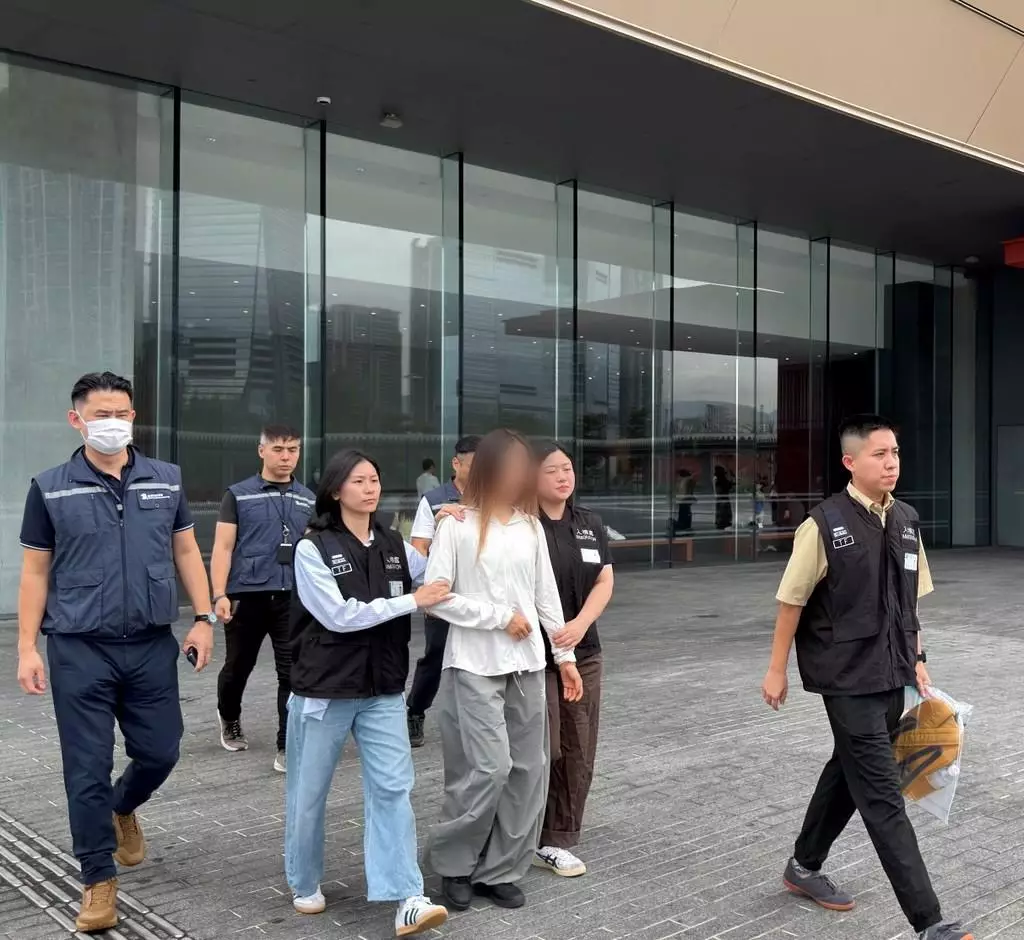
Two persons arrested during joint anti-illegal worker operation by Immigration Department and Travel Industry Authority Source: HKSAR Government Press Releases
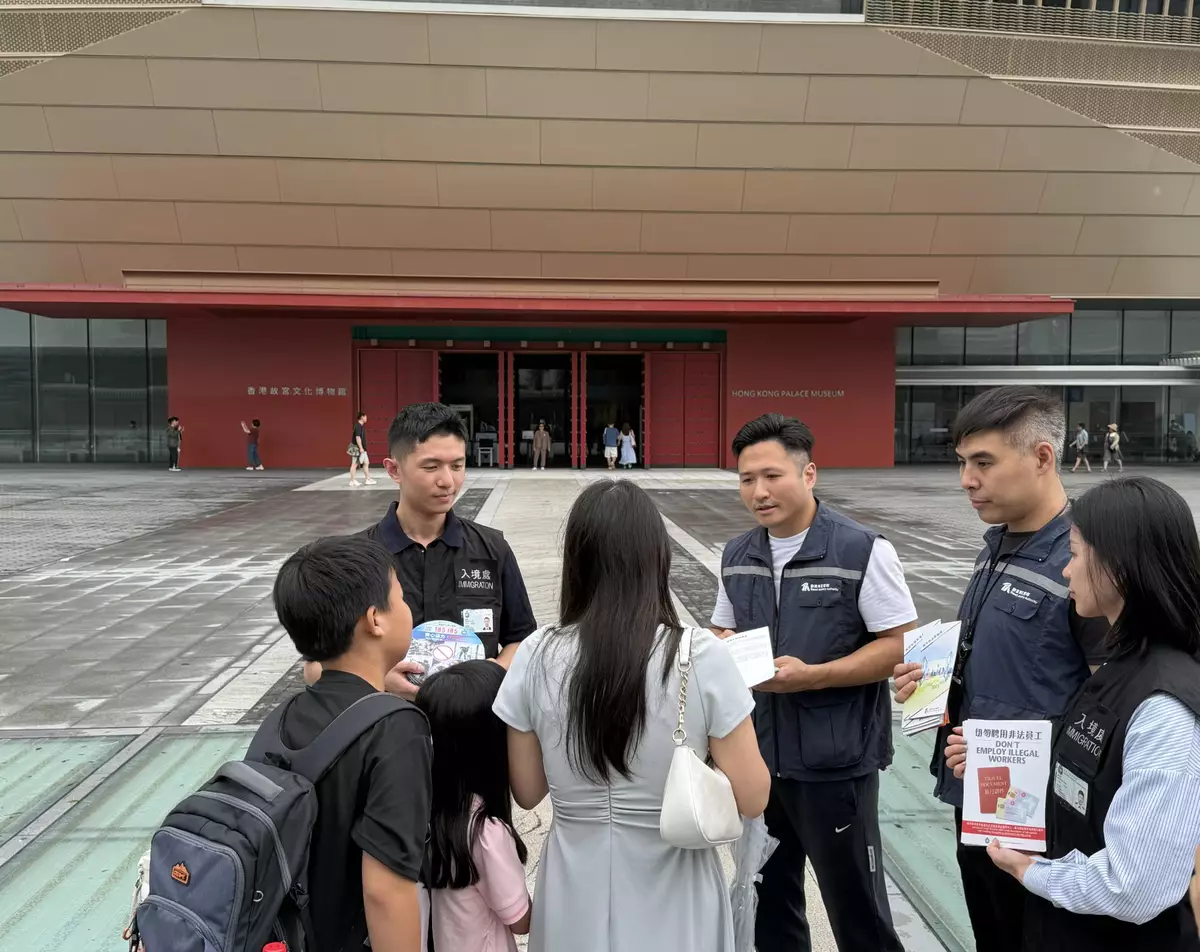
Two persons arrested during joint anti-illegal worker operation by Immigration Department and Travel Industry Authority Source: HKSAR Government Press Releases
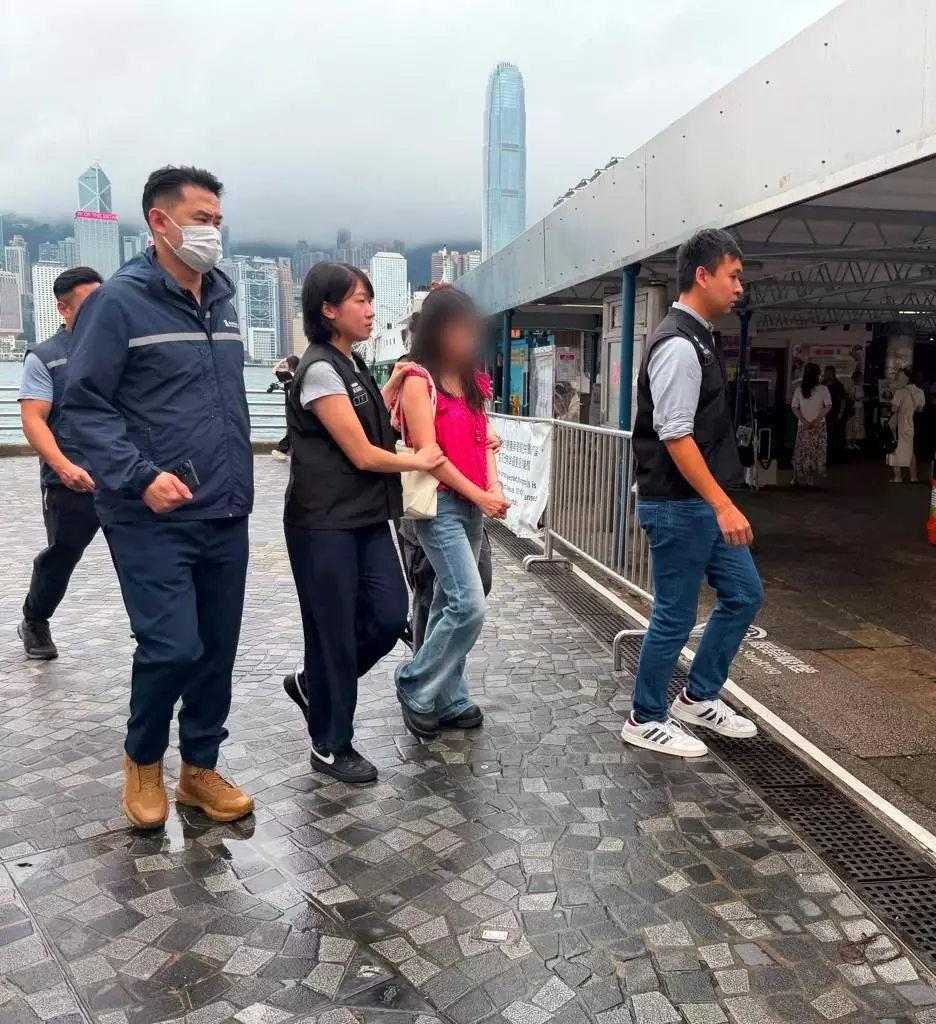
Two persons arrested during joint anti-illegal worker operation by Immigration Department and Travel Industry Authority Source: HKSAR Government Press Releases