The method assembles most of a structure on land before it is filled with concrete at sea and is designed to double as a habitat for marine life.
SINGAPORE - Media OutReach Newswire - 11 June 2026 - Singapore-based Hydrantula, will unveil the solution over Singapore International Water Week 2026.
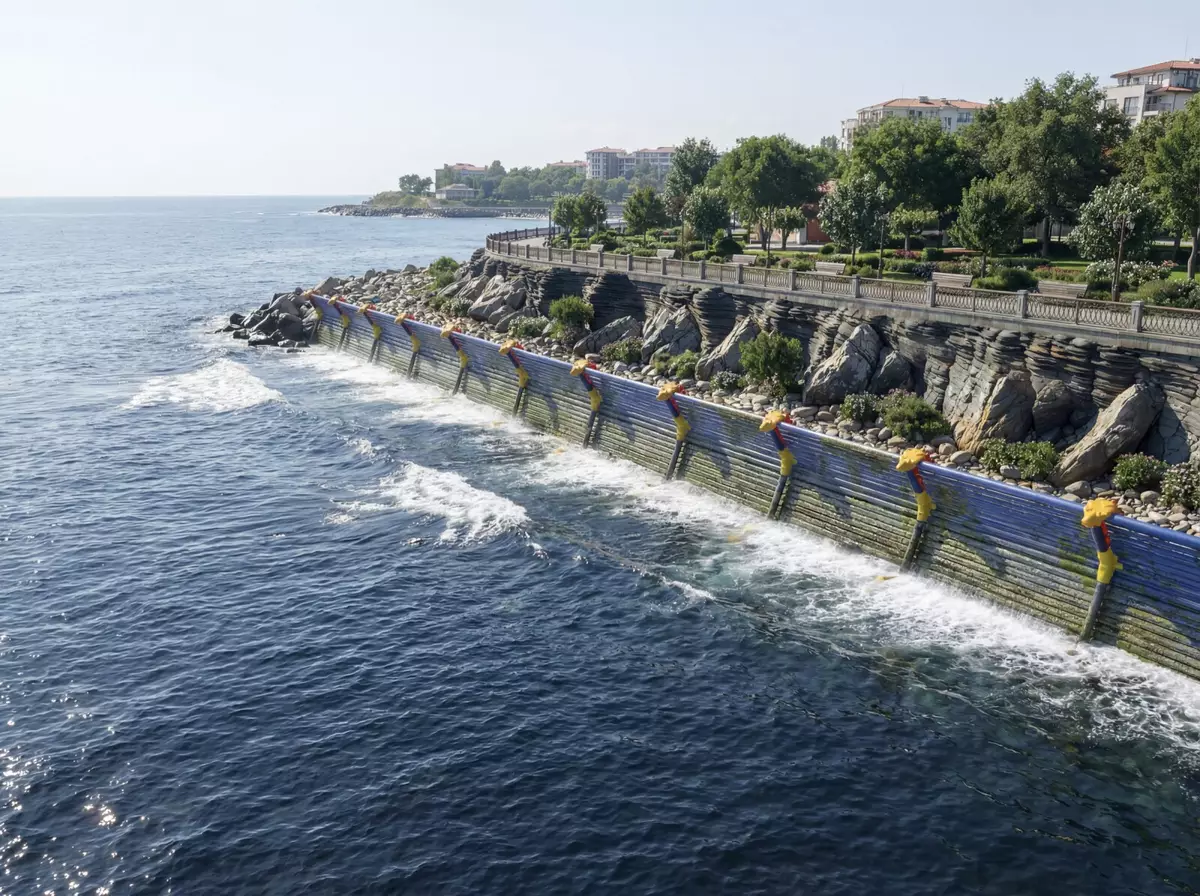
Singapore company Hydrantula develops a modular way to build coastal protection faster and at a lower cost.
As Singapore and its neighbours plan decades of investment to defend low-lying coasts against rising seas, a local company is proposing a different way to build the structures that do the work − assembling most of the structures on land and finishing the final works in the water.
A coastline problem with no single answer
Building on land, finishing at sea
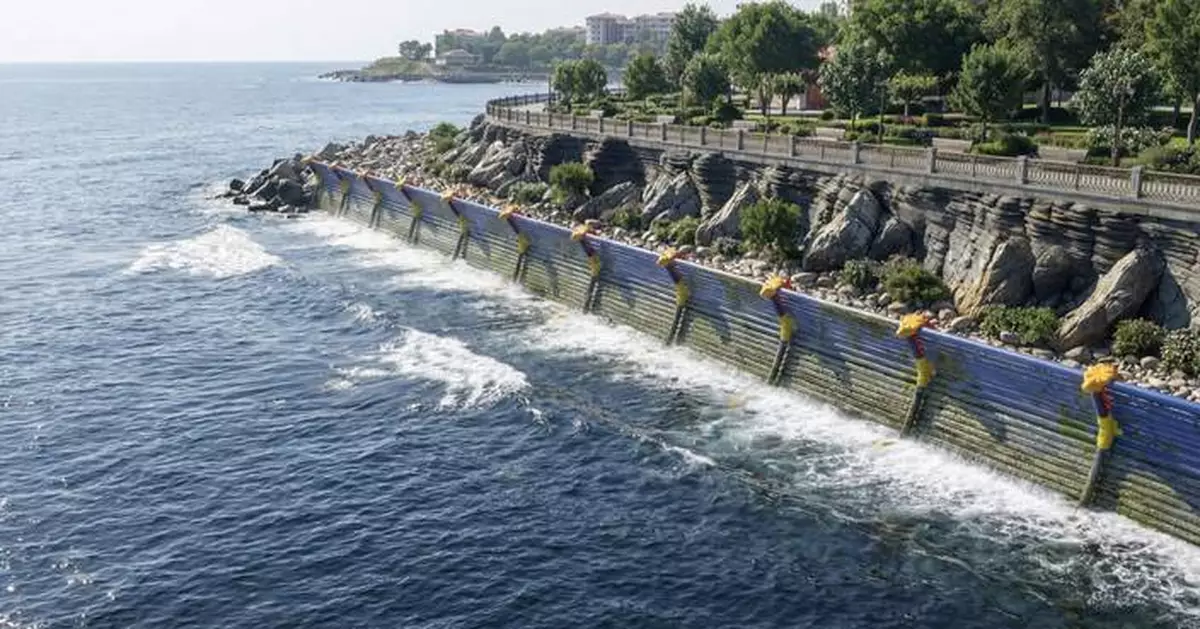
The system uses a lightweight, permanent formwork built from standard HDPE pipes joined by moulded plastic nodes. The frame is assembled onshore − the company estimates around 90 per cent of the work is done on land − then lowered into position and filled with reinforced concrete pumped from the bottom up, displacing the water inside. Once the concrete hardens, the result is a monolithic reinforced-concrete structure within a plastic shell.
Because the geometry is set by the pipework rather than by custom moulds, the company says the same family of parts can form a range of structures, from floating breakwaters and seawalls to jetty foundations, mooring ramps and terraced, beach-retaining shoreline structures.
Hydrantula says the approach can cut construction time by roughly two to three times, and cost to around a third of conventional methods, for equivalent reinforced-concrete structures. It also estimates the life-cycle carbon of its structures at about 5 tonnes of CO2 per metre over 60 years, against roughly 25 tonnes for conventional reinforced concrete, based on the company's own assessment to ISO 14040/14044. These are design targets and company estimates rather than independently certified figures.
Designed to host marine life
The open frame is intended to let wave energy pass through rather than reflect it and does not seal the seabed beneath a solid foundation. Over time, the submerged plastic surfaces are colonised by marine organisms, so the structure can also function as an artificial reef − an approach in line with the "hybrid" coastal solutions, combining hard structures with nature, that researchers in Singapore are actively studying. The company targets a service life of more than 60 years.
"Most of the cost, the risk and the environmental disturbance in marine construction comes from working in the water. If you can do the bulk of the work on land and keep the disturbance at sea short, the economics and the footprint both change. We are not trying to out-build nature − we are trying to build with it."
Still to be proven at scale
The technology is at an early commercial stage. Hydrantula has proposals and pilot discussions under way in Singapore, elsewhere in Southeast Asia and in California, and is pursuing research collaboration with Singapore academic partners to test its structural performance and ecological behaviour under local conditions. Its performance and durability claims have yet to be verified in long-term field use.
The company will present the system at Singapore International Water Week 2026 (SIWW2026 booth number: L1-A23), which runs from 15 to 18 June at the Sands Expo & Convention Centre, Marina Bay Sands.
Hashtag: #Hydrantula #CoastalProtection #Marineconstruction #SIWW2026
The issuer is solely responsible for the content of this announcement.
About Hydrantula
Hydrantula PTE LTD (Singapore, UEN 202600937R) is a coastal-resilience technology company developing a modular marine construction platform based on permanent HDPE formwork filled with reinforced concrete and GFRP reinforcement. The technology is designed for the marine environment and spans applications from breakwaters and seawalls to foundations, terraced shoreline structures and artificial reefs.
For more information, please visit: www.hydrantula.com
** This press release is distributed by Media OutReach Newswire through automated distribution system, for which the client assumes full responsibility. **
Partnership with Korea Green Foundation and FIRA will help restore seagrass meadows off Geoje Island, supporting marine biodiversity, blue carbon habitats and local communities
BUSAN, SOUTH KOREA - Media OutReach Newswire - 11 June 2026 - DP World has launched its first global seagrass restoration initiative on Geoje Island in South Korea, supporting efforts to restore 2.4 hectares of coastal marine habitat over the next four years and enhancing marine biodiversity.
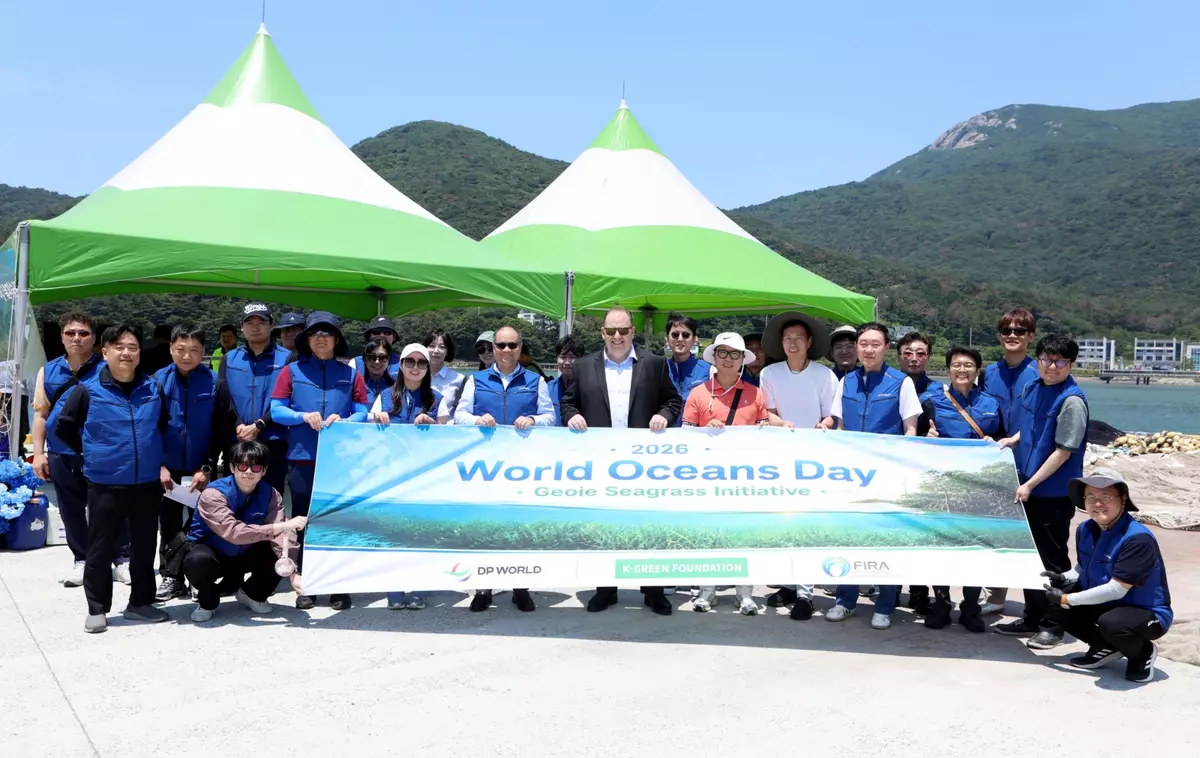
DP WORLD Seagrass restoration South Korea
The initiative in South Korea was formalised through a Memorandum of Understanding (MOU) between DP World, Korea Green Foundation and the Korea Fisheries Resources Agency (FIRA). The MOU establishes a long-term collaboration focused on ongoing monitoring of seagrass meadows, the development of restoration approaches informed by scientific research, and continued cooperation between public, private and community stakeholders in the coastal waters of Dadae Village on Geoje Island.
The partnership was launched on World Ocean Day, with representatives from DP World, Korea Green Foundation, FIRA and the local fishing community helping to transplant approximately 6,000 seagrass shoots along the Dadae coastline. The project aims to restore up to 2.4 hectares of seabed over the next four years and is expected to benefit local communities by supporting marine productivity and fish catch potential.
Glen Hilton, CEO & Managing Director, Asia Pacific, DP World, said: "Healthy oceans are essential to sustainable trade and thriving coastal communities. By restoring seagrass meadows in Geoje, we are helping protect one of nature's most effective blue-carbon ecosystems while supporting marine biodiversity and local livelihoods. Together with the Korea Green Foundation and FIRA, we are supporting research, restoration and community engagement efforts that can deepen our understanding of these valuable marine ecosystems to strengthen the resilience of our coasts for future generations."
Jung Tae-yong, Secretary General, Korea Green Foundation, said: "Seagrass meadows are an invaluable presence in supporting coastal ecosystems. They store carbon, help prevent coastal erosion and act as a breakwater for the ecosystem. This project goes beyond simple environmental protection, bringing together businesses, public institutions and local communities to expand practical marine-conservation models and public awareness of the importance of climate action."
Seagrass meadows provide habitat for a wide range of marine species and contribute to the health of coastal ecosystems. They are recognised as an important blue carbon ecosystem because of their ability to absorb and store carbon naturally, making their protection and restoration an area of growing interest among researchers and conservation organisations.
The project will include ongoing monitoring and evaluation activities led by FIRA, alongside community engagement initiatives designed to support long-term stewardship of the restoration site. The partners also intend to build on the Geoje initiative through continued research, community engagement and public awareness activities that support understanding of marine ecosystems and coastal conservation.
This initiative builds on DP World's broader sustainability efforts to support environmental stewardship and community resilience across Asia Pacific. From our flagship mangrove ecosystem restoration programme in Indonesia — aligned with DP World's global commitment to restore and protect 280 hectares of mangroves by 2030 — to watershed rehabilitation initiatives in the Philippines and coral reef restoration in Australia, these efforts reflect a regional commitment to protecting the natural environments that are most critical to local communities.
Through partnerships with governments, non-governmental organisations and local communities, DP World continues to explore practical ways to contribute to the long-term sustainability of the environments in which it operates.
Hashtag: #DPWORLD
https://www.dpworld.com/
https://www.linkedin.com/company/dp-world
https://twitter.com/DP_World
The issuer is solely responsible for the content of this announcement.
DP World
DP World is reshaping the future of global trade to improve lives everywhere. Operating across six continents with a team of over 125,000 employees, we combine global infrastructure and local expertise to deliver seamless supply chain solutions. From Ports and Terminals to Marine Services, Logistics and Technology, we leverage innovation to create better ways to trade, minimising disruptions from the factory floor to the customer's door.
In Asia Pacific, DP World employs over 11,000 people across 22 geographies. We operate 17 ports and terminals, complemented by a comprehensive suite of end-to-end supply chain solutions – to connect the region to the rest of the world.
WE MAKE TRADE FLOW
** This press release is distributed by Media OutReach Newswire through automated distribution system, for which the client assumes full responsibility. **