
When a pet dies, a pet owner's world can feel as though it has collapsed. Yet for many, the unspoken regret and recurring self-blame that follow can be even harder to bear than the loss itself. Through sharing with others who understand, some begin to realize: sadness does not have to fade quickly, and learning to live with regret can be its own form of love.

Dr. Olivia Fong, Photo by Bastille Post
SPCA: Support for Grieving Pet Owners
Click to Gallery
Dr. Olivia Fong, Photo by Bastille Post
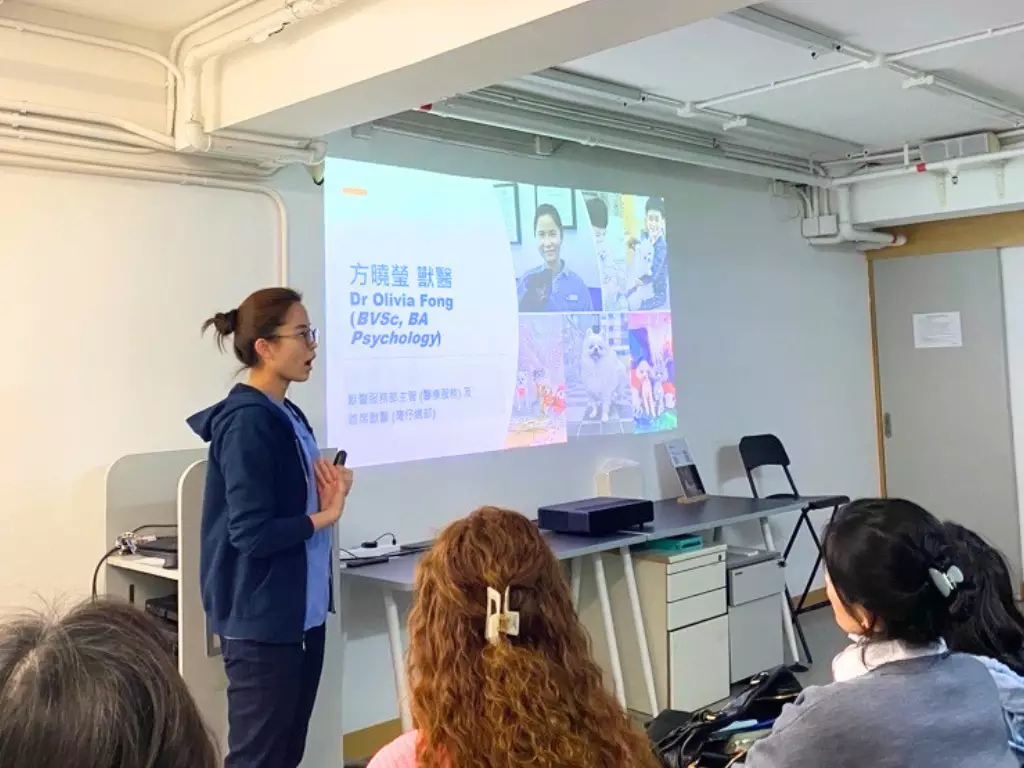
The lecture on "preparing for death" held by SPCA in February received an exceptionally positive response. Photo source: SPCA

Ms. Heidi Tang, Photo by Bastille Post
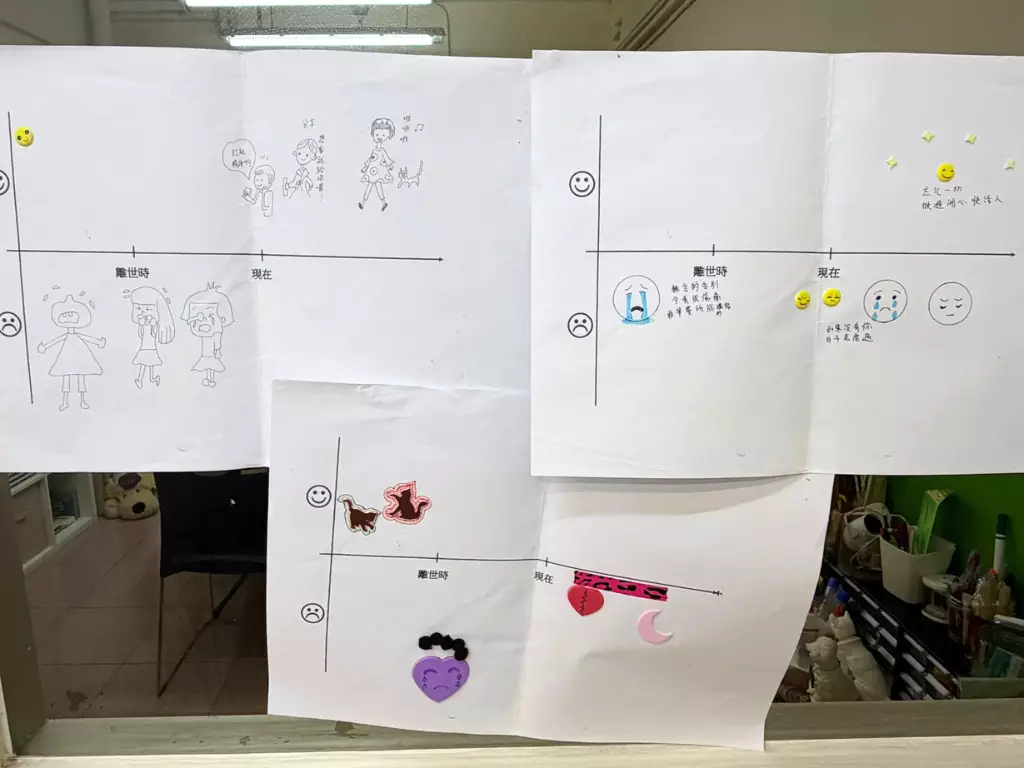
Bereaved pet owners expressed their feelings about their pets' death through drawing. Photo by Bastille Post
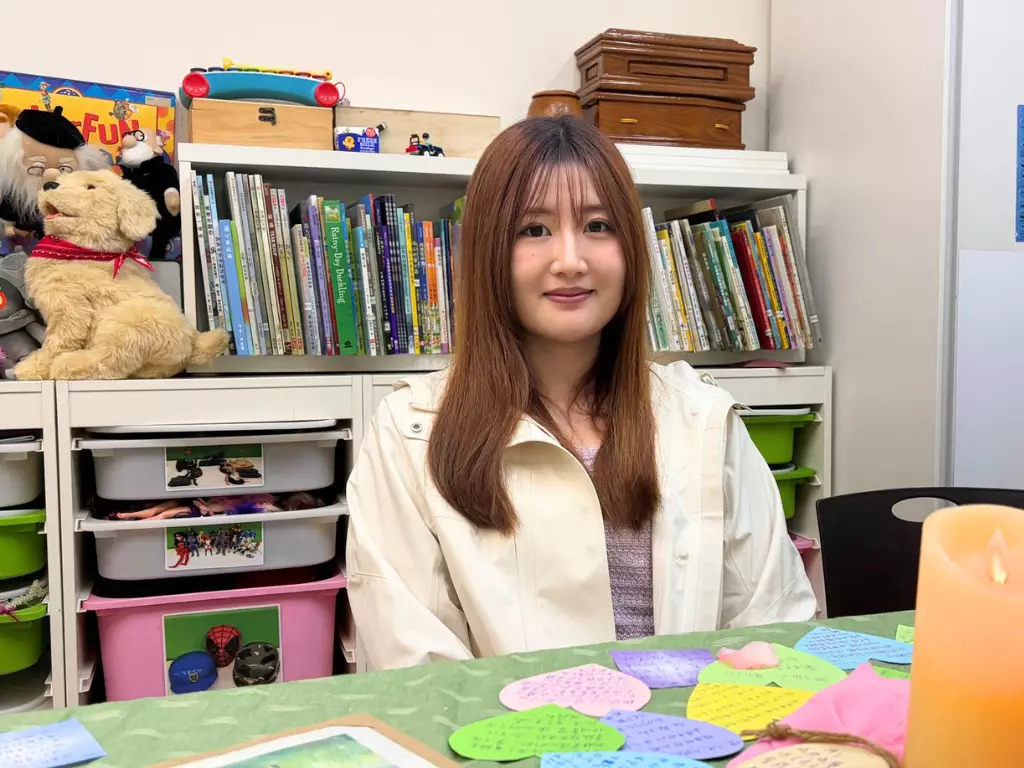
Ms. Kiki Wong, Photo by Bastille Post
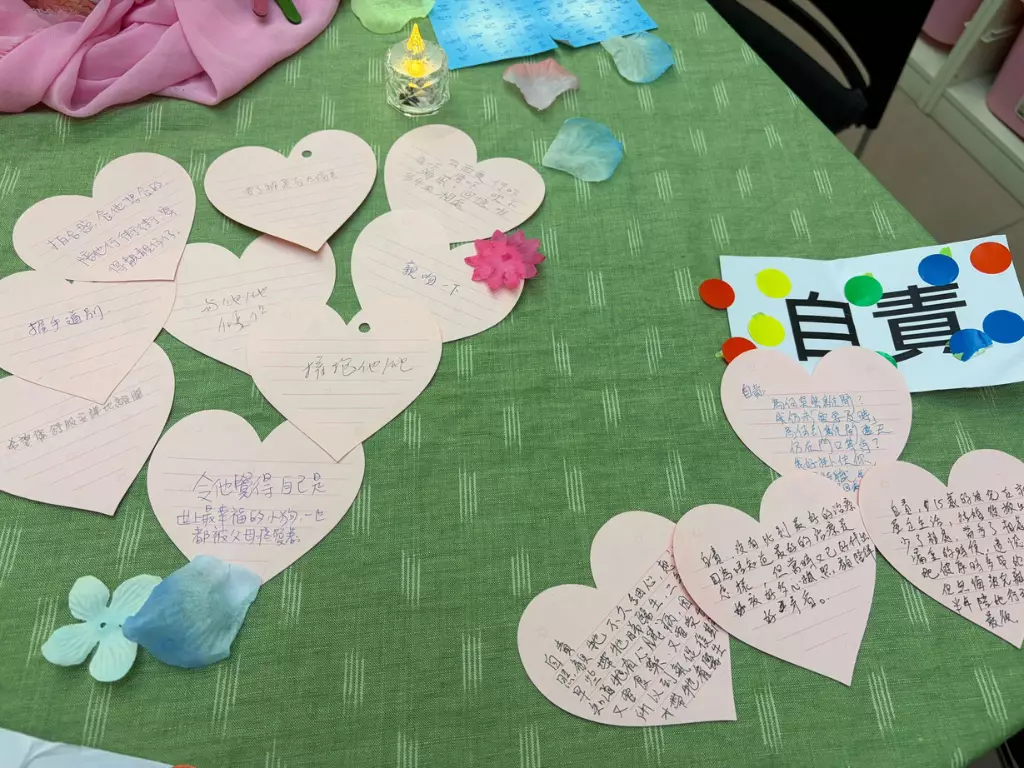
Group members wrote down the reasons they blamed themselves, and the things they most wanted to do with their pets during their final days. Photo by Bastille Post

Heidi, the counselor at the Comfort Care Concern Group, Photo by Bastille Post
Dr. Olivia Fong, Chief Veterinary Surgeon (Wan Chai) of the Society for the Prevention of Cruelty to Animals (SPCA), revealed that the SPCA website features a "Never Too Old to Love" Campaign.
The campaign provides emotional support and practical information for pet owners grieving a loss or confronting a terminal diagnosis, aiming to help them navigate their grief more positively.
The webpage includes emotionally focused articles written by the SPCA, addressing care needs at the family level, such as how to comfort family members facing death and separation of pets, how to help other pets adjust to the loss of a companion, and a memorial wall where owners can honor their deceased pets in a lasting, revisitable way.
Dr. Fong noted that the SPCA has previously held mutual aid sharing sessions and workshops. A lecture on "preparing for death" held in February received an exceptionally positive response. Its core messages included: that "old age is not a disease" but the final stage of a pet's life cycle, encouraging owners to shift from fear of aging to understanding; an overview of late-stage physical conditions and key care points; and basic care concepts that owners can readily apply.
The lecture on "preparing for death" held by SPCA in February received an exceptionally positive response. Photo source: SPCA
Deeper Than the World Knows: The Human-Pet Bond
In response to the view that grief over pet loss is a form of "disenfranchised grief", a term used when a loss is not socially recognized, Dr. Fong explained that, from a psychological perspective, this feeling can be described as "grief being deprived." Those affected feel helpless because their sorrow is not acknowledged. They may even question whether they are overreacting, which further inhibits them from seeking help or expressing their pain. She acknowledged that a key reason for this gap is that outsiders fail to grasp how deep the human-animal bond can be. For some owners, pets serve as family members, confidants, or even the center of daily life. Therefore, the impact of losing a pet can be as real as losing a loved one, and in some cases, even more intense.
"It's Okay Not to Be Okay." Dr. Fong emphasized that everyone's way of dealing with grief and the time required are different, and there is no need to force oneself to "recover quickly."
Beyond the SPCA's online and offline support services, some organizations in Hong Kong have extended their expertise in human end-of-life and bereavement counseling to pet loss support. Among them is the Comfort Care Concern Group, founded in 1987. The group is a non-governmental, charitable service organization in Hong Kong, primarily funded by the Hong Kong Jockey Club and the Community Chest.
Its longstanding mission has been to accompany terminally ill patients through the final journey of life and to provide support to the bereaved, including group counseling, individual counseling, and small-group sessions. Its animal bereavement counseling service has been available since 2015.
Ms. Heidi Tang, Photo by Bastille Post
Over 2,000 People Supported in 10 Years
Ms. Heidi Tang, a counselor at the Comfort Care Concern Group, said that most of those who use the service are middle-aged and predominantly women, though men also seek help. From 2015 to 2025, the service reached over 2,000 people and hosted 60 events.
Heidi said the most common emotional difficulty faced by bereaved pet owners is an obsession with, and self-blame over, the idea of a "perfect death." In her view, pet owners often hold a fantasy of what a perfect death should look like - dying naturally at home, without pain, or peacefully in their owner's arms. When reality falls short of that imagination, disappointment easily turns into self-blame. Such self-blame, she noted, often stems from deep love and a desire to "do more and do better."
The Obsession with a "Perfect Death"
When asked how to face self-blame, Heidi said that counseling services help owners see that behind their self-blame is actually love. Counselors also affirm the efforts owners have already made, enabling them to look back on everything they did throughout their pet's care journey rather than fixating only on what they feel they failed to do.
She noted that self-blame has its own "function": it can translate emotion into meaningful action, such as learning to become a better caregiver or extending patience and love to other family members and pets.
For owners obsessed with achieving a "perfect death," Heidi would help clarify the reasons behind this obsession and guide them to refocus on their pet's true needs, especially regarding quality of life. Before an animal dies, she would encourage owners to recall what their pet loved most and what they enjoyed doing together, and to incorporate more of those activities in the animal's final days.
Bereaved pet owners expressed their feelings about their pets' death through drawing. Photo by Bastille Post
"Simple companionship is what animals treasure most," she stressed. Nevertheless, Heidi admitted that some owners need to make the difficult decision of euthanizing their pets. She said that the counselling service will assist owners in deciding before the pet dies, in conjunction with a veterinarian's assessment of the pet's pain level and quality of life. She also emphasized that there is no absolute right or wrong when it comes to euthanasia. "Not wanting the animal to suffer is also an act of love, not harm."
A Cat Owner's Story: "I Always Saw What I Didn't Do"
Ms. Kiki Wong, Photo by Bastille Post
Ms. Kiki Wong, a cat owner who has accepted the Comfort Care Concern Group's counseling services, shared her experience. After her 8-year-old cat, "Kam Kam," died of aggressive lymphoma, she began seeking help with her husband's support.
Kiki said that the greatest source of distress for her was self-blame after Kam Kam's death. She described the overwhelming sense of powerlessness behind it as: "Given my personality, I believe that as long as I work hard enough and do more in life, I can change bad outcomes. But the unpredictability of life shattered this belief." Even when others offered well-intentioned advice, Kiki would interpret it as proof that she "hadn't done enough" for her cat, whether it was giving reishi mushroom, not trying acupuncture, not consulting a traditional Chinese medicine practitioner, not pursuing radiotherapy, or not detecting symptoms earlier. She admitted that after losing Kam Kam, she could only see "the things she didn't do," rather than "the efforts she had made," attributing her cat's death entirely to her own perceived shortcomings.
Another source of distress for Kiki was the strained relationship with her father after her cat's death. She mentioned that Kam Kam had loved being close to her father during its life. Yet her father did not go to the veterinary hospital to see Kam Kam's body and was even absent from its funeral. She could not understand why he seemed so heartless.
No Need to Move On Hurriedly
Recalling her first time participating in a counseling activity, Kiki said she was "trembling" when she first joined the group, worrying about sharing, and even worried that if she continued attending, she would need to "pretend to have gained something", otherwise she would feel "sorry" for the assistance of the Comfort Care Concern Group. Luckily, Heidi reassured her that "it's okay to share if you want to, but it's also okay not to share," which reduced the pressure she felt about participating in the group.
As for her most profound realization, Kiki said it was the first time in the group that she heard someone tell her, "It's normal to cry." "You don't need to feel sorry or embarrassed." "You don't have to move on toward a new life." She was particularly moved by the idea of not moving on, since people often advised her that "you'll move on eventually." "Your beloved cat Kam Kam wouldn't want you to be unhappy." But the group's sharing helped her understand that allowing sadness to exist does not mean wallowing in it forever. Rather, it means permitting that sadness to coexist with her daily life.
What is Death Really For?
Kiki also recalled a group member's words that deeply moved her: "If we have to define 'success' or 'failure,' and 'success' means 'treating your pet so that it lives to be a hundred years old,' then all of us must fail, since every pet will eventually pass away. If death equals failure, does death have to be the end and erase years of a good relationship?"
Kiki admitted that she used to rush to offer advice when helping others, like recommending a good vet, only to realize it might not be what the person needed at that moment. Over time, she shifted to a gentler approach: putting the other person's needs first, letting them take the lead, and offering information only when asked. Now, she prefers to simply sit with her friends in silence, letting the quiet speak for itself. She even tells them, "It's okay not to share."
Group members wrote down the reasons they blamed themselves, and the things they most wanted to do with their pets during their final days. Photo by Bastille Post
As for her strained relationship with her father after the loss of their beloved cat "Kam Kam", Kiki admitted that her father had also gone through the deaths of several relatives, shifting his personality from easygoing and gentle to irritable. That realization prompted her to reinterpret his avoidance of talking about Kam Kam's death. She came to believe that avoidance could itself be a form of grief, not a sign of loving any less.
Then she saw something that changed her perspective further: many photos of Kam Kam are still kept on her father's phone. She decided to actively work on healing their relationship. "Now I try to be more patient when listening to my father's phone calls, and more responsive to the photos and updates he shares."
“It's always us, blaming ourselves.”
When asked what she most wanted to share with other bereaved pet owners, Kiki frankly stated that many owners had actually made the best decisions they could at the time. All decisions stemmed from love. Owners also need to recognize their own limitations and needs, and not fixate solely on that "10%" of regret. She firmly believes that pets don't blame their owners: "It's always just us blaming ourselves."
Heidi, the counselor at the Comfort Care Concern Group, Photo by Bastille Post
The inner guilt of owners is already heavy enough. Cold words from the outside world often cause secondary harm. Heidi, the counselor at the Comfort Care Concern Group, offered a deeper analysis of this collective experience of isolation and helplessness. She noted that bereaved pet owners' grief is often perceived as "disenfranchised grief", a loss society fails to recognize. Society may dismiss their pain by saying, "It was just an animal."
Her suggested minimum principle of social support is: do not cause secondary harm. Even if others may not fully understand, they should at least avoid denying or questioning the mourner's pain.
Whether to Get a New Pet or Not
Regarding the common question of whether bereaved pet owners should "get a new pet," Heidi said that a new pet cannot easily replace the one that's been lost, because every pet is unique. If the premise is "replacement," the owner is likely to be disappointed. If the owner gets a new pet to escape grief, unresolved feelings may be triggered later when the new pet becomes ill, causing secondary harm.
Heidi stressed that there are many ways to continue love beyond owning a new pet. Owners can extend love and care to friends, family, or those around them.
"Some owners may feel tormented while caring for their elderly pets," she acknowledged. "Saying 'I don't want to go through that again' is a genuine feeling."