SAN FRANCISCO--(BUSINESS WIRE)--Jun 11, 2026--
PagerDuty, Inc. (NYSE: PD), a leader in AI-first operations management, today published an international survey which illustrates a growing disconnect between employee AI adoption and corporate governance. Left unaddressed, that gap generates measurable risks around data security, workforce trust and talent retention. The PagerDuty Shadow AI Survey was conducted among 1,250 office professionals at organizations with annual revenue of $500 million or more, in non-IT and technology roles, across Australia, Japan, the United Kingdom, and the United States.
This press release features multimedia. View the full release here: https://www.businesswire.com/news/home/20260611896863/en/
To read the full report, including survey findings and methodology, please visit here.
Proliferation of AI Tools - Workplace Policies Lag
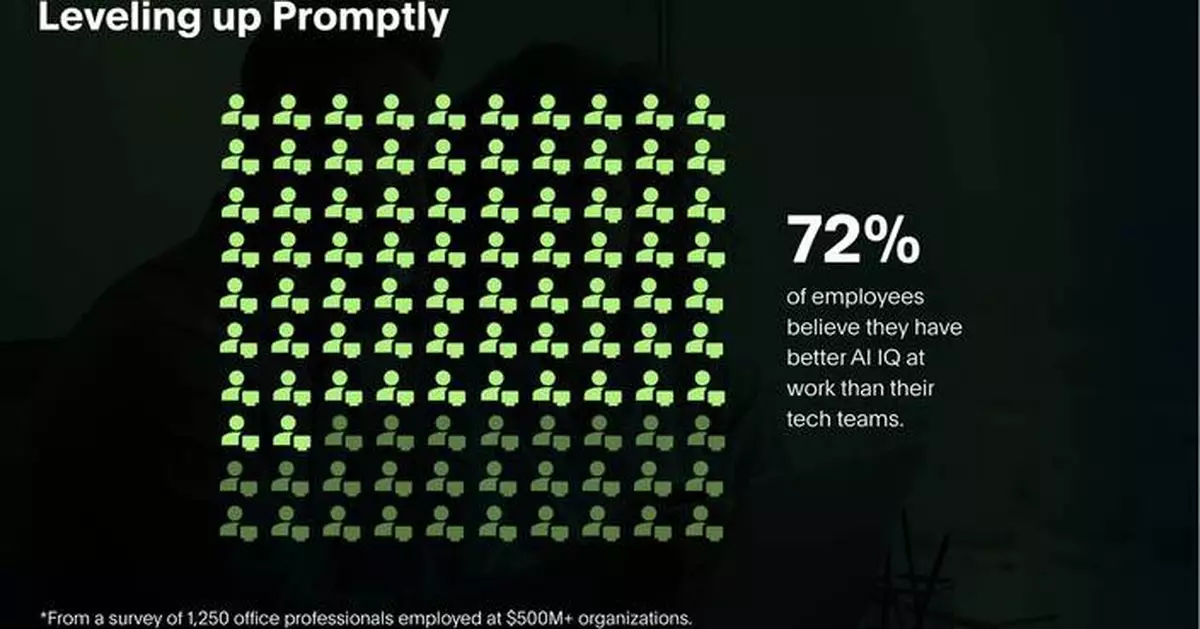
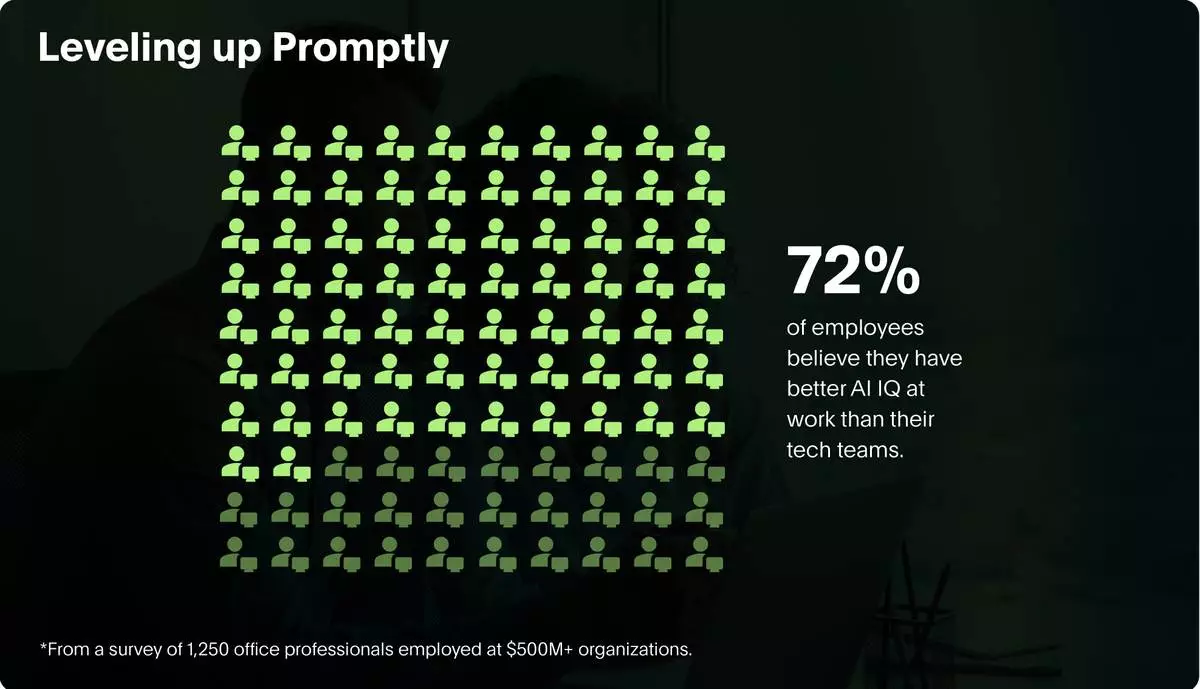
Office professionals are growing increasingly confident in their AI expertise, but company policies appear to hinder their adoption of AI tools:
Sharing Confidential Information with LLMs
Additional key findings from the PagerDuty Shadow AI Survey include:
“When over 30% of employees are putting confidential company data into public models, 'Shadow AI' becomes a massive enterprise liability,” said Tim Armandpour, CTO at PagerDuty. “We know the demand for AI is there because we see it in our own platform - PagerDuty customers are increasingly leveraging our AI and agentic products to solve complex operational challenges securely. The goal for any executive today should not be to slow down AI adoption, but to redirect that energy into proven platforms that offer governance and automation at scale.”
Additional Resources
About PagerDuty
PagerDuty, Inc. (NYSE: PD) is the global leader in AI-first digital operations. By automatically detecting, diagnosing, and remediating issues, the PagerDuty Operations Cloud acts as the central control plane for the modern enterprise - orchestrating AI agents and automated workflows with context from over 750 integrations. Trusted by approximately two-thirds of the Fortune 100 and nearly half of the Fortune 500, PagerDuty is the industry standard for organizations scaling resilient, autonomous operations. Learn more and try it for free at www.pagerduty.com.
The PagerDuty Operations Cloud
The PagerDuty Operations Cloud is an AI-powered platform that automates and orchestrates the entire incident management lifecycle - from detection to resolution, providing resilience at scale. Designed for mission-critical operations, the platform empowers teams to identify and diagnose disruptions in real time, mobilizing the right teams to quickly streamline workflows to solve digital issues before they become incidents. The PagerDuty Operations Cloud is essential for delivering flawless, always-on digital experiences that organizations and consumers expect today.
FAQs
The PagerDuty Shadow AI Survey examines how office professionals across four global markets are adopting and using AI while circumventing AI policies at work, and what such behavior means for organizations navigating AI governance, security, and workforce development.
EWING, N.J. & INGOLSTADT, Germany--(BUSINESS WIRE)--Oct 26, 2026--
Universal Display Corporation (UDC) (Nasdaq: OLED) and Audi celebrated ten years of OLED technology in Audi production vehicles, marking a decade of innovation that has transformed OLED lighting into one of the automotive industry’s most distinctive, energy-efficient and technologically advanced lighting platforms. The announcement follows Audi’s event in Ingolstadt, Germany recognizing a decade of OLED technology across its vehicle portfolio. Together with OLEDWorks, the companies are highlighting how OLED automotive lighting has evolved and its growing role in the future of automotive design, functionality and communication.
This press release features multimedia. View the full release here: https://www.businesswire.com/news/home/20261026188956/en/
Since the introduction of OLED rear lighting in the Audi TT RS in 2016, OLED technology has evolved from a breakthrough design innovation into a sophisticated platform that combines ultra-thin form factors, homogeneous area illumination, exceptional design flexibility and advanced functionality. Today, digital OLED lighting systems enable highly customizable digital light signatures, enhanced visibility features and increasingly sophisticated communication capabilities, redefining the role of lighting within the vehicle and creating new opportunities for vehicle differentiation, advanced communication functions and enhanced safety.
“We congratulate Audi on reaching this important milestone and celebrating ten years of bringing OLED technology to the road,” said Steven V. Abramson, President and Chief Executive Officer of Universal Display Corporation. “The continued advancement of OLED automotive lighting over the past decade demonstrates what can be achieved when advanced materials, engineering and design come together around a shared vision. Audi’s commitment to innovation has helped expand the possibilities of automotive lighting, and we are proud that Universal Display’s OLED technologies and energy-efficient phosphorescent materials have contributed to this journey. As OLED lighting continues to evolve, we see significant opportunities to further extend its capabilities to support the next generation of automotive lighting and communication applications.”
“Over the past ten years, OLED technology has fundamentally expanded the possibilities of automotive lighting,” said Dr. Werner Thomas, Project Manager OLED-lighting of Audi AG. “What began as a breakthrough design innovation has evolved into a sophisticated platform that combines design, functionality and intelligent vehicle communication in ways that continue to redefine what automotive lighting can achieve. OLED lighting has enabled us to create distinctive customer experiences while continually reimagining the role of light within the vehicle. As mobility advances, we believe OLED technology will remain an important platform for innovation, differentiation and future vehicle interaction and communication.”
The progress of OLED automotive lighting reflects collaboration across the OLED ecosystem, bringing together advances in materials, panel technology and vehicle integration. Today, Audi, Universal Display, and OLEDWorks continue to contribute their respective expertise as OLED lighting evolves toward increasingly sophisticated design, functionality and communication capabilities.
“OLED automotive lighting exemplifies what can be achieved when expertise from across the value chain comes together to advance a common vision,” said David DeJoy, Chief Executive Officer of OLEDWorks. “Collaboration among materials innovators and automotive leaders has helped transform OLEDWorks’ OLED lighting into the highly differentiated Atala automotive OLED lighting platform it is today. We are proud to work alongside Audi and Universal Display as we continue exploring new opportunities for vehicle design, functionality and driver engagement.”
Looking ahead, advances in OLED materials, manufacturing technologies and system integration are expected to further expand the role of OLED lighting across automotive applications. Building on a decade of innovation, Audi, Universal Display and OLEDWorks continue to explore new possibilities for OLED lighting that enhance vehicle design, functionality, communication and the overall mobility experience.
About Universal Display Corporation
Universal Display Corporation (Nasdaq: OLED) is a leader in the research, development and commercialization of organic light emitting diode (OLED) technologies and materials for use in display and solid-state lighting applications. Founded in 1994 and with subsidiaries and offices around the world, the Company currently owns, exclusively licenses or has the sole right to sublicense more than 7,000 patents issued and pending worldwide. Universal Display licenses its proprietary technologies, including its breakthrough high-efficiency UniversalPHOLED® phosphorescent OLED technology that can enable the development of energy-efficient and eco-friendly displays and solid-state lighting. The Company also develops and offers high-quality, state-of-the-art UniversalPHOLED materials that are recognized as key ingredients in the fabrication of OLEDs with peak performance. In addition, Universal Display delivers innovative and customized solutions to its clients and partners through technology transfer, collaborative technology development and on-site training. To learn more about Universal Display Corporation, please visit https://oled.com/.
Universal Display Corporation and the Universal Display Corporation logo are trademarks or registered trademarks of Universal Display Corporation. All other Company, brand or product names may be trademarks or registered trademarks.
All statements in this document that are not historical, such as those relating to the projected adoption, development and advancement of the Company’s technologies, and the Company's expected results, as well as the growth of the OLED market and the Company's opportunities in that market, are forward-looking financial statements within the meaning of the Private Securities Litigation Reform Act of 1995. You are cautioned not to place undue reliance on any forward-looking statements in this document, as they reflect Universal Display Corporation’s current views with respect to future events and are subject to risks and uncertainties that could cause actual results to differ materially from those contemplated. These risks and uncertainties are discussed in greater detail in Universal Display Corporation’s periodic reports on Form 10-K and Form 10-Q filed with the Securities and Exchange Commission, including, in particular, the section entitled “Risk Factors” in Universal Display Corporation’s Annual Report on Form 10-K for the year ended December 31, 2025. Universal Display Corporation disclaims any obligation to update any forward-looking statement contained in this document.
Follow Universal Display Corporation
X
LinkedIn
Facebook
YouTube
(OLED-C)

History of digital OLED technology at Audi in the Light Assistance Centre. Courtesy: AUDI AG