Evidence (Amendment) Bill 2026 gazetted today
The Government today (June 12) gazetted the Evidence (Amendment) Bill 2026 (the 2026 Bill) to reform the rule against hearsay in criminal proceedings.
According to the common law rule against hearsay (hearsay rule), hearsay evidence is generally inadmissible in criminal proceedings unless it falls within one of the common law or statutory exceptions to the rule. The hearsay rule has been criticised over the years for being too strict and inflexible, and for excluding hearsay evidence even if it is cogent and reliable, which can result in injustice. The Law Reform Commission of Hong Kong (LRC) published a report on "Hearsay in Criminal Proceedings" in November 2009, recommending that the relevant rule be reformed by way of a detailed legislative scheme.
The Government previously introduced the Evidence (Amendment) Bill 2018 (the 2018 Bill) to implement the recommendations of the LRC. However, the 2018 Bill lapsed due to insufficient time to complete the legislative process by the end of the term of office of the sixth-term Legislative Council (LegCo). The Department of Justice (DoJ) subsequently conducted a comprehensive review. After re-examining the LRC's recommendations and carefully considering the views received in the 2017 consultation exercise and the deliberations of LegCo on the 2018 Bill, together with the latest legal and policy developments, the DoJ has put forward the 2026 Bill for introduction into LegCo.
The new regime under the 2026 Bill generally applies to criminal proceedings, but does not apply to cases concerning national security. Apart from preserved common law exceptions and other statutory exceptions, hearsay evidence may be admitted if both the prosecution and the defence agree, if no party opposes its admission, or, in the event of opposition, if the court grants permission upon certain conditions being satisfied. These conditions include necessity (for example, where a witness is unfit to testify because of the witness's physical or mental condition), threshold reliability (the court will holistically consider various factors to ensure that the reliability of the evidence is reasonably assured), and that the probative value of the hearsay evidence is greater than any prejudicial effect it may have.
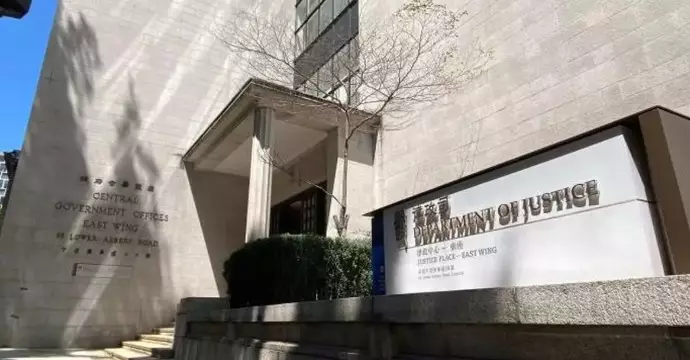
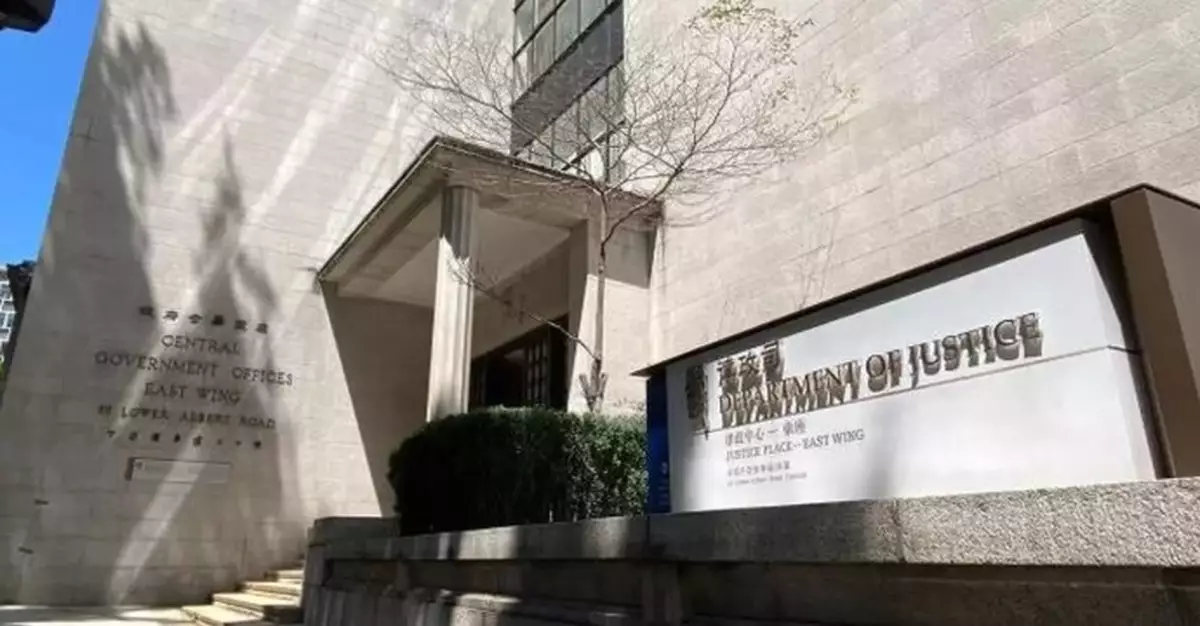
The Department of Justice, Photo source: reference image
A spokesman for the DoJ said, "Compared with the 2018 Bill, the 2026 Bill introduces a number of improvements, including conferring on the court greater procedural discretion and refining the mechanism for the exclusion of hearsay evidence admitted with the court's permission. These measures not only provide robust protection for the defendant's right to a fair trial, but also meet the court's need to ascertain the truth, thereby enabling appropriate reform of Hong Kong's criminal evidence law."
In December 2025, the DoJ issued a consultation paper together with a draft of the 2026 Bill to various stakeholders, including the Judiciary, legal professional bodies, and university law schools, for consultation. The stakeholders in general supported the legislative proposal. The DoJ also briefed the LegCo Panel on Administration of Justice and Legal Services in March this year on the consultation exercise and policy aspects of the Bill, with members of the Panel indicating their support.
The 2026 Bill will be introduced into LegCo for first reading on June 24.

The Legislative Council, Photo by Bastille Post
Secretary for Health chairs 21st meeting of Cancer Coordinating Committee
The Secretary for Health, Professor Lo Chung-mau, chaired the 21st meeting of the Cancer Coordinating Committee (CCC) today (June 12) to review the implementation of the Hong Kong Cancer Strategy and discuss the response strategies and measures with relevant government departments and organisations.
Professor Lo said, "The Government promulgated Hong Kong's first Strategy in 2019, setting out the overall direction and related strategies for cancer prevention and treatment. At today's meeting, we conducted a comprehensive review of the implementation of various cancer prevention and control initiatives. A preliminary assessment indicated that over 80 per cent of the targets were met, covering enhancing the cancer surveillance system, expanding screening programmes, optimising diagnostic and treatment services, strengthening support to survivors, promoting cancer research, and more. The Government will continue to adopt a multipronged approach to promote cancer prevention and control, consolidate Hong Kong's leading position in cancer research as well as prevention and control, and strive to optimise services and provide appropriate treatment for cancer patients."
At the meeting, the CCC reviewed and discussed the progress of various cancer prevention and control measures, including:
Surveillance
The Hong Kong Cancer Registry (HKCaR) is responsible for conducting comprehensive cancer surveillance through the collection, analysis, consolidation and dissemination of data of patients diagnosed with cancer from public and major private healthcare institutions in Hong Kong. In recent years, the HKCaR has not only supported evaluating the current cancer screening programmes in Hong Kong (such as the Colorectal Cancer Screening Programme and the Breast Cancer Screening Pilot Programme), but has also strengthened the collection and compilation of more comprehensive cancer surveillance data. This includes providing analysis of survival trends for 20 major solid cancers and early-onset cancers, as well as consolidating and disseminating the most common cancer biomarkers or prognostic indicators of various cancers, with a view to empowering stakeholders with essential information to improve the quality of cancer care and implement cost-effective cancer prevention and control work.
At the meeting, the CCC examined the city-wide population-based cancer surveillance data for 2023. These data include figures on cancer incidence, mortality, survival rates, and early-onset cancer. In particular, a total of 37953 newly diagnosed cancer cases were recorded in 2023, involving 18 656 males and 19297 females. In other words, 104 new cancer cases were diagnosed every day. Lung cancer (6111 cases) remains the most common cancer in Hong Kong, while breast cancer (5603 cases, including male breast cancer) has for two consecutive years surpassed colorectal cancer (5467 cases), being the second and third most common cancers, respectively.
In addition, the HKCaR analysed the data from adults diagnosed with 20 major solid cancers over the past decade or so. The results show that the overall cancer survival rate has demonstrated an increasing trend over the years. Notably, the survival rates of the fatal cancers, including lung, liver and pancreatic cancers, improved significantly. The overall number of cancer cases in Hong Kong has been increasing, primarily attributed to an ageing and growing population. Recent data reveal that cancer has increased among females across both younger and older age groups, while remaining stable among males.
In fact, as early as 2006, cancer has been defined as a chronic disease by the World Health Organization. The CCC is concerned about the prevalence of cancer in Hong Kong and the long-term burden it places on public resources, and recognises the importance of existing data. The comprehensive cancer database in Hong Kong not only provides reliable data as a key reference for cancer surveillance, but also serves as a crucial resource for the Government and various stakeholders in formulating cancer prevention and control strategies and advancing healthcare development. More detailed cancer data are available on the HKCaR's website for reference.
Prevention and screening
The Department of Health (DH) has long adopted the promotion of a healthy lifestyle as a key strategy for cancer prevention, and is committed to strengthening public education to enhance public awareness of cancer prevention and screening. Through a variety of channels, including websites, the mass media and social media platforms, health information is disseminated to encourage the public to adopt a healthy lifestyle, such as a healthy diet, regular physical activity and avoidance of smoking and alcohol, to reduce the risk of developing non-communicable diseases including cancer.
For screening, the DH has, in accordance with the recommendations of the Cancer Expert Working Group on Cancer Prevention and Screening (CEWG), successively implemented the Cervical Screening Programme, the Colorectal Cancer Screening Programme and the Breast Cancer Screening Pilot Programme. The majority of cancer cases identified through various screening programmes are at earlier stages, leading to a more favourable prognosis. To enhance cervical screening coverage, the Government initiated the Pilot Scheme on Human Papillomavirus (HPV) Testing of Self-collected Samples at 11 Maternal and Child Health Centres since 2024, and extended the programme to the district health network in January this year. In addition, the DH launched Phase II of the Breast Cancer Screening Pilot Programme in June last year to provide subsidised screening services to females aged 35 to 74 who are at high risk of developing breast cancer. Regarding lung cancer screening, the Research Council chaired by the Secretary for Health has commissioned a local university to conduct a study to provide a scientific basis for developing local screening strategies and to assess the feasibility of lung cancer screening by low-dose computed tomography with artificial intelligence technology for asymptomatic persons at high-risk in Hong Kong.
The Primary Healthcare Commission launched the Hepatitis B Co-care Scheme in February this year to identify people with chronic hepatitis B in the community at an early stage and provide long-term follow-up services, with a view to reducing their risk of having serious complications such as cirrhosis and liver cancer.
The CCC also discussed and endorsed the recommendations on prevention and screening for prostate cancer by the CEWG at the meeting.
Diagnosis, treatment and survivorship care
The Hospital Authority (HA) is committed to enhancing cancer diagnosis, treatment and survivorship care by augmenting service capacity and improving service co-ordination. As stipulated in the Chief Executive's 2025 Policy Address, the HA will increase service capacity by the first quarter of 2027 to provide 12000 additional Specialist Out-patient attendances annually, over 5000 additional chemotherapy attendances annually, and nine additional operating theatre sessions per week. The HA has also regularly reviewed and enhanced the Drug Formulary and the coverage of the safety net through the prevailing mechanism, with a view to enhancing cancer treatment services. In addition, the Office for Introducing Innovative Drugs and Medical Devices was set up and commenced operations on June 8 this year. The Office will significantly expedite the process of introducing "new and better" drugs, including cancer drugs, into the HA Drug Formulary, thereby effectively and comprehensively enhancing the treatments provided for patients.
The HA will continue to provide personalised and multidisciplinary cancer care services. Services for lung cancer patients with enhanced diagnosis and treatment procedures will continue to be rolled out in different clusters, including expanding the multidisciplinary fast-track diagnostic services for suspected lung cancer patients to Hong Kong Island Cluster, Kowloon East Cluster and New Territories West Cluster, as well as expanding the cancer case manager service to Hong Kong Island Cluster and New Territories East Cluster. The HA will also implement precision medicine through increasing various genetic and related testing capacities to support more targeted and personalised cancer treatment options, thereby improving treatment efficacy and lessening side effects.
As for the support to cancer survivors, the HA will implement the primary healthcare collaboration model on cancer survivorship by the first quarter of 2027 to facilitate the transition of cancer survivors who are in stable condition from specialist care to primary healthcare services for appropriate care and continuous follow-up.
Research
The Health Bureau has long been supporting research related to cancer prevention, diagnosis, treatment and survivorship through the Health and Medical Research Fund (HMRF), with a view to formulating evidence-based health policies in a bid to reduce the morbidity and mortality of cancer as well as improve patients' conditions and their quality of life. Since the Government's promulgation of the Strategy, the HMRF has supported over 310 investigator-initiated and health promotion projects and over 40 awardees under the Research Fellowship Scheme, as well as multiple commissioned research related to cancer and its risk factors, including those evaluating the effectiveness of the Colorectal Cancer Screening Programme and Phase I of the Breast Cancer Screening Pilot Programme, and a new commissioned study on the use of artificial intelligence to assist cancer screening targeting high-risk non-smokers. With the launch of the research translation strategy, the HMRF will foster research translation and engagement of end-users for cancer-related projects and continue to support clinical cancer-related research as one of the thematic priorities.
Established in 2001 and chaired by the Secretary for Health, the CCC comprises cancer experts and doctors from the public and private sectors, academics and public health professionals. The CCC makes recommendations on the formulation of strategies for cancer prevention and control, while steering the direction of work in relation to cancer prevention and screening, treatment, surveillance, research, and more. The CEWG under the CCC regularly reviews international and local evidence and makes recommendations on cancer prevention and screening applicable to the local setting. In addition, the Hong Kong Cancer Registry, the HA and the Research and Data Analytics Office of the Health Bureau oversee cancer surveillance, treatment and research respectively.

Secretary for Health chairs 21st meeting of Cancer Coordinating Committee Source: HKSAR Government Press Releases