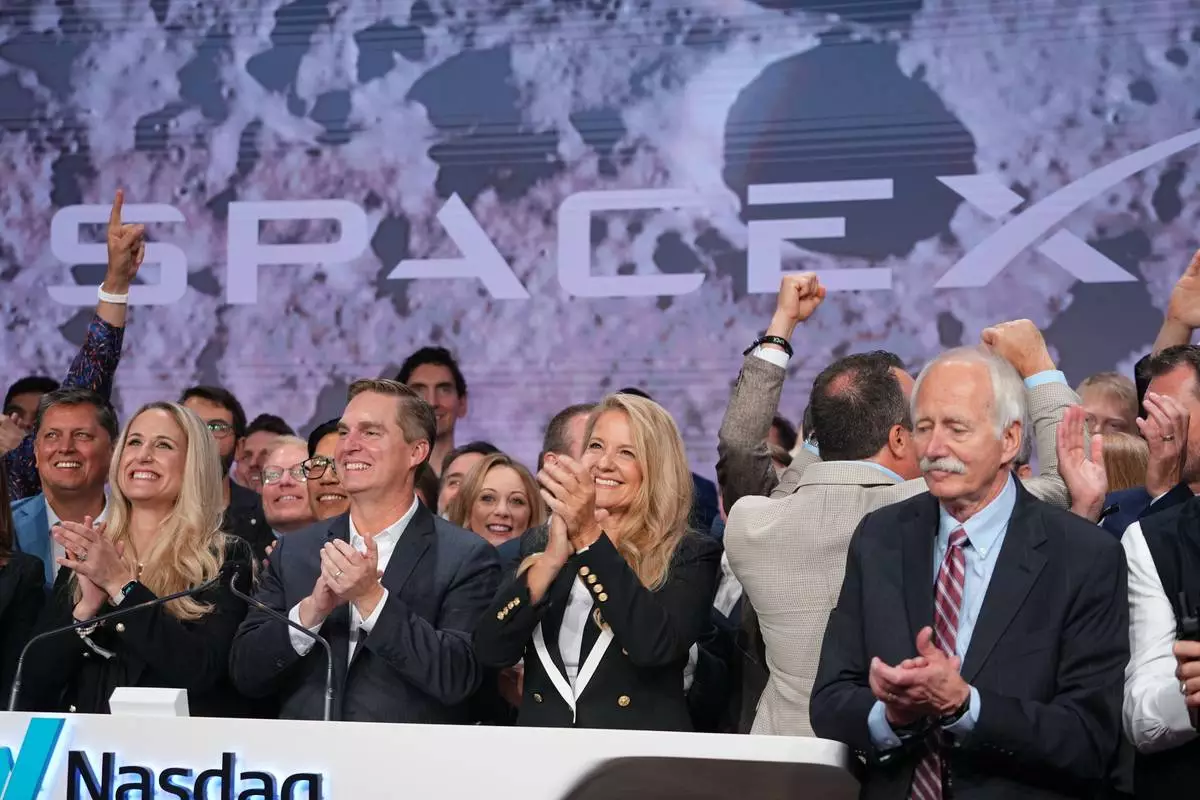
NEW YORK (AP) — U.S. stocks are drifting Friday after oil prices fell again and Wall Street welcomed the highly anticipated debut of SpaceX.
SpaceX’s stock surged 11% shortly after it began trading. It’s the first of three gargantuan companies in the artificial-intelligence industry expected to start selling their shares on the U.S. market, and it is being watched as a gauge for how hungry investors still are for AI stocks following vicious swings and big doubts for them over the last week.
Click to Gallery
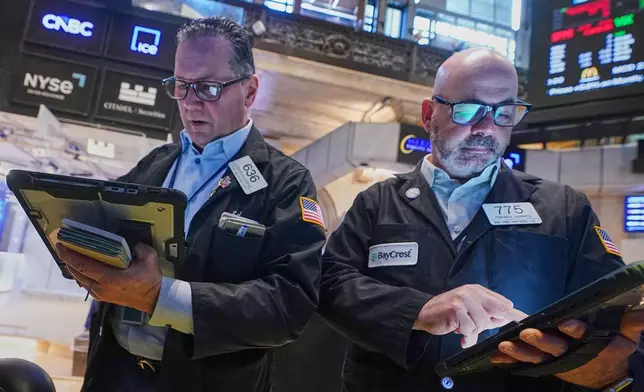
Traders Edward Curran, left, and Fred Demarco work on the floor of the New York Stock Exchange, Wednesday, June 3, 2026. (AP Photo/Richard Drew)
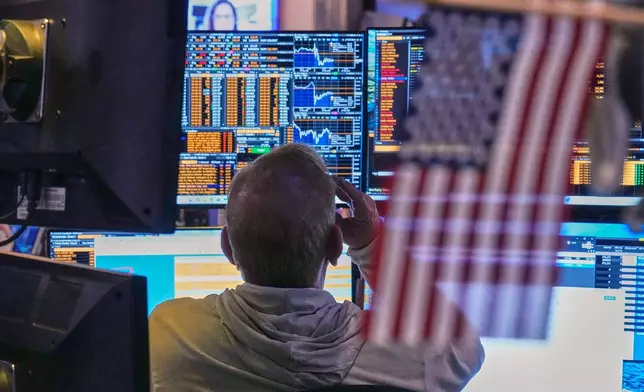
Trader Richard Cohen works on the floor of the New York Stock Exchange, Friday, May 29, 2026. (AP Photo/Richard Drew)

A currency trader passes by a screen showing the Korea Composite Stock Price Index (KOSPI) and the foreign exchange rate between U.S. dollar and South Korean won at the foreign exchange dealing room of the Hana Bank headquarters in Seoul, South Korea, Friday, June 12, 2026. (AP Photo/Ahn Young-joon)
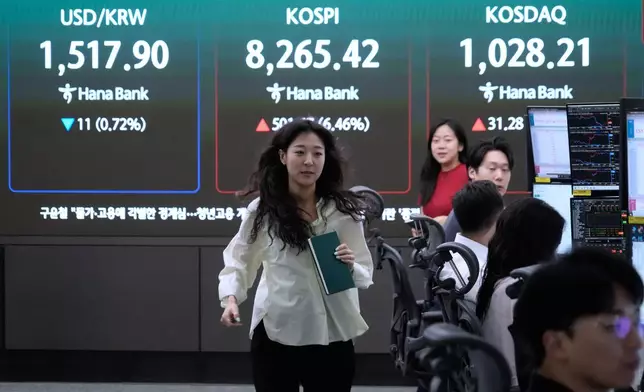
A currency trader passes by a screen showing the Korea Composite Stock Price Index (KOSPI) and the foreign exchange rate between U.S. dollar and South Korean won at the foreign exchange dealing room of the Hana Bank headquarters in Seoul, South Korea, Friday, June 12, 2026. (AP Photo/Ahn Young-joon)
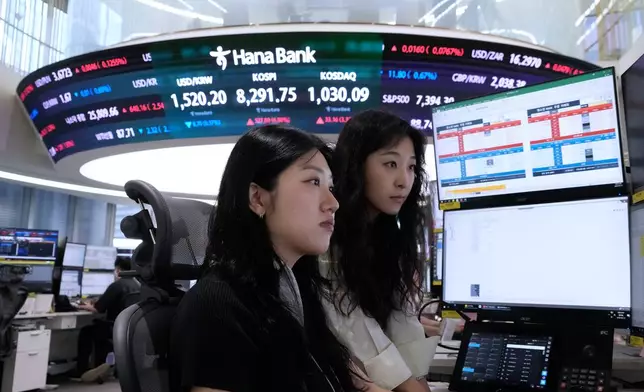
Currency traders watch monitors at the foreign exchange dealing room of the Hana Bank headquarters in Seoul, South Korea, Friday, June 12, 2026. (AP Photo/Ahn Young-joon)
The S&P 500 rose 0.1%. The Dow Jones Industrial Average was up 253 points, or 0.5%, as of noon Eastern time, and the Nasdaq composite was 0.3% lower.
Stocks got a lift from a 3.1% dip for the price of Brent crude oil to $87.58 per barrel, deepening its loss for the week. Oil prices have come down since President Donald Trump on Thursday called off his threat to launch strikes on Iran and said a potential deal with Iran may be imminent.
A deal to end the war could reopen the Strait of Hormuz and allow oil tankers to once again deliver crude from the Persian Gulf to customers worldwide. Its near closure since the war began has sent the price of Brent up from roughly $70 per barrel and caused a wave of painful inflation for the world.
Of course, financial markets have rallied in the past on hopes that an end to the war with Iran was near, only to get disappointed each time.
The bigger factor for Wall Street over the last week has actually been AI stocks, and how they have gone from roaring to records to suddenly turning lower. The concern is whether such stocks shot too high, too fast because of AI mania, and their careening moves have sometimes reversed direction by the hour.
Several headed back down the roller coaster Friday following a climb on Thursday. Broadcom's drop of 1.9% was one of the heavier weights on the S&P 500.
Some of the pressure on AI stocks may be coming from investors pulling their money out in hopes of moving it to SpaceX and other big AI-related initial public offerings.
SpaceX jumped 11% to $150 a share as the rocket maker’s stock opened for trading, giving the company a market value of $1.96 trillion and making CEO Elon Musk the first-ever trillionaire. SpaceX also has big investments in AI, part of the reason it has built up $29.1 billion in debt, as of the end of March.
Elsewhere on Wall Street, Adobe dropped 6.9% despite reporting stronger profit and revenue for the latest quarter than analysts expected.
Its stock has lost 42% so far this year, and it announced its chief financial officer is leaving the company on Monday. Adobe is already looking for a CEO to replace Shantanu Narayen, who announced in March that he is stepping aside after 18 years as Adobe’s leader.
In the bond market, Treasury yields rose to regain some of their sharp slides the day before, when oil prices dropped following Trump’s announcement. The yield on the 10-year Treasury climbed to 4.48% from 4.45% late Thursday.
High yields can slow entire economies and undercut prices for all kinds of investments, including stocks and cryptocurrencies. They hit investments seen as the most expensive in particular, and some critics are calling the AI industry a bubble where investment inflated too far.
Yields got a boost after a report suggested sentiment among U.S. consumers is not as bad as economists feared. The preliminary survey from the University of Michigan said sentiment improved by more than expected. U.S. consumers said they were feeling some relief after gasoline prices eased a bit early in the month.
In stock markets abroad, indexes rallied as they caught up to Thursday’s big gains on Wall Street.
South Korea’s Kospi jumped 4.6% and trimmed its losses from earlier this month taken because of sell-offs for AI-related stocks. The Kospi has nearly doubled since the start of the year.
Tokyo’s Nikkei 225 rose 2.8%, and France’s CAC 40 climbed 1.8% for two of the world’s bigger moves.
AP Business Writers Chan Ho-him and Matt Ott contributed to this report.
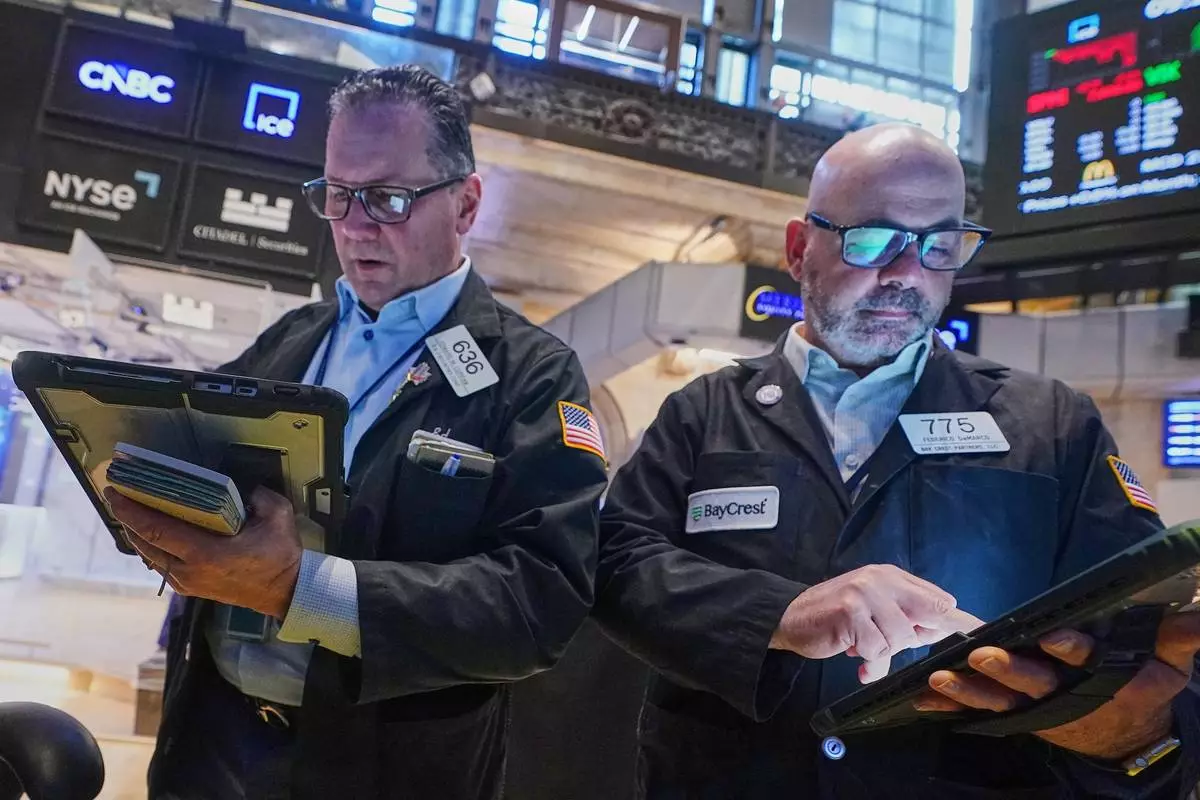
Traders Edward Curran, left, and Fred Demarco work on the floor of the New York Stock Exchange, Wednesday, June 3, 2026. (AP Photo/Richard Drew)
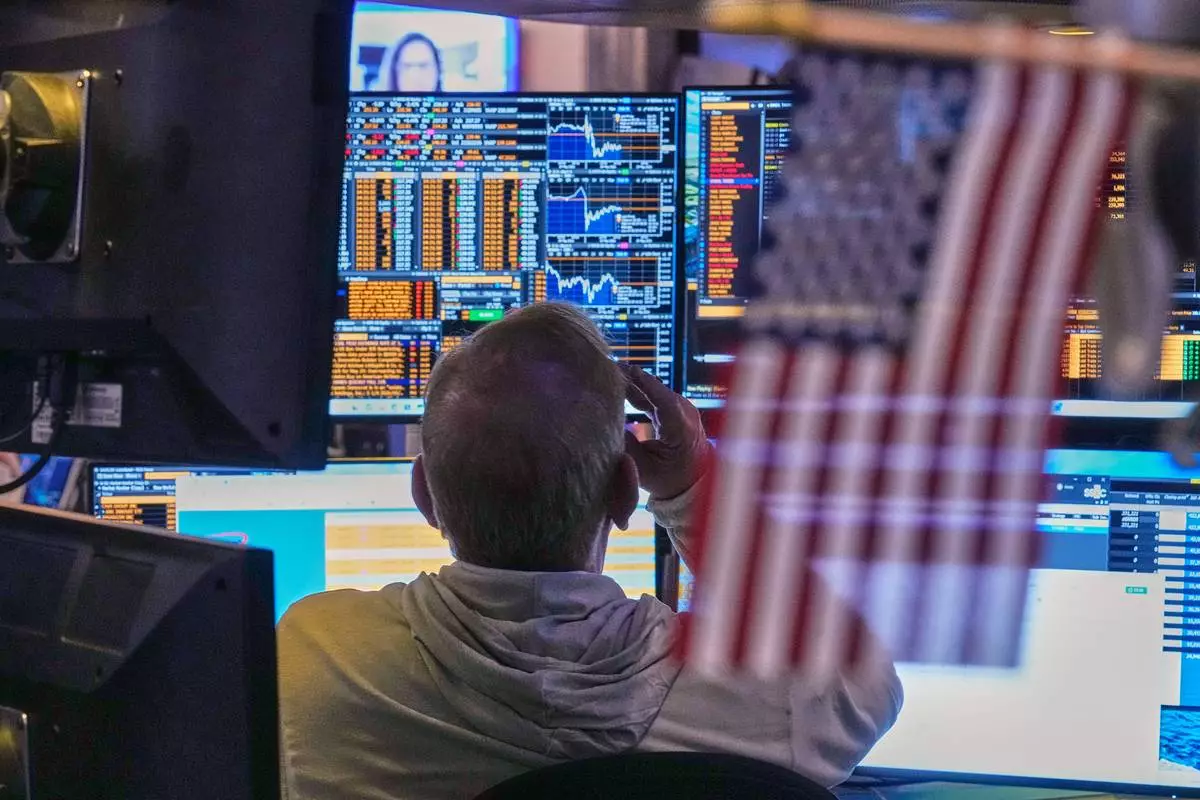
Trader Richard Cohen works on the floor of the New York Stock Exchange, Friday, May 29, 2026. (AP Photo/Richard Drew)

A currency trader passes by a screen showing the Korea Composite Stock Price Index (KOSPI) and the foreign exchange rate between U.S. dollar and South Korean won at the foreign exchange dealing room of the Hana Bank headquarters in Seoul, South Korea, Friday, June 12, 2026. (AP Photo/Ahn Young-joon)

A currency trader passes by a screen showing the Korea Composite Stock Price Index (KOSPI) and the foreign exchange rate between U.S. dollar and South Korean won at the foreign exchange dealing room of the Hana Bank headquarters in Seoul, South Korea, Friday, June 12, 2026. (AP Photo/Ahn Young-joon)

Currency traders watch monitors at the foreign exchange dealing room of the Hana Bank headquarters in Seoul, South Korea, Friday, June 12, 2026. (AP Photo/Ahn Young-joon)