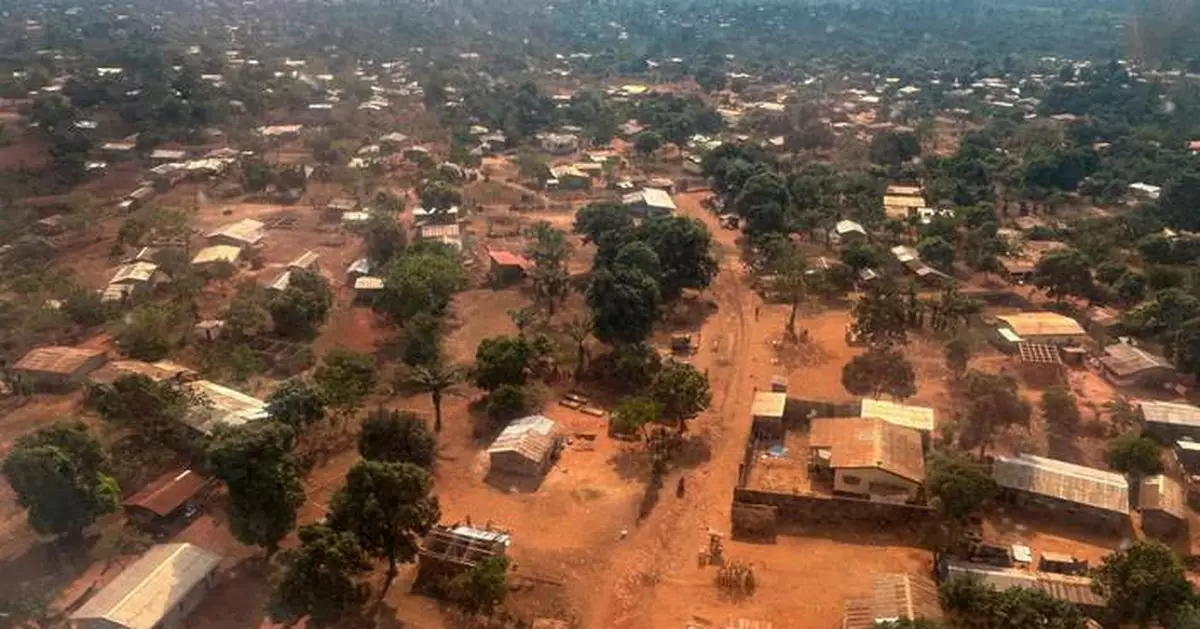
BANGUI, Central African Republic (AP) — A flight carrying at least two dozen migrants, including an Iranian woman facing persecution in her home country, landed in the Central African Republic on Friday. It is the latest example of the Trump administration’s widely criticized deals with African and Latin American nations to take third-country deportees.
The Central African Republic, a deeply impoverished country plagued by conflict, is one of at least nine African nations with this type of agreement.
Under a series of often-secret agreements that are part of a broad U.S. crackdown on immigration, the Trump administration has deported thousands of people to nearly two dozen countries that are not their own, advocates say.
The Trump administration uses deportations to third countries as a legal loophole to indirectly force asylum seekers back to their home countries, immigration lawyers said.
It was unclear exactly how many migrants were on the deportation flight that left Louisiana late Thursday on the way to the Central African Republic’s capital, Bangui.
Some of the migrants are temporarily staying at a firefighters’ base near the U.S. Embassy compound under construction in Bangui, while others will be housed at other locations, according to a source close to the embassy. The source, who spoke on condition of anonymity as they were not allowed to speak publicly on the matter, also said women and men were separated upon arrival.
Among those set to be deported Thursday were people from Iran, Jordan, Armenia, Turkey, Georgia and Afghanistan, according to Ali Rahnama, interim executive director of the Iranian American Legal Defense Fund, who has been in touch with some of the migrants.
Three Iranian women in the U.S. were originally scheduled to be sent to the Central African Republic, according to Sahar Jalili Pawelski, one of their immigration lawyers, who said two of them received emergency court orders temporarily stopping their deportation while judges reviewed whether the government was acting legally.
All had been granted court protection against deportation to Iran after judges ruled they faced credible fears of persecution on the basis of politics or religion, Rahnama said.
“Despite being granted withholding of removal, these individuals are being removed from the United States and abandoned in a country where they have no status, no connection and no support network. We fear they will ultimately be forced to return to the countries they originally fled,” Emily Trostle, an attorney representing two of the women, said Friday.
The U.S. Department of Homeland Security on Thursday would not comment on the case, saying it would not confirm future removal operations for security reasons. U.S. Immigration and Customs Enforcement did not immediately respond to requests for comment.
The Central African Republic has been plagued by years of conflict between pro-government forces and armed groups and is one of the poorest countries in the world. Despite vast reserves of gold, one in three people live on less than $2 a day.
It also is one of the countries where Wagner, a Russian mercenary group, was first active in Africa. The group has been responsible for President Faustin-Archange Touadéra’s security and fighting rebel groups.
The country remains one of Russia’s closest allies in Africa, despite recent tensions between Touadéra and Moscow over Russia’s push to replace Wagner with the state-controlled Africa Corps.
Rahnama of the Iranian American Legal Defense Fund expressed concerns about an Iranian asylum seeker being sent to the Central African Republic, noting Russia’s influence in the country and Moscow’s close security ties with Iran.
The International Organization for Migration, a U.N.-affiliated agency, will “provide post-arrival humanitarian assistance” to the migrants at the request of the Central African authorities, a spokesperson said.
The U.S. earlier this year awarded $85 million to the IOM for operations in the Central African Republic to provide “assistance to migrants” and promote “community stabilization.”
Banchereau reported from Dakar, Senegal. Associated Press writers Rebecca Santana in Washington and Akram Oubachir in Casablanca, Morocco contributed to this report.
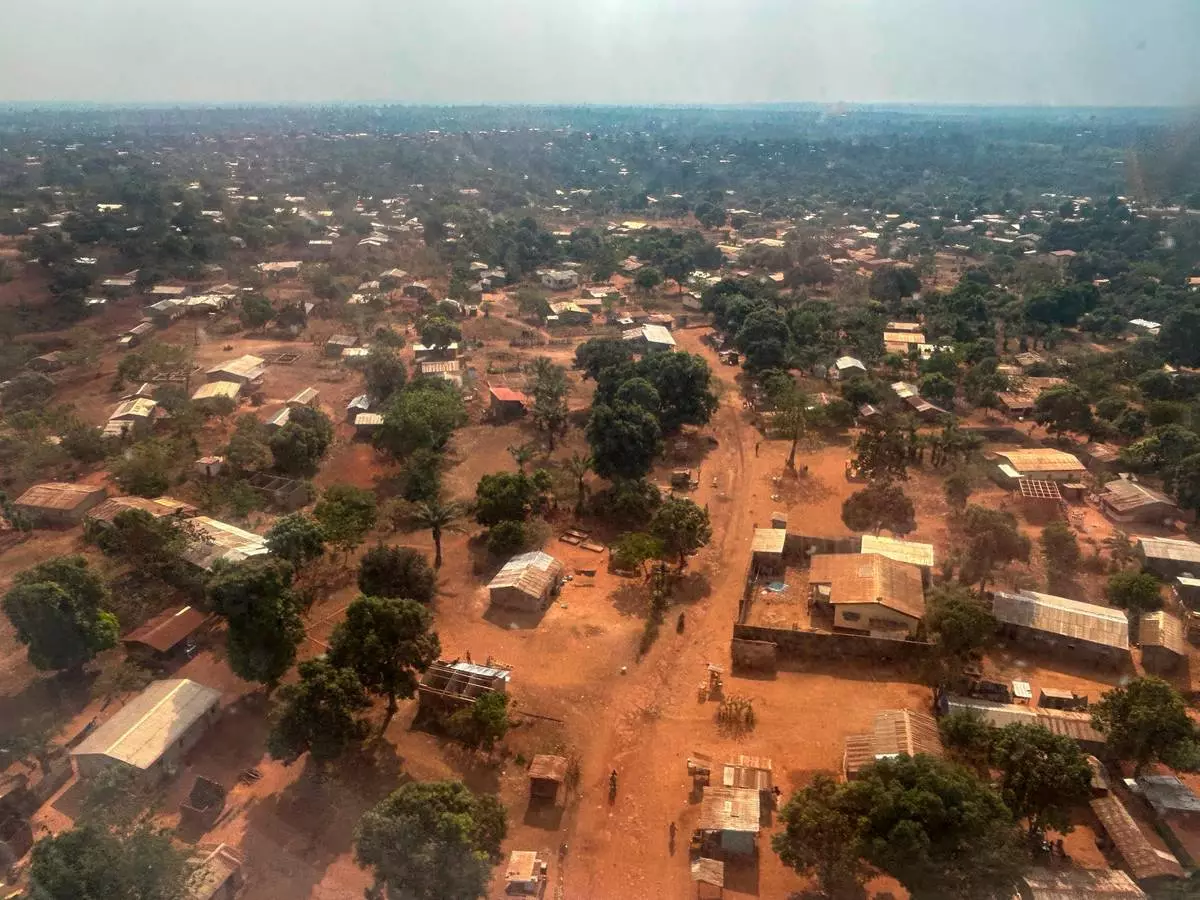
FILE - An arial view of Bangui, Central African Republic, is seen on March. 8, 2024. (AP Photo/Sam Mednick, File)
INDIANAPOLIS (AP) — Denny Hamlin had another bittersweet moment at Indianapolis Motor Speedway on Sunday.
Sure, one of his 23XI Racing drivers, Corey Heim, reached victory lane at a crown jewel race. Again. But for Hamlin, it also was a brutal reminder about how frustrating the Brickyard 400 has been for him. Eighteen starts, no wins and another top-five finish.
The good news: All is not lost.
The 45-year-old Hamlin heads into a rare midseason weekend off still leading in points, as one of four drivers locked into the playoffs and second in wins as everyone else spends the next four races trying to fill the other 12 playoffs spots. In the meantime, Hamlin can start game-planning to add the other missing link on his resume — winning a Cup championship.
“I haven’t really thought too much about the future,” Hamlin said in Indianapolis when asked about possibly retiring after next season. "Obviously, (Joe Gibbs Racing) has good plans set in place and whatnot. So, no, I haven’t put any more thought into or second thoughts or anything like that. So, its just really riding the wave of week to week right now and continue trying to get more wins.”
The timing for a break couldn't be better for Hamlin or some other top contenders.
Tyler Reddick owns a season-best five wins and is second in points, but hasn't won since Kansas in April. The 23 XI driver finished 10th in Sunday's race after qualifying third.
Ryan Blaney is third, but had his streak of 11 consecutive top-11 finishes snapped on Indy's 2.5-mile oval after he was caught up in a late, nine-car crash that dropped him to 26th and cost him the $1 million In-Season Challenge prize.
Hamlin's teammate, Ty Gibbs, clinched the fourth playoff spot by earning points in each of the first two stages, leading the second-most laps (46) and finishing 12th at the Brickyard.
Pole winner Carson Hocevar produced his second top 10 in three weeks, but that came after posting just two top 10s in the eight weeks prior to Atlanta. He's fifth in the standings.
Even previous series champs have not been immune from problems.
In addition to Blaney, the 2023 champ, Chase Elliott, the 2020 Cup winner, has finished outside the top 10 in eight consecutive races, and defending Cup champ Kyle Larson's winless streak reached 46 thanks to a flat left rear tire that sent him hard into the wall at Indy. Elliott finished 37th Sunday while Larson was last in the 39-car field.
Still, Elliott is sixth, Larson is eighth and both know they still have time to get things right.
“Storylines can change quick as we all know,” Elliott said. “So three weeks of running good and y'all will be talking about how these guys are championship favorites.”
Once the break ends, though, everyone knows the intensity and pressure will crank up again quickly. They'll head to Iowa on Aug. 9, then Richmond and New Hampshire where the practice sessions will be extended from 25 to 50 minutes before the regular-season finale at Daytona. That's when the 16 playoff contestants embark on a nerve-wracking 10-week shootout for the title.
For many, the 0.875-mile oval also will be a welcome site because many started racing on short tracks.
“I grew up on a three-eighths mile asphalt track similarly shaped to Iowa,” said Ross Chastain, who is trying to fight his way into the playoffs despite having no wins and ranking 21st. “I feel like that's much more what I just ran for so much of my childhood on. So that feels more natural to me than the big oval here (in Indy)."
But for drivers, the break also is a reminder of the high-stakes game still to come — especially for someone like Hamlin, whose partnership with Michael Jordan with 23XI has helped extend his legacy even as he continues chasing two of the Cup's biggest prizes.
“It’s great that we’ve been able to make the changes that we’ve had and built this race team into championship contenders, and it’s exceeded really all the expectations I’ve had for it in such a short amount of time,” Hamlin said. " It’s certainly an honor to be amongst a lot of sport greats.”
AP auto racing: https://apnews.com/apf-AutoRacing

Corey Heim celebrates after winning a NASCAR Cup Series auto race at Indianapolis Motor Speedway in Indianapolis, Sunday, July 26, 2026. (AP Photo/Michael Conroy)

Crew members perform a pit stop on driver Denny Hamlin's car during a NASCAR Cup Series auto race in North Wilkesboro, N.C., Sunday, July 19, 2026. (AP Photo/Chuck Burton)

Denny Hamlin drives into Turn 1 during a NASCAR Cup Series auto race in North Wilkesboro, N.C., Sunday, July 19, 2026. (AP Photo/Chuck Burton)