HAVANA (AP) — Cuban President Miguel Díaz-Canel on Friday announced a package of economic reforms aimed at attracting investment, expanding participation by Cubans living abroad in the economy and decentralizing parts of the country’s administration.
The president did not provide details about the measures or a timetable for their implementation but said during remarks to state media that it is now “time to change” and that the country “simply cannot continue on its current course.”
“Every opportunity in the midst of a crisis must be seized as a moment for takeoff, as a moment for growth,” Díaz-Canel said, according to a statement from the presidency that was republished by state-run media. “We have established a group of priorities to confront this situation,” he added without offering specifics.
The announcement comes as Cubans have struggled with fuel shortages as a result of the U.S. oil blockade and food insecurity. In January, the United States tightened restrictions on Cuba’s oil supplies in an effort to pressure the island’s government to change its political and economic model, exacerbating challenges that have persisted for about five years.
The U.S. State Department had no comment on the Díaz-Canel remarks and referred to the statement released Thursday on the latest sanctions.
Díaz-Canel said officials are evaluating measures related to foreign trade, exports, supply chains and logistics. Without elaborating, he suggested the government could eliminate mandatory state intermediaries in import and export operations and grant tariff benefits to those who bring raw materials into the country for production.
“The numbers don’t add up, and the government wants to make this look like a matter of will rather than a math problem,” Cuban economist Pedro Monreal wrote on X, in response to Díaz-Canel’s proposals.
The Spain-based former UNESCO official went on to criticize the collapse of a centralized planning model, for which he said “there are two respectable alternatives: assume the political price of failure, or self-critically rectify and drastically transform the model.”
For decades, Cuba maintained a centralized, vertical system under strict state control. This structure began to shift gradually over the last decade when the government introduced permits for independent workers. More recently, the state authorized the operation of the country’s first small- and medium-sized private enterprises.
Earlier Friday, a ship carrying nearly 100 tons of food and essential goods arrived from Colombia as part of the humanitarian aid that several countries have sent to Cuba in recent months as a U.S. energy embargo persists.
The ship, which departed Cartagena in early June, crossed the Havana Bay channel early in the morning flying the Colombian flag and escorted by a small Cuban auxiliary vessel, The Associated Press confirmed.
The Colombian Presidential Agency for International Cooperation said that, on orders of President Gustavo Petro, the shipment included nonperishable food, medicine, hospital supplies, electrical materials, solar panels and other items.
The ship also carried seven tons of goods collected by solidarity groups.
Last weekend, another ship carrying 1,700 tons of essential goods from Mexico and Belize arrived in Havana.
In late January, U.S. President Donald Trump threatened tariffs on any country that sells or provides oil to Cuba. The move has deepened a preexisting crisis caused by U.S. sanctions. Washington is pressing the Cuban government to release political prisoners and move toward political and economic liberalization in return for a lifting of sanctions.
Cuba produces only 40% of its oil, leaving the island semiparalyzed and subjected to severe power outages.
AP Diplomatic Writer Matthew Lee contributed to this report from Washington.
Follow AP’s coverage of Latin America and the Caribbean at https://apnews.com/hub/latin-america
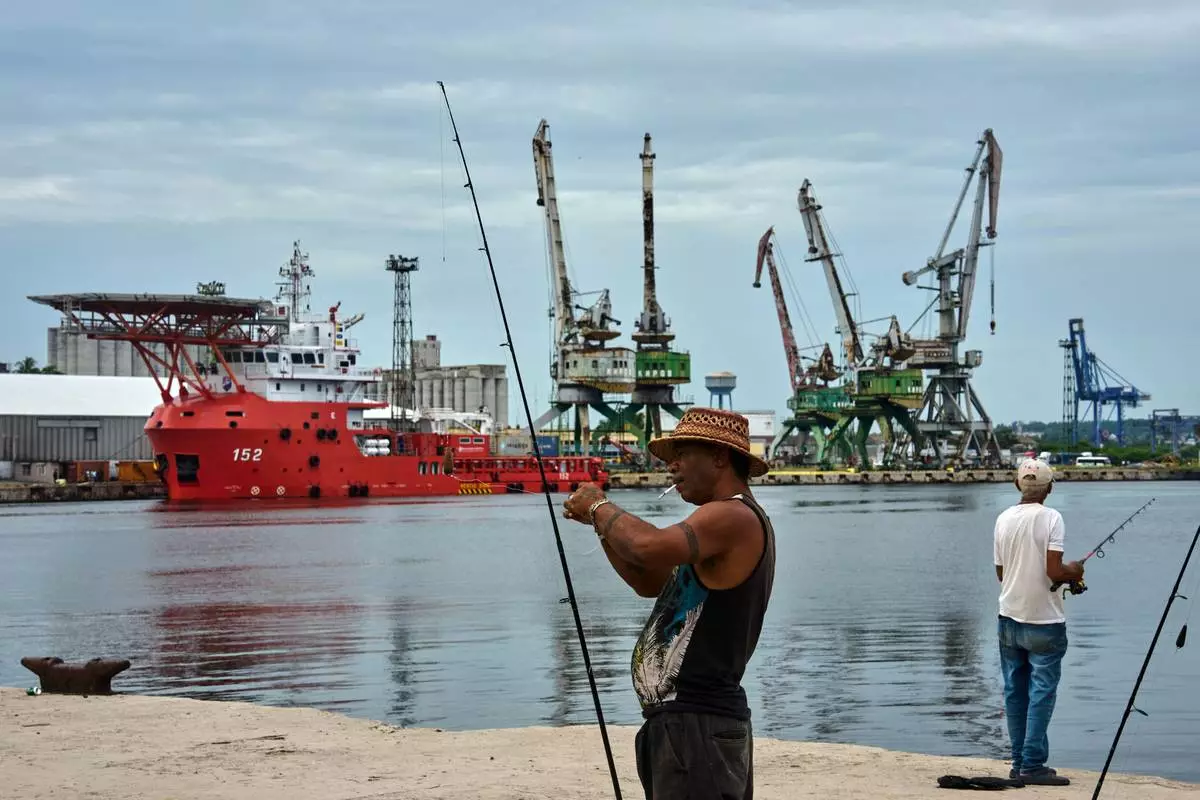
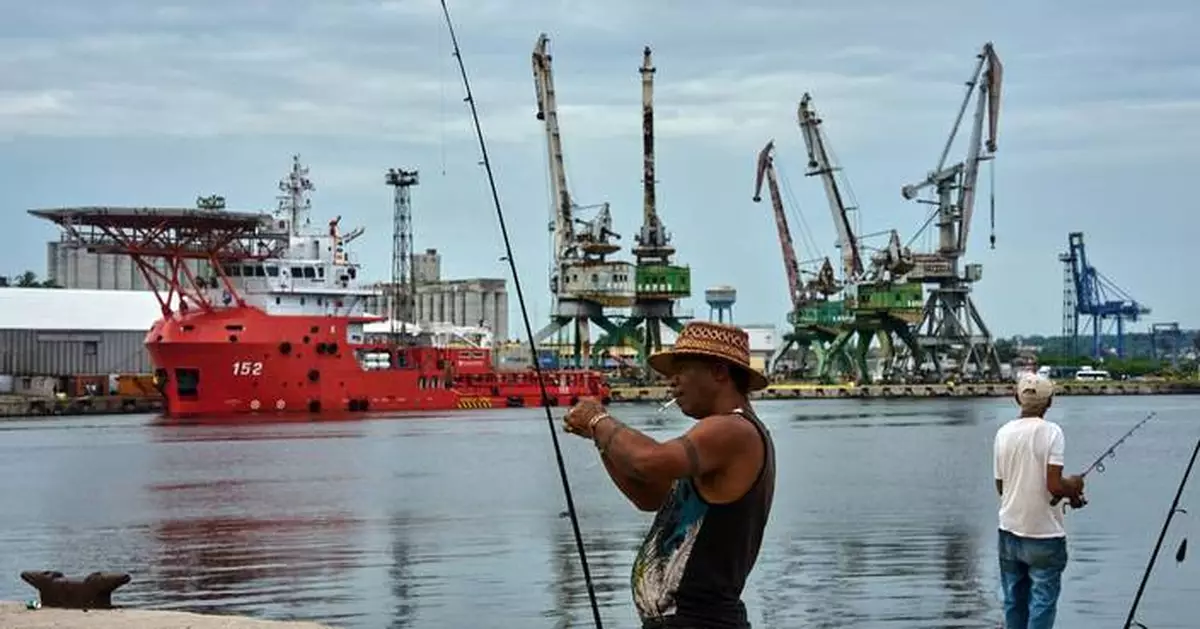
A fisherman prepares his fishing rod in front of the Colombian Navy ship ARC Caribe, docked at a pier in Havana, Cuba, after arriving with humanitarian aid, Friday, June 12, 2926. (AP Photo/Ramon Espinosa)
WASHINGTON (AP) — The Trump administration asked the Supreme Court on Monday to clear the way for an executive order from President Donald Trump that could dramatically change mail-in voting ahead of November’s midterm elections.
The Justice Department asked the justices to halt for now lower court decisions blocking the sweeping changes in nearly half the country.
The request comes shortly after Trump delivered a primetime address elevating his yearslong push to raise doubts about the legitimacy of elections, and could be one of several voting-related challenges before the court ahead of the high-stakes midterm contest.
Trump ordered the government in March to create a “state citizenship list” of eligible voters and deliver mail ballots only to people on that list.
Democratic officials in 23 states and the District of Columbia sued, saying the Constitution gives states and Congress the authority to set election rules, not the president. Their attorneys have said Trump's proposed changes are ripe for abuse and could cause chaos.
A judge in Massachusetts blocked the executive order for the plaintiff states, and a divided 1st U.S. Circuit Court of Appeals panel left her ruling in place over the weekend.
The executive order calls for U.S. Citizenship and Immigration Services and the commissioner of the Social Security Administration to send state officials federal citizenship lists to determine eligible voters. It tells the U.S. Postal Service to deliver mail ballots only to people on the lists.
The order also calls for ballots to have secure envelopes with unique barcodes for tracking. Federal funding could be withheld from states and localities that don’t comply.
The appeal argues that Trump's order lays out “general policy guidance” and doesn’t directly dictate how states run their elections. Solicitor General D. John Sauer asked the high court to freeze the judge's order as lawsuits play out, calling it indefensible.
“And the injunction is especially indefensible because the agencies are still deliberating over how (if at all) to implement the Order, yet the district court preemptively decided that whatever the agencies may choose to do will necessarily be unlawful,” Sauer wrote.
He urged the high court to move quickly, arguing that any new policies would have to be in place as soon as August to be effective for the November elections. A response to the appeal is due Aug. 3.
Mail balloting has long been a favorite target for Trump, even as he has used the method to cast his own votes. He has blamed it for his loss to Democrat Joe Biden in 2020 and has claimed without evidence that it opens the door to fraud. He returned to that theme Monday during an appearance at a General Motors facility in Michigan as he was making an appeal for Congress to pass his voter ID and proof-of-citizenship bill.
“And hopefully there will be no mail-in ballots,” he said, calling them 'inherently corrupt."
Using mail ballots has become increasingly popular with voters of both parties, with about 30% of all ballots cast that way during the 2024 presidential election, according to federal data. The process also is secure. A 2025 Brookings Institution study found only about four cases of fraud out of every 10 million mail ballots cast.
The Supreme Court has ruled against the Trump administration before on mail-in ballots, finding in June that states can count ballots that arrive after Election Day.
Trump has promoted the proposed changes in his executive order as safeguards to keep non-U.S. citizens from voting. He's also repeatedly pressed for the passage of the legislation that requires proof of citizenship to vote.
Noncitizen voting has been shown to be rare, and is a felony that can be punishable by deportation.
U.S. District Court Judge Indira Talwani in Boston, who was nominated by Democratic President Barack Obama, agreed in June to halt implementation for the Nov. 3 elections.
Her ruling differed from that of another federal judge based in Washington. U.S. District Judge Carl Nichols, who was appointed by Trump, found in May that it was too early to block the order because it had not yet been implemented.
The office of California Attorney General Rob Bonta, who is leading the lawsuit for the states, did not immediately comment on the Trump administration’s appeal. New York Attorney General Letitia James’ office declined to comment.
The Postal Service also would not discuss its plans regarding implementing Trump’s order or its rule, citing the ongoing litigation. In Kansas, Republican Secretary of State Scott Schwab’s office said it has not heard from the Postal Service about plans going forward.
Associated Press writer John Hanna in Topeka, Kansas, contributed to this story.
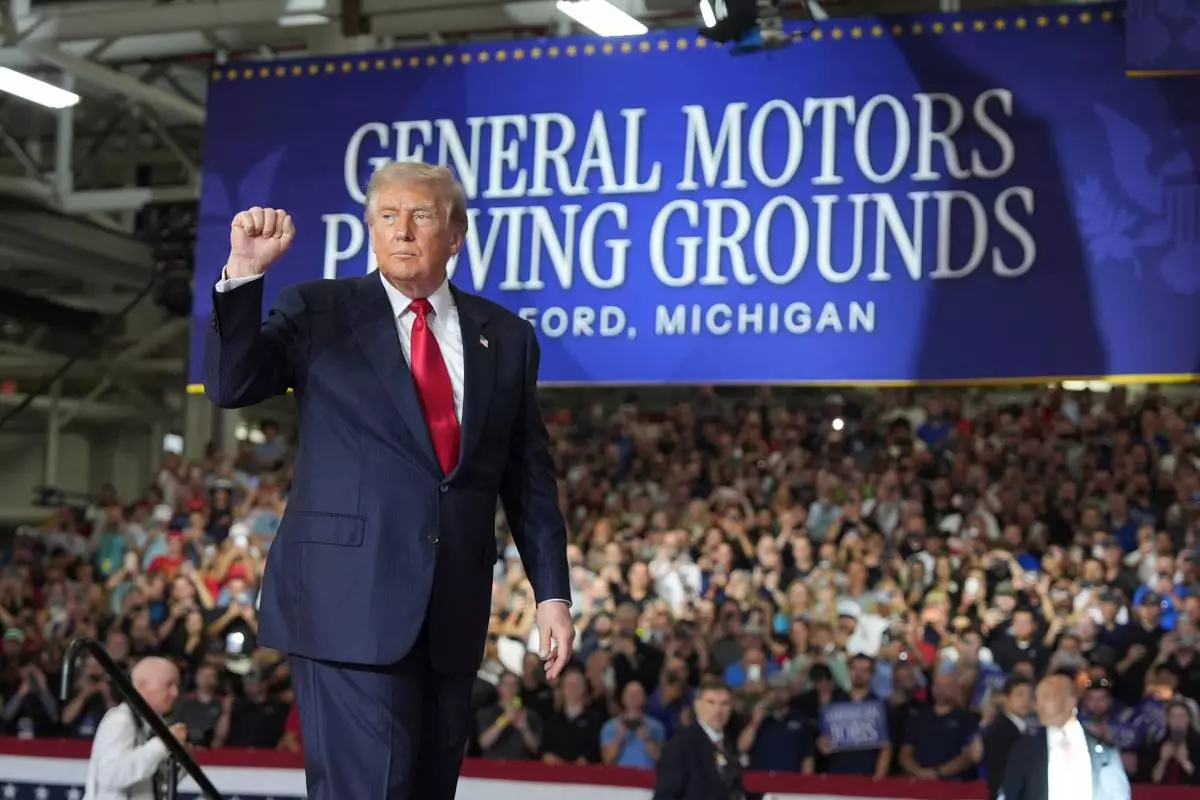
President Donald Trump gestures as he departs after speaking at General Motors proving ground, Monday, July 27, 2026, in Milford, Mich. (AP Photo/Alex Brandon)
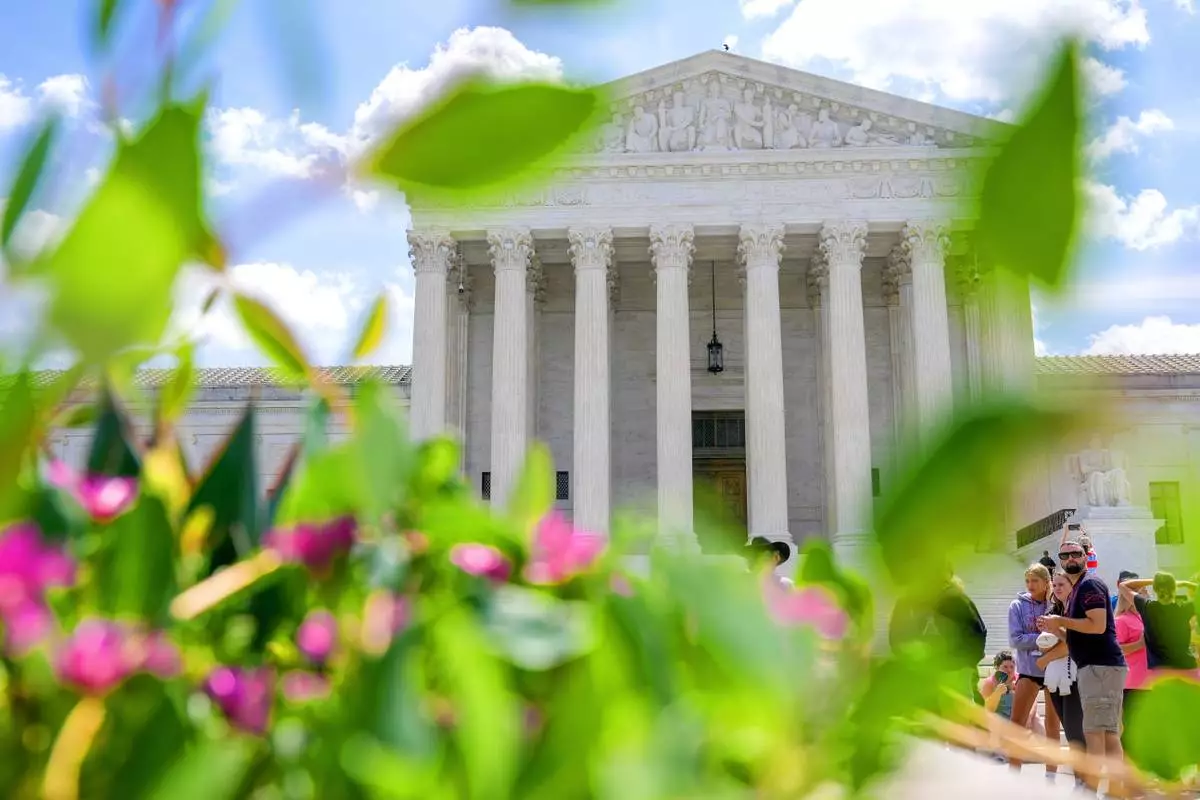
Visitors walk in front of the Supreme Court Friday, July 24, 2026, in Washington. (AP Photo/Mariam Zuhaib)