ATLANTA (AP) — A federal judge who was disciplined after an investigation found that she had sex with a police officer in her chambers and then lied about it wrote a letter to a former law clerk apologizing for her “harmful, offensive, and unprofessional behavior.”
An investigation initiated last year by the chief judge of the 11th Judicial Circuit found that U.S. District Judge Eleanor Ross had sex in the courthouse with a high-ranking uniformed police officer within earshot of staff, attended a partisan event and initially lied when confronted with the allegations. Ross wrote in the letter dated Thursday and obtained by The Associated Press that her “actions were patently wrong, and there is no excuse.”
“You deserved better than to have your experience marred by my own offensive conflict,” says the letter, which was first reported by The New York Times.
Ross was nominated to the bench in the Northern District of Georgia in 2014 by then-President Barack Obama, a Democrat.
The investigation of Ross began after one of her law clerks reported that on multiple occasions the judge had engaged in sexual activity with a high-ranking uniformed police officer in her office during working hours. It also was alleged that the judge didn’t properly supervise clerks and on one occasion yelled and cursed at staff.
Ross received a “private reprimand” that didn't publicly name her after the investigation confirmed the allegations against her. She also agreed not to seek the position of chief judge of the district when eligible and to write apology letters to six former law clerks.
William Pryor, the chief judge of the 11th Circuit, opened the initial investigation of Ross last fall. He asked her to respond to the clerk’s allegations that she had had sex in her office and had attended a partisan event. She replied the same day and “specifically denied” each allegation. In a follow-up email the next day, the judge speculated to Pryor that the law clerk may have invented things in retaliation for being required to work in the office.
Ross' letter says, “I also want to convey my deepest apologies to you for my false accusation against you. Again, I have no excuse and immensely regret my behavior.”
The letter also references a previous letter that Ross wrote to the clerk, saying it was “entirely deficient, as I did not take full accountability for my actions, and I failed to give you the apology that you deserve.”
Federal judges are appointed for life and can only be removed by impeachment by Congress. Two Georgia congressman this week filed separate impeachment resolutions against Ross. It is up to the House Judiciary Committee to decide whether to start impeachment proceedings.
Pryor appointed a special committee to investigate. That investigation was detailed in a report attached to the disciplinary order.
The committee’s review of logs and security footage showed an officer had frequently visited the judge’s chambers in uniform around lunchtime. Six clerks recalled seeing someone who fit the officer’s description, with three remembering overhearing what may have been sexual activity in the judge’s office.
Three clerks remembered bringing summer interns on their first day to watch the judge presiding over a hearing in a criminal case. Right after that, they told the committee, the judge declined to have lunch with the interns, acknowledging having too many martinis the night before at a primary election victory party for a district attorney friend.
The clerks said the judge didn’t provide sufficient guidance and “rarely, if ever, substantively edited civil orders the clerks drafted.” While clerks described an “eggshell culture,” the committee didn’t find evidence of abusive behavior.
The judge ultimately admitted to having an extramarital sexual relationship with the officer but denied the allegations about mistreatment of staff, the committee wrote. The judge acknowledged to the committee having gone to a “mixer” of former employees of a district attorney’s office where the judge used to work, but said it was in a separate room from the victory party.
“Though I can never fully undo the harm that I have caused you, I hope that my acknowledgment of these failures is a small first step,” Ross wrote in the letter to her former clerk. “I will be taking further steps to ensure that this never happens again.”
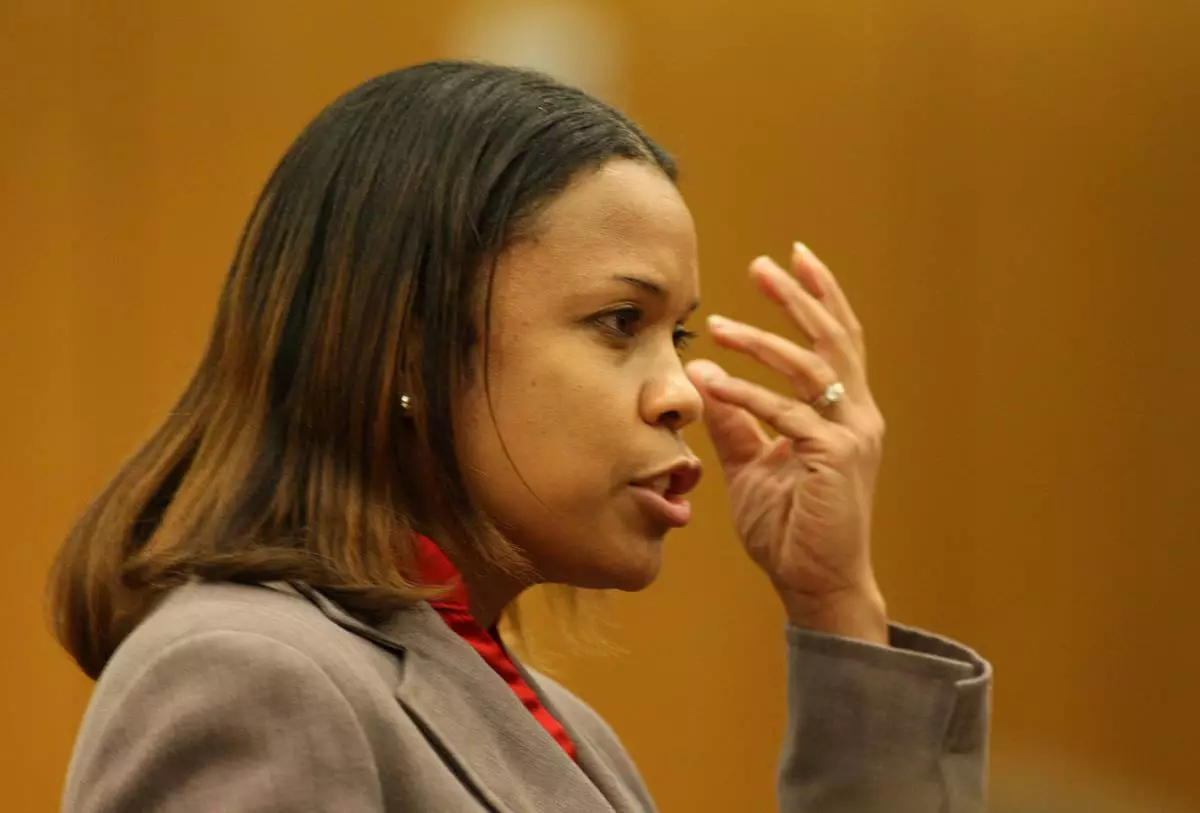
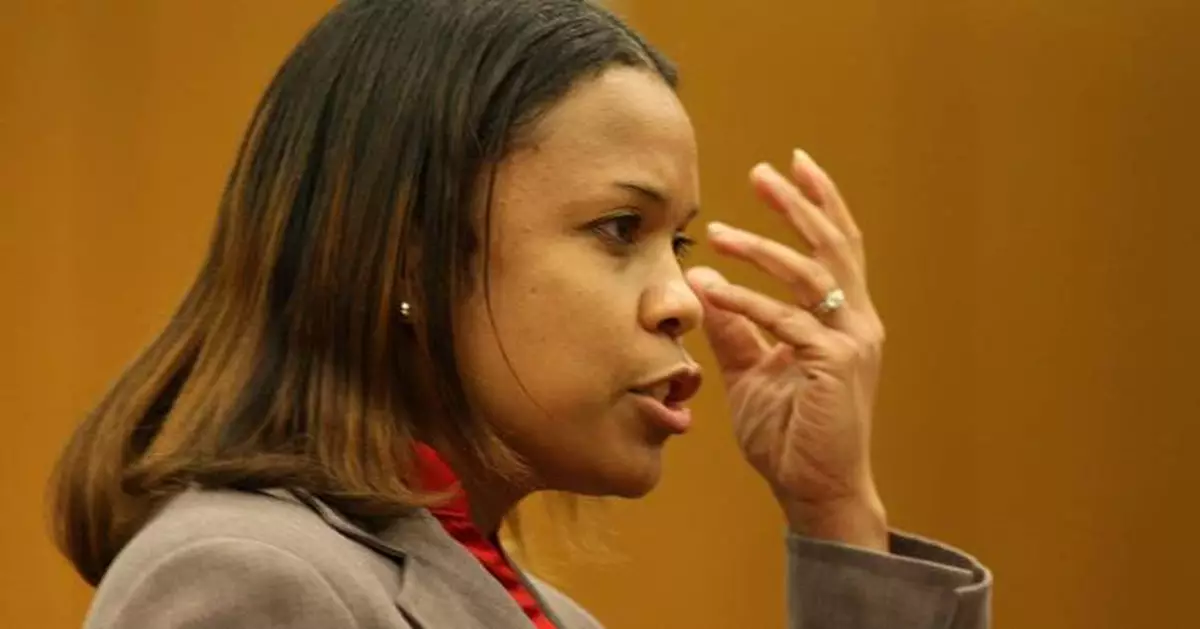
FILE - Fulton County Senior ADA Eleanor Ross speaks during opening statements Wednesday, Feb. 17, 2010 in Atlanta. (Vino Wong/Atlanta Journal-Constitution via AP, File)
First responders searched homes and buildings on Tuesday for possible victims of a powerful tornado that ravaged several northeastern Wisconsin communities.
The Fox Cities region, which is home to more than 100,000 people in the cities of Appleton, Menasha and Neenah, was left in shambles by Monday's twister, with homes leveled, cars flipped, and power lines and trees toppled.
“The depth of the tornado and its impact is incredible, devastating. We’re really still at the assessment stage,” Winnebago County Executive Gordon Hintz said at a news conference Tuesday.
David Chew, 55, said a tree smashed through his roof in Menasha, and he still hadn't located an outdoor patio lounger swept away by the storm. But he's better off than a neighbor: A portion of her roof was ripped clean, with furniture and drywall “sucked out.”
“It was just a shocker,” said Chew, who had rushed to the basement with his wife and son.
Despite widespread damage, the timing of the storm could be why there have been no reported deaths. The tornado arrived in the early afternoon, authorities noted, when most people were awake and after warnings had been issued.
“Everybody was at work. It was the middle of the day,” Menasha Police Chief Matt Albrecht said. “Most people were not at home and at their place of employment.”
Dozens of people were injured, and officers were still going door-to-door a day later in search of possible victims.
The tornado touched down around 1 p.m. and remained on the ground for more than 20 minutes, cutting a roughly 12-mile (19.3-kilometer) path of destruction, the National Weather Service reported. The area is about 100 miles (160 kilometers) northwest of Milwaukee.
It was classified as an EF3 tornado — the strongest to strike Outagamie and Winnebago counties since an EF4 touched down in April 1984, the weather service said.
Gov. Tony Evers declared a state of emergency for the affected areas. Shelters were opened for displaced residents.
As chain saws roared in the background, Appleton Mayor Jake Woodford said a number of neighborhoods were “truly devastated.” Like elsewhere in the region, electricity lines were tangled around broken trees, making power restoration a slow, risky process.
More than 10,000 customers in Winnebago and Outagamie counties were still without power, according to utilities that serve them. It could be several days before power is fully restored.
The twister was spun off by a large storm system that moved through the Great Lakes and was fueled by a buildup of heat and humidity, the weather service said.
“What we are seeing this summer is significant heat leading to significant severe weather,” said Chad Merrill, senior meteorologist at AccuWeather. “We had an EF3 tornado in Wisconsin. People need to take these warnings seriously. It can happen just about anywhere.”
ThedaCare Regional Medical Centers in Appleton and Neenah said it treated 40 people, mostly for minor storm-related injuries. Ascension St. Elizabeth Hospital in Appleton said it saw about 30 patients, all with minor injuries.
Rachel Bernhardt, 56, said she grabbed her dog and dashed to her basement in the village of Fox Crossing after she saw a steel swing spinning in the yard. When the storm passed, her second-floor bedroom was covered in glass and a tree branch was resting on her bed. The carpet was soaked.
“We can’t be in there anymore,” said Bernhardt, who is sleeping on the first floor and using a generator to keep the refrigerator going. “In fact, I’m going to caution-tape that off.”
At Manderfield’s Home Bakery, a decades-old landmark in Menasha, the brick frame around the door still stood, but not much more.
“This can be replaced,” owner Jerry Manderfield told WISN-TV. “We had people in the building that could possibly have died in there.”
Luigi’s Pizza in Menasha set up a food trailer to distribute hygiene packs and free slices after donors kicked in enough money to make at least 125 pizzas Tuesday.
“Sometimes a hot pizza, a taco, and a reminder that your community cares can mean more than words,” said Duncan’s Window & Door, which chipped in for 50 pizzas.
Associated Press reporters Christopher Keller and Scott Bauer contributed to this story.
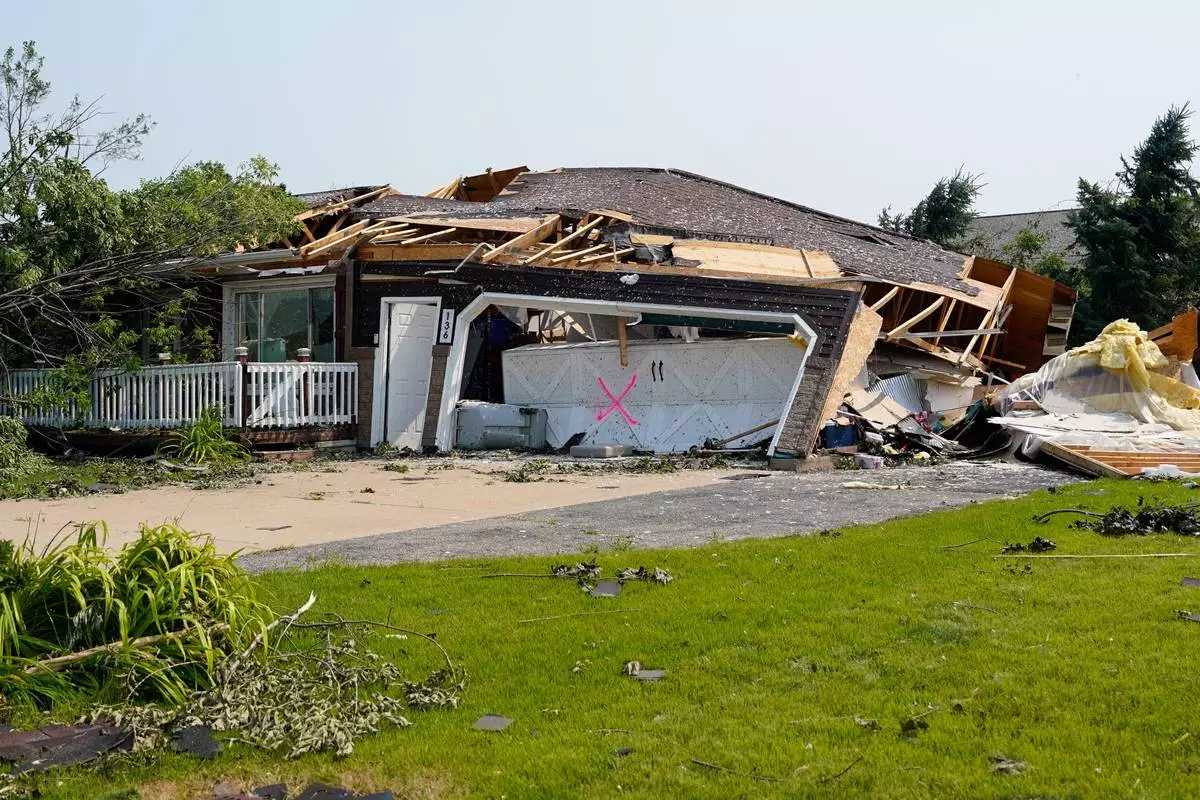
A view of a home damaged by a tornado that tore through a day before in Appleton, Wis., Tuesday, July 28, 2026. (AP Photo/Kayla Wolf)
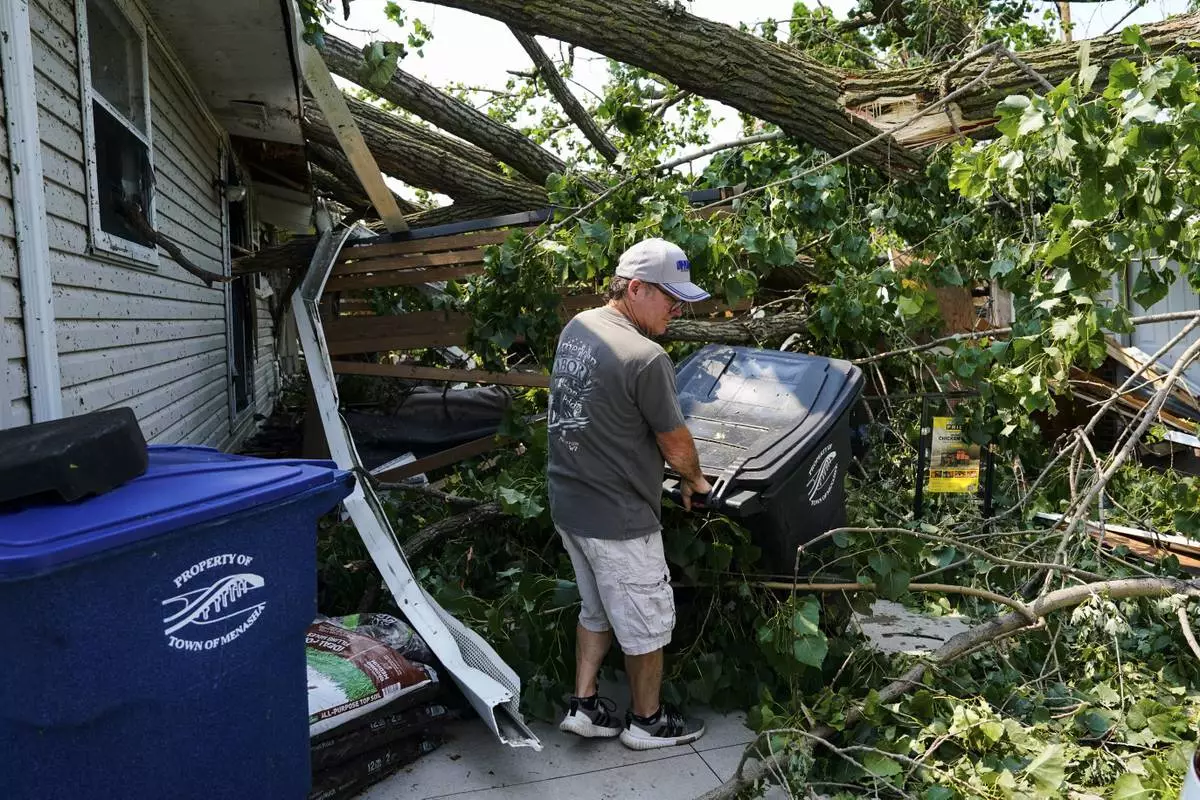
A man helps clear debris from the backyard of a damaged house after a tornado hit the day before, Tuesday, July 28, 2026, in Appleton, Wis. (AP Photo/Kayla Wolf)
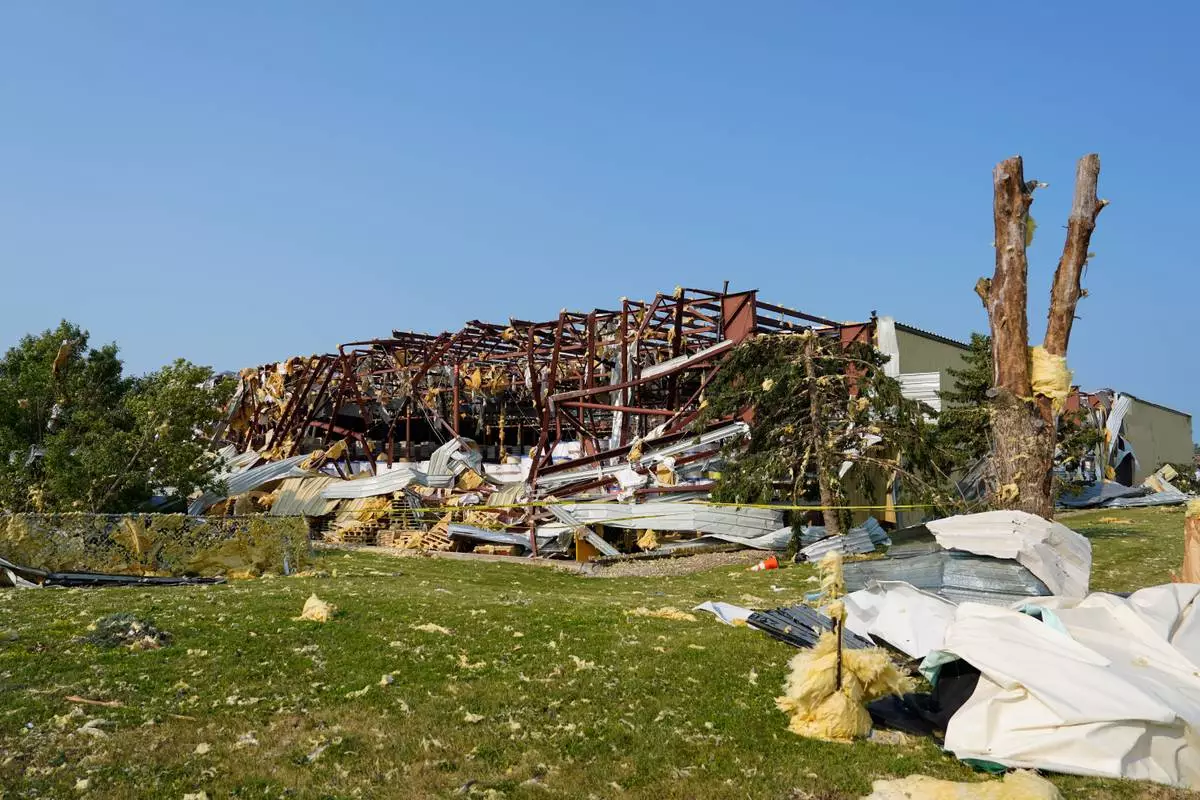
Debris surrounded a damaged warehouse in the aftermath of a tornado that tore through Appleton, Wis., Tuesday, July 28, 2026. (AP Photo/Kayla Wolf)
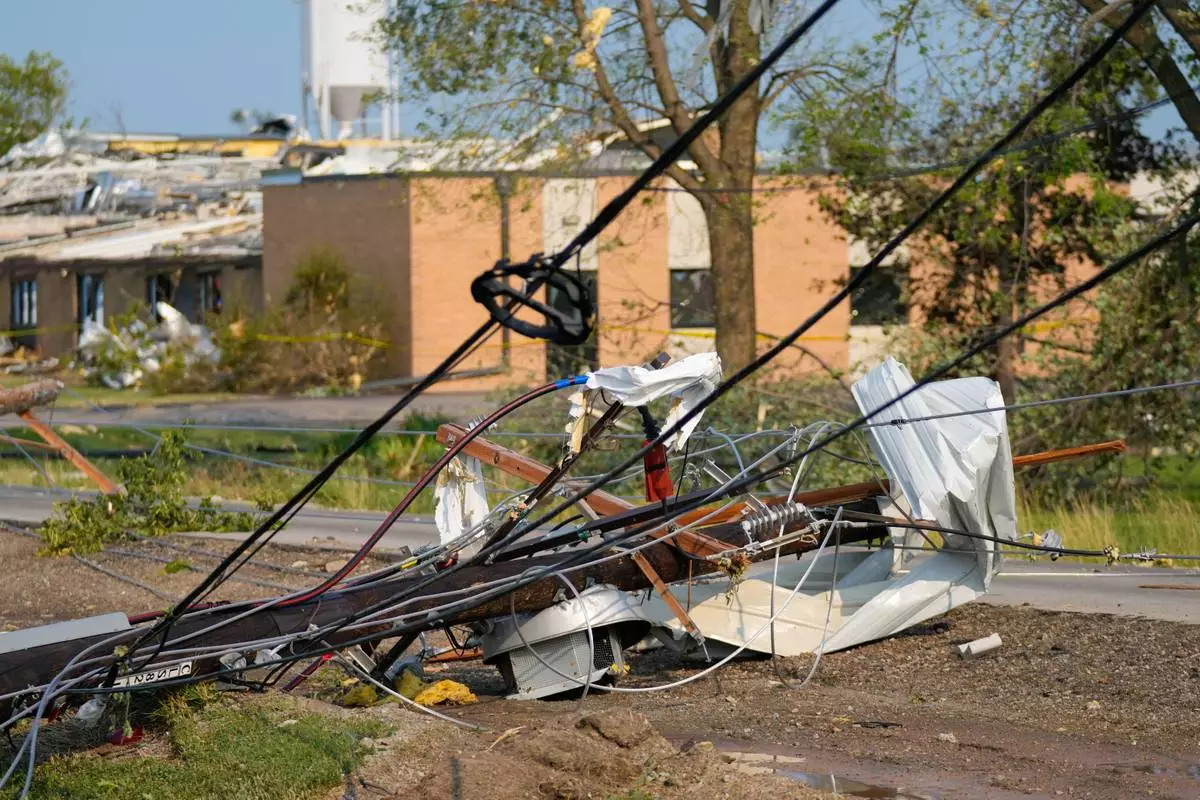
Power lines tangled with debris lie on the ground after a tornado tore through a day before in Appleton., Wis., Tuesday, July 28, 2026. (AP Photo/Kayla Wolf)
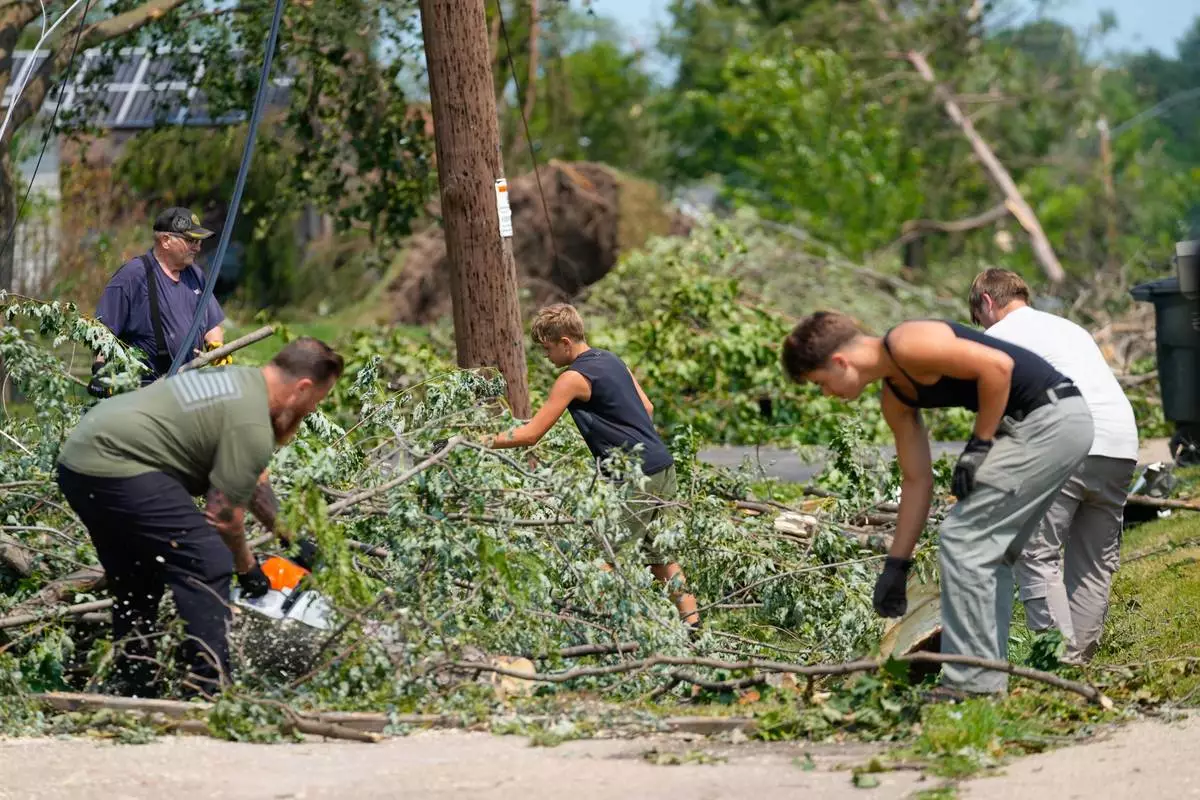
Volunteers help clear tree limbs near a damaged house after a tornado hit the day before in Appleton, Wis., Tuesday, July 28, 2026. (AP Photo/Kayla Wolf)
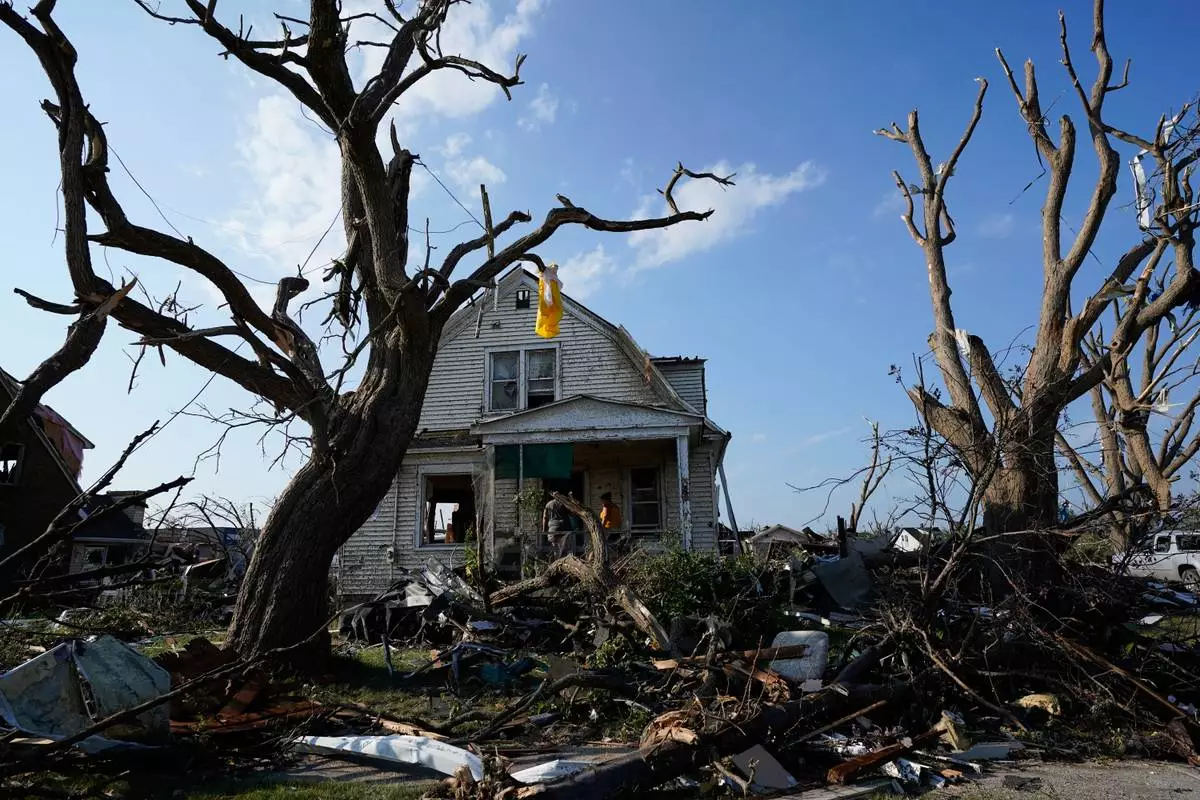
Debris is seen in front of a damaged house after a tornado struck Monday, July 27, 2026, in Menasha, Wis. (AP Photo/Kayla Wolf)
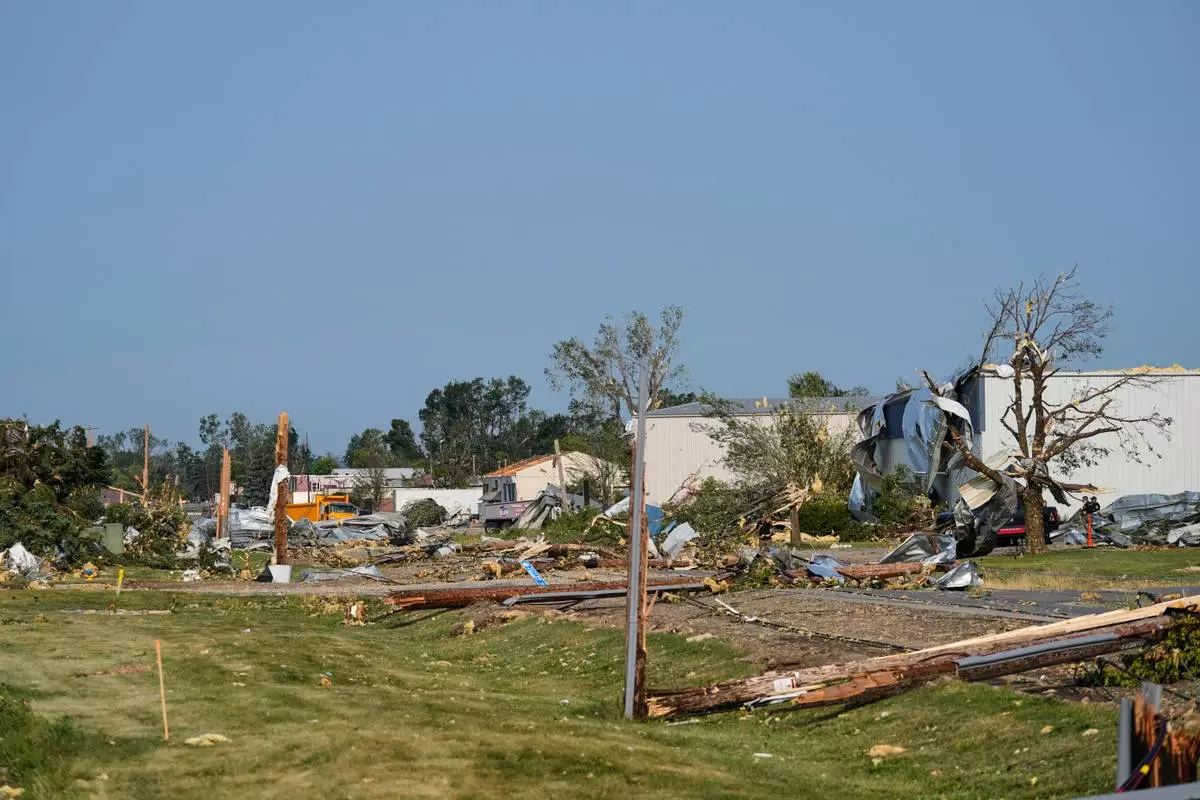
Debris and fallen trees cover the ground after a tornado struck the day before, Tuesday, July 28, 2026, in Appleton, Wis. (AP Photo/Kayla Wolf)

A car sits in a parking lot under a collapsed roof after a tornado struck the day before, Tuesday, July 28, 2026, in Appleton, Wis. (AP Photo/Kayla Wolf)
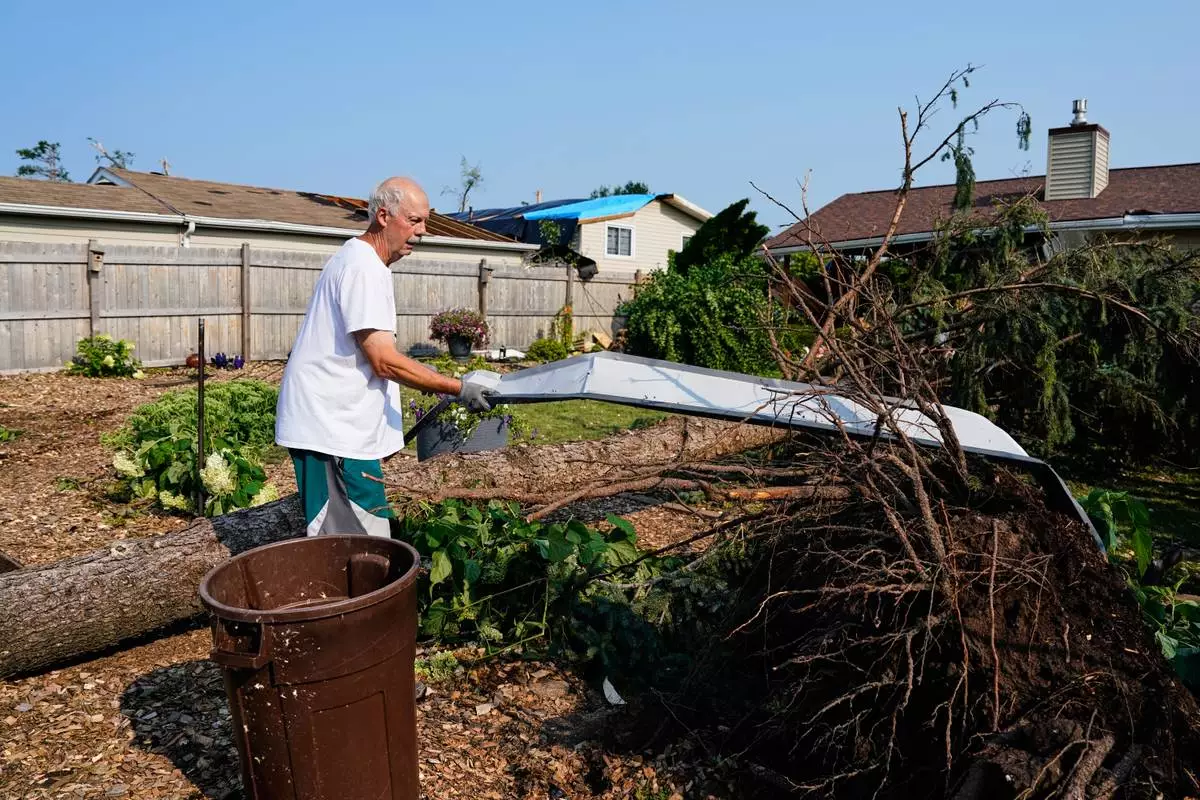
Williams Burrows cleans up debris in his backyard after a tornado struck the day before, Tuesday, July 28, 2026, in Appleton, Wis. (AP Photo/Kayla Wolf)
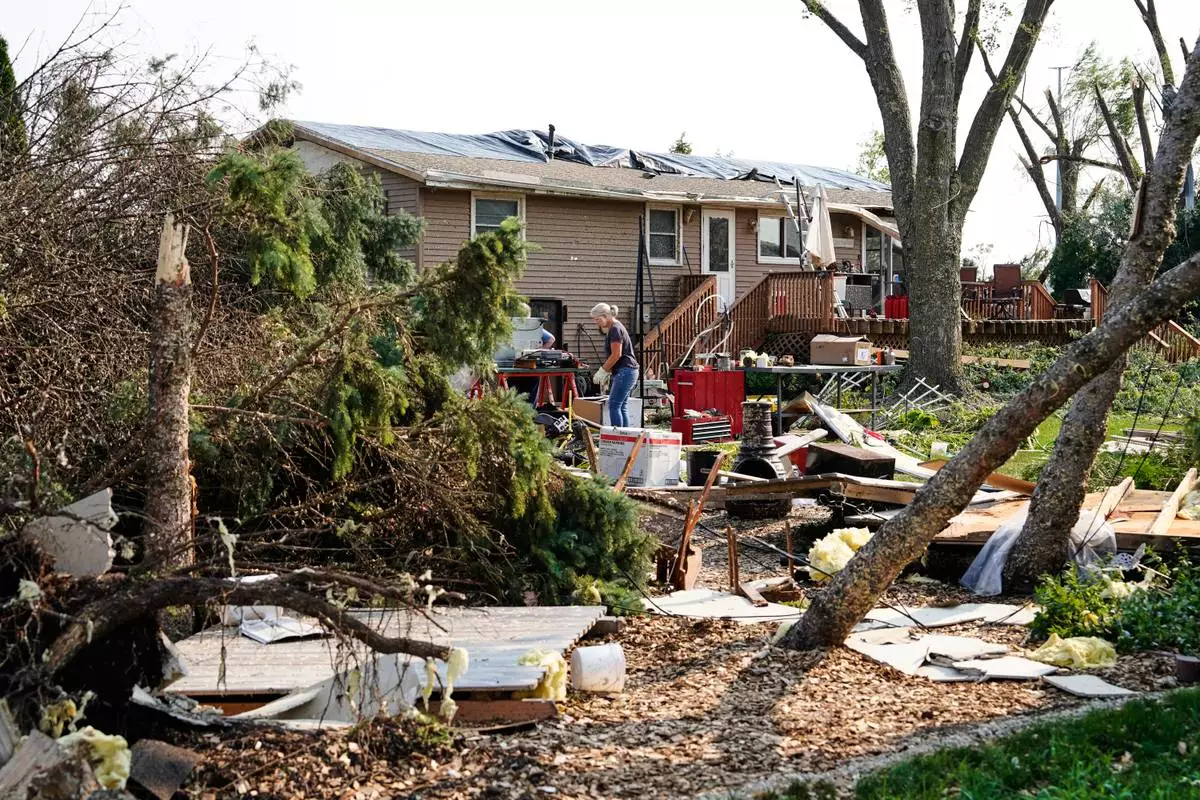
People clean up debris in front of a damaged home after a tornado struck the day before, Tuesday, July 28, 2026, in Appleton, Wis. (AP Photo/Kayla Wolf)