Skip to Content Facebook Feature Image

US OPEN '26: Previous Opens at Shinnecock Hills

Sport

US OPEN '26: Previous Opens at Shinnecock Hills
Sport

Sport

US OPEN '26: Previous Opens at Shinnecock Hills

2026-06-13 18:00 Last Updated At:19:10

A capsule look at the five previous U.S. Open golf championships held at Shinnecock Hills:

Winner: James Foulis.

Score: 152.

Margin: 3 shots.

Runner-up: Horace Rawlins.

Prize: $150.

Summary: Foulis of Scotland won the second U.S. Open as golf was just starting in America. He shot 74 in the final round to break out of a six-way tie for the lead on a Shinnecock Hills course that was only 4,423 yards. There were 35 players in the field, and only 28 finished the 36-hole championship. Most memorable about this U.S. Open was a petition several players signed in support of John Shippen, an African-American, and Oscar Bunn, a Native American. Shippen, a caddie at Shinnecock, was tied for the lead after the first round and still in the mix until taking 11 on the 13th hole. He tied for sixth. Rawlins won the inaugural U.S. Open a year earlier at Newport.

Notable: Shinnecock Hills, one of the five founding golf clubs of the USGA, would wait 90 years before hosting another U.S. Open.

Quotable: “We stood up almost 125 years ago and did the right thing and made sure we were welcoming.” — Mike Davis, CEO of the USGA, on Shippen and Bunn being allowed to play.

Winner: Raymond Floyd.

Score: 279.

Margin: 2 shots.

Runner-up: Chip Beck and Lanny Wadkins.

Prize: $115,000.

Summary: Two months after 46-year-old Jack Nicklaus became the oldest Masters champion, Floyd became the oldest U.S. Open champion at age 43. It was his first U.S. Open title, and he closed with a 4-under 66 to overcome a three-shot deficit against Greg Norman, who faded to a 75. Ten players had at least a share of the lead in the final round. Floyd took the lead with a birdie on the 14th, and he pulled away with another birdie on No. 16. For Norman, it was the second leg of the illustrious “Saturday Slam” when he had the 54-hole lead in all four majors in 1986 and only one the British Open.

Notable: Floyd had only two top 10s in 21 attempts at the U.S. Open until he won at Shinnecock Hills.

Quotable: “The old guys are doing pretty good. Who needs the Senior Tour?” — Nicklaus, on he and Floyd become the oldest champions of the Masters and U.S. Open.

Winner: Corey Pavin.

Score: 280.

Margin: 2 shots.

Runner-up: Greg Norman.

Prize: $350,000.

Summary: Pavin overcame a three-shot deficit in the final round by closing with a 68 to win his first major championship. As usual, it came at the expense of Norman, runner-up in a major for the sixth time. Norman and Tom Lehman shared the lead going into Sunday. Pavin made bogey on the third hole to fall four shots back, but that was his last bogey of the day. He saved par with a 5-foot putt on No. 17, and Norman fell two shots behind when he bogeyed the 17th. Pavin wrapped it up with a 4-wood from 228 yards onto the green to 6 feet. He missed the putt, but Norman, who shot 73, couldn’t catch him. Lehman shot 74 and finished third. It was the first of four straight years that Lehman played in the final group at the U.S. Open.

Notable: Phil Mickelson played the par-5 16th in 6-over par for the week and finished four shots behind.

Quotable: “I got tired of hearing the question. It wears on you.” — Pavin on no longer being asked about the best to have never won a major.

Winner: Retief Goosen.

Score: 276.

Margin: 2 shots.

Runner-up: Phil Mickelson.

Prize: $1,125,000.

Summary: Goosen won his second U.S. Open in three years and sent Mickelson to more heartache. The course began to bake out on the weekend and Goosen had one of three rounds under par on Saturday to take the lead. It got out of control on Sunday, and 28 players couldn’t break 80. It came down to Goosen and Mickelson over the back nine. Mickelson briefly took the lead with a birdie on the 16th, only for Goosen in the final group to match him. It turned on the par-3 17th when Mickelson hit into a bunker, blasted out to 5 feet and three-putted for a double bogey. It was the third runner-up finish for Lefty in the U.S. Open. Three more would follow.

Notable: The average score Sunday was 78.7, the highest for a final round in the U.S. Open since windswept Pebble Beach in 1972.

Quotable: “I played some of the best golf of my life and still couldn’t shoot par. So you tell me.” — Phil Mickelson, on whether the course was unfair.

Winner: Brooks Koepka.

Score: 281.

Margin: 1 shot.

Runner-up: Tommy Fleetwood.

Prize: $2,160,000

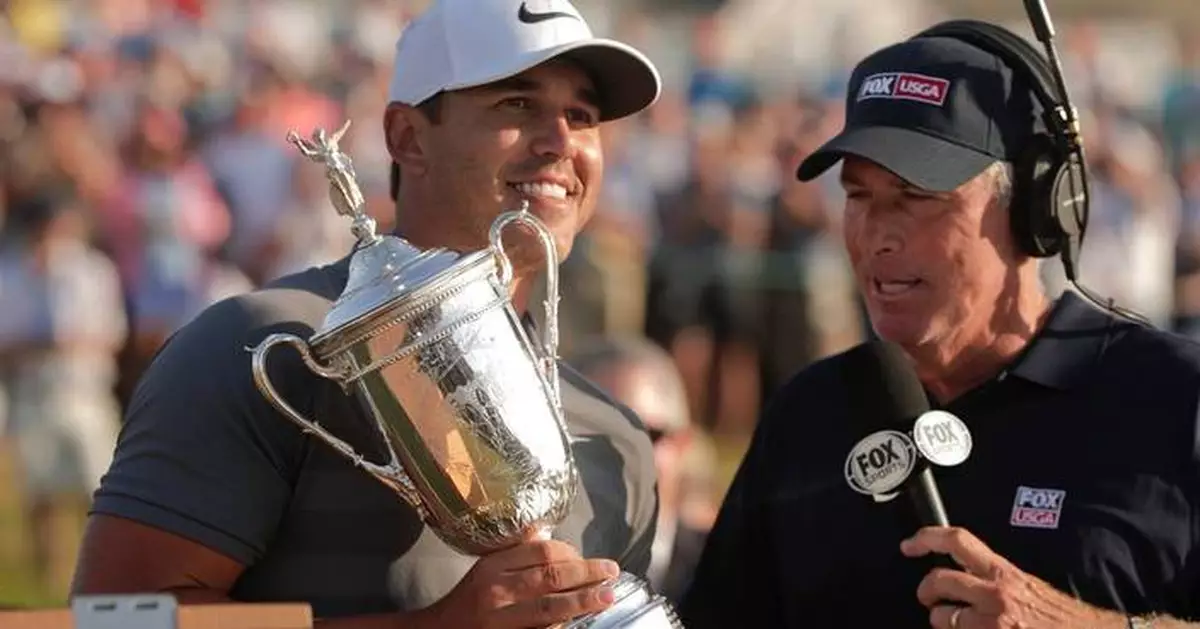
Summary: Koepka became the first repeat winner of the U.S. Open when he closed with a 68 to hold off Tommy Fleetwood, whose 63 was largely a product of the USGA softening the course to atone for conditions that were borderline unplayable Saturday afternoon. Koepka had three birdies on a five-hole stretch to pull away early from a four-way tie for the lead. It was the second straight time at Shinnecock Hills the USGA was criticized for letting the golf course get too extreme. Phil Mickelson purposely swatted a moving ball on the 13th green Saturday to avoid it rolling off the green again.

Notable: Curtis Strange was the last back-to-back U.S. Open champion. He spent most of Sunday walking with Koepka as the ground reporter for Fox Sports. “Hell of a job,” Strange told him on the 18th green.

Quotable: “You were seeing shots that were well played and not rewarded. It was a very tough test, but probably too tough this afternoon.” — USGA executive director Mike Davis on the Saturday setup where the greens were so baked players were hitting putts off the green.

AP golf: https://apnews.com/hub/golf
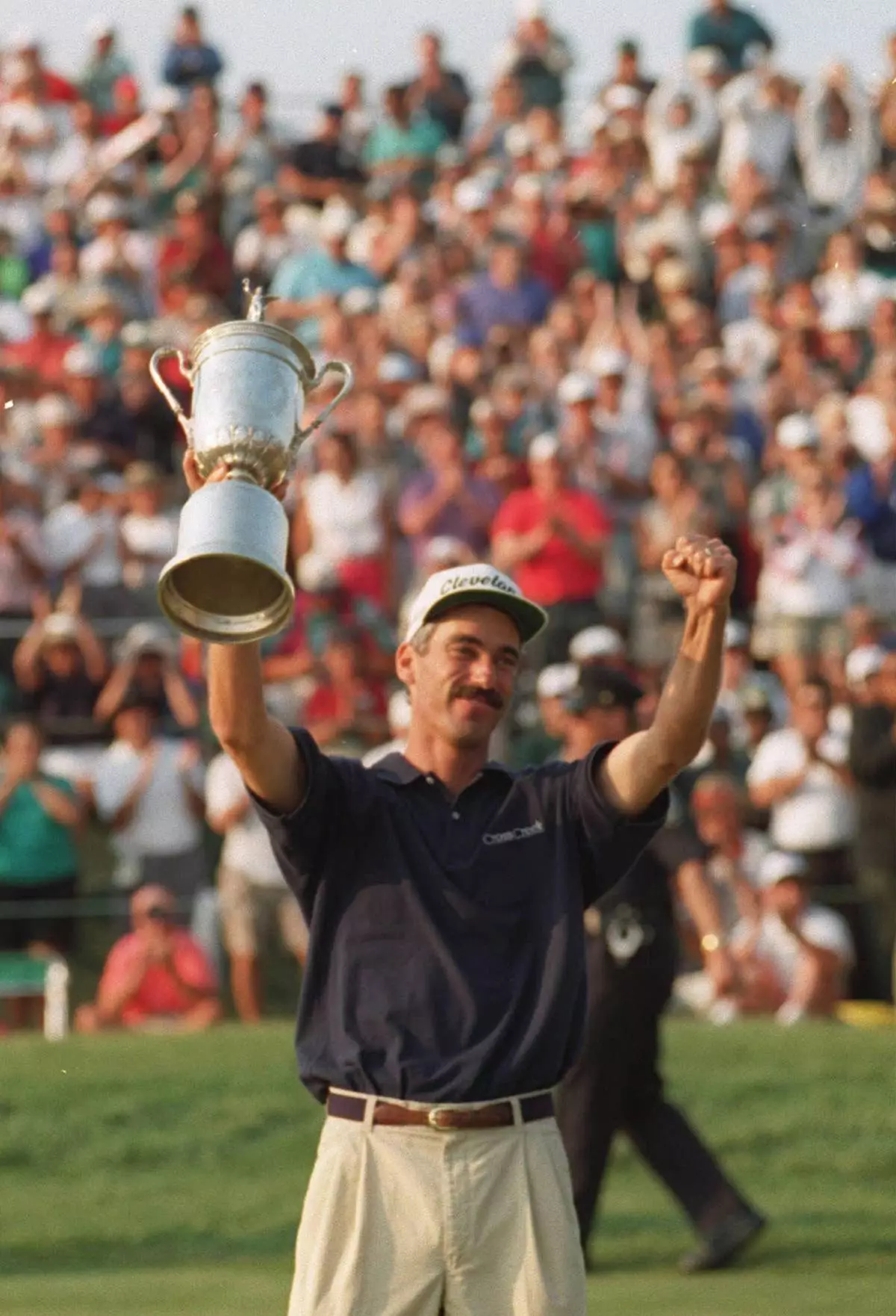
FILE - Corey Pavin holds the trophy on the 18th green after winning the 95th U.S. Open at the Shinnecock Hills Golf Club in Southampton, N.Y., Sunday, June 18, 1995. (AP Photo/Charles Rex Arbogast,File)
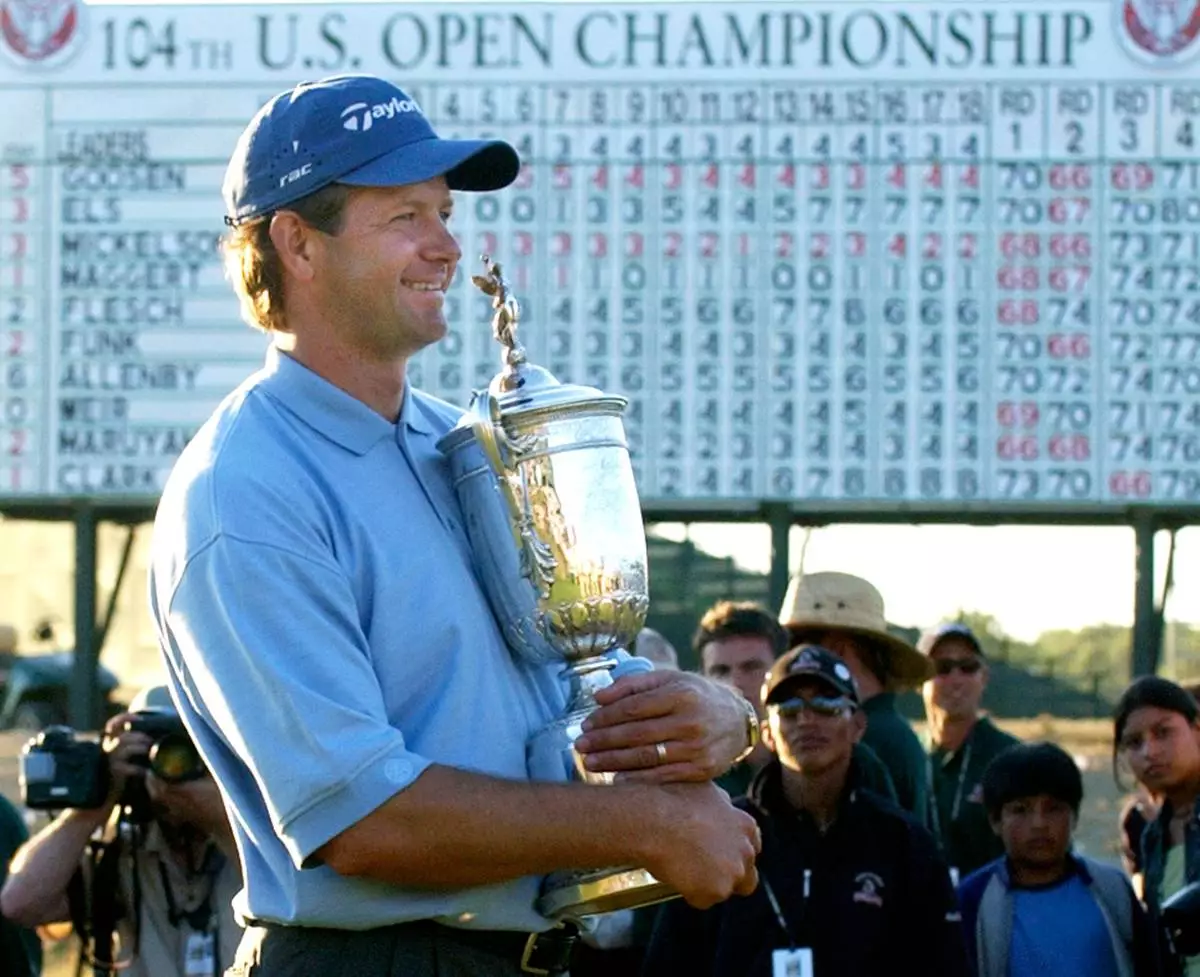
FILE - Corey Pavin holds the trophy on the 18th green after winning the 95th U.S. Open at the Shinnecock Hills Golf Club in Southampton, N.Y., Sunday, June 18, 1995. (AP Photo/Charles Rex Arbogast,File)

FILE - Retief Goosen, of South Africa, holds the U.S. Open Championship trophy Sunday, June 20, 2004, at Shinnecock Hills Golf Club in Southampton, N.Y. (AP Photo/Charles Krupa,File)
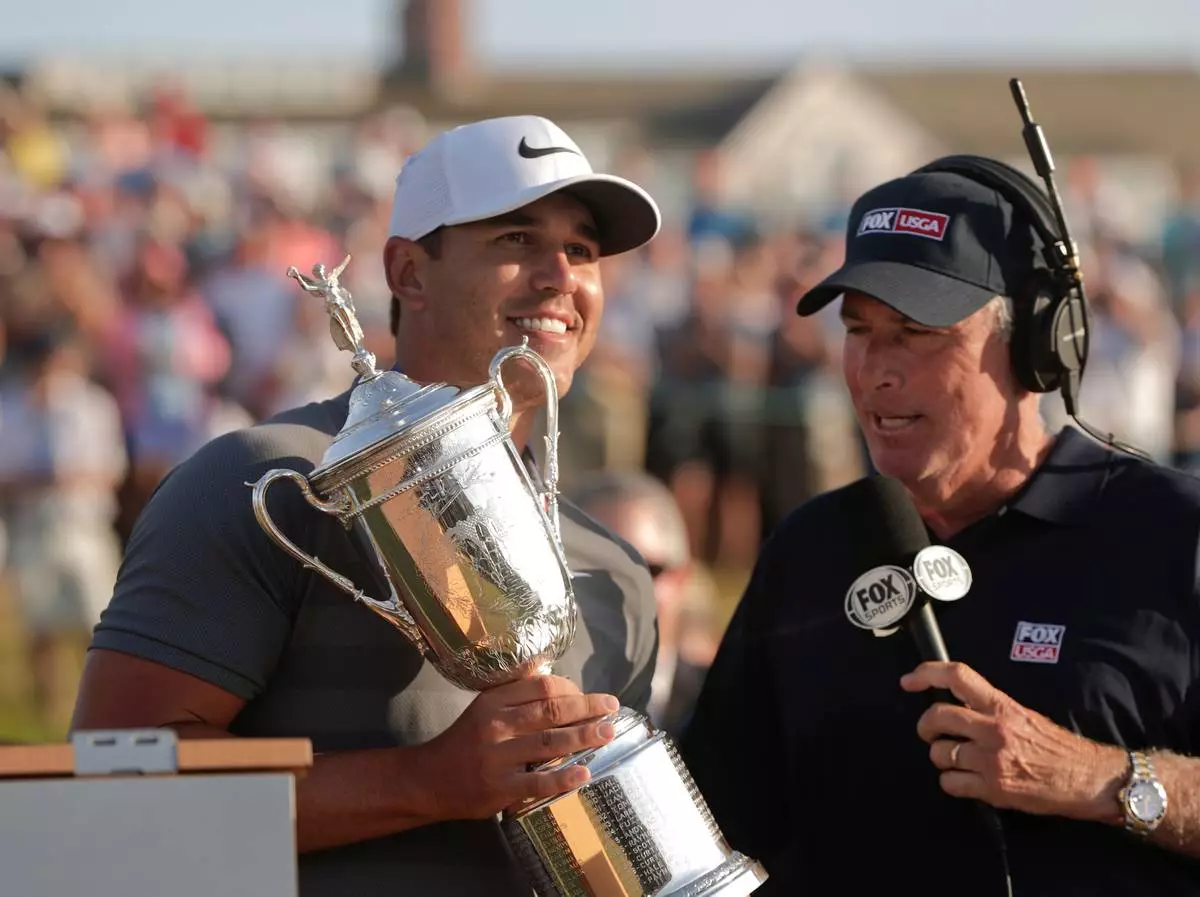
FILE - Retief Goosen, of South Africa, holds the U.S. Open Championship trophy Sunday, June 20, 2004, at Shinnecock Hills Golf Club in Southampton, N.Y. (AP Photo/Charles Krupa,File)

FILE - Brooks Koepka is interviewed by Curtis Strange after winning the U.S. Open Golf Championship, Sunday, June 17, 2018, in Southampton, N.Y. (AP Photo/Julio Cortez,File)

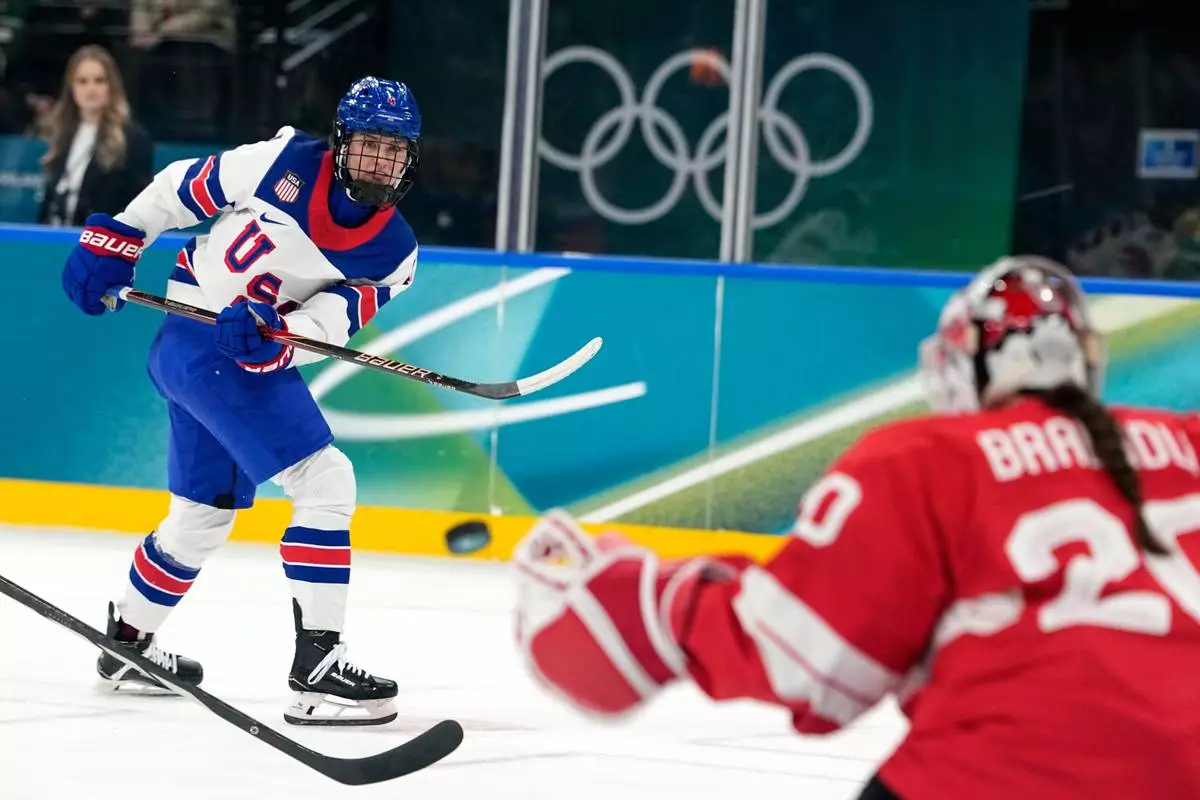
FILE - Brooks Koepka is interviewed by Curtis Strange after winning the U.S. Open Golf Championship, Sunday, June 17, 2018, in Southampton, N.Y. (AP Photo/Julio Cortez,File)
Having devoted much of her childhood and teenage years to her single-minded intention of becoming an elite hockey player, defender Caroline Harvey had little time to stop and consider there being more to life than skates, sticks and pucks.

It wasn’t until Harvey was sidelined by a left knee injury early into her sophomore season at Wisconsin when the realization flickered.

“It taught me how to have more balance,” Harvey said of the time she missed rehabbing an injured medial patellofemoral ligament in the fall of 2023.

Rather than review film to dissect her performance as she would do most nights, Harvey learned to turn off her phone. She got into yoga, started doing breathing exercises, took up cooking and even thrifting. Just as important was Harvey watching from the stands to gain perspective and find her voice in providing feedback to teammates during and after games.

“I am grateful for it now looking back, and as much as it sucked,” she said. “It did teach me a lot about myself that I didn’t know before. And it helped me mature a lot.”

At 23, Harvey already is one of the most accomplished players in women's hockey. She is coming off a senior season in which she won a third NCAA title and was named college hockey’s MVP. Internationally, she was the Olympic tournament’s MVP while winning gold representing the U.S. at the Milan Cortina Games in February.

Next up is turning pro. Harvey leads what’s regarded as the PWHL’s most talented prospect class and is projected to go first in the draft in Detroit on Wednesday.

Vancouver holds the No. 1 pick.

The bumper crop of prospects features five U.S. Olympic teammates, including Wisconsin’s Laila Edwards and Minnesota forward Abbey Murphy, plus several European Olympians.

There's no doubt in U.S. coach John Wroblewski's mind about who deserves to go first.

“The accolades that she’s racked up before she’s even graduated college is unprecedented,” he said. “It’s a no-brainer.”

Harvey is a strong and gifted skater who is rarely out of position defensively and a deft playmaker. With two goals and seven assists in seven games, she had nine points at the Olympics to tie for the tournament lead. And she completed her college career with 54 goals and 201 points in 147 games, including consecutive 60-point seasons.

“She is the most beautiful, fastest skater I’ve ever seen,” said U.S. teammate and PWHL veteran Hayley Scamurra, who also believes Harvey will be chosen first. “Just unbelievable. She’s such a great player, and I cannot wait to see her in the pro league.”

Harvey is from Pelham, New Hampshire, and got into hockey as a youngster after attending her older brother’s practices. Her father would rent out rink time and the two would make the half-hour drive to North Andover, Massachusetts, for individual sessions. By high school, Harvey moved to Rochester, New York, to attend the BK Selects hockey academy.

Harvey delayed her first college season to make her Olympic debut at the 2022 Beijing Games.

The U.S. settled for silver in a tournament that proved to be a disappointment for Harvey. She was held without a point and benched for a majority of the knockout rounds after losing the faith of former coach Joel Johannson.

In replacing Johannson, Wroblewski identified Harvey’s abilities and immediately began building her confidence by encouraging her to play without fear.

In the four years since, Wroblewski has watched a once shy and soft-spoken Harvey grow into an assertive player and person.

“I think we’re just getting a glimpse of what that looks like in her maturation process,” he said.

“It just so happens that this young woman is supremely gifted with athleticism and electricity and everything that goes into being a superstar hockey player. And it all meets up with the fact that she loves what she’s doing and destined to be here,” Wroblewski added. “It’s a rare quality that you find in superstar athletes. And (she’s) got the je ne sais quoi.”

Harvey has become more comfortable talking about herself, even though she declines to guess when she’ll be drafted.

“They can’t honestly go wrong with who they pick because this draft class is just so deep,” she said. “And I’m just going to be grateful that night if I hear my name called.”

It’s not a matter of if.

Harvey can reflect on the long hours she’s put in on the ice, in weight rooms and playing far away from home to appreciate what she has so far accomplished.

“It’s being satisfied in a sense of like, yes, you can look back at the accomplishments, but you just always want more,” Harvey said, no different from how she's approached perfecting her game. “Part of it's I don't want to look back and be like, ‘Oh, I could have done better.’ I don't want to ever underachieve.”

AP women’s hockey: https://apnews.com/hub/womens-hockey

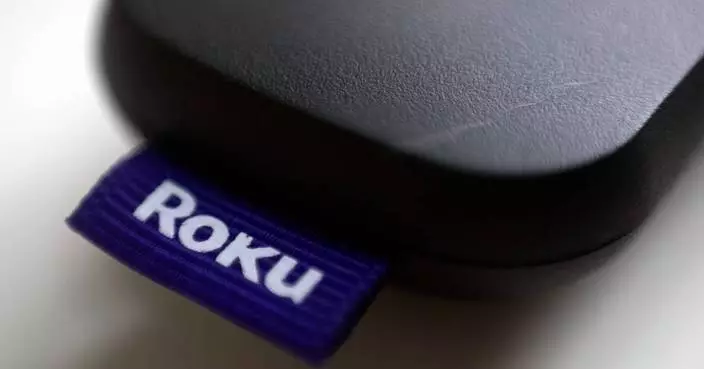
FILE - United States' Caroline Harvey shoots on goal during a preliminary round match of women's ice hockey between Switzerland and United States at the 2026 Winter Olympics, in Milan, Italy, Feb. 9, 2026. (AP Photo/Hassan Ammar, File)

FILE - United States' Caroline Harvey shoots on goal during a preliminary round match of women's ice hockey between Switzerland and United States at the 2026 Winter Olympics, in Milan, Italy, Feb. 9, 2026. (AP Photo/Hassan Ammar, File)

Recommended Articles