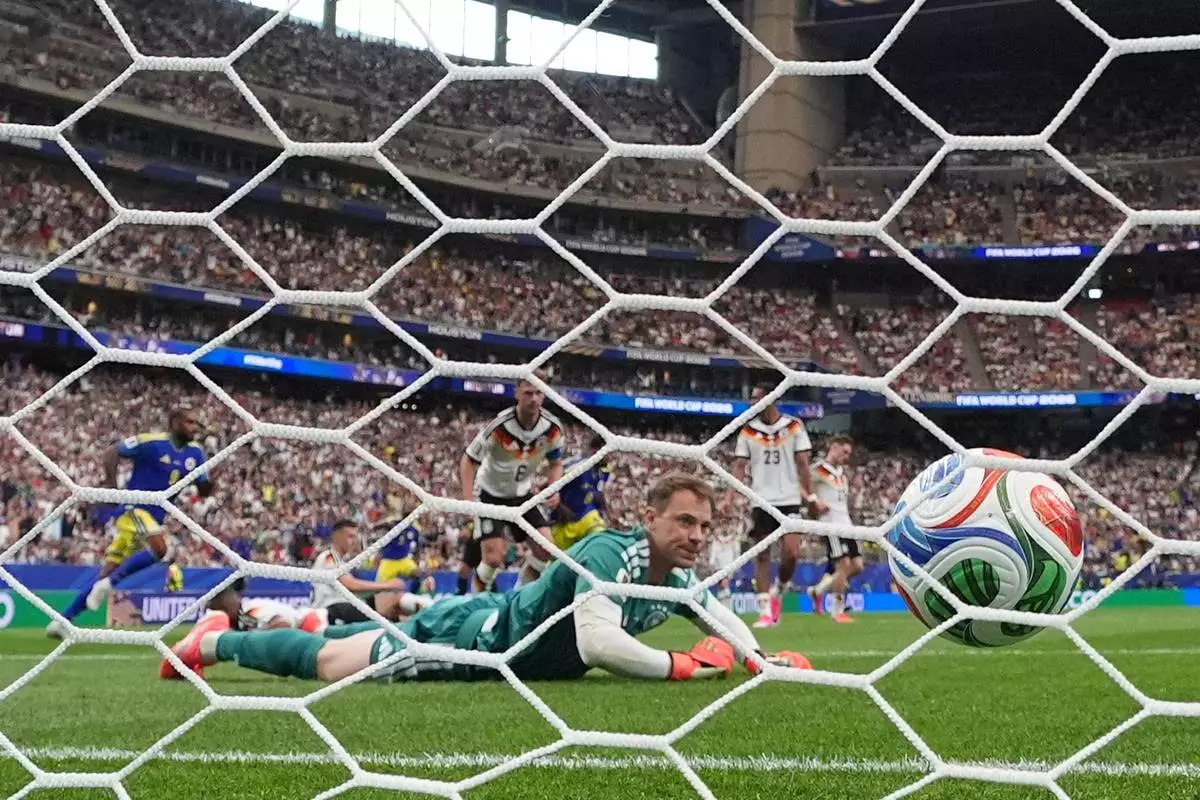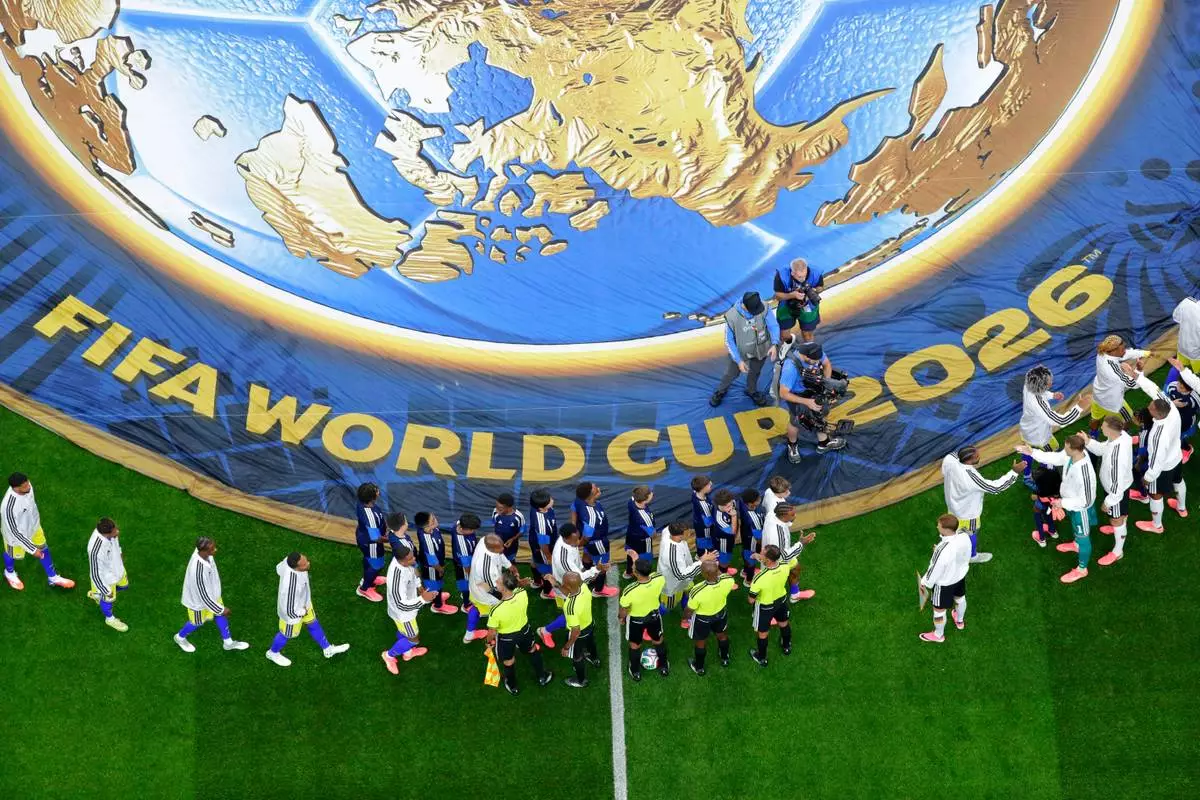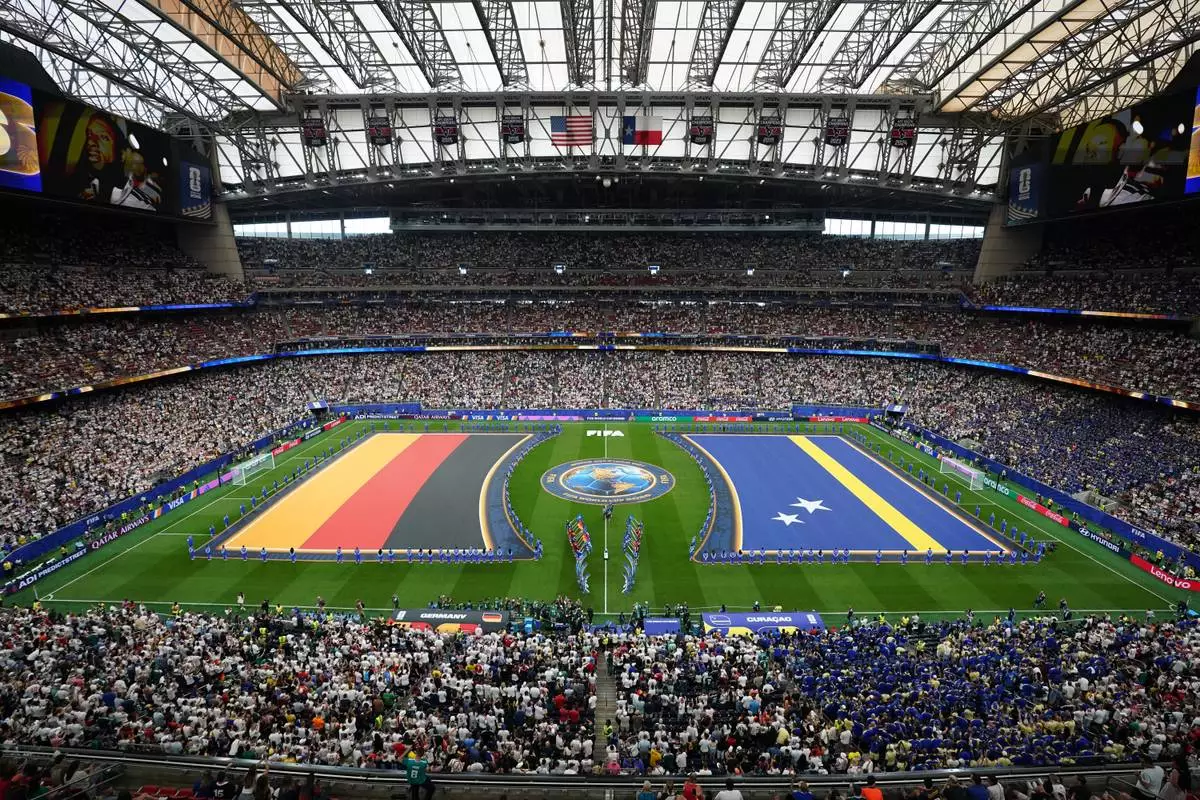
HOUSTON (AP) — Germany's seven-goal rout of Curaçao in its World Cup opener on Sunday was the perfect outcome to overshadow a close first half and boost the team after consecutive group-stage exits for the four-time champions.
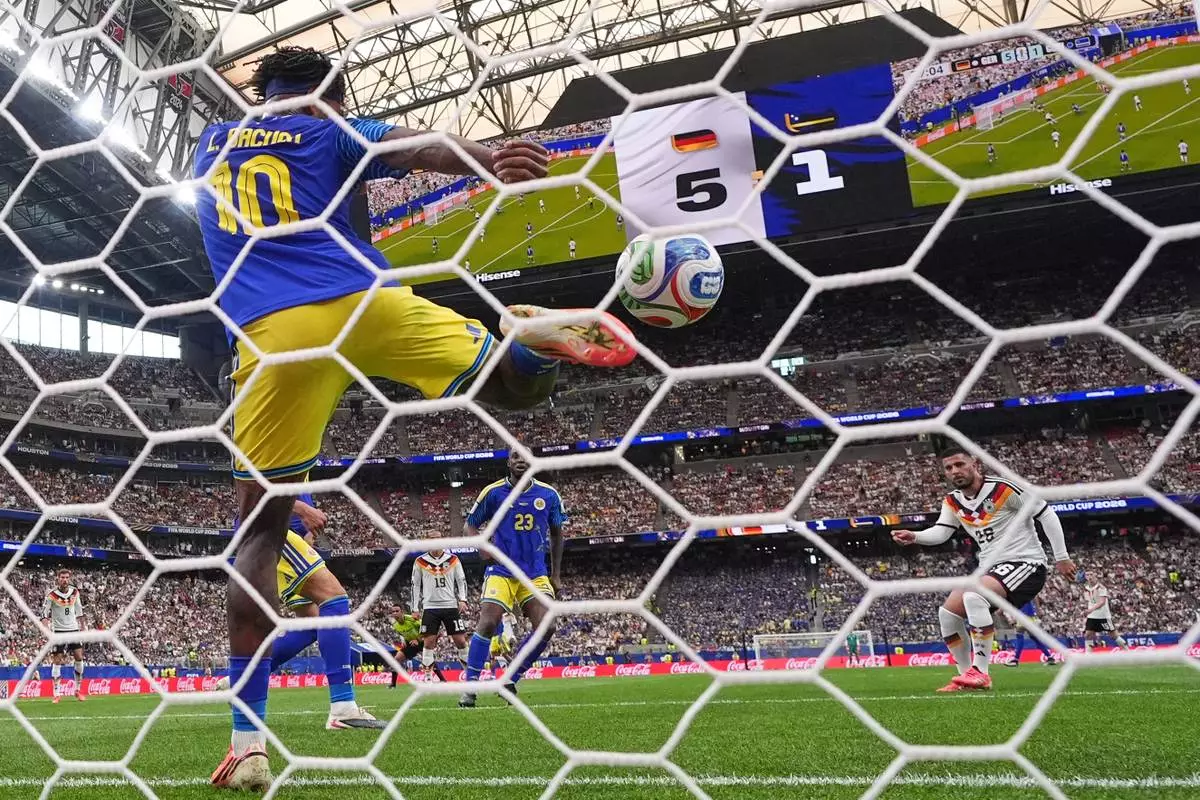
Kai Havertz scored two goals as Germany pulled away from World Cup first-timer Curaçao and piled it on in a 7-1 win in group play. The smallest country to ever appear in the tournament hung tight at 1-1 until the 38th minute.
Click to Gallery

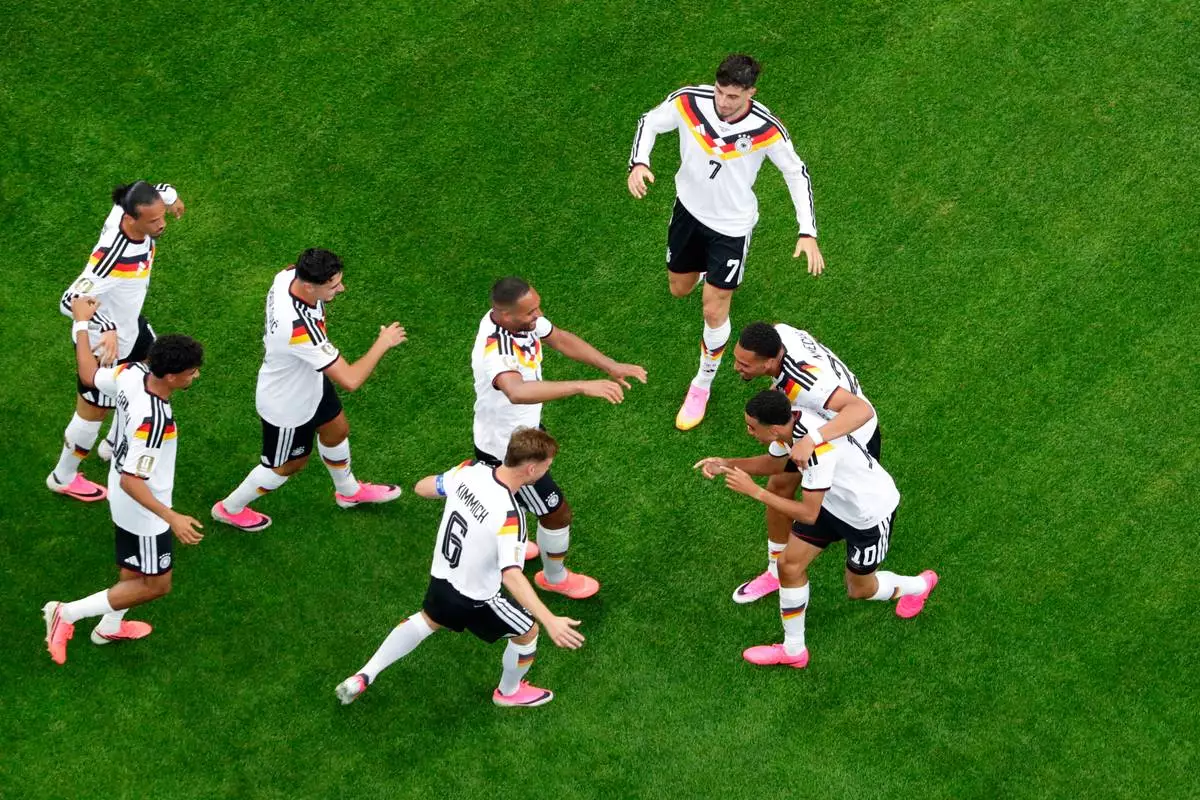
Germany's Kai Havertz celebrates with teammate Jonathan Tah, left, after scoring his side's third goal during the World Cup Group E soccer match between Germany and Curacao in Houston, Sunday, June 14, 2026. (AP Photo/Karen Warren)

Germany's Nico Schlotterbeck (15) celebrates after scoring his side's second goal during the World Cup Group E soccer match between Germany and Curacao in Houston, Sunday, June 14, 2026. (AP Photo/Eric Smith)
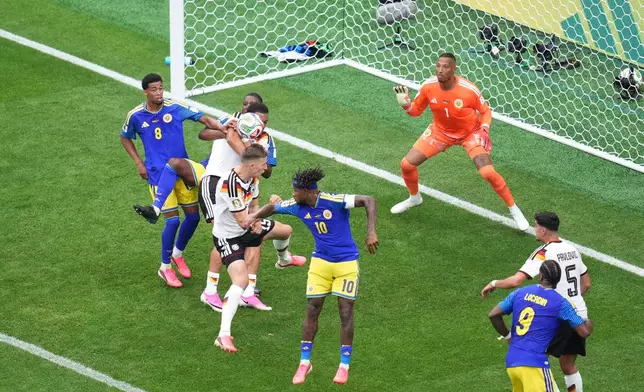
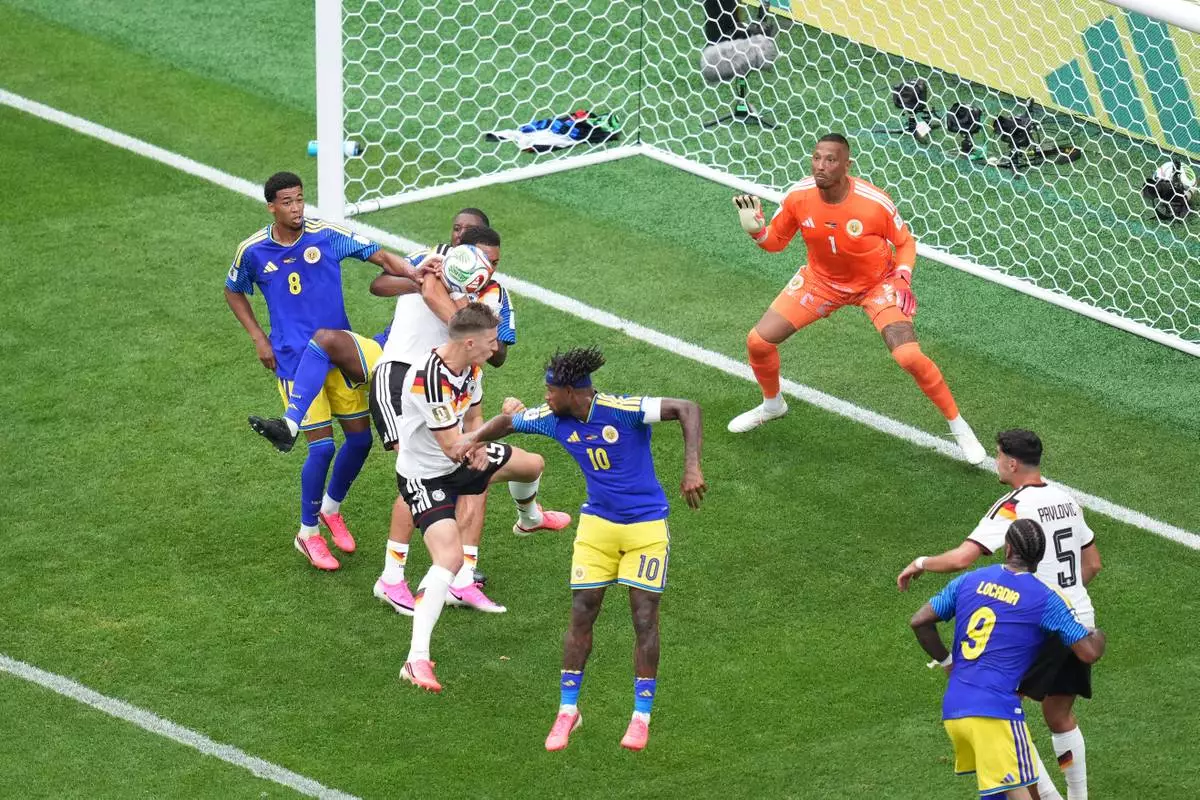
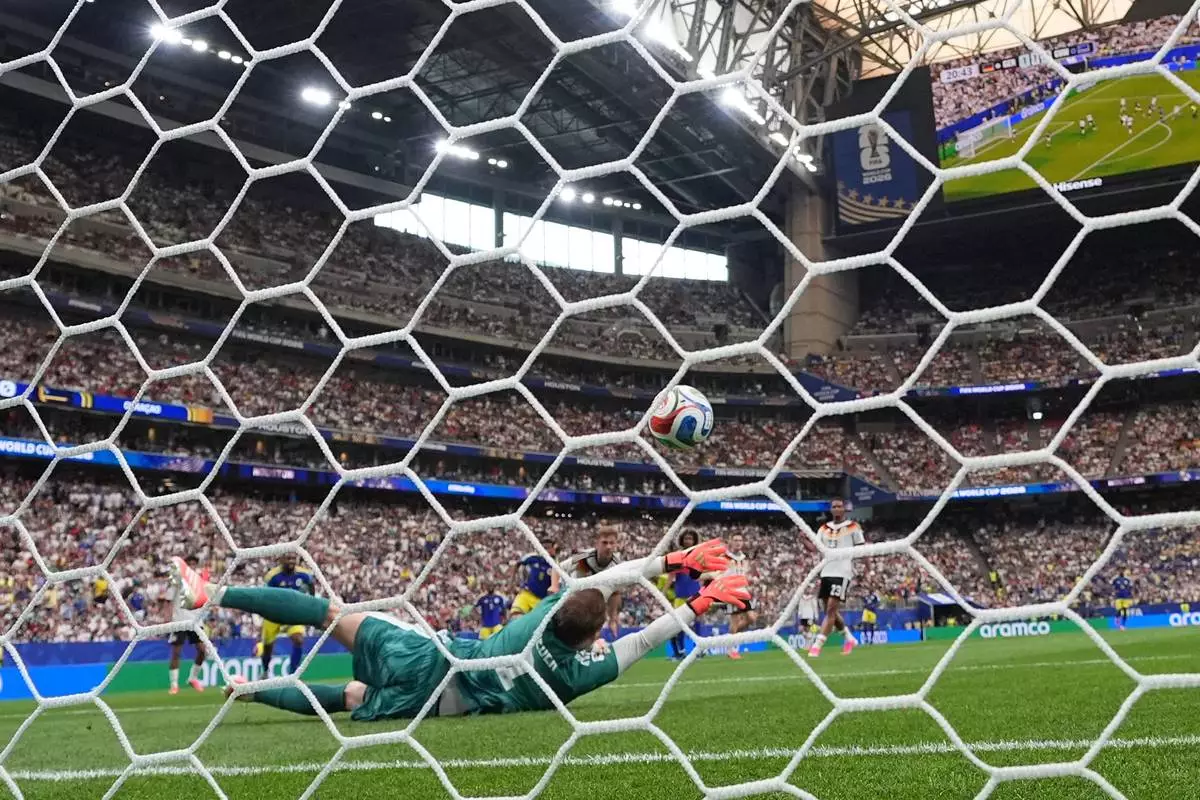
Germany's Nico Schlotterbeck (15) scores their second goal against Curaçao goalkeeper Eloy Room (1) during the World Cup Group E soccer match between Germany and Curacao in Houston, Sunday, June 14, 2026. (AP Photo/Eric Smith)
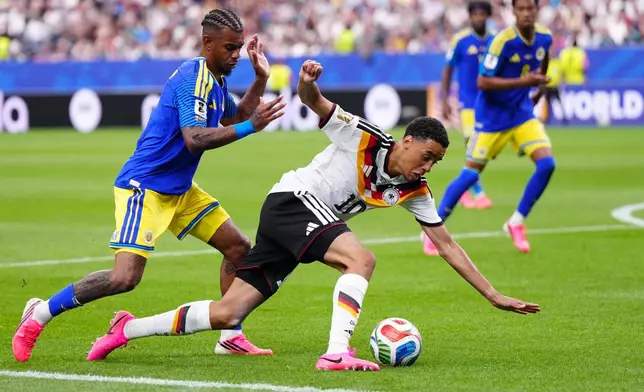
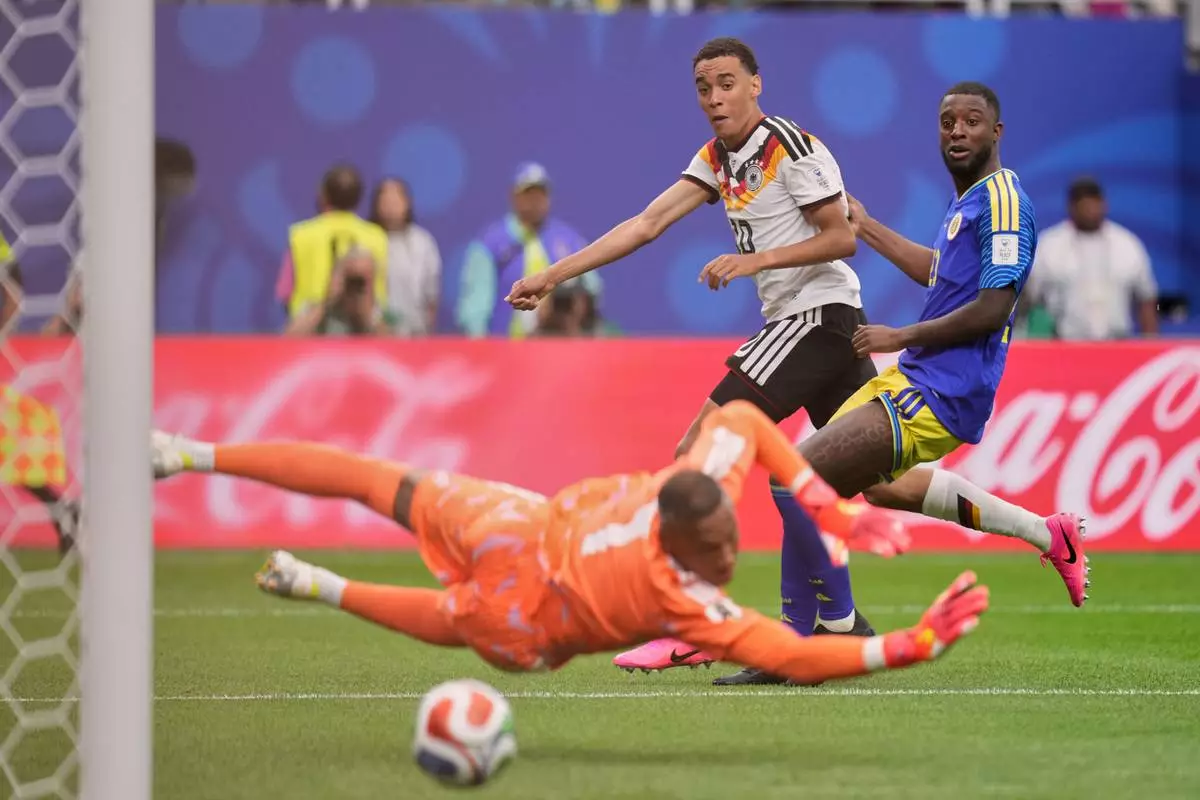
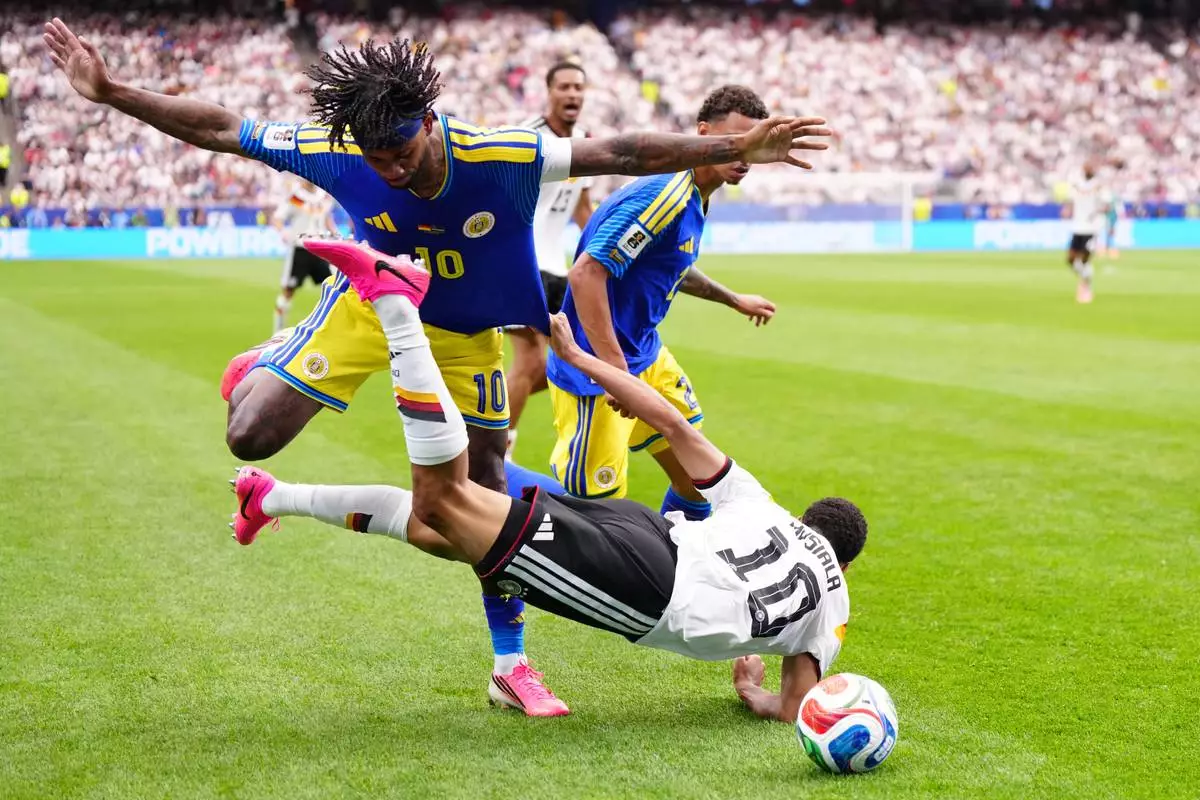
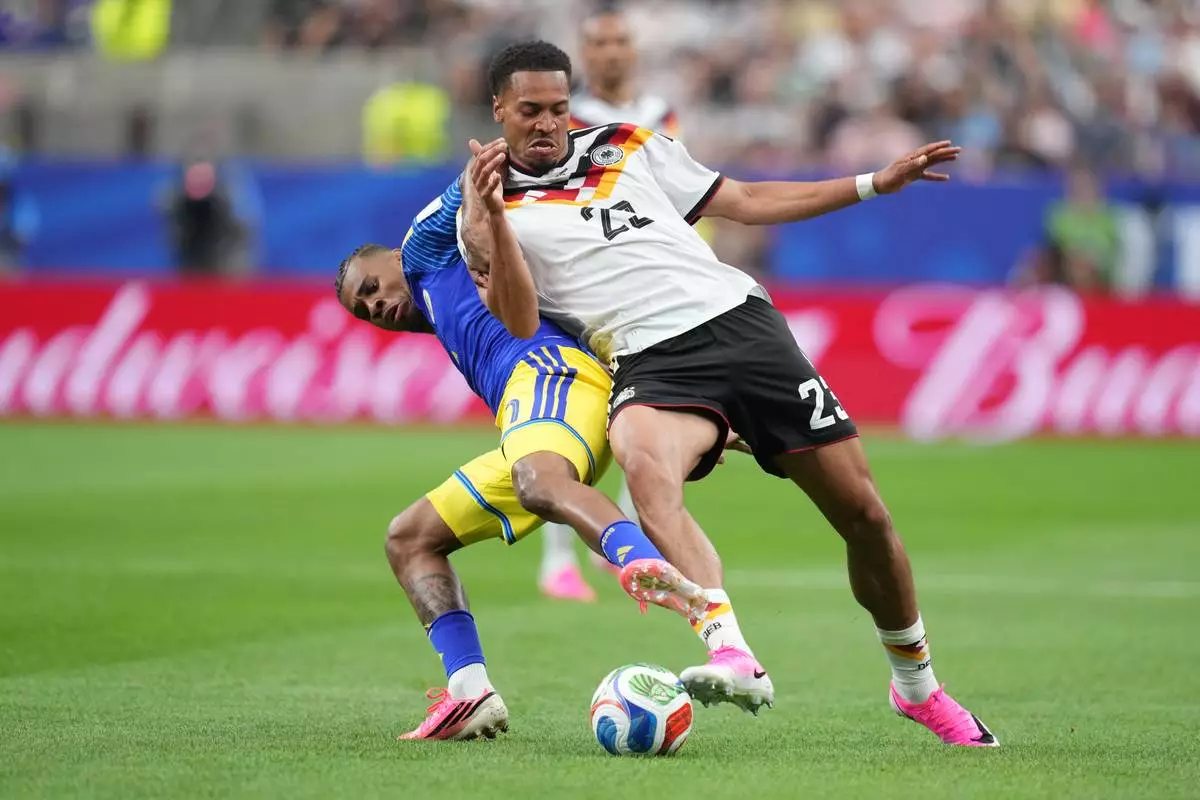
Germany's Jamal Musiala falls to the ground in front of Curaçao's Juninho Bacuna during the World Cup Group E soccer match between Germany and Curacao in Houston, Sunday, June 14, 2026. (AP Photo/Karen Warren)
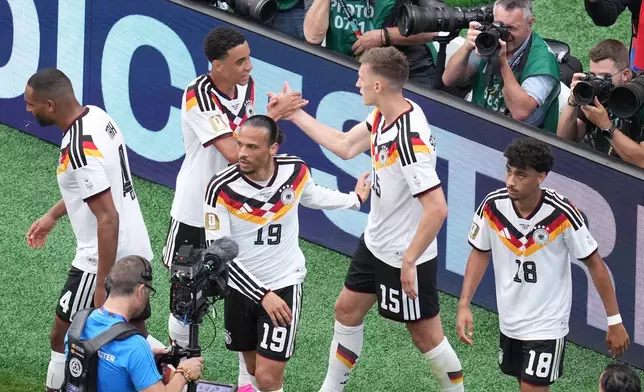
Germany's Nico Schlotterbeck (15) celebrates with teammates after scoring his side's second goal during the World Cup Group E soccer match between Germany and Curacao in Houston, Sunday, June 14, 2026. (AP Photo/Eric Smith)
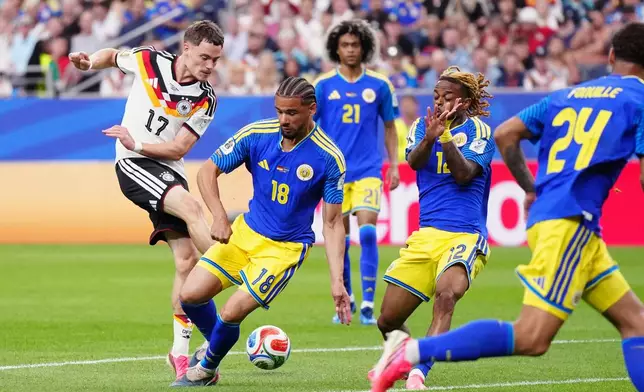
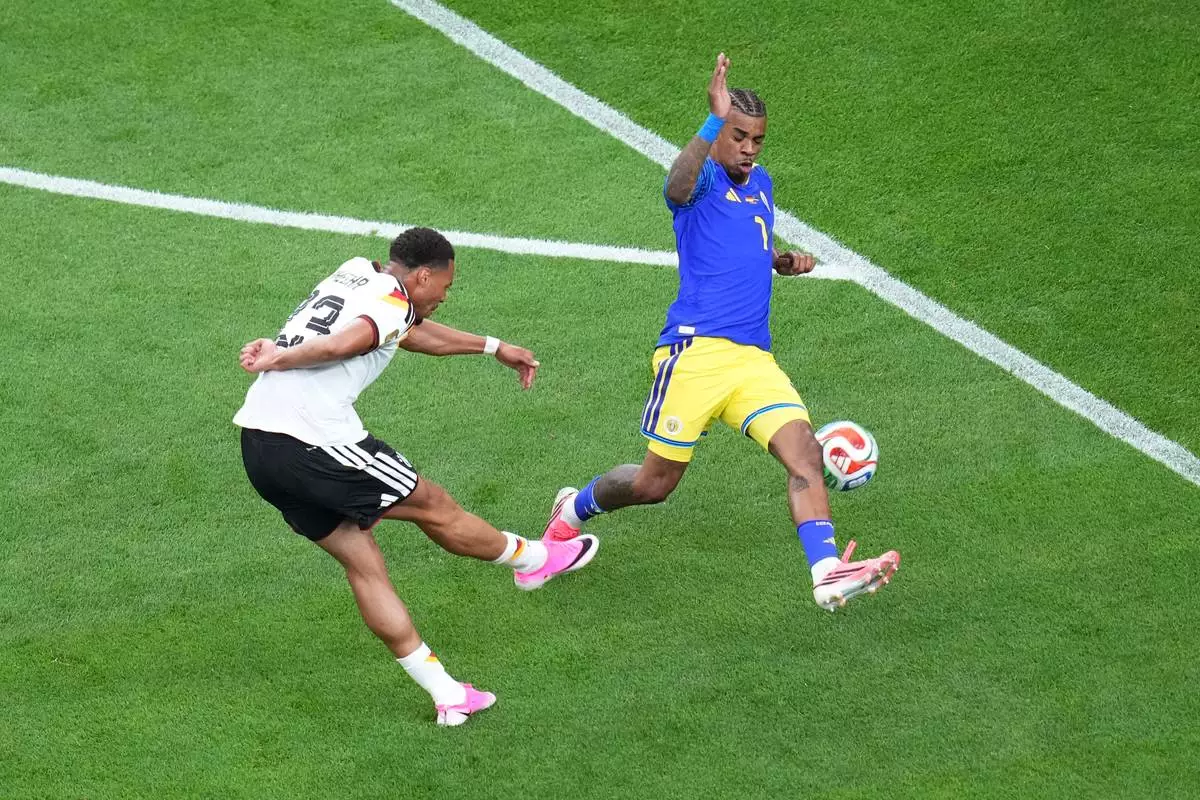
Germany's Florian Wirtz, left, attempts a shot at goal during the World Cup Group E soccer match between Germany and Curacao in Houston, Sunday, June 14, 2026. (AP Photo/Karen Warren)
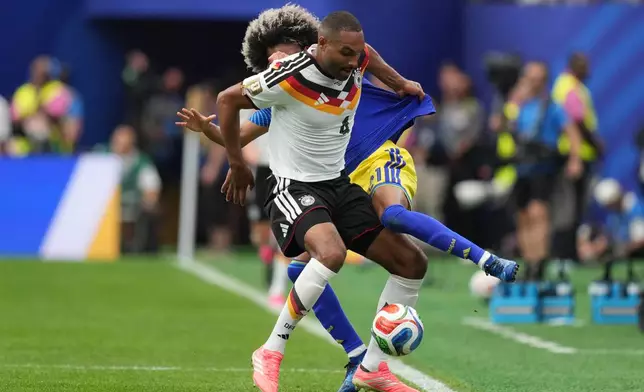
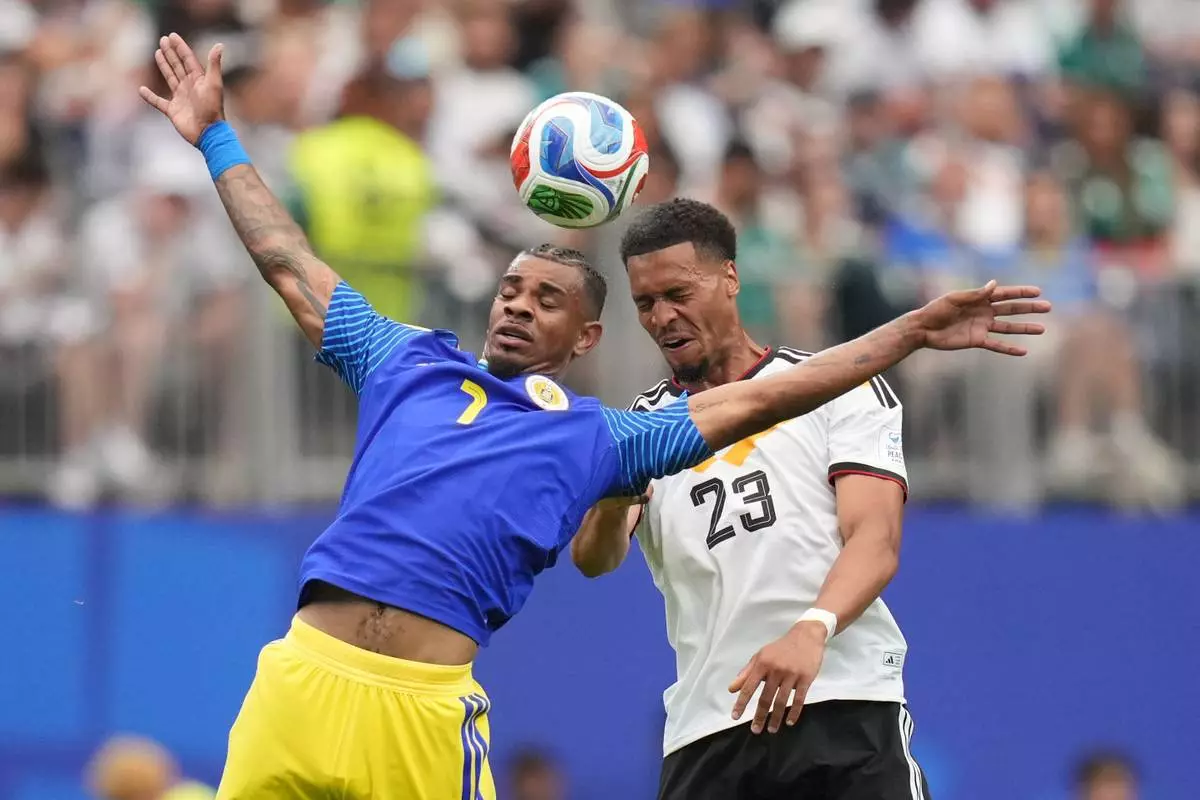
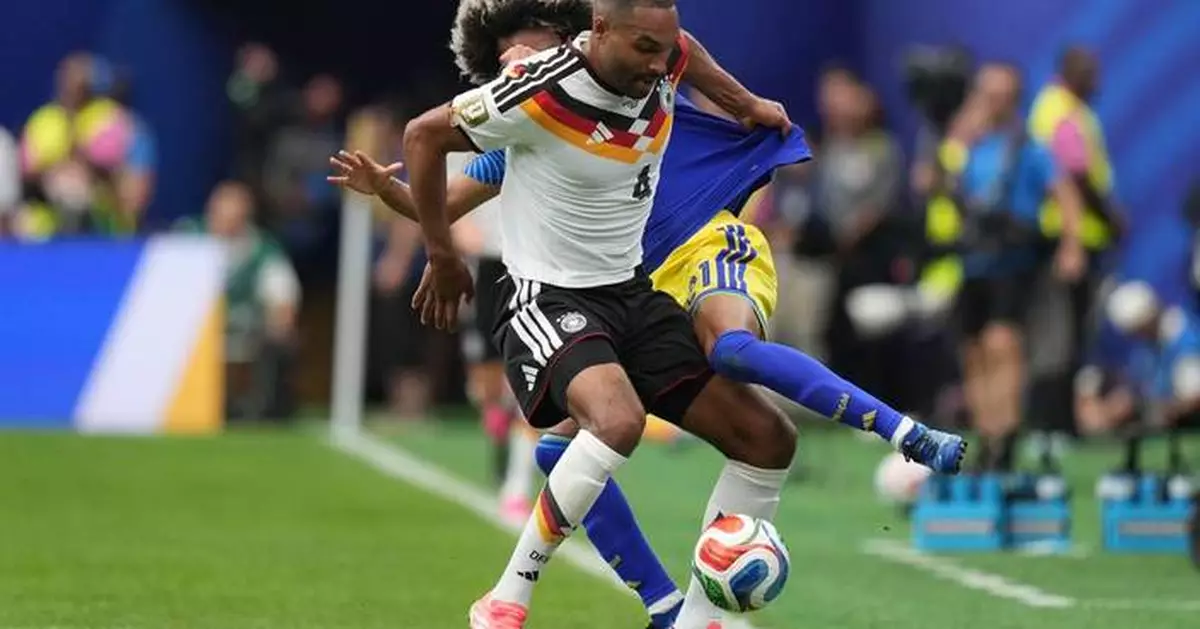
Germany's Jonathan Tah, front , and Curaçao's Tahith Chong fight for the ball during the World Cup Group E soccer match between Germany and Curacao in Houston, Sunday, June 14, 2026. (AP Photo/Eric Gay)
“We really needed this convincing win,” coach Julian Nagelsmann said. “We needed this self-confidence. It was there but it definitely grew.”
He said Sunday's display was important for the country's fans.
“We have to show them that we can perform and we have to have the confidence,” he said. “I think we’re in a better spot than we were entering this match.”
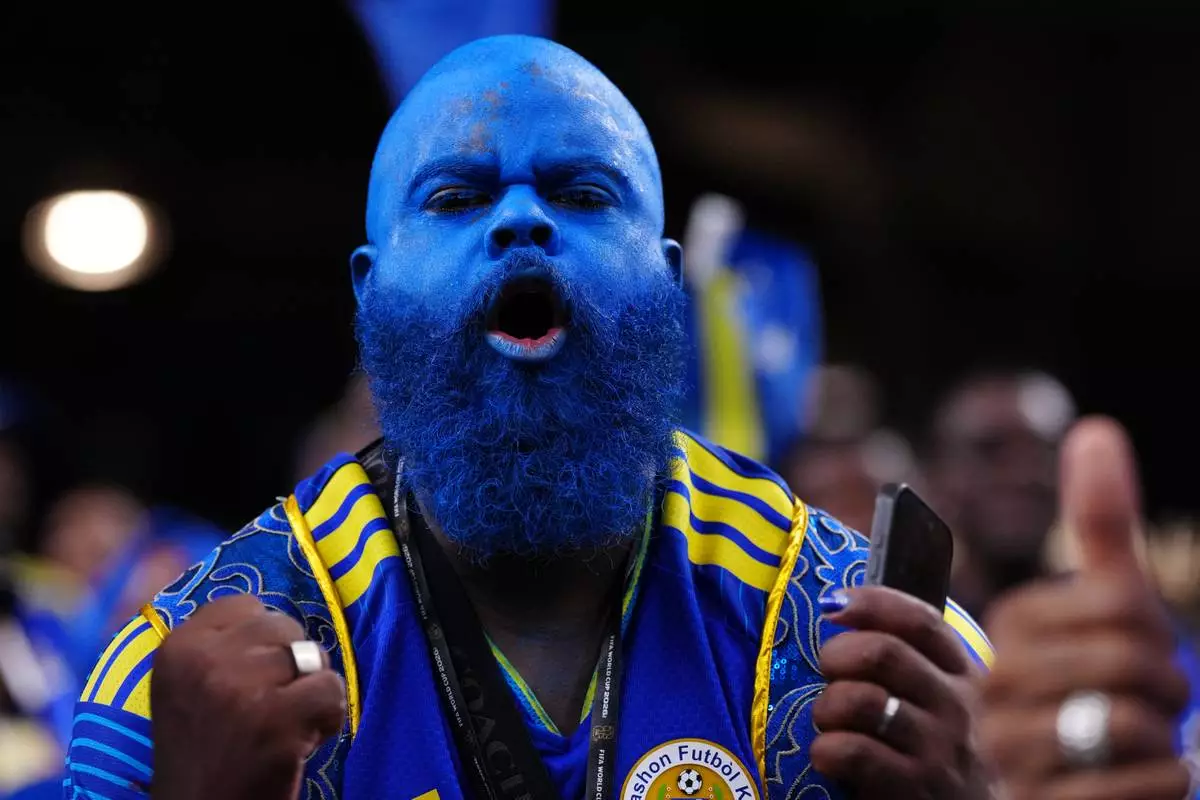
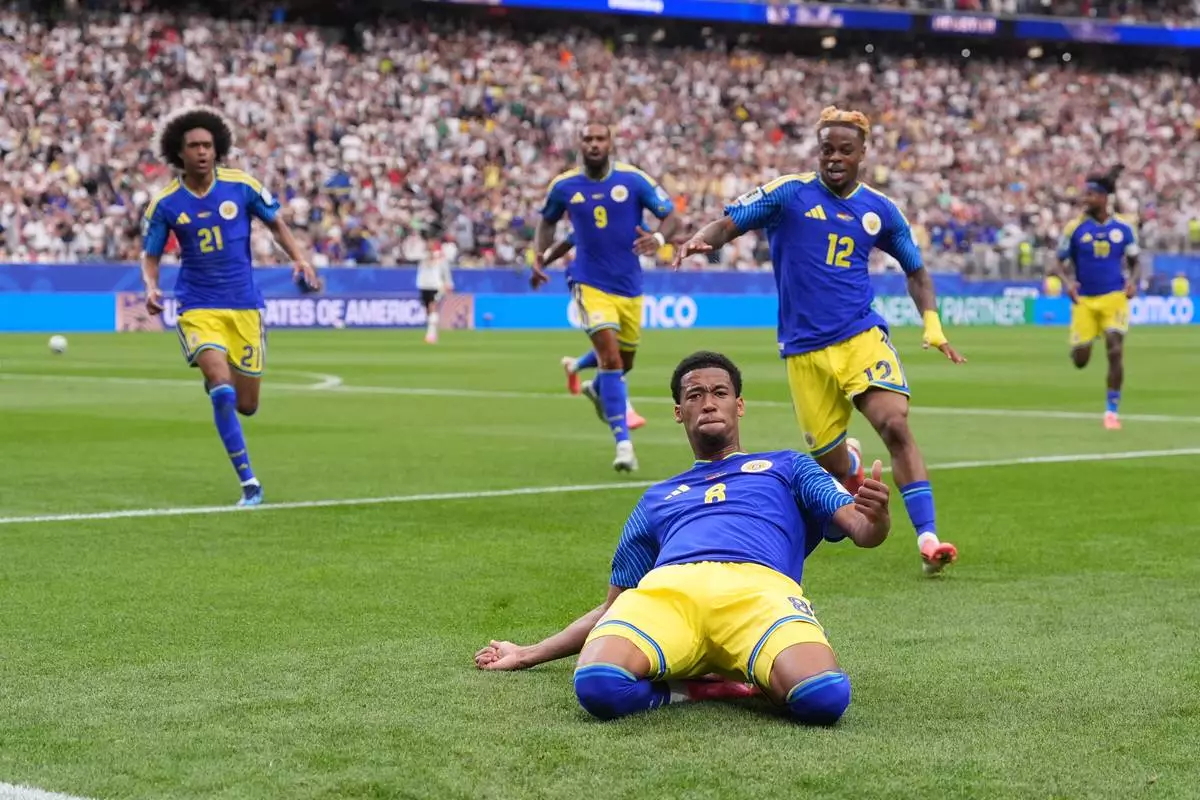
Livano Comenencia tied it at 1-1 with his left-footed shot through traffic from the center of the box in the 21st minute to give Curaçao its first goal in the tournament and send fans of the tiny Caribbean nation into a frenzy.
“Even though it wasn’t me, it felt like it was me, it was all of us, the whole island, everybody,” Curaçao's Jearl Margaritha said. “We screamed our lungs out. So we were happy.”
It was all Germany after that with the team regaining the lead on Nico Schlotterbeck’s header off Nathaniel Brown’s corner kick in the 38th.
“One team has very high expectations and the other one doesn’t and that’s a bit tricky,” Nagelsmann said.
The six-goal margin was well short of the World Cup record of nine, which has happened three times, most recently when Hungary beat El Salvador 10-1 in 1982. And the performance from the Germans was much more expected than the last time they won 7-1 in a World Cup, beating host Brazil in the 2014 semifinals.
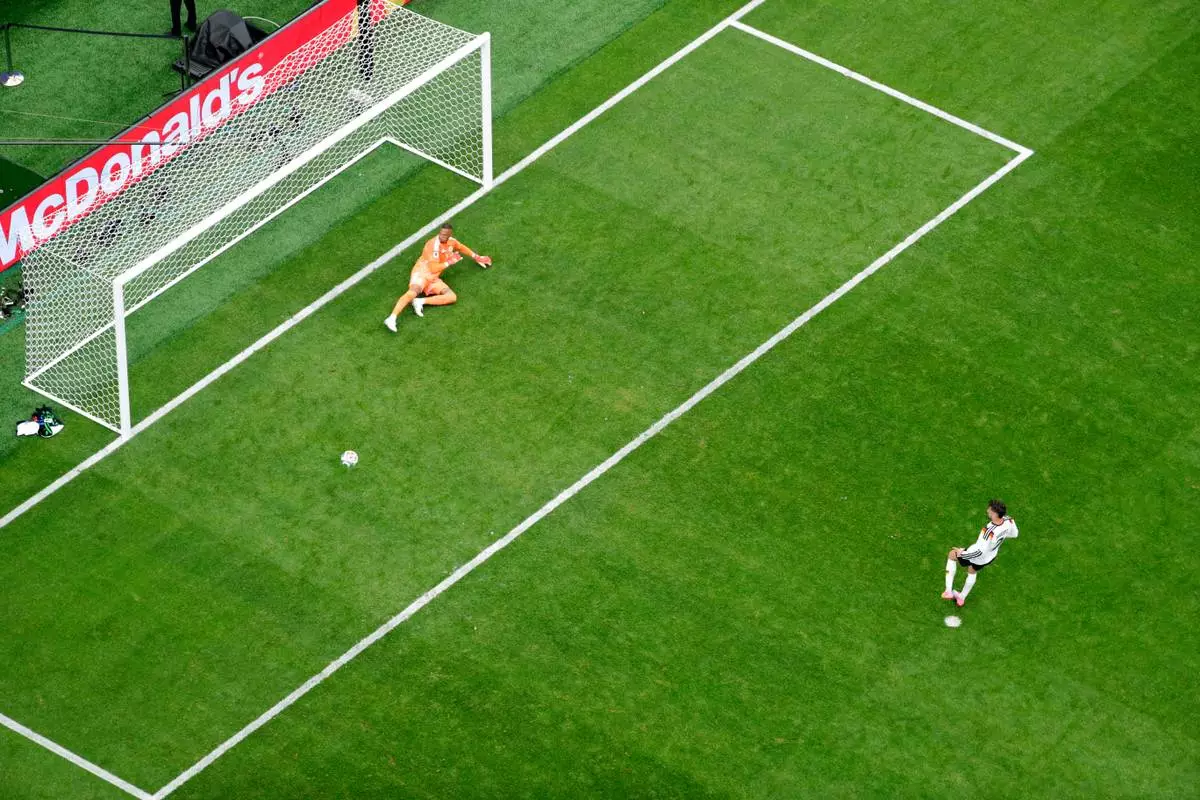
Havertz connected on a penalty shot into the left goal in first-half stoppage time to make it 3-1. Germany was awarded the penalty shot after Felix Nmecha was tripped in the box by Riechedly Bazoer.
Germany wasted no time after halftime to extend the lead, with Jamal Musiala scoring on a right-footed shot across the goalkeeper’s area in the 47th minute.
Brown scored in the 68th minute to push the advantage to 5-1. The 22-year-old has an American father, but made it clear ahead of the World Cup he'd be representing the country in which he was born and raised by his mother.
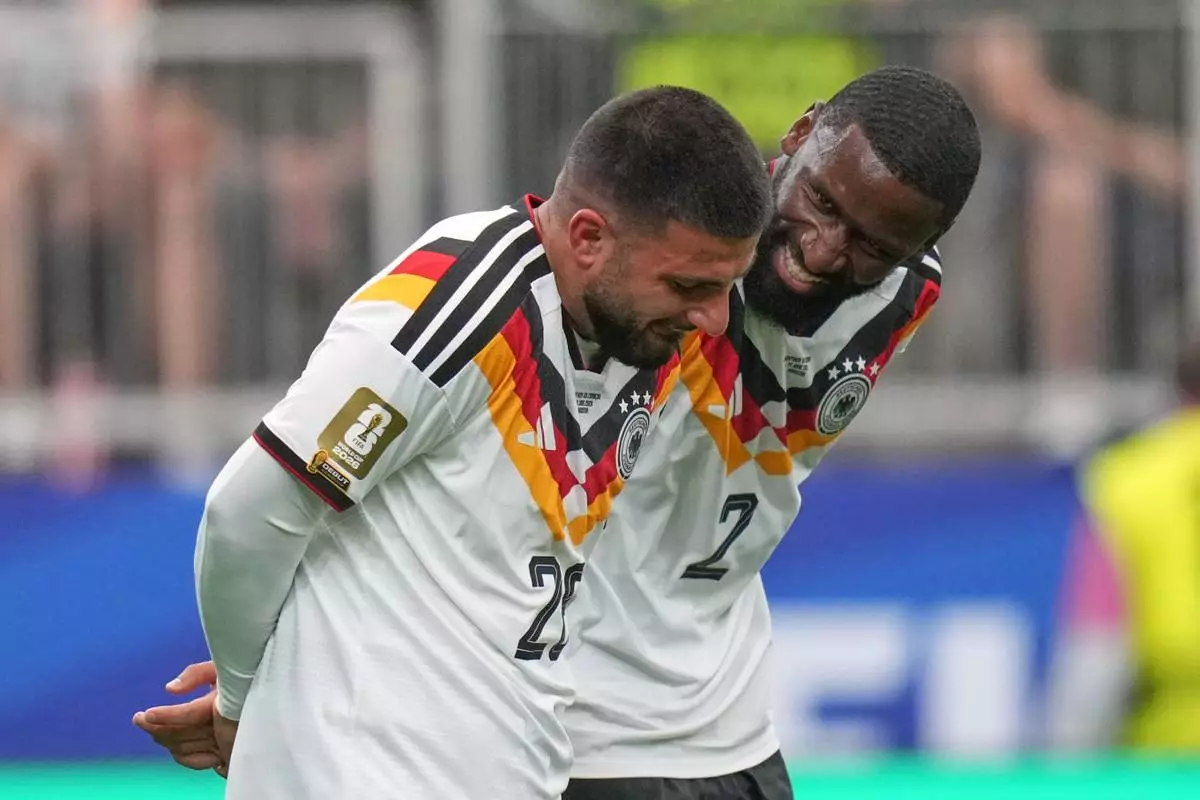
Deniz Undav added a goal in the 78th minute. Havertz's second goal came in the 88th.
Germany is seeking redemption after failing to get out of the group stage in Russia and Qatar following its 2014 title.
“We are on the right path but of course there are things that we can do better and we will have stronger opponents,” Nagelsmann said.
Nmecha one-timed it with his right foot into the near post just inside the upper box with an assist from Florian Wirtz in the sixth minute to make it 1-0.
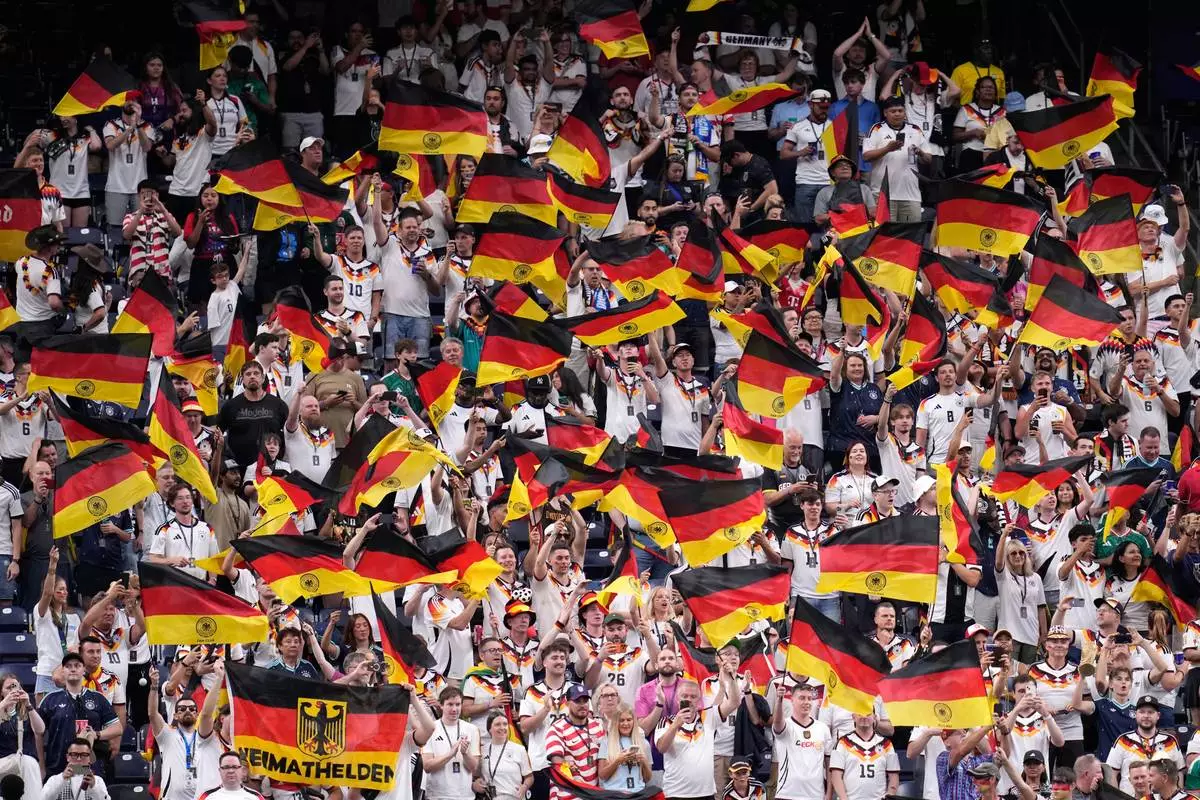
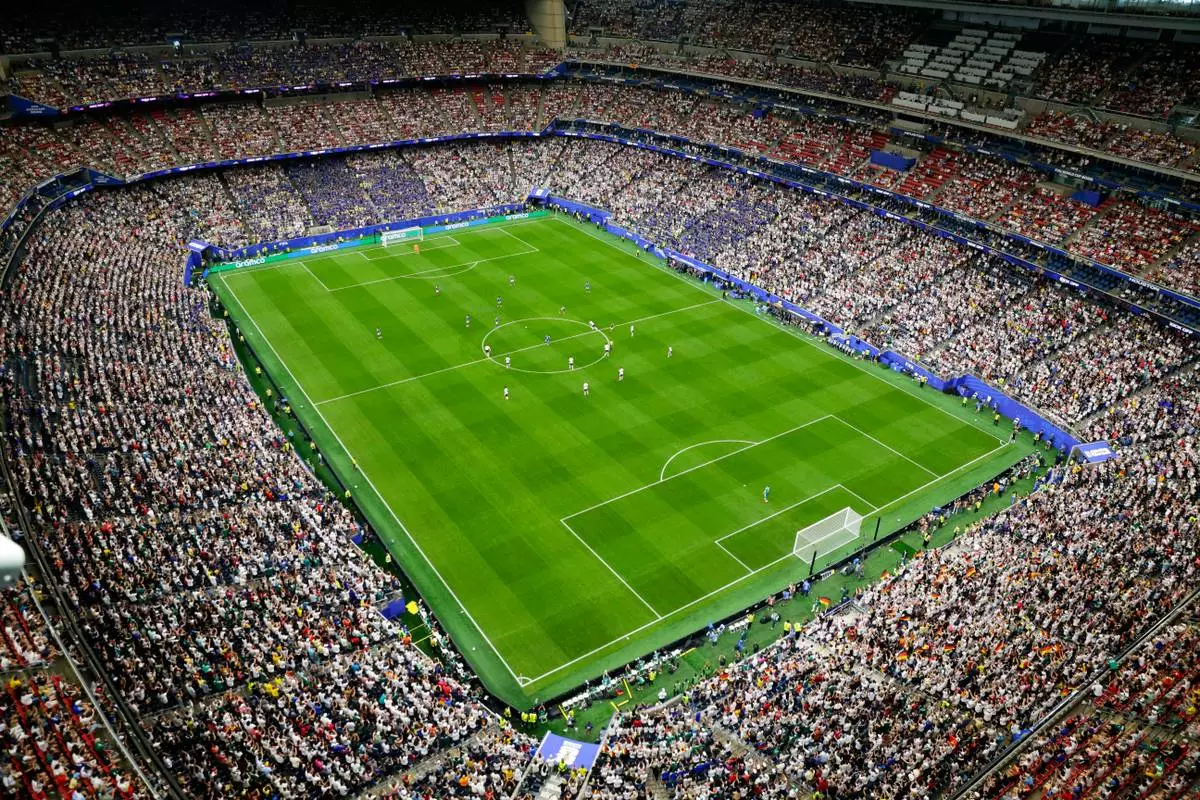
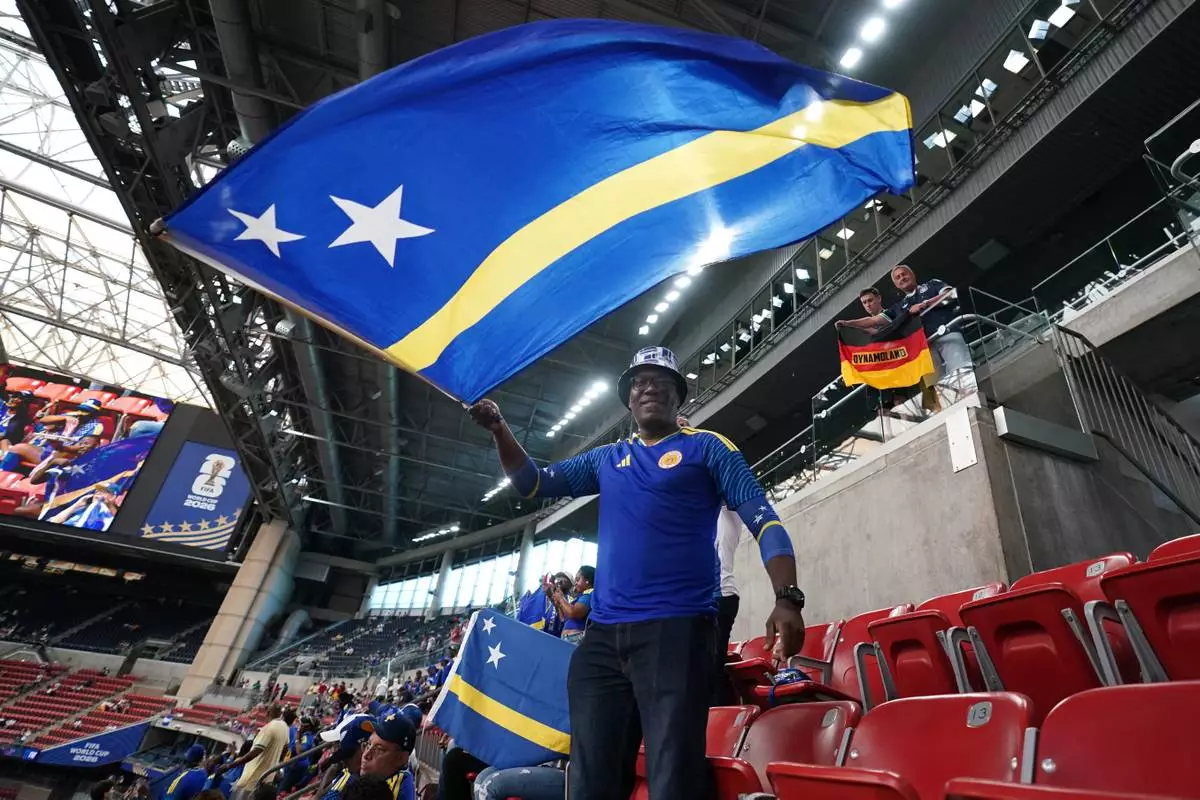
The crowd of 68,021 was overwhelmingly rooting for Germany but there was a spirited contingent of people cheering on Curaçao.
It was the first match of the tournament at NRG Stadium, home of the NFL's Houston Texans.
Manuel Neuer, the 40-year-old goalkeeper who came out of international retirement for the tournament, had one save in his first appearance for Germany in almost two years.
The match featured the largest age gap between coaches in World Cup history with Curaçao's 78-year-old coach, Dick Advocaat, becoming the oldest ever in the tournament against 38-year-old Nagelsmann, who is the youngest coach in this year’s tournament.
Germany faces Ivory Coast in its next match in Toronto on Saturday and Curaçao meets Ecuador Saturday in Kansas City, Missouri.
AP World Cup coverage: https://apnews.com/hub/fifa-world-cup

Germany's Kai Havertz celebrates with teammate Jonathan Tah, left, after scoring his side's third goal during the World Cup Group E soccer match between Germany and Curacao in Houston, Sunday, June 14, 2026. (AP Photo/Karen Warren)

Germany's Nico Schlotterbeck (15) celebrates after scoring his side's second goal during the World Cup Group E soccer match between Germany and Curacao in Houston, Sunday, June 14, 2026. (AP Photo/Eric Smith)
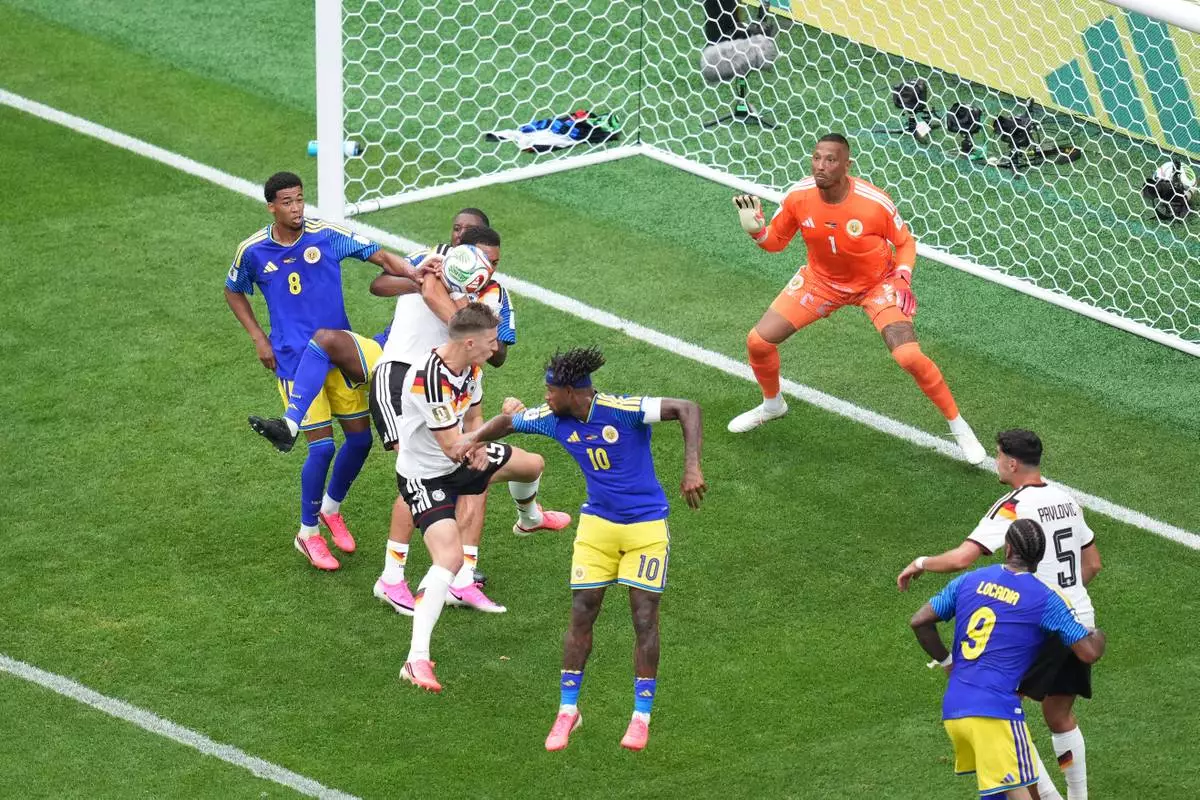
Germany's Nico Schlotterbeck (15) scores their second goal against Curaçao goalkeeper Eloy Room (1) during the World Cup Group E soccer match between Germany and Curacao in Houston, Sunday, June 14, 2026. (AP Photo/Eric Smith)
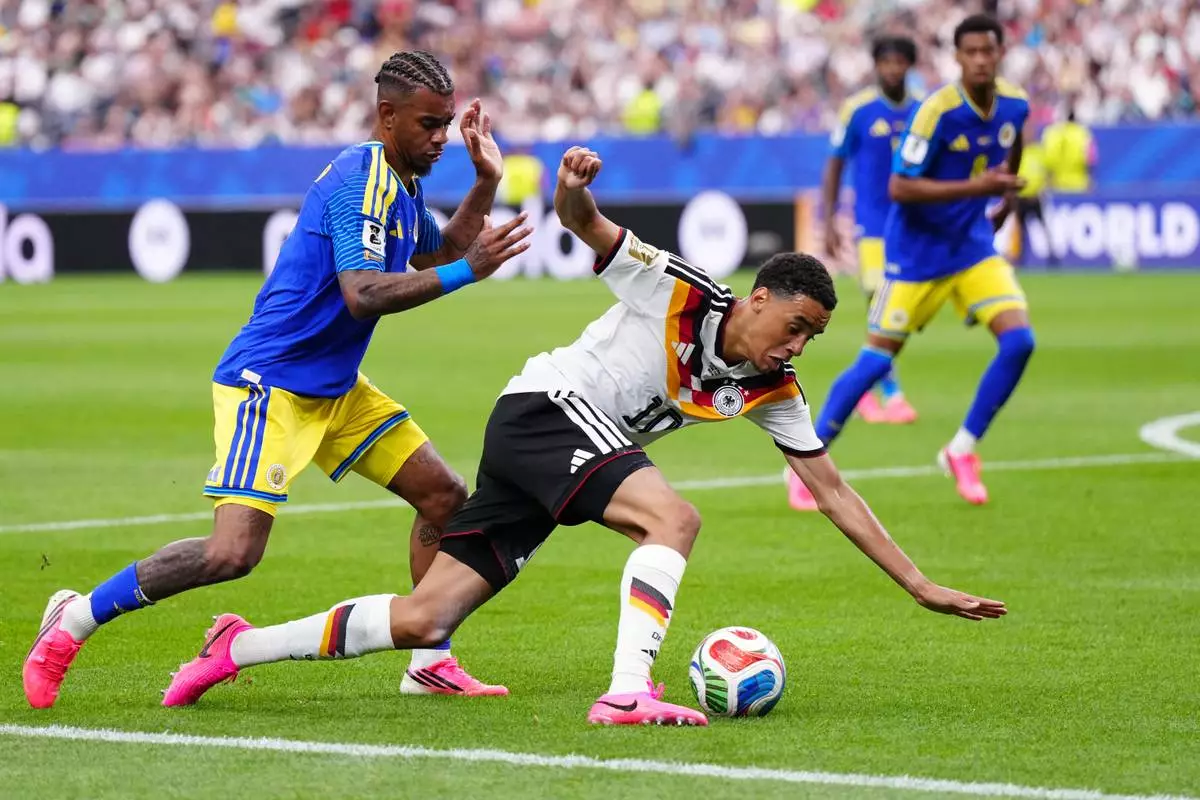
Germany's Jamal Musiala falls to the ground in front of Curaçao's Juninho Bacuna during the World Cup Group E soccer match between Germany and Curacao in Houston, Sunday, June 14, 2026. (AP Photo/Karen Warren)

Germany's Nico Schlotterbeck (15) celebrates with teammates after scoring his side's second goal during the World Cup Group E soccer match between Germany and Curacao in Houston, Sunday, June 14, 2026. (AP Photo/Eric Smith)
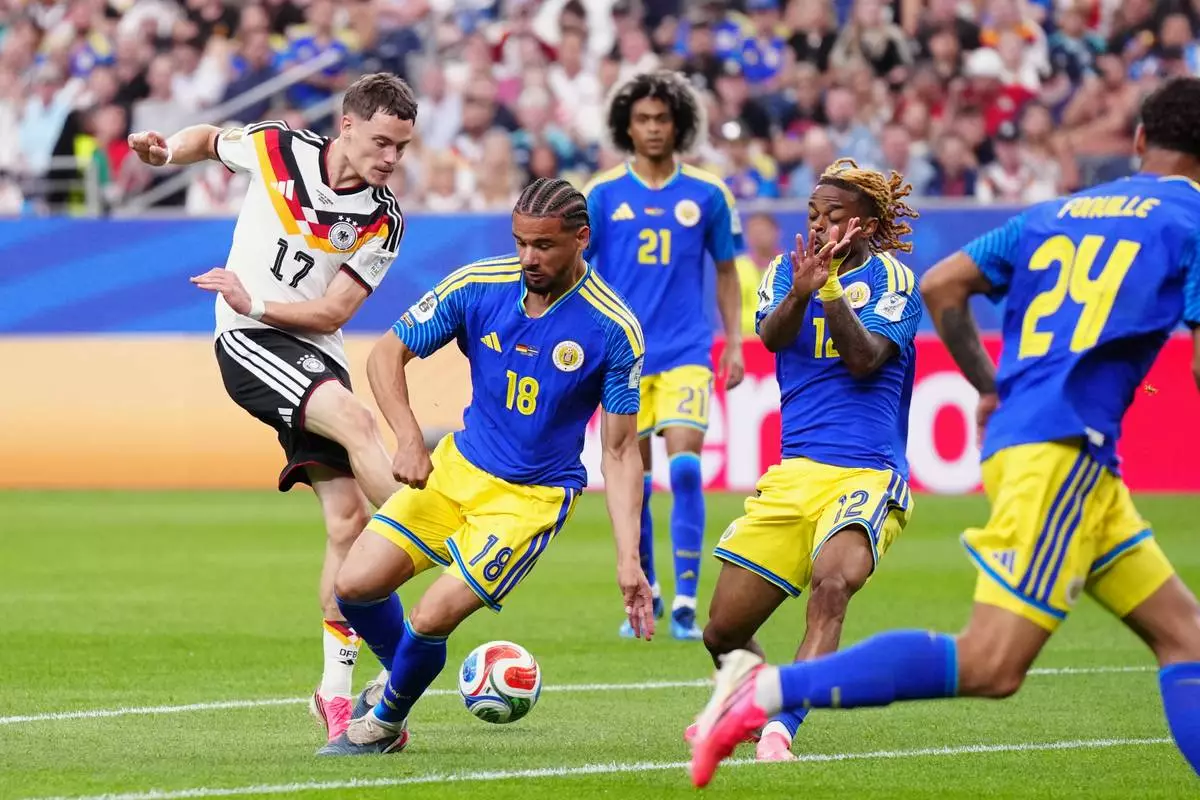
Germany's Florian Wirtz, left, attempts a shot at goal during the World Cup Group E soccer match between Germany and Curacao in Houston, Sunday, June 14, 2026. (AP Photo/Karen Warren)
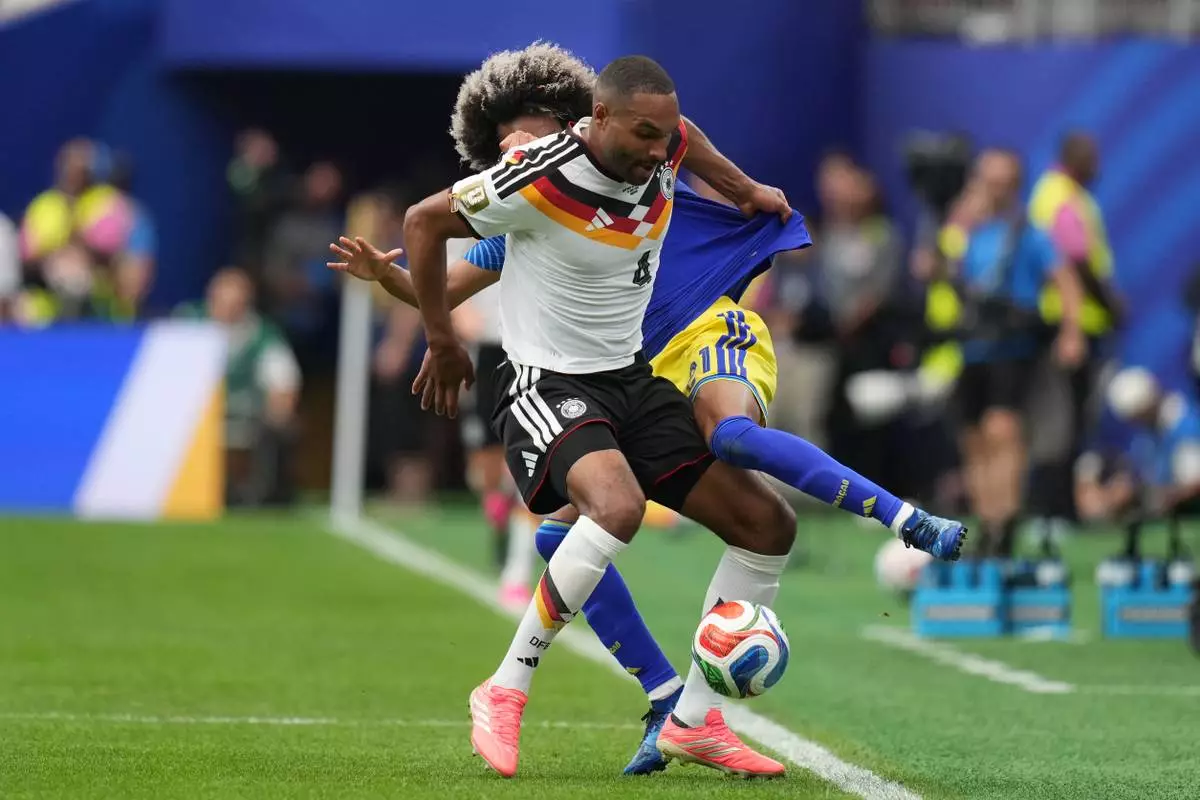
Germany's Jonathan Tah, front , and Curaçao's Tahith Chong fight for the ball during the World Cup Group E soccer match between Germany and Curacao in Houston, Sunday, June 14, 2026. (AP Photo/Eric Gay)

DUBAI, United Arab Emirates (AP) — The U.S. military announced Wednesday that it was conducting a 12th night of strikes against Iran as both sides increasingly targeted civilian infrastructure.
U.S. Central Command once again said the attacks were designed to “further degrade Iran’s ability to threaten civilian mariners and commercial vessels transiting regional waters,” as the Americans push to regain control over the Strait of Hormuz and restore the flow of international shipping.
President Donald Trump warned earlier Wednesday that the U.S. will destroy one bridge or power plant each time Iran shoots at a ship in the strait.
“From this point forward, any time the Islamic Republic of Iran shoots at a ship in the Strait of Hormuz, whether it be by Missile, Rocket, Drone, or any other device or weapon, the United States will bomb and destroy ONE BRIDGE OR POWER PLANT,” Trump wrote on social media.
The continued American airstrikes are occurring even as diplomatic efforts show little public sign of progress and officials on both sides have dug in on the dispute over the crucial waterway for global energy that remains largely closed because of Iranian attacks. The unpopular war threatens further worldwide economic disruption and sending fuel prices up ahead of midterm U.S. elections this fall.
Seyed Abbas Araghchi, Iran’s foreign minister, said his country would adopt an “eye for an eye” defense doctrine.
“Any aggression against Iran, including our infrastructure, will compel a powerful and decisive response,” he posted Wednesday on X.
The U.S. carried out a previous wave of strikes on Iran overnight into Wednesday, and air defenses opened fire over the capital, Tehran. Iran launched a missile attack on a Jordanian city on Israel’s doorstep, and alerts were issued in Bahrain and Saudi Arabia.
With negotiations largely stalled, both sides have sought leverage by targeting civilian infrastructure. Iran has responded to U.S. attacks by targeting energy infrastructure and desalination plants that provide drinking water in parched neighboring Gulf countries.
International law generally prohibits such attacks unless the infrastructure is being used for military purposes. United Nations Secretary-General Antonio Guterres decried such attacks as “unacceptable” on Tuesday.
The closure of the strait, through which a fifth of the world’s traded oil and gas passed during peacetime, has jolted the world economy with effects far beyond the Middle East. A new threat by Iran-backed Houthi rebels in Yemen to target Saudi shipping in the Red Sea puts another trade chokepoint at risk.
“From this point forward, any time the Islamic Republic of Iran shoots at a ship in the Strait of Hormuz, whether it be by Missile, Rocket, Drone, or any other device or weapon, the United States will bomb and destroy ONE BRIDGE OR POWER PLANT,” Trump wrote on social media.
Trump traveled to Dover Air Force Base on Wednesday for the arrival of the remains of four U.S. service members. A day earlier, his defense secretary, Pete Hegseth, estimated in a fiery Senate hearing that the U.S. had spent $37.5 billion on the war so far.
Benchmark Brent crude oil rose to more than $93 a barrel in trading. That's up from less than $72 early this month, which is roughly where it was before the war. Gasoline prices are also climbing.
Iran says it has the right to manage traffic and potentially charge fees in the strait, which was open to all and toll-free before the war. It has attacked ships using a route through the strait that is overseen by U.S. forces and intended to be outside Tehran's control.
Iran's parliament speaker, Mohammad Bagher Qalibaf, who has led negotiations with the U.S., appeared to brush off Trump's threats.
“If our security is not ensured, no infrastructure will be safe, and the security of the strait is in the absence of American forces,” he wrote on social media. “We have repeatedly said that the situation of the strait will not return to prewar conditions.”
Jordan’s military said it intercepted four Iranian missiles over Aqaba, while two others fell in “uninhabited areas.” Plumes of smoke could be seen overhead in videos filmed by people in the nearby Israeli city of Eilat. Jordan said it also intercepted four Iranian drones.
Iran has avoided striking Israel since hostilities resumed last month, apparently hoping to keep it from reentering the war. But the attack on Aqaba, within sight of Israel’s Eilat, raised concerns over a further widening of the conflict after an agreement to halt hostilities collapsed.
Another missile alert sounded in Bahrain, and Saudi Arabia warned residents of the Persian Gulf city of Dammam to seek shelter. Saudi authorities later said the danger had passed, without elaborating.
The U.S. military said earlier Wednesday that it had completed an 11th night of strikes on Iran, with targets including aircraft hangars and drone storage sites.
Iran's state-run IRNA news agency reported explosions across several provinces. Iran's Health Ministry says U.S. strikes over the past 11 days have killed 53 people, including six women and three children, and wounded nearly 600 people.
Iran's paramilitary Revolutionary Guard insisted its retaliatory attacks would continue.
Before the latest strikes, Iranian Interior Minister Eskandar Momeni visited Pakistan, a key mediator in the conflict, seeking to revive diplomacy. But it was unclear what new arrangement might be reached to end the war, which lately has become a battle for control over the Strait of Hormuz.
Iran's Interior Ministry spokesman Ali Zeinivand said “diplomacy isn’t called off” and that messages were still being exchanged, without elaborating, according to IRNA.
An Arab diplomat said Gulf states are increasingly pessimistic about finding an off-ramp for escalating hostilities and are particularly concerned about the latest round of threats in which the two sides have warned they may attack civilian infrastructure.
The diplomat said countries in the region, in addition to Pakistan and Turkey, are continuing to push for de-escalation. But, he said the chances for any improvement currently appear bleak. The diplomat spoke on condition of anonymity due to the sensitivity of the situation.
At a regional summit in the Philippines, U.S. Secretary of State Marco Rubio denounced Iran’s actions in the strait.
“If we create a precedent in the Middle East where a nation state can decide that they are going to control an international waterway, charge a toll and if you don’t pay them, blow up your ships, we have created a very dangerous precedent which will repeat itself in other parts of the world, including in this region,” he said.
Rubio said the U.S. remains open to negotiations with Iran, “but right now they don’t seem to be serious about that” so instead the focus is on protecting shipping.
In response to Iran’s attacks, the U.S. re-imposed a blockade on Iranian ports.
Speaking from the Oval Office on Tuesday, Trump gave a dim view on possible talks, saying the U.S. had “no interest in meeting.”
He signaled that U.S. forces could soon target an under-construction Iranian nuclear site buried deep under a mountain.
The site, known as Pickaxe Mountain, lies on the south side of Iran’s Natanz nuclear enrichment site, which was bombed by the U.S. during the 12-day war between Iran and Israel in 2025. But Pickaxe Mountain has remained untouched as Iran continues to dig at the site.
Iran has always insisted its nuclear program is peaceful, while resuming the enrichment of uranium to near weapons-grade levels since Trump scrapped a 2015 nuclear deal during his first term. The U.S. and others believe Iran had a nuclear weapons program until 2003 and may reconstitute it in the future.
Binkley reported from Washington. Contributing were Associated Press writers Bassem Mroue in Beirut; Michelle L. Price and Jim Gomez in Manila, Philippines; and Christopher Weber in Los Angeles.
Mourners carry the coffins containing additional remains of victims identified through DNA testing during funeral ceremonies in Minab, Iran, Tuesday, July 22, 2026, nearly five months after they were killed in the Feb. 28 strike on the Shajareh Tayyebeh School.(Razieh Poudat/ISNA via AP)
Gold-colored Presidential seals are seen on a fireplace in the Oval Office as President Donald Trump meets with Lebanese President Joseph Aoun at the White House, Tuesday, July 21, 2026, in Washington. (AP Photo/Mark Schiefelbein)
President Donald Trump speaks while meeting with Lebanese President Joseph Aoun in the Oval Office at the White House, Tuesday, July 21, 2026, in Washington. (AP Photo/Mark Schiefelbein)
Secretary of State Marco Rubio speaks during a press conference on the sidelines of the Association of Southeast Asian Nations (ASEAN) Foreign Ministers' Meeting in Pasay, Metro Manila, Philippines Wednesday, July 22, 2026. (Brendan Smialowski/Pool Photo via AP)